Macromolecules
 Call Kai
 Learn
Learn Practice Test
 Spaced Repetition
 Match
Match Flashcards
 Knowt Play
1/30

There's no tags or description
Looks like no tags are added yet.
Name | Mastery | Learn | Test | Matching | Spaced | Call with Kai | Chat |
|---|
No analytics yet
Send a link to your students to track their progress
31 Terms
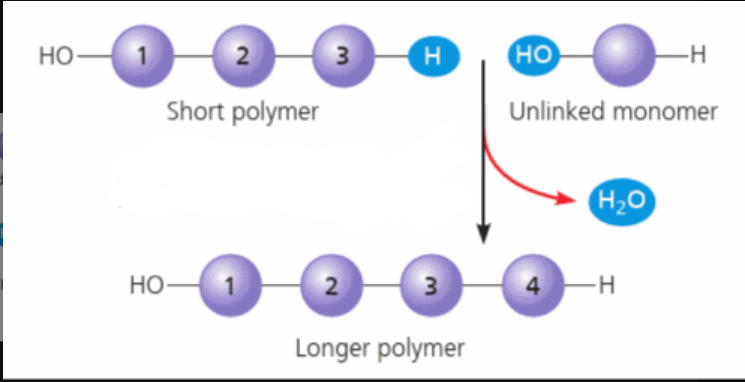
dehydration reaction
the removal of a water molecule that forms a new bond
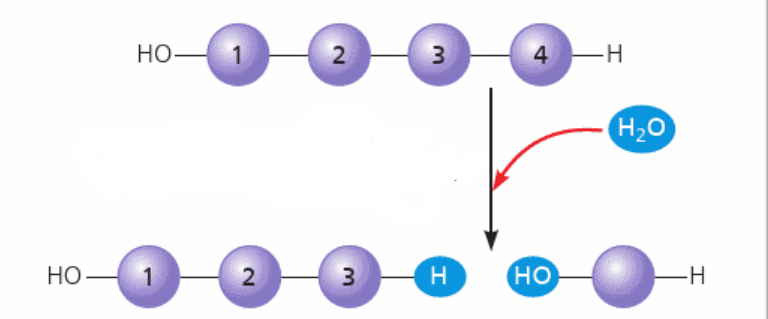
hydrolysis
the addition of a water molecule that breaks a bond
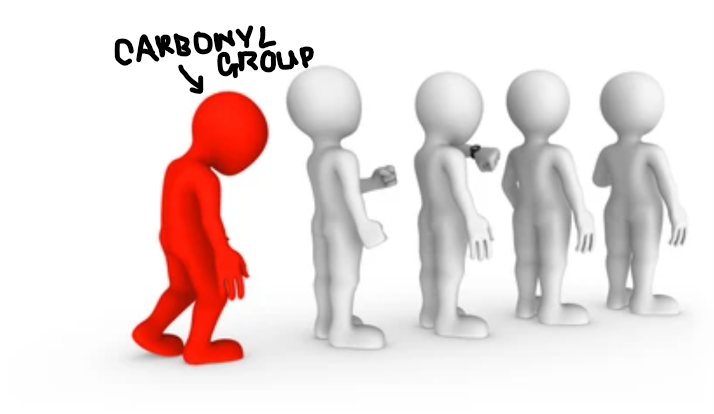
aldose (aldehyde sugars)
carbonyl group at the end of carbon skeleton
ketose (ketone sugars)
carbonyl group within the carbon skeleton
glycosidic linkage
covalent bond formed between two monosaccharides by a dehydration reaction
polysaccharides used by plants and animals + functions
starch in plants for energy, cellulose in plants for cell wall structure, glycogen in animals for energy storage in liver and muscle cells
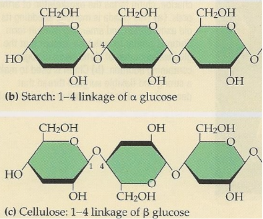
difference in 3D arrangement of starch and cellulose
glucose monomers in starch are in the alpha configuration (they are in the same orentation), glucose monomers in cellulose are in the beta configuration (they are upside down)
starch composition
amylose and amylopectin, branched molecule
glycogen composition
composed of alpha glucose monomers, more branched than amylopectin
cellulose composition
beta glucose monomers, forms microfibrils that strengthen the cell wall
chitin
structural polysaccharide used by arthropods for their exoskeleton and used by fungi for their cell wall
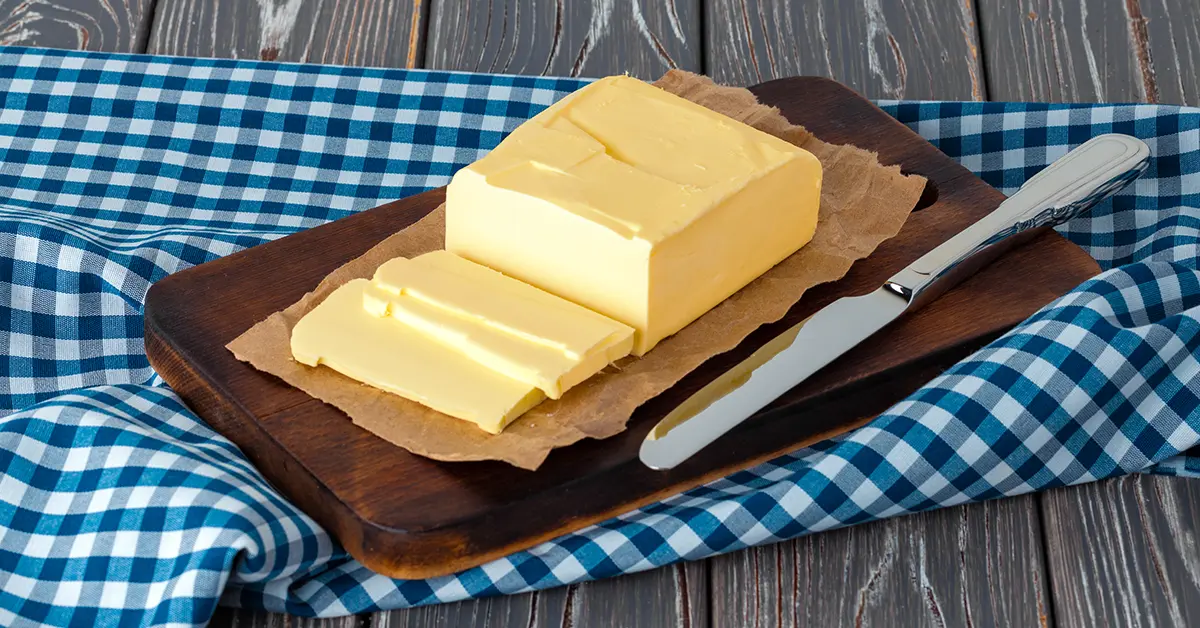
saturated fat
solid at room temperature, the hydrocarbon chains of the fatty acid
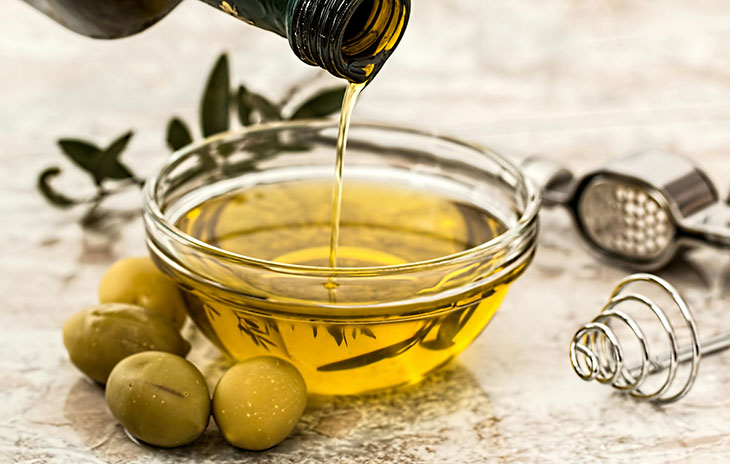
unsaturated fat
liquid at room temperature, hydrocarbon chain of a fatty acid that has one or more double bonds
hydrogenation of unsaturated fat
the synthetic conversion of unsaturated fat to saturated fat by adding hydrogen, allowing it to solidify
adipose cells
where humans and mammals store long-term food reserves, found under the skin and around internal organs like the kidneys
hydrophobic part of phospholipid
hydrocarbon tail
hydrophilic part of phospholipid
phosphate head
number of amino acids present in proteins and number of essentials
20 and 9
peptide bond
a covalent bond between amino acids by dehydration reactions to form peptides, polypeptides, and proteins
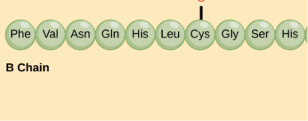
primary protein structure
linear sequence of amino acids in a polypeptide chain
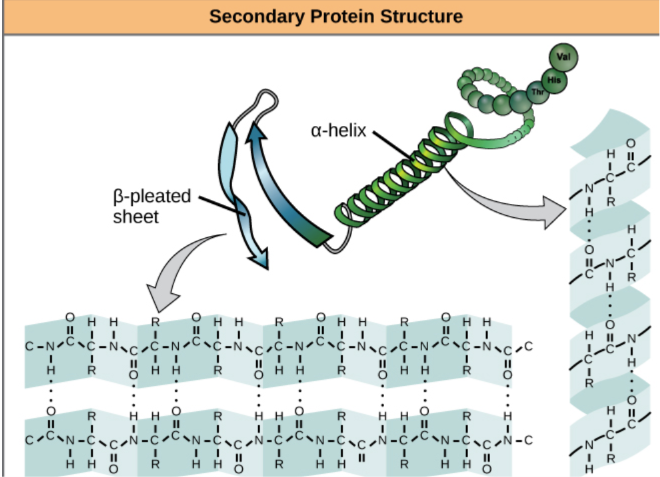
alpha helix secondary protein structure
H bonds between every 4th amino acid in a polypeptide chain
beta pleated sheet secondary protein structure
H bonds between 2 or more segments of the same polypeptide chain laying side by side

tertiary protein structure
3D polypeptide chain due to interactions between amino acid side chains
hydrophobic interactions in tertiary protein structure
van der waals, ionic bonds, hydrogen bonds, disulfide linkages

quaternary protein structure
protein consisting of more than one amino acid
nucleotide composition
pentose, nitrogenous base, phosphate group
pyrimidines
cytosine, thymine, uracil
purines
adenine, guanine
differences between pyrimidines and purines (RNA and DNA assignment)
adenine, cytosine, guanine are found in both DNA and RNA, thymine is only found in DNA, uracil is only found in RNA
nucleoside
pentose and nitrogenous base, phosphate group absent
complimentary base pairings + number of bonds
adenine with thymine/uracil has 2 H bonds, guanine with cytosine has 3 H bonds