CELL ORGANELLES, MEMBRANES, AND TRANSPORT (PG. 55-60)

0.0(0)
Studied by 0 people
call kaiCall Kai
Locked
learnLearn
examPractice Test
spaced repetitionSpaced Repetition
heart puzzleMatch
flashcardsFlashcards
GameKnowt Play
Card Sorting

1/31

encourage image

There's no tags or description

Looks like no tags are added yet.

Last updated 9:32 PM on 9/7/26
Name
Mastery
Learn
Test
Matching
Spaced
Call with Kai
Chat

No analytics yet

Send a link to your students to track their progress

32 Terms

1
New cards

What are the 2 types of cells?

Prokaryotic = simple cells

Eukaryotic = more complex cells

👉 Biggest difference: eukaryotic cells have a nucleus and membrane-bound organelles; prokaryotic cells don’t.

<p>Prokaryotic = simple cells</p><p>Eukaryotic = more complex cells</p><p><span data-name="point_right" data-type="emoji">👉</span> Biggest difference: eukaryotic cells have a nucleus and membrane-bound organelles; prokaryotic cells don’t.</p>
2
New cards

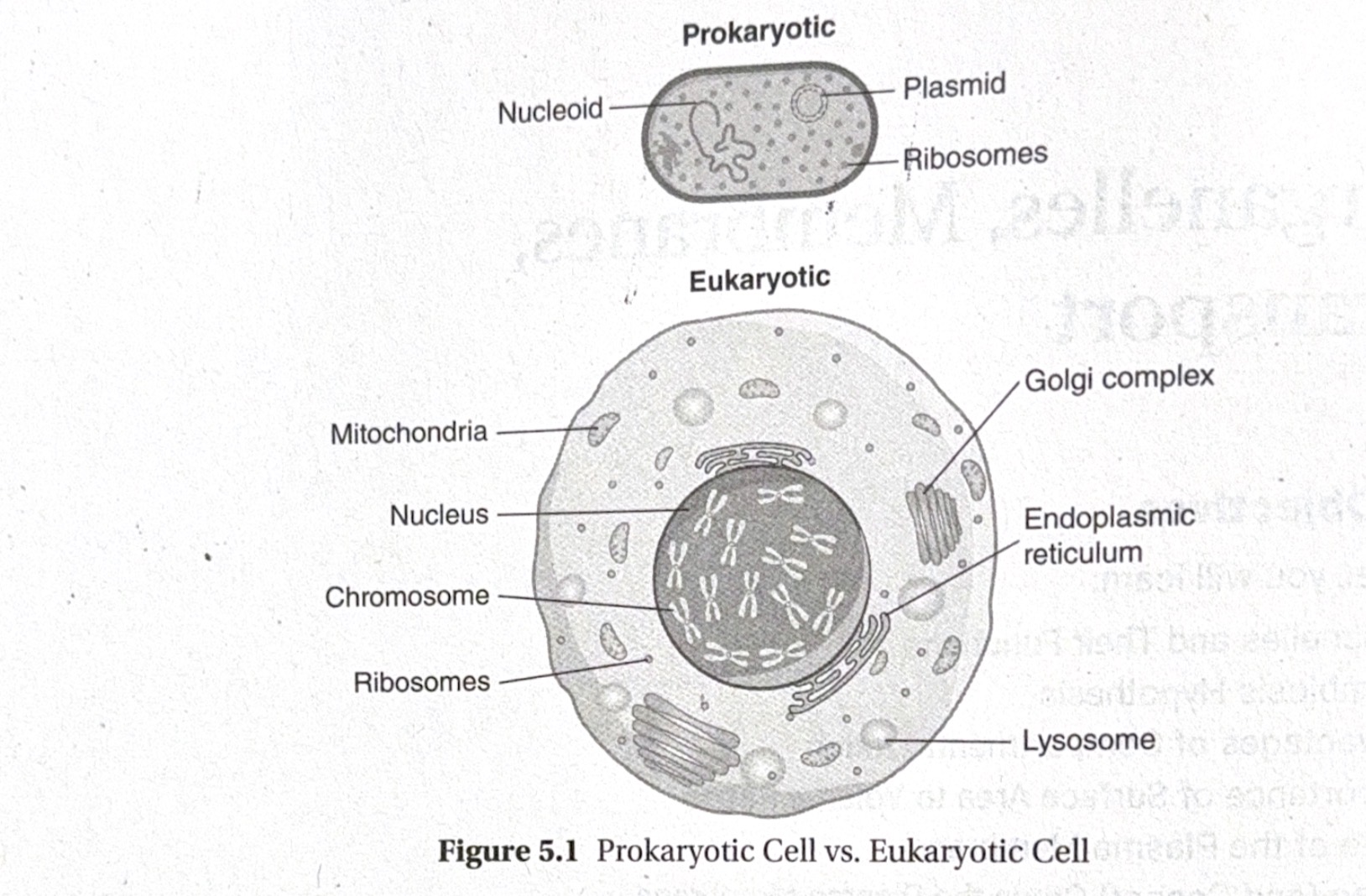
What do ALL cells have?

Every cell has:

DNA

Ribosomes

Cytosol

Plasma membrane

🧠 ALL = DNA + ribosomes + cytosol + membrane
<p>Every cell has:</p><p>DNA</p><p>Ribosomes</p><p>Cytosol</p><p>Plasma membrane</p><p><span data-name="brain" data-type="emoji">🧠</span> ALL = DNA + ribosomes + cytosol + membrane</p>
3
New cards

Where is DNA in a prokaryotic cell?

The DNA is in the nucleoid region.

It isn’t inside a nucleus because prokaryotes don’t have a nucleus.


<p>The DNA is in the nucleoid region.</p><p>It isn’t inside a nucleus because prokaryotes don’t have a nucleus.</p><p></p>
4
New cards

What is a plasmid?

A small circle of extra DNA found in some bacteria.

🧠 Think: little extra DNA circle.

<p>A small circle of extra DNA found in some bacteria.</p><p><span data-name="brain" data-type="emoji">🧠</span> Think: little extra DNA circle.</p>
5
New cards

How are prokaryotic and eukaryotic DNA different?

Prokaryotic: usually circular DNA → nucleoid

Eukaryotic: linear chromosomes → nucleus

<p>Prokaryotic: usually circular DNA → nucleoid</p><p>Eukaryotic: linear chromosomes → nucleus</p>
6
New cards

What do ribosomes do?

They make proteins.

🧠 Ribosome = protein maker

7
New cards

What are the two parts of a ribosome?

A large subunit and a small subunit.

The sizes differ between prokaryotic and eukaryotic ribosomes.

8
New cards

What are ribosomes made of?

Protein + rRNA (ribosomal RNA).

And they’re NOT surrounded by a membrane.

<p>Protein + rRNA (ribosomal RNA).</p><p>And they’re NOT surrounded by a membrane.</p>
9
New cards

What are the ribosome sizes?

A large subunit and a small subunit

🦠 Prokaryotic = 70S
🧬 Eukaryotic = 80S

70S: 50S + 30S
80S: 60S + 40S

🚨 Don’t accidentally say 50 + 30 = 80. The whole prokaryotic ribosome is 70S.

<p>A large subunit and a small subunit</p><p><span data-name="microbe" data-type="emoji">🦠</span> Prokaryotic = <strong>70S</strong><br><span data-name="dna" data-type="emoji">🧬</span> Eukaryotic = <strong>80S</strong></p><p><strong>70S:</strong> 50S + 30S<br><strong>80S:</strong> 60S + 40S</p><p><span data-name="rotating_light" data-type="emoji">🚨</span> Don’t accidentally say 50 + 30 = 80. The whole prokaryotic ribosome is <strong>70S</strong>.</p>
10
New cards

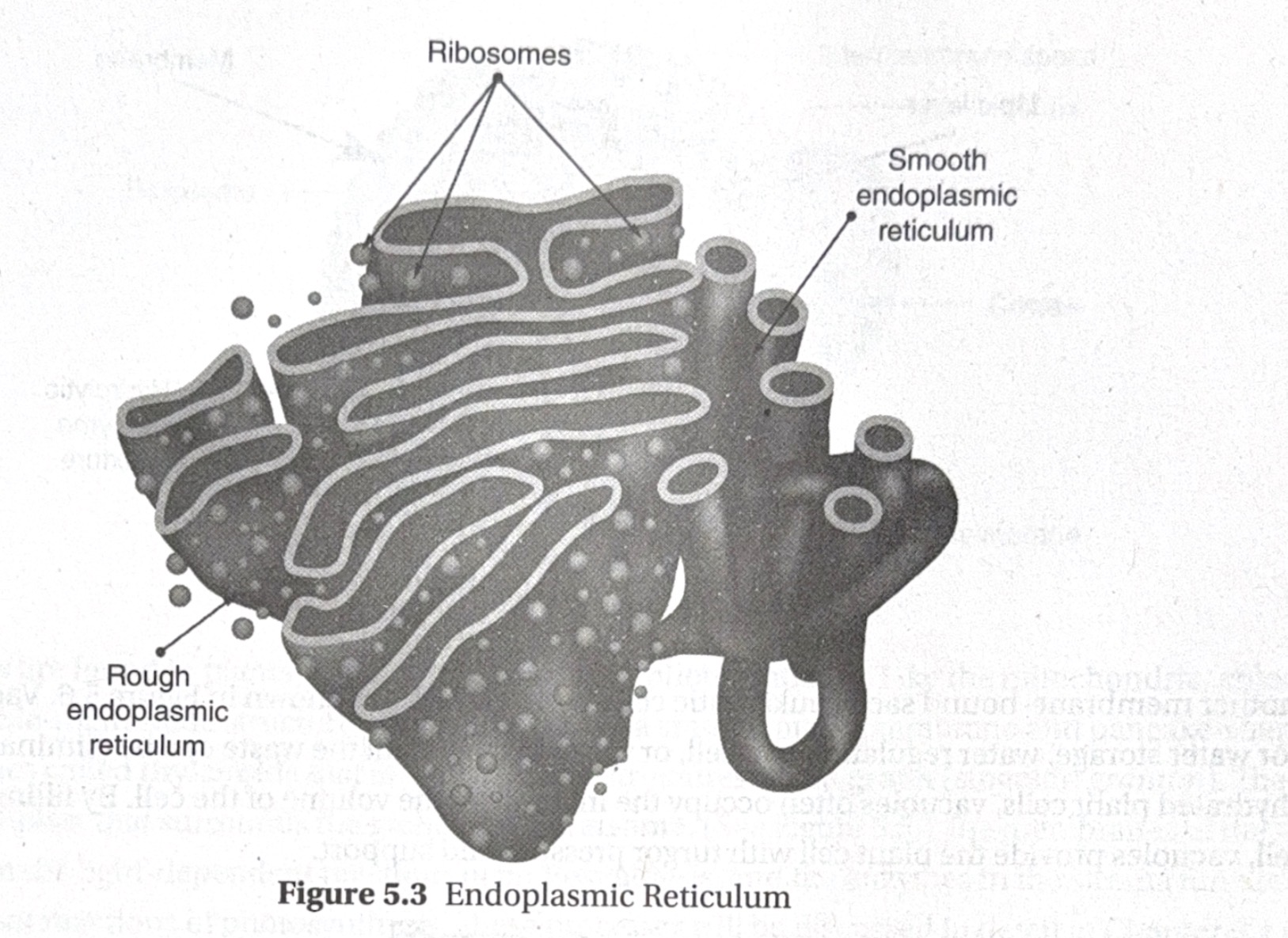
What is the ER?

The endoplasmic reticulum (ER) is a network of membranes inside the cell.

There are two types:

Rough ER

Smooth ER

<p>The endoplasmic reticulum (ER) is a network of membranes inside the cell.</p><p>There are two types:</p><p>Rough ER</p><p>Smooth ER</p>
11
New cards

What’s the difference between rough ER and smooth ER?

Rough ER: has ribosomes attached → helps make proteins.

Smooth ER: no ribosomes attached.

🧠 ROUGH = has bumps (ribosomes).
<p>Rough ER: has ribosomes attached → helps make proteins.</p><p>Smooth ER: no ribosomes attached.</p><p><span data-name="brain" data-type="emoji">🧠</span> ROUGH = has bumps (ribosomes).</p>
12
New cards

What does the Golgi apparatus do?

It changes, sorts, and packages proteins so they can be sent where they need to go.

🧠 Golgi = post office for proteins 📦

<p>It changes, sorts, and packages proteins so they can be sent where they need to go.</p><p><span data-name="brain" data-type="emoji">🧠</span> Golgi = post office for proteins <span data-name="package" data-type="emoji">📦</span></p>
13
New cards

What is the Golgi lumen?

The inside space of a Golgi cisterna.

🧠 Lumen = inside space.

<p><span>The <strong>inside space</strong> of a Golgi cisterna.</span></p><p><span data-name="brain" data-type="emoji">🧠</span><span> <strong>Lumen = inside space.</strong></span></p>
14
New cards

What are cisternae?

The flattened sacs that make up the Golgi.

🧠 If you see a stack of flat pancakes → cisternae/Golgi.

<p>The flattened sacs that make up the Golgi.</p><p><span data-name="brain" data-type="emoji">🧠</span> If you see a stack of flat pancakes → cisternae/Golgi.</p>
15
New cards

What is a vesicle?

A tiny membrane bubble/sac that carries things around the cell.

🧠 Vesicle = delivery bubble 📦

<p>A tiny membrane bubble/sac that carries things around the cell.</p><p><span data-name="brain" data-type="emoji">🧠</span> Vesicle = delivery bubble <span data-name="package" data-type="emoji">📦</span></p>
16
New cards

What are lysosomes?

Little sacs filled with enzymes that break things down.

They can break down:

Macromolecules

Old/worn-out cell parts

Bacteria and viruses

🧠 Lysosome = cell’s recycling/digestion center

<p>Little sacs filled with enzymes that break things down.</p><p>They can break down:</p><p>Macromolecules</p><p>Old/worn-out cell parts</p><p>Bacteria and viruses</p><p><span data-name="brain" data-type="emoji">🧠</span> Lysosome = cell’s recycling/digestion center <span data-name="recycle" data-type="emoji">♻</span></p>
17
New cards

Why is the lysosome membrane important?

It keeps the powerful digestive enzymes contained inside the lysosome instead of letting them freely spread through the cell.

<p>It keeps the powerful digestive enzymes contained inside the lysosome instead of letting them freely spread through the cell.</p>
18
New cards

What does a vacuole do?

It is like a storage container.

It can store:

Water 💧

Food

Waste

It can also help with water regulation.

<p>It is like a storage container.</p><p>It can store:</p><p>Water <span data-name="droplet" data-type="emoji">💧</span></p><p>Food</p><p>Waste</p><p>It can also help with water regulation.</p>
19
New cards

Why are vacuoles important in plant cells?

A large vacuole fills with water and creates turgor pressure, which helps keep the plant cell firm and supported.

🧠 Water in vacuole → pressure → plant stays firm.

<p>A large vacuole fills with water and creates turgor pressure, which helps keep the plant cell firm and supported.</p><p><span data-name="brain" data-type="emoji">🧠</span> Water in vacuole → pressure → plant stays firm.</p>
20
New cards

What do mitochondria do?

They help the cell make energy (ATP) through cellular respiration.

🧠 Mitochondria = energy makers

<p>They help the cell make energy (ATP) through cellular respiration.</p><p><span data-name="brain" data-type="emoji">🧠</span> Mitochondria = energy makers <span data-name="high_voltage" data-type="emoji">⚡</span></p>
21
New cards

What are cristae?

The folds of the inner mitochondrial membrane.

Why are they important?

👉 They give the mitochondrion more surface area for energy-producing processes.

🧠 Cristae = folds = more space.

<p>The folds of the inner mitochondrial membrane.</p><p>Why are they important?</p><p><span data-name="point_right" data-type="emoji">👉</span> They give the mitochondrion more surface area for energy-producing processes.</p><p><span data-name="brain" data-type="emoji">🧠</span> Cristae = folds = more space.</p>
22
New cards

What is the mitochondrial matrix?

The fluid-filled inside of the mitochondrion.

The Krebs cycle happens there.

🧠 Matrix = inside of mitochondrion.

<p>The fluid-filled inside of the mitochondrion.</p><p>The Krebs cycle happens there.</p><p><span data-name="brain" data-type="emoji">🧠</span> Matrix = inside of mitochondrion.</p>
23
New cards

What should I recognize in a mitochondrion diagram?

Know these:

Outer membrane = outside

Inner membrane = inside membrane

Intermembrane space = space between membranes

Cristae = folds

Matrix = inside fluid

ATP synthase = helps make ATP

Ribosomes = inside mitochondria

<p>Know these:</p><p>Outer membrane = outside</p><p>Inner membrane = inside membrane</p><p>Intermembrane space = space between membranes</p><p>Cristae = folds</p><p>Matrix = inside fluid</p><p>ATP synthase = helps make ATP</p><p>Ribosomes = inside mitochondria</p>
24
New cards

What are chloroplasts?

Chloroplasts are structures in plants and photosynthetic algae that carry out photosynthesis.

🧠 Chloroplast = photosynthesis 🌱

<p>Chloroplasts are structures in plants and photosynthetic algae that carry out photosynthesis.</p><p><span data-name="brain" data-type="emoji">🧠</span> Chloroplast = photosynthesis <span data-name="seedling" data-type="emoji">🌱</span></p>
25
New cards

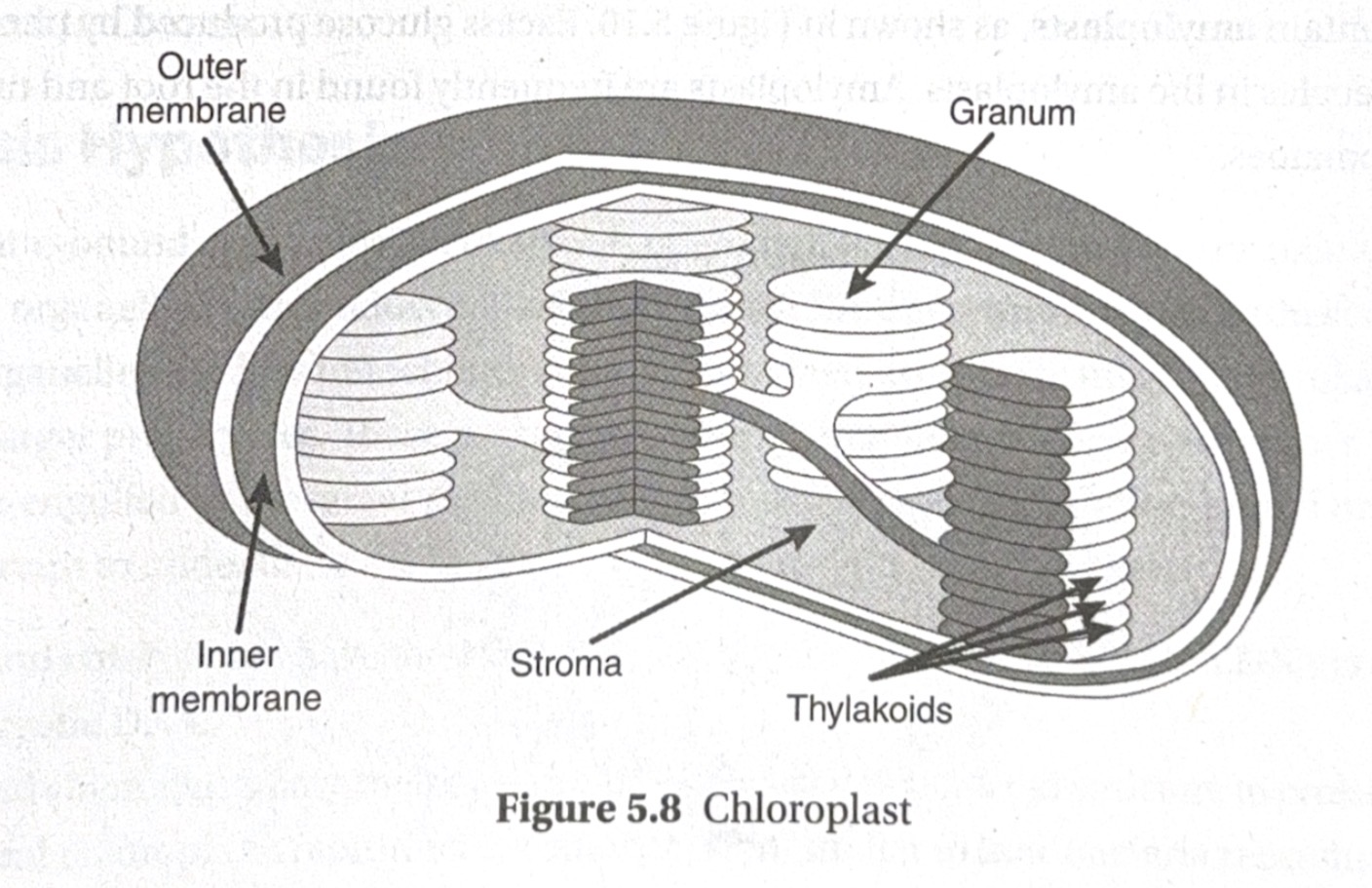
What are thylakoids, grana, and stroma?


🥞 Thylakoid = ONE pancake-like sac

🥞🥞🥞 Granum = stack of thylakoids

🌊 Stroma = fluid surrounding the grana

🧠 One pancake = thylakoid. Stack = granum. Liquid = stroma.

<p></p><p><span data-name="pancakes" data-type="emoji">🥞</span> Thylakoid = ONE pancake-like sac</p><p><span data-name="pancakes" data-type="emoji">🥞</span><span data-name="pancakes" data-type="emoji">🥞</span><span data-name="pancakes" data-type="emoji">🥞</span> Granum = stack of thylakoids</p><p><span data-name="ocean" data-type="emoji">🌊</span> Stroma = fluid surrounding the grana</p><p><span data-name="brain" data-type="emoji">🧠</span> One pancake = thylakoid. Stack = granum. Liquid = stroma.</p>
26
New cards

Where do the reactions of photosynthesis happen?

Light-dependent reactions → thylakoid membranes

🌱 Light-independent reactions → stroma

🚨 This one is VERY worth memorizing.
<p><span data-name="sun" data-type="emoji">☀</span> Light-dependent reactions → thylakoid membranes</p><p><span data-name="seedling" data-type="emoji">🌱</span> Light-independent reactions → stroma</p><p><span data-name="rotating_light" data-type="emoji">🚨</span> This one is VERY worth memorizing.</p>
27
New cards

What do mitochondria and chloroplasts have in common?

Both have:

Double membranes

Their own DNA

Their own ribosomes

🧠 They’re both a little different from most organelles because they have their own DNA and ribosomes.

28
New cards

What is a centrosome?

A structure in animal cells that helps organize microtubules.

During cell division, these help form spindle fibers.

🧠 Centrosome → microtubules → spindle fibers → cell division

<p>A structure in animal cells that helps organize microtubules.</p><p>During cell division, these help form spindle fibers.</p><p><span data-name="brain" data-type="emoji">🧠</span> Centrosome → microtubules → spindle fibers → cell division</p>
29
New cards

What is an amyloplast?

A structure in plant cells that stores starch.

🧠 Amyloplast = starch storage 🌱🥔

It’s especially common in roots and tubers, like potatoes.

<p>A structure in plant cells that stores starch.</p><p><span data-name="brain" data-type="emoji">🧠</span> Amyloplast = starch storage <span data-name="seedling" data-type="emoji">🌱</span><span data-name="potato" data-type="emoji">🥔</span></p><p>It’s especially common in roots and tubers, like potatoes.</p>
30
New cards

What is Peroxisome?

Peroxisome → helps break down/oxidize molecules and toxins.

31
New cards

What is the Nucleolus?

Nucleolus → makes/assembles ribosomes inside the nucleus.

32
New cards

What is Cytoskeleton?

Cytoskeleton → helps the cell keep its shape and helps move things around inside the cell.



