IB BIO SL - Theme A
 Call Kai
 Learn
Learn Practice Test
 Spaced Repetition
 Match
Match Flashcards
 Knowt Play
1/14

There's no tags or description
Looks like no tags are added yet.
Name | Mastery | Learn | Test | Matching | Spaced | Call with Kai | Chat |
|---|
No analytics yet
Send a link to your students to track their progress
15 Terms
Where did the first cells originate
The first cells originated in water and that water remains the medium in which most processes of life occur.
Polarity of covalent bonding within water molecules is due to
unequal sharing of electrons
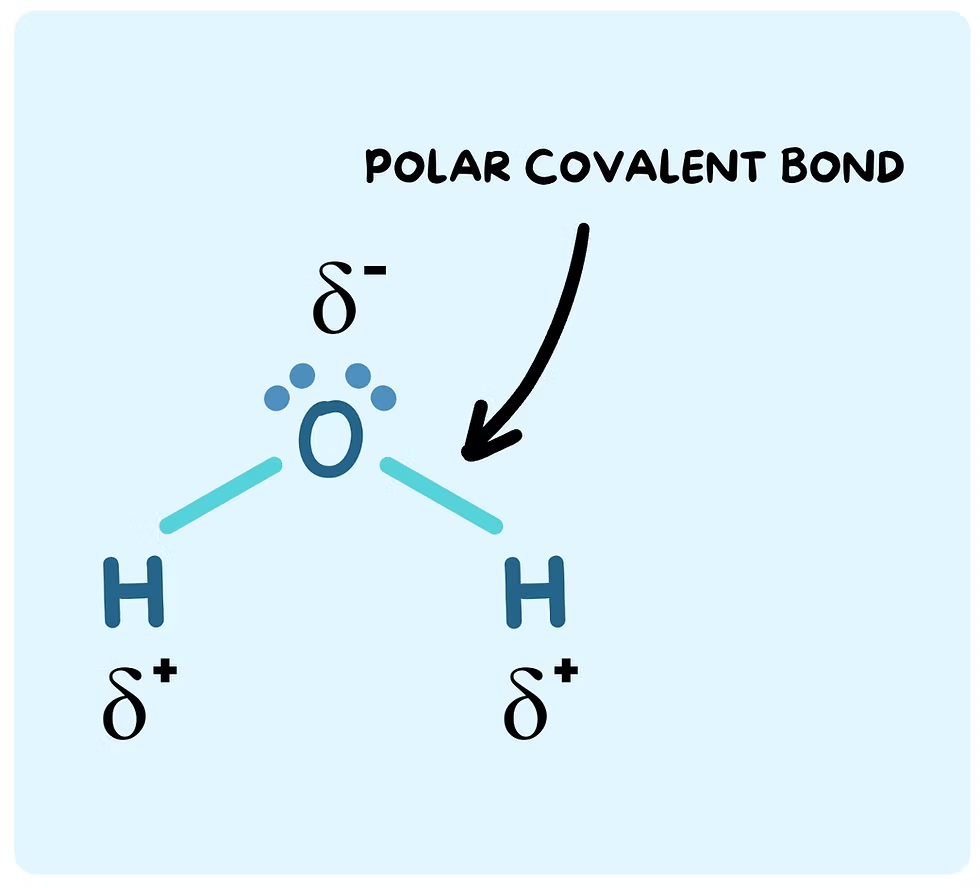
Why and where does hydrogen bonding occur?
Due to polarity of covalent bonding occurs between water molecules.
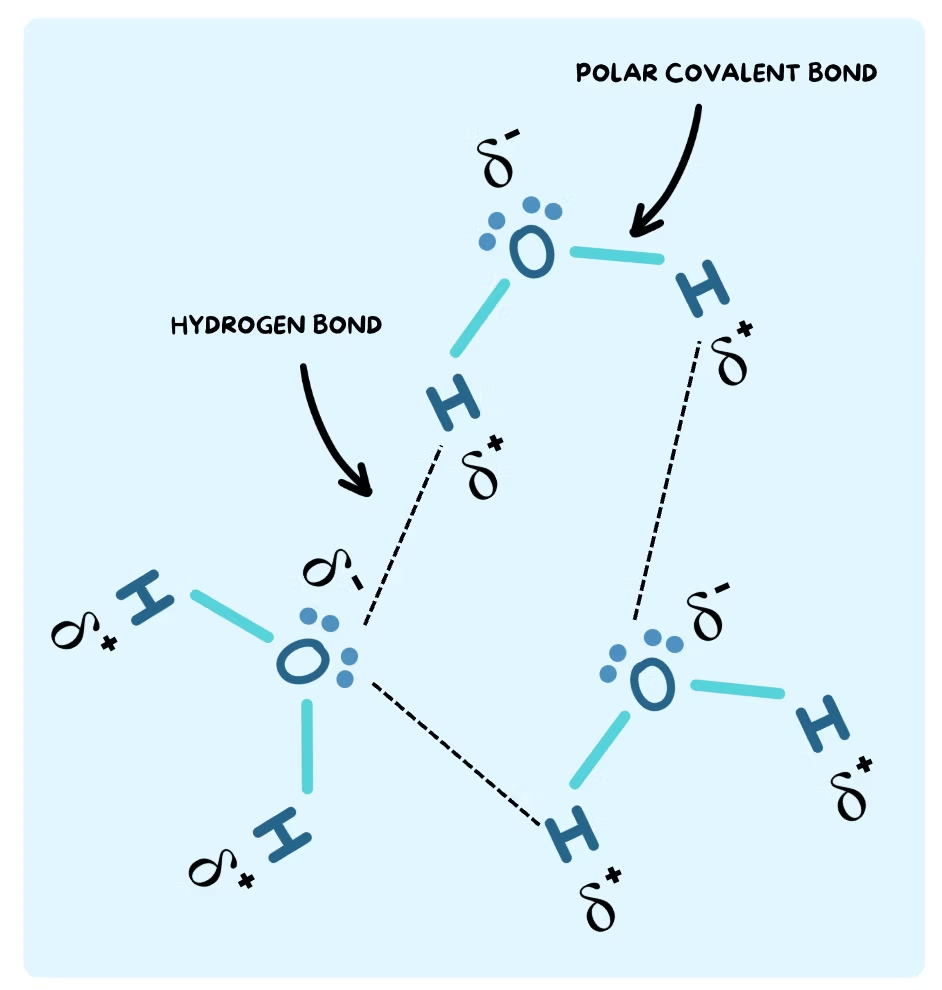
Represent two or more water molecules and hydrogen bonds between them with the notation shown below to indicate polarity.
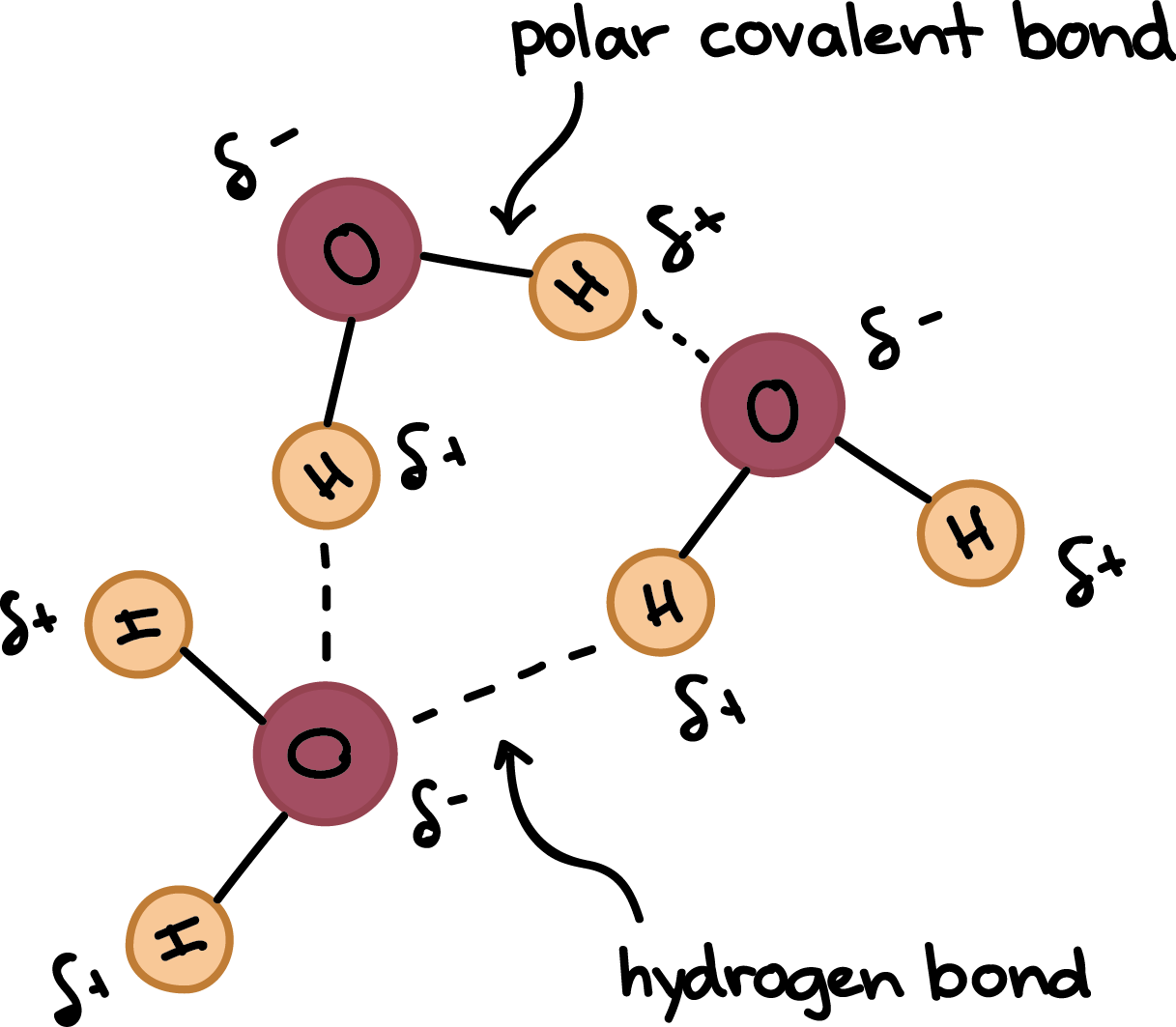
Define cohesion
The attractive force between molecules of the same kind, causing them to stick together due to hydrogen bonds
Describe how water moves through the xylem of a vascular plant.
Water moves through the xylem of a vascular plant via the passive Cohesion-Tension Theory.
Evaporation of water from leaves (transpiration) creates a pulling force, transmitted down a continuous column of water by cohesion and adhesion, drawing water upwards against gravity without using energy.
Outline the cause of surface tension
Surface tension in water is caused by cohesion—the attraction between water molecules due to hydrogen bonding
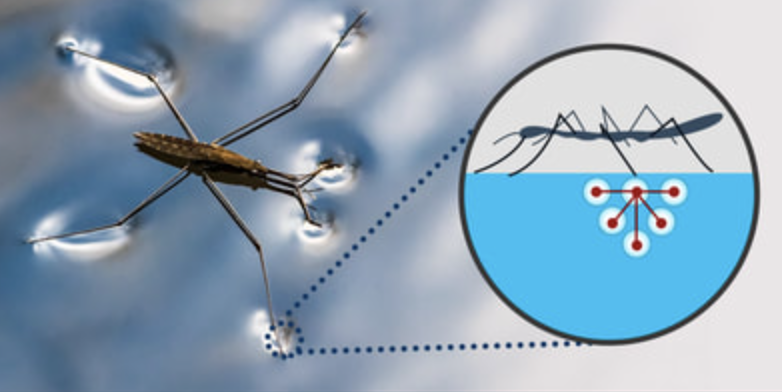
State a benefit to living things that results from surface tension.
It allows small organisms (such as water striders) to move or live on the water's surface, creating a distinct habitat
Describe the structure of an atom.
An atom consists of a tiny, dense, positively charged nucleus containing protons and neutral neutrons, surrounded by a cloud of negatively charged electrons that occupy different energy levels.
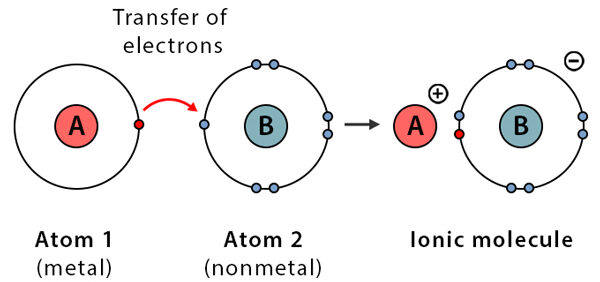
Outline the formation of ionic bonds between atoms.
Formed by the complete transfer of electrons between atoms (usually metals and non-metals). The metal loses electrons to become a positive cation, and the non-metal gains them to become a negative anion. The bond itself is the strong electrostatic attraction between these oppositely charged ions.
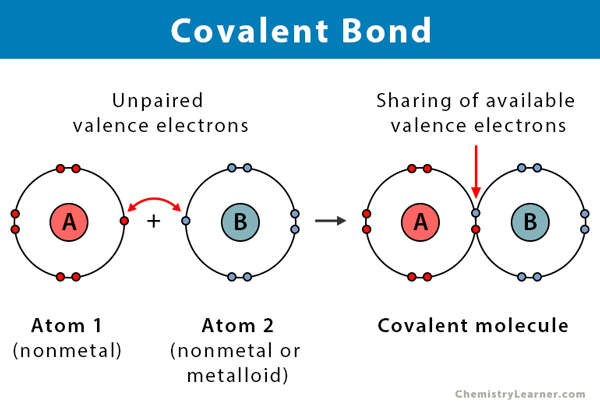
Outline the formation of covalent bonds between atoms.
Formed when atoms (usually non-metals) share one or more pairs of electrons to achieve a stable outer shell. The bond is the result of electrostatic attraction between the shared pair of negatively charged electrons and the positively charged nuclei of both atoms
Explain the sharing of electrons between atoms in a polar covalent bond
A polar covalent bond occurs when atoms share electrons unequally.
This happens because one atom has a higher electronegativity, pulling the shared electrons closer to itself.
This unequal sharing creates partial charges across the molecule, such as in water
State the location of the polar covalent bond within a water molecule.
Within the molecule. Specifically, they are the bonds that form between the central oxygen atom and each of the two hydrogen atoms
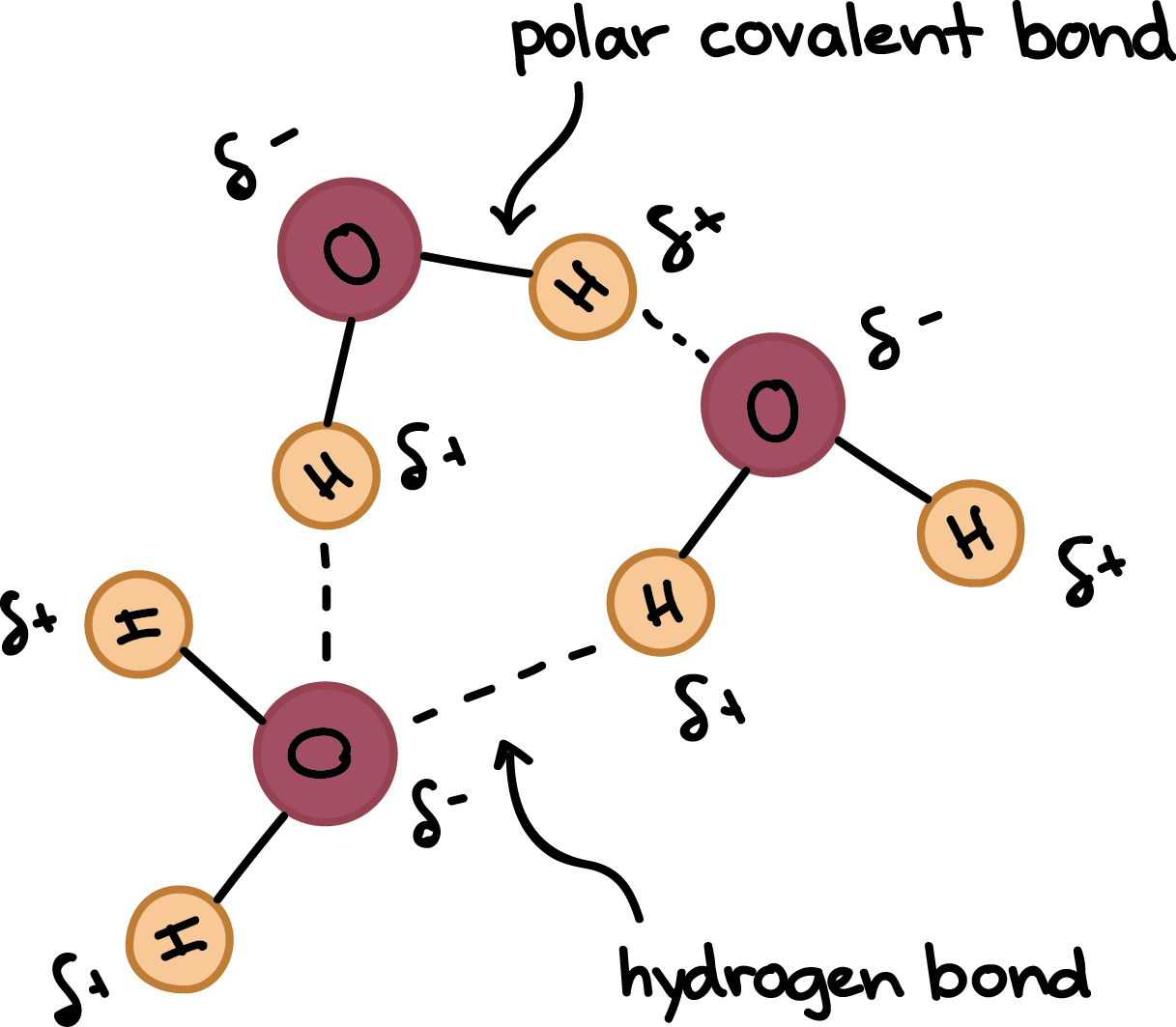
Explain the partial charges of the oxygen and hydrogen atoms within a water molecule.
Unequal Sharing: Electrons in the covalent bond are shared unequally.
Electronegativity: Oxygen is more electronegative (holds a greater electron-attracting power) than hydrogen.
Partial Negative charge: The oxygen atom pulls shared electrons closer to its nucleus, giving it a slight negative charge.
Partial Positive charge: Because the electrons are pulled away, the two hydrogen atoms are left with a slight positive charge.
Result: This unequal charge distribution forms a polar molecule, which allows adjacent water molecules to form hydrogen bonds with each other.