Chapter 13 Viruses, Viroids, and Prions
 Call Kai
 Learn
Learn Practice Test
 Spaced Repetition
 Match
Match Flashcards
 Knowt Play
1/73

There's no tags or description
Looks like no tags are added yet.
74 Terms
Virus
Contain a single type of nucleic acid, either DNA or RNA.
Contain a protein coat
Multiply inside living cells
Acellular
Obligatory Intracellular Parasites
Absolutely require living host cells in order to multiply
Host Range
The spectrum of host cells the virus can infect.
Bacteriophages
Also known as a phage. Viruses that infect bacteria
Virion
A complete, fully developed, infectious viral particle composed of nucleic acid and surrounded by a protein coat outside of a host cell, and is a vehicle of transmission from one host cell to another.
Capsid
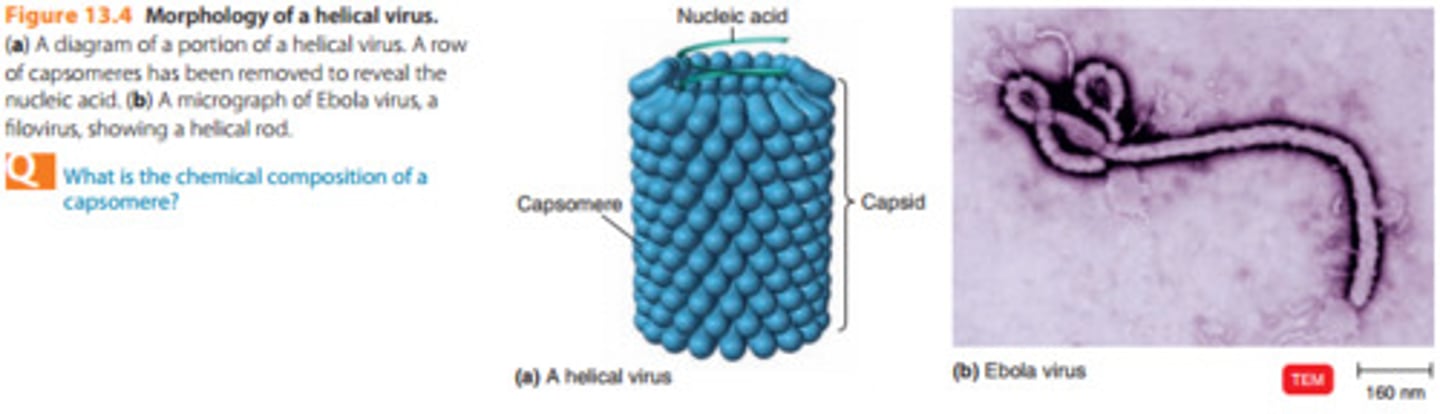
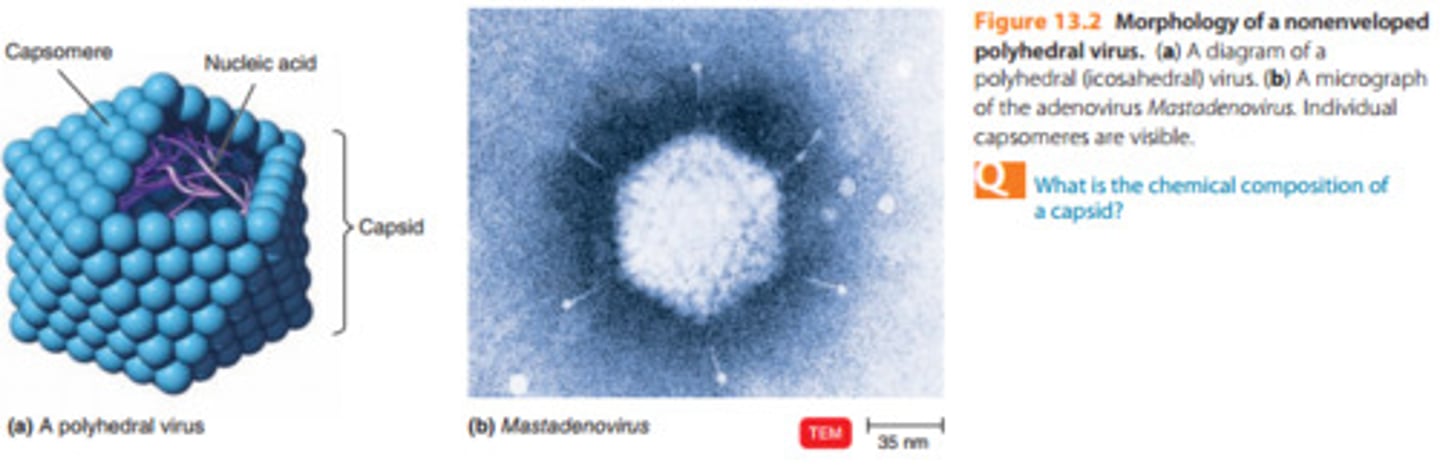
The protein coat of a virus that surrounds the nucleic acid
Capsomere
A protein subunit of a viral capsid
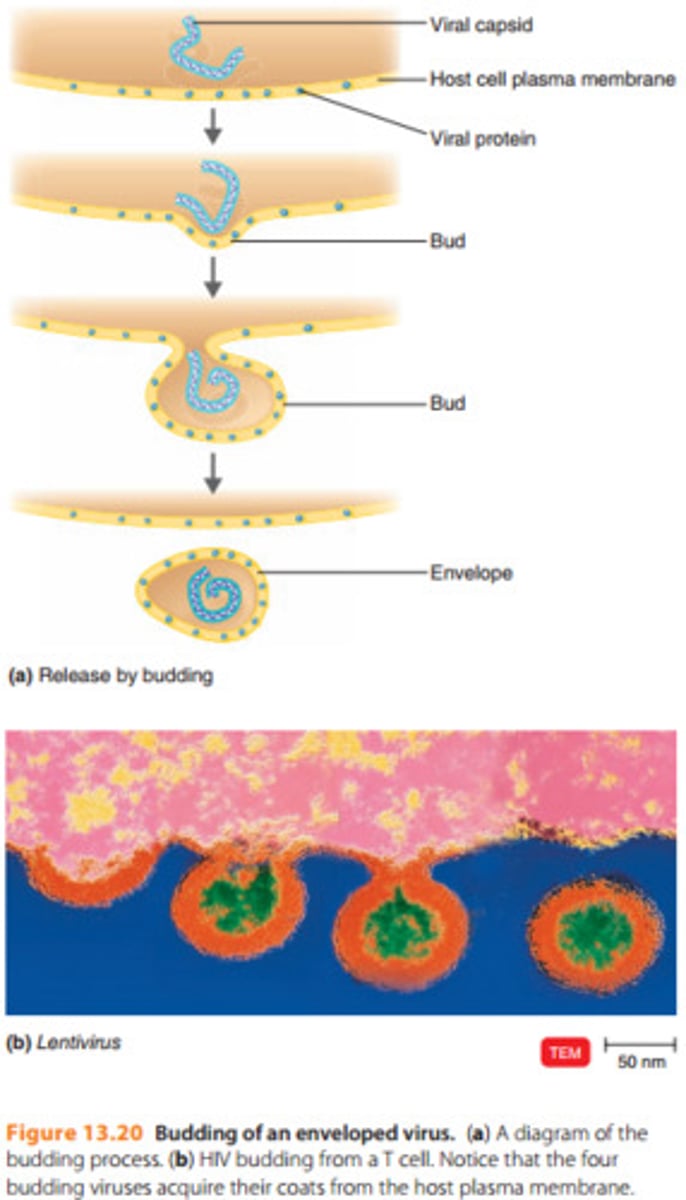
Envelope
An outer covering surrounding the capsid of some viruses
Spikes
A carbohydrate-protein complex that projects from the surface of
certain viruses
Nonenveloped Viruses
Viruses whose capsids are not covered by an envelope
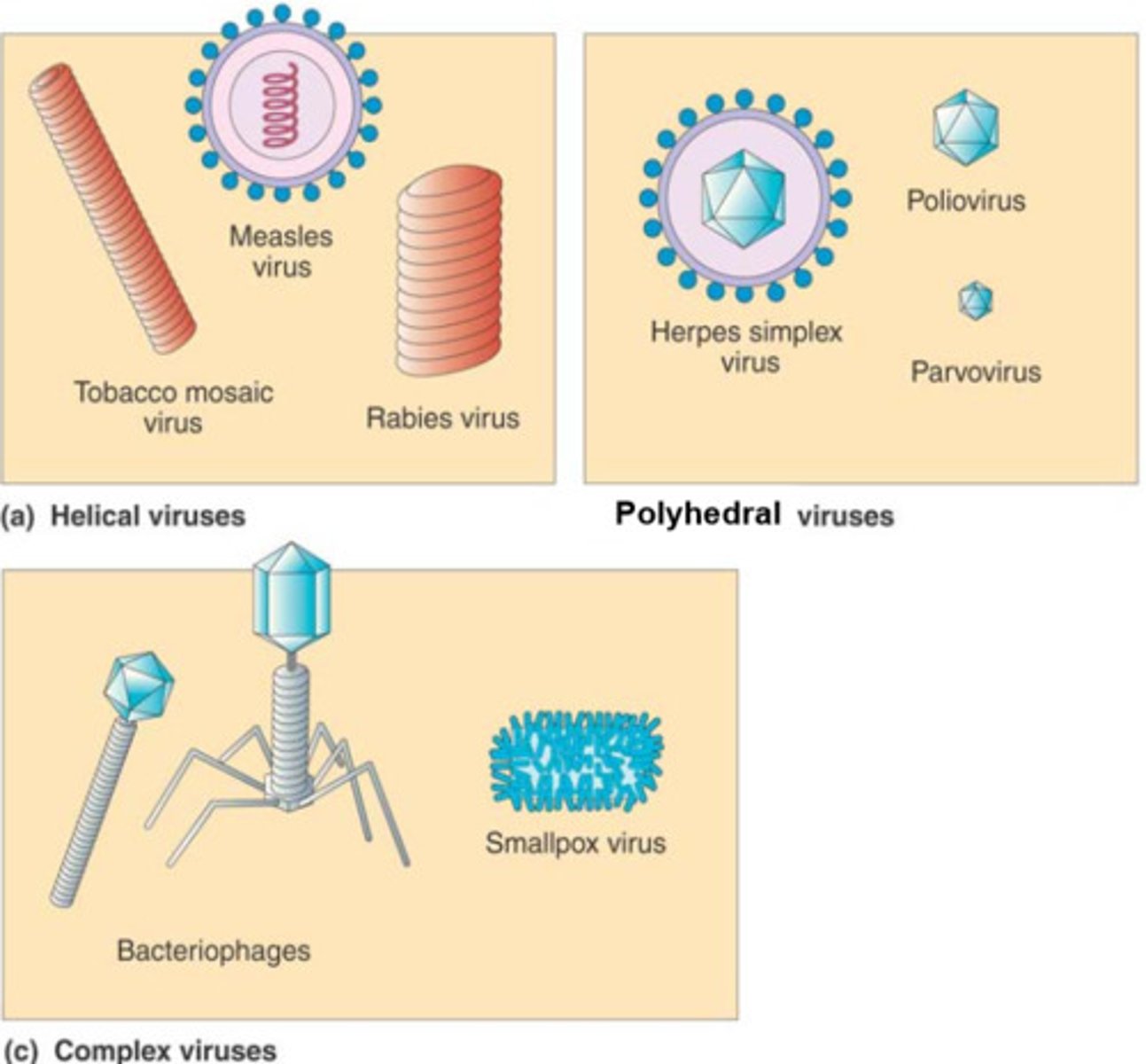
General Morphology
Helical Viruses
Polyhedral Viruses
Enveloped Viruses - Enveloped Helical Viruses, Enveloped Polyhedral Viruses
Complex Viruses
Helical Viruses
Resemble long rods that may be rigid or flexible. The viral nucleic acid is found within a hollow, cylindrical capsid that has a helical structure. The viruses that cause rabies and Ebola hemorrhagic fever are helical viruses
Polyhedral Viruses
Many animal, plant, and bacterial viruses are polyhedral, or many-sided, viruses. The capsid of most polyhedral viruses is in the shape of an icosahedron,a regular polyhedron with 20 triangular faces and 12 corners. The capsomeres of each face form an equilateral triangle. An example of a polyhedral virus in the shape of an icosahedron is the adenovirus. Another icosahedral virus is the poliovirus.
Complex Viruses
A virus with a complicated structure, such as a bacteriophage
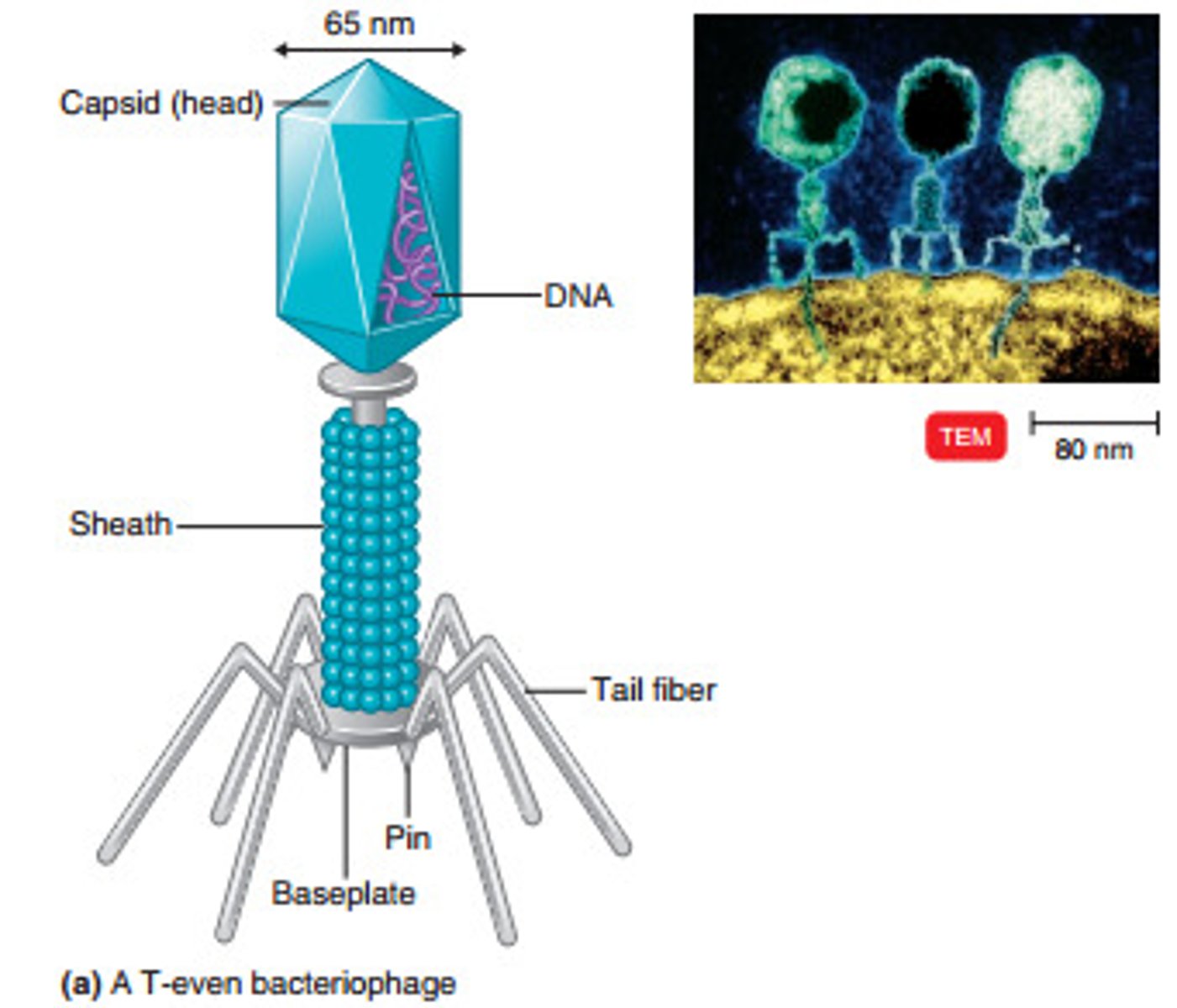
Viral Species
Group of viruses sharing the same genetic information and ecological niche (host range). Designated by descriptive common names, such as human immunodeficiency virus (HIV), with subspecies (if any) designated by a number (HIV-1)
What is the chemical composition of a capsid?
Protein
What is the nucleic acid in a virus?
DNA or RNA
What is the chemical composition of a capsomere?
Protein/peptide
What is the value of a capsid to a virus?
Protects the nucleic acid from nucleases and promotes the virus's attachment to susceptible host cells
What is the result of the lytic cycle?
Lysis of the host cell and release of phages
How does lysogeny differ from the lytic cycle?
In lysogeny, phage genes are in the host chromosome and phages are not being made
Of what is a viral envelope composed?
Phospholipids from the host plasma membrane; may include viral encoded peptides
Oncolytic
Viruses may selectively infect and kill tumor cells or cause an immune response against tumor cells.
Phage Therapy
Using bacteriophages to treat bacterial infections
One-step Growth Curve
Theoretical. Shows how many virus particles come out ("yield per cell") from one going in. Also shows period of time between these events ("eclipse period").
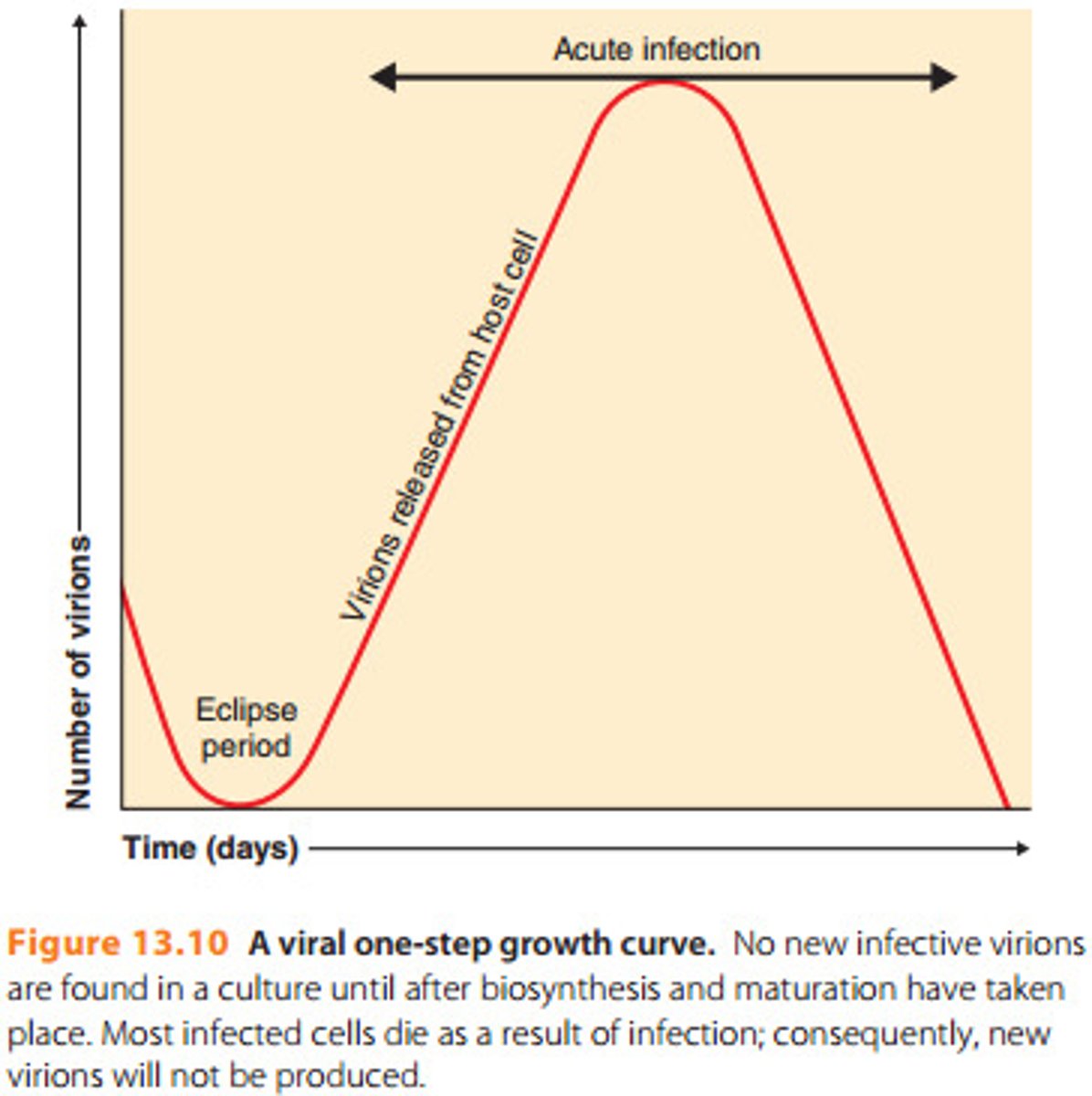
Lytic Cycle
A mechanism of phage multiplication that results in host cell lysis. Five (5) stages - attachment, penetration, biosynthesis, maturation, and release
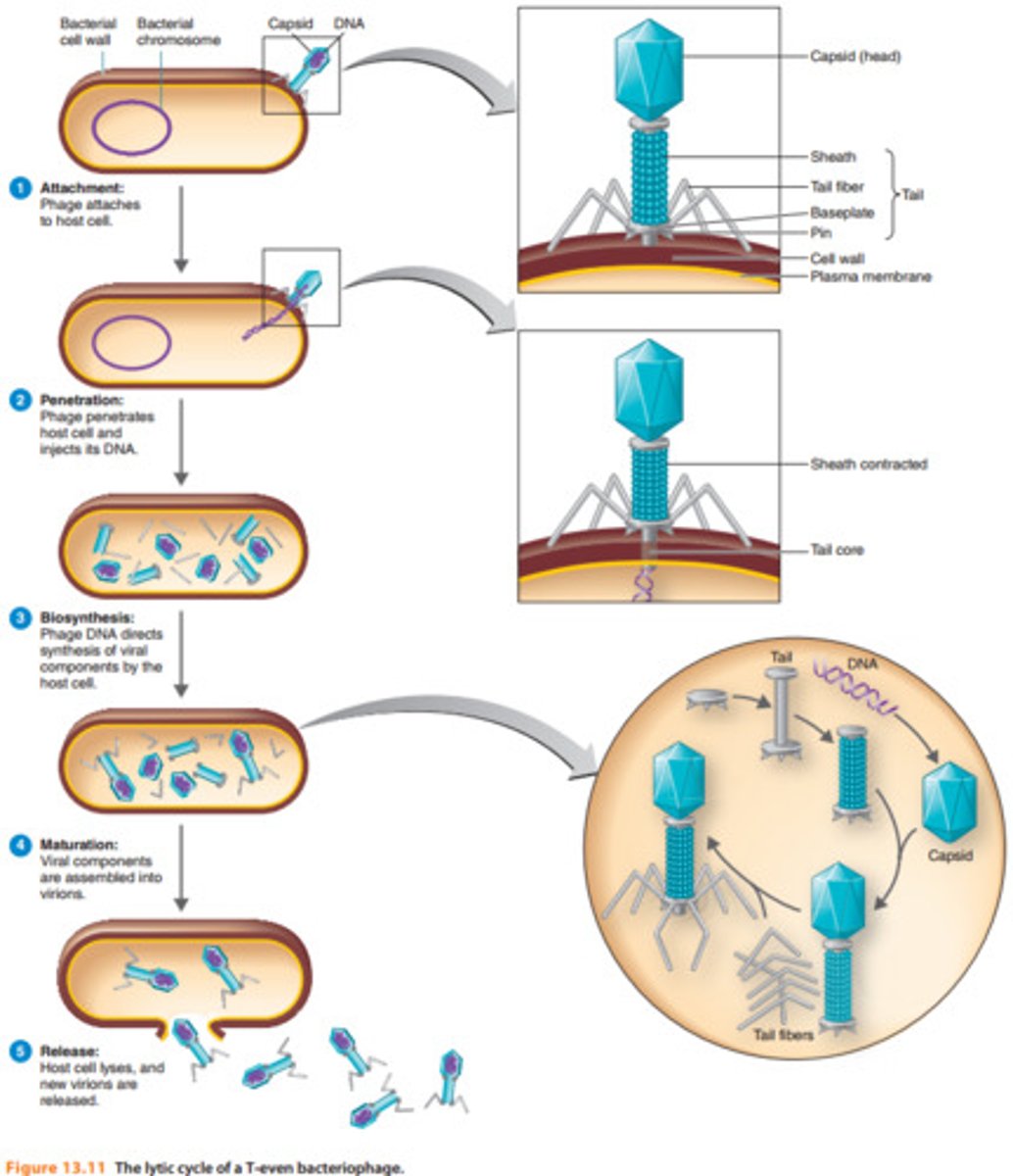
Lysogenic Cycle
Stages in viral development that result in the incorporation of viral DNA into host DNA. If the bacteriophage does not lyse its host cell, it becomes integrated into the bacterial genome in a harmless form (provirus), lying dormant for one or more generations. The virus may stay integrated indefinitely. However, either spontaneously or as a result of environmental factors, the provirus can reemerge and enter a lytic cycle.
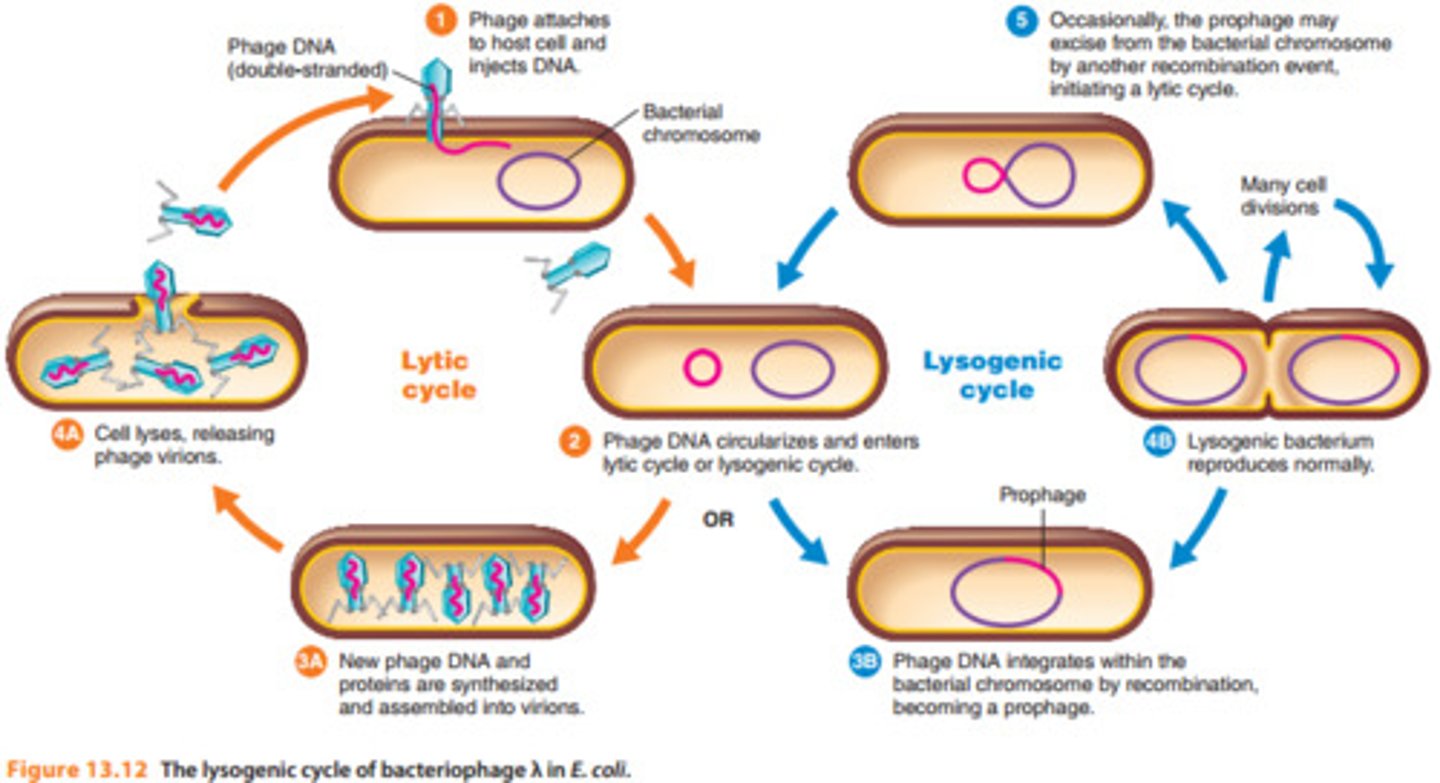
Phage Lysozyme
Enzyme that breaks down a portion of the bacterial cell wall
Eclipse Period
Period during viral multiplication when complete, infective virions are not yet present
Lysis
Rupture, breaks open
Lysogeny
A state in which phage DNA is incorporated into the host cell
Lysogenic Conversion
The acquisition of new properties by a host cell infected by a lysogenic phage
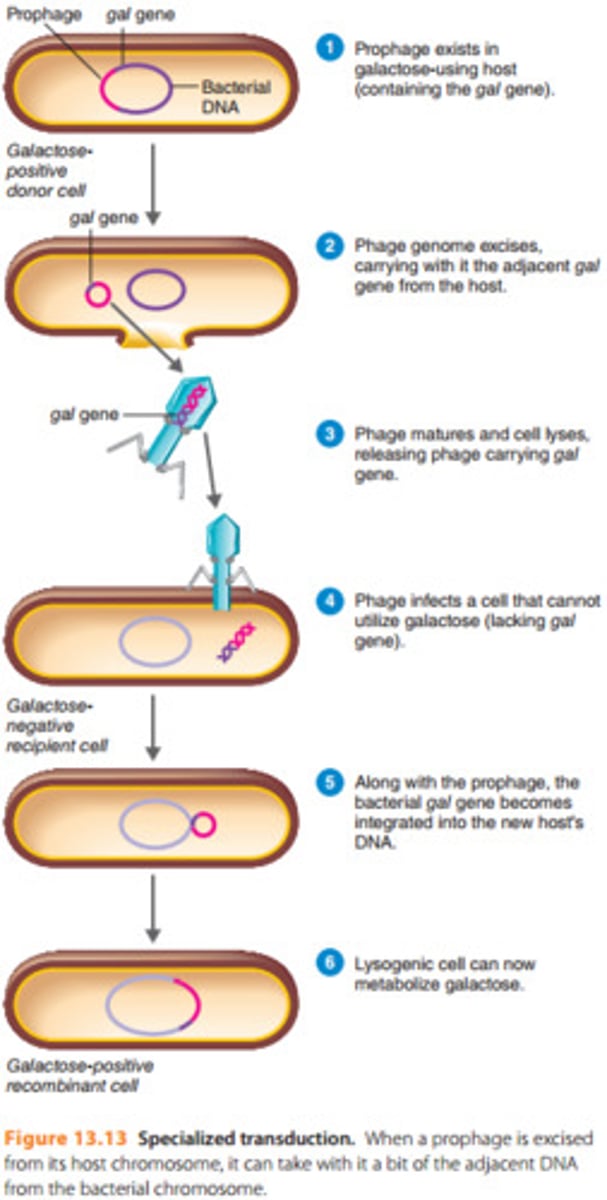
Prophage
DNA of a lysogenic phage that has integrated into the host cell chromosome
Phage Conversion
Host cell may exhibit new properties due to lysogenic phage where DNA of a lysogenic phage that has integrated into the host cell chromosome
Specialized Transduction
The process of transferring a piece of cell DNA adjacent to a prophage to another cell. Part of the lysogenic cycle.
Multiplication of Animal Viruses
Attachment, Entry (receptor-mediated endocytosis or fusion), Uncoating, Biosynthesis, Maturation, and Release
Receptor-mediated Endocytosis
A type of pinocytosis in which molecules bound to proteins on the plasma membrane are taken in by infolding of the membrane
Fusion
The merging of plasma membranes of two different cells, resulting in one cell containing cytoplasm from both original cells
Budding
The process by which the envelop develops around the capsid
Uncoating
The separation of the viral nucleic acid from its protein coat once the virion is enclosed within the vesicle
Sarcoma
Cancer of connective tissue
Adenocarcinomas
Virus induced cancers of glandular epithelial tissue
Oncogenes
Cancer-causing alterations to cellular DNA affect parts of the genome; a gene that can bring about malignant transformation
Oncogenic Viruses
(or oncoviruses) A virus that is capable of producing tumors
Transformation
(1) The process in which genes are transferred from one bacterium to another as "naked" DNA in solution. (2) The changing of a normal cell into a cancerous cell.
Latent Infection
A condition in which a pathogen remains in the host for long periods without producing disease
Chronic Viral Infection
An illness that develops slowly and is likely to continue or recur for long periods
Cellular Prion Protein
Normal host glycoprotein called PrPC
Persistent Viral Infection
A disease process that occurs gradually over a long period
Viroids
Infectious RNA; short pieces of naked RNA with no protein coat
Another term for a lysogenic phage is?
Temperate phage
The type of virus implicated in the cause of AIDS is a(n)?
Retrovirus
What part of the phage is absorbed in the host cell?
Tail
How does a phage form a hole in the cell wall which allows the phage to drive the tail core through the cell wall?
Phage lysozyme
What is the usual size range of viruses?
30 to 300 nm
Which two viruses make DNA from an RNA template?
Hepadnavirudae and Retroviridae
Prions cause disease by
Altering normal proteins
What type of infectious agent causes potato spindle tuber disease?
Viroid
Viruses possess genetic material comprised of
DNA or RNA
Members of the adenoviridae cause
The common cold
An example of a latent virus infection is
Shingles
Viruses that use RNA as a template for transcribing DNA include
Retroviridae
A method by which a virus enters an animal host cell?
Endocytosis
A bacterial virus?
Phage
A term meaning cancer-causing?
Oncogenic
Observable changes in a virus-infected cell?
Cytophatic effect
RNA to DNA?
Reverse Transcription
The ability of a virus to infect an organism is regulated by
The host species
The type of cells
The availability of an attachment site
Cell factors necessary for viral replication
The lytic cycle of a virus
Ends with lysis and death of the host cell
Viruses that alter cell DNA to make the host cell cancerous are called
Oncogenic viruses
A viral infection that occurs gradually over a long period of time and is usually fatal is
Persistent viral infection
When viral DNA that has inserted itself into the bacterial host chromosome it is known as?
Prophage
Transformed Cell
A cell that has been genetically changed to a tumor cell and that passes the change to its daughter cells
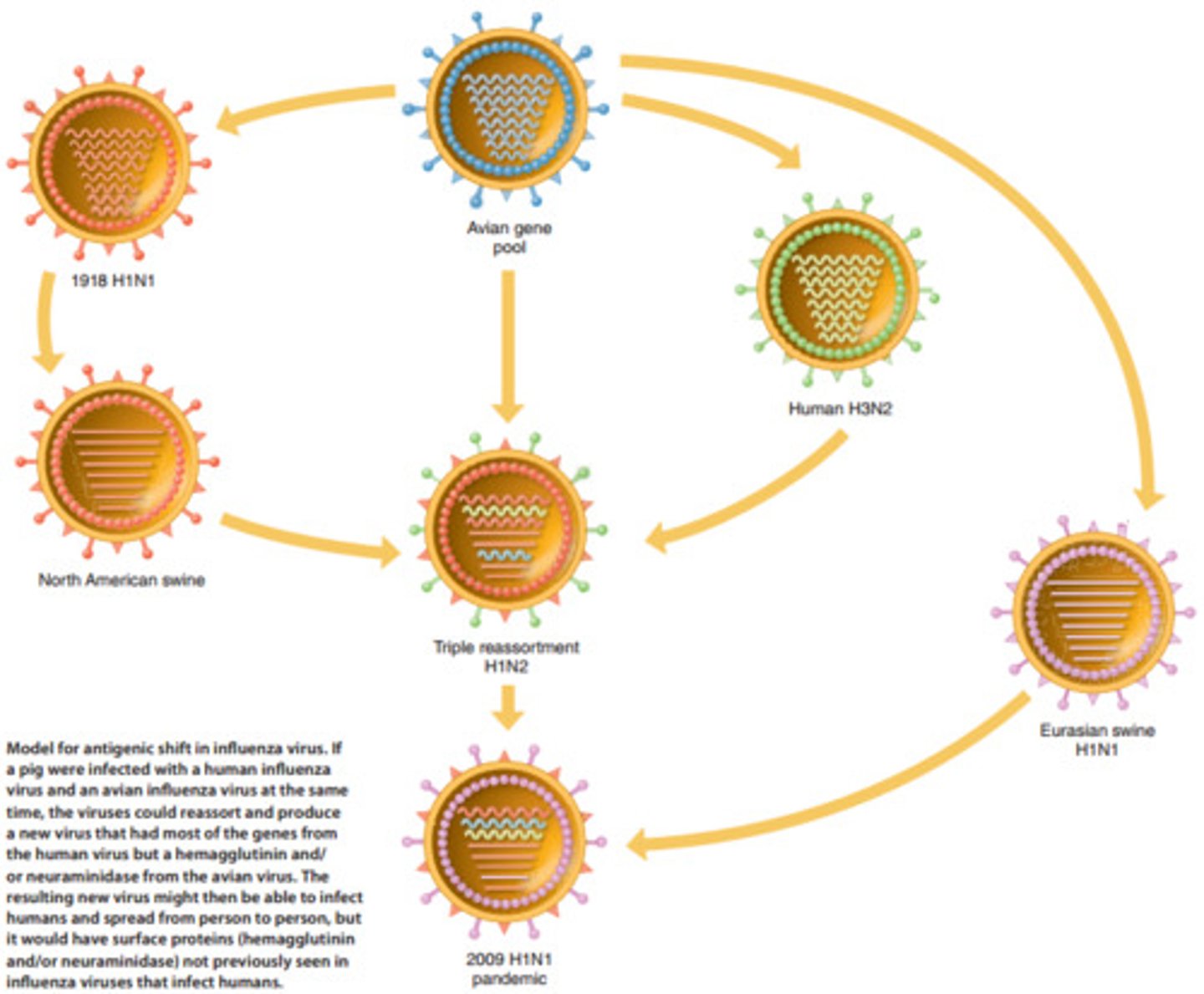
Antigenetic Shift
Major changes in the viral genome; genetic material from different strains is combined in a process called reassortment. Reassortment takes place when a host is simultaneously infected with two different strains