Microbiology: Bacterial Structure, Genetics, and Identification Techniques
 Call Kai
 Learn
Learn Practice Test
 Spaced Repetition
 Match
Match Flashcards
 Knowt Play
1/79

There's no tags or description
Looks like no tags are added yet.
Name | Mastery | Learn | Test | Matching | Spaced | Call with Kai | Chat |
|---|
No analytics yet
Send a link to your students to track their progress
80 Terms
What is the role of a clinical microbiologist?
To culture organisms from specimens, classify and identify organisms, and predict susceptibility to improve treatment.

What are the growth requirements of bacteria used for?
To select the correct medium for primary culture and increase the likelihood of pathogen isolation.
Who is Anton Von Leeuwenhoek?
A Dutch lens maker and biologist known as the 'Father of Protozoology and Bacteriology' for discovering 'wee beasties' or 'animalcules.'

What are the main memberships of microorganisms?
Bacteria, parasites, fungi, and viruses.
What defines bacteria?
Prokaryotic, unicellular organisms without organelles.
What distinguishes eukaryotic parasites from bacteria?
Eukaryotic parasites have organelles, can be single or multicellular, and include protozoa and worms.
What are the characteristics of fungi?
Heterotrophic eukaryotes that obtain nutrients through absorption; can be unicellular (yeast) or multicellular.
What is a dimorphic fungus?
A fungus that exists as yeast at human body temperature and as filamentous at room temperature.
What are viruses?
The smallest infectious particles, acellular, containing DNA or RNA, and obligate intracellular parasites.

What is taxonomy in microbiology?
The orderly grouping of organisms into taxa based on similarities and differences.
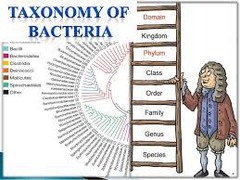
What are the three structured categories of taxonomy?
Classification/taxonomy, nomenclature, and identification.
What is the difference between genotype and phenotype?
Genotype refers to genetic makeup, while phenotype refers to observable physical and functional features.
What is the nomenclature format for species?
Genus species (e.g., Escherichia coli).
What are subspecies and serovarieties?
Subspecies refer to phenotypic differences, while serovarieties refer to serologic differences.
What are the three domains of life?
Bacteria, Archaea, and Eukarya.
What distinguishes Archaea from Bacteria?
Archaea are extremophiles with cell walls lacking peptidoglycan and are more closely related to eukaryotic cells.
What is the structure of a prokaryotic cell?
Lacks a membrane-bound nucleus, has a singular circular chromosome, and ribosomes for protein synthesis.
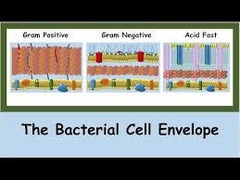
What is the function of the bacterial cell envelope?
Consists of the plasma membrane and cell wall, providing structure and protection.
What are the four basic categories of bacterial cell walls?
Gram-positive, Gram-negative, acid-fast, and absence of cell wall.

What is the composition of a Gram-positive cell wall?
Contains a thick peptidoglycan layer with teichoic and lipoteichoic acids.
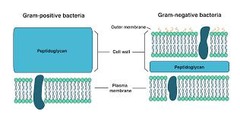
What characterizes a Gram-negative cell wall?
Has two layers: an inner peptidoglycan layer and an outer membrane containing lipopolysaccharide (LPS).

What is the role of lipopolysaccharide (LPS) in Gram-negative bacteria?
Acts as an antigen and barrier to harmful substances, enhancing attachment to host cells.
What is mycolic acid?
A major component of the waxy layer in acid-fast bacteria, contributing to their resistance.
What is the primary characteristic of organisms that are strongly hydrophobic?
They do not interact well with water.
What staining technique is used for organisms that are difficult to Gram stain?
Acid-fast stain.
What are the components of the acid-fast stain?
Carbolfuchsin and acid-alcohol decolorizer.
Which bacteria are known to pick up the acid-fast stain?
Mycobacterium spp. and Nocardia spp.
What does the absence of a cell wall pertain to?
Bacteria in the genera of Mycoplasma and Ureaplasma.
What structural feature do Mycoplasma and Ureaplasma possess in their plasma membrane?
Sterols.
What is the term for bacteria that exhibit various shapes due to lack of a rigid cell wall?
Pleomorphic.
What is the function of a bacterial capsule?
Adherence to surfaces and prevention of phagocytosis.
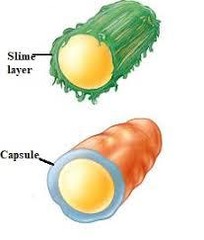
What does India ink reveal when used in staining?
A clear halo-like structure indicating the presence of a capsule.
What are the different types of flagella arrangements in bacteria?
Monotrichous, lophotrichous, peritrichous, and amphitrichous.

What are pili in bacteria?
Nonmotile long filamentous tubes used for adhesion.
What is the primary function of the nucleus in eukaryotic cells?
Contains DNA and is the site of rRNA synthesis.
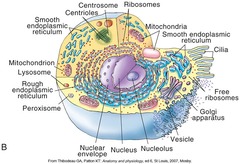
What type of ribosome is found in eukaryotic cells?
80S ribosome complex (60S and 40S).
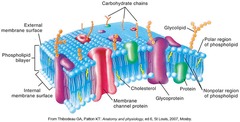
What is the role of the plasma membrane?
It acts as a phospholipid bilayer with embedded proteins.
What is the function of the cell wall in bacteria?
Provides rigidity and strength to the exterior of the cell.
What are endospores?
Highly resistant structures produced by Bacillus and Clostridium, not involved in reproduction.
What is the typical size range for bacteria?
0.4 to 2 µm.
What are the three common microscopic shapes of bacteria?
Cocci (spherical), bacilli (rod-shaped), spirochetes (spiral).
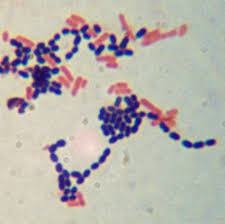
What is the purpose of Gram staining?
To differentiate bacterial species into Gram-positive and Gram-negative.
What are the steps involved in the Gram stain procedure?
Heat fix, crystal violet, iodine, alcohol-acetone, safranin.
What does the acid-fast stain detect?
Mycobacteria and Nocardia species.
What is the Ziehl-Neelsen method used for?
To perform acid-fast staining using heat.
What does acridine orange stain?
Nucleic acids, appearing bright orange under UV light.
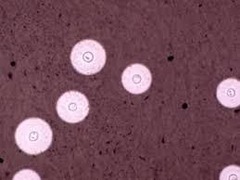
What does calcofluor white bind to in fungal cell walls?
Chitin.
What is the role of trace elements in microbial nutrition?
Essential for various cellular functions.
What distinguishes autotrophs from heterotrophs?
Autotrophs can synthesize their own food, while heterotrophs require complex substances.
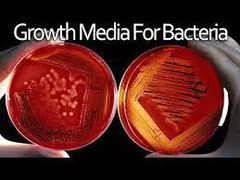
What is a selective medium?
A growth medium that inhibits some bacteria while promoting others.
What environmental factors influence microbial growth?
pH, temperature, and gaseous composition of the atmosphere.
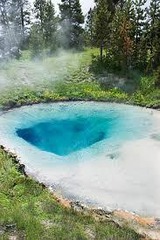
What are psychrophiles, mesophiles, and thermophiles?
Bacteria categorized by their temperature preferences: cold, moderate, and high, respectively.
What are obligate aerobes?
Bacteria that require oxygen for growth.
What are facultative anaerobes?
Bacteria that can grow with or without oxygen.
What is generation time in bacteria?
The time required for one cell to become two.
What are the four phases of the bacterial growth curve?
Lag, Log (exponential), Stationary, and Death phases.
What occurs during the lag phase of bacterial growth?
Bacteria prepare to divide.
What characterizes the log phase of bacterial growth?
Bacterial numbers increase exponentially.
What happens during the stationary phase of bacterial growth?
Nutrients become limited, and bacterial numbers remain constant.
What occurs during the death phase of bacterial growth?
Nonviable cells exceed viable cells.
How can cell numbers be determined in bacterial cultures?
Through direct counts under a microscope or growth on a plate, and density measurement (turbidity).
What is microbial metabolism?
Biochemical reactions bacteria use to break down organic compounds and synthesize new bacterial molecules.
What are the two main processes of bacterial metabolism?
Fermentation and respiration.
What is the outcome of anaerobic utilization of pyruvic acid?
Fermentation.
What is aerobic utilization of pyruvate?
Oxidation, which is part of aerobic respiration.
What are the three major biochemical pathways from glucose to pyruvic acid?
Embden-Meyerhof-Parnas (EMP) glycolytic pathway, Pentose-phosphate pathway, and Entner-Doudoroff pathway.
What is alcoholic fermentation?
A process used by yeasts to ferment glucose to produce ethanol.

What is homolactic fermentation?
A process used by genus Streptococcus and Lactobacillus that produces lactic acid as the end product.
What are the end products of heterolactic fermentation?
Lactic acid, carbon dioxide, alcohols, formic acid, and acetic acid.
What is the main end product of propionic fermentation?
Propionic acid.
What type of fermentation is used by select gram-negative rods in the Enterobacteriaceae?
Mixed acid fermentation.
What is the end product of butanediol fermentation?
Butanediol.
What is the Krebs cycle?
A process where pyruvic acid is oxidized, generating ATP and producing acid and carbon dioxide during aerobic respiration.
What role does lactose play in the Enterobacteriaceae family?
It differentiates organisms based on their ability to ferment lactose.
What is the structure of DNA?
A double helix composed of phosphate, pentose sugar, and nitrogen-containing bases.
What is the function of mRNA?
It is produced by transcription of DNA and is read by ribosomes during translation.
What is a mutation in bacterial genetics?
A change that occurs in the DNA code, which may result in a change in the coded protein.
What is genetic recombination?
The transfer or exchange of genes between homologous regions on two DNA molecules, forming new combinations of genes.
What are the three mechanisms of gene transfer in bacteria?
Transformation, transduction, and conjugation.
What are restriction enzymes?
Enzymes that cut incoming foreign DNA at specific sequences.