Bio exam 2 zanzot
 Call Kai
 Learn
Learn Practice Test
 Spaced Repetition
 Match
Match Flashcards
 Knowt Play
1/130

Earn XP
Description and Tags
Name | Mastery | Learn | Test | Matching | Spaced | Call with Kai | Chat |
|---|
No analytics yet
Send a link to your students to track their progress
131 Terms
What are plants derived from?
Charophyta (green algae)
Plants characteristics
Paraphyletic, multicellular, tissues, photoautotrophic, heteromorphic sporic meiosis, cell walls made of cellulose, movement by growth
What is an embryo protected by?
Gametophyte tissue
Major plant groups (4)
Non-vascular, seedless vascular, gymnosperms, angiosperms
Non-vascular plants characteristics (4)
Dominant gametophyte
moist habitats
small plants
large immobile eggs, larger mobile sperm
Non-vascular phyla (3)
Byrophyta, Hepatophyta, Anthocerophyta
Anthocerophyta characteristics (2)
Simple, charophyte-like thallus
Hornworts
How do Anthoceros release spores
Horn-like sporophyte (dehiscent) splits open and releases spores (2n)
Anthoceros gametophyte
Looks like a green sheet (n)
Hepatophyta (2)
Liverwort
dichotomously branching thallus
Hepatophyta gametophyte
Split into two equal-sized lobes, gemma cups
Hepatophyta antheridiophore/antheridia
Sperm produced here, antheridia are microscopic but antheridiophores can be seen
Hepatophyta archaegoniophore/archegonia
Egg produced here, archegonia are microscopic but archaegoniophores can be seen
Hepatophyta sporophyte
Foot, capsule, elators on spores. Elator opens up and catches air currents to help anchor the spore. Microscopic, hidden under lobes of archaegoniophore
Bryophyta characteristics (3)
Splash cups
True mosses
Leafy shoots
Are sporophytes diploid or haploid?
Diploid
Are gametophytes diploid or haploid?
Haploid
Bryophyta phylum characterstics
The mosses
Sporophytes are in capsules
Seedless vascular plants characteristics (4)
Vascular tissue
Larger plants in dryer habitats
Dominant sporophyte
Gametophytes are often hidden
Vascular tissue system
Moves material around the inside of the body of the plant, has a series of tubes
Xylem
Moves water & mineral nutrients from the soil to the roots, stems, & leaves
Phloem
Moves photosynthate (sugars) to where it is needed & plant hormones
Dermal tissue system
Outer covering layer like skin, protects plant from being eaten & keeps water in tubes from leaking out
Ground tissue system
Fills the space between DTS & VTS, provides support for the VTS, “background tissue”
Divergence of leaves in seedless vascular plants
Microphyll leaves: single unbranched vein
Megaphyll leaves: branched vascular tissue
leads to better photosynthesis
Meristem
Specialized tissues dedicated to mitosis
Apical meristems (3)
“Root & shoot”
Primary growth: increase in height & depth
Found in all vascular plants
Lateral meristems (3)
Secondary growth
Increase in girth
Trees & woody plants
Seedless vascular plant phyla (4)
Pteridophyta, Equisetophyta, Psilophyta, Lycophyta
Another way seedless vascular plants can be classified?
Moniliophyta: pteridophyta, equisetophyta, psilophyta
Lycophyta
Symplesiomorphy for seedless vascular plants?
Seedlessness
Synapomorphy for seedless vascular plants?
Vascular tissue
Why are seedlless vascular plants paraphyletic?
Need to make 2 cuts because they are seedless and vascular
Psilophyta characteristics (4)
“Whisk ferns”
Lack true leaves & roots
Sporangia on stem (divided into 3 lobes)
Can see sporophyte
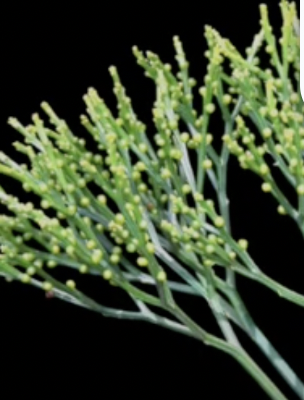
Psilophyta
Equisetophyta characterstics (4)
1 extant genus: Equisetum (living fossils)
Horsetail ferns, pot scrubbers
Hollow ribbed stem, jointed
Whorls of microphylls in each node
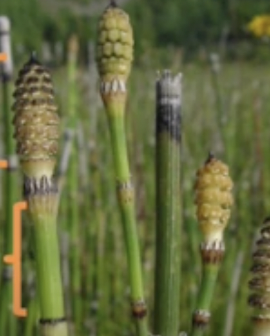
Equisetophyta
Pteridophyta characteristics (4)
True ferns
Most diverse of SV
Megaphyll leaves = frond
Circinate vernation
Rachis
Central stem
Pinnae
Broad flattened bits
Circinate vernation
Way ferns develop, in spirals
Psilophyta sporophyte
Sours: cluster of sporangia, sori contain spores
Psilophyta gametophyte
Protonema, prothallus with artheridia & archegonia
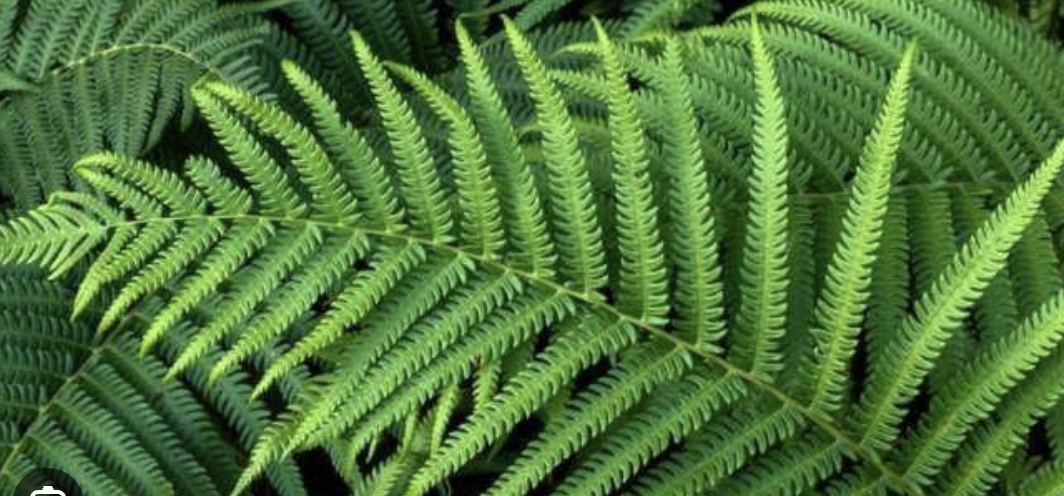
Pteridophyta
Lycophyta characteristics (2)
Club mosses, ground pine, quillwort
Both homosporous & heterosporous
Lycophyta sporophyte
Strobilus: cluster of sporophylls
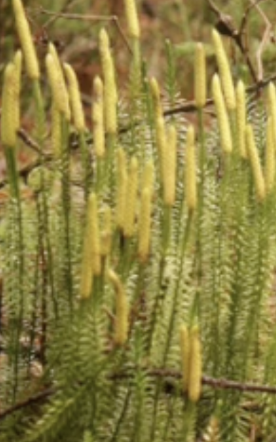
Lycophyta
Spores (3)
Single, totipotent cell
Small, limited resources
HAPLOID
Seeds (4)
Multicellular
Organ & tissue systems developed
DIPLOID
Nutrition for embryo inside
What is the smelly part of the ginkgophyta?
The seed coat
Gymnosperm characteristics (5)
Vascular tissue
Larger plants
Dominant sporophyte
Heterospory (needed for seeds)
Monophyletic
Gymnosperm phyla (4)
Ginkgophyta, gnetophya, cycadophyta, coniferophyta
Gnetophyta characteristics (4)
3 extant genera
Gnetum
Welwitschia
Ephedra
Gnetophyta - gnetum (3)
Found in the tropics
Has fleshy seed coats
Used to make rope
Gnetophyta - welwitschia (4)
Found in deserts in Africa
Two leaves & cone-shaped seeds
“Burned” stump
Upward angling of leaves to catch dew
Gnetophyta - ephedra (5)
Found in temperate regions
12 species in the US
Joint fur or mormon tea are names
Bright red seeds
Produces sudafed!!!!
Ginkgophyta characteristics (6)
Monotypic (one species)
Ginkgo biloba: maidenhair tree
Deciduous
Dichotomonous venation
Male & female trees
Bilobed leaves
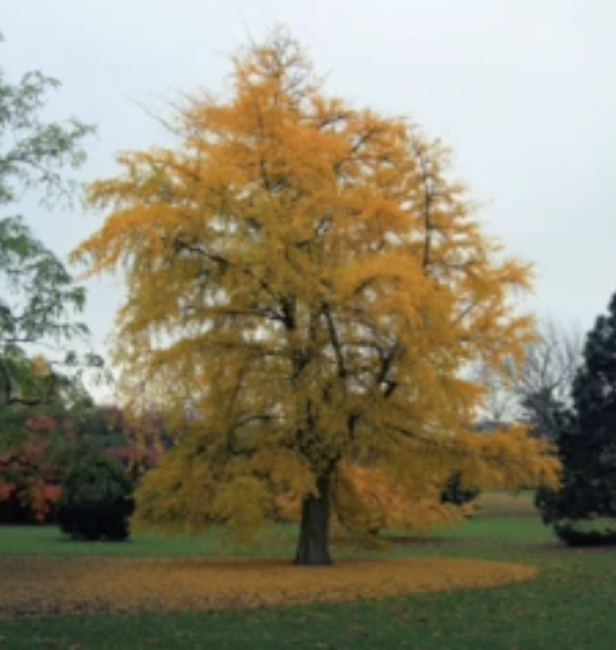
Ginkgophyta
Cycadophyta characteristics (4)
Cycads: short, palm-like
Found in FL, GA, tropics
Dioecious
Beetles found in pollen cones
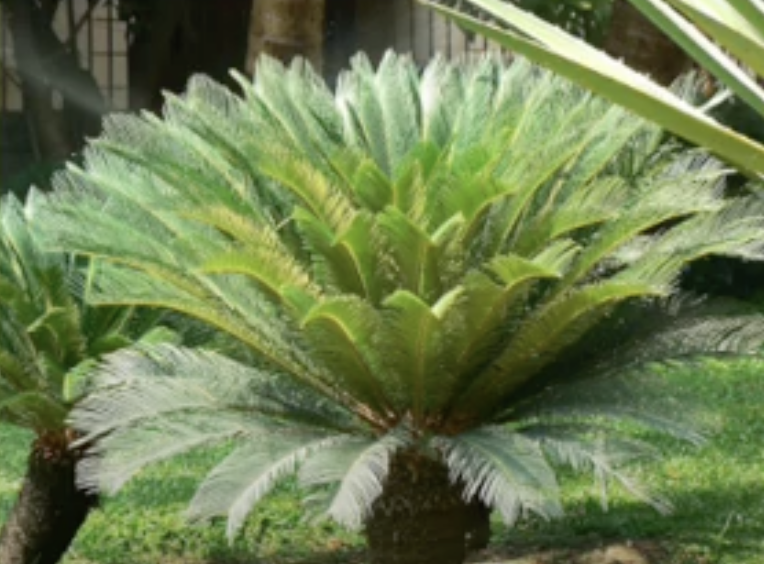
Cycadophyta
Coniferophyta characteristics (2)
Oldest trees, large, diverse
Pines, firs, spruce, hemlock, redwood, juniper, cedar
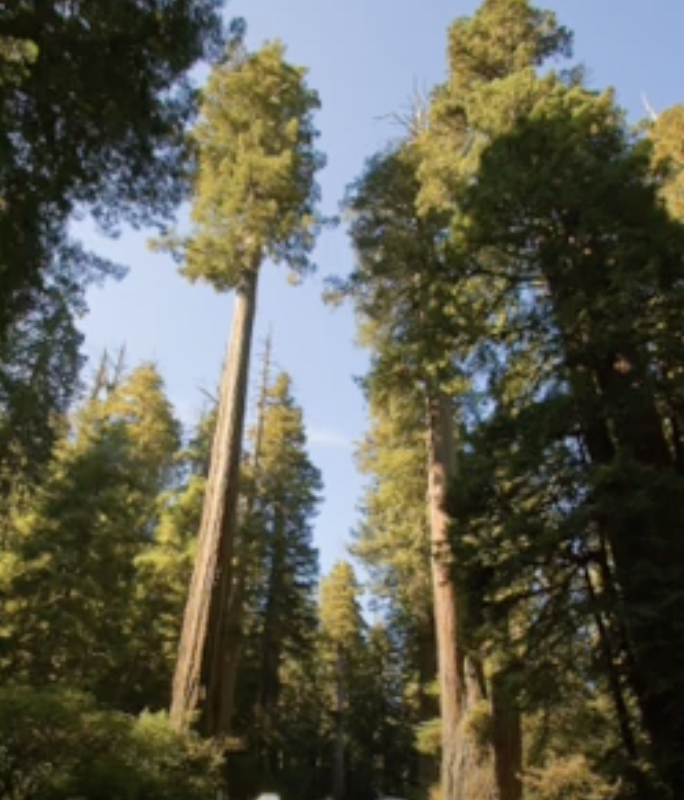
Coniferophyta
Angiosperms characteristics (3)
Flowering & fruiting plants
Most successful lineage
Very diverse
Angiosperms phyla (1)
Magnoliophyta, (anthophyta)
What is a flower? (3)
Determinate sporophyll bearing chute
Subtended by a penduncle
Born from a receptacle
Male flower parts
The stamen: anther + filament
Female flower parts
The carpel: stigma + style + ovary
Four whorls
Calyx, corolla, androecium, gynoecium
Calyx
Sepals
Corolla
Petals
Calyx + corolla
Perianth
Androecium
‘male house’
Stamens
Gynoecium
‘woman house’
Carpels
Perfect flower
Has both female & male whorls in every flower
Complete flower
Has all 4 whorls in every flower
Monoecious plants
Male & female whorls & gametes produced on the same plant
Dioecious plants
Separate male & female gamete producing plants
Connotation in a flower
Fusion within a whorl is derived, not uncommon
Adnation
Fusion between different whorls is derived, not common
Inflorescence
Arrangement of flowers on a branch or stem
Basal angiosperms
Include magnolias & a few others
Monocots (5)
Poaceae: oats, grasses, wheat
Liliaceae: lilys
Arececeae: Palms
Orchidaceae: largest, orchids
Iridaceae: iris
Eudicots (6)
Asteraceae: Artichokes, sunflowers
Fabaceae: Peas, peanuts, beans
Rosaceae: Roses, apples, peaches
Brassicaceae: Mustard, cabbage, kale
Solanaceae: Eggplants, tomatoes, peppers
Lamiaceae: Mint, spices, herbs
Monocot characteristics (6)
One cotyledon
Parallel veins
Vascular tissue scattered in stems
No main root
Pollen grain w/ one opening
Floral organs in multiples of 3
Eudicot characteristics (6)
Two cotyledons
Leaf veins netlike
Ring-like vascular tissue in stems
Main root present
Pollen grain w/ 3 openings
Floral organs in multiples of 4 or 5
Angiosperm life cycle (3)
Gametophyte dominant
Heterospory
All takes place in covered seed
Fruit
Ovary wall of flower develops into fruit
Container for seeds, disperses them by tasty covering or wind
Multiple fruit definition & examples
Multiple flowers come together to make 1 fruit
Pineapples
Berry definition & examples
Almost all of the pericarp is fleshy
Tomatoes & blueberries
Pepo definition & examples
Exocarp surrounds fleshy mesocarp
Watermelon
Citrus fruit definition & examples
Leathery rind with juicy hesperidium with hairs filled with juice
Lemon, oranges
Drupe definition & examples
Fleshy fruits with a stony endocarp
Avocados, peaches
Pome definition & examples
Type of fleshy fruit where paper margin is ovary wall
Apples, pears
Paracarp
Ovary wall
Exocarp
Outside body
Mesocarp
Middle body
Endocarp
Inside body
Indehiscent fruits definition & examples
These do not split open at maturity
Acorns, sunflower seeds, samara
Melittophily (5)
Bee pollination
Bees see yellow, purple, & UV light
Flowers have nectar guides
Bees have only existed since pollination
Developed fur on body & legs to collect pollen
Psychophily (4)
Butterfly pollination
They see UV, red, pink, purple, orange
Flowers have tubular corollas
Scents to attract butterflies & landing platforms