Topic 4: Thermochemistry
 Call Kai
 Learn
Learn Practice Test
 Spaced Repetition
 Match
Match Flashcards
 Knowt Play
1/103

There's no tags or description
Looks like no tags are added yet.
Name | Mastery | Learn | Test | Matching | Spaced | Call with Kai | Chat |
|---|
No analytics yet
Send a link to your students to track their progress
104 Terms
Energy
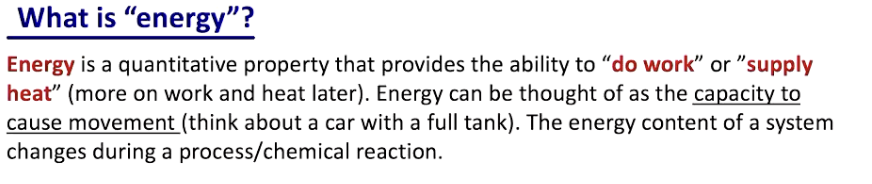
Potential energy and kinetic energy
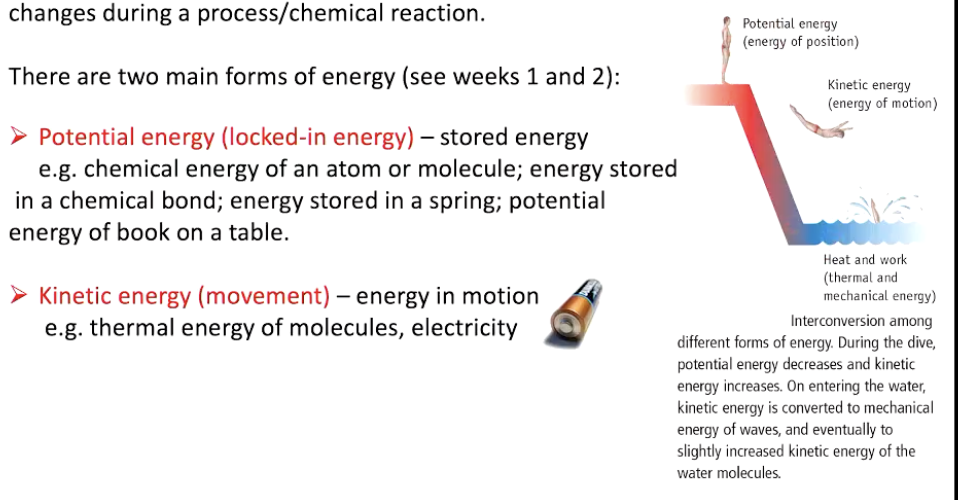
Heat and work
interconnected ways of transferring energy

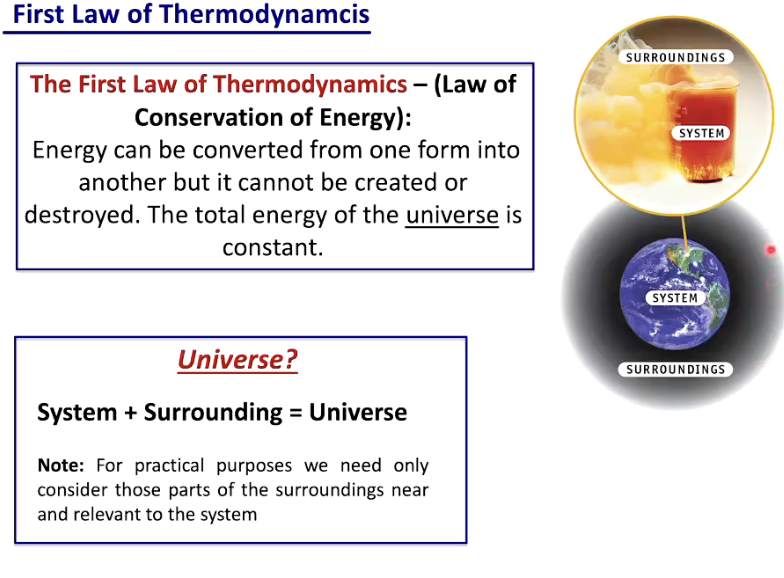
Main Law of Thermodynamics
Energy can be transferred into different forms - IT CANNOT BE LOST
thermodynamics describes transfer of energy from one pace to another or one form to another
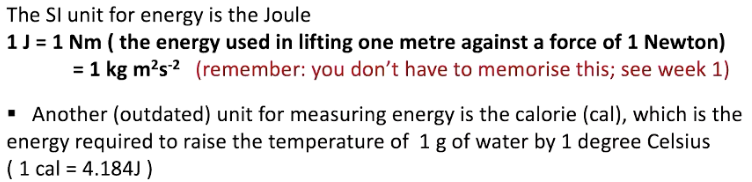
Thermochemistry units
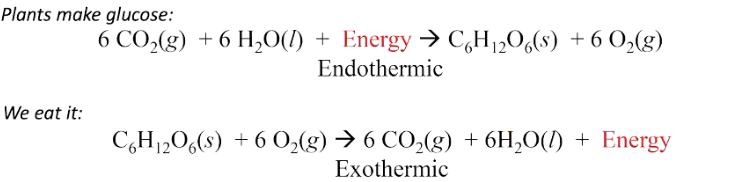
Photosynthesis and Cellular resp
The first law of thermodynamics
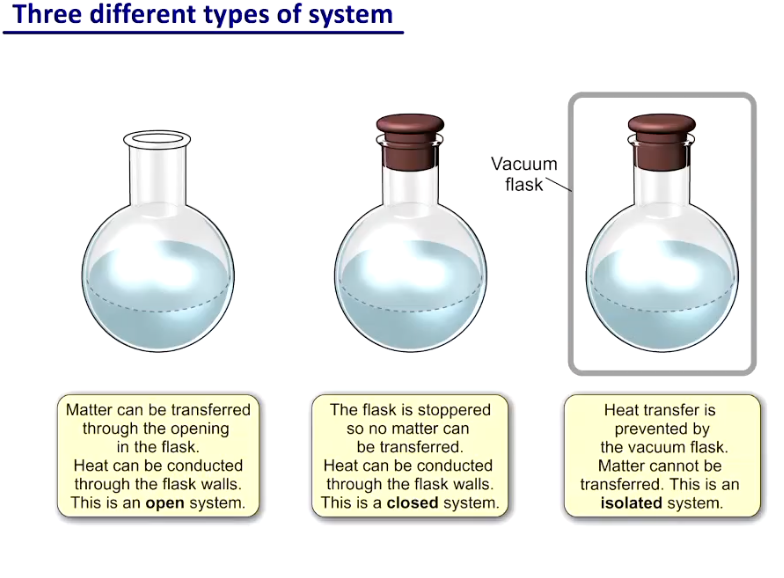
Three types of system
open = matter and heat transfer bw system and surrounding
closed = no matter but heat transfer occurs
isolated = heat transfer and matter transfer prevented
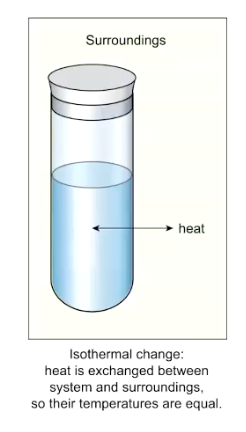
Isothermal exchange
heat transfer from hot body to cold body until temps are the same
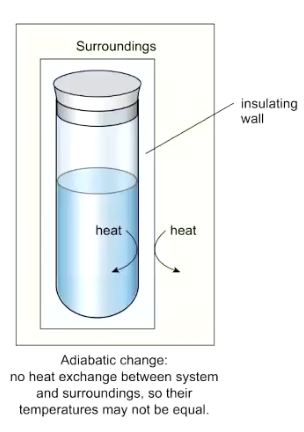
Adiabatic change
system and surrounding have no heat exchange so temp might not be equal
Heat (q) and temp not same thing
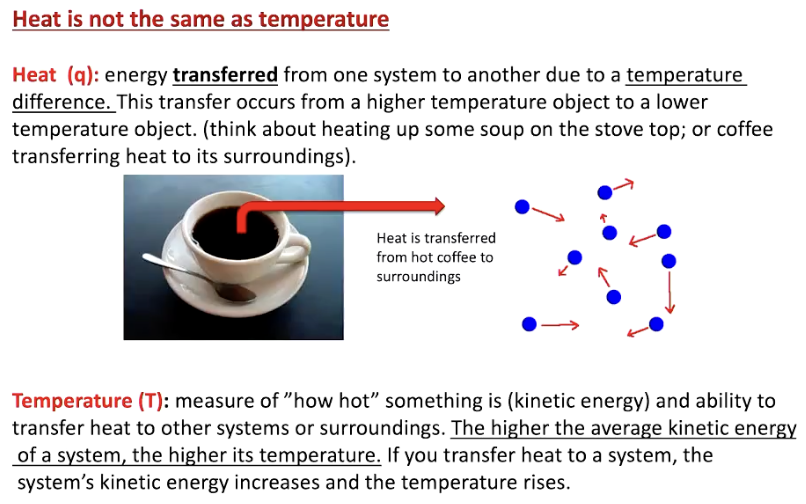
heat: quantifiable energy
temp: measure of how hot smth it (kinetic energy)
eg. both larger and smaller coffee has same temp but larger coffee has more heat
extensive property
property of matter that changes depending on amount of matter
eg. heat

intensive property
prop. of matter that does not change if amount of matter changes
eg. temp
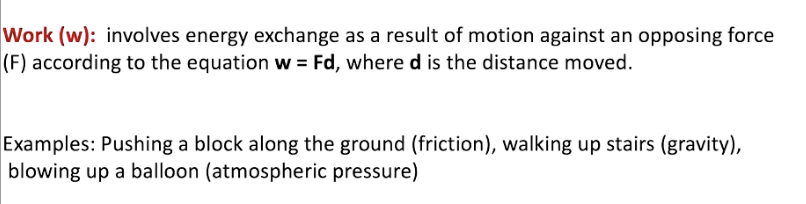
Work (w)
energy exchange due to motion against an opposing force
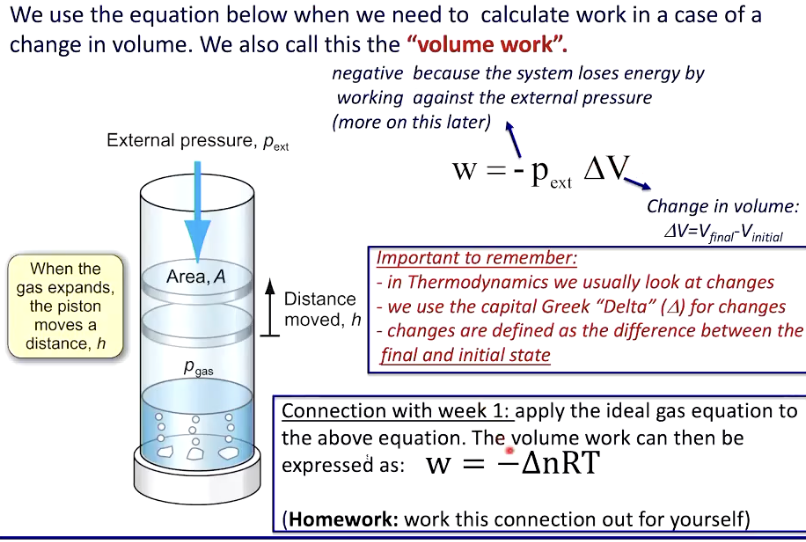
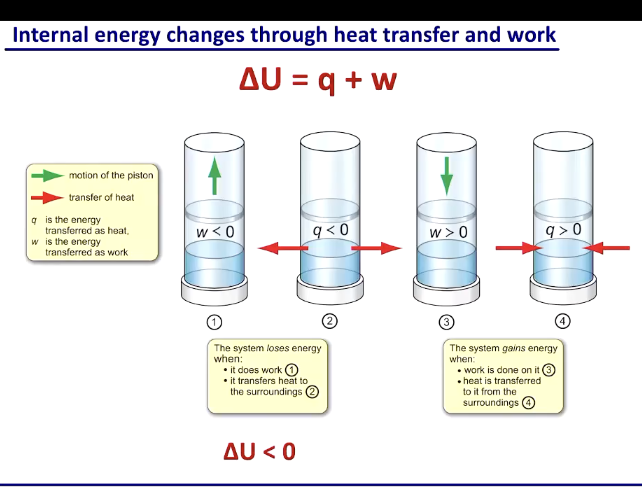
when system does work on surroundings - it LOSES energy
when surrounding do work on system - it GAINS energy
Work related gases - eq. for change in volume
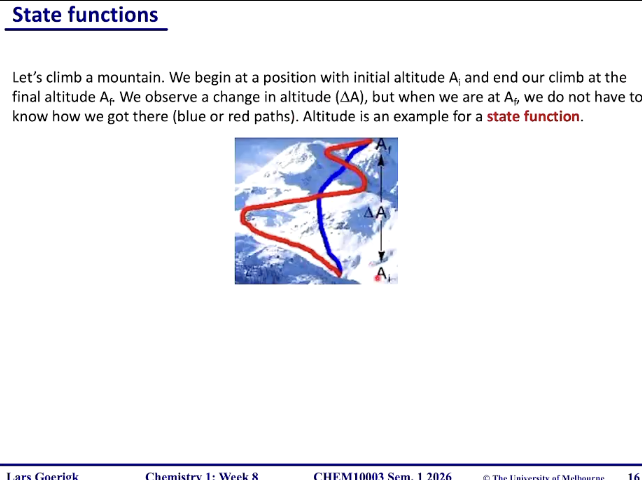
State functions
we only know final end result not how we got to end result
eg. internal energy (U)
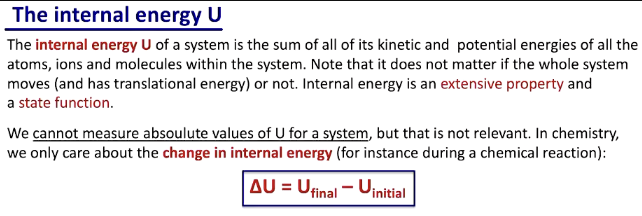
Internal energy (U)
sum of all its kinetic and potential energies
total energy
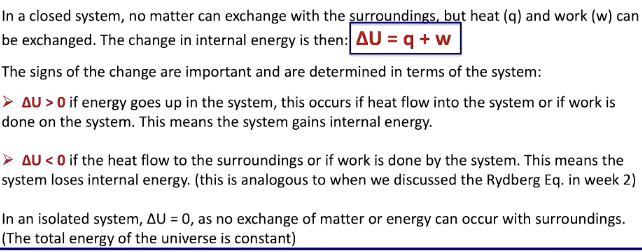
Delta U in closed system
if positive - we gaines energy
if negative - we lost energy
if 0 = no change
How can we change Delta U
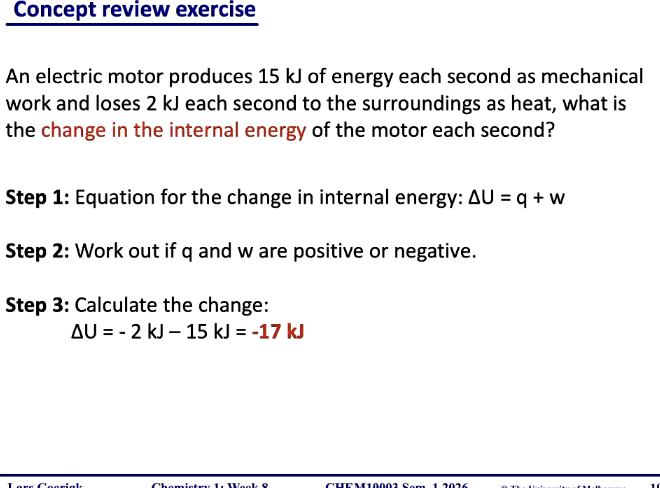
Electrical motor example for change internal energy
Issue with internal energy
some of the enrgy transferred to the system is used to do the work of expansion against constant pressure
in order to not have to always worry abt this - enthalpy (H) is used
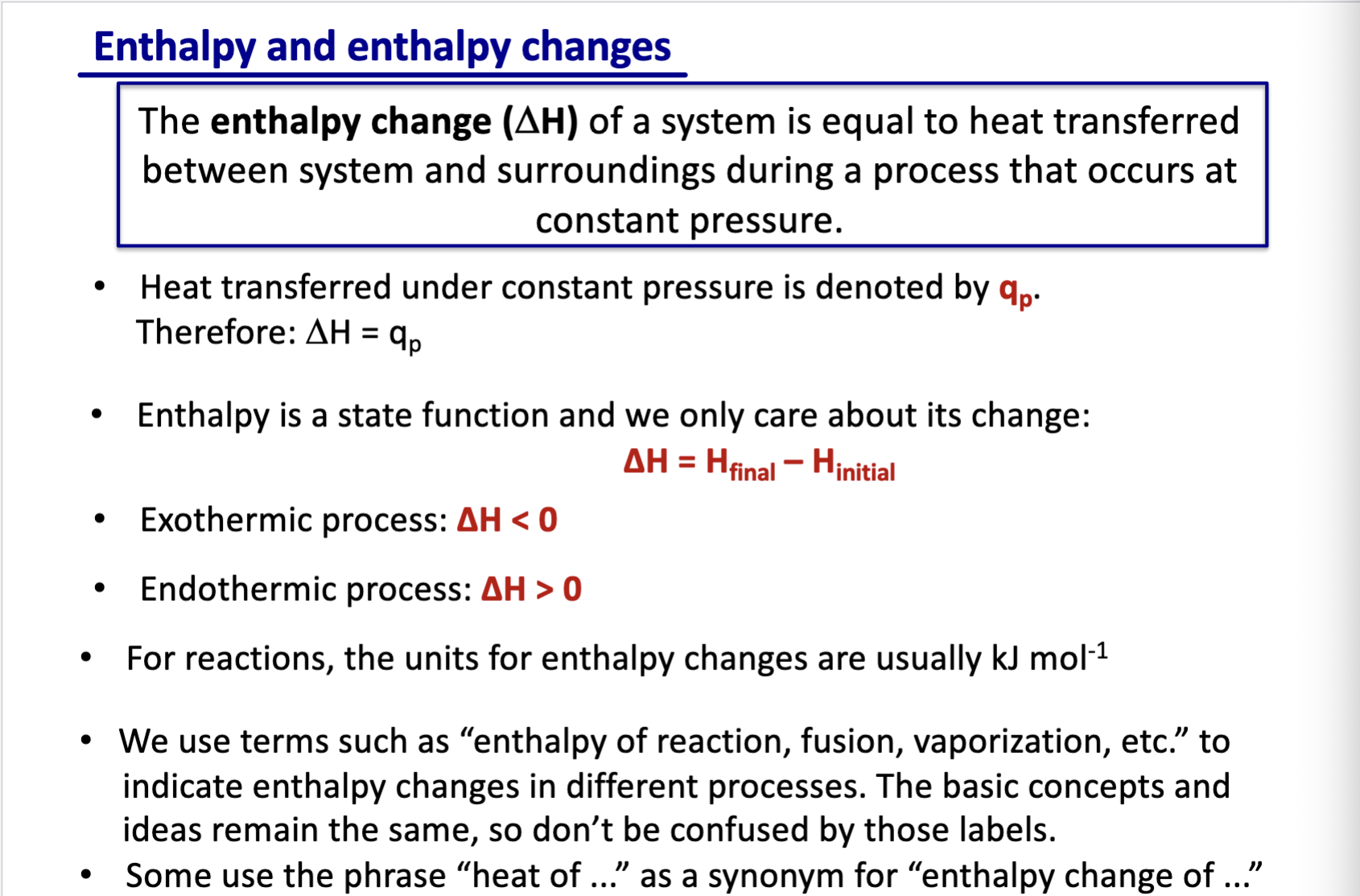
Enthalpy (H) and enthalpy change
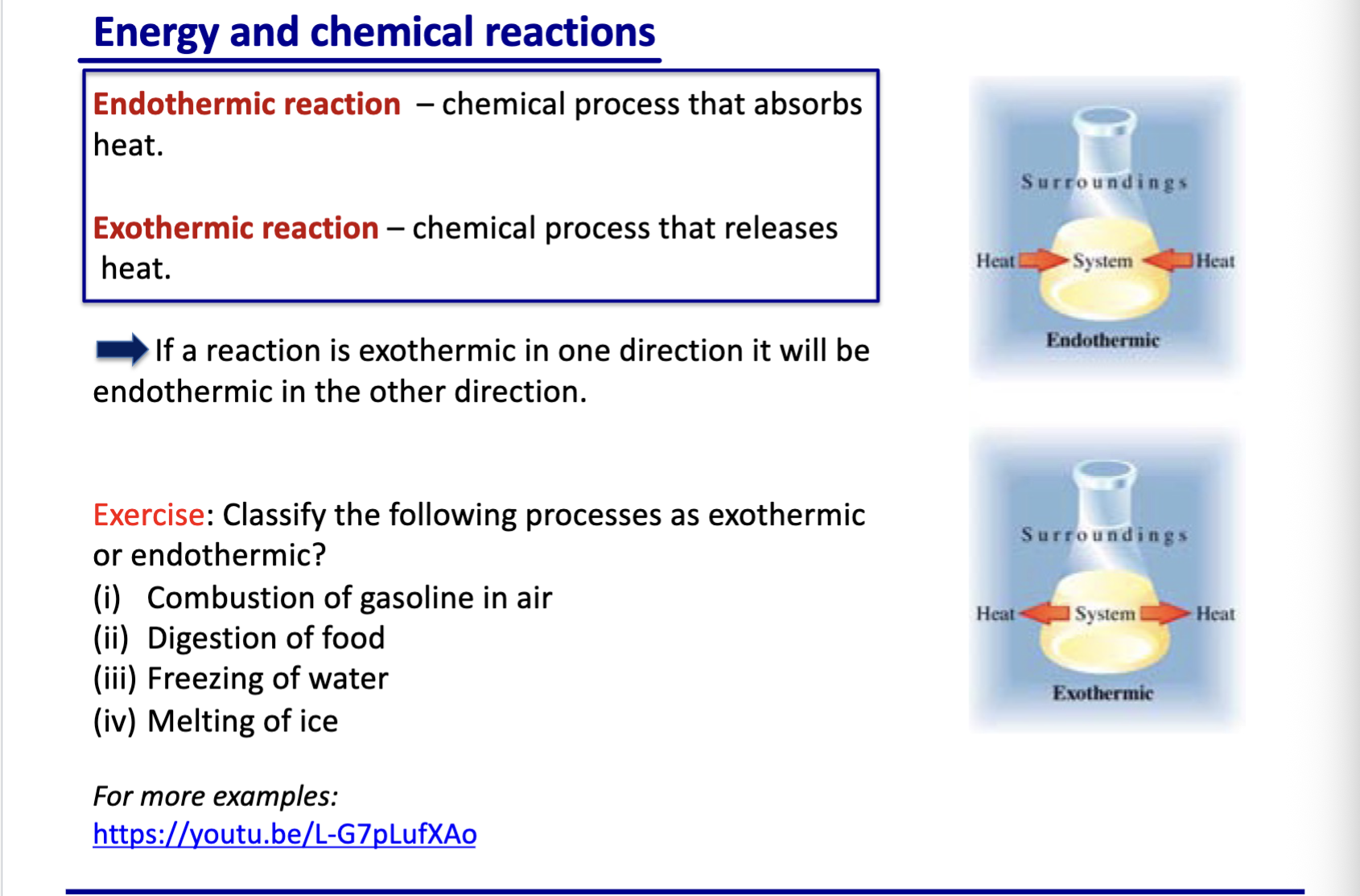
Endothermic vs exothermic
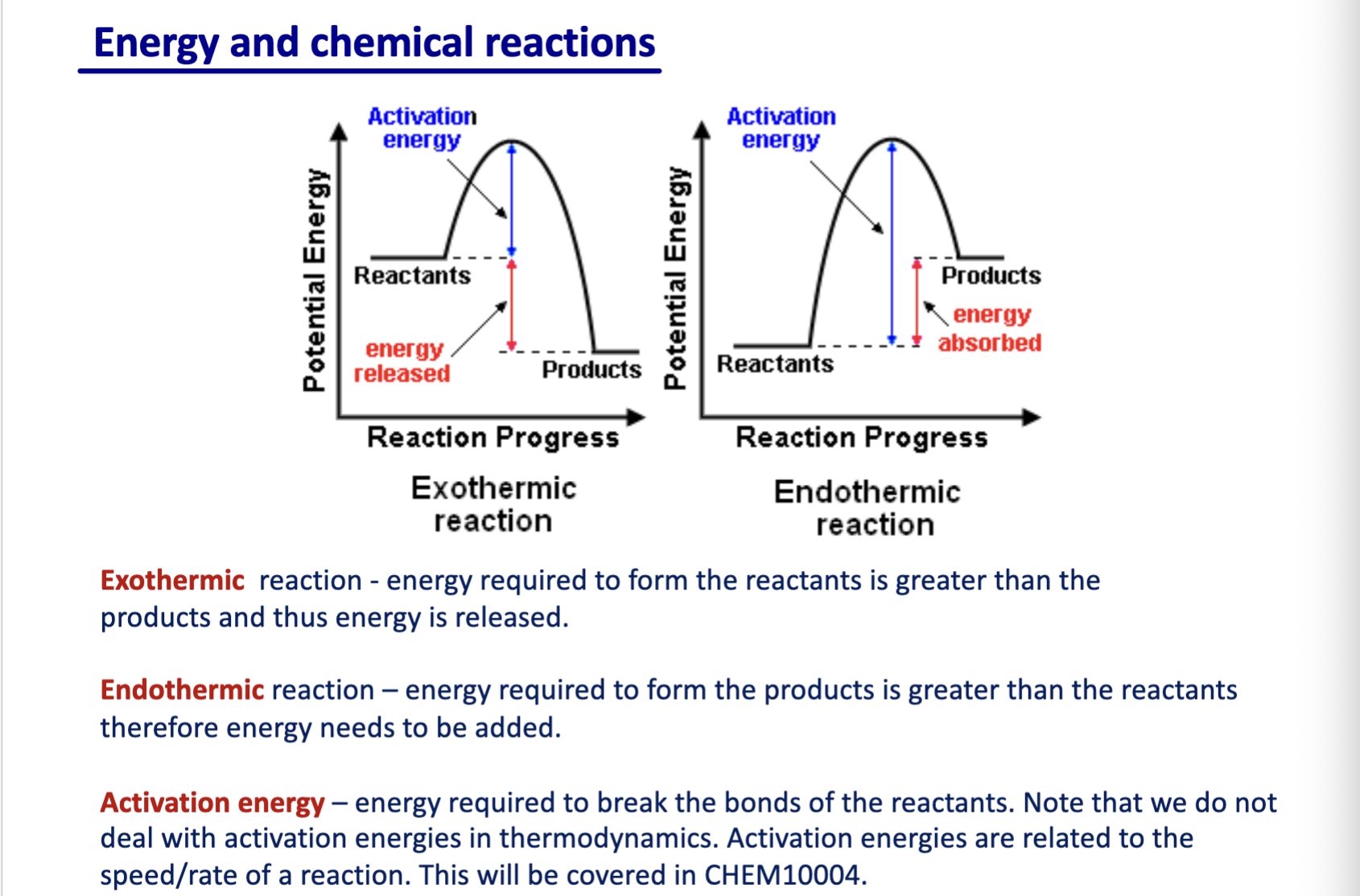
Energy profile diagrams
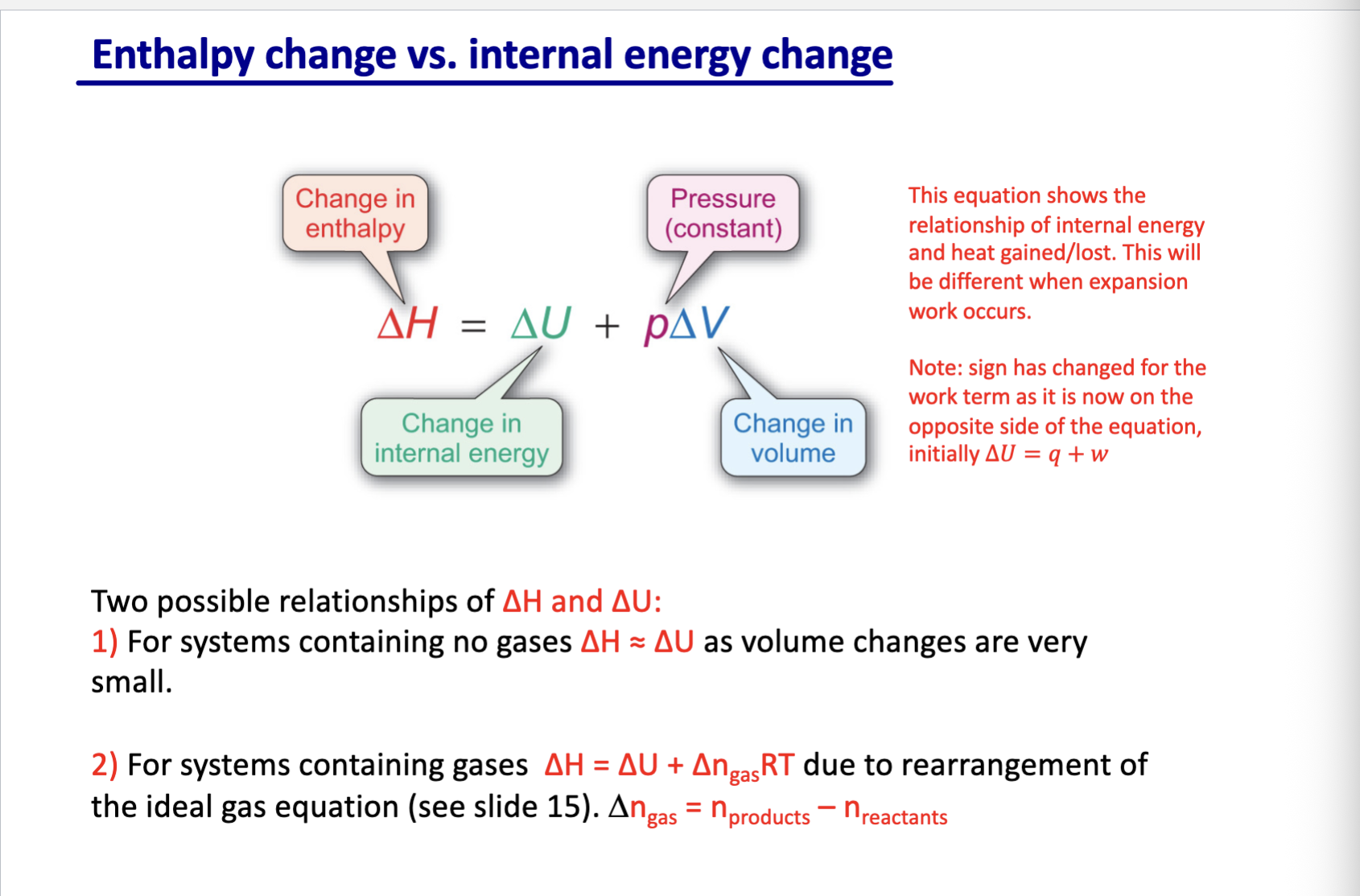
Delta H and Delta U relationships
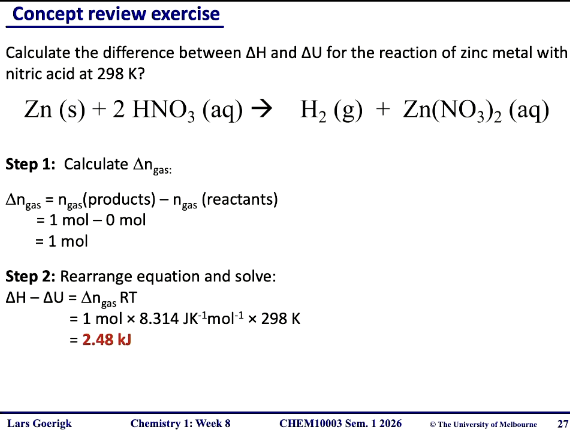
Quick example on delta U and Delta H calc.
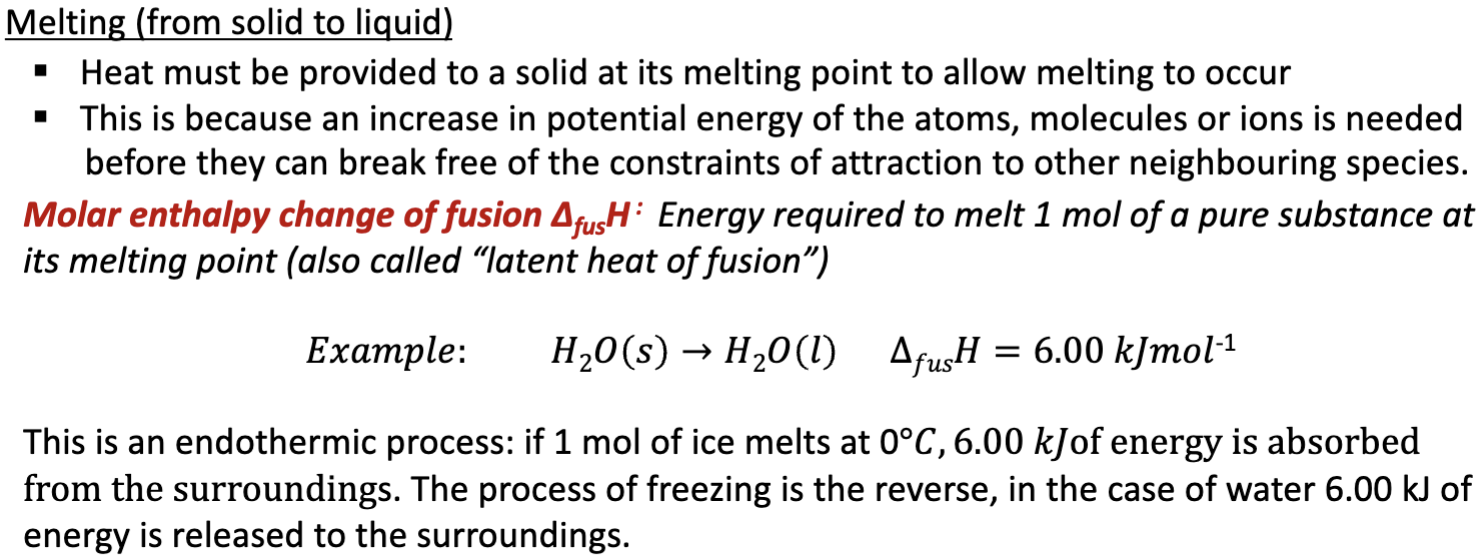
Melting enthalpy changes
absorb energy bc for bonds to break - the potential energy has to increase
freezing is opposite
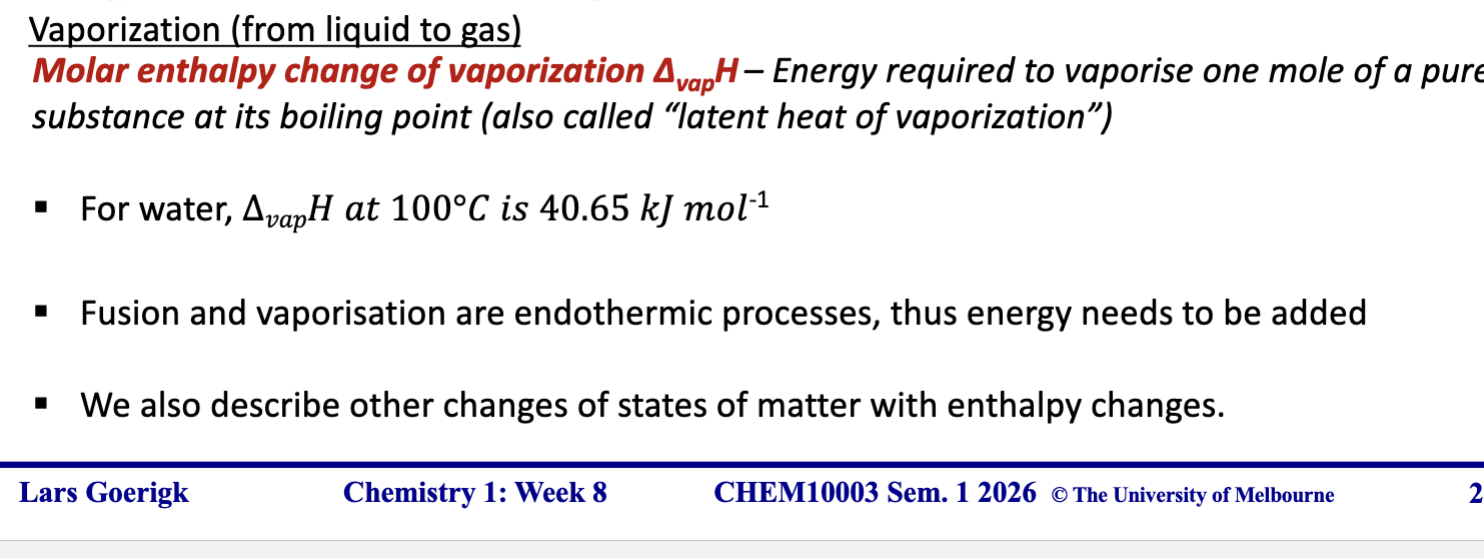
Vaporisation enthalpy changes
endothermic
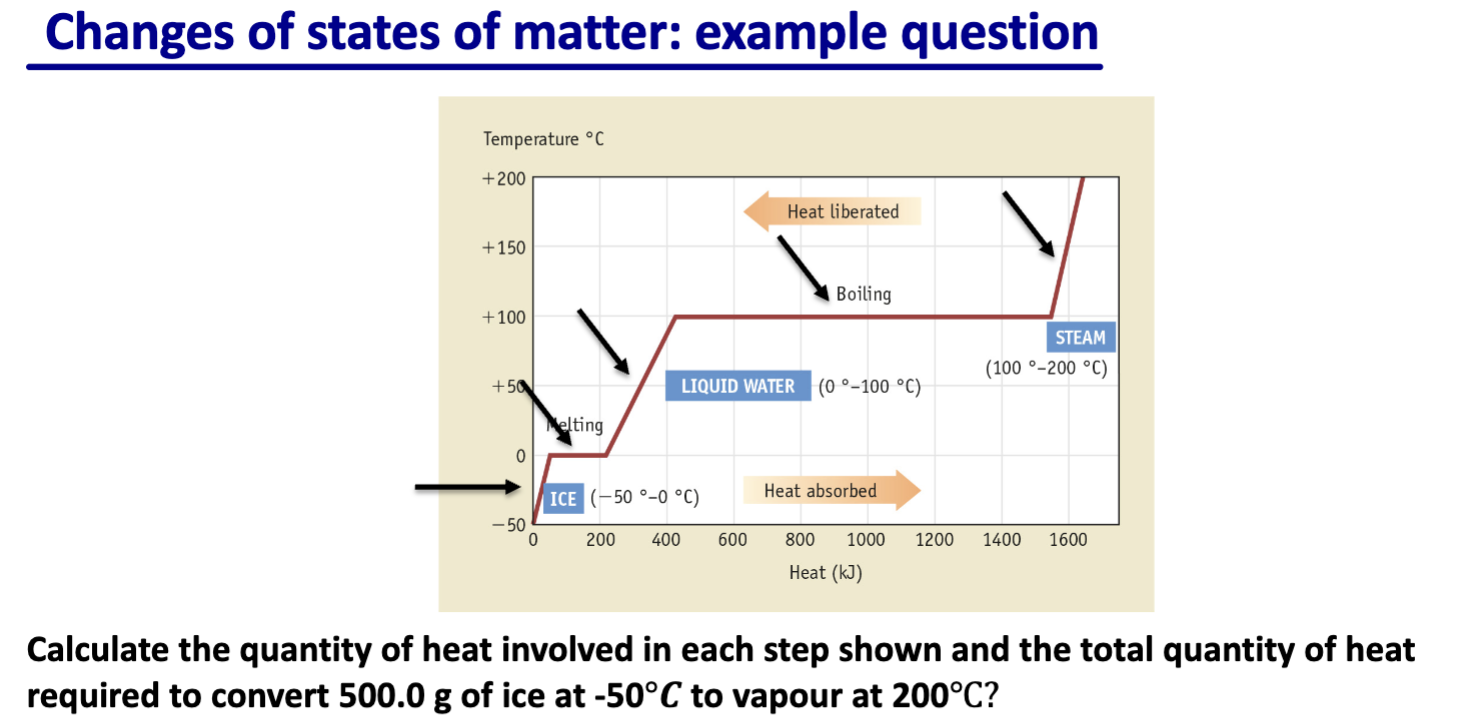
How to approach this
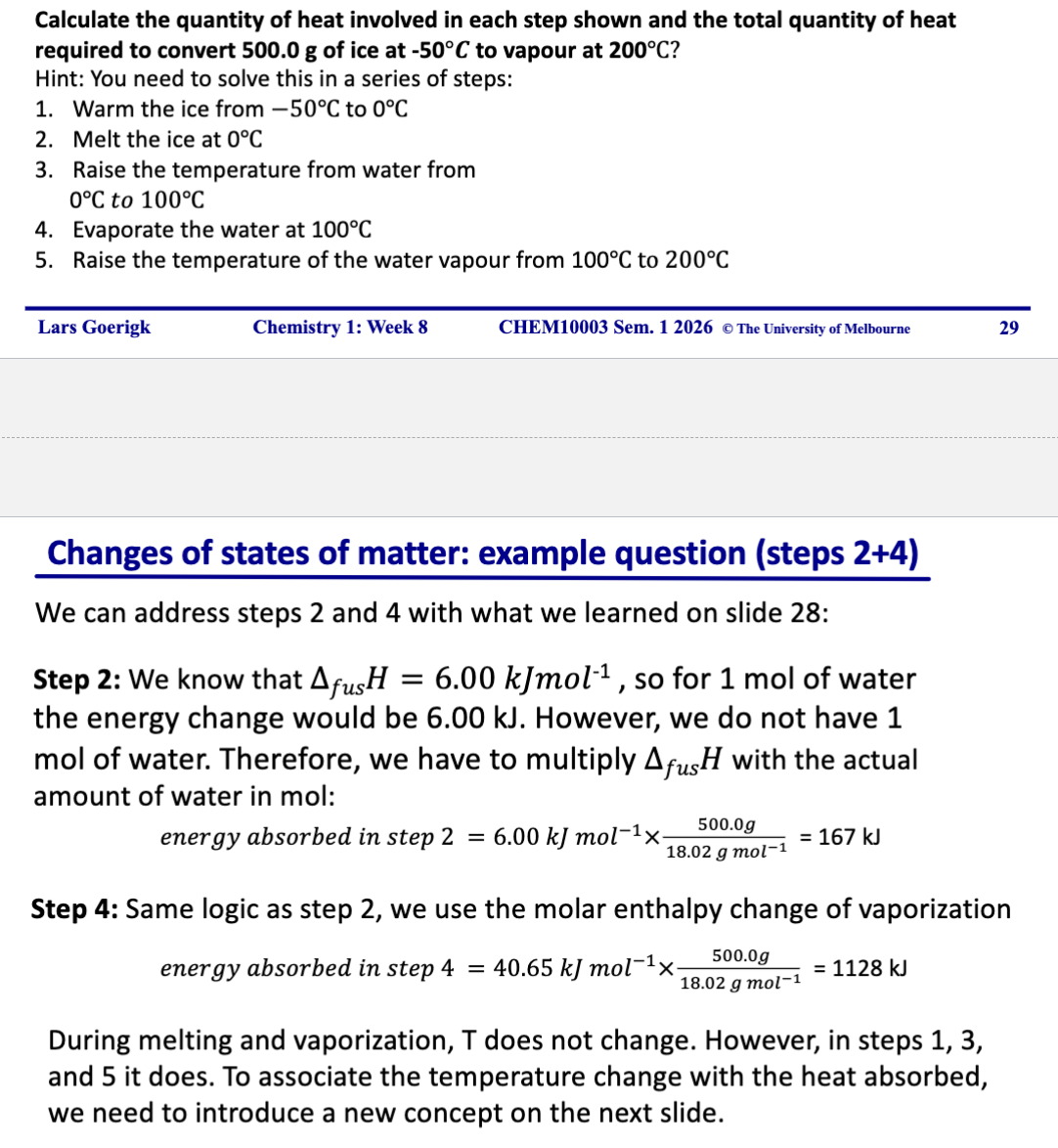
Heat capacities
how much heat energy required to raise the temp by 1deg
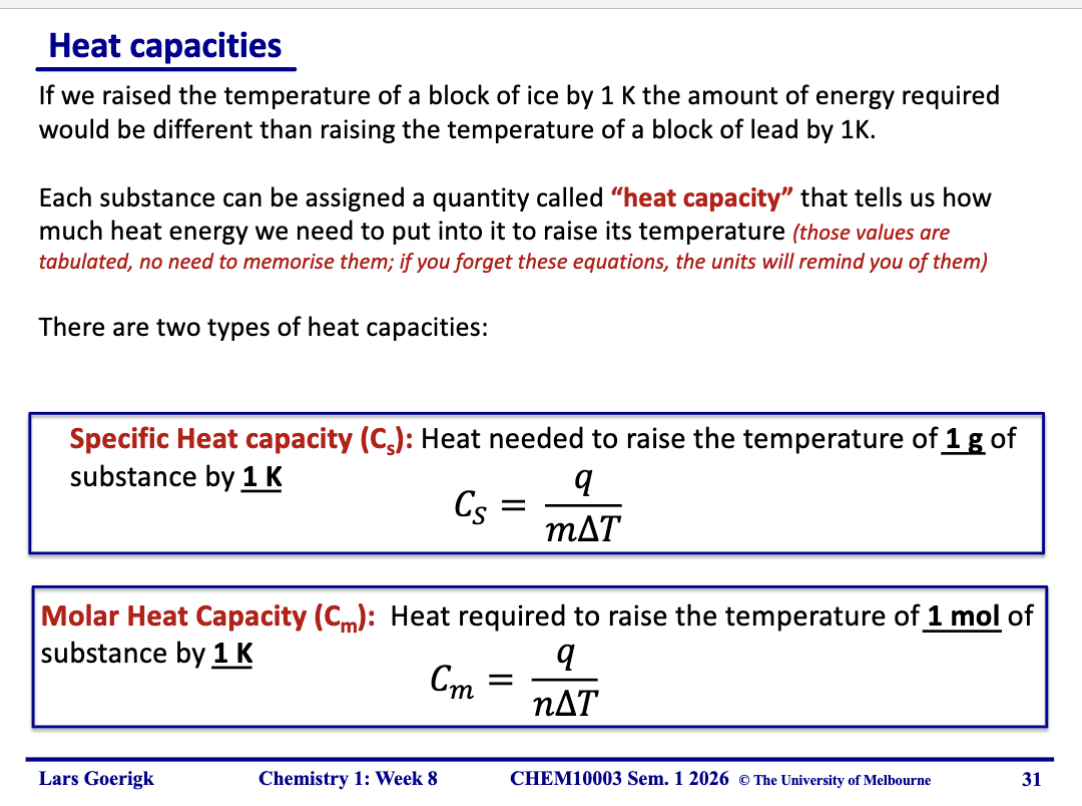
Question from before now using heat capacities
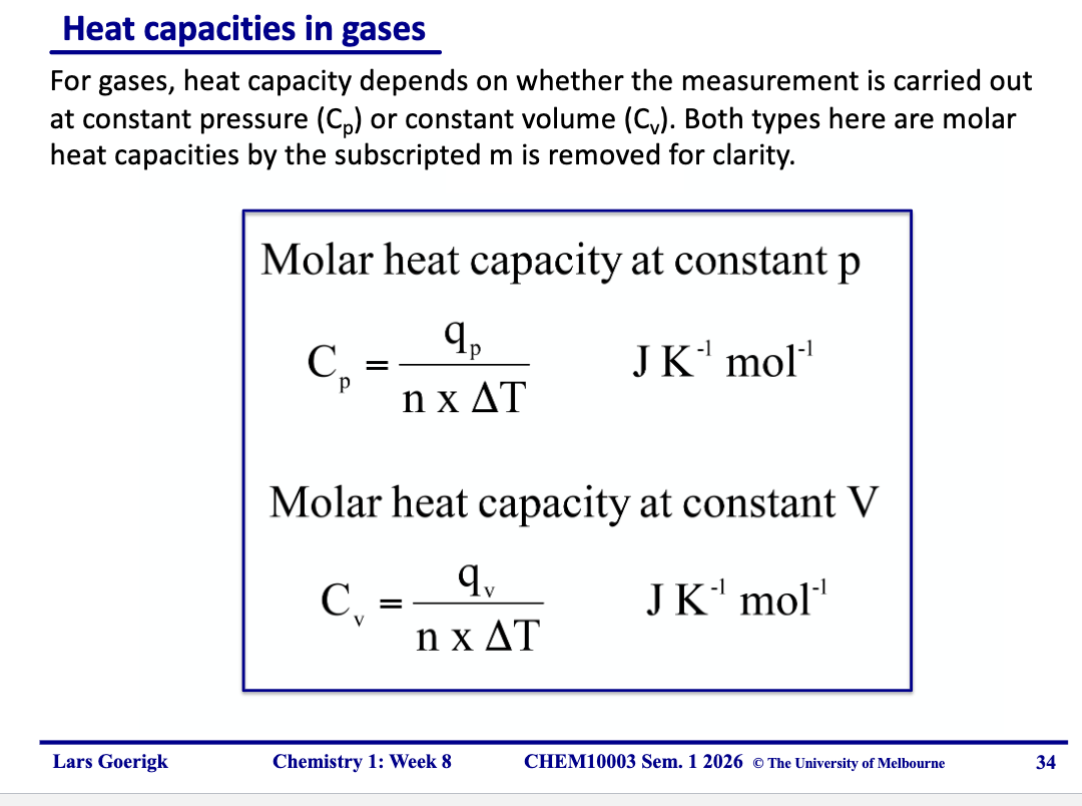
Heat capacities in gases
Cp is generally Cv + R
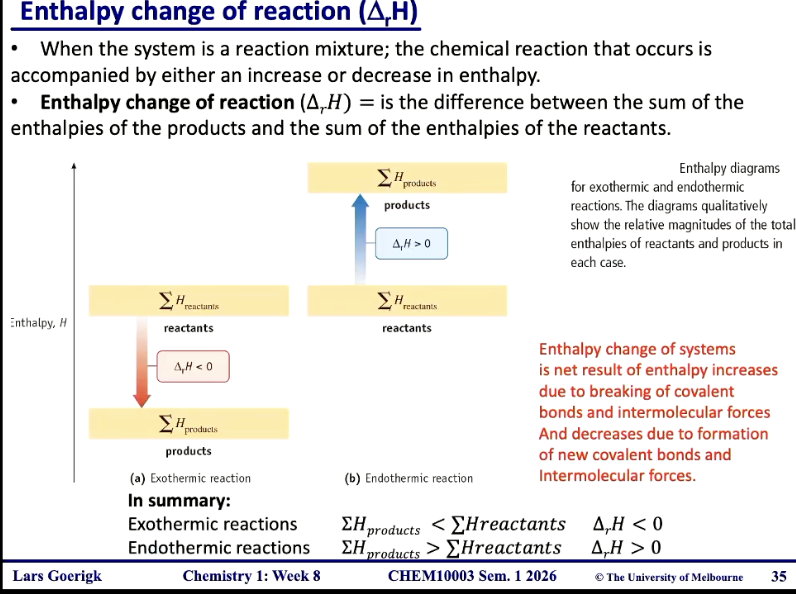
energy profile mechanism
when reaction happens - enthalpy either decreases or increases
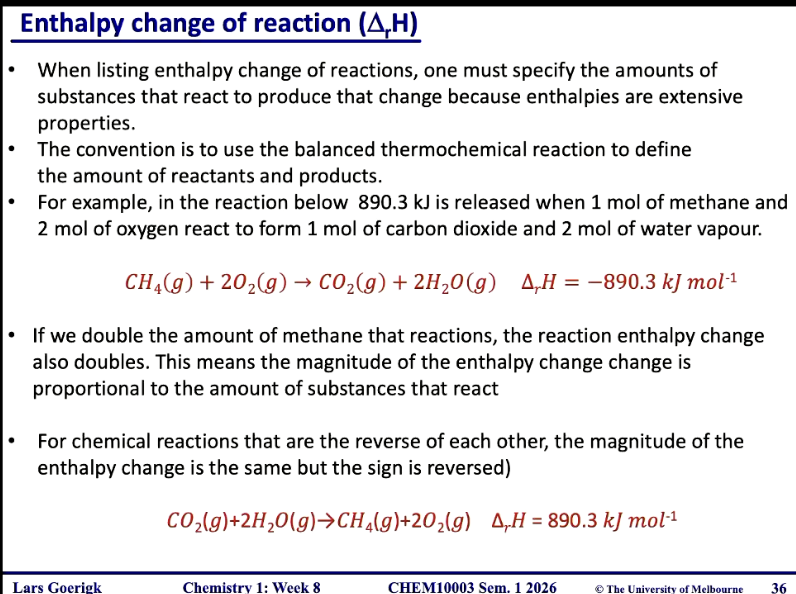
Why kind of property is enthalpy change
extensive property - depends on amount of substance
Enthalpy change - thermochemical reactions
Calculating enthalpy change
H(products) - H(reactants) or
bonds broken - bonds form
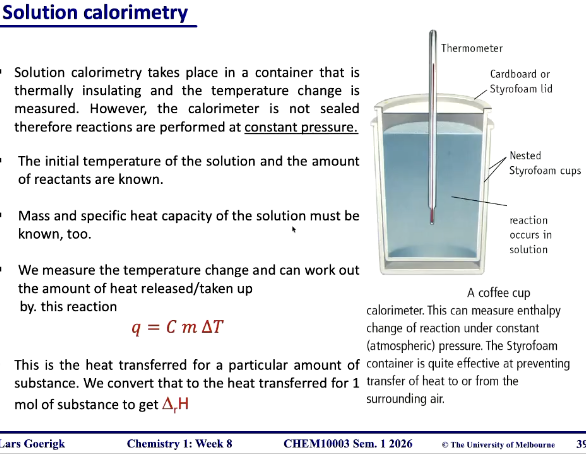
Solution calorimetry
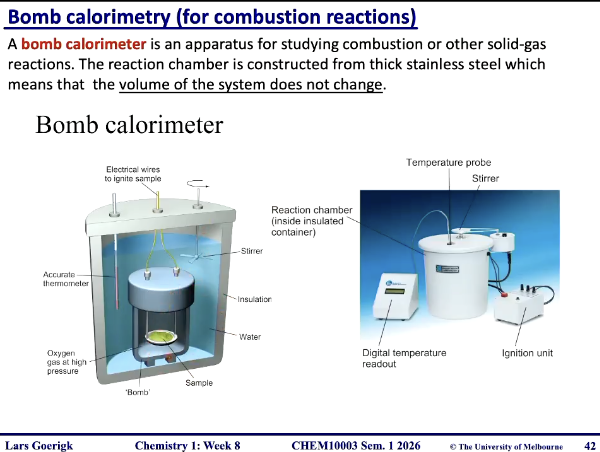
Bomb calorimetry
bc v doesn’t change - heat is under constant voluem/pressure
Bond calorimeter calculations
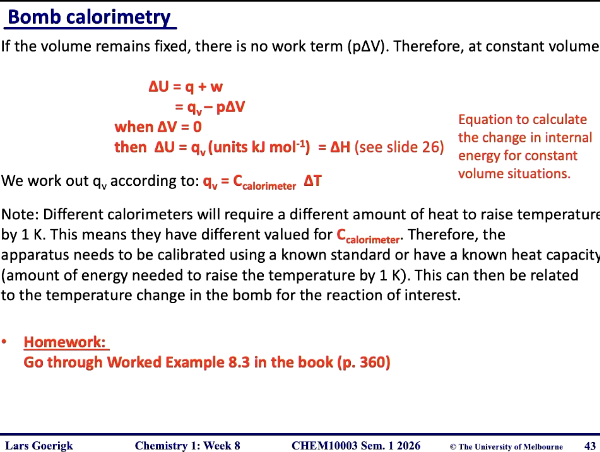
heat capacity is specific to calorimeter (eg. CF) and bc constant volume → Delta U = Delta H
What can enthalpy be impacted by
pressure, conc of reactants and products, phyisical state and form
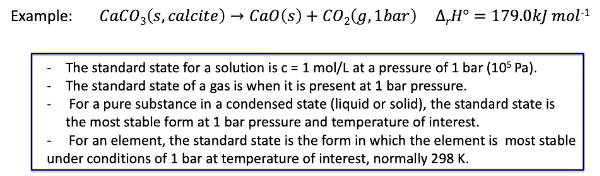
we need to define standard states
Standard enthalpy change of reaction

What standard states are in example
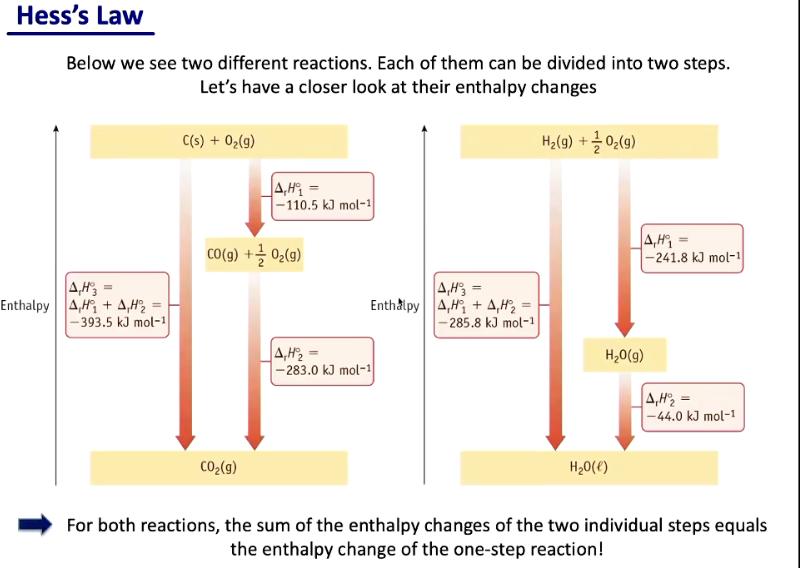
Hess’s law
basically if we know the enthalpy changes of half the reactions like step by step - we can just add them together to get the total enthalpy change bc it’s a state function
Hess’s law written

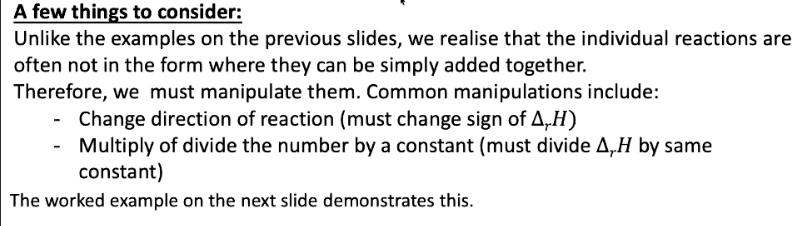
Things we have to consider when applying Hess’s law
must manipulate
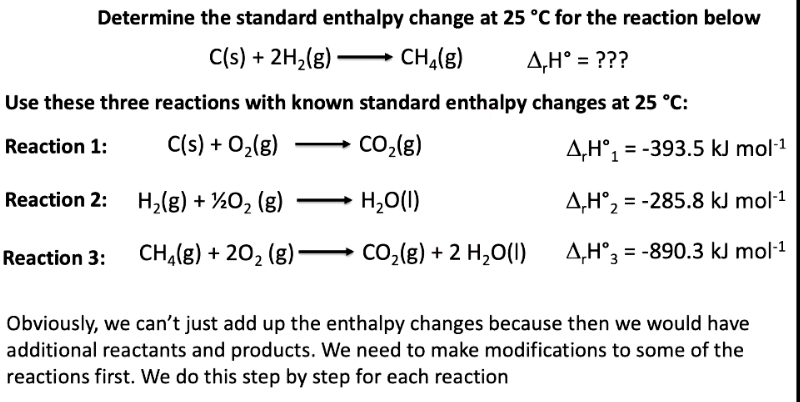
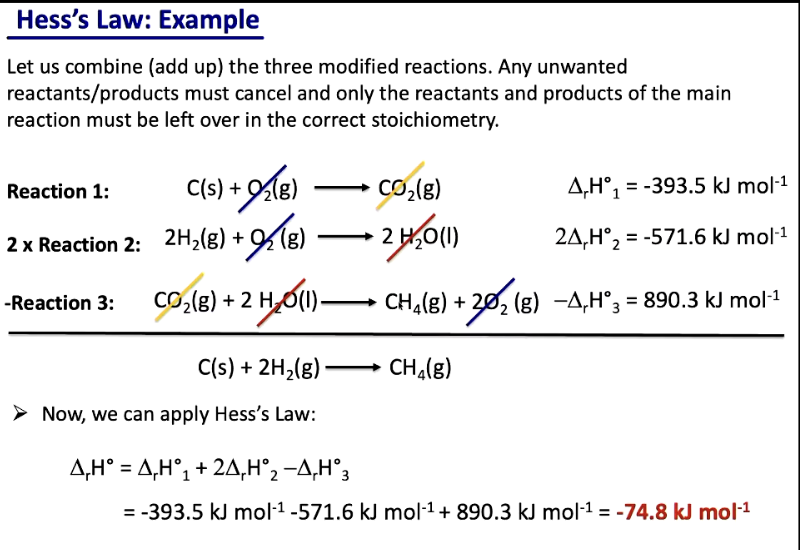
Example of Hess’s law applied
reaction 1 is fine and we can use that delta H value
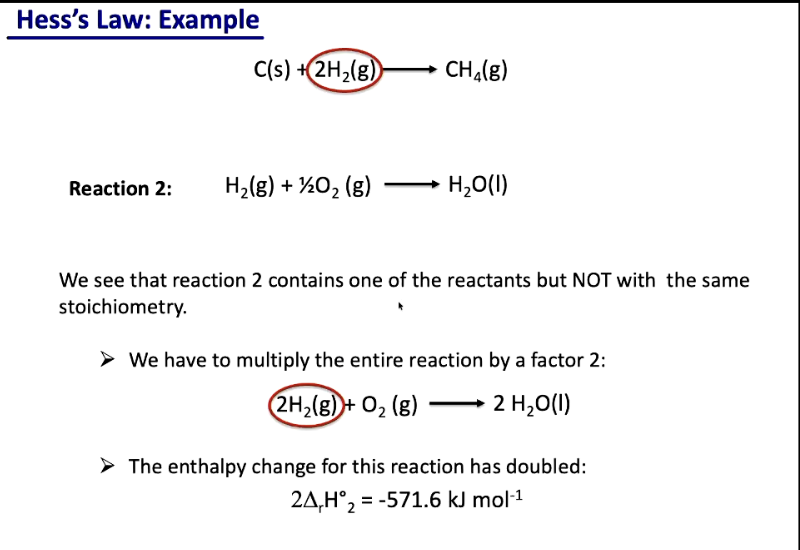
Reaction 2 adjustment
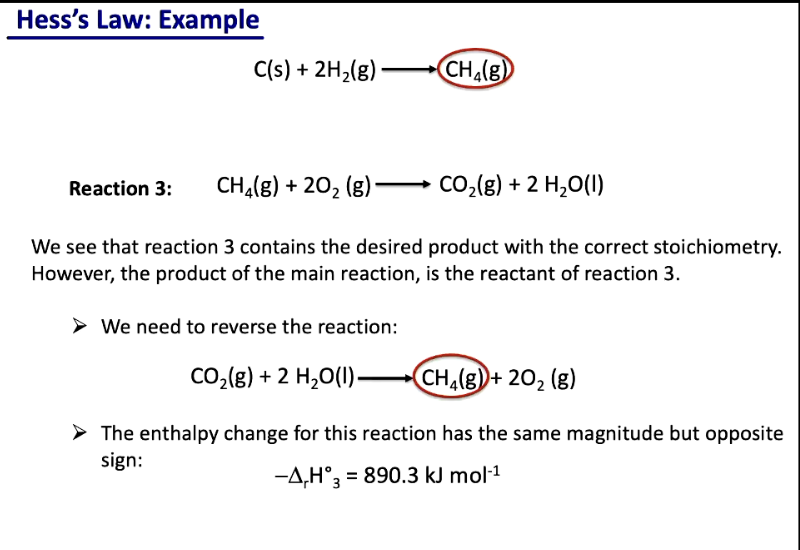
Reaction 3 adjustment
Final check to do before adding the adjusted eqs tgt
everything must cancel out to give you og reaction
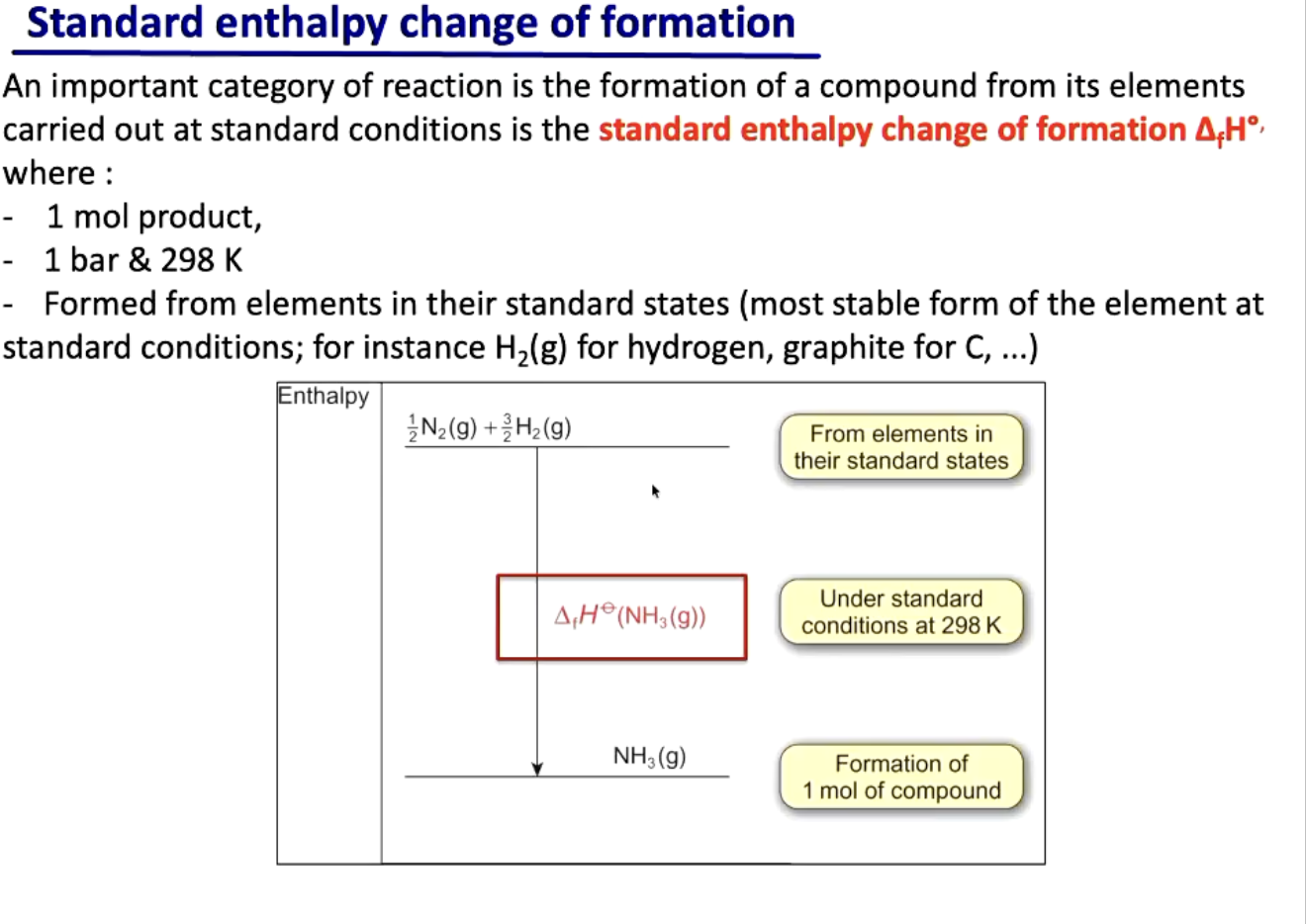
Standard enthalpy change of formation
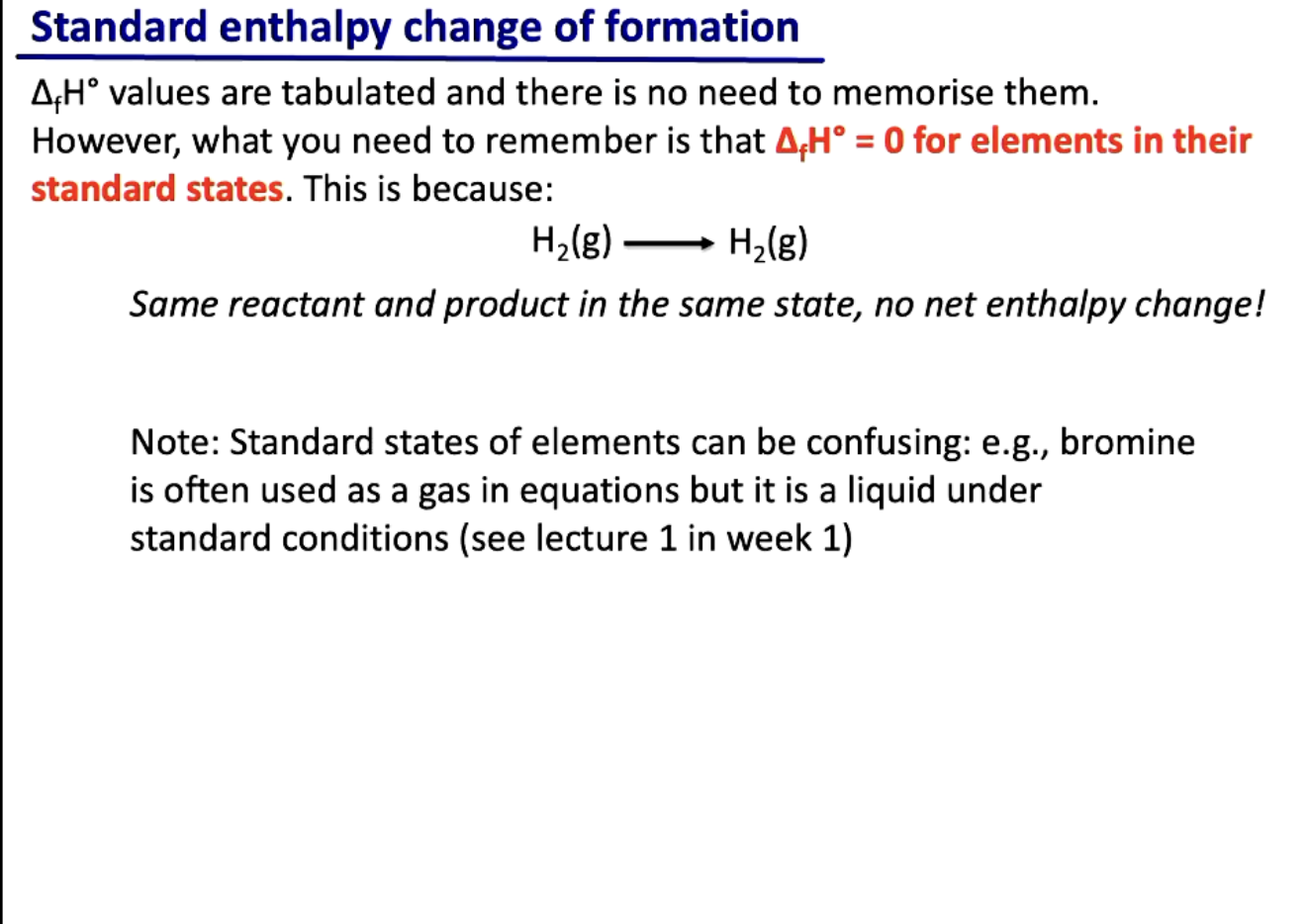
when elements in their standard state - eg. H2(g)
using tabulated values to find actual delta H
Formula to find the delta r H
(coeff x product’s H value from table) - (coeff x reactant’s H value from table)
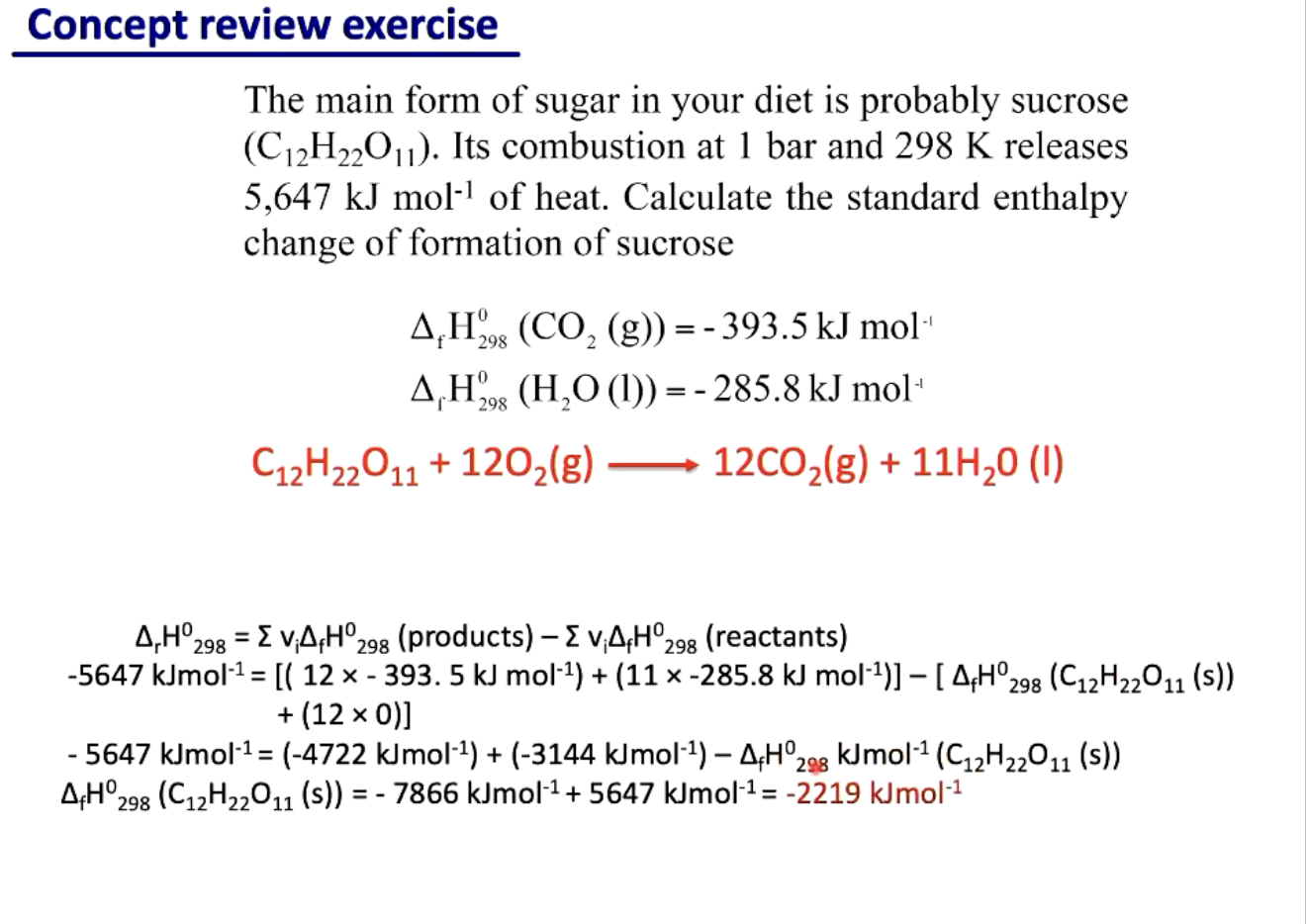
example of standard enthalpy change of formation
O is 0 bc its in standard state
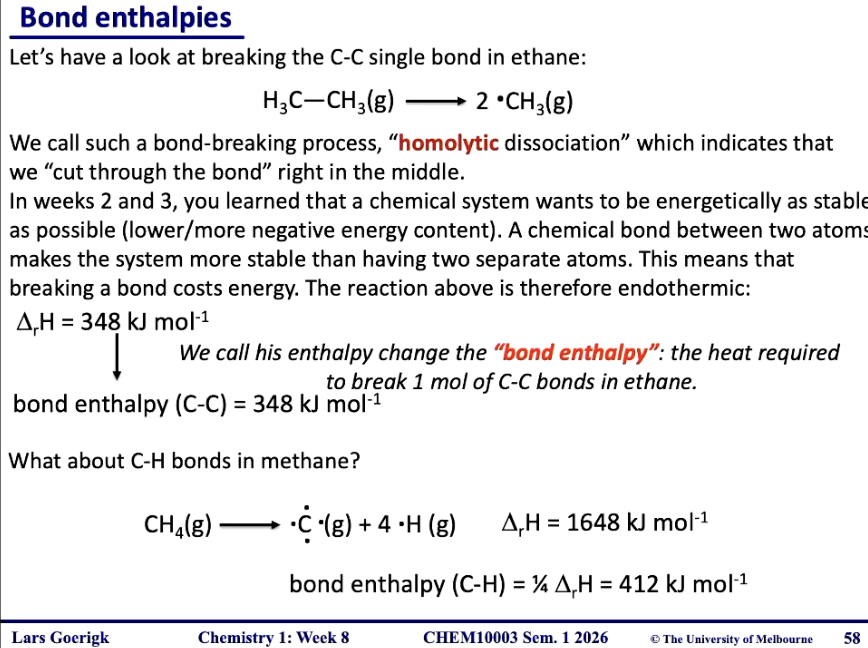
Bond enthalpies
energy required to break a bond is the bond enthalpy
the process of breaking bond = homolytic dissociation
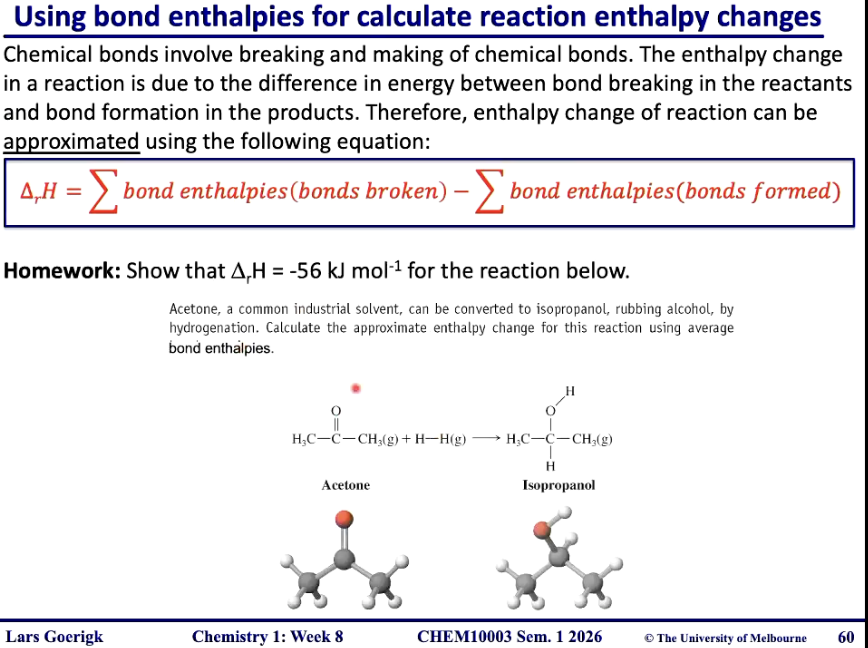
The actual equation to find delta H via bond enthalpies
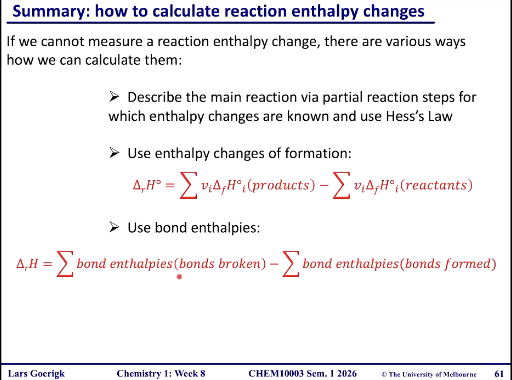
Different ways to calculate delta H
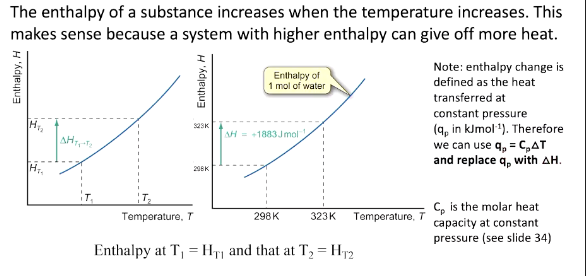
System’s enthalpy depends on temp
when temp increases, the enthalpy of substance increases
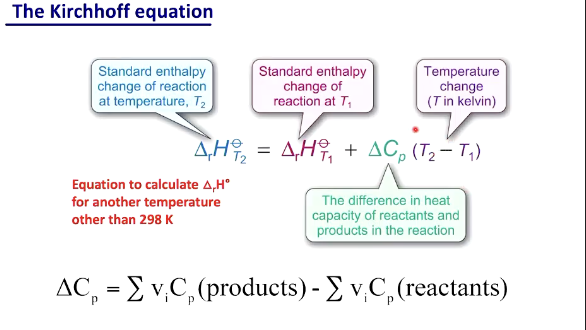
The Kirchhoff equation
always products - reactants when deltas
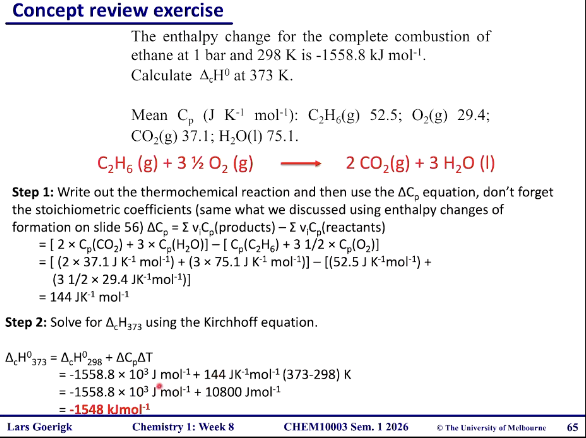
Example of Kirschhof eq.
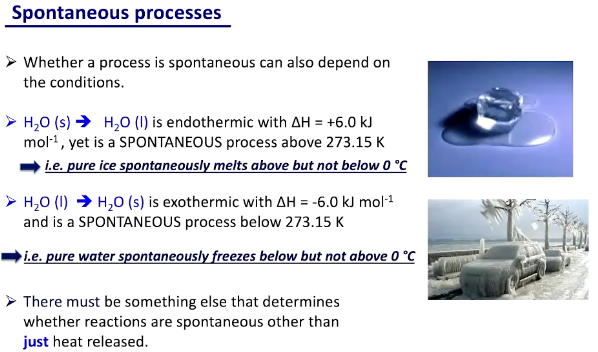
Spontaneous processes
process, which once started, occur without any external intervention or action (may need energy to start tho)
spontaneous direction of reaction goes toward equilibrium
usually exothermic
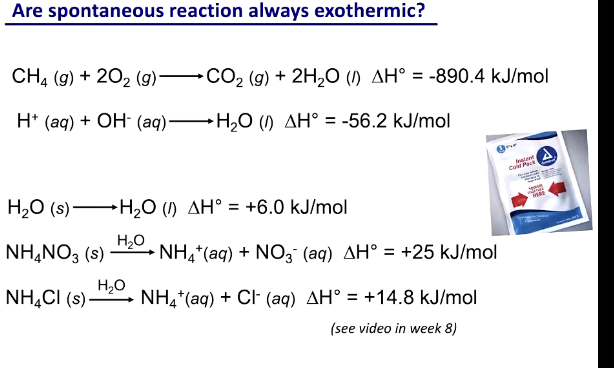
Are spontaneous reactions always exothermic?
no - eg. dissolution
they can be endothermic
Do all spontaneous reactions have delta H
no - eg. gases mixing - no heat exhcange
Conditions that spontaneous processes depend on
delta H but also temp
not related to ROR
ENTROPY IS IMPORTANT
Entropy (S)
measure for the degree of disorder in a system, its surrounding and universe
eg. shuffling increases entropy - likelihood of getting back to og is very low
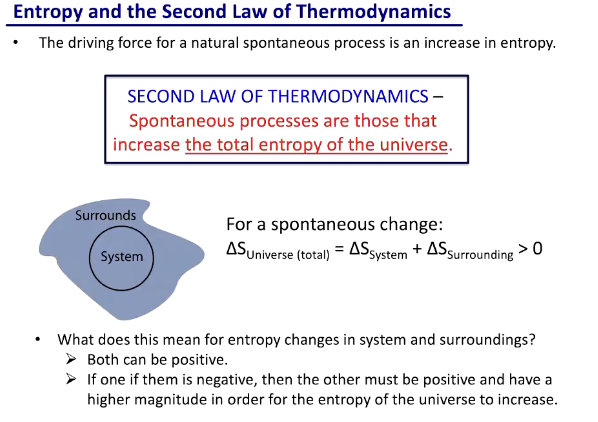
Entropy in terms of second law of thermodynamics
if Delta S is + → more disorder
if Delta S is - → less disorder
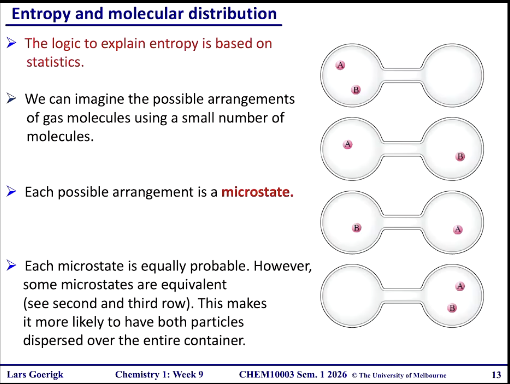
molecular distribution
middle two more likely
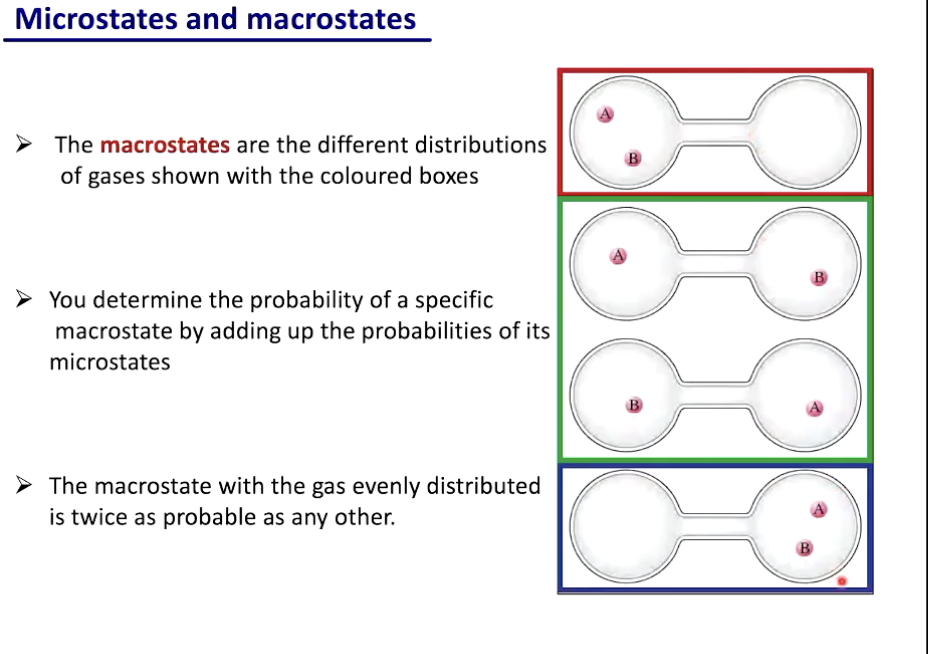
microstates and macrostates + higher entropy
most probable is the macrostate with the highest number of microstates
eg. middle
middle one has higher entropy
Example of macrostates with 4 particles prob
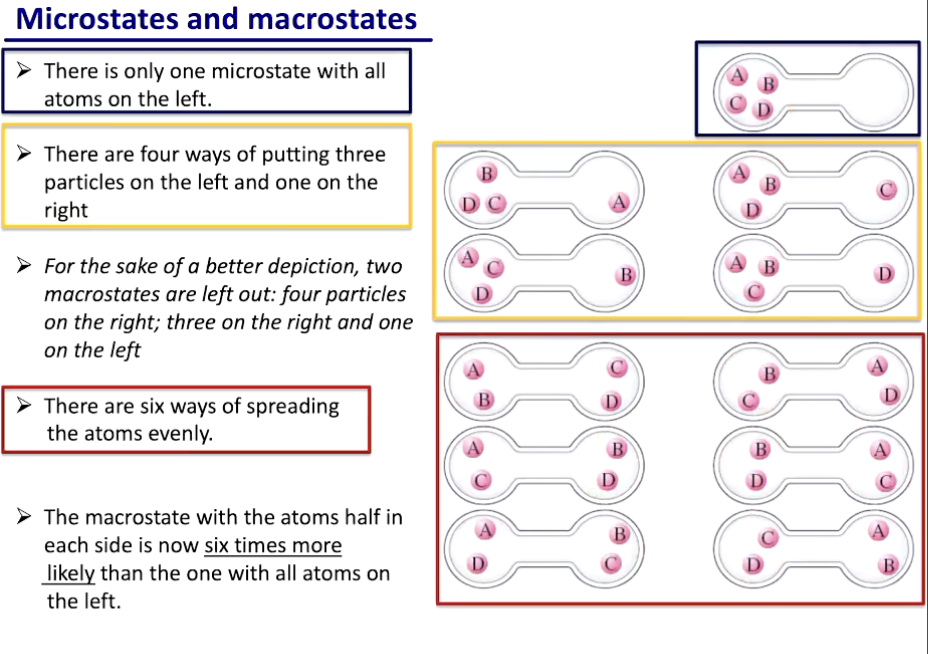
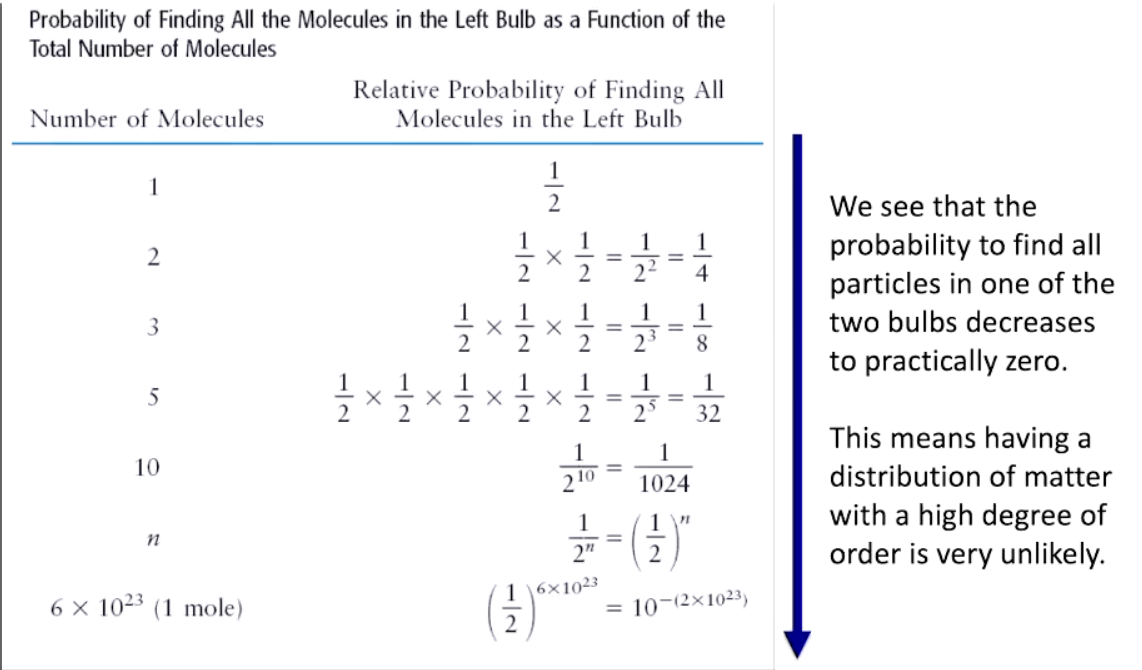
What happens as the no. of atoms in gases increase
more an more microstates
less likely to find all on left
chances of surprising observations decrease
when number of atoms large, we are at the thermodynamic limit
Thermodynamic limit
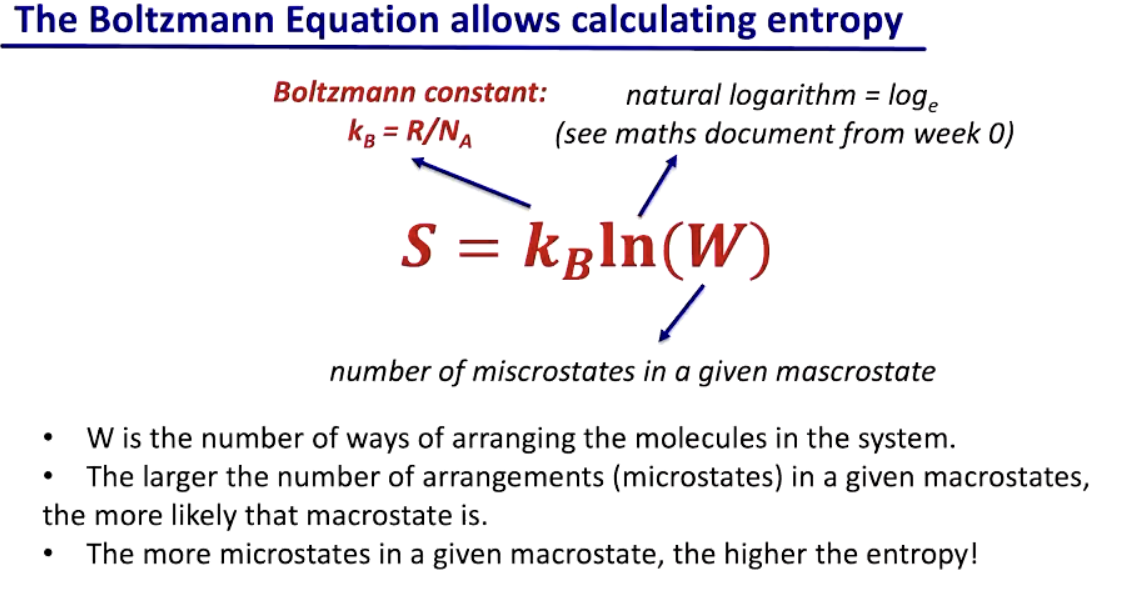
Boltzmann equation allows us to calculate entropy
Example of using Boltzmann equation
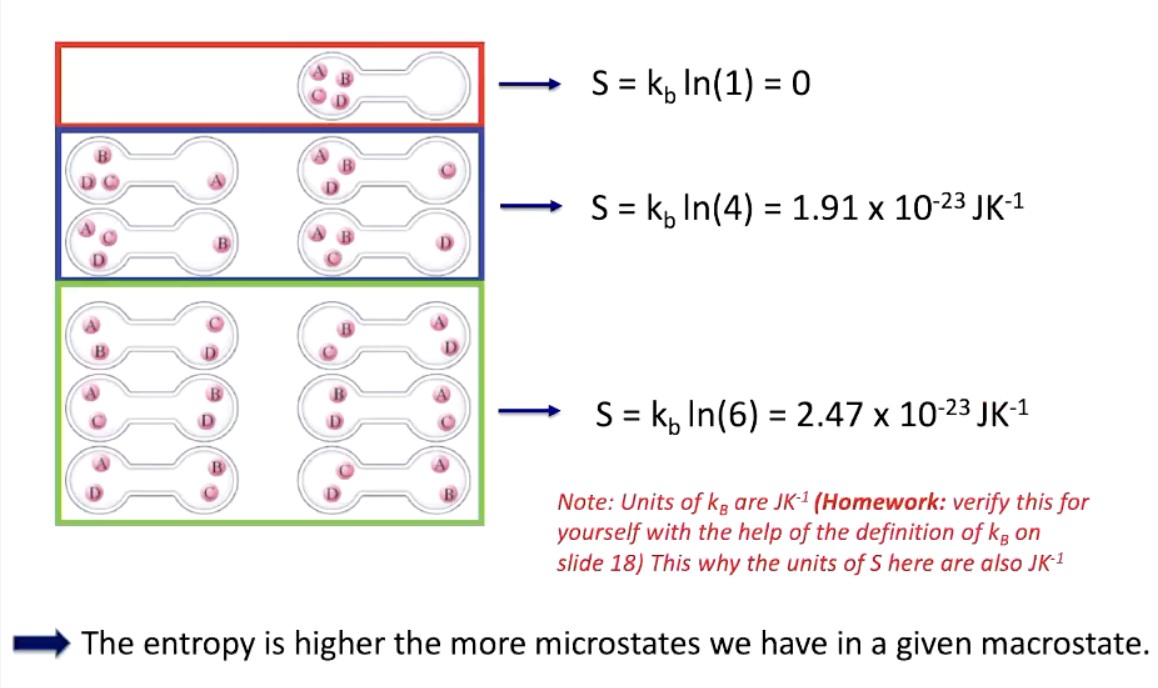
Understanding entropy
we want to maximise a systems entropy
this is the most probably distribution of atoms wher matter and energy is MOST DISPERSED
this is why gases are so disordered and dispersed
Arrow of time
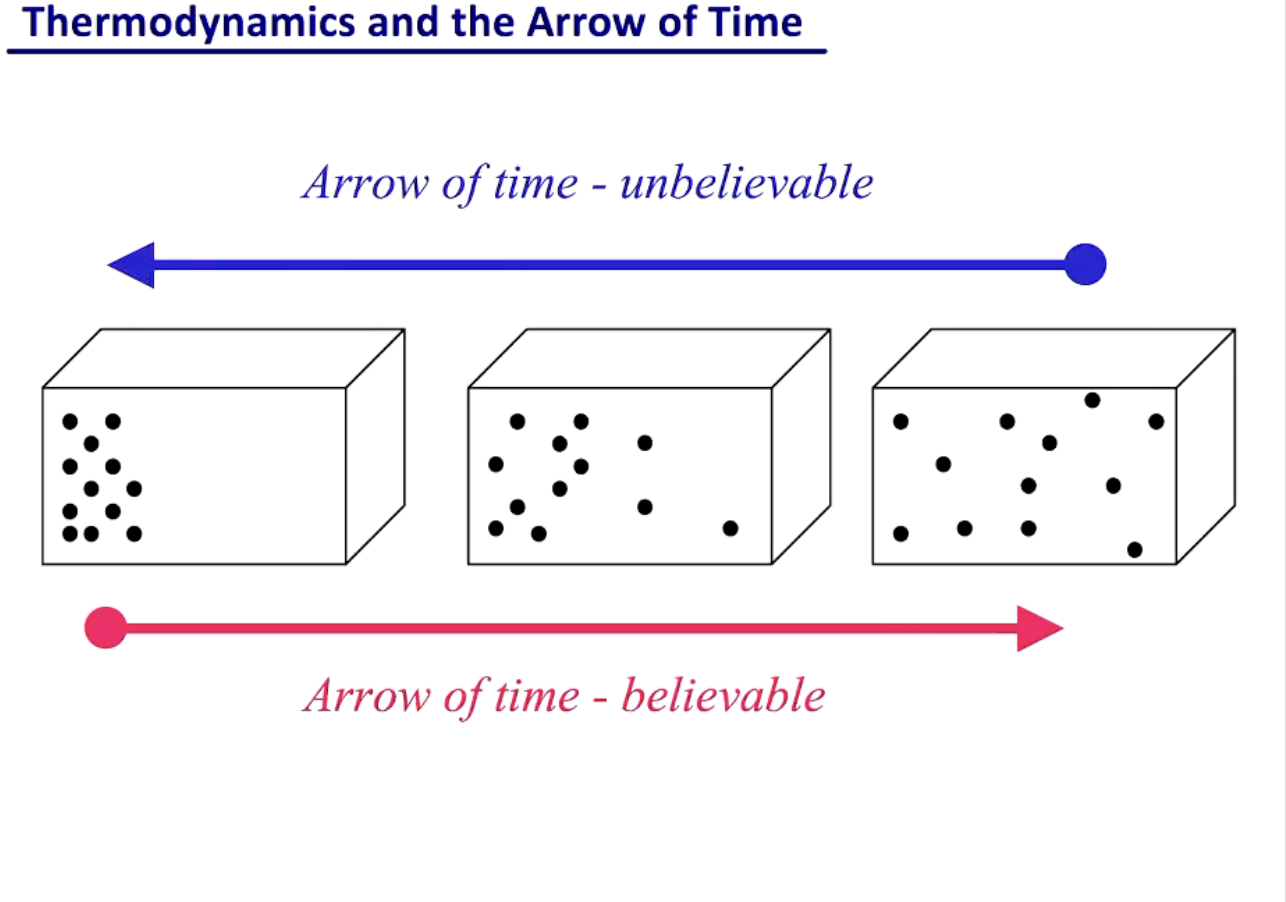
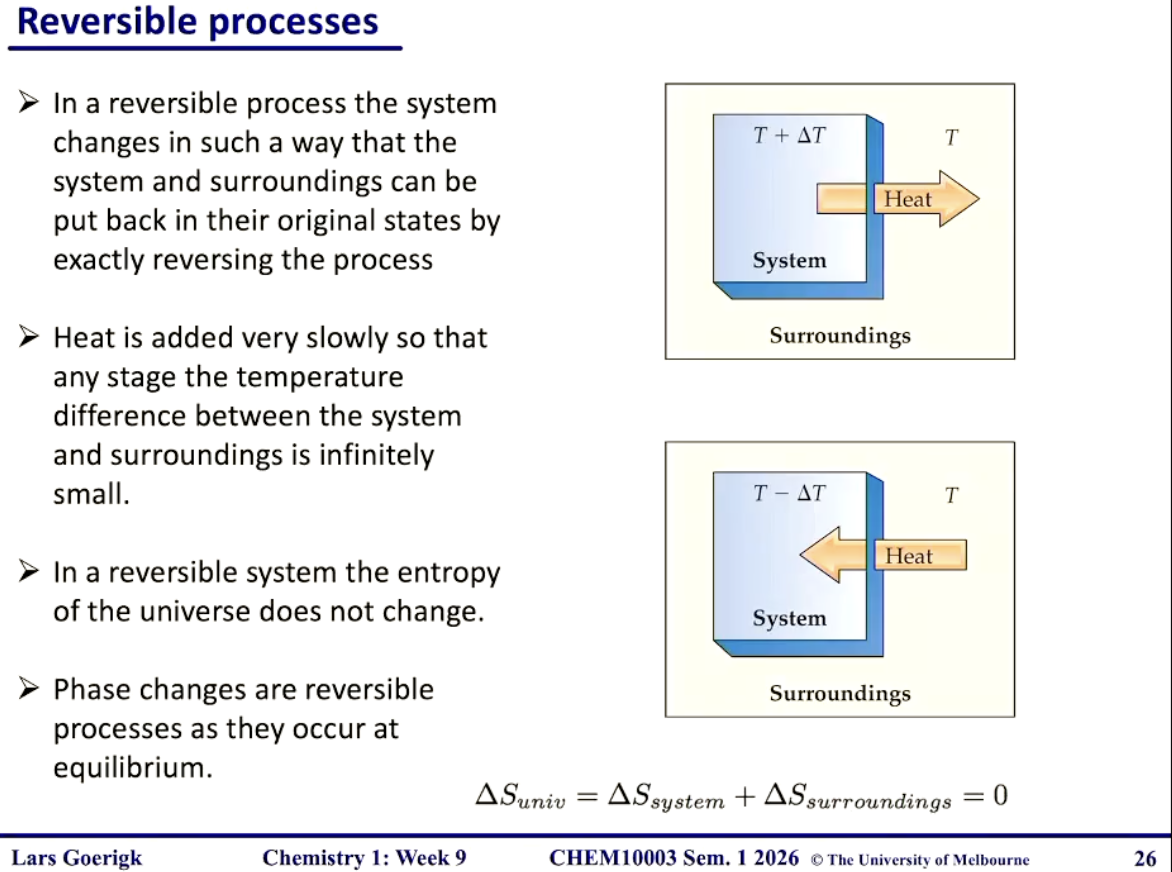
Reversible processes
system and surroundings can be put back to g states
eg. entropy doesn’t change in reversible system
temp can leave system and come back in
state changes
maximum amount of work is obtained
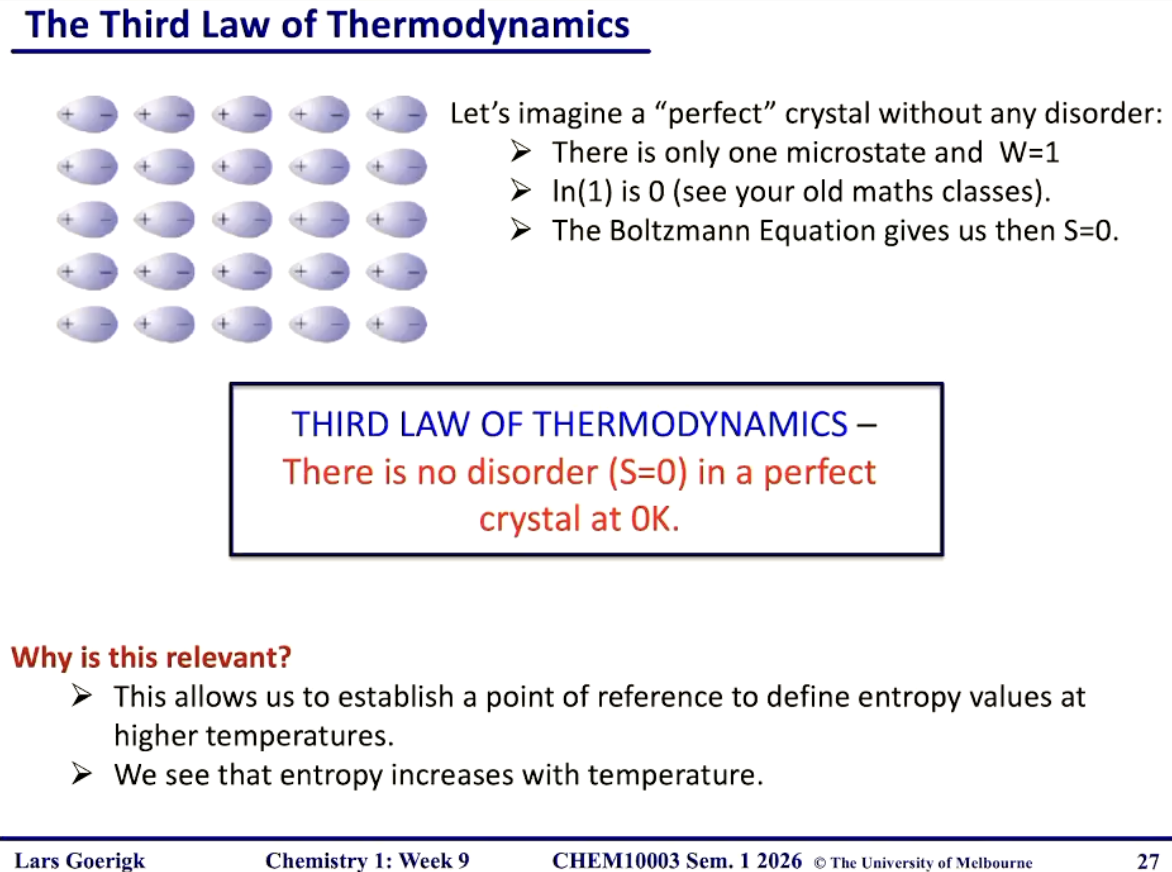
Third Law of Thermodynamics
entropy increases with temp
can get a value of the entropy of water bottle and by what bc we have a reference point
How can we find entropy
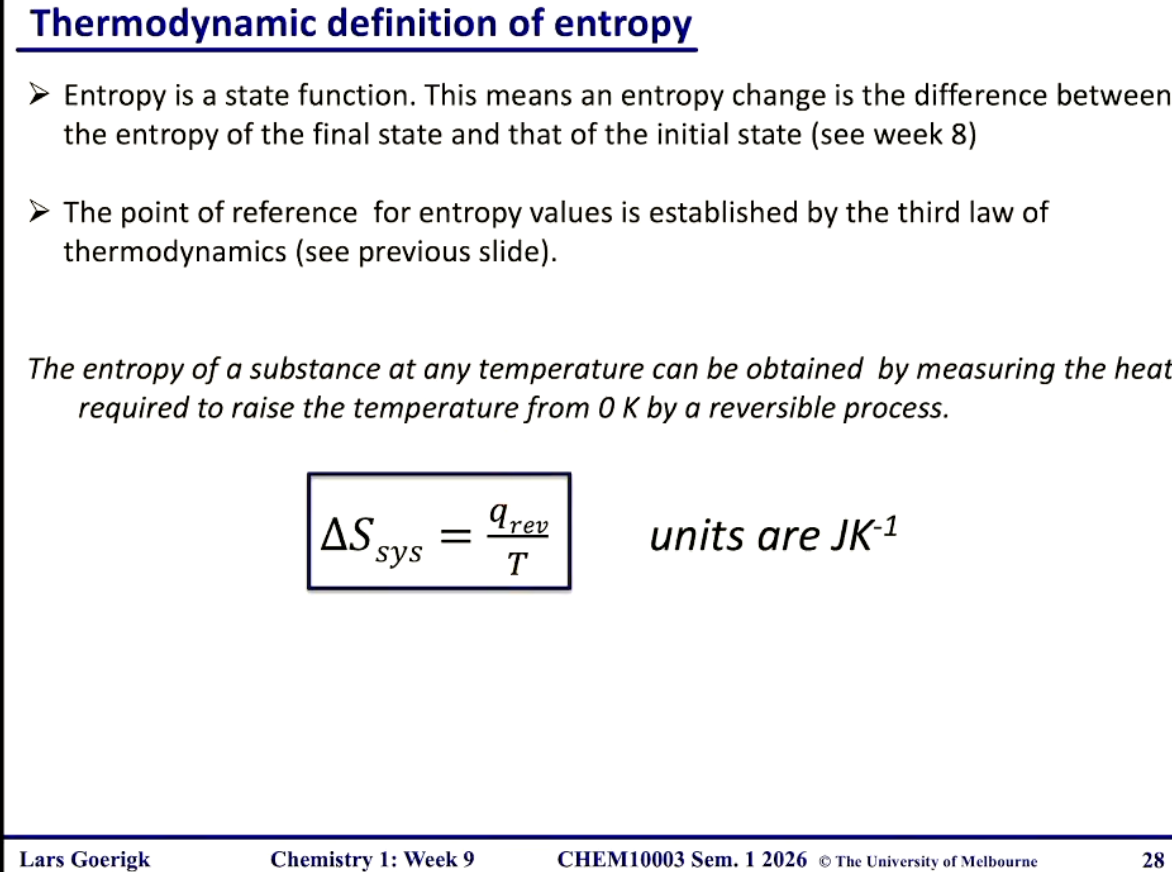
How to calc entropies
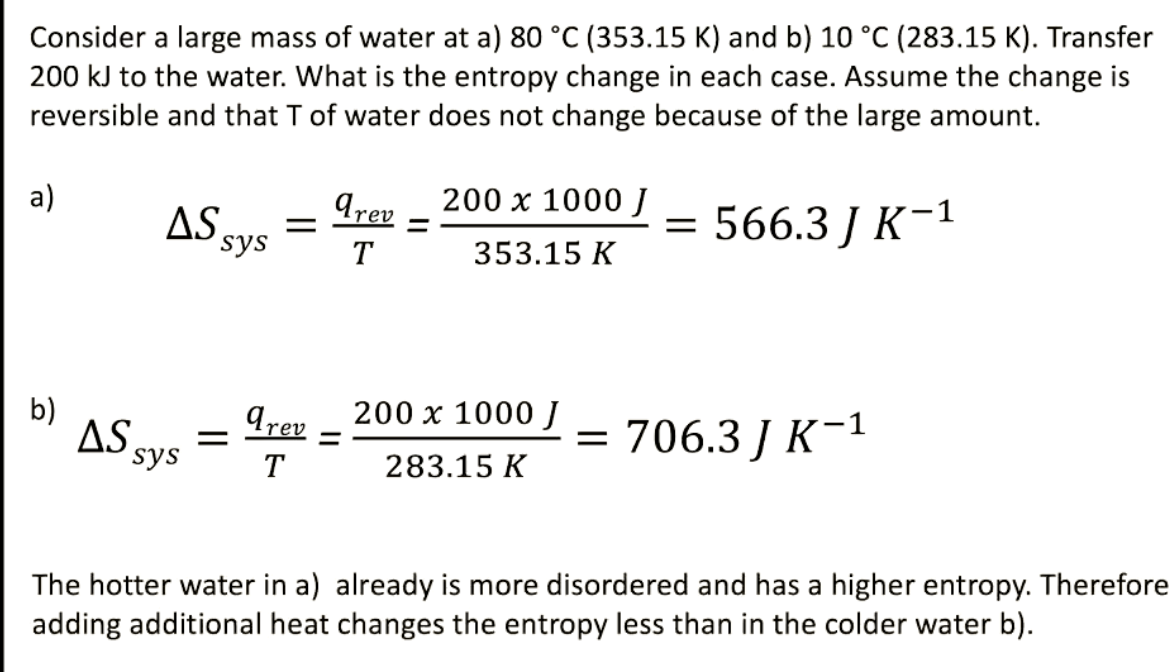
the heat put in in joules divided by temp
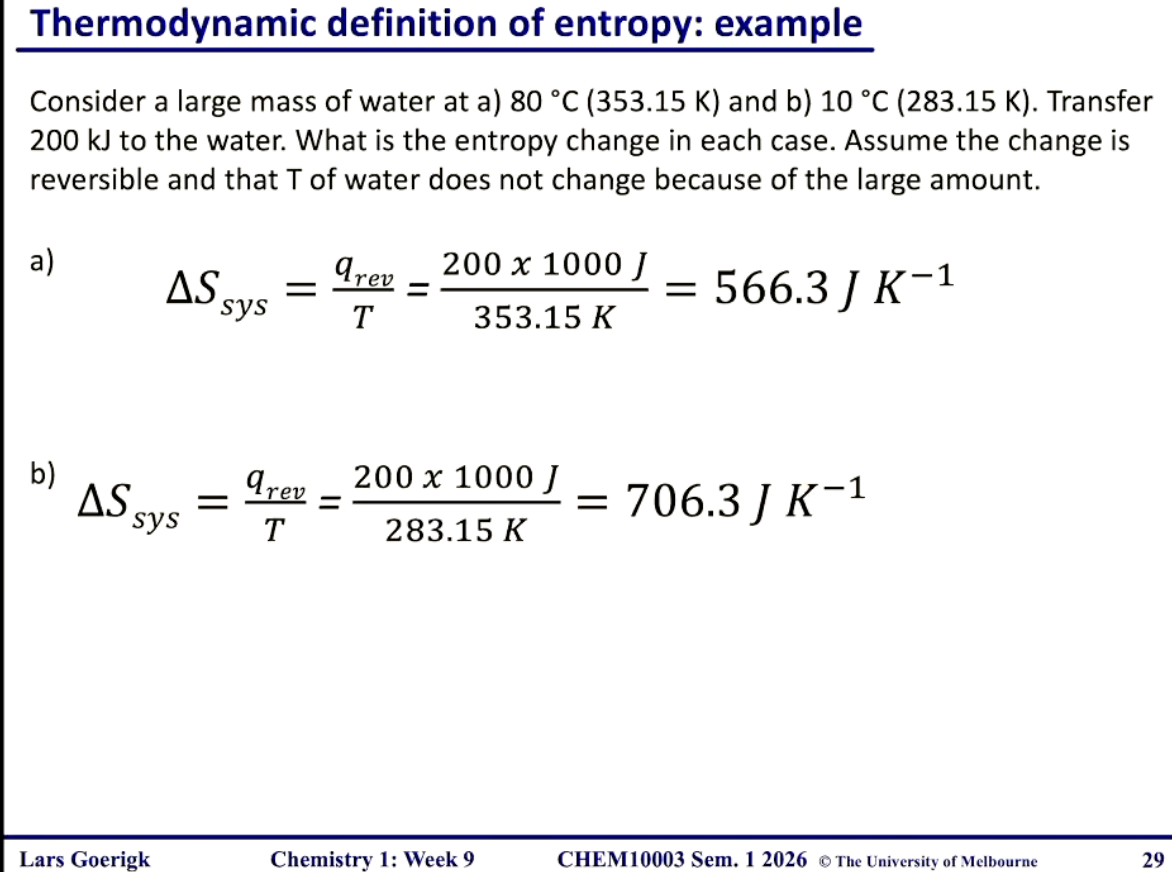
Why hotter water will have lower entropy value than cold
the hotter water was already more disordered so adding heat changes entropy less than cold water does
therefore, colder water have higher entropy increase
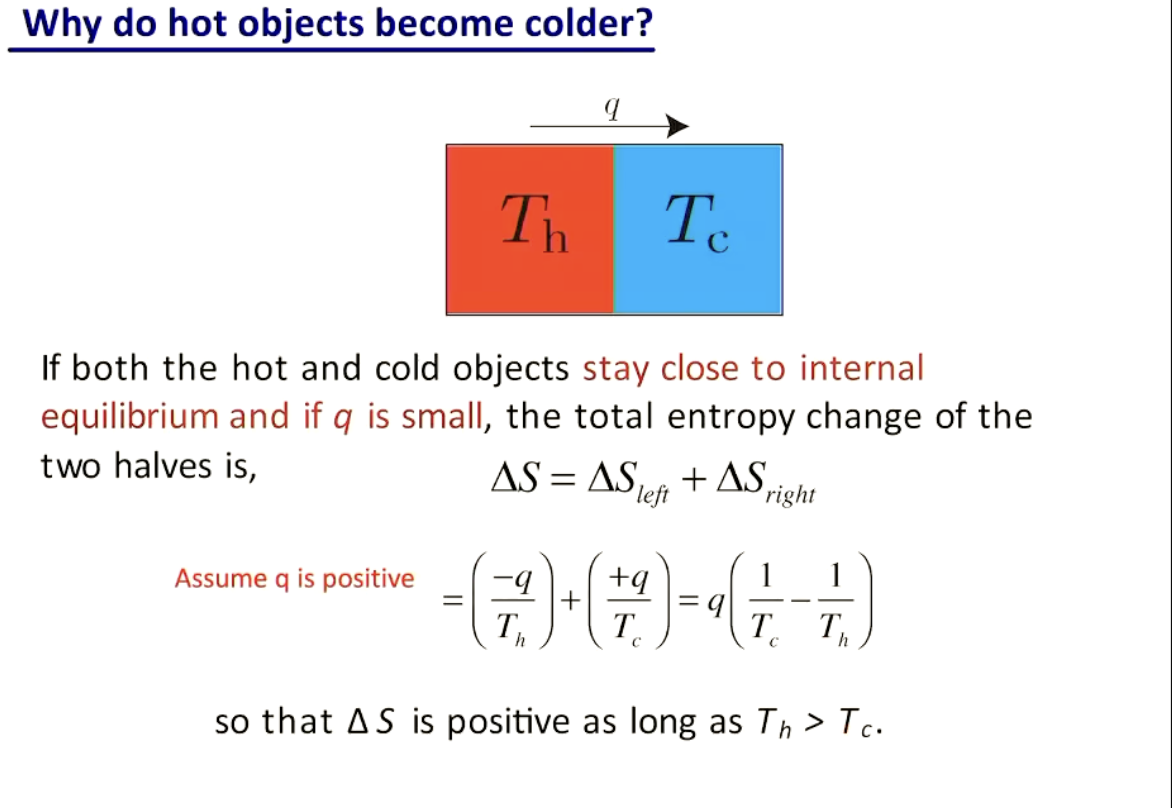
Why does heat always flow from hotter part to cooler part?
if system loses heat (so left bc the temp is already high) = minus sign
if it gains heat = plus sign
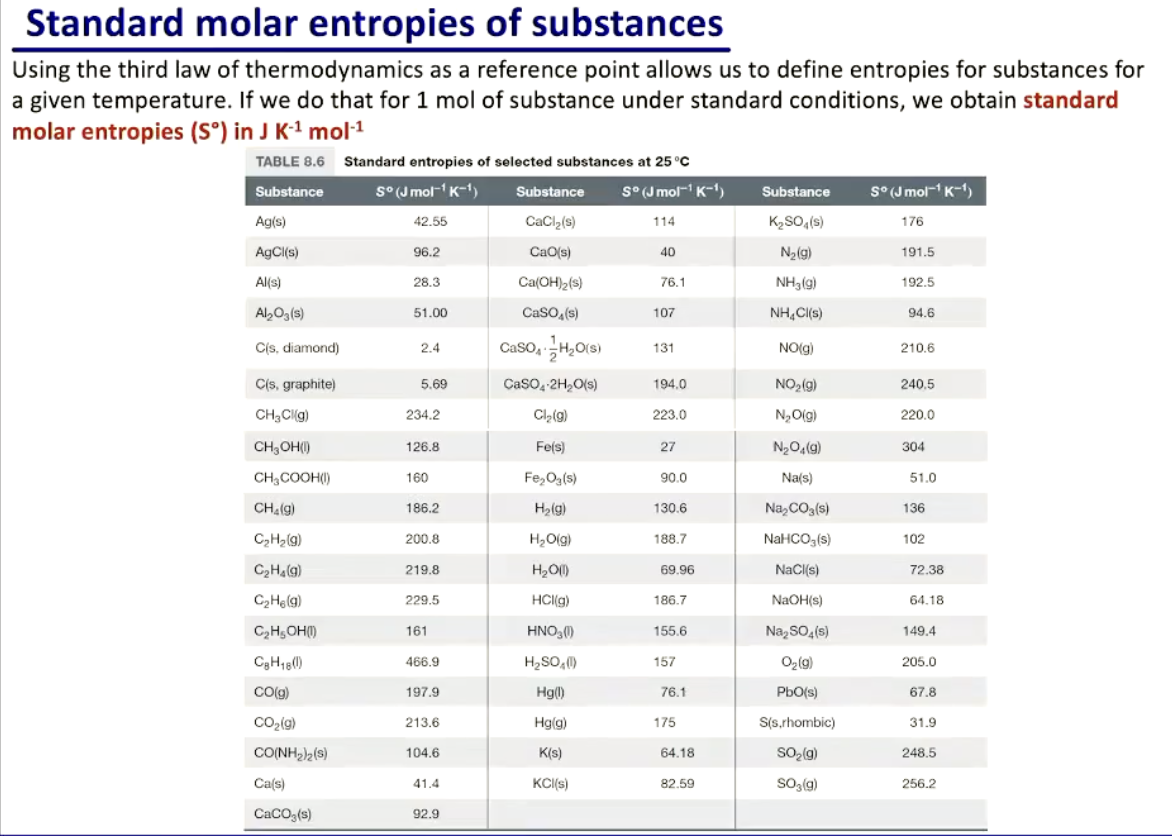
We can find the molar entropies of substances at certain temps
lower temp = lower entropy
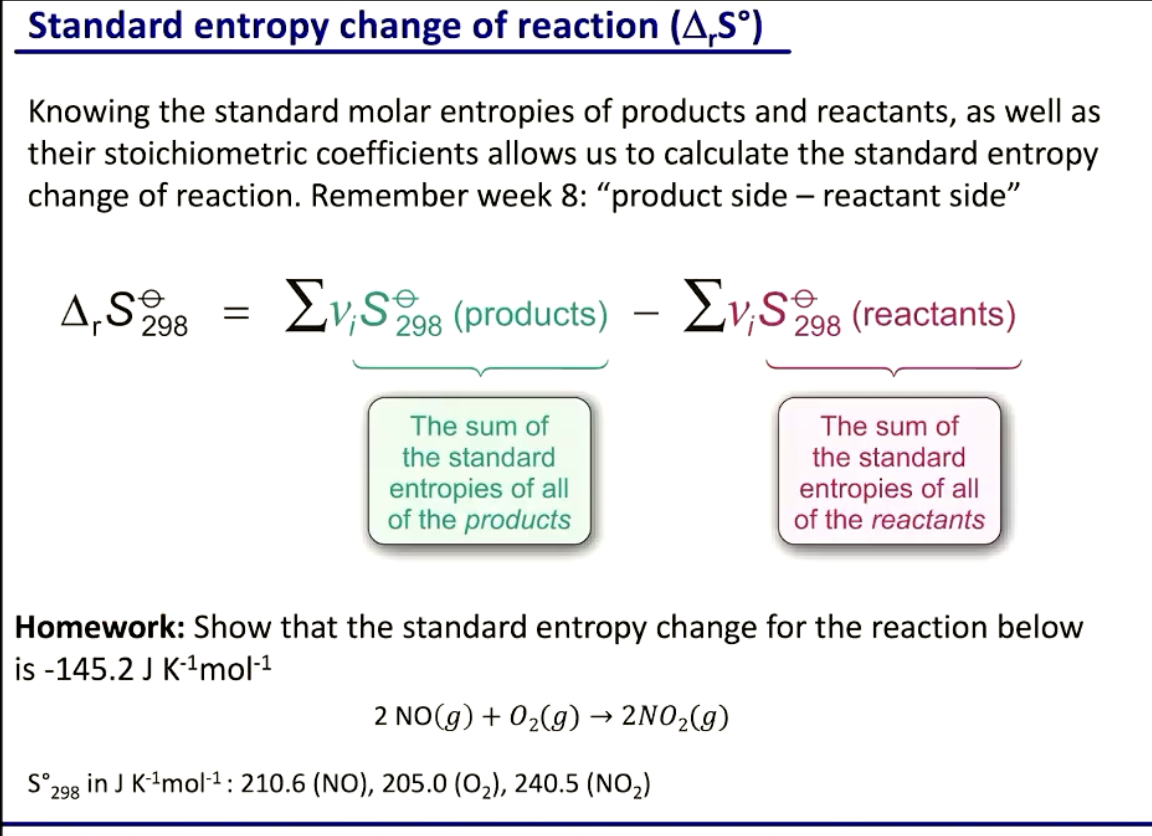
Standard entropy change of reaction
Entropy on molecular scale
1. Bigger/more complex molecule = higher entropy More atoms = more ways to move, rotate, vibrate = more disorder
2. Heavier molecule = higher entropy More mass = more accessible microstates
Entropy by states
gas > liquid > solid bc more freedom of motion
eg. H2 + O2 → H2O (l) = entropy decreases
Phase changes and Temp increase
at the exact state change points (phase changes = melting point/ evaporation point) → very sharp
entrop increases bc temp is being added to system
How to calculate entropy at points of phase change
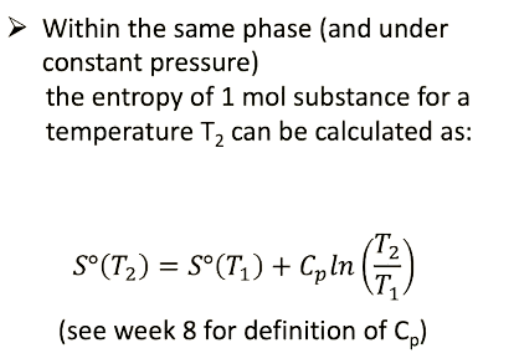
Phase changes and equilibrium
At a phase change (boiling or melting), you can calculate ΔS if you know ΔH and the temperature.
For boiling: ΔS = ΔH_vap / T_boiling
For melting: ΔS = ΔH_fus / T_melting
Enthalpy in J and temp in K
eg."Given enthalpy of vaporisation of mercury is 58.51 kJ/mol and boiling point is 629.7K, calculate ΔS"
ΔS = 58510 J/mol ÷ 629.7K = 92.9 J/K/mol
Law 2 thermodynamics
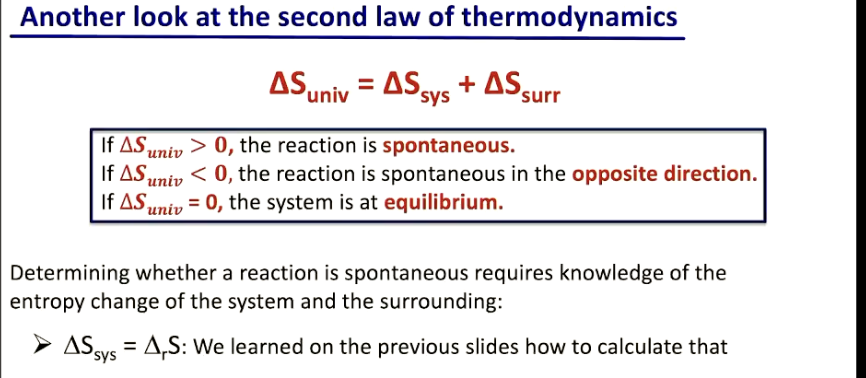
Entropy calc if given heat capacity

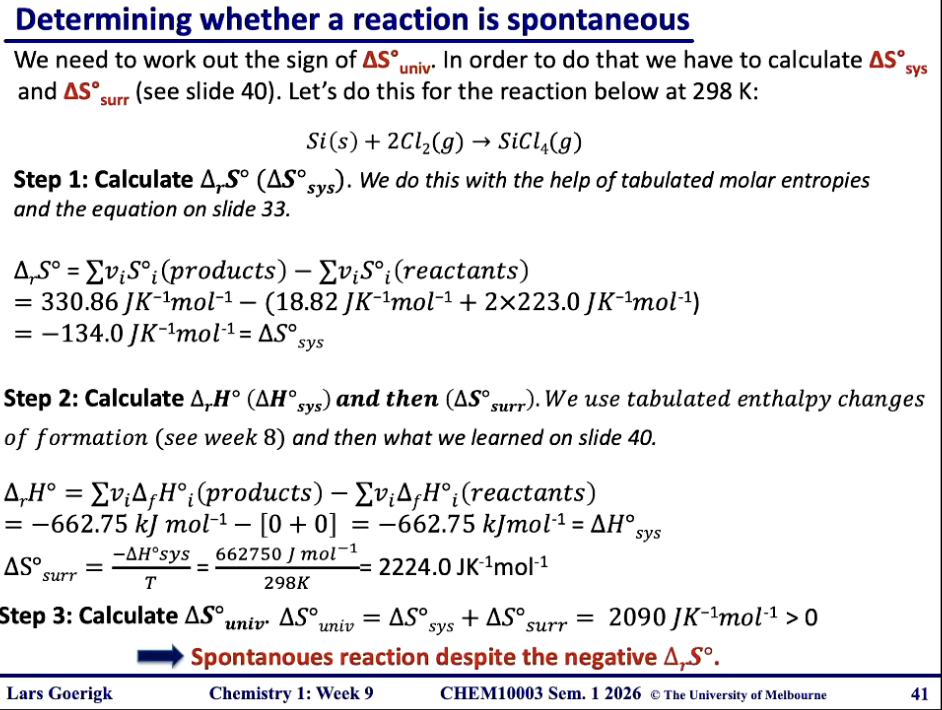
Determining whether a reaction is spontaneous - calculations incl. delta H and S
Q asks: delta S universe
Step 1: delta S system by
entropies of products - entropies of reactants
Step 2: delta H system by
Enthalpy changes of formation → products - reactants
Step 3: delta s surroundings by
-delta H system / T in K
Step 4: delta S universe
add both values tgt and i positive then spontaneous
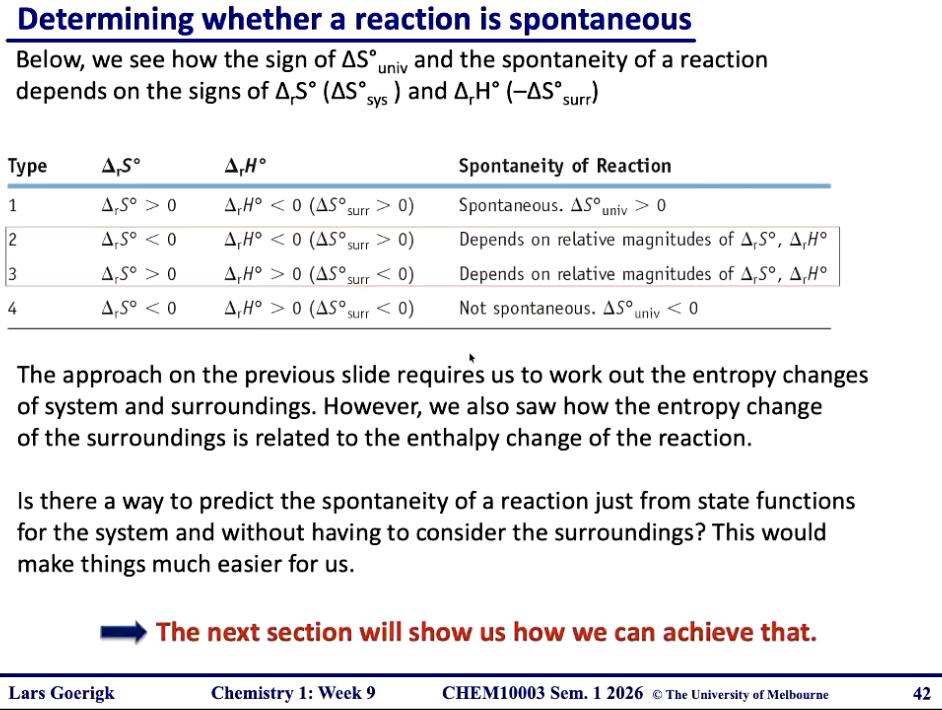
How to read the final Delta S universe value in terms of spontaneity
special cases: is exothermic and negative entropy → compare magnitude
vice versa
Gibbs Free Energy Change

What exactly is Gibbs free energy (G)
bc S and H are state functions, so it G
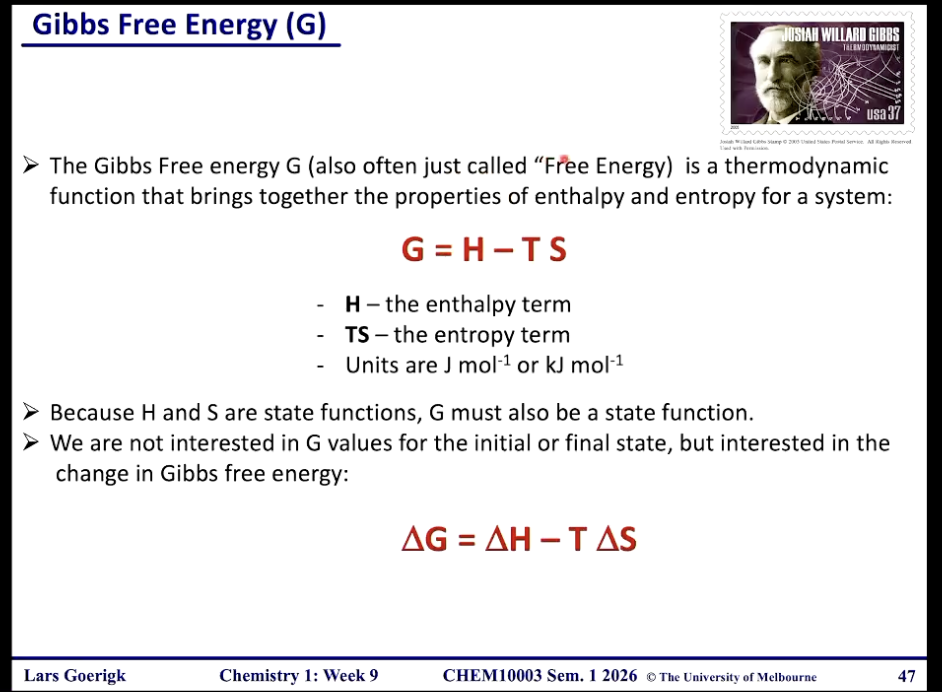

bc T is always positive, if S is positive then multiply → has to be negative
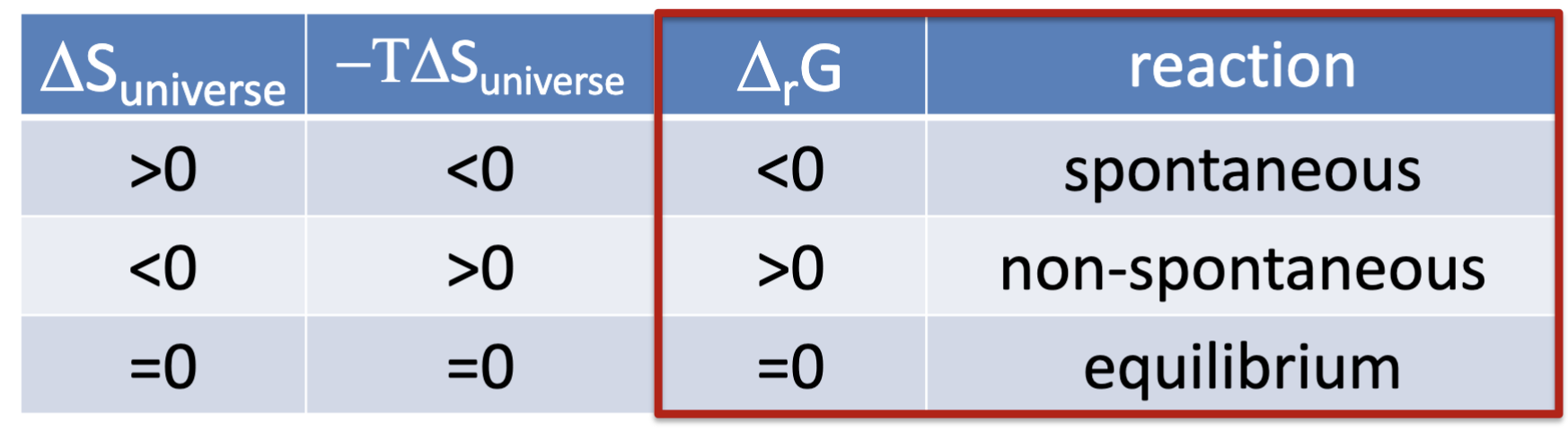
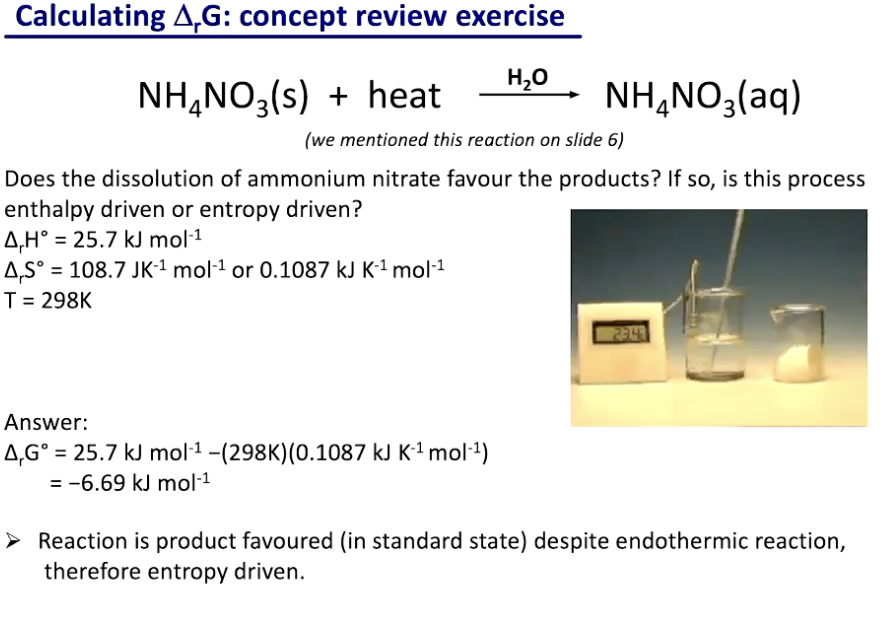
Example of determining spontaneity of reaction
Delta G with polymerisation
at low temps, delta H is negative but at high temps -TAS will dominate and delta G becomes positive
polymerisation no longer proceeds at certain temps
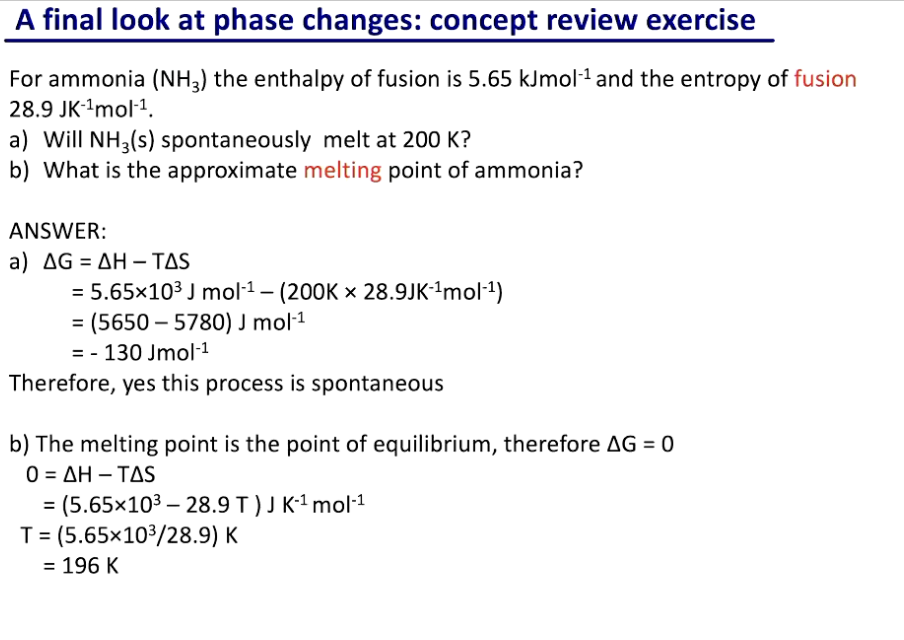
Why ice melts and water freezes spontaneously
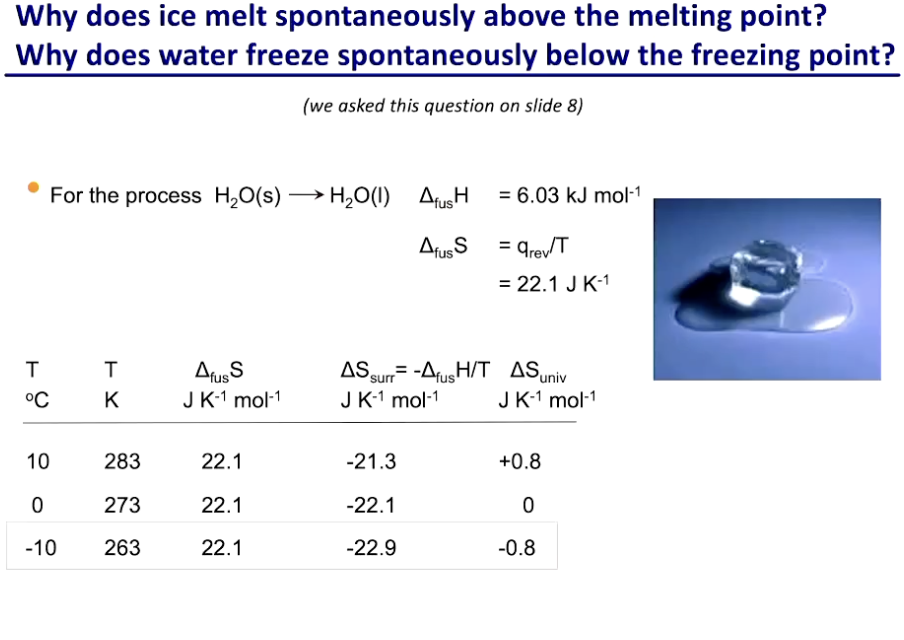
Phase changes worked example
Crossovers between enthalpy, entropy and gibbs
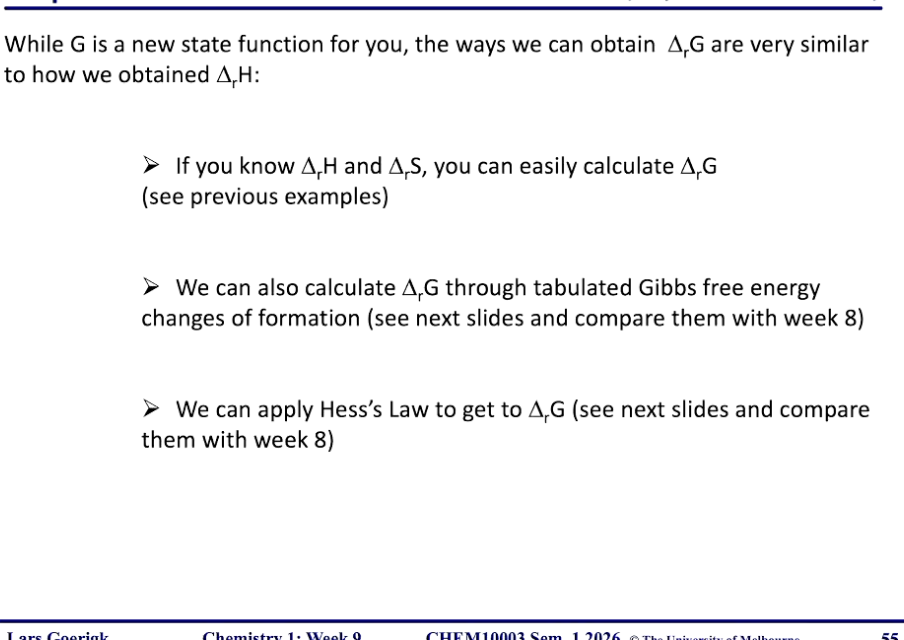
Standard gibbs free energy changes (Delta f G)