Regional/Neuraxial
 Call Kai
 Learn
Learn Practice Test
 Spaced Repetition
 Match
Match Flashcards
 Knowt Play
1/19

Earn XP
Description and Tags
Another weak area, but a more focused topic, rather than random tidbits. https://associationofanaesthetists-publications.onlinelibrary.wiley.com/doi/10.1111/anae.15276
Name | Mastery | Learn | Test | Matching | Spaced | Call with Kai | Chat |
|---|
No analytics yet
Send a link to your students to track their progress
20 Terms
What is the transducer position for a supraclavicular nerve block?
Transverse on the neck, superior to the clavicle, at the midpoint.
Ideally, how much local should you use for a supraclavicular nerve block?
20-25cc (per NYSORA)
What level of the brachial plexus is being blocked at the supraclavicular location?
The trunks
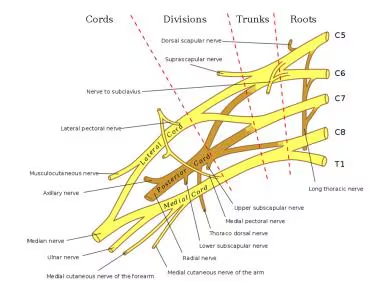
At the level of the supraclavicular nerve block, what artery (not the subclavian) may you run into if not careful?
Dorsal scapular artery
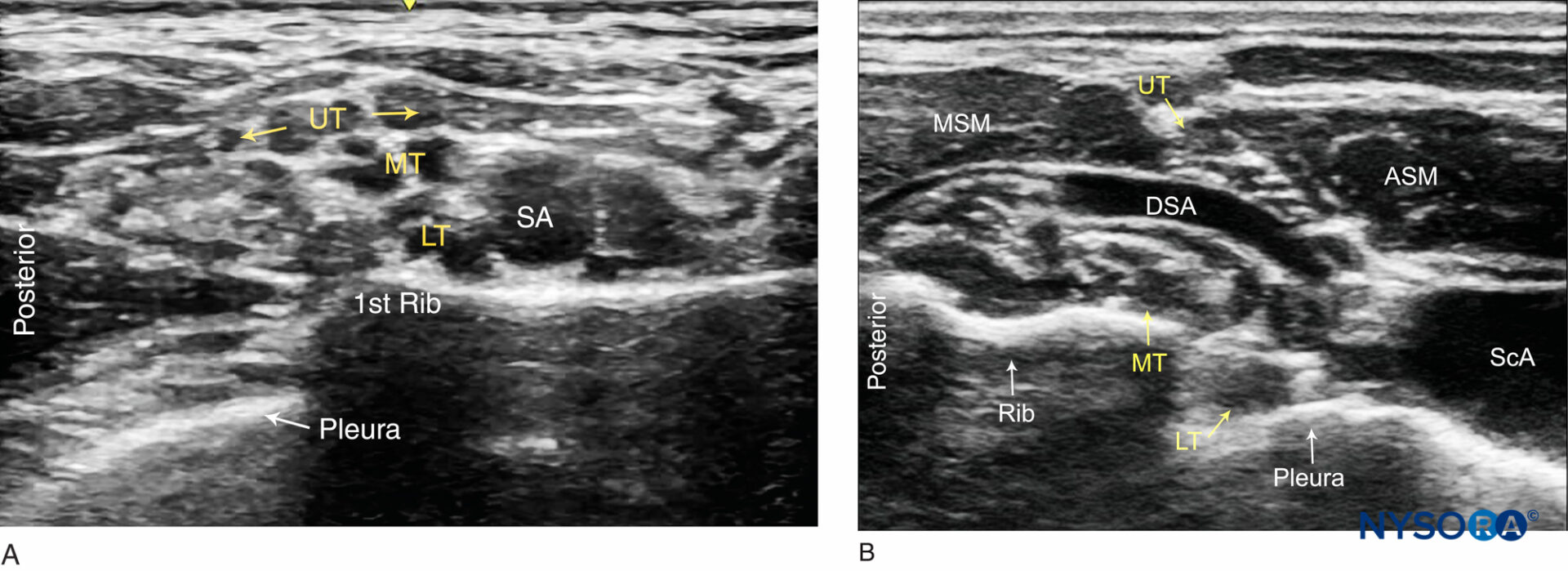
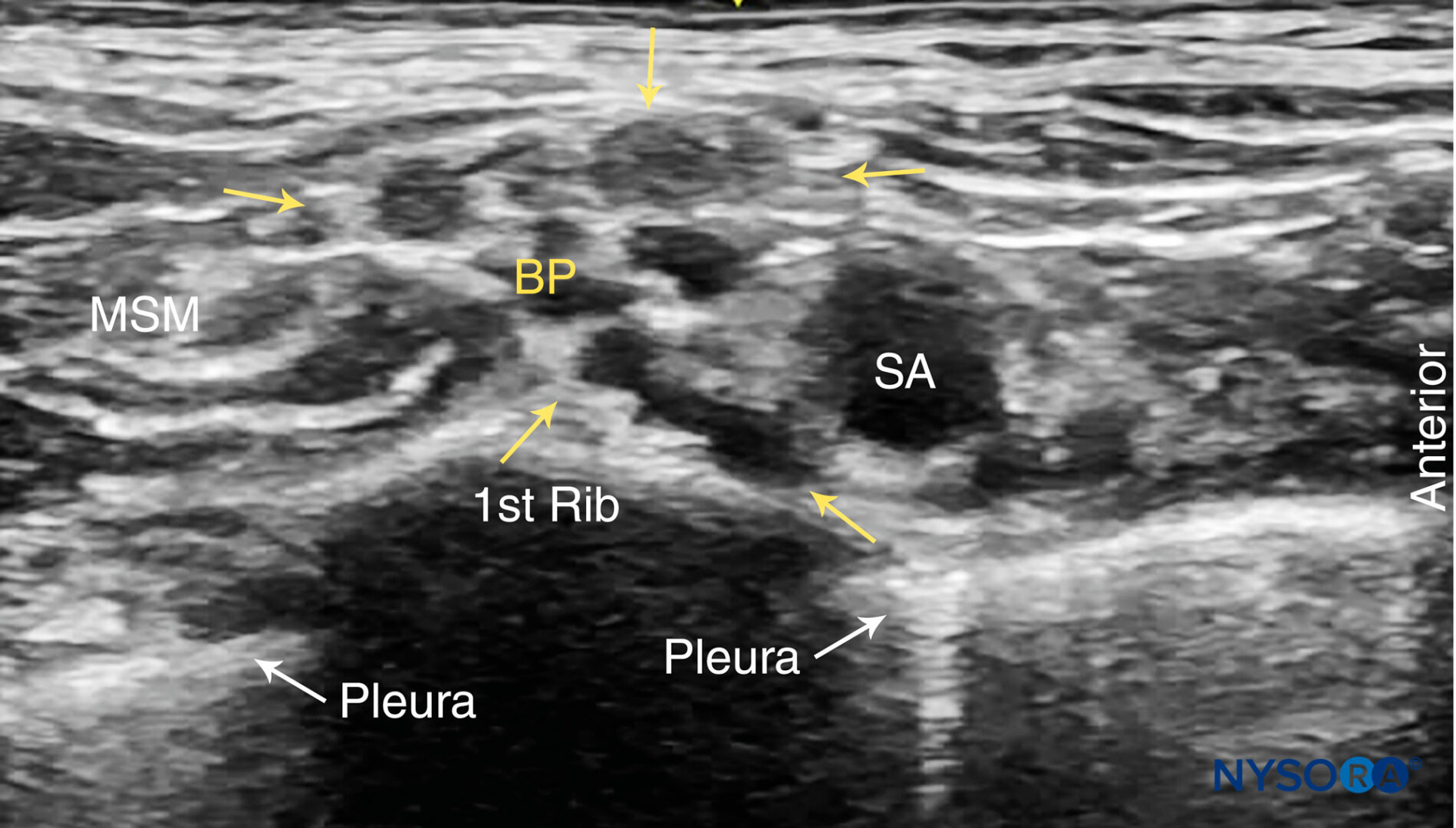
At the level of the supraclavicular nerve block, what are the muscles on either side of the plexus, as seen on US when performing the block>
the anterior and middle scalenes.
Recall that the subclavian artery courses over the first rib in between the anterior and middle scalenes.
Why can the skin of the medial arm be missed after a supraclavicular nerve block?
Because the intercostobrachial nerve provides the sensory innervation to that area and is T2, therefore not part of the brachial plexus (C5-T1)
What are you concerned about if your opening injection pressure is >15 psi while doing a nerve block?
Intrafasicular injection - which can cause nerve damage and ischemia
What is a typical skin-to-epidural space distance?
4-6cm
80% of patients in a study of 3200 pts
What is the rationale for adding epinephrine to local anesthetics?
Vasoconstriction - prolongs duration by decreasing removal from site via blood vessels
Detection of possible intravascular injections with increasing heart rate
What is the ratio used to achieve equianalgesic dosing IV:epidural:spinal?
100:10:1
However, can’t strictly go based on this because each opioid has different characteristics that impacts how it behaves in the epidural and intrathecal spaces (lipophilicity, mechanism, etc)
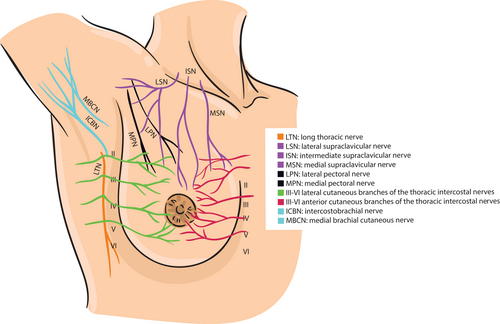
What are the neural targets for the PECS I block?
Lateral and medial pectoral nerves
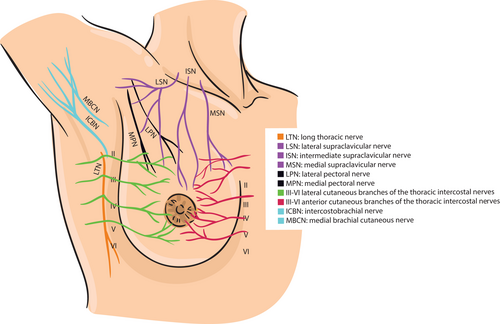
What are the neural targets for the PECS2 block?
Lateral & medial pectoral nerves, the lateral cutaneous branches of T2-T6 intercostal nerves.
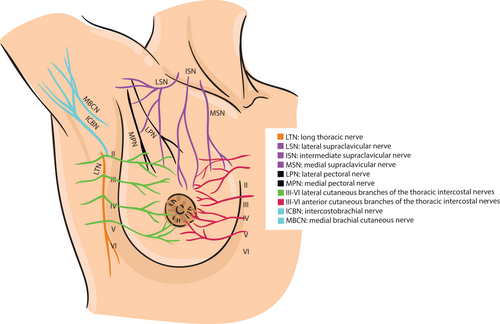
What’s the neural target of the serratus block?
Lateral cutaneous branches of T2-T7 intercostal nerves.
The deep block (what we do) can also hit the main trunk of intercostal nerves
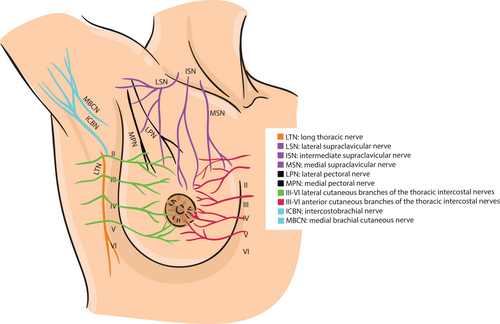
Which chest wall block is performed by injecting local deep to the internal intercostal muscle, superficial to the transversus thoracis muscle, just lateral to the sternal edge?
Transversus thoracis plane block
What is the neural target of the transversus thoracis plane block?
Anterior cutaneous branches of T2-T6 intercostal nerves
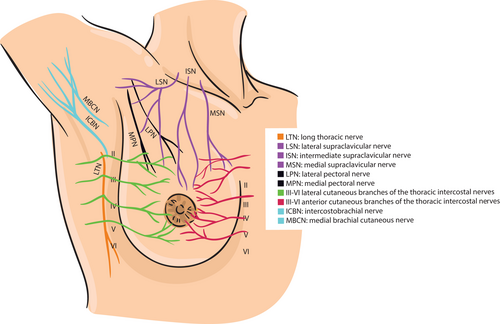
What is the neural target of the parasternal nerve block (AKA pectointercostal fascial plane block)?
Anterior cutaneous branches of the T2-T6 intercostal nerves
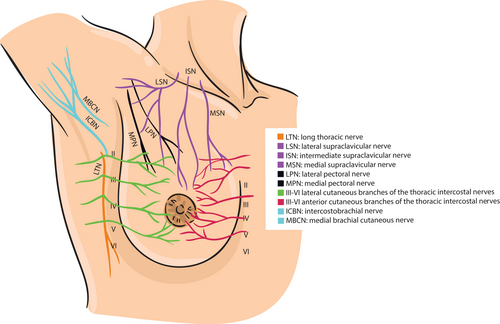
What is Hilton’s law?
Nerves that innervate the muscles acting at or across a joint are also responsible for the sensory innervation of the articular soft tissues (joint capsule, ligament, synovium).
This indicates that nerves purely thought of as motor may have a larger role in pain transmission than previously thought.
The anterolateral chest and axillary regions are innervated by 5 groups of nerves; what are they?
Anterior cutaneous branches T2-T6
Lateral cutaneous branches T2-T6 thoracic intercostal nerves
Long thoracic nerve
Supraclavicular nerves
Pectoral nerves
When using a nerve stimulator, at what current do you suspect that your needle is intraneural?
0.2 mA
What are the ways to prevent nerve injury when doing a nerve block?
Using ultrasound
Use pressure monitoring
Use nerve stimulator