Lect 2: Connective and Specialized Tissue
 Call Kai
 Learn
Learn Practice Test
 Spaced Repetition
 Match
Match Flashcards
 Knowt Play
1/54

There's no tags or description
Looks like no tags are added yet.
Name | Mastery | Learn | Test | Matching | Spaced | Call with Kai | Chat |
|---|
No analytics yet
Send a link to your students to track their progress
55 Terms
What are the 3 basic elements thhat compose connective tissue?
cells, fibers, and ground substance
What are the fibers and ground substance of connective tissue collectively referred to?
fibers + ground substance = ECM (extra cellular matrix)
*cells = suspended in the ECM
What is collagen? (Basic)
long strands of protein for tensile strength and flexibility
(connective tissue fiber)
3 main types: I, II, III (but 28+ have been identified)
Where is type I collagen found?
(type I = most common)
tendon, ligament, muscle, bone
Where is type II collagen found?
articular cartilage
Where is type III collagen found?
pliable tissue: blood vessels, wounds
What are reticular fibers?
(connective tissue fibers)
thin branching proteins made of specific Type III collaen fibers
What do reticular fibers do?
act as a supportin net in soft tissues / organs
What are elastic fibers?
(connective tissue)
wavy bundle of elastain (protein) that tolerate stretch
What do elastic fibers do?
allow for tissue to return to origional shape after stretch
What are 8 types of specialized tissues?
nerves, bones, muscles, tendons,ligaments, synovium, cartilage, fascia
Motor vs Sensory electrical Path through body (in laymans terms)
sensory input (body > brain)
motor output (brain > body)

What are the parts/functions of a neuron? (ABC)
A) dendrites: input
B) cell body (Soma): processing, organelles
C) Axon: output
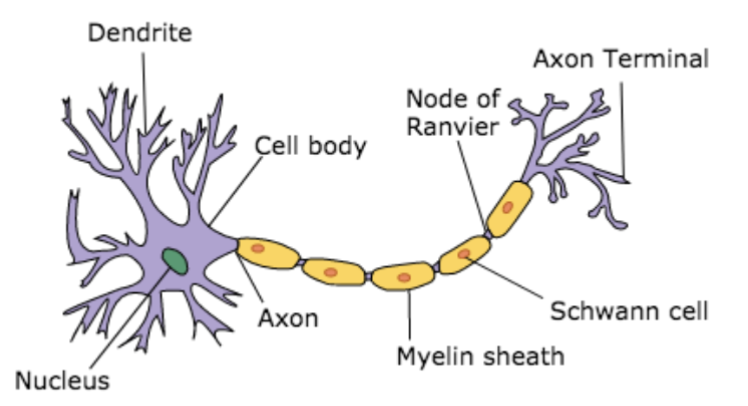
What is the structure of a spinal nerve?
bundles of nerves, blood vessels and connective tissue entering/exiting the spinal cord
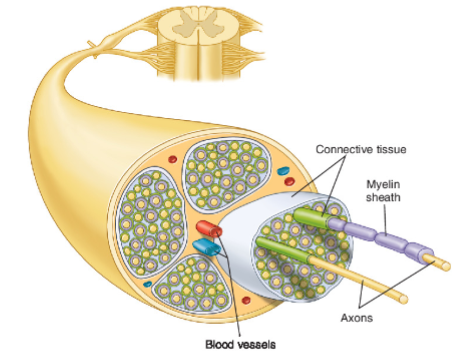
How would you describe the parts/purpose of the spinal nervse as they enter/exit the spinal cord?

What is the (simplified) neural pathway?
sensory input > info processed at the level of the spinal cord and brain
> CNS direct body to move
What is osseous tissue?
bone tissue
What are 4 purposes of bone?
store calcium / phosphate
form blood cells
protect vital organs
mechanical basis for movement
What is osseous tissue composed of?
collaen and mineral deposits
What bone claassification are the humerus and femur examples of?
long / tubular
What bone claassification are the carpals / tarsals examples of?
short / cuboidal
What bone claassification are the bones of the cranial vault examples of?
flat (= protective in function)
What bone claassification are the face bone and vertebrae examples of?
irregular
What bone claassification is the patella an example of?
sesamoid (prevent tendons from wearing)
‘looks like sesame seed’
What are the 5 bone form (shape) classifications?
long/tubular
short/cuboidal
flat
irregular
sesamoid
Is blood supply important to bones?
YES, need rich arterial supply
no blood = avascular necrosis

What factor regarding blood effects fracture repair in elderly populations?
decreased circulation = inc in healing time
What are the 4 stages of bone healing?
inflammation
soft callus formation
hard callus formation (reabsorbed in remodeling stage)
remodeling
What is the range immobiliization time related to bone healing?
3 weeks for smaller bones to
8+ weeks for long bones
Wolff’s Law
describes bone remodeling (and tissue remodeling)
growing bone adapts to the forces placed on it
abscence of normal stress > deformity / injury
About what percent of body weight is from skeletal muscle?
40%
3 types of muscle
smooth
cardiac
skeletal
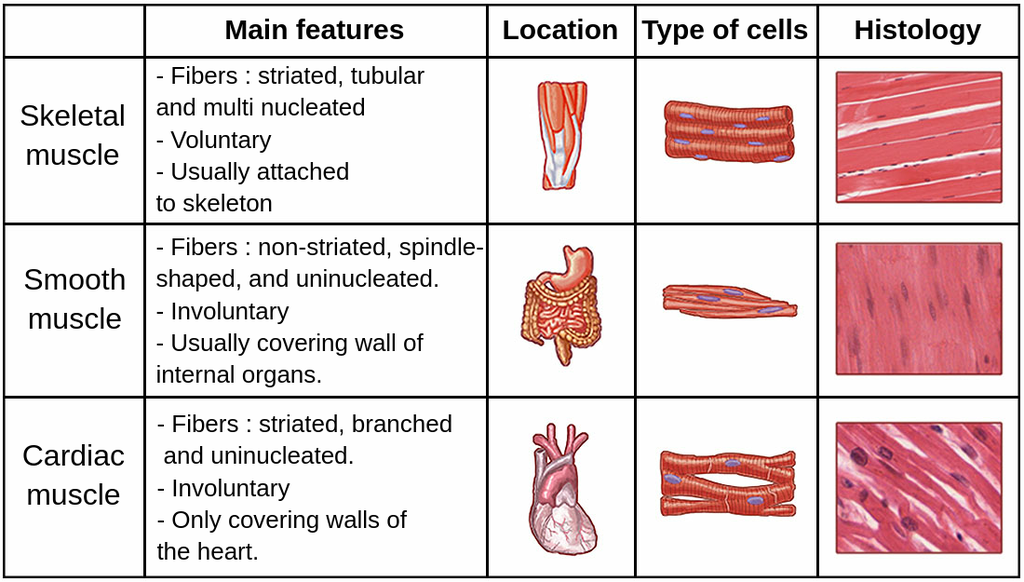
What are 3 things muscles are constantly (unconsciously) working to do?
pump blood
move food through intestines
maintain posture
What are 4 places you can find smooth muscle?
Hair follicles- responsible for making hair stand on end
Pupil of eye- dilates and contracts pupil
Blood vessels and bronchioles
Urinary bladder
What are the key functional attributes of smooth muscle?
= visceral muscle
peristalsis
emesis (reverse peristalsis)
What are the key attributes of cardiac muscle?
involuntary
muscle fibers special characteristics to facilitate synchronized beating
connection between muscle fiber allow quick electric wave passing
What are the key attributes of skeletal muscle?
voluntary (or reflex- without conscious control)
What connects mucle to bone? what part of the bone does it attach to?
Sharpey’s fibers of tendon connect muscle to the periosteum of bone
How are skeletal muscle fibers arranged?
fibers > bundles (fascicles)
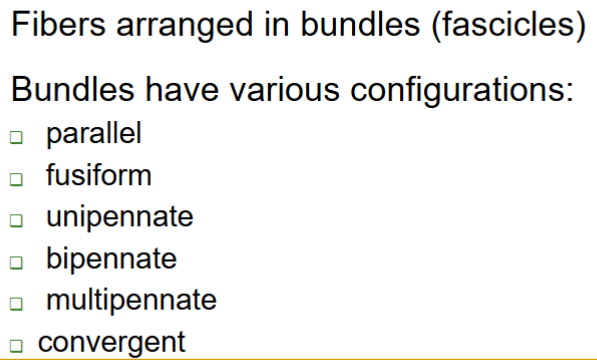
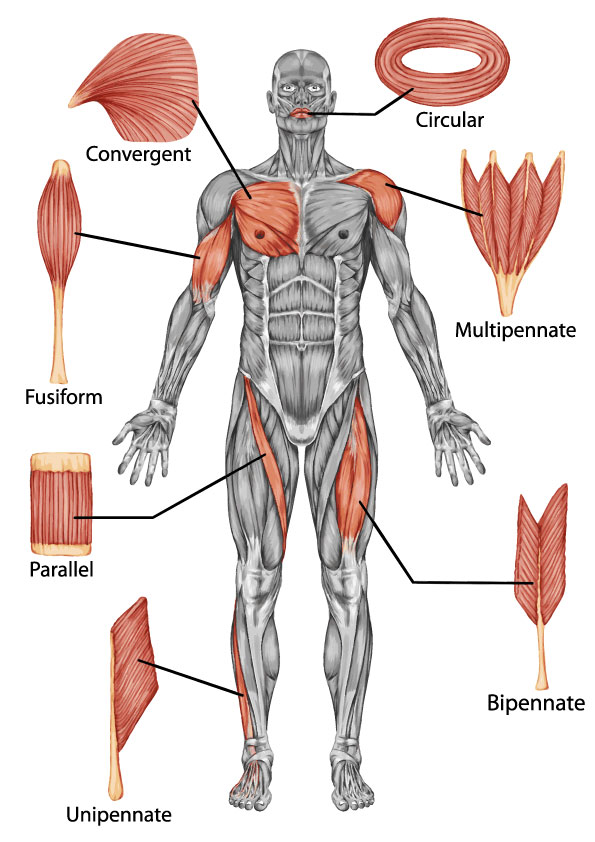
What are different bundle configurations of skeletal muscles?
parallel
fusiform
unipennate
bipennate
multipennate
convergent
What are the main attributes of Type I skeletal muscles?
slow twitch
“red” fibers
slow
endurance
postural
What are the main attributes of Type II skeletal muscles?
fast twitch
“white” fibers
anaerobic activity
bursts
Motor unit
a neuron + all the muscle fibers it innervates
(mult neurons used to innervate all the fibers inn one muscle)
*neuron activates ALL fibers in amotor unit
Motor endplates
in muscle fibers where neurons terminate
How does the number of motor units in muscles used for more refined movements change?
more motor units = more precise control
Describe the muscle contraction: concentric
muscle shortens
force of muscle > greater than > opposing force
‘concentrating pose bring arm to forehead’ ‘cheers’
Describe the muscle contraction: Eccentric
muscle lengthens
opposing force becomes greater than muscle force
*can be involuntary! (until- failure) or voluntary!
Describe the muscle contraction: Isometric
no length change
muscle contract but stationary
‘pushing a metric ton’
“gripping cup just enough that it doesn’t slide out of your hand”
is an example of what type of muscle contraction?
isometric
What are tendons?
attach muscle to bone (ligaments = like, so t is the opposite)
tough, cable-like fibrous tissue
flexible to bend / shock absorb
can be vascular depending on if its surrounded by blood vessels or tendinous sheath
What are ligaments?
connect bone to bone (Ligaments connect Like)
enhance joint stability
guide joint motion
*provides proprioceptice feedback (contains mechanoreceptors and free nerve endings)
can initiate protective reflexes
What joint connector can provide proprioceptive feedback?
Ligaments
contain mechanoreceptors + free nerve endings
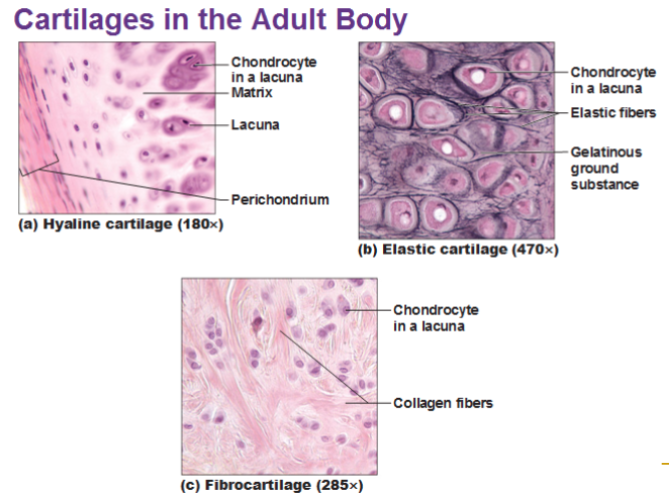
Cartilages
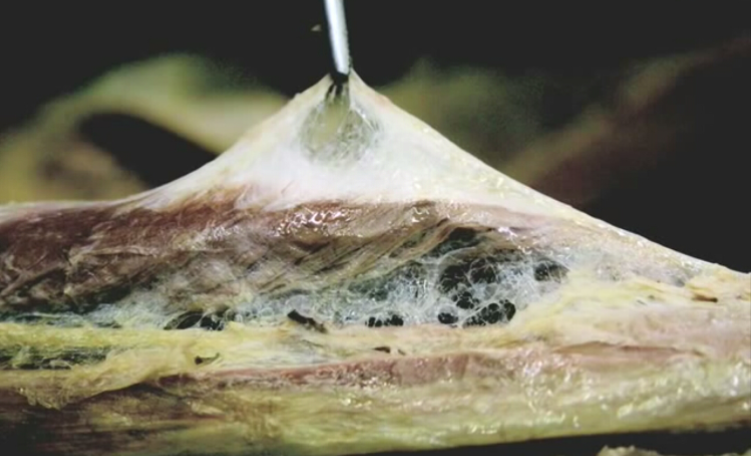
What is fascia?
thin membrane of connective tissue
covers structures of the body
protect / bind to structural units
seperate dif body regions / systems
sheathes nerves / blood vessels
continuous matric around all body structures
What are some limitations of connective tissue?
variety of limits bc variety of connective tissue types
many patients in OTs have 1+ limits impacting their function
(is it in video portion of lecture?)