Art History Test 1
 Call Kai
 Learn
Learn Practice Test
 Spaced Repetition
 Match
Match Flashcards
 Knowt Play
1/85

There's no tags or description
Looks like no tags are added yet.
Name | Mastery | Learn | Test | Matching | Spaced | Call with Kai | Chat |
|---|
No analytics yet
Send a link to your students to track their progress
86 Terms

Leonardo da Vinci, The last supper, Oil and tempera on plaster, 1495-1498

Sebastiano del piombo, Portrait of a Man, Said to be Christopher Columbus, 1519, oil on canvas, Metropolitan Museum, New York

Anthony van Dyck, Portrait of Elena Grimaldi Cattaneo and a Black Attendant, 1623, oil on canvas

Raphael, The School of Athens, 1509-11, fresco, Stanze di Raffaello, Vatican Palace, Rome

Who is this and why do I care?
Petrarch, 14th century italian scholar and poet and is considered the father of humanism
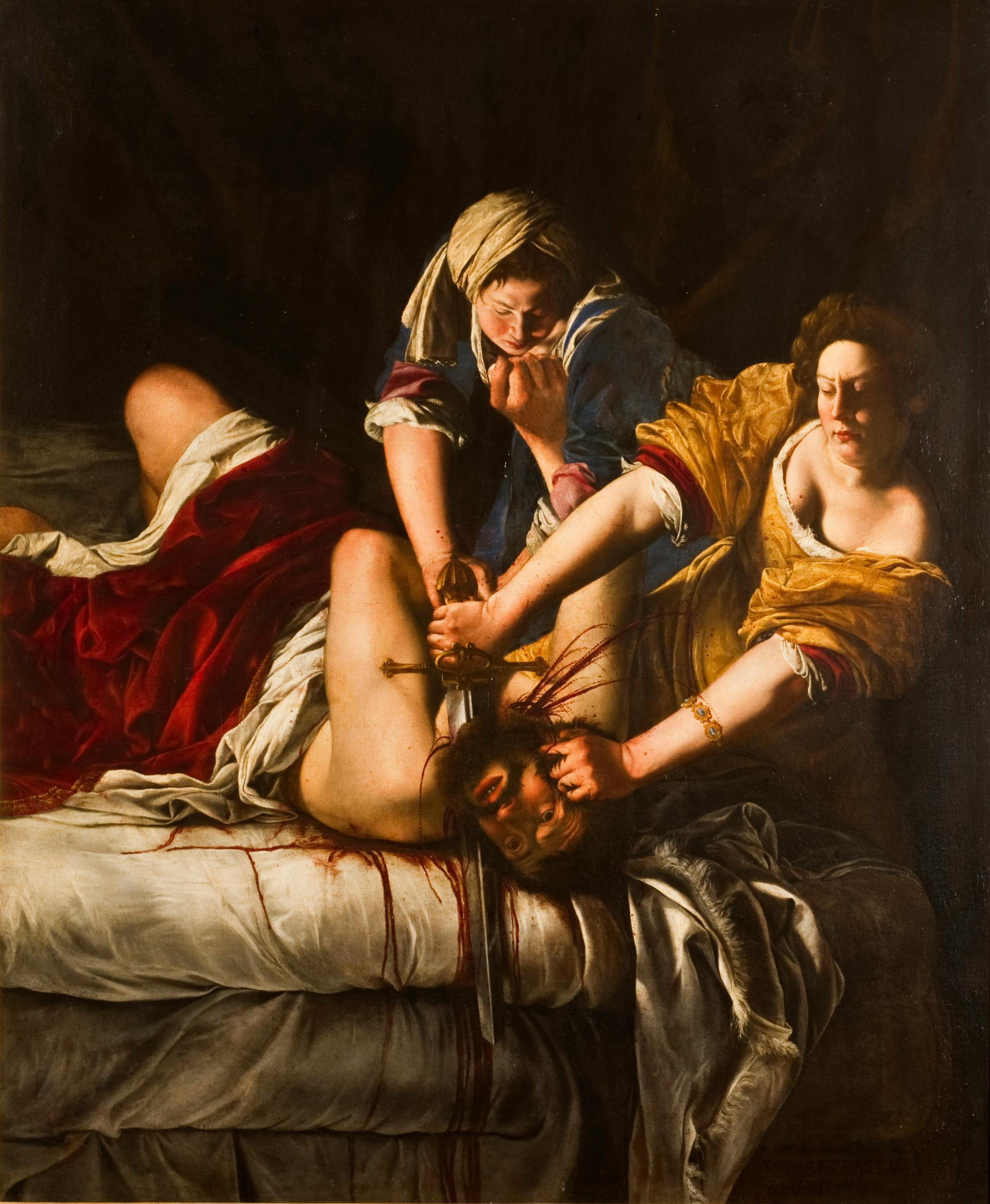
Artemisia Gentileschi, Judith Beheading Holofernes, c.1620, oil on canvas, Uffizi Gallery, Florence. Example of baroque art

Titian, Woman with a Mirror, c.1515, oil on canvas, Louvre Museum, Paris

Bronzino, Portrait of a Young Man with a Book , c.1530, oil on panel

Sacra Conversazione, iconography
A composition type of Renaissance painting in which ‘attendant saints are grouped in a unified space around the centralized Virgin and Child in a single panel.
Piero della Francesca, Montefeltro Altarpiece (The Brera Madonna), 1472, tempera on panel, 248 cm × 150 cm (98 in × 59 in), Pinacoteca di Brera, Milan
the renaissance
A term that means “rebirth,” referring to a period of cultural dynamism between the 14th and 17th centuries in Europe.
Baroque
A western style of artistic production from c.1600-1750 characterized by material exuberance, dramatic, exaggerated motion, and a sense of grandeur, awe, or surprise.

Perugino, Madonna and Child Enthroned with Saints John the Baptist and Sebastian, 1493, oil on panel
Stigmata
marks corresponding to those left on Jesus’ body by the Crucifixion, said to have been impressed by divine favor on the bodies of certain saints.
Pieta
the Virgin Mary holding the dead body of Jesus Christ on her lap or in her arms, following the Crucifixion
Guild
An association of craftsmen or merchants, often holding considerable political and economic power.

Campanile: bell tower attached to church castle or palace
Arnolfo Di Cambio, Palazzo Vecchio, 1299-1315, Florence

Loggia: Gallery or room with one or more open sides (ex. palazzo vecchio). Benci di cione and simone di francesco talenti, 1374-82

Humanism
The worldview centered on the nature and importance of humanity and human achievement, which emerged from the study of Classical antiquity.
All’antica
In the manner of the ancients, used in reference to architecture.

Leon Battista Alberti, Santa Maria Novella Facade, Marble, 1470, Florence
Mendicant orders
Religious groups comprised of male members a lifestyle of poverty, traveling, and living in urban areas for purposes of preaching, evangelization, and ministry, especially to the poor
Magnificence
A moral virtue that consists of spending great amounts of money on appropriately large scale and grand, things, befitting to one’s station in society, and often for the public good

Santa Maria del Fiore, the Duomo, 1296-1436.
Filippo Brunelleschi, dome, 1420-1436
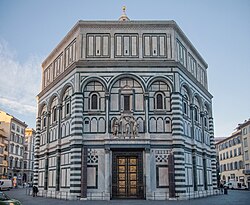
St John’s Baptistry, 1059 to 1128, sandstone and marble, Florence
Key terms for perspective
*Horizon line: Where the sky appears to meet the ground.
* Vanishing Point: The vanishing point is located near the center of the horizon line. The vanishing point is also where all orthogonals that run towards the horizon line appear to converge.
*Orthogonals: All parallel lines that converge in a single vanishing point on a composition's horizon line.

Masaccio, The Holy Trinity, c.1426-1428, fresco
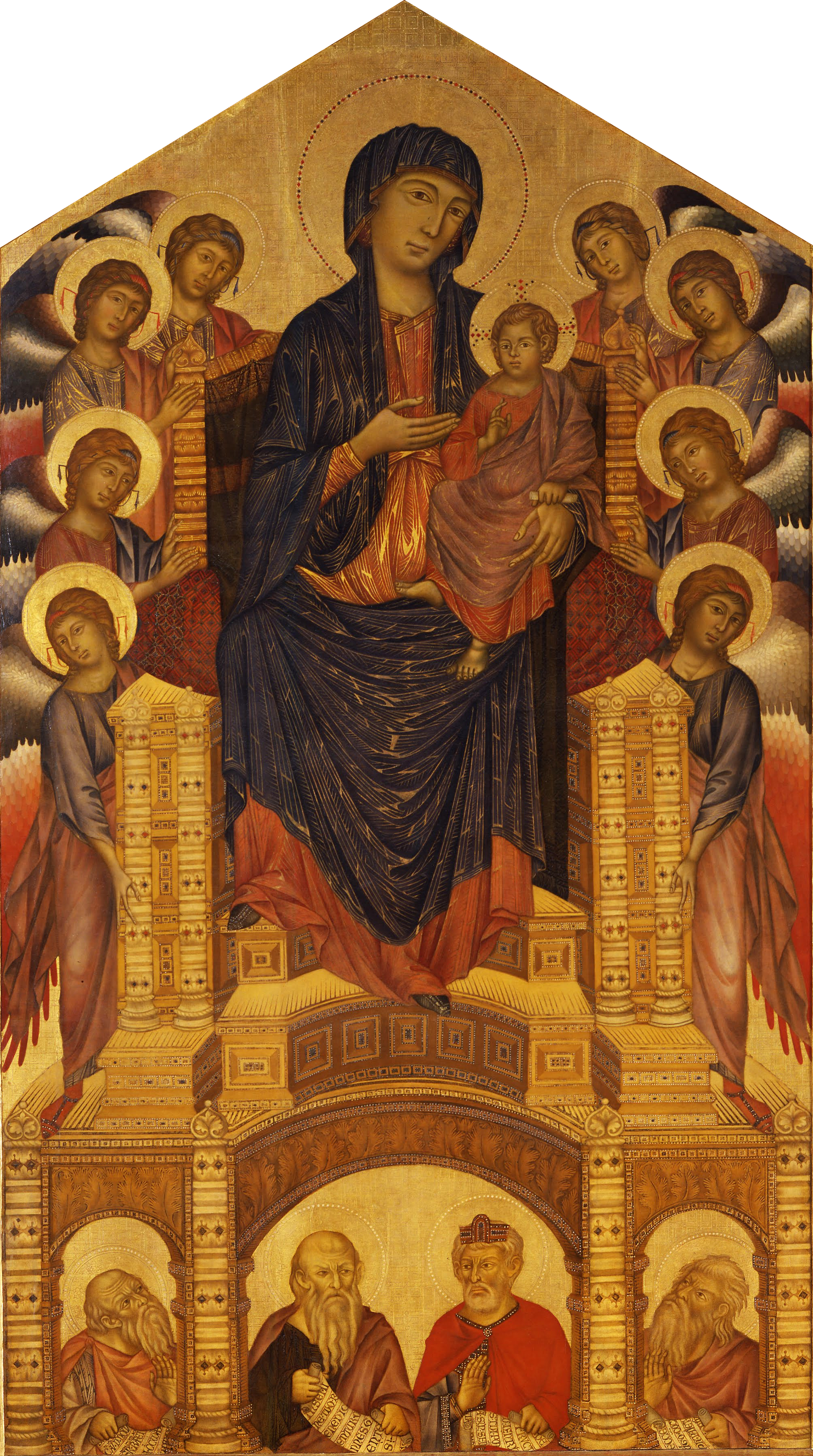
Cimabue, Santa Trinita Maesta, tempera on panel, 1280–1285
Maestà: A compositional format depicting an enthroned Madonna with the child Jesus, generally accompanied by angels and/or saints

Giotto di Bondone, Ognissanti Madonna, c. 1310, tempera on panel, 325 cm × 204 cm (128 in × 80 in),Uffizi Gallery, Florence
Naturalism: a lifelike accuracy or artistic interest in representing things as they appear in real life

Fra Angelico, The Annuncitation, c. 1435, tempera on panel

Filippino Lippi, Madonna and Child, tempera, oil, and gold on wood, 1483-84

Condottiere
A leader or member of a troop of mercinaries
Andrea Mantegna, Camera degli spose, 1465- 1474, fresco

Piero della Francesca, Diptych of Federico da Montefeltro and Battista Sforza, detail, c. 1473– 1475, oil on wood, 47 cm × 33 cm (19 in × 13 in) Uffizi Gallery, Florence
part of diptych
when painting kings who had some physical defect, did not wish this to appear to have been overlooked, but they corrected it as far as possible while still maintaining the likeness.
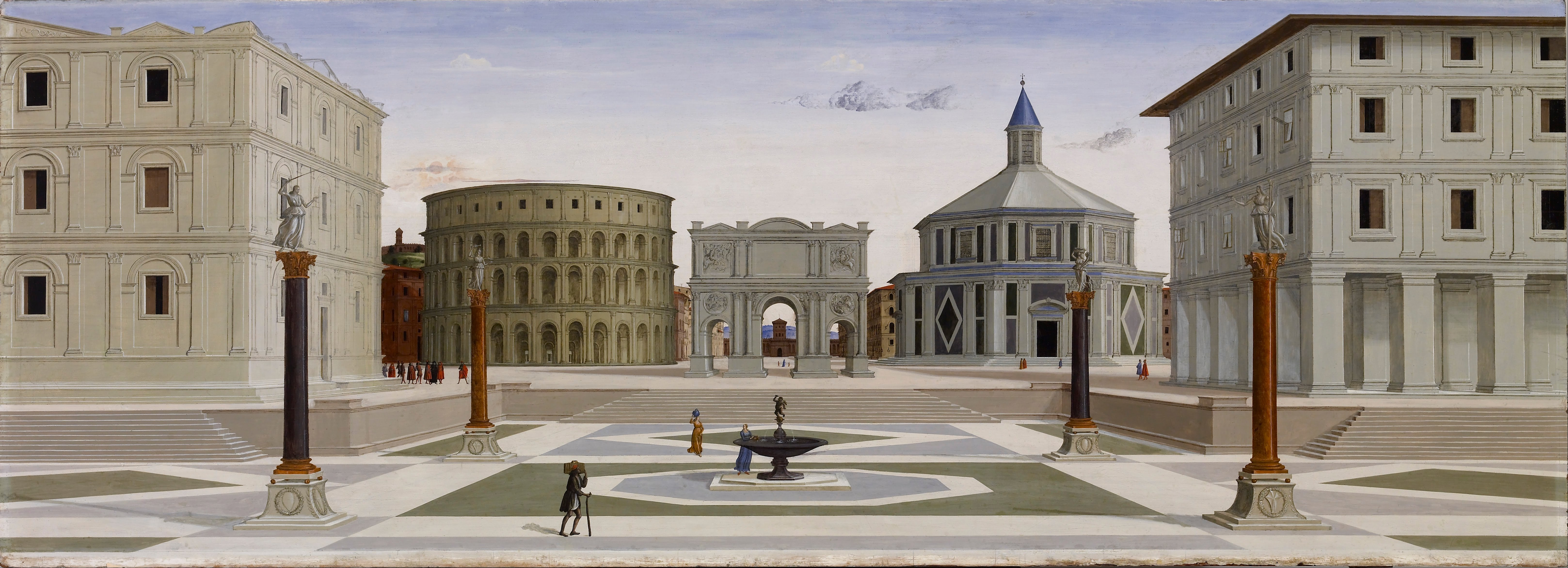
Attributed to Fra Carnevale, The Ideal City, c. 1480-1484, oil and tempera on panel, 77.4 cm × 220. cm (30.5 in × 86.6 in), The Walters Art Museum, Baltimore
Spalliere: a decorated backboard mounted on a wall, often behind a cassone or as a headboard to a bed
Arch of constantine in middle, collusseum and the baptistry, 4 female figures

Ducal Palace of Urbino, Fra Carnavale, Luciano Laurana, and Francesco di Giorgio, begun 1458
Arcade: a structural element consisting of a series of arches supported by columns or piers, creating a covered passageway

Studiolo/i: a room inside a residence designed for study and contemplation
*The active life interacts with the world and with other people, while the contemplative life only interacts with the abstract objects of the mind.
Giuliano e Benedetto Da Maiano, Studiolo in the Ducal Palace,1476, Urbino
wood inlaying called intarsia

Designed by Federico da Montefeltro, executed in the workshop of Giuliano da Maiano Studiolo from the Ducal Palace in Gubbio, c. 1478–82 Walnut, beech, rosewood, oak, and fruitwoods in walnut base, 485 x 518 x 384 cm (190 15/16 x 203 15/16 x 151 3/16 in), The Metropolitan Museum of Art, New York
Sprezzatura
a nonchalance or effortless elegance which conceals the conscious effort or ‘art’ required to perform this nonchalance

Piero della Francesca, The Baptism of Christ, 1440-1450, tempera on panel

Piero della Francesca, Flagellation of Christ, c. 1455-65, oil and tempera on wood

Michelozzo, Palazzo Medici, 1444-84, Florence

Donatello, David, 1430s, bronze

Donatello, David, c.1408-9, marble
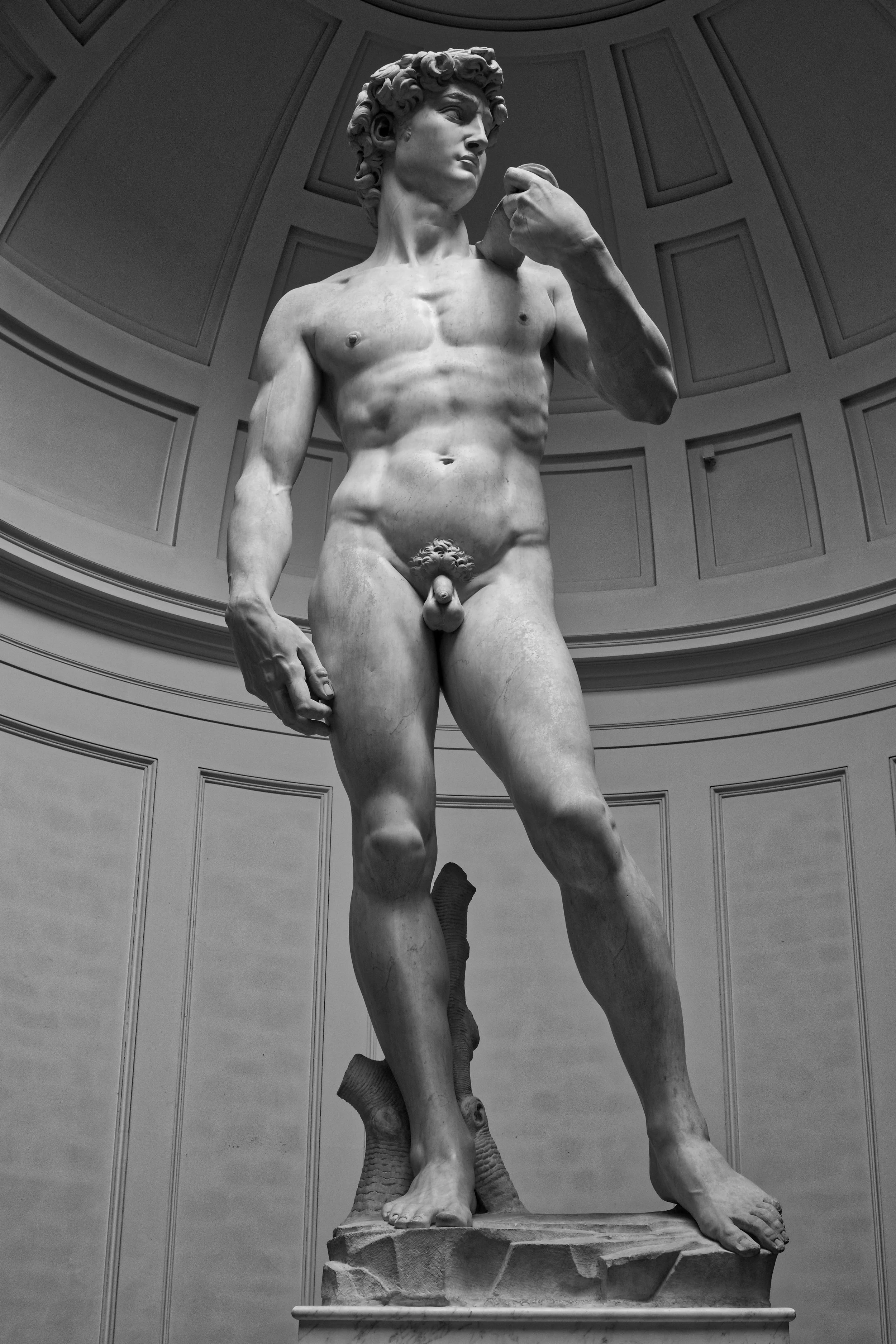
Michelangelo, David, c.1501-4, marble

Example of what?
Cassone: A wooden chest created to commemorate a marriage, often decorated with painted panels.
inside was sometime lewd

Botticelli, Venus and Mars, 1485, tempera and oil on panel

Agnolo Bronzino (design), Prosperity, (La Dovizia,) c.1545, wool tapestry, Museo degli argenti, Florence
Cabinet of Curiosity
Cabinet of curiosity; Wunderkammer; studiolo: rooms or cabinets designed to house and display the ‘wonders’ of the world (diverse objects from around the world)

Giorgio Vasari, Sala delle Carte Geografiche, or Guardaroba Nuova, c.1563-65

Pietro Tacca, Monument of the four moors, 1623, bronze and marble

Jan van Eyck, Madonna in the Church, c. 1438–1440, oil on oak panel
Key elements of flemish art
Naturalism: microscopic detail, scenes of the every day
Non-naturalism: organization of space, representation of bodies
Iconography/symbolism

Workshop of Robert Campin, Annunciation Triptych (Merode Altarpiece), oil on panel, 25 3/8 x 46 3/8 in., Metropolitan Museum of Art, New York
triptych: a painting, usually an altarpiece, composed of two panels- a central panel with two wings
Hortus Conclusus
A walled or enclosed garden which symbolizes purity or chastity (specifically of the Virgin)

Jan van Eyck, Man in a Red Turban, oil on panel, 1433

Jan van Eyck, Madonna with Canon van der Paele, 1436, oil on panel

Jan van Eyck, The Arnolfini Portrait, 1434, oil on panel

Hugo van der Goes, Portinari Altarpiece, 1475, oil on panel, Uffizi
Gallery, Florence
SEE GREYSCALE SIDE
Grisaille: method of painting in grey monochrome to imitate sculpture
Eucharist
The holy bread and wine used during the ritual of communion, which are the body and blood of Christ

Domenico Ghirlandaio, The Adoration of the Shepards, 1485, oil on panel

Rogier van der Weyden, Annunciation Triptych, 1434, oil on panel, 89 cm × 36.5 cm (35in × 14.4 in), Louvre Museum, Paris, and Galleria Sabauda, Turin

Rogier van der Weyden, The Descent from the Cross,1435, oil on panel

Hubert and Jan van Eyck, The Ghent Altarpiece, completed 1432, oil on wood, 11’ 5” x 7’ 6”, Saint Bavo Cathedral, Ghent, Belgium
example of a polyptych
closed example on slides

Rogier van der Weyden, Beaune Altarpiece, 1445–1450, oil on panel

Hans Memling, The Last Judgement, c. late 1460s, National Museum, Gdańsk
Reliquary: A container or shrine in which sacred relics are kept

Gerard David, Salvator Mundi, c. 1500, Oil on panel,18 1/8 x 13 1/4 inches (46 x 33.6 cm), Philadelphia Museum of Art, Philadelphia

Jan van Eyck, Lucca Madonna, 1436, oil on panel
Madonna Lactans: An iconography of the Madonna and Child in which the Virgin Mary is shown breastfeeding the Christ child
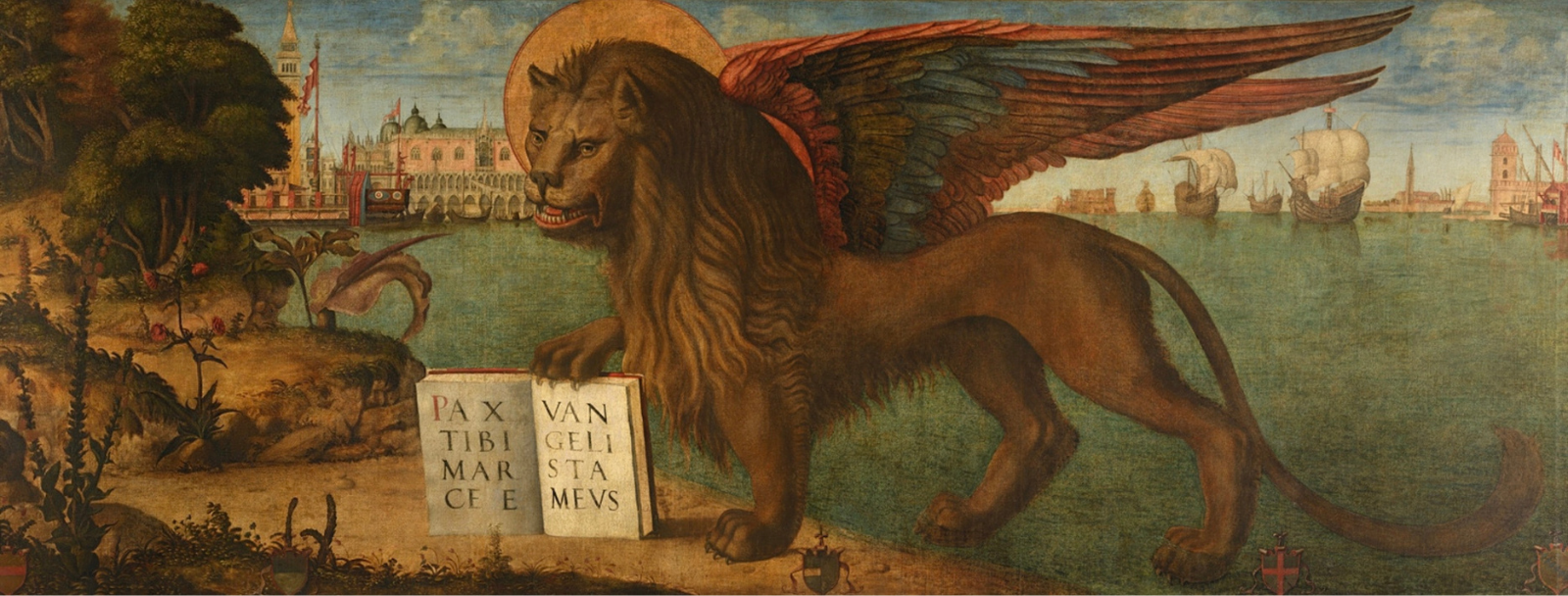
Vittore Carpaccio, The Lion of St Mark, 1516, tempera on canvas

example of…
Venetian gothic: An architectural style defined by the merging of the European gothic and Byzantine architectural vocabularies

Palazzo Ducale (Doge’s Palace), Venice, 1424

Tesserae: small block of stone, tile, glass, or other material used in the construction of a mosaic
Scuola/scuole: charitable and religious organization for the laity
St Marks Basilica, consecrated 1094, venice

Vittore Carpaccio, Miracle of the Relic of the Cross at the Ponte di Rialto, c. 1496, c. 1496, tempera on canvas, 371 cm × 392 cm (146 in × 154 in), Gallerie dell'Accademia, Venice

Giovanni Bellini, San Giobbe Altarpiece, 1487, oil on panel

Giovanni Bellini, San Zaccaria Altarpiece, 1505, oil on wood transferred to canvas

Titian, The Assumption of the Virgin, 1516–1518, oil on panel, 690 cm × 360 cm (270 in × 140 in), Basilica di Santa Maria Gloriosa dei Frari, Venice

Titian, Madonna of the Pesaro Family (Pesaro Altarpiece), 1519-26, oil on canvas

Paolo Veronese, The Wedding at Cana, 1563, oil on canvas, 6.77 m × 9.94 m (267 in × 391 in), Louvre Museum, Paris

Paolo Veronese, Feast in the House of Levi, 1573, oil on canvas

Andrea Palladio, Villa Barbaro (Villa di Maser), c.1560, Maser, Veneto
Trompe l’oeil: Visual illusion in art, especially as used to trick the eye into perceiving a painted detail as a three- dimensional object or space

Palladio, Villa la Rotonda, c.1560- 1590, Vicenza

Giovanni Bellini, St Francis in Ecstasy, c. 1480, oil and tempera on panel

Giorgione, The Tempest, c. 1505- 1508, oil with traces of tempera on canvas, 82 x 73 cm (Gallerie dell’Accademia, Venice
Pentimento/i: Visual remanents of a painting’s original composition that were altered by the artist during the process of painting. These changes are usually hidden beneath a subsequent paint layer
Capriccio: an imaginary topographical scene
Poesia/e: genre of painting that aspires to the lyrical qualities of poetry.
*ut pictura poesis: as in painting, so in poetry
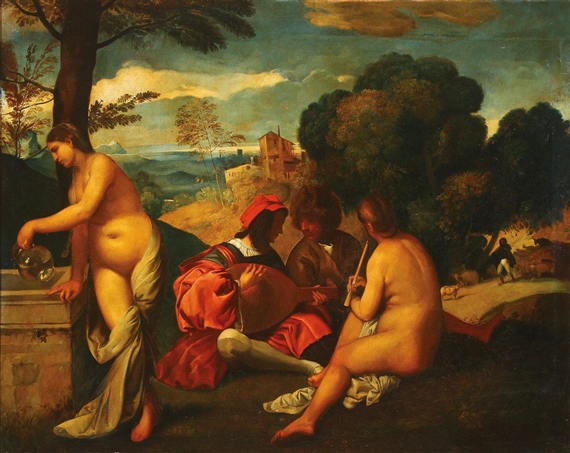
Titian(?), previously attributed to Giorgione, Pastoral Concert, c.1510, oil on canvas, 1.1 x 1.4m, Louvre Museum, Paris
Paragone: comparison, debate, competition
Disegno: Drawing or design. The guiding principle of disegno is manifested in definition of form and line
Colore/colorito: Color or colored. Argues for the superiority of correctly applied color in service of greater naturalism and sensuousness

Titian, Bacchus and Ariadne, 1520-23, oil on canvas
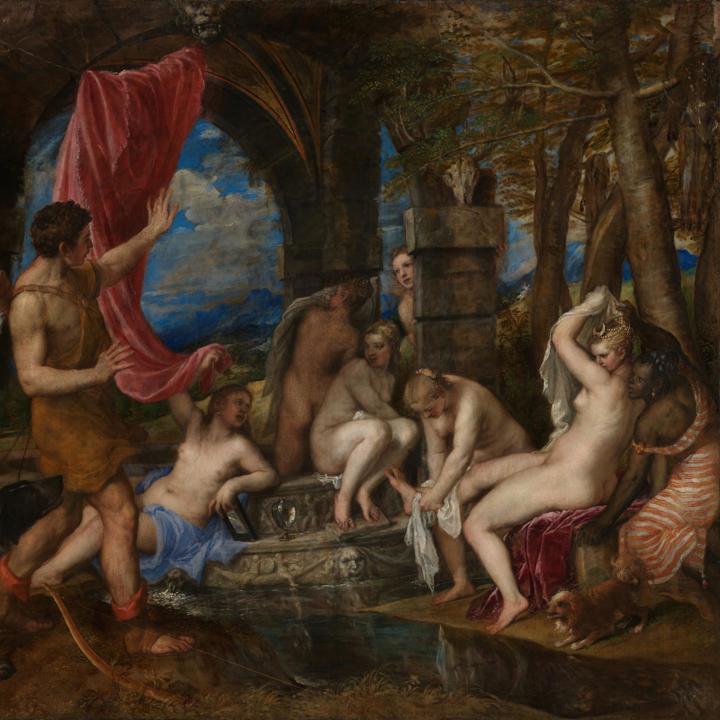
Titian, Diana and Acteon, 1556–1559, oil on canvas

Giorgione, Sleeping Venus, c. 1508–1510, oil on canvas
Pudica: a pose in which a female figure conceals her breasts and genitalia with her hands

(this is a snip of the work)
Titian, Venus of Urbino, 1538, oil on canvas