Organic Nucleophilic Substitutions and Eliminations
 Call Kai
 Learn
Learn Practice Test
 Spaced Repetition
 Match
Match Flashcards
 Knowt Play
1/93

There's no tags or description
Looks like no tags are added yet.
Name | Mastery | Learn | Test | Matching | Spaced | Call with Kai | Chat |
|---|
No analytics yet
Send a link to your students to track their progress
94 Terms
general nucleophilic substitutions proceed how
electron pair on nucleophile attacks carbon atom with a partial positive charge bound to an electronegative atom (leaving group)
nucleophiles are often BLANK charged
negatively
a 1 step nucleophilic reaction is called
bimolecular
bimolecular reactions are also reffered to as
Sn2
Sn2 reactions are
first order
2 step nucleophilic substitutions are called
unimolecular
unimolecular substitution reactions are also referred to as
Sn1
In an Sn1 mechanism, which step is rate determining?
ionization
In regards to what is an Sn1 ionization first order
alkyl substrate concentration

Identify the mechanism
Sn2
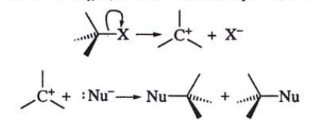
Identify the mechanism
Sn1
unimolecular reactions produce
racemized tetrahedral stereocenters bearing the nucleophile
bimolecular reactions happen via
inversion of configuration at carbon center
in nucleophilic elimination, the nucleophile acts as a
base
The removal of the acidic proton, and the departure of the leaving group produces a BLANK from the alkyl substrate
alkene
One step elimination reactions are referred to as
E2 mechanisms
Two step elimination reactions are referred to as
E1 mechanisms
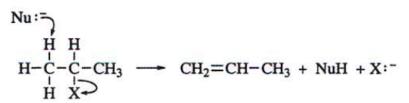
Identify the mechanism
E2
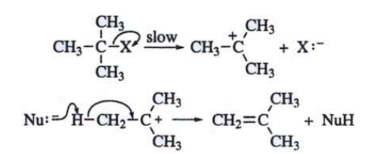
Identify the mechanism
E1
The major product of a nucleophilic reaction is substitution if the leaving group is on a
primary carbon
The major product of a nucleophilic reaction is elimination if the leaving group is on a
tertiary carbon
bimolecular reactions are faster on BLANK carbon atoms
primary
unimolecular reactions are faster on BLANK carbon atoms
tertiary
If the alkyl substrate is secondary, and the nucleophile is a strong base, what is the dominant reaction
E2
If the alkyl substrate is secondary, and the nucleophile is a weak base, what is the dominant reaction
Sn2
If the alkyl substrate is secondary, and the nucleophile is poor, what is the dominant reaction
Slow Sn1/E1 in polar protic solvents
If the alkyl substrate is primary, and the nucleophile is a strong base, what is the dominant reaction
Sn2 (E2 with non-nucleophilic bases)
If the alkyl substrate is primary, and the nucleophile is a weak base, what is the dominant reaction
Sn2
If the alkyl substrate is primary, and the nucleophile is poor, what is the dominant reaction
no reaction
If the alkyl substrate is tertiary, and the nucleophile is a strong base, what is the dominant reaction
E2
If the alkyl substrate is tertiary, and the nucleophile is a weak base, what is the dominant reaction
Sn1/E1 in polar, protic solvents
If the alkyl substrate is tertiary, and the nucleophile is poor, what is the dominant reaction
Sn1/E1 in polar, protic solvents
Strong bases favor the elimination product from what carbon atoms
secondary and tertiary
Weak bases produce more BLANK products mostly via BLANK
substitution, unimolecular
Hindered bases favor a BLANK product in all degrees of carbon atoms
elimination
Rates of substitution and elimination reactions are favored by better
leaving groupsW
What makes a good leaving group?
weak bases
Protonation of a poor leaving group makes it a weaker base and therefore
a better leaving group
What mechanistic step is most common in all of organic chemistry
protonation
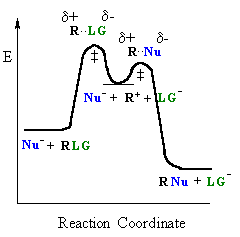
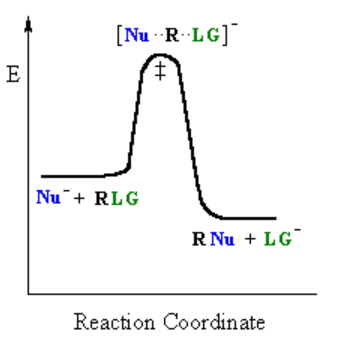
What reaction mechanism does the reaction coordinate diagram represent?
Sn1
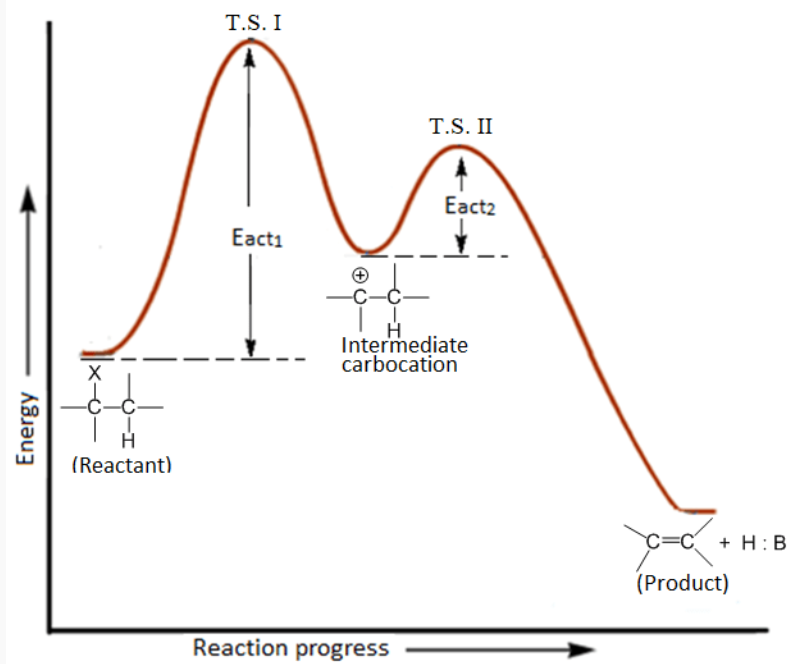
What reaction mechanism does the reaction coordinate diagram represent?
Sn2
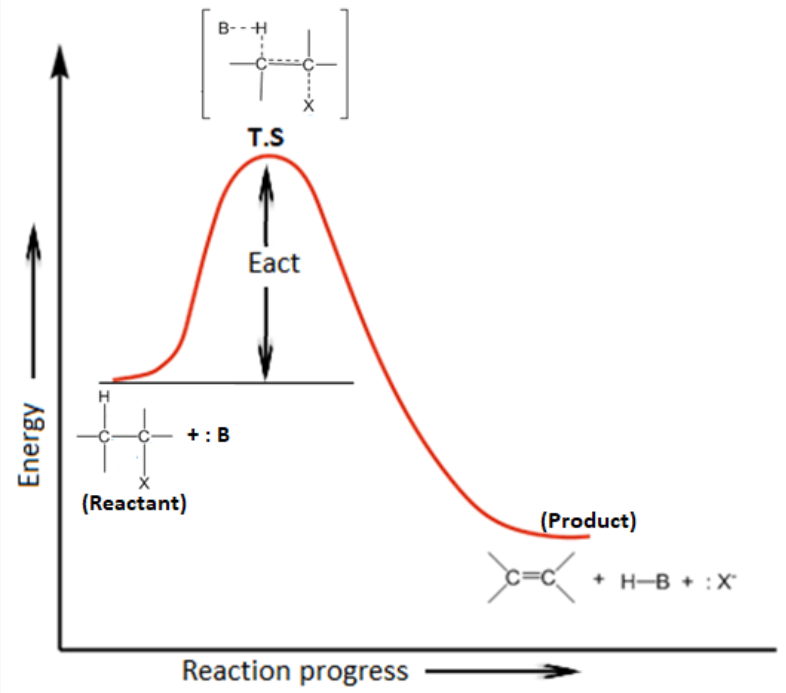
What reaction mechanism does the reaction coordinate diagram represent?
E1
What reaction mechanism does the reaction coordinate diagram represent?
E2
In an exothermic reaction, the energy of the products is
lower than the energy of the reactants
In an endothermic reaction, the energy of the products is
higher than the energy of the reactants
The # of peaks in a reaction coordinate diagram is equal to
number of mechanistic steps
The height difference between reactants and products on a reaction coordinate diagram represents the
change in enthalpy
nucleophilic substitutions and eliminations generally only occur on
sp3 hybridized carbons
Sub and Elim reaction tend to favor the direction in which the leaving group is BLANK than the nucleophile
a weaker base
Alkoxides are
good nucleophiles/strong bases
A traditional leaving group bonded to a double carbon bond is
not reactive as a leaving group
Leaving groups on primary carbons are susceptible to displacement in what mechanisms
one-step/bimolecular
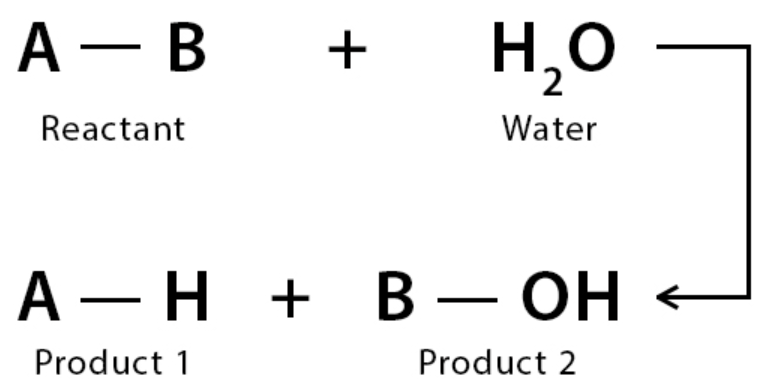
Identify the mechanism
Hydrolysis
What does not count as a substituent in determining the degree of substitution on a carbon?
Deuterium
In substitution reactions, a negatively charged nucleophile is
faster in reaction
Low electronegativity of atoms in a nucleophile implies BLANK in subsitution reactions
faster reaction rate
nucleophilic strength BLANK with increasing atomic size when nucleophilic atoms are in the same column of the periodic table in substitution
increases
Less bulky nucleophiles react
faster in substitution
nucleophiles that can be resonance stabilized react
slower in substitution
bulkier substituted nucleophiles will react faster in BLANK reactions
elimination
The optical rotation value of a enantiomer of a compound is the
opposite charge of the original compound (equal magnitude opposite direction)
vinylic halides do NOT normally undergo what mechanisms
substitution
allylic and benzylic alkyl halides undergo what mechanism faster than other halides
Sn2
cleavage of an ether requires what
a strong acid who’s conjugate base is a strong nucleophile
phenols and phenyls do not undergo
Sn1 or Sn2 reactions
what type of ethers are not cleaved by HBr or HI?
diaryl ethers
ring opening of epoxides happens via
Sn2 (whether or not the ring oxygen is protonated)
If the ring oxygen of an epoxide is not protonated the nucleophile attacks the
less substituted carbon atom
If the ring oxygen of an epoxide is protonated the nucleophile attacks the
more highly substituted carbon if it is a tertiary carbon, otherwise the attack occurs at both carbons to give a mixture of products
fused ring epoxides will give a product in which the nucleophile and alcohol groups are
trans
a resonance stabilized alkyl halide (allylic) will undergo Sn1
faster than the other alkyl halides
Secondary and tertiary alcohols react with hydrogen halides via
Sn1
1,2-alkyl or 1,2-hydride rearrangements can occur during reaction between OH and HX when
a more stable carbocation can be formed from the initial carbocation
When elimination occurs in a cyclohexane ring, the hydrogen atom and leaving group are
trans and diaxial

how is this alkene substituted?
monosubstituted
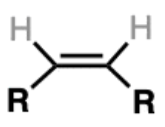
how is this alkene substituted?
disubstituted
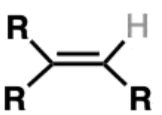
how is this alkene substituted?
trisubstituted
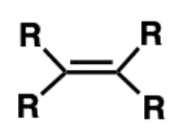
how is this alkene substituted?
tetrasubstituted
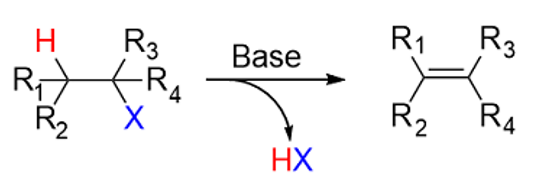
identify the mechanism
dehydrohalogenation
a nucleophile with low electronegativity will have faster
substitution reactions
a negatively charged nucleophile make substitution reactions
faster
higher bulkiness in a nucleophile leads to BLANK substitution, and lower bulkiness in a nucleophile leads to BLANK susbtitution
slower, faster
the larger the leaving group
the faster the nucleophilic reaction
in order to rearrange atoms to be anti to one another in an alkane
rotate individual carbons
to determine where the alkene forms after E, you must identify the
most acidic hydrogen adjacent to the leaving group carbon
dehydration reactions will commonly use acids such as BLANK, since their conjugate bases are BLANK, leaving elimination as a primary pathway
H2SO4 or H3PO4, poor nucleophiles
Sn2 is highly sensitive to BLANK in the alkyl substrate
steric hindrance
CH3OK is a BLANK nucleophile, while CH3OH is a BLANK nucleophile
strong, weak
Methylamine is more BLANK than methanol
basic
The longer the bond length, the better the
Leaving group
A secondary carbon with a strong base will proceed with
E2 reaction
in an E2 elimination which atom will be attacked by the nucleophile?
The axial atom on the least substituted adjacent carbon to the carbon with the leaving group
From which carbon is the hydrogen removed during dehydrohalogenation?
the most substituted adjacent carbon
Aryl halides will not undergo
substitutions