Immune System - Chp 37 +38
 Call Kai
 Learn
Learn Practice Test
 Spaced Repetition
 Match
Match Flashcards
 Knowt Play
1/39

There's no tags or description
Looks like no tags are added yet.
Name | Mastery | Learn | Test | Matching | Spaced | Call with Kai | Chat |
|---|
No analytics yet
Send a link to your students to track their progress
40 Terms
Pathogen
a micro-organsim that causes disease
Immunity
the ability to resisit disease
How do microbes enter the body?
through openings such as the mouth or woundsa
What is the general defence system?
acts as a barrier to all pathogens attempting to gain entry into the human body
What is the specific defence system?
attack on a particular pathogen that have entered the body
also called the immune repsonse
Name some ways the general defence system prevents disease:
mucus catches pathogens + lysozyme breaks down the cell wall of pathogens in the nose
mucus catches pathogens + cilia helps remove pathogens from windpipe in the trachea
acids kills bacteria in the stomach
platelets clot wound preventing microbes enter
phagocytic white blood cells engulf bacteria
skin acts as a physical barrier
inflammatory response
friendly bacteria compete with harmful bacteria and control their populations
Antigen
a foreign molecules that stimulates the production of antibodies
Antibodies
proteins produced by white blood cells (lymphocytes) in response to an antigen
How do antibodies protect the body against microbes?
antibodies bind to the wall of a microbe and help destroy it
Where are lymphocytes produced?
red blood marrow
later mature in the lymphatic system
What happens when a foreign antigen is found in the body?
triggers the immune response
when it meets the correct antigen receptor clonal expansion occurs
white blood cells produce antibodies which coat the microbes, and the cell wall of the pathogen becomes more permeable and bursts
phagocytes produced engulf invaders marked with antibodies
memory cells remembers how to fight the pathogen
Induced immunity
when the body contains (or has the ability to produce) specific antibodies against particular antigens
What are the 2 types of immunity?
active immunity
passive immunity
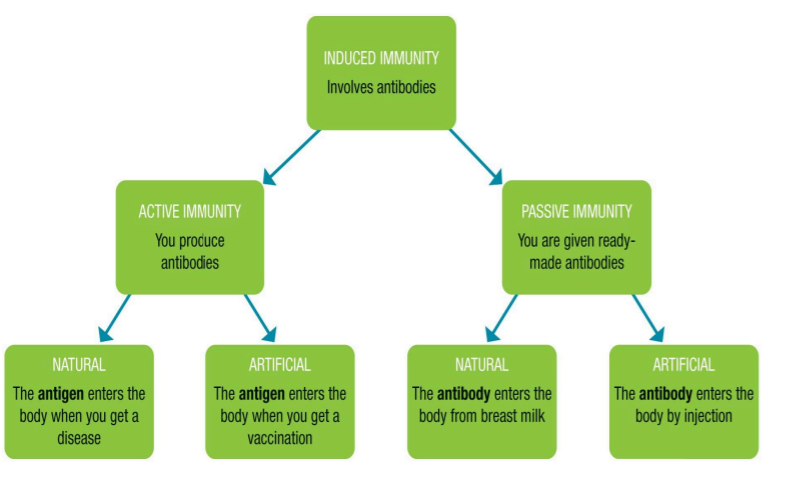
Active immunity
involves the production of a person’s own antibodies in response to antigens that enter the body
Passive immunity
when a person receives antibodies that have been made by another organism - eg breast feeding
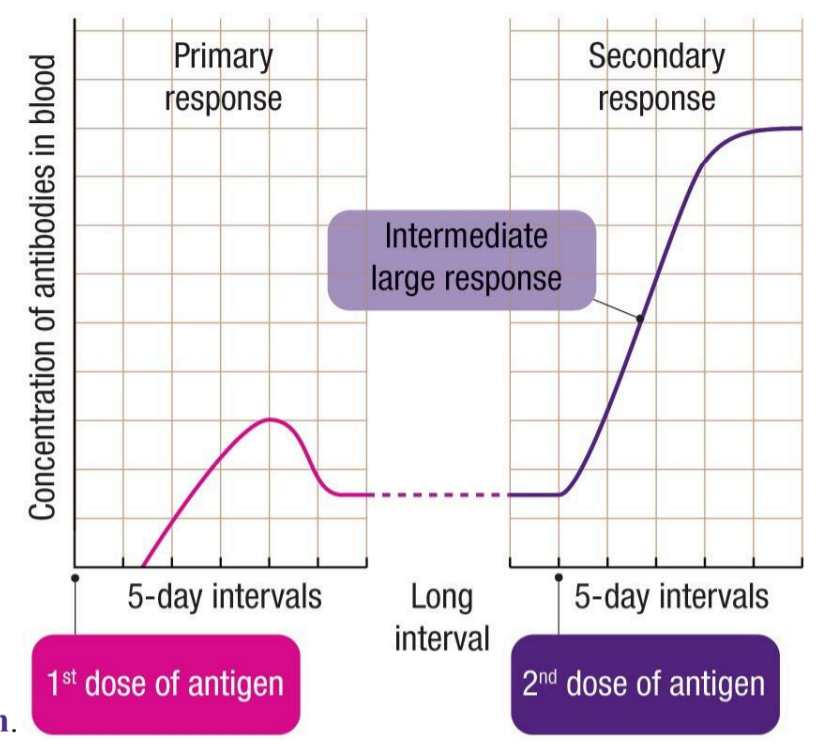
What happens when a second dose of the antigen enters the body?
the memory cells now know how to produce the correct antibody
What type of immunity is a vaccine?
artificially generated induced active immunity
Vaccine
a non-disease causing dose of a pathogen, which triggers the production of antibodies
What is immunisation?
injection of already made antibodies, short term solution as the body has not learned how to produce the suitable antibodies
What are the 2 types of lymphocytes?
B lymphocytes/B cells
T lymphocytes/T cells
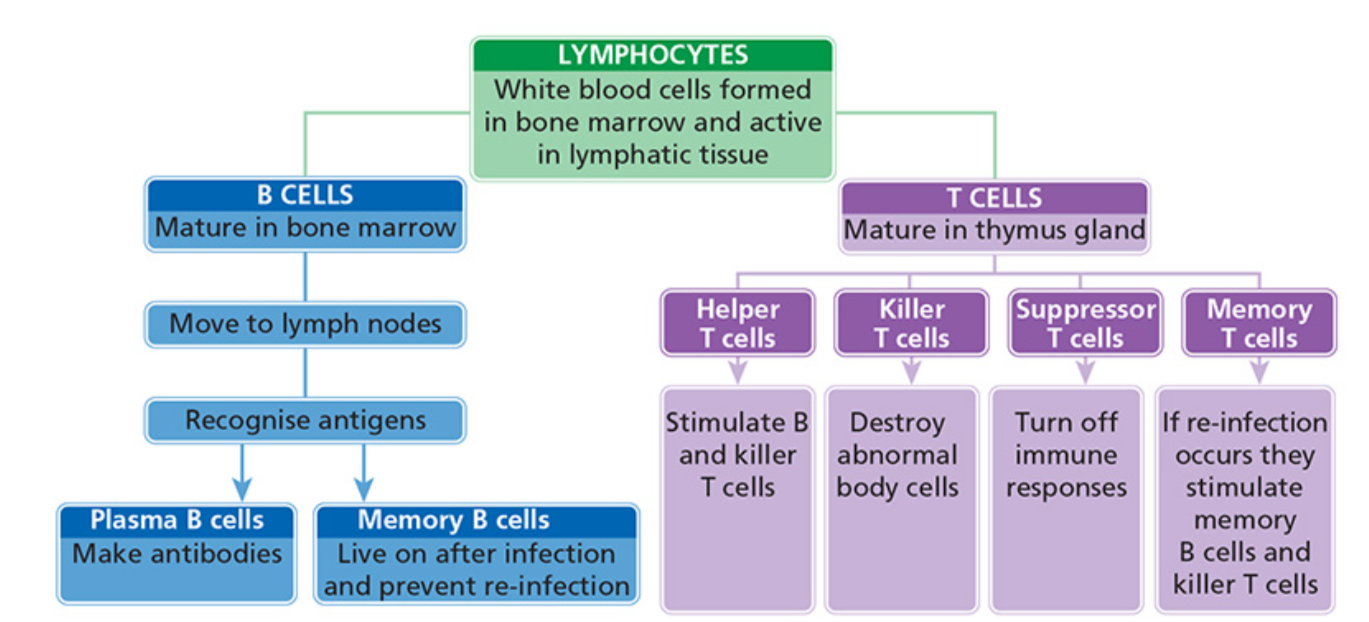
Where are B lymphocytes made + mature?
red bone marrow
red bone marrow
What are the 2 types of B cells?
plasma b cells
memory b cells
Where are T lymphocytes made + mature?
red bone marrow
thymus gland
What is the function of B lymphocytes?
each plasma b cell its own specific antibody attached to its surface
attachs to an antigen when they come into contact
the B cell replicates and releases lots of antibodies
some these B cells are memory cells
What are the 4 types of T cells?
Helper T cells
Killer T cells/cytotoxic cells
Suppressor T cells
Memory T cells
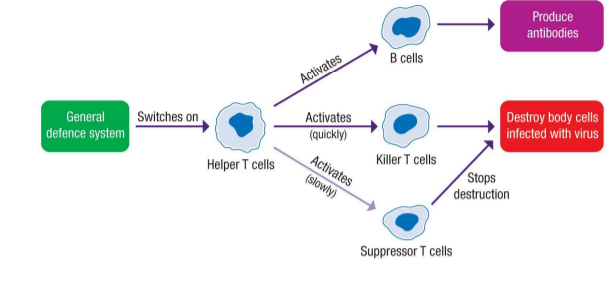
What is the function of T cells?
they do not produce antibodies
helper t cells activate the immune response when they recognise an antigen, stimulate replication of b cells, killer t cells and slowly stimulat suppressor cells
killer t cells destroy the pathogen
suppressor t cells stops the immune response when it is no longer needed
memory t cells remember how to activate the immune response if the antigen enters again
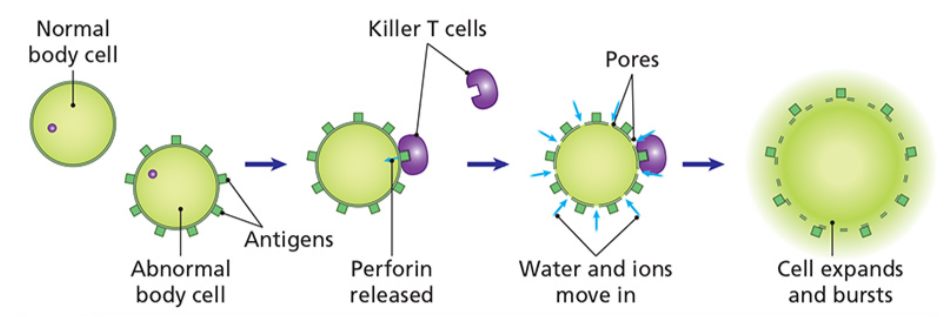
What protein is released by t cells + what does it do?
perforin
it forms pores in the membrane of the pathogenic cell, allowing water and ions to flow into it, causing it to swell and burst
Are Viruses living or dead?
they are on the boarder between living and non-living as they contain characteristics of both
Give the living and non-living characteristics of viruses?
Living
contains genetic material
can replicate inside a living cell
contain a protein coat
Non-living
non-cellular
can’t reproduce by themselves
only have one type of nucleic acid: RNA or DNA not both
What are the 3 possible shapes of viruses?
round
rod
complex
Describe the structure of a virus?
have an outer protein coat called a capsid
some viruses have an outer layer complex for extra protection
inside there is a single nucleic acid carrying genes for the formation of new viruses
they contain no ribosomes, mitochondira or cytoplasmic organelles
What kind of parasites are viruses?
obligate parasites they need the organelles and enzymes of the host to carry out their reaction, and cannot do so on their own
Why are antibiotics ineffective for viruses?
there are no organelles/cell machinery for the antibiotics to damage in the virus
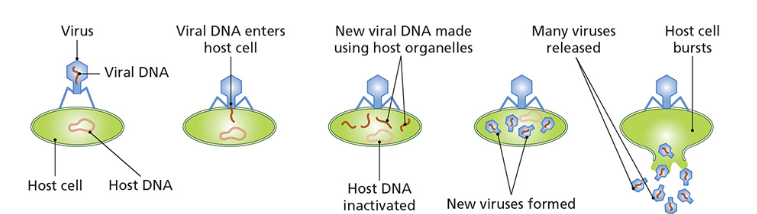
Describe + draw the process of replication of a bacteriophage:
Attachment - viruses attach to the host cell wall or membrane, proteins on the virus match up with reception sites specific to the host
Entry - virus forms a hole and pushes its nucleic acid through, the protein coat stays outside if the host is a bacterium, and enters if the host is an animal cell
Synthesis - host nucleic acid is make inactive, viral nucleic acid uses hosts organelles to produce new viral nucleic acid and proteins
Assembly - new viruses are made inside the host cell
Release - the host cell bursts to release new viruses and the cell is destroyed in the process
What is a retrovirus?
contains RNA + enzyme called reverse transcriptase which converts RNA to DNA
they are very difficult to cure because they become part of the bodies makeup
Name a harmful effect of viruses to humans, plants and animals?
humans - rabies, meningitis
plants - potato mosaic disease, tomato mosaic disease
animals - rabies, cowpox
Who are particularly vulnerable to viruses?
unvaccinated people
people with a compromised immune system
babies
Give a beneficial effect of viruses?
can be used as a vector in genetic engineering
can be used to control antibiotic resistant bacterial infections
How are viruses treated?
controlled by the body's general and specific defence systems
cannot be treated with antibiotics
can be protected using vaccinations and immunisation
interferons
some new drugs
What are interferons?
a range of substances produced by viruses to protect healthy cells and can be made artificially + help treat viral infections