neuro 371 mt 1 pt 2
 Call Kai
 Learn
Learn Practice Test
 Spaced Repetition
 Match
Match Flashcards
 Knowt Play
1/68

There's no tags or description
Looks like no tags are added yet.
Name | Mastery | Learn | Test | Matching | Spaced | Call with Kai | Chat |
|---|
No analytics yet
Send a link to your students to track their progress
69 Terms
why is Ca essential to signaling
enzymes (protein kinase + protease) are activated by Ca
NT release triggered by high [Ca}
intracellular vs extracellular Ca
intracellular: buffered at <<100nM (rly little)
extracellular: 2nM
Ex of Ca
>125mV
Ex>>Vm
Vm-Ex = NEGATIVE
why do we keep Ca intracelluarly low (4)
less sensitivity: signal much louder than noise
speed: big gardient = large, and local increase (domain)
selectivity: only activates LOCAL processes
safety: since sensitivity range is large, Ca depol only affects domain
Ca and K relationship
eleveated Ca activates gK, Ca
bursting behaviour
BK channel
maxi gK, Ca → repolarize neurons during AP
K channel activated by Ca
SK channel
I,AHP → reduces repetitive firing
K channel activated by Ca
how are the different kinds of Ca channels classified
electrical behaviour
pharmacology
(subunits)
high voltage activated Ca channels
start to activate near AP threshold (-40mV)
L,N,P/Q, R
low voltage activated Ca channels
start to activate near resting potential (-70mV)
T channels
Cav channels assemble with _____
multiple additional subunits
core pore-forming subunit of Ca channels
alpha (LNTR,P/Q)

most alpha subunits except ____, are associated with ____ subunit
T
beta + alpha2delta

some L type Ca channels assemble with
gamma subunit

genes vs channel types vs H/LVA

in general, what are the differences/ similarities of TNL Ca channels in response to V
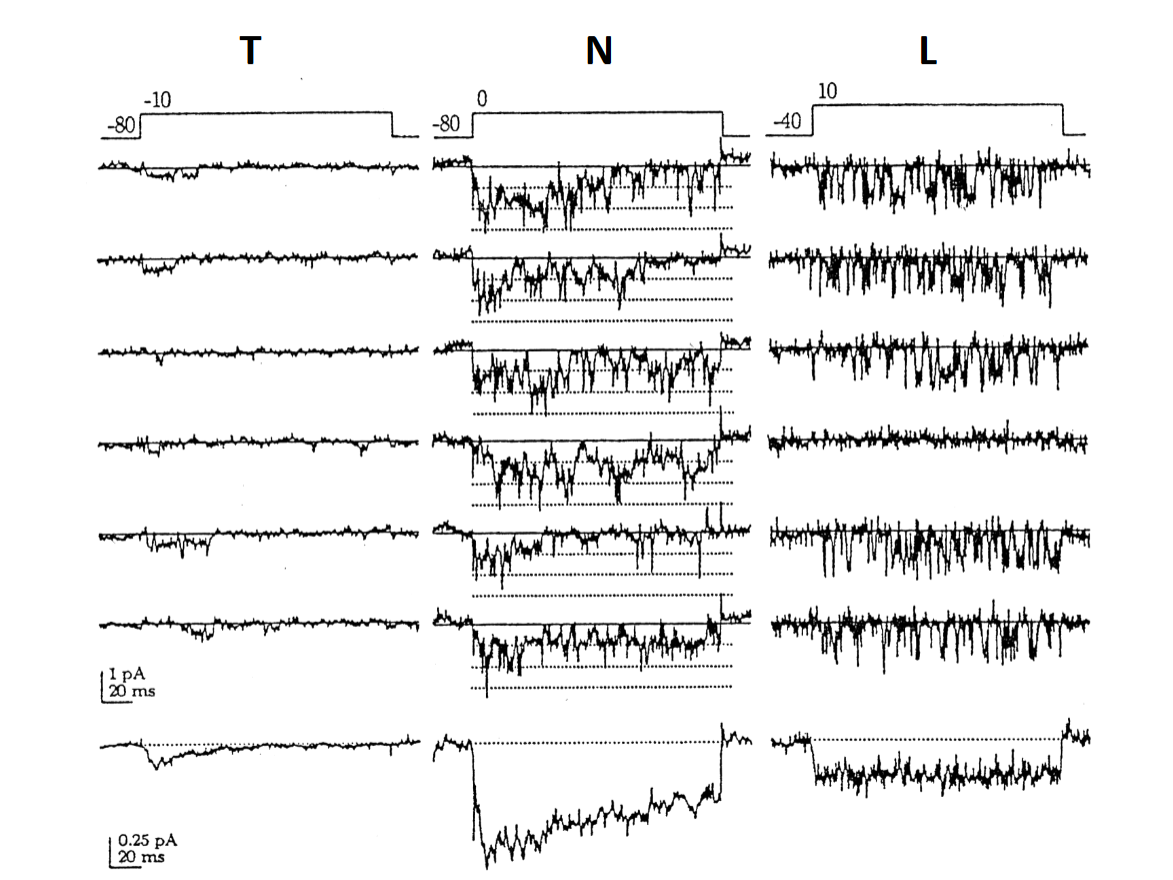
L-type Ca channels found where
skeletal and cardiac muscle
some extent in nerves
nomenclature of L type Ca channels arose from + graph
Large unitary conductance (25 pS)
Long lasting (slow inactivation)
HVA (~40mV)

Nomenclature and graph of N type Ca channels
Neuronal
iNtermediate conductance
activation betweeN L and T

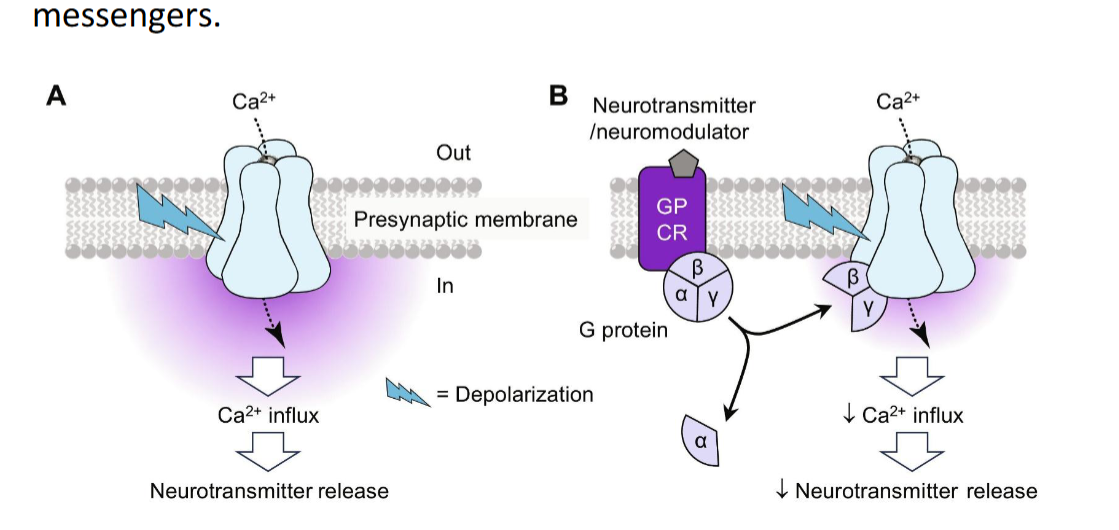
G coupled protein agonist examples
opioids, alpha2-adrenergics, GABAb agonists
Gi GPCR in relation to N type
Gi modulates response of N-type Ca to dampen effect (also indirect downstream signaling)
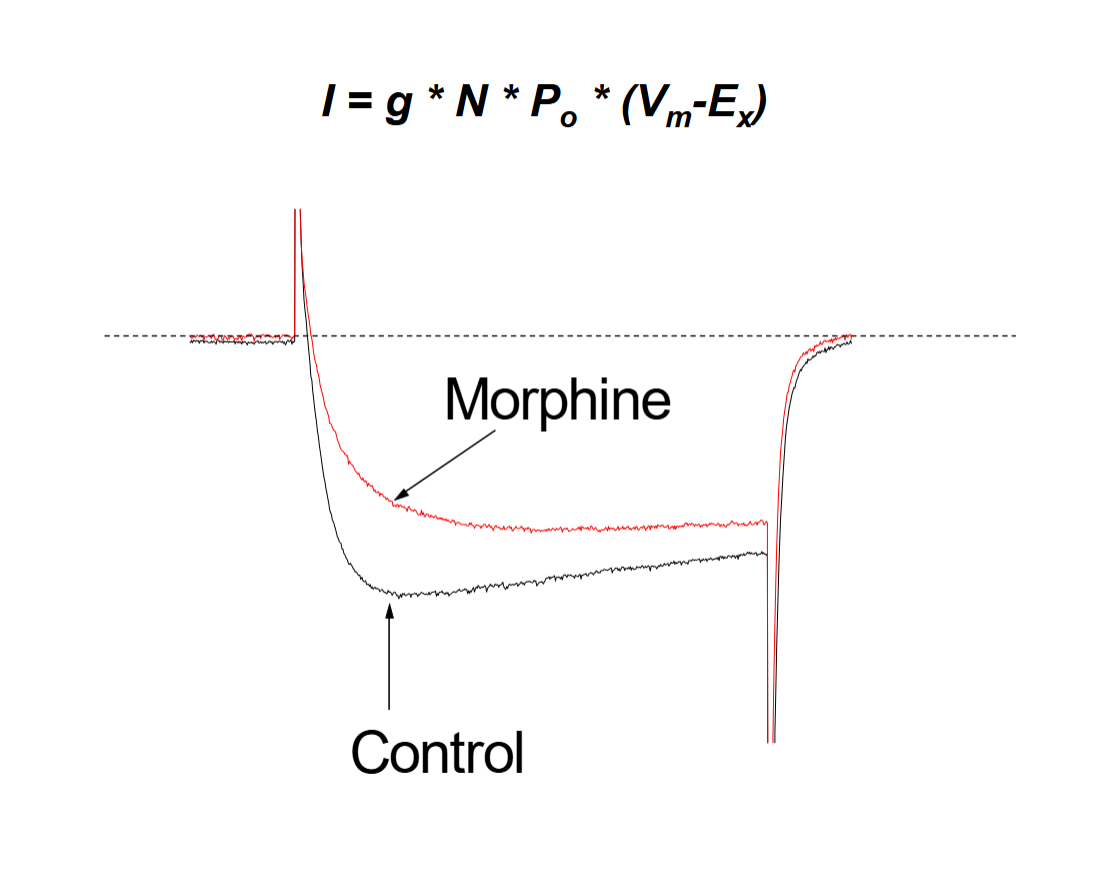
graph of control vs morphine modulation
morphine = Gi coupled
suppresses Po
T-type Ca and nomenclature
Tiny unitary conductance
Transient activation (rapid inactivation)
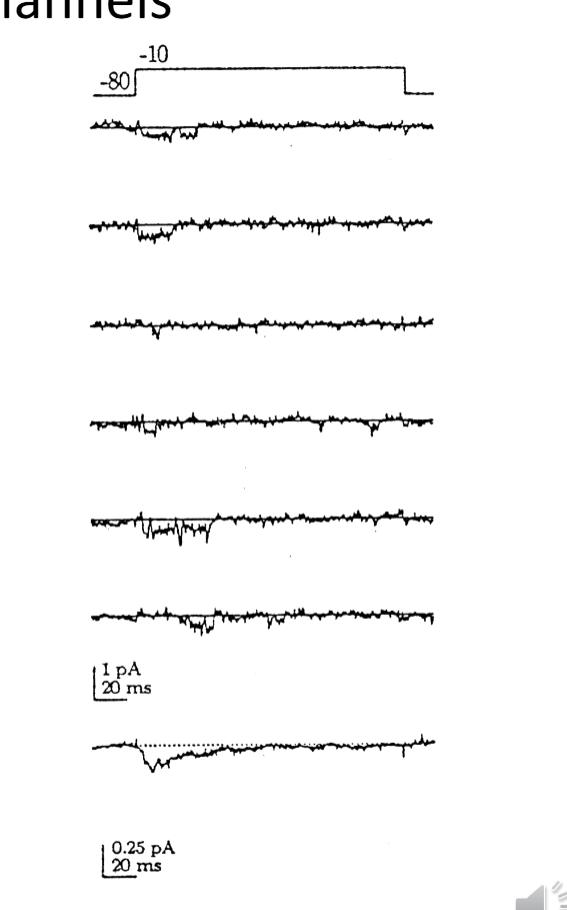
what do T type channels need to remove inactivation
strong hyperpolarization
window current
range where inactivation of T or Na type channels is incomplete
depolarizing current can be generated → excitation

T type channels firing vs regular
occurs because voltage drops into the window current range

T-type channel blockers
suppress excitation and used theraputically to treat specific seizures
two structures of ligand-gated ion channels

ligand gated ion channels graph
open probability is dependant on [neurotransmitter]
![<p>open probability is dependant on [neurotransmitter]</p>](https://assets.knowt.com/user-attachments/bb6c7341-cfaf-4468-842f-5053dcb733dc.png)
minis
miniature post synpatic potentials
hold at voltage X and measure the random spontaneuous neuron activity

is this mini excitatory or inhibitory (for glutamate)
excite! current negative = Na inward = depol

evoked post-synpatic potential experiment
hold at X current or Y voltage and measure all the NT at once

iontropic glu receptors
major excite
non selective (Na, K Ca)
Nernst potential of EGlu?
average of Na K and Ca ~0mV
subtypes of Glu channels
NMDA
non-NMDA: AMPA, Kainate
structure of iontropic Glu
selecticity channel in membrane
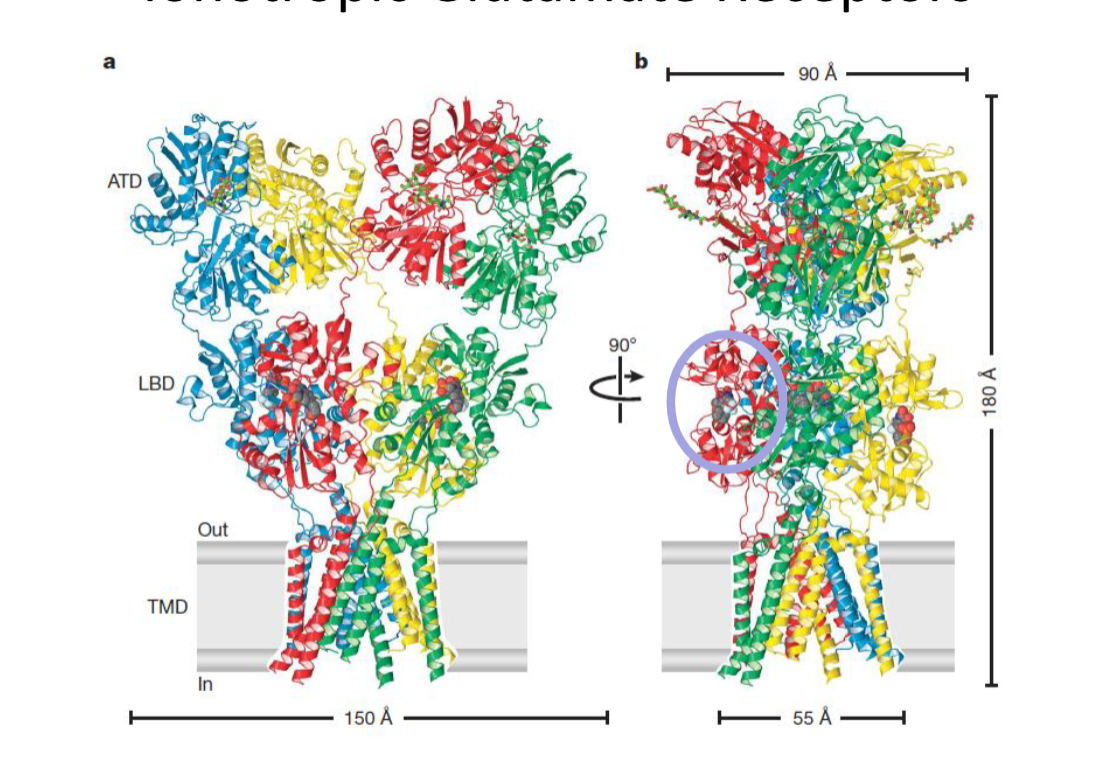
AMPA receptors
non-NMDA Glu iontropic
Na and K
fast
desensitization (inactivation)
AMPA channel when Glu, AMPA and Kainate binds

Kainate receptor
Na and K
fast
desensitize with Glu or Kainate
kainate receptors in response to AMPA, Glu and Kainate
homomeric channels dont respond to AMPA

NMDA receptors
permeable to Na, K and Ca
two subtypes: homomeric (NR1), heteromeric (NR1 and NR2)
NMDA in relation to Ca
prominent Ca influx when activated → developmental actions, LTP< exocitotoxicity
homomeric NR1 receptors
small Glu gated currents\
heteromeric NR1 adn NR2
100x greater currents than homomeric
need glycine co-agonist
APV compeptitive agonist (opposite effect)
NR2 has diff properties (Mg block)
NMDA in relation to other receptors
with APV (NMDA competitive agonist), shorter time to desensitize
NMDA needs longer desensitization time

why does NMDA have more effect on postitive voltages as opposed to negtative
NMDA does not conduct well at negative potentials due to Mg block (pos. Mg pulled to inside of cell by negative inside)
at postive V Mg leaves = conduts
GABA(A) receptor
major inhibitory in CNS
Cl- channel, pentameric heterooligomer
fast inhib
ECl
-60 to 70 mV
agonists, antagonist, and channel blockers of GABA
agonist: GABA, muscimol
antagonist: bicuculline
channel blocker: picrotoxin
GABA receptor gerneral structure
green = GABA binding regions

mini of GABA receptor
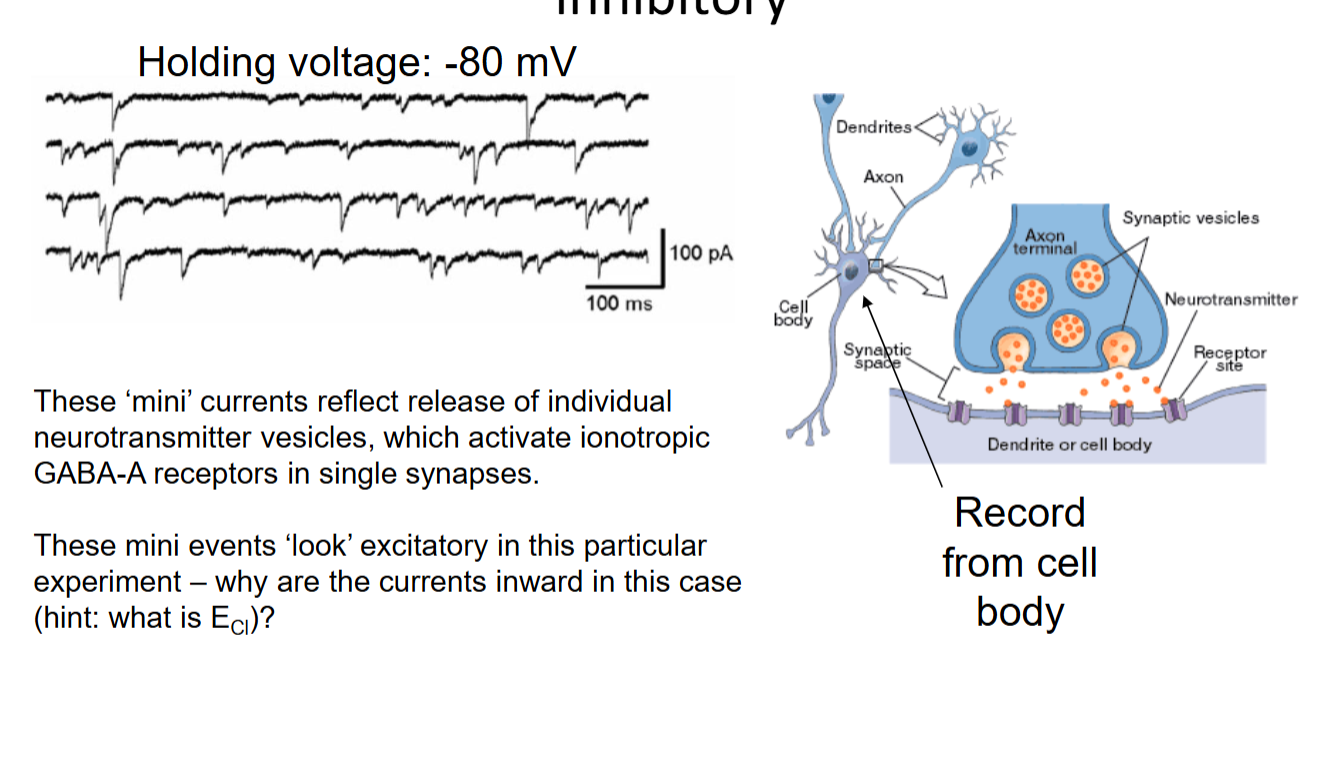

why does mini of GABA look excitatory?
because ECl is -60 to -70mV, holding is -80 (-80 mV -(-70mV))= negative current
additionally, negative ions entering a cell is a negative current (produce same effect as positive ion leaving cell)
both get more neg

describe this
evoked post-synaptic potentials of an inhibitory channel (this test determines inhib or excite)
the in between where current goes from positive to negative = Ex
benzodiazepines
increase affinity of GABA(A)R + frequency of channel opening + potentiates
bind at red (positive allosteric modulator)

GABA voltage and current graph
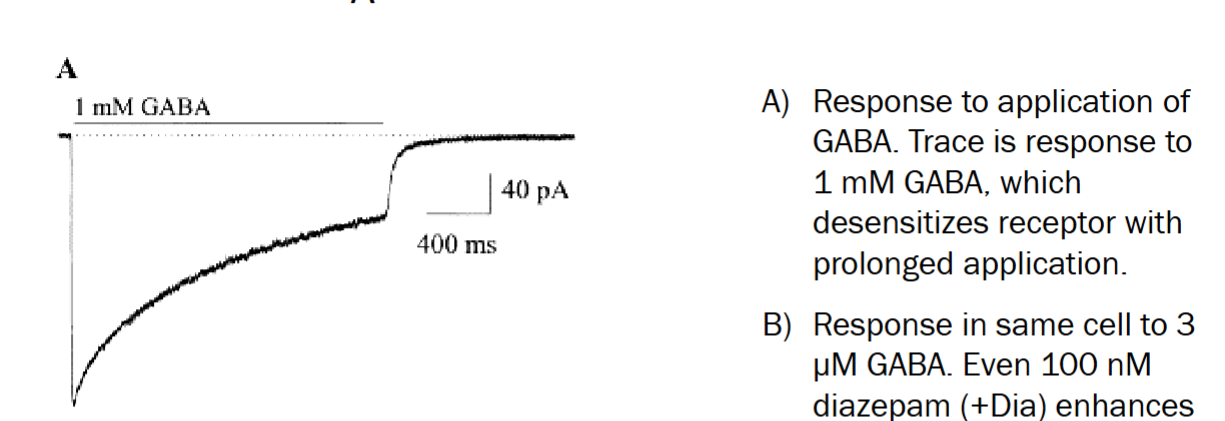
voltage clamp with GABA + benzodiazepine
no deactivation but benzoes increase effect of GABA

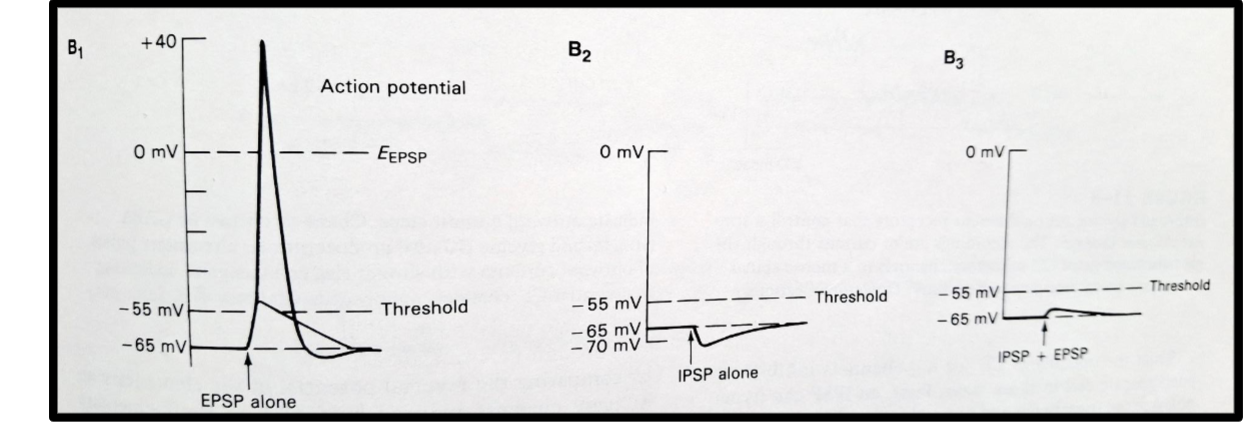
look and talk
good
IPSP +EPSP average
increase stimulus strength =
increase number of action potentials
hyperkalemia
increase extracellular K → depolarization of membrane potentials (opens and inactivates Na channels)
neuromusclar and cadiac impairment
hypokalemia
decrease extracellular K levels = hyperpolarization = reduced excitability of neurons and myocytes (paraylsis)
cardiac systems (arrhythmias)
local anesthetics what
temproary loss of sensation blocks pain during medical
injecting to a specific nerve (works within 4 minutes and lasts half and hour to 3)
main mechanism of local anesthetics
prolonging inactivation phase of voltage gated Na
_____Schwann cells ensheath ______ axon in _____; _____ oligodentride ensheaths ____ axons in ____
many; one; PNS
one; many: CNS
saltatory conduction
myelineation increase efficiency of conduction
AP does not need to be regenerated at every part
current generated @ nodes of ranvier but flows electronically between nodes

Grp I afferent fiber
thickest + fastest
skeletal muscle proprioceptor
Grp II afferent
skin mechanoreceptor
Grp III afferent
pain and temperature
Grp IV afferent
pain ithc and temp
Grp afferent thickness and fastness compaire
