Basics of exercise training - 2
 Call Kai
 Learn
Learn Practice Test
 Spaced Repetition
 Match
Match Flashcards
 Knowt Play
1/15

There's no tags or description
Looks like no tags are added yet.
Name | Mastery | Learn | Test | Matching | Spaced | Call with Kai | Chat |
|---|
No analytics yet
Send a link to your students to track their progress
16 Terms
what is conditioning
noun - the state of something with regard to its appearance, quality or working order: a persons or animals state of health or physical fitness, an illness or other medical problem
verb - bring (something) into the desired state of use, make a person or animal fit and healthy
how is conditioning achieved
physical activity - focused more in this course, one that we can manipulate the most and see the most results
nutrition - plays a huge role in conditioning
ergogenic aids - supplements
adjunctive modalities - massage, compression, font really prescribe these by themselves
what is exercise
activity requiring physical effort carried out to sustain or improve health and fitness
carried out for a specific purpose - specific objective

what is the difference between physical activity and exercise
physical activity
needs physical exertion, can be anything
purpose may or may not be to improve health/fitness
types: locomotion, ADL, job, sport, exercise
exercise
type of PA
specific purpose to sustain or improve health/fitness
what is muscle effort
striated muscle - skeletal and cardiac
smooth muscle - in circulatory and digestive system
specific modes and methods - identifying the modality of exercise (the event of the exercise like doing a squat) and methods is how you are doing it
types of exercise - cardiovascular (cardiorespiratory) vs musculoskeletal fitness
what is homeostasis
regulation of an organisms or cells internal environment
maintain a condition of equilibrium regardless of changing external conditions - ability to maintain it is limited
from claude bernard
what is the disruption of homeostasis
external conditions exceed the organisms or cells ability to regulate internal environment
single disruption: stimulus → response
physiological processes occur to restore balance
multiple disruption: stimulus → response → adaptation (if the stimulus is strong enough to elicit an adaptation, semi-permanent changes for a long stimulus bc if you stop it then it goes back to normal)
physiological processes occur to change the condition
what are 3 ways you can elicit an adaptation
stimulus - must be sufficient to distrupt homeostasis
multiple/repeated stimuli - sufficient stimuli presented to elicit change in condition
FITT principle - frequency, *intensity, type, time (volume or amt)
need to know that you are changing homeostasis enough to elicit a response which mainly comes from intensity
what is physical training
planned regimen of appropriate types of exercise with sufficient volume, intensity, and frequency to elicit a predictable change in an organisms condition
you can do this with:
modes of training - exercise selection
methods of training - manipulation of volume, intensity, and frequency
what are the three training objectives
health and wellness - training to improve physical fitness to improve health and wellness
body composition - training to modify physical appearance, taking into account FM and FFM
performance - training to improve physical fitness to improve physical performance, can be ADL’s or any physical performance
what are the 4 steps to develop a training program
assessment and determination of needs and goals - what do you want to be able to do and how far away are you
identification of timeframe
planning training programs (modes and methods) specific to needs and goals - has to be realistic
monitoring training efficacy and modifying training program as necessary - decide if what youve planned is working, overcoming obstacles if there is an injury or their not adapting
what is peridization
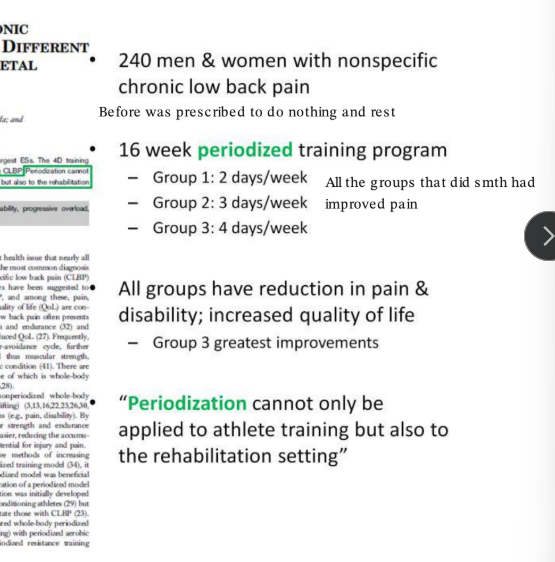
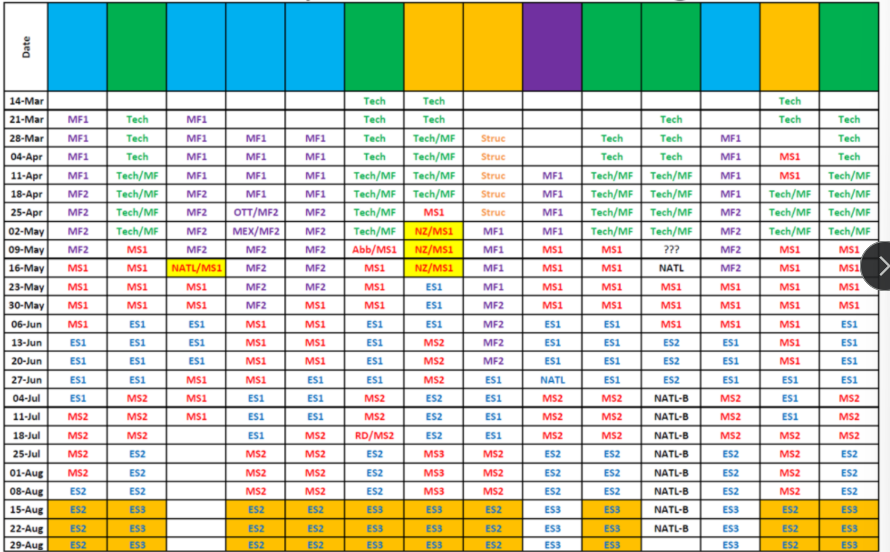
planned variation of training, doing diff things at diff times on purpose, to make training more efficient and to see adaptions faster
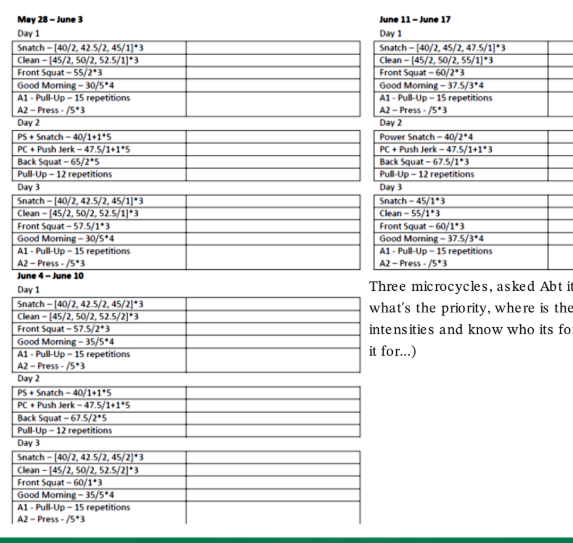
what are microcycles
Three microcycles, asked Abt it on final (what muscles is targeted,
what's the priority, where is the eccentric contraction, look at
intensities and know who its for, if you change smth then who's
it for...)
what is performance
noun - the action or process of performing a task or function
ex. sport performance, occupational performance, ADL’s
why is sport important
pursuit of excellence
knowledge that sport has been translated to other area of human physical function

what is the history of resistance exercise
1800’s - they were entertainers and physique contests, weightlifting in the olympics
1940’s - conversion of dr. peter karpovich which is an anti strength training prof starts to study strength training, and thomas delorme pioneers the use of resistance exercise for injured soldiers (hes why we have 3 sets of 10)
1960’s - resistance exercise gains popularity for athletes
1990’s - resistance exercise is recommended for adults
2009 - recommended in ACSM guidelines