CPrac N - Organic synthesis and purification
 Call Kai
 Learn
Learn Practice Test
 Spaced Repetition
 Match
Match Flashcards
 Knowt Play
1/5

There's no tags or description
Looks like no tags are added yet.
Name | Mastery | Learn | Test | Matching | Spaced | Call with Kai |
|---|
No analytics yet
Send a link to your students to track their progress
6 Terms
ROR for organic VS inorganic
Organic: Covalent bonds header to break -> slower ROR inorganic
Inorganic: Ionic bonds already can form bonds
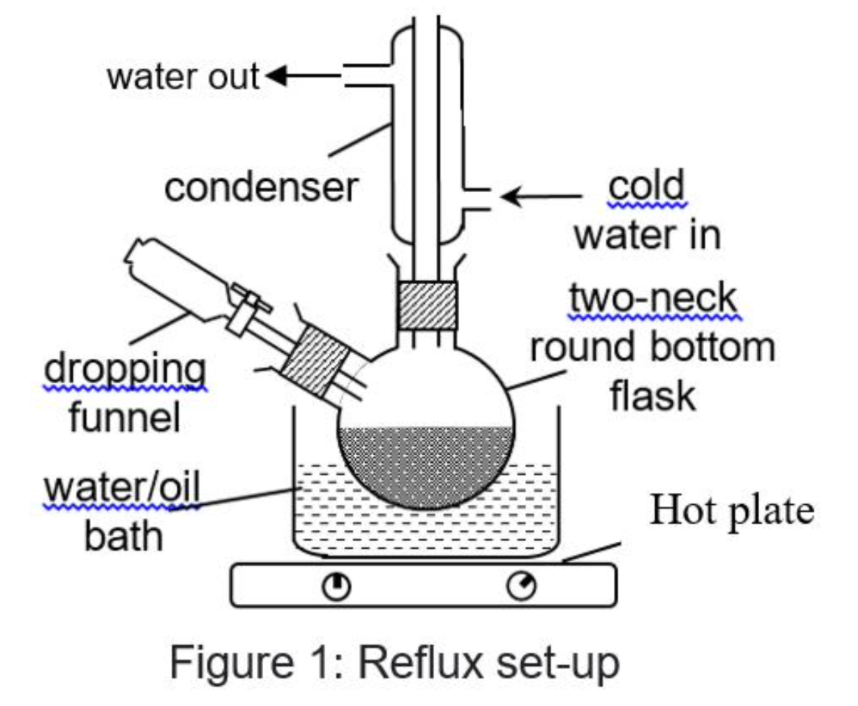
Draw heat with reflux apparatus
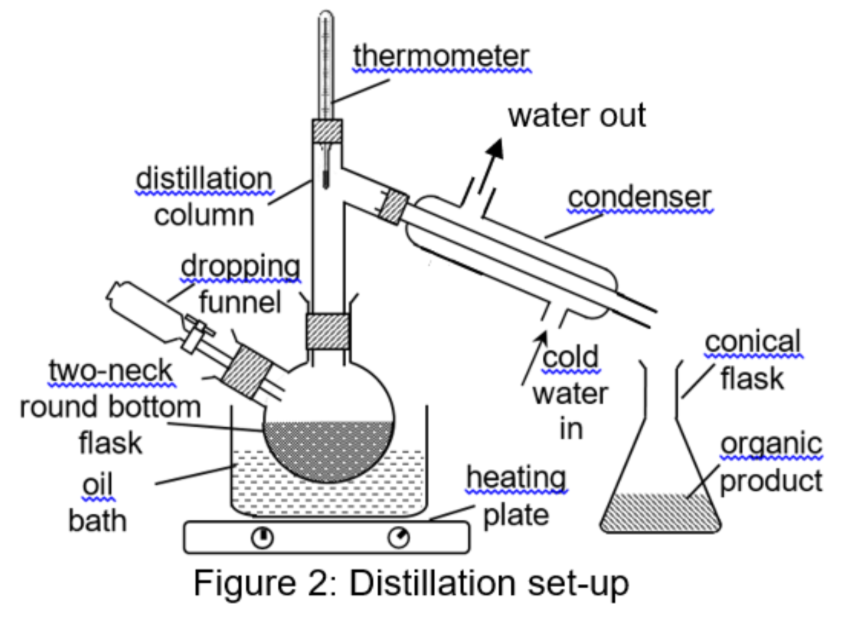
Draw Heat with distillation apparatus
Describe purificiation of organic Solid product
Filtration → recrystallisation → melting point determination
Pure organic solids have a very sharply defined melting point range
Dry solid organic products can be obtained placing it under an infra–red lamp to dry or air–dry
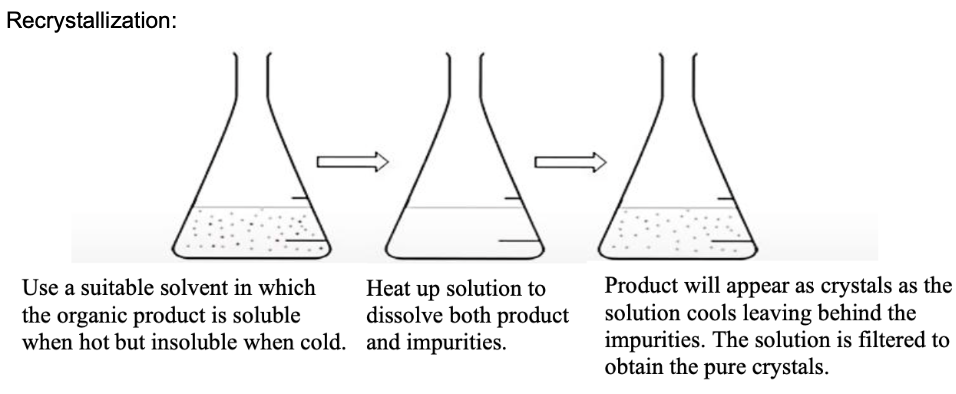
Describe recrystallisation
Describe purificiation of organic liquid product
Organic liquids are impure when aqueous reagents are used
Separation → drying → distillation
Separating funnel is used to separate the organic product from the aqueous solution
The mixture is washed with water to remove unreacted aqueous reactants
After separating, the organic liquid is dried with an anhydrous ionic salt with have high affinity for H2O molecules (through ion–dipole bond formation)
Solid Na2CO3 added to remove unreacted acids -> there will be effervescence of CO2
The mixture is filtered is obtain the organic liquid which is further distilled at the boiling point range of the organic compound to obtain the pure product