IPFC 1 - Childhood Anemia
 Call Kai
 Learn
Learn Practice Test
 Spaced Repetition
 Match
Match Flashcards
 Knowt Play
1/48

There's no tags or description
Looks like no tags are added yet.
Name | Mastery | Learn | Test | Matching | Spaced | Call with Kai | Chat |
|---|
No analytics yet
Send a link to your students to track their progress
49 Terms
What is anemia
Hemoglobin level too low to maintain cellular oxygen demands.
Practical definition: Hemoglobin level > 2 SD lower than mean value for age, sex and race.
4 main types of globins
Protein subunits that make up Hgb
Alpha
Beta
Delta
Gamma
Hemoglobin type is determined by...
The combination of globin chains
- HbA can also be written as “α2ß2”
- HbS can also be written as “α2ßS2”
Hemoglobin type by age
< 0 months
- Hb F start to decrease around the second trimester
0-6 months
- HbF > HbA,HbA2
2-3 months:
- β globin production begins
- γ globin continues to decrease
> 6 months
- Hb A continues to increase and becomes the dominant Hb
Which chromosomes are the globin genes are arranged on ?
chromosomes 11 and 16 in the order they are expressed.
T/F Globin genes are permanently either activated (hypomethylated) or suppressed (hypermethylated)
False, Globin genes are activated (hypomethylated) or suppressed (hypermethylated) at different stages in life
T/F Globins are synthesized independently
True! and they combine with each other to produce the various hemoglobins.
Hemoglobin at birth is ~___________
150-200 g/L.
Progressive decline during first 2-3 months
the smaller or more premature the infant, the ___________ and __________ the hemoglobin nadir.
earlier and lower
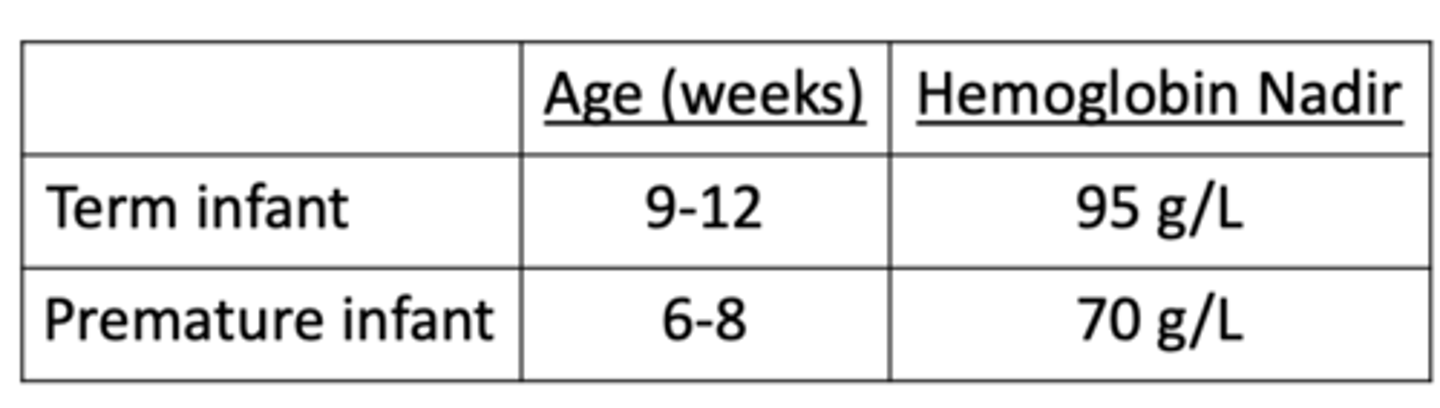
T/F Hemoglobin and MCV values are unrelated to age, sex, pubertal stage, ethnicity, altitude and heredity
False, they are related to age, sex, pubertal stage, ethnicity, altitude and heredity
T/F Iron deficiency is unusual before 6 months of age
true
Diets consistent with anemia
Cow's milk (iron), goat's milk (folate), vegan/vegetarian (B12), favism, pica (iron deficiency)
Symptoms consistent with anemia
Pallor, exercise intolerance, headache, excessive sleeping, poor feeding, syncope
Can anemia result in developmental delays?
Yes, Delays due to chronic anemia/nutritional deficiencies
Medications that can cause anemia
Anti-folates (SMX-TMP, phenytoin, antimetabolites, AZT, alcohol), oxidant stress (nitrofurantoin, anti-malarials), immune hemolysis (penicillin)
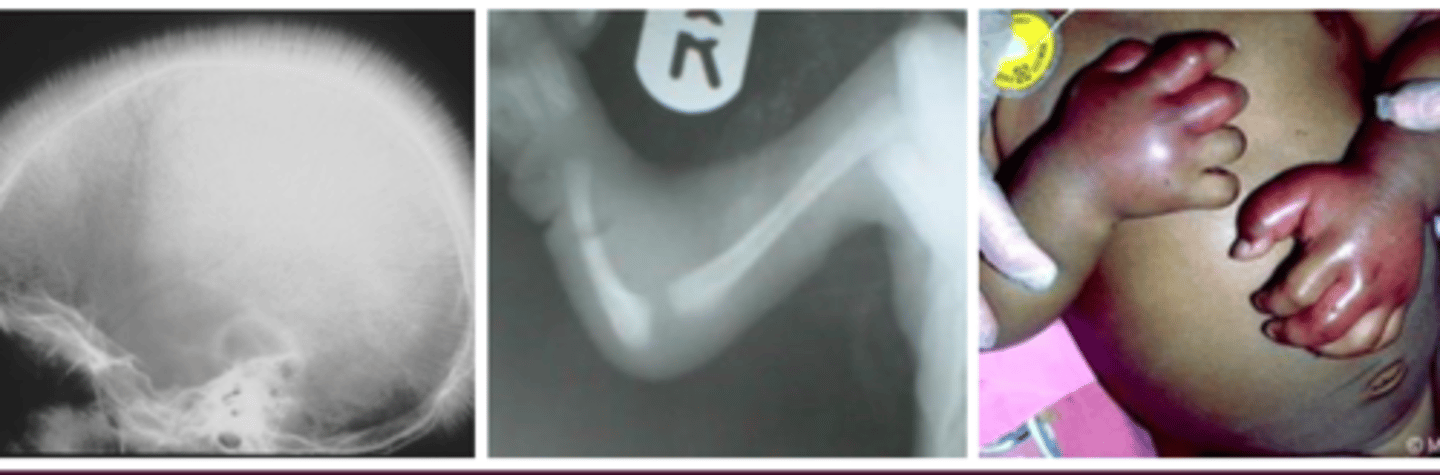
Evaluating anemia: physical findings
MOUTH: bruises, gum swelling, glossitis, angular stomatitis, pharyngitis (infection)
SKIN: petechiae, purpura, pallor, jaundice, café au lait macules
NECK: lymphadenopathy, thyroid
ABDOMEN: HSM, tenderness, masses
Three most important tests when evaluating anemia:
CBC - Hemoglobin, MCV, RBC, WBC, Platelets
Reticulocyte count – indicator of bone marrow response
Peripheral blood smear - morphological clues
Optional tests when indicated:
- Examine stool and urine for blood loss
IDA: serum iron, transferrin/TIBC, ferritin, soluble transferrin receptor
Thalassemia or SCD: sickle screen, hemoglobin analysis, hemoglobin H prep
Megaloblastic anemia: RBC folate, serum B12, homocysteine, MMA
Hemolysis: LDH, haptoglobin, bilirubin, DAT, G6PD assay, pyruvate kinase activity
- If spherocytes, consider osmotic fragility test for hereditary spherocytosis
15
4 different approaches to classifying anemia
- Morphology (size, shape and colour)
- Etiology (cause of the anemia)
- Pathophysiology
- Reticulocyte response
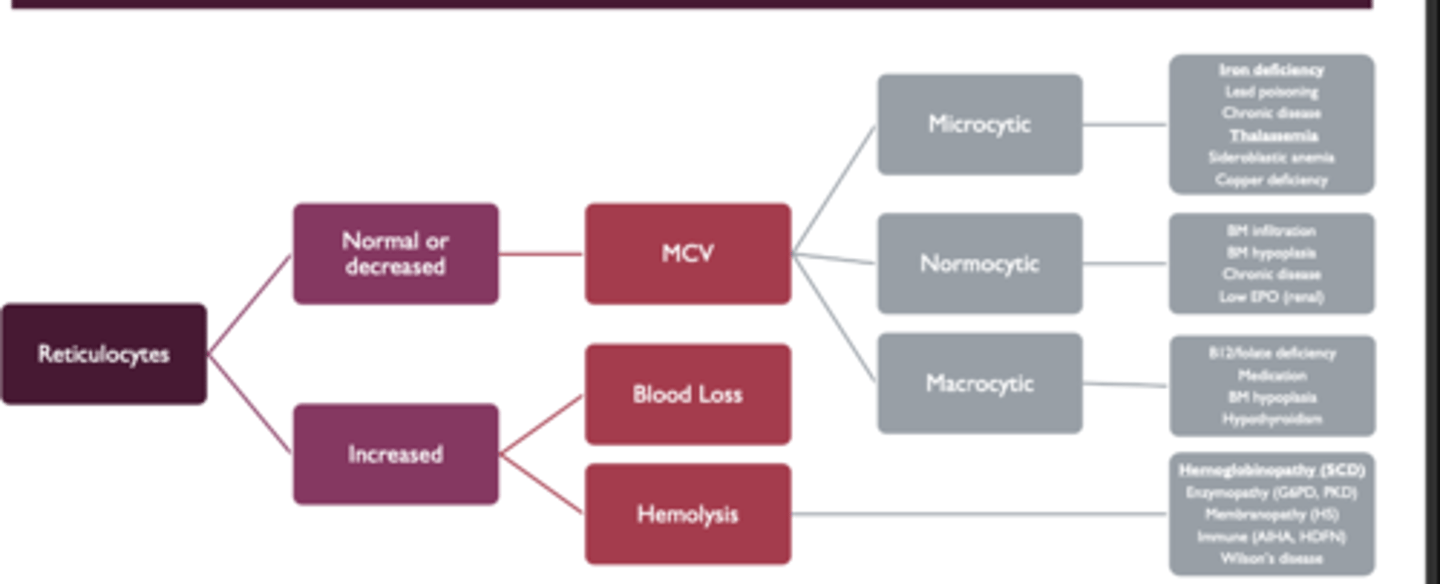
Causes of iron deficiency
1. Inadequate iron stores at birth (e.g. prematurity, maternal iron deficiency)
2. Inadequate dietary absorption
➢ Poor bioavailability (cow’s milk, high gastric pH, inhibitors of absorption)
➢ Loss/dysfunction of absorptive surface (duodenectomy, short gut syndrome, Celiac disease)
3. Blood loss
➢ GI tract (cow’s milk, Meckel's, polyps, ulcer, H. pylori, IBD, parasitic infection, varices)
➢ Epistaxis, menorrhagia, rarely pulmonary or renal losses
4. Malabsorption of iron
➢ Celiac disease, antacids, giardiasis, iron-refractory IDA (IRIDA)
Treatment for 17 month old boy with IDA
Ferrous sulfate for 3 months
3-6 mg/kg/day elemental Fe
Oral Iron Challenge
Fasting serum iron level before and 2 hours after 1 mg/kg dose of oral iron
- Can help detect malabsorption
Iron-refractory Iron Deficiency Anemia (IRIDA)
abnormal oral iron challenge
Treated with IV iron with normalization of CBC and iron indices.
Refer to Hematology if:
- Iron deficiency with poor response to a therapeutic trial of oral iron
- Anemia with additional cytopenia
- Evidence of acute or chronic hemolysis
- Any unexplained normocytic anemia
Hemoglobinopathies
"Diseases of hemoglobin"
Qualitative vs quantitative hemoglobinopathy
Quantitative = reduced or absent globin synthesis
- Thalassemia syndromes
Qualitative = structural hemoglobin variants
-Sickle cell disease (HbC, HbS)
- Methaemoglobinemia (metHb)
- G6PD deficiency, etc.
Canada is seeing more patients with hemoglobinopathies due to _____________
immigration
Sickle cell disease (SCD)
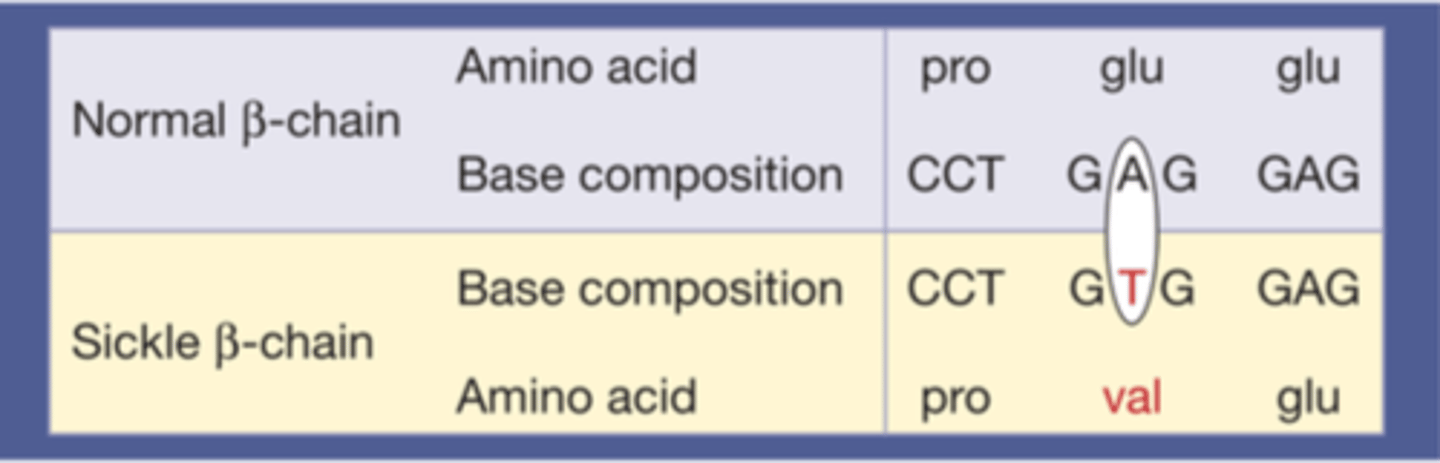
A group of hemoglobin disorders caused by a mutation in the ß globin (HBB) gene (p.Glu6Val) i.e. ßS
Autosomal recessive
The only risk factor for SCD is ancestry from:
- Sub-Saharan Africa
- Caribbean
- Central and South America
- India
- Mediterranean basin
- Middle East
T/F Sickle cell trait (HbAS) is a risk factor for malaria
False! Sickle cell trait (HbAS) confers protection to malaria
Pathophysiology of sickle cell disease
When HbS is deoxygenated, α2βs2 can polymerize which causes the RBC’s membrane to deform sickle shape.
Effects of SCD
1. Vaso-occlusion occurs when RBC get trapped in blood vessels causing infarcts
2. Intravascular hemolysis promotes inflammation and redox instability and leads to vasculopathy
RBC lifespan: sickled vs normal
Normal RBC: 110 to 120 days
Sickled RBC : 10 to 20 days
Bloodwork consistent with chronic hemolysis/anemia
high LDH
high Bilirubin
low Hgb
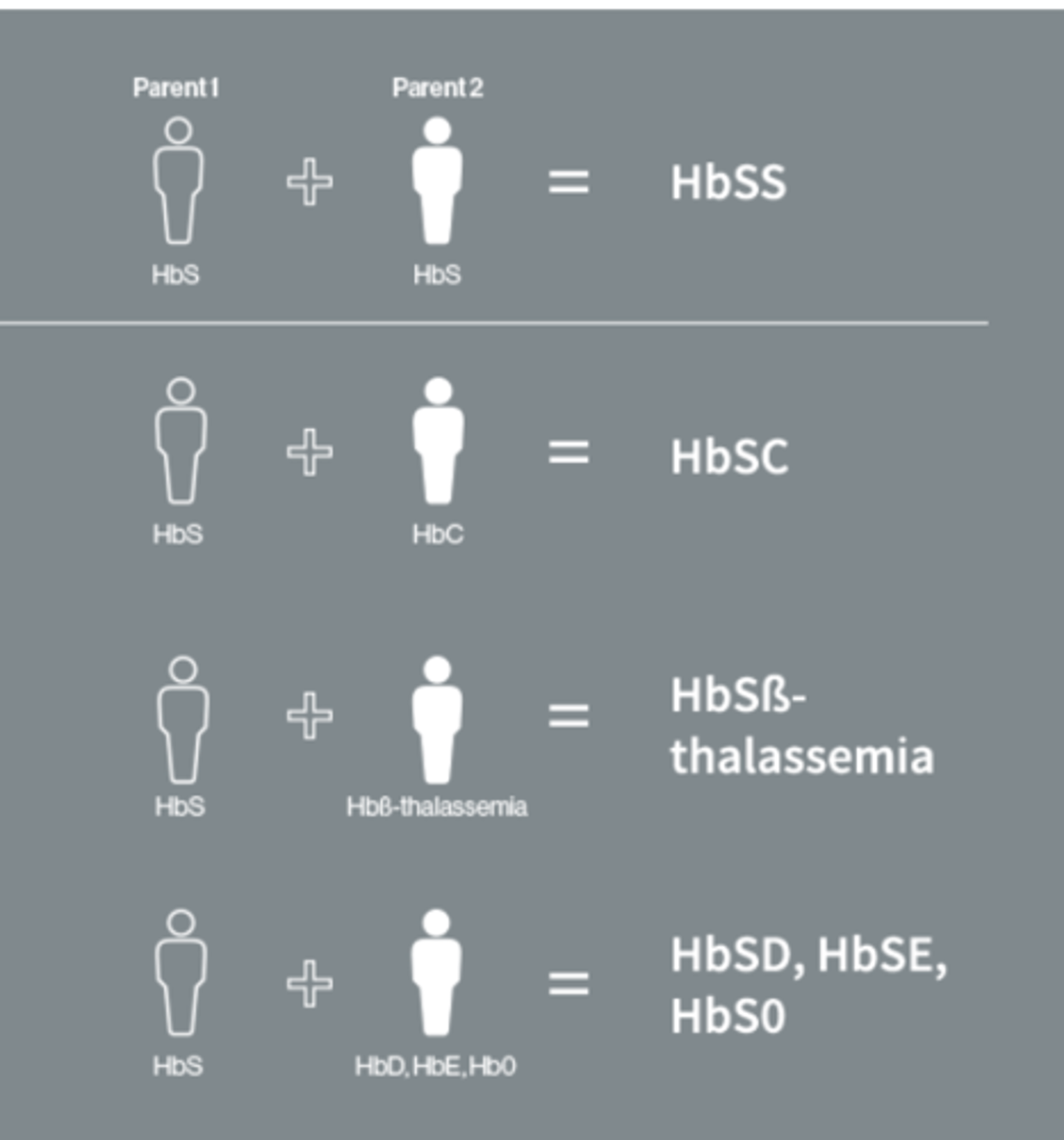
SCD subtypes
Autosomal recessive
Homozygous
HBSS (main type in the USA)
Heterozygous
HbSB0
HbSO-Arab
newborn screening ontario (NSO)
- Consider screening patients who are were born prior to screening
- Some people may not be aware of their genetic status
- Earlier diagnosis = Reduction of childhood infections / complications
Sickle-cell crisis
AKA vaso-occlusive crisis (VOC), sickling crisis
Presentation:
- Chest pain
- Dyspnea
- Low PO2
- Pulmonary infiltrates on CXR
Acute sickle chest syndrome (ACS)
is a common cause of death (~25%)
Sickle-cell crisis treatment
Analgesics: opioids, ketamine, NSAIDS
Bronchodilators, O2
Hydration
Transfusions?
Risk factors for Sickle-cell crisis
- Dehydration
- Anoxia
- Infections
- Venous stasis
- Acidosis
- Deoxygenation (e.g. high altitudes, operations, obstetric delivery)
- Vigorous exercise
Treatment options for SCD
Hydroxyurea
Supportive care
- Antimicrobial prophylaxis / immunizations
- Blood transfusions (HbS ≤ 30%)
- Splenectomy
- Supplementation
Hydroxyurea (Hydrea®) mechanism
Induces production of fetal hemoglobin (primary mechanism)
• Inhibition of ribonucleotide reductase (RR) = blocks DNA synthesis in the S-phase
• Decreased adhesion and improve rheology of circulation neutrophils and reticulocytes
• Increased hydration of RBC→improved flexibility
Baby hug trial
Showed that hydroxyurea 20mg/kg daily resulted in:
• Lower rates of initial and recurrent episodes of pain
• Lowest episodes of dactylitis
• Fewer acute chest syndromes
• Lower hospitalization
• Fewer transfusions requirements
• Mild-to-moderate neutropenia in the hydroxyurea group but no increase in # of infections
Hydroxyurea indications
- HbSS or HbSB0: start at 9 mo. (BABY HUG trial)
- HbSC or HbSB + with a history of ≥3 crises/year
Hydroxyurea dosing
Once daily
- Children: start at 20 mg/kg, up to 35 mg/kg (or as tolerated)
- Adults: start at 1000 mg daily and increase as tolerated
Renally cleared → adjust dose if CrCl < 60 ml/min
Supportive care for SCD
Antibiotic prophylaxis (PROPS 1 and II trials)
- Penicillin (or amoxicillin) PO until age ~6
Splenectomy
Folic acid (1 daily or 5mg weekly)
- increases RBC turnover
T/F SCD patients with painful episodes will present with vital sign abnormalities.
False, most will have normal vitals
T/F Opioid dependence is uncommon in patients with SCD
true
Individuals with SCD do not have a higher pain tolerance.
True, SCD-related pain should be treated aggressively and adequately.