MODULE 8 - Non-Infectious Disease and Disorders
 Call Kai
 Learn
Learn Practice Test
 Spaced Repetition
 Match
Match Flashcards
 Knowt Play
1/135

Earn XP
Description and Tags
UP TO PAGE TWENTY TWO SO FAR BTW
Name | Mastery | Learn | Test | Matching | Spaced | Call with Kai | Chat |
|---|
No analytics yet
Send a link to your students to track their progress
136 Terms
Homeostasis
the process by by which organisms can maintain a relatively stable internal environment, despite a changing external environment
includes: The nervous system, endocrine system
Receptors
a stage of homeostasis:
recieves stimulus
includes: patches of sensetive nerve cells, complex organs such as eyes and ears in mammals
Effectors
a stage of homeostasis:
respond to the change (detected by stimulus) and restore the organism to the stable state
can be muscles or glands
Muscles
respond to stimuli by contracting or relaxing → bringing about movement
Glands
respond to stimuli by secreting hormones
e.g. pancreas secretes insulin in response to an increase in blood sugar levels
Feedback
when outputs of a system are routed back into the system as an input
negative feedback loop
deviation from stable state results in a response to counteract this in order to achieve homeostasis. More common
e.g. body temp, blood glucose levels are controlled by ___
postitive feedback loop
deviation away from stable state which results in an amplification of the change, deviating further away from homeostasis. More uncommon.
e.g. uterine contractions during childbirth, blood clotting
thermoreceptors
found in the hypothalamus, detect temperature of blood circulating body
Control of Body Temperature
Controlled by hypothalamus and pituitary glands in brain
Thermoreceptors in hypothalamus detect change
responses include: sweating/vasodilation or goose bumps/shivering/constriction of blood vessels
Control of Blood Glucose
Controlled by pancreas: secretes insulin and glucagon
negative feedback
Insulin
Plays role in blood glucose feedback
promotes ↓ in blood glucose through synthesis of glycogen and cellular uptake of glucose
Glucagon
Plays role in blood glucose feedback
promotes ↑ blood glucose through breakdown of glycogen and synthesis if glucose from amino acids
Endotherms
organisms whose body temperatures maintain fairly constant (e.g. humans and euro [mammals] and birds [kookaburra]
ambient temperature
temperature of external environment (not body temp)
Ectotherms
organisms whose body temperatures vary with the environment around them (ambient temp)
e.g. reptiles [blue tounged lizard], amphibians [frog]
adaptation
an inherited characteristic, process or behaviour that is of benefit to an organism (facilitates it’s survival in a certain habitat)
Behavioural adaptation
change in the activities and behaviours of an organism e.g. hibernation, nocturnal
Structural adaptation
change in the physical characteristics of an organism e.g. body shape and size, large thin ears
Physiological adaptation
change in the processes carried out by the structure e.g. sweating
Coordination
____ systems in the body work to achieve and maintain homeostasis
includes the nervous and/or endocrine system
CNS (Central Nervous System)
consists of: the brain and spinal cord
function: transmits messages to and from the brain and controls spinal reflexes
PNS (Peripheral Nervous System)
consists of: branching networks of nerves. all nerves enter or leave CNS
Neurons
contain bundle fibres, either axons or dendrites, surrounded by connective tissue
function: to carry out the functions of the nervous system by conducting nerve impulses
main parts: cell body, dendrites, exon
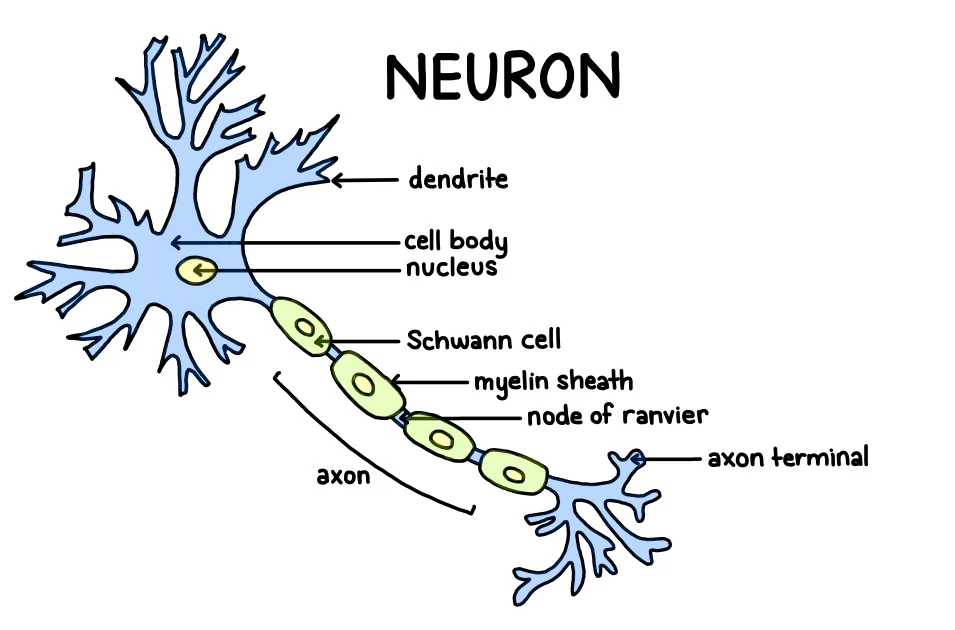
dendrites
part of neuron
extensions that project from the cell body
recieves singals from other neurons and carry them to the body
axon
part of neuron
carries messages away from the cell body
myelin sheath
covers many neurons
white, fatty substance
sensory neuron
arise from sensory receptors (e.g. eyes, ears, taste buds) as well as internal receptors for hunger, thirst, body position, pain etc.
function: to carry messages to the CNS for processing
interneurons
connects sensory and motor neurons and are located in the CNS
function: carry impulses from sensory to motor neurons
motor neurons
function: carry impulses away from the CNS to effectors (muscles and glands that carry out the response)
synapse
gap between neurons that impulse must cross (2 types)
electrical synapse
type of synapse
contain specialised integral proteins, gap junctions which form channels that span across the synapse.
They connect the two nerve cells and allow impulse to travel from one neuron to the next by an electrical signal
chemical synapse
type of synapse
neurotransmitters are released from axon terminals into the synaptic cleft
They diffuse across the cleft and bind to receptor on the dendrite of the next neuron
This may or may not trigger nerve impulse (depends on how much of the chemicals are secreted)
Nervous control
Usually follows these steps:
Stimulus
Receptor
Control centre (CNS)
Effectors
Response
Stimulus detection (NC)
Step 1 of nervous control
Change is detected in internal or external environment
e.g. (change in CO2 levels, internal temp) or (sound, vibration, odours, touch)
Receptor
Step 2 of nervous control
detect stimulus and convert it into electrochemical impulses
Transmitted by sensory neurons in one direction to the CNS
RECEPTORS INCLUDE:
photoreceptors
thermoreceptors
mechanoreceptors
chemoreceptors
photoreceptors
detect light (found in eyes)
thermoreceptors
detect heat (found in the skin and the hypothalamus)
mechanoreceptors
detect pressure, sound, touch, gravity (found in skin and inner ear)
chemoreceptors
detect taste and smell (such as olfactory receptors in the nose and taste buds)
Control centre
Step 3 in nervous control
Response reaches CNS → carried by interneurons to the brain
Can be sent to different parts of brain which are associated with diff functions
Hypothalamus - maintaining homeostasis (e.g. body temp)
cerebullum - muscular activity (e.g. posture and balance)
brainstem - control of heart, blood vessels and lung ventilation
cerebral cortex (cerebrum) - motor activity, sensory input, speech, sight and hearing
Effectors
Step 4 of nervous control
motor neurons carry impulses from spinal cord to effectors
TYPES OF EFFECTORS:
muscles (e.g. skeletal and smooth muscles in stomach)
glands (e.g. endocrine)
organs
Response
Step 5 of nervous control (final step)
muscle or gland stimulated by motor neuron responds accordingly
reflex
an automatic response to stimulus involving a small number of neurons
does not need conscious thought
rapid response to stimuli
reflex arc
Steps:
sensory neuron → spinal cord
interneurons interpret stimuli
message relayed to motor neurons → response produced
membrane potential
neurons have an electrical charge difference across their cell membranes causing potential difference.
*due to different concentrations of Na+ and K+ ions
Action potential
a rapid and short change in membrane potential of an exciteable cell
In nerve cells → causes nerve impulse
muscle cells → contraction
Nerve impulse
Consists of 5 main steps:
Stimulus
Depolarisation
Repolarisation
Hyperpolarisation
Resting state (or refractory stage)
Resting potential of neuron
-70 mV
∴ inside of the cell is more -ve than the outside, ↑ number of +ve ions outside cell (cell is polarised)
ion concentration is maintained by:
Sodium and potassium ion channels
sodium-potassium pumps
Stimulus detection (NI)
Step 1 of nerve impulse
stimulus is applied → Na+ channels open and NaK channels close
∴ Na+ rushes into cell, ↑ voltage
If stimulus is strong enough, V ↑ to the threshold
difference between threshold and resting potential is the MINIMUM ΔV needed to generate action potential (usually 15mV)
*Threshold needs to be met for the process to continue
Depolarisation
Step 2 of nerve impulse
Na+ continue moving into cell, ∴ inside of cell more +ve than outside
Δelectrical potential is called _____
Repolarisation
Step 3 of nerve impulse
Na+ channels close → prevents Na+ ions entering cell
K+ channels open and allow K+ ions to leave cell
∴ inside becomes more -ve than outside of cell again
Hyperpolarisation
Step 4 of nerve impulse
As repolarisation was occuring, the K+ channels closed relatively slowly → inside of cell becomes temporarily more -ve than the resting potential
Resting state (NI)
Step 5 of nerve impulse (final step)
aka. refractory stage
NaK pumps open -→ restore conc of ions to the original levels
∴ membrane returns to its resting potential (-70mV)
Endocrine system
system that is composed many ductless glands which secrete hormones into the bloodstream
Hormones
chemical messengers that target specific cells to cause a specific response for maintaining internal homeostasis and internal communication
Hormone coordination
long lasting but relatively slow
glands need to be activated
hormones synthesised
secretion
transmitted by diffusion into extracellular fluid or bloodstream
reaches target organ/cells
hypothalamus
links nervous system and endocrine system
processes sensory information responsible for activities such as:
sex
hunger
thirst
pleasure
pain
anger
Pituitary gland
small gland that lies below the hypothalamus, called the master gland
controlled by hypothalamus
stores some hormones produced by the hypothalamus (e.g. ADH and oxytocin)
produces hormones (e.g. prolactin, FSH, LH, growth hormone)
secretes hormones to activate other endocrine glands (e.g. TSH → stimulated thyroid, ACTH → stimulates adrenal glands)
Auxins
Found in: shoot and root tips
Stimulates elongation of cells
growth
Photo tropism
Gravitropism
Cytokinins
Produced by: roots
Found in: embryos and fruits
Promote cell diversity
Growth
Lateral growth and aging
Phototrophism
Plant bending towards the light
Gravitrophism
Response to gravity
Gibberellins
Produced by: young roots and leaves
Cell elongation and division
stimulates flowering and fruit developent
Abscisic acid
Produced by: leaves, stems, roots, green fruits
Inhibits germination
determines whether seed remains dormant or germinates
Ethylene
Produced by: aging fruits and leaves
Triggers fruit ripening and other aging provesses
transpiration
water loss (evaporation) in plants via stomata on leaves
xerophytes
plants adapted to low water conditions
halophytes
salt tolerant plants
xeromorphic features
features in halophytes and alpine species of plants
an adaptation to the scarcity of water and high transpirational losses in these environments
Non-infectious diseases
diseases that aren’t caused by pathogen and can’t be transferred from person to person
genetic diseases
result of mutations in germ-line cells. passed down through generation to generation.
e.g. CF, breast cancer, huntington’s disease
cancer
results from mutation in genetic material, leads to abnormal cell behaviour → leads to uncontrolled cell growth under action of genes called proto-oncogenes
malignant
describes cancer that actively invades and spreads around the body
benign
describes abnormal (potentially cancerous cells) that don’t invade surrounding tissue areas and remain confined, not considered cancerous
malnutrition
deficiencies, excesses, or imbalences in a person’s intake of energy, and/or nutrients
undernutrition
includes:
wasting (low weight for height)
stunting (low height for age)
underweight (low weight for age)
micronutrient-related malnutrition
includes:
micronutrient deficiencies (lack of important vitamins/minerals)
micronutrient excess
overweight/obesity and diet related noncommunicable diseases
includes:
heart disease
stroke
diabetes
some cancers
nutritional diseases
malnutrition:
undernutrition
micronutrient malnutrition
obsesity, overweight, noncommunicable diseases
examples:
scurvy (vit C deficiency), rickets (vit D deficiency), night blindness (vit A deficiency), anemia (iron deficiency)
Epidemiological studies
includes the collection and statistical analysis of large quantities of data from hospitals, census etc.
impact: provide a picture of incidence, prevalence, mortality of disease, can identify cause, methods of transmission, treatment, controls and long-term measures of prevention
Epidemiology
the study of diseases that affect many people (infectious & non-infectious disease)
descripitve studies
type of epidemiological study
study of distribution of disease in terms of age, race, ethnicity, sex etc.
analytical studies
type of epidemiological study
Observational (case-controlled) studies
compares diseased individuals (case) to normal individuals (control) → draw conclusions relating to cause and risk factors of disease
retrospective
Experimental (cohort) studies
compare individuals who have (or not) been exposed to a particular risk factor → draw conclusions about cause and risk factors of disease
prospective
intervention studies
type of epidemiological study
used to evaluate treatment and prevention methods
e.g. clinical trials
validity of epidemiological study
large sample size (ie large data quantities)
includes people from a variety of backgrounds/occupations
includes a control group
conducted over a long period of time
educational programs and campaigns to prevent disease
aim: raise awareness of risk factors associated with particular diseases
carried out by: NGOs, GOs, Aus gov, state, territory, local gov, private health professionals
types:
paid advertising
school-based health education
screening programs
policy changes
paid advertising
e.g. “Slip, Slap, Slop” → Cancer Council Victoria (1981) for melanoma rates
School-based health education
e.g. program that targets risks of hazardous and harmful drug use → NSW PDHPE curriculum (active)
screening programs
e.g. “National Bowel Cancer Screening Program” or NBCSP → Aus Department of Health (active) provides a free Bowel screening kit to Australians between 50-75y/o every two years
early detection of cancer is beneficial
policy changes
e.g. “Tobacco Plain Packaging Act of 2011” → Aus Government
cigarettes must display health warnings and graphic imagery
genetic engineering
direct manipulation of an organism’s genetic material → has potential to prevent genetic diseases, nutritional diseases and cancers
pre-implantation genetic testing
involves fertilisation via IVF, a single cell is removed from uterus and tested (when blastocyst has 8 cells)
tests for:
CF
Huntingtons
thalassemia
muscular dystropy
emrbyos that have the disease are discarded: ∴ 100% effective
Mitochondrial Replacement Therapy
note: mitochondrial diseases passed from mother to child (egg contains way more mitochondria than sperm)
MRT can be used with IVF to prevent transmission of mitochondrial diseases (involves donor)
diseases:
Leber Hereditary optic neuropathy (LHON) and MELAS syndrome
Biofortificaiton
↑ nurtitional value of crops
process: selective breeding or genetic modification (↑ value during production rather than after harvestation)
aim: prevent nutritional diseases caused by micronutrient-related malnutrition
examples:
Golden Rice genetically modified to include two transgenes: one from daffodil and soil bacterium → allows rice to produce beta-carotene, precursor to Vitamin A (for vitamin A defeicieny → leads to blindness in children)
pitch
frequency of sound wave
loudness/intensity
amplitude of waves
mechanoreceptors
responsible for sound reception:
tiny hair cells in cochlea of ear
pinna
collects and focusses sound waves
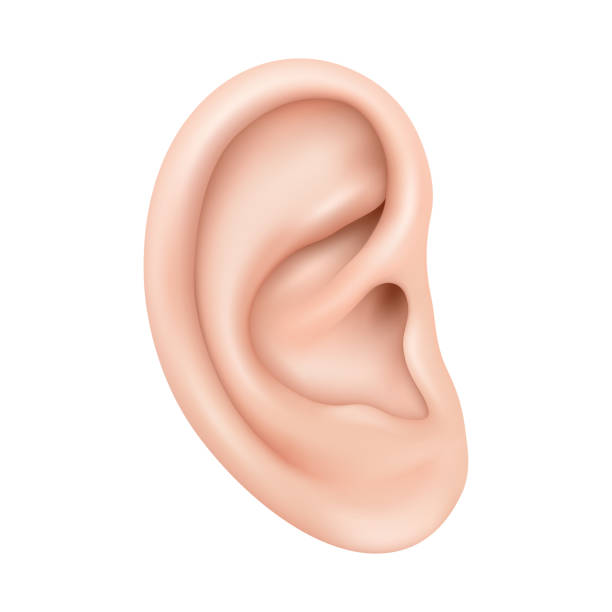
tympanic membrane
sound waves travel down auditory channel to here.
vibrates at the same frequency as the sound