7.2 - Factors affecting gene expression
 Call Kai
 Learn
Learn Practice Test
 Spaced Repetition
 Match
Match Flashcards
 Knowt Play
1/10

There's no tags or description
Looks like no tags are added yet.
Name | Mastery | Learn | Test | Matching | Spaced | Call with Kai | Chat |
|---|
No analytics yet
Send a link to your students to track their progress
11 Terms
What is a transcription factor?
A protein that controls the transcription of genes, so that only certain parts of the DNA are expressed (e.g. in order to allow a cell to specialise)
How do transcription factors work?
They move from the cytoplasm into the nucleus, bind to the DNA near their target gene & either increase or decrease the rate of transcription
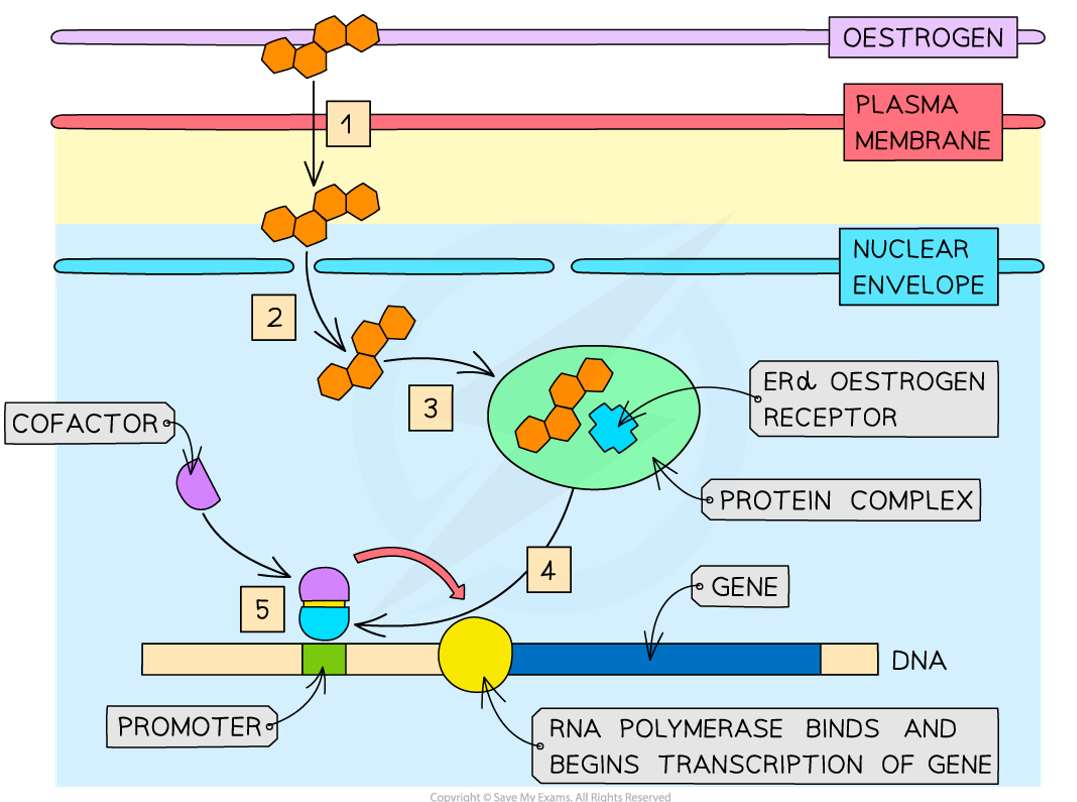
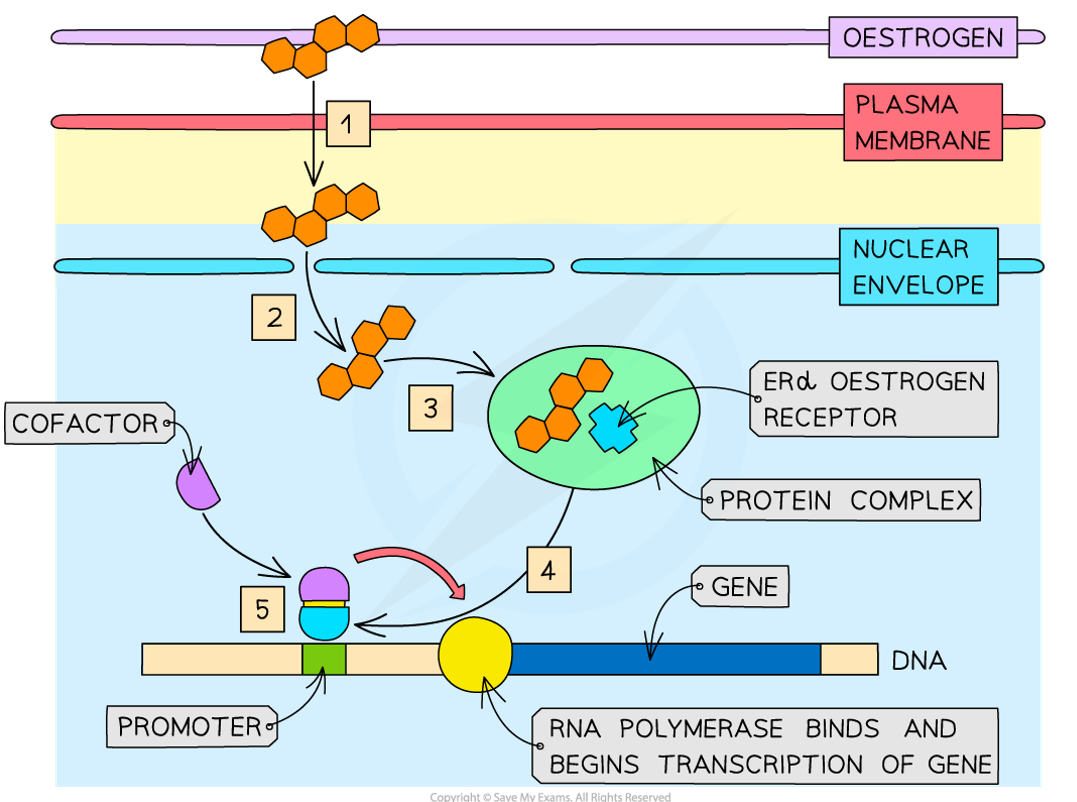
Outline what is happening in this image
Oestrogen travels through the phospholipid bilayer by simple diffusion, as it is lipid-soluble & non-polar
Oestrogen then enters the nucleus through the nuclear envelope
Oestrogen binds to the oestrogen receptor & is held within the protein complex
Upon binding, the oestrogen receptor undergoes a confirmational shape change, causing it to change shape & leave the protein complex
The altered oestrogen receptor can now bind to the promoter, which attracts a cofactor. This complex allows RNA polymerase to bind tightly & transcription begins
Where are promoters found in DNA?
In the DNA sequence, before the beginning/in front of the gene
What is splicing?
In eukaryotic cells, mRNA contains introns (non-coding regions), which are removed & the exons (coding regions) are joined together by enzymes

How can splicing result in different products from a single gene?
There are a variety of ways that the exons can be joined back together by enzymes, meaning several different versions of the RNA can be produced
What is meant by epigenetics?
A heritable change in gene function, without changing the DNA base sequence:
these changes are caused by changes in the environment (e.g. diet, stress & toxins) & can inhibit transcription
How can non-coding RNA affect gene expression?
There are many types of non-coding mRNA:
some interfere with protein translation, some are involved in splicing & some chemically modify other RNAs
How can histone modification affect gene expression?
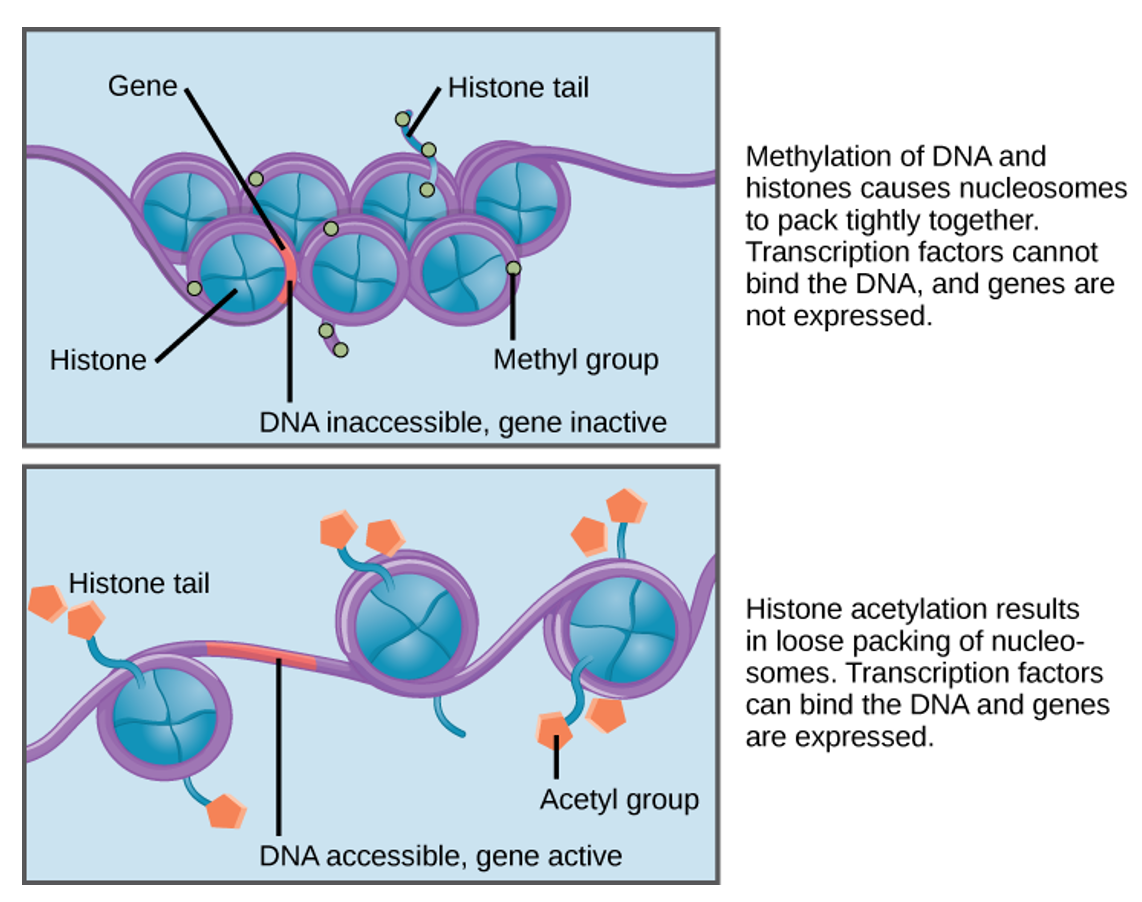
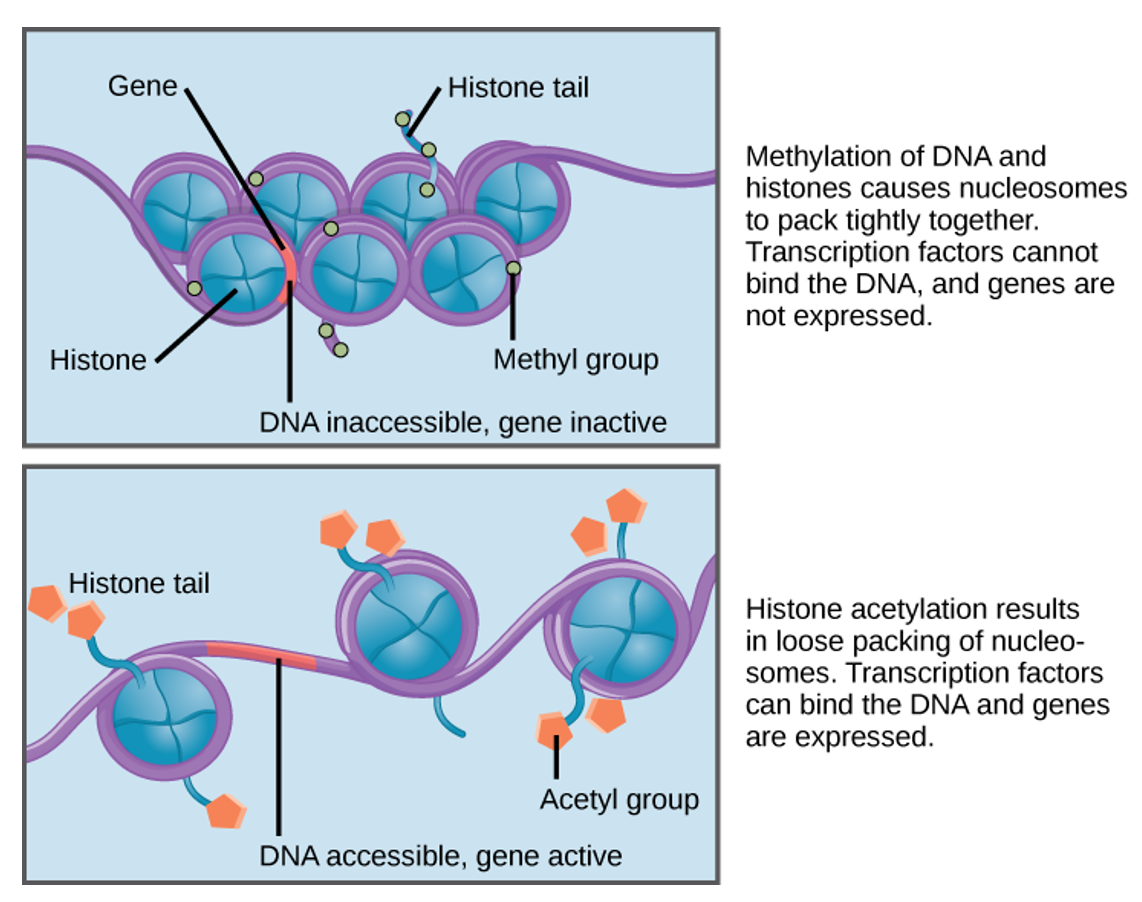
Addition of an acetyl group (acetylation) activates chromatin, allowing transcription
opens up the packaging of the nucleosomes, meaning transcription factors can bind → greater gene expression
Addition of a methyl group (methylation) can either activate or inactivate chromatin depending on the position of the lysine
How can DNA methylation affect gene expression?
Involves the addition of a methyl (CH3) group to cytosine bases:
silences a gene or sequence of genes → causes nucleosomes to pack more tightly together, meaning the gene is less accessible
prevents transcription factors from binding therefore, gene transcription is suppressed
How are epigenetics involved in cell differentiation?
Epigenetics control the amount of a cell’s DNA that is transcribed, so ensures that only the proteins needed for that specific cell’s function are produced