Biological Molecules (Combined) 1
 Call Kai
 Learn
Learn Practice Test
 Spaced Repetition
 Match
Match Flashcards
 Knowt Play
1/64

There's no tags or description
Looks like no tags are added yet.
Name | Mastery | Learn | Test | Matching | Spaced | Call with Kai | Chat |
|---|
No analytics yet
Send a link to your students to track their progress
65 Terms
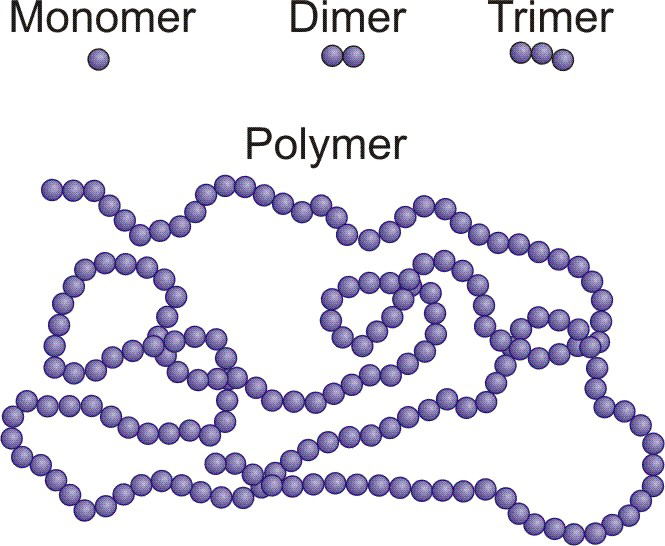
Monomer, dimer, trimer, polymer
Hydrolysis
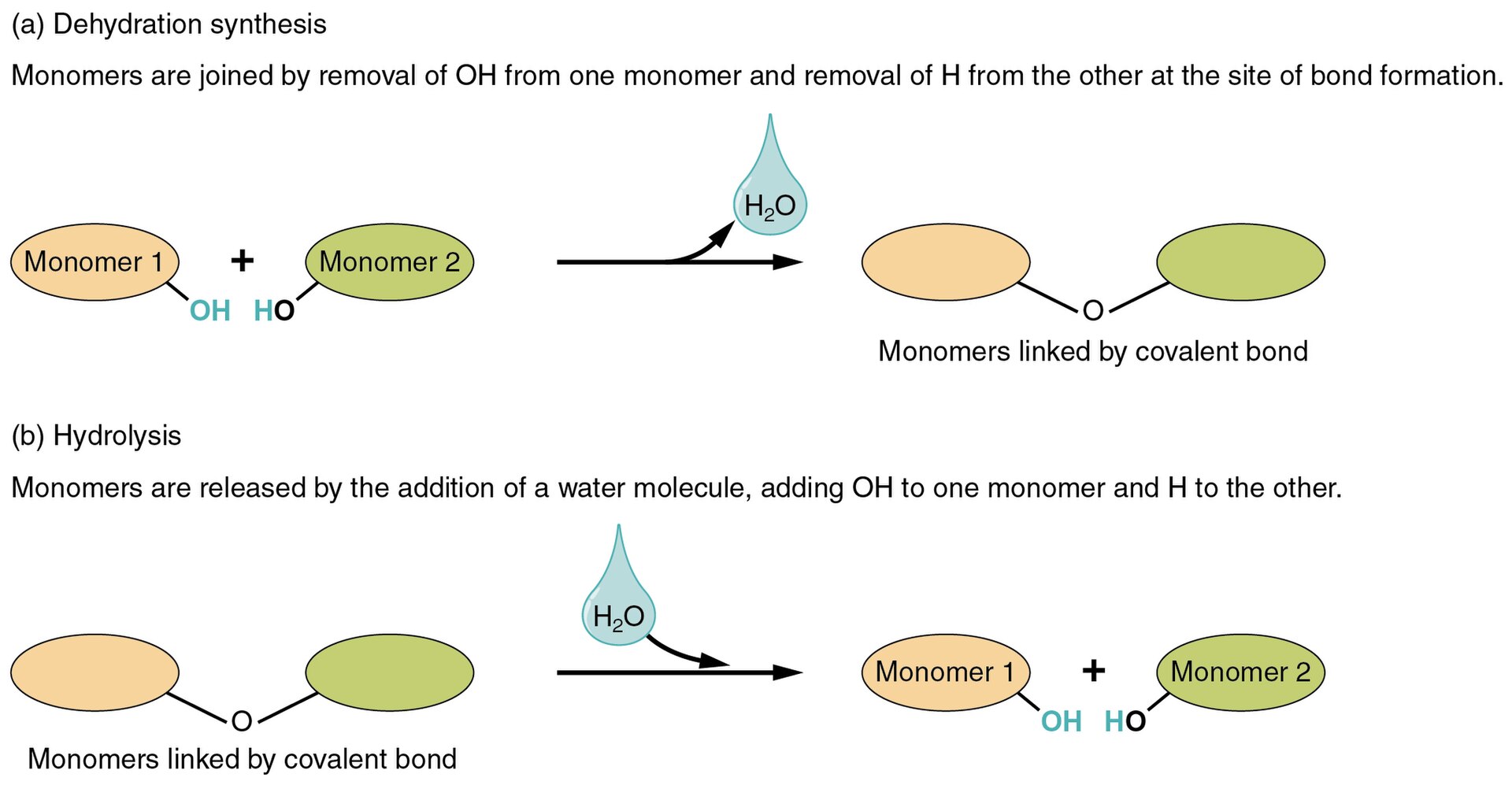
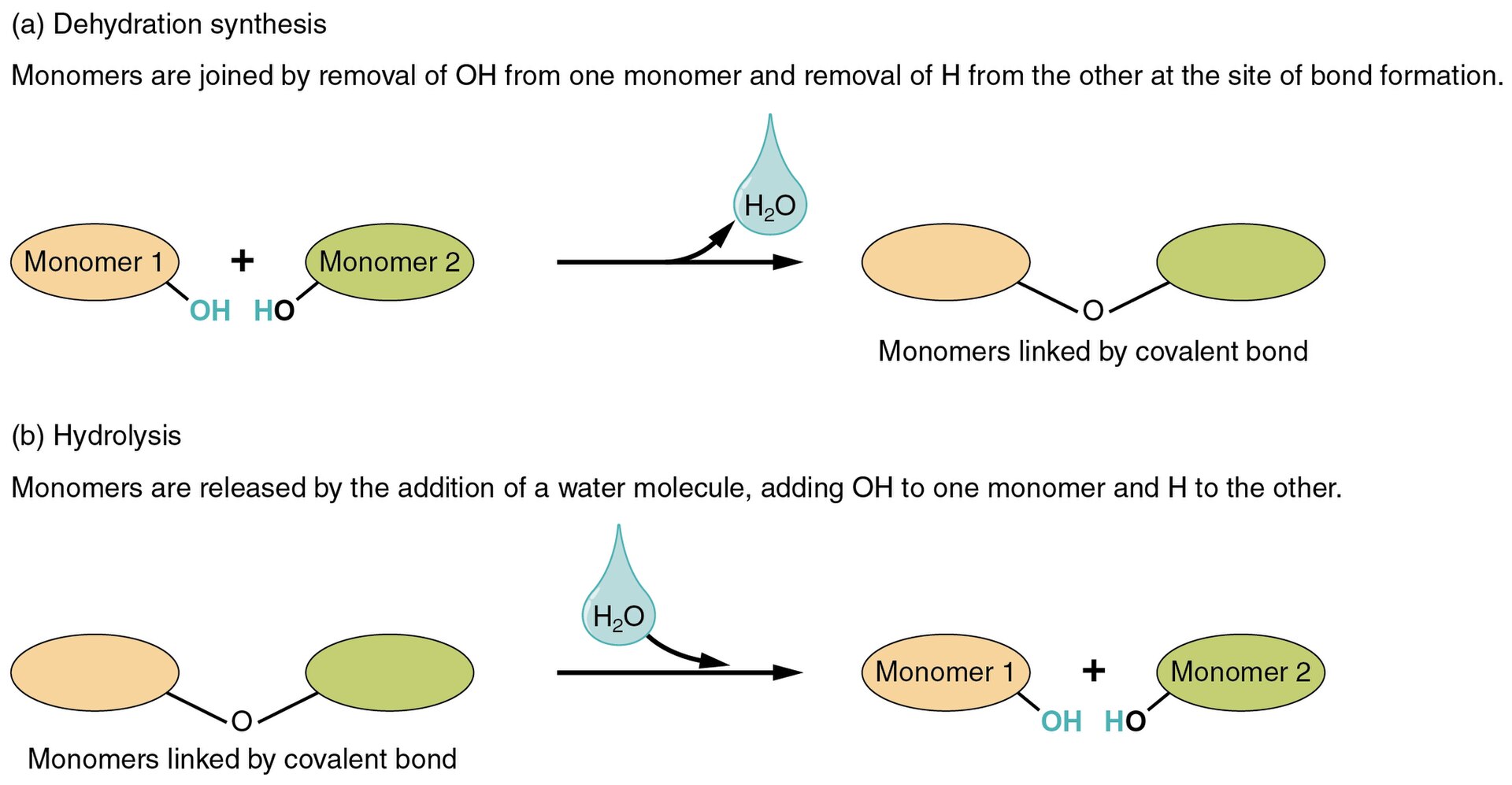
Breaking down a large molecule into smaller molecules (e.g., polymer to monomer). Each bond is broken after reaction with one molecule of water.
Condensation
Forming a large molecule from smaller molecules (e.g., monomer to polymer). As each bond is formed, one molecule of water is released. This reaction is also known as dehydration, since water is lost.
Sugars, starch, cellulose
Examples of carbohydrates
Monosaccharide
Monomer form of carbohydrates
Glucose, galactose, fructose, ribose
Examples of monosaccharides
Chemical formula of monosaccharides
Usually (CH2O)n. For example, glucose, galactose, and fructose are C6H12O6.
Disaccharide
Dimer form of carbohydrates
Maltose, lactose, sucrose
Examples of disaccharides
Simple sugars
Monosaccharides and disaccharides
Isomers
Molecules with the same chemical formula but different arrangements of atoms. E.g., Glucose, galactose, and fructose are isomers. They all have the chemical formula C6H12O6.
Main function of simple sugars
Most serve as the main energy source for living things. Cellular respiration converts glucose and oxygen to form carbon dioxide, water, and energy.
Polysaccharide
Polymer form of carbohydrates (also known as ‘complex carbohydrate’)
Starch, glycogen, cellulose
Examples of polysaccharides. All three are formed from glucose.
Main function of starch
Energy storage in plants
Main function of glycogen
Short-to-medium-term energy storage in animals and fungi
Main function of cellulose
Makes up the cell walls in plants
Glycosidic bond
Bond formed between monomers of carbohydrates to produce dimers or polymers.

Polysaccharide (carbohydrate)
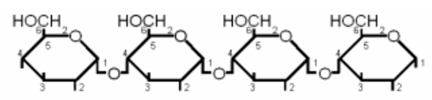
Polysaccharide (carbohydrate)
Oils, fats, cholesterol, waxes
Examples of lipids
Triglycerides
Oils and fats. Made from 1 glycerol + 3 fatty acids.
Main functions of triglycerides
Long-term energy storage
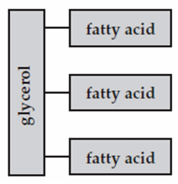
Triglyceride (lipid)
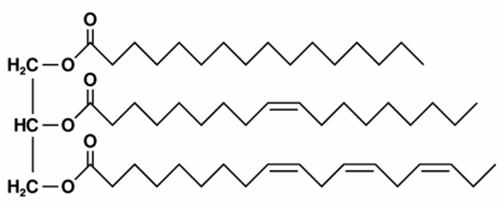
Triglyceride (lipid)
Saturated fatty acid
Fatty acid molecule with no C=C double bonds. Triglycerides made from a greater number of saturated fatty acids pack closely together and tend to be solid at room temperature.
Unsaturated fatty acid
Fatty acid molecule with C=C double bond(s), which provide kink(s) in the molecule Triglycerides made from a greater number of unsaturated fatty acids do not pack closely together and tend to be liquid at room temperature.
Phospholipids
Found in cell membranes. Made from 1 glycerol + 1 phosphate and choline (‘head’) + 2 fatty acid ‘tails’.
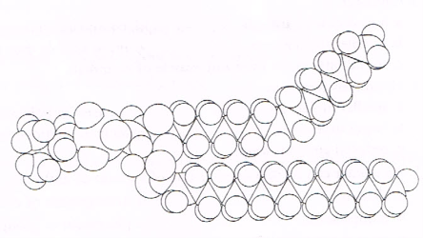
Phospholipid (lipid)
Hydrophilic
“Water-loving”. Hydrophilic molecules are polar molecules which dissolve in water but not oil.
Hydrophobic
“Water-hating”. Hydrophobic molecules are non-polar molecules which dissolve in oil but not water.
Amphipathic
Amphipathic molecules contain both hydrophobic and hydrophilic parts. Examples: Phospholipids, fatty acids, soaps, some proteins.
Head and tails of phospholipids
Heads are hydrophilic and like to be surrounded by water. Tails are hydrophobic and like to avoid water.
The cell membrane is mostly made of a …
Phospholipid bilayer
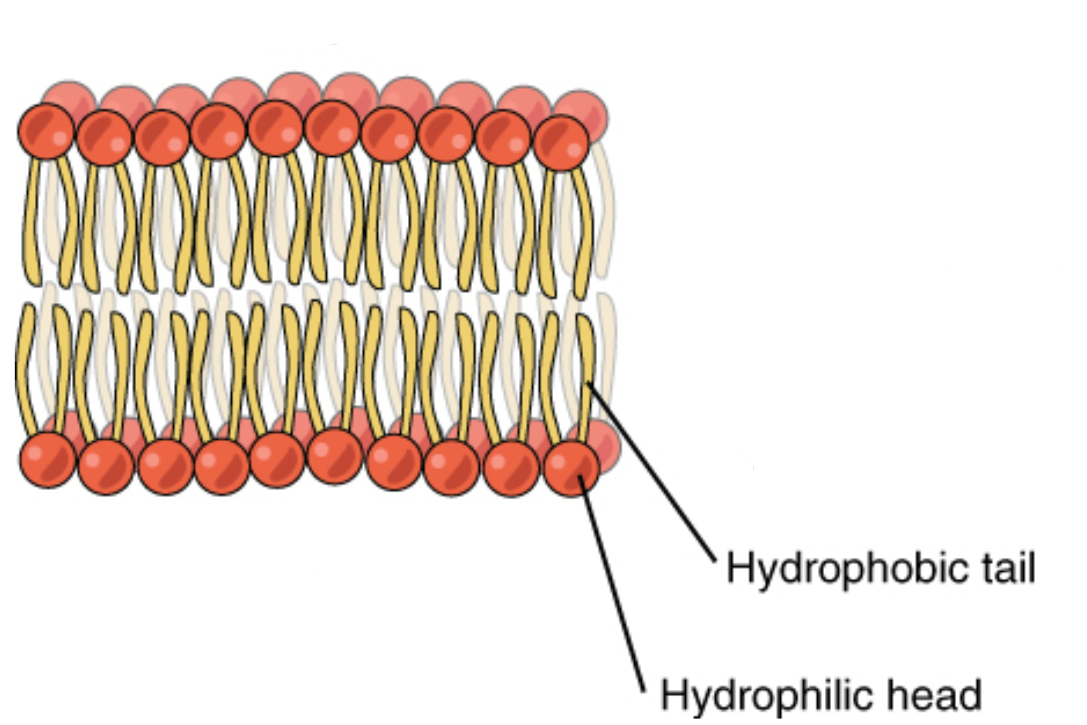
Phospholipid bilayer
Ester bond
Bond formed between glycerol and fatty acids.
Enzymes, hemoglobin, collagen, keratin, insulin
Examples of proteins
Amino acid (There are 20 standard types of amino acids.)
Monomer form of proteins
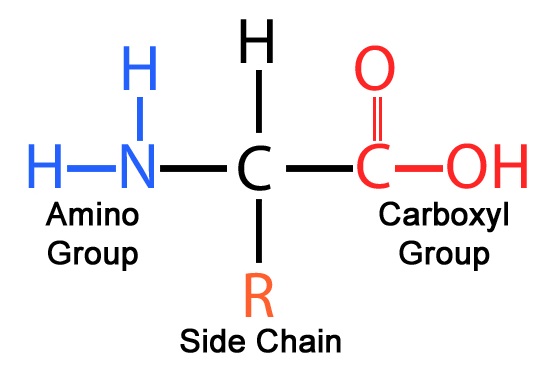
Amino acid (protein monomer) – Notice how it must contain C, H, N and O!
Polypeptide
Polymer form of proteins

Polypeptide (protein)
Functions of proteins
Proteins take part in many important biological processes. A few examples: Enzymes are proteins that speed up chemical reactions. Some proteins like collagen and keratin are structural proteins. Some proteins like insulin are chemical signaling molecules.
Protein folding
Polypeptide twists and folds into a specific 3D shape. The shape of a protein is very important to the protein’s function.
Protein denaturation
A protein unfolds and loses its shape under high temperatures, extreme pH, or when certain chemicals are added. This denaturation is usually irreversible, meaning the protein loses its function.
DNA, RNA
Examples of nucleic acids
Nucleotide
Monomer form of nucleic acids
Components of a nucleotide
(1) Phosphate, (2) sugar (ribose for RNA, deoxyribose for DNA), and (3) nitrogen-containing base (determines ATCG in DNA and AUCG in RNA).
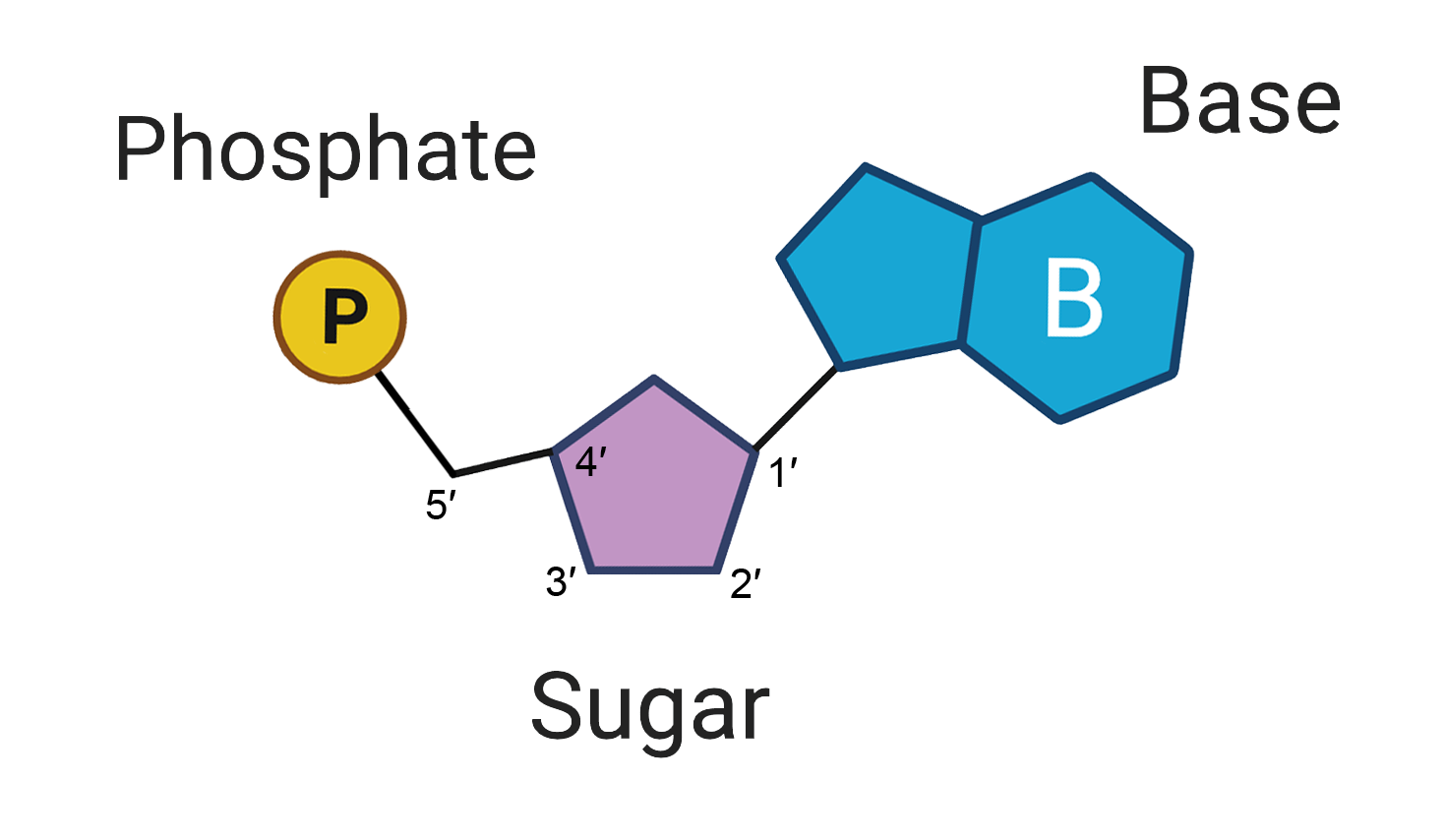
Nucleotide (nucleic acid monomer)
Polynucleotide
Polymer form of nucleic acid
Phosphodiester bond
Bond formed between nucleotides to produce polynucleotides.
Function of DNA
Contains genetic information, “blueprint for life”, passed down via inheritance.
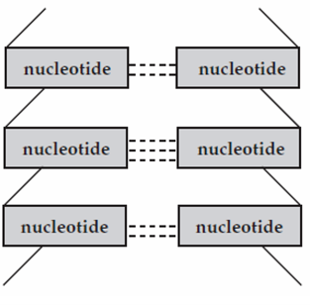
DNA (nucleic acid)
DNA (nucleic acid)
The Benedict’s test tests for …
Reducing sugars (all monosaccharides, and disaccharides except sucrose).
Procedure for Benedict’s test
Add Benedict’s reagent (blue) and warm.
Positive result for Benedict’s test
Green/yellow/orange/red precipitate is formed. (Colors from left to right: increasing concentration of reducing sugar)
The iodine test tests for …
Starch
Procedure for iodine test
Add a few drops of iodine solution (yellowish-brown).
Positive result for iodine test
Turns dark blue
The Biuret test tests for …
Proteins
Procedure for Biuret test
Add Biuret’s reagent (blue) and wait.
Positive result for Biuret test
Purple solution.
The ethanol emulsion test tests for …
Fats and oils (lipids)
Procedure for ethanol emulsion test
Add ethanol and mix
Positive result for ethanol emulsion test
Cloudy emulsion forms