World War 2
 Call Kai
 Learn
Learn Practice Test
 Spaced Repetition
 Match
Match Flashcards
1/22

There's no tags or description
Looks like no tags are added yet.
Name | Mastery | Learn | Test | Matching | Spaced | Call with Kai | Chat |
|---|
No analytics yet
Send a link to your students to track their progress
23 Terms
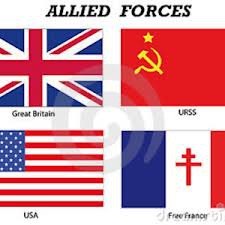
Allied Powers
Alliance of Great Britain, Soviet Union, United States, and France during World War II.
Anschluss
The union of Austria with Germany, resulting from the occupation of Austria by the German army in 1938.

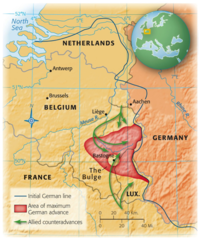
Battle of the Bulge
1944-1945 battle in which Allied forces turned back the last major German offensive of World War II
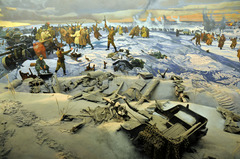
Battle of Stalingrad
Unsuccessful German attack on the city of Stalingrad during World War II from 1942 to 1943, that was the furthest extent of German advance into the Soviet Union.
Blitzkrieg
"Lighting war", typed of fast-moving warfare used by German forces against Poland in 1939

D-Day
June 6, 1944, 160,000 Allied troops landed along a 50-mile stretch of heavily-fortified French coastline to fight Nazi Germany on the beaches of Normandy, France. General Dwight D. Eisenhower called the operation a crusade in which "we will accept nothing less than full victory." More than 5,000 Ships and 13,000 aircraft supported the D-Day invasion, and by day's end on June 6, the Allies gained a foot- hold in Normandy.
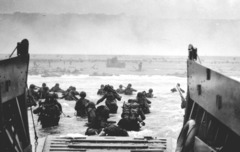
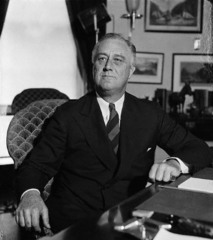
Franklin D. Roosevelt
32nd US President - He began New Deal programs to help the nation out of the Great Depression, and he was the nation's leader during most of WWII
Harry Truman
33rd President of the United States. Led the U.S. to victory in WWII making the ultimate decision to use atomic weapons for the first time. Shaped U.S. foreign policy regarding the Soviet Union after the war.

Invasion of Poland
The action by Germany that began World War II in 1939. Germany invaded Poland only days after signing the Nazi-Soviet Non-Aggression Pact, under which the Soviet Union agreed not to defend Poland from the east if Germany attacked it from the west.

Isolationism
A policy of nonparticipation in international economic and political relations; avoiding involvement in world affairs

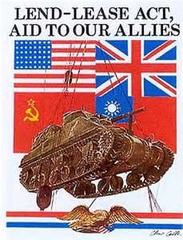
Lend-Lease Act
Approve by Congress in March 1941; The act allowed America to sell, lend or lease arms or other supplies to nations considered "vital to the defense of the United States."
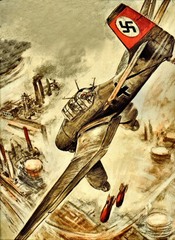
Luftwaffe
German Air Force
Munich Conference
1938 conference at which European leaders attempted to appease Hitler by turning over the Sudetenland to him in exchange for promise that Germany would not expand Germany's territory any further.
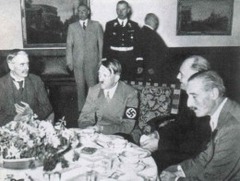
Non-Aggression Pact
Hitler and Joseph Stalin agreed not to attack each other but divided Poland for an easy win, but Germany didn't keep true to their word and attacked Stalin later

Panzer
German word meaning tank or armor
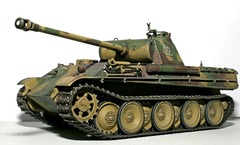
Pearl Harbor
7:50-10:00 AM, December 7, 1941 - Surprise attack by the Japanese on the main U.S. Pacific Fleet harbored in Pearl Harbor, Hawaii destroyed 18 U.S. ships and 200 aircraft. American losses were 3000, Japanese losses less than 100. In response, the U.S. declared war on Japan and Germany, entering World War II.

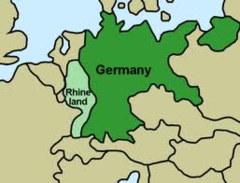
Rhineland
A region in Germany designated a demilitarized zone by the Treaty of Versailles; Hitler violated the treaty and sent German troops there in 1936
Sudetenland
German-speaking area of Czechoslovakia, ceded to Germany in the Hitler-Chamberlain Munich meeting (September 1938)

The Big Three
Churchill, Roosevelt and Stalin; leaders who met between 1943 and 1945 to coordinate attacks on Germany and Japan, and later to discuss plans for postwar Europe and settlement of Germany. After the war, their armies occupied Germany, each with a separate zone, although governed as a single economic unit.

Winston Churchill
A noted British statesman who led Britain throughout most of World War II and along with Roosevelt planned many allied campaigns.

Hideki Tojo
Militaristic general of Japan before and during WWII.

Joseph Stalin
Communist dictator of the Soviet Union c.1924-1953
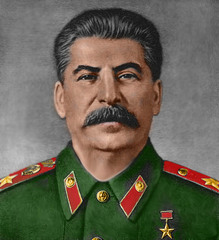
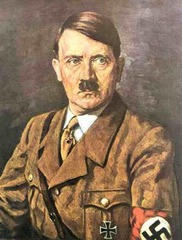
Adolf Hitler
This man was the leader of Germany during World War II and brought the National Socialist German Workers' Part, or Nazis, to power.