genomics and bioinformatics
 Call Kai
 Learn
Learn Practice Test
 Spaced Repetition
 Match
Match Flashcards
 Knowt Play
1/27

There's no tags or description
Looks like no tags are added yet.
Name | Mastery | Learn | Test | Matching | Spaced | Call with Kai | Chat |
|---|
No analytics yet
Send a link to your students to track their progress
28 Terms
whats a genome
all nuclear DNA and genetic material of plastids (mitochondrial, chloroplasts)
how many genes do homo sapiens have
23K genes
what is the C value paradox
genome size does not increase with perceived complexity of organisms
genome size does not mean more genes
why do some simple organisms have huge genomes
lots of DNA is non coding
not all DNA = genes
what is the genome architecture
only tiny part codes for proteins - mostly non coding
1.5% - exons
repetitive DNA (‘junk’ DNA) makes up huge part
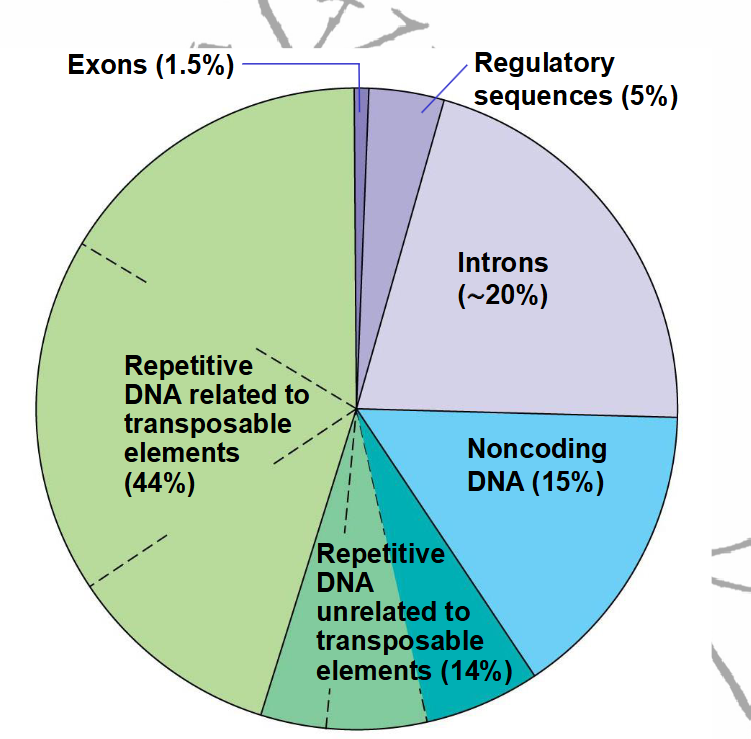
whats included in non coding DNA
Introns
regulatory sequences
repetitive DNA - tandem repeats and transposable elements
non coding RNA genes - rRNA, tRNA, miRNA (gene silencing)
what is repetitive DNA
tandem repeats:
repeated next to each other
microsatellites and minisatellites
originated by strand slippage during DNA replication
transposable elements:
DNA that can move around the genome
discovered by barbara McClintock - identified changes in colour of corn kernels - only made sense if some genetic elements moved
DNA transposons - ‘cut and paste’
RNA transposons - ‘copy and paste’
can move genes, change gene expression, cause mutations and affect recombination
Alu elements - most abundant gene in human genome
what is epigenetics
heritable changes of genetic information not caused by changes in the DNA sequence
what are the mechanisms of epigenetics
histone modification
DNA methylation - addition of CH3 makes DNA inaccessible
genomic imprinting - only one copy of an allele is expressed - one copy switched off
difference between 1st, 2nd and 3rd generation sequencing
1st:
shotgun (sanger) sequencing
2nd:
example = illumina
do NOT need priori genetic info (primers for PCR)
3rd:
example - nanopore
do NOT need priori genetic info
focus on a single molecule sequencing
no need for shotgun sequencing
what are orthologs
same gene in different species
came from common ancestor
what are paralogues
genes duplicated within one species
can evolve new functions
what is a complication with evolutionary trees
horizontal gene transfer
genes move between species
can confuse evolutionary trees
what are homologous traits
same origin - shared ancestor
e.g arm bones in humans, bats, whales
what are analogous traits
same function but different origin
due to convergent evolution
e.g wings in birds vs insects
what is the C value paradox
idea that some simple organisms can have more DNA than more complex ones
genome size does not equal complexity
what are the types of coding and non coding DNA
Coding:
Exons - make proteins
Non - Coding:
introns
regulatory DNA
RNA genes (make RNA not proteins)
most DNA does not directly make proteins
what are some important functions of Non-coding DNA
rRNA - helps build ribosomes
tRNA - brings amino acids
miRNA - controls gene activity
so non coding DNA Is important in control and regulation
What are the two types of repetitive DNA
Tandem repeats - repeated next to each other e.g microsatellites (used in DNA fingerprinting)
transposable elements - DNA that can move around the genome
What are transposons
‘jumping genes’
discovered by barbara mcClintock
two types
DNA transposons - cut and paste
RNA transposons - copy and paste - make copies of themselves
they can disrupt genes, change gene activity and help evolution
what are Alu elements
very common repetitive DNA
about 10% of the human genome
may help regulate genes
why are some genomes really large
often have lots of repetitive DNA
many transposons
polyploidy (extra copies of chromosomes)
what is the definition of epigenetics
heritable changes of genetic information not caused by changes in the DNA sequence
dna stays the same but gene can be turned on and off
epigenetics explains how cells become different, how environment affects genes and how organisms adapt
how does epigenetics work
histone modification - chemical changes to histones - loosen DNA - gene on or tighten DNA - gene off
DNA methylation - adding a CH3 group to DNA - makes DNA hard to access, turns genes off
RNA interference - small RNA’s can block gene expression and stop proteins from being made
what is genomic imprinting
only one parents gene is active
in females one X chromosome is turned off
what are the types of genome sequencing
first generation
slow and expensive
used to sequence human genome
second generation
faster and cheaper
no prior DNA info needed
can sequence a human genome in under a week
third generation
reads single DNA molecules
even faster and more advanced
what is BLAST
basic local alignment search tool
algorithm for comparing primary biological sequence information
google for genes
this allows us to use a single sequence to find one or more sequences
used to compare a DNA or protein sequence to a database
find similar sequences
what are the BLAST steps
input your sequence
BLAST splits the sequence into smaller chunks
search database - it looks for matches in a big database of sequences
find intial matches
extend matches
score matches
calculate significance - E value - shows how likely match is by chance - E value of 0 means highest probability of having found an exact match