Cardiovascular
0.0(0)
Studied by 0 people Call Kai
 Learn
Learn Practice Test
 Spaced Repetition
 Match
Match Flashcards
 Knowt Play
Card Sorting
1/34

Earn XP
Description and Tags
Last updated 6:43 PM on 3/30/23
Name | Mastery | Learn | Test | Matching | Spaced | Call with Kai |
|---|
No analytics yet
Send a link to your students to track their progress
35 Terms
1
New cards
heart position
base = left 2nd intercostal space
apex = left 5th intercostal space
right ridge of the sternum to the left mid-clavicular line
apex = left 5th intercostal space
right ridge of the sternum to the left mid-clavicular line
2
New cards
great vessels
* superior and inferior vena cava
* pulmonary artery
* pulmonary veins
* aorta
* pulmonary artery
* pulmonary veins
* aorta
3
New cards
sinoatrial node (SA node)
* posterior wall of right atrium
* 60-100 BPM
* conduct impulses over R/L atrium at the same time
* 60-100 BPM
* conduct impulses over R/L atrium at the same time
4
New cards
atrioventricular node (AV node)
* located in the internal septum
* relays impulses to the AV bundle
* impulse travels down purkije fiber in the ventricles
* 40-60 BPM
* relays impulses to the AV bundle
* impulse travels down purkije fiber in the ventricles
* 40-60 BPM
5
New cards
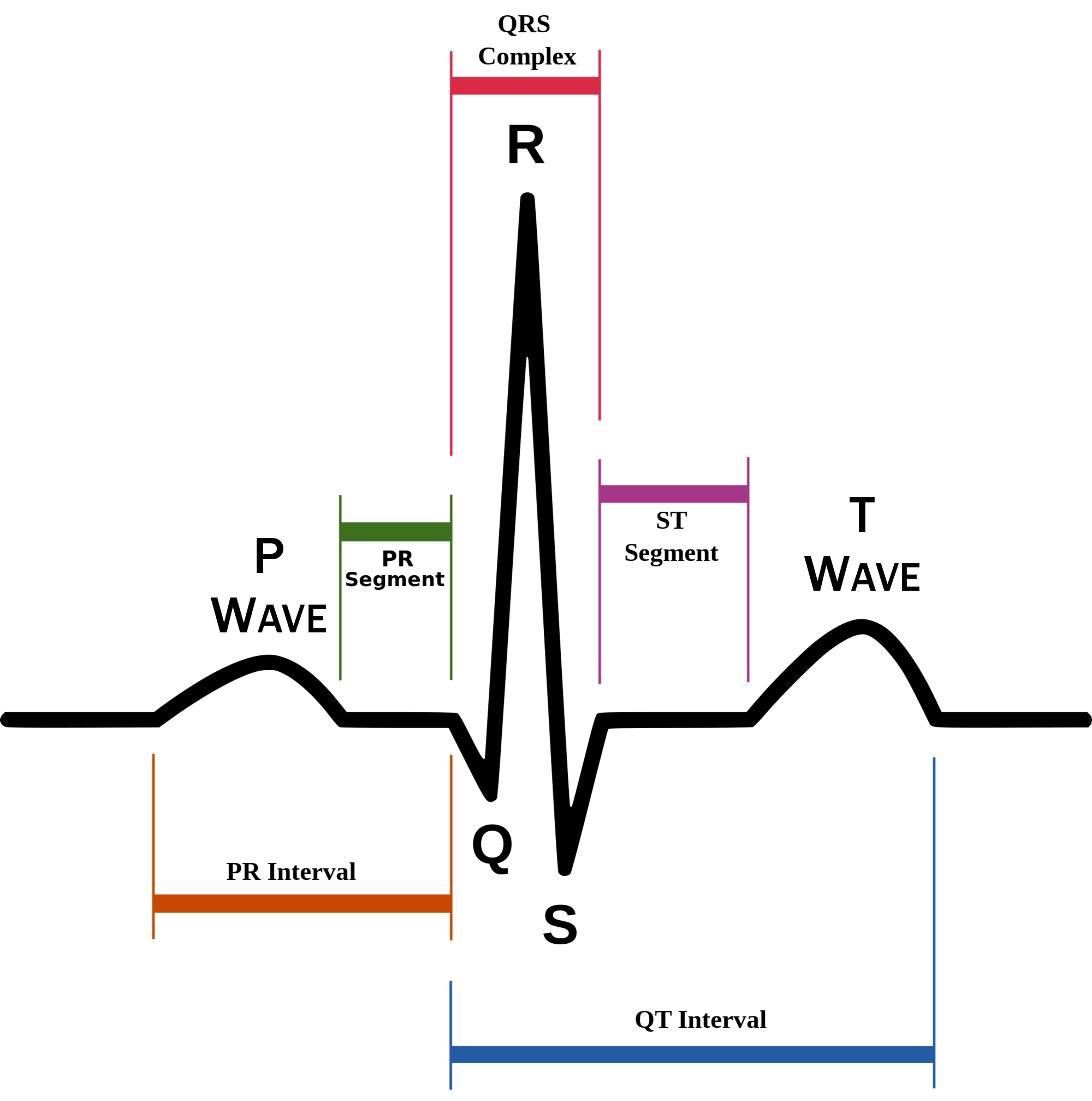
EKG/ECG phases
==P-wave== = atrial depolarization causing atrial contraction
PR interval = spans from atrial depolarization to the beginning of ventricular depolarization
==QRS complex== = ventricular depolarization causing ventricular contraction
ST segment = between ventricular depolarization and beginning of ventricular repolarization
==T-wave== = ventricular depolarization causing ventricles to rest
QT interval = total time for ventricle depolarization and depolarization
PR interval = spans from atrial depolarization to the beginning of ventricular depolarization
==QRS complex== = ventricular depolarization causing ventricular contraction
ST segment = between ventricular depolarization and beginning of ventricular repolarization
==T-wave== = ventricular depolarization causing ventricles to rest
QT interval = total time for ventricle depolarization and depolarization
6
New cards
normal heart sounds
S1 = AV valves close, heard best at the Apex (left MCL, 5th intercostal)
S2 = SL valves close, heard best at the base of the heart (2nd intercostal)
S2 = SL valves close, heard best at the base of the heart (2nd intercostal)
7
New cards
extra heart sounds
S3 = heard after S2, caused by ventricular vibration due to ventricular resistance during atrial contraction (can be normal in children)
S4 = just before S1 (late diastole)
S4 = just before S1 (late diastole)
8
New cards
causes of heart murmurs
increased amount blood velocity (speed), heart defects, faulty valves, abnormal heart chambers or septal defects
9
New cards
heart murmur characteristics
* timing - systole or diastole
* intensity: grade 1-6
* pitch: high, medium, low
* quality: blowing, rushing, roaring, rumbling, harsh, musical
* location: over which valve
* transmission: other areas than origin
* intensity: grade 1-6
* pitch: high, medium, low
* quality: blowing, rushing, roaring, rumbling, harsh, musical
* location: over which valve
* transmission: other areas than origin
10
New cards
jugular venous pulse and pressure
* central lines get put into the internal jugular vein
* pressure tells us about right sided heart function
* right-sided heart failure = pressure/volume increases due to backed up blood in vein
* pressure tells us about right sided heart function
* right-sided heart failure = pressure/volume increases due to backed up blood in vein
11
New cards
ischemia
decreased blood flow to tissue (reversible or nonreversible)
12
New cards
infarction
no blood flow to tissue causing tissue death
13
New cards
hypervolemia
high blood volume, can cause hypertension, elevated BP, and pulmonary failure
14
New cards
hypovolemia
low blood volume, dehydration
15
New cards
dependent position
leg/arm below level of the heart
16
New cards
trendelenburg position
head down and legs up
17
New cards
nocturia
excessive voiding at night, associated with left sided heart failure or obstructive sleep apnea
18
New cards
arteriosclerosis
thickening or hardening of arteries
19
New cards
when auscultating the heart include:
rate, rhythm (regular or irregular)
20
New cards
how to auscultate carotid arteries
* use the bell of the stethoscope
* have patient hold their breath
* listen for bruit, blowing, or swishing sounds
* include rate, rhythm, and strength (+2 normal)
* have patient hold their breath
* listen for bruit, blowing, or swishing sounds
* include rate, rhythm, and strength (+2 normal)
21
New cards
signs of arterial insufficiency
* pallor or redness
* loss of hair
* shiny skin
* coolness of skin
* absence of pulse or sounds (occlusion)
* intermittent pain
* loss of hair
* shiny skin
* coolness of skin
* absence of pulse or sounds (occlusion)
* intermittent pain
22
New cards
signs of venous insufficiency
* cyanosis
* rusty/brownish color
* edema
* pain
* thick/tough skin
* rusty/brownish color
* edema
* pain
* thick/tough skin
23
New cards
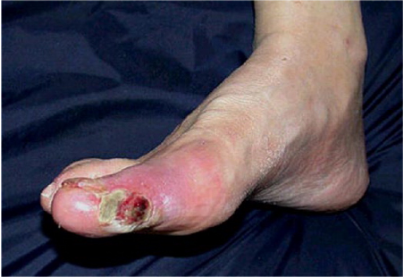
type of ulcer and characteristics?
arterial vascular disease (arterial insufficiency)
more distal (toes), deep, circular, blackish base
more distal (toes), deep, circular, blackish base
24
New cards
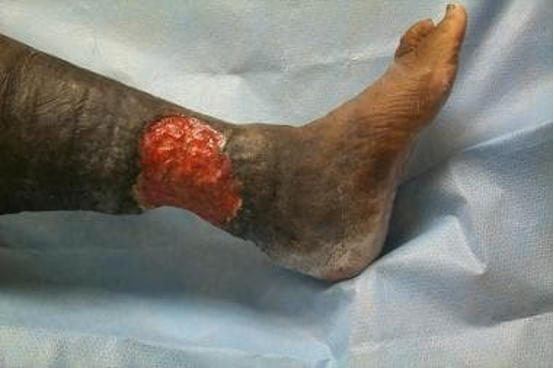
type of ulcer and characteristics?
venous vascular disease (venous insufficiency)
irregular, painful, superficial, red/yellow base, larger, medial malleolus/anterior tibial area
irregular, painful, superficial, red/yellow base, larger, medial malleolus/anterior tibial area
25
New cards
valvular heart disease
* Acquired or Congenital
* Stenotic Valve – does not open completely
* Incompetent Valve – does not close completely
* Causes: Rheumatic Fever, Endocarditis
* Stenotic Valve – does not open completely
* Incompetent Valve – does not close completely
* Causes: Rheumatic Fever, Endocarditis
26
New cards
Angina pectoris
* Chest pain due to ischemia (lack of blood flow) of heart tissue
* Caused: Arteriosclerosis of Coronary Arteries (arteries are clogged and blood cant pass through)
* Can occur due to increased demand on the heart – stress/activity
* Can occur at rest due to spasms
* S/S: Squeezing pain, shouldn’t last more than 30 minutes
* Caused: Arteriosclerosis of Coronary Arteries (arteries are clogged and blood cant pass through)
* Can occur due to increased demand on the heart – stress/activity
* Can occur at rest due to spasms
* S/S: Squeezing pain, shouldn’t last more than 30 minutes
27
New cards
Myocardial infarction (heart attack)
* Left ventricle more commonly affected
* Complete or near complete occlusion of a coronary artery (no blood flow to the heart) -> more severe Angina Pectoris
* Pain last more than 5 minutes that radiates to left shoulder/jaw/arm and not relieve by nitroglycerin
* Other S/S: Fatigue, nausea, sweating, pallor, thready pulse….
* Female patients are more likely to have abnormal symptoms
* Complete or near complete occlusion of a coronary artery (no blood flow to the heart) -> more severe Angina Pectoris
* Pain last more than 5 minutes that radiates to left shoulder/jaw/arm and not relieve by nitroglycerin
* Other S/S: Fatigue, nausea, sweating, pallor, thready pulse….
* Female patients are more likely to have abnormal symptoms
28
New cards
atrial arrhythmias/disrhythmias
atrial fibrillation (quivering instead of contracting); high risk for stroke
29
New cards
ventricular arrhythmias/dysrhythmias
ventricular tachycardia/fibrillation (quivering instead of contracting); lethal and person often has no pulse
* CPR and defibrillation
* CPR and defibrillation
30
New cards
heart failure
* Heart failure occurs when either ventricles fail to pump blood efficiently into aorta or pulmonary arteries -> decreased CO
* Left sided more common -> fluid will back up to the lungs (edema) causing breathing problems
* Will sound like crackles when listening to lung sounds
* Right sided -> peripheral symptoms, edema in the legs
* Left sided more common -> fluid will back up to the lungs (edema) causing breathing problems
* Will sound like crackles when listening to lung sounds
* Right sided -> peripheral symptoms, edema in the legs
31
New cards
pericarditis
* inflammation of the pericardium
* S/S: pericardial friction rub and chest pain (worse with inspiration)
* cause: MI, infection, trauma, surgery
* S/S: pericardial friction rub and chest pain (worse with inspiration)
* cause: MI, infection, trauma, surgery
32
New cards
endocarditis
* inflammation/infection of the endocardium → progresses to valvular diseases
* common with intravenous drug users
* common with intravenous drug users
33
New cards
edema
* caused by obstruction or insufficiency of deep veins over time
* pitting: +1 - +4
* unilateral? bilateral?
* ulcers and abnormal skin color (brown) may be present
* pitting: +1 - +4
* unilateral? bilateral?
* ulcers and abnormal skin color (brown) may be present
34
New cards
Raynaud’s disorder
* caused by vasoconstriction or spasms of the toes and fingers
* S/S = rapid changes in color (pallor/cyanosis/erythema), pain, swelling, numbness, tingling, burning, throbbing, coldness
* S/S = rapid changes in color (pallor/cyanosis/erythema), pain, swelling, numbness, tingling, burning, throbbing, coldness
35
New cards
Varicose veins
* incompetent valves in veins, weak walls or obstruction
* reasons = pregnancy, obesity, prolonged sitting or standing
* veins appear distended or bulging
* can lead to peripheral vascular disease
* reasons = pregnancy, obesity, prolonged sitting or standing
* veins appear distended or bulging
* can lead to peripheral vascular disease