Alkener och Alkyner
 Call Kai
 Learn
Learn Practice Test
 Spaced Repetition
 Match
Match Flashcards
 Knowt Play
1/9

There's no tags or description
Looks like no tags are added yet.
Name | Mastery | Learn | Test | Matching | Spaced | Call with Kai | Chat |
|---|
No analytics yet
Send a link to your students to track their progress
10 Terms
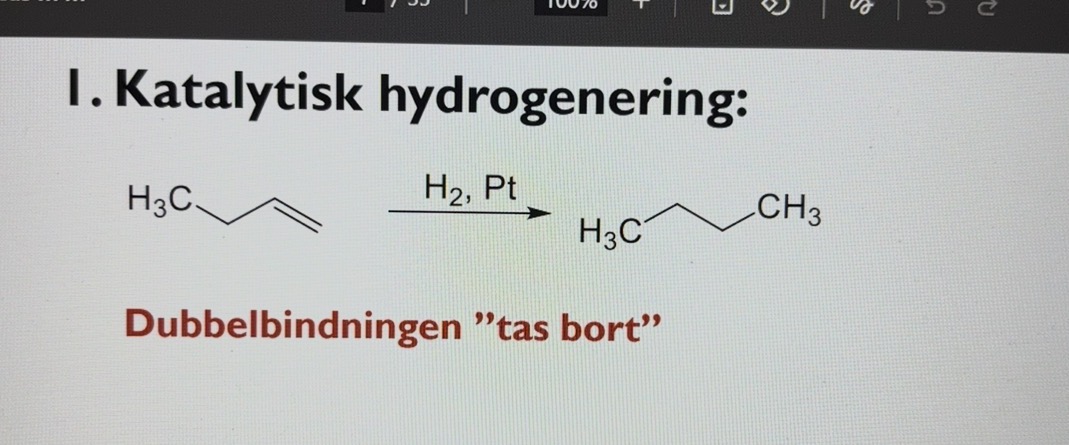
katalytisk hydrogenering av alken (med Pd/H2)
dubbelbindningen omvandlas till enkelbindning
alkene reacts with H2 has in the presence of a metal catalyst (Pd,Pt, Ni)
each carbon gets one hydrogen added
the alkene absorbs into the the metal surface Pd
h2 splits into 2 hydrogens on the surface
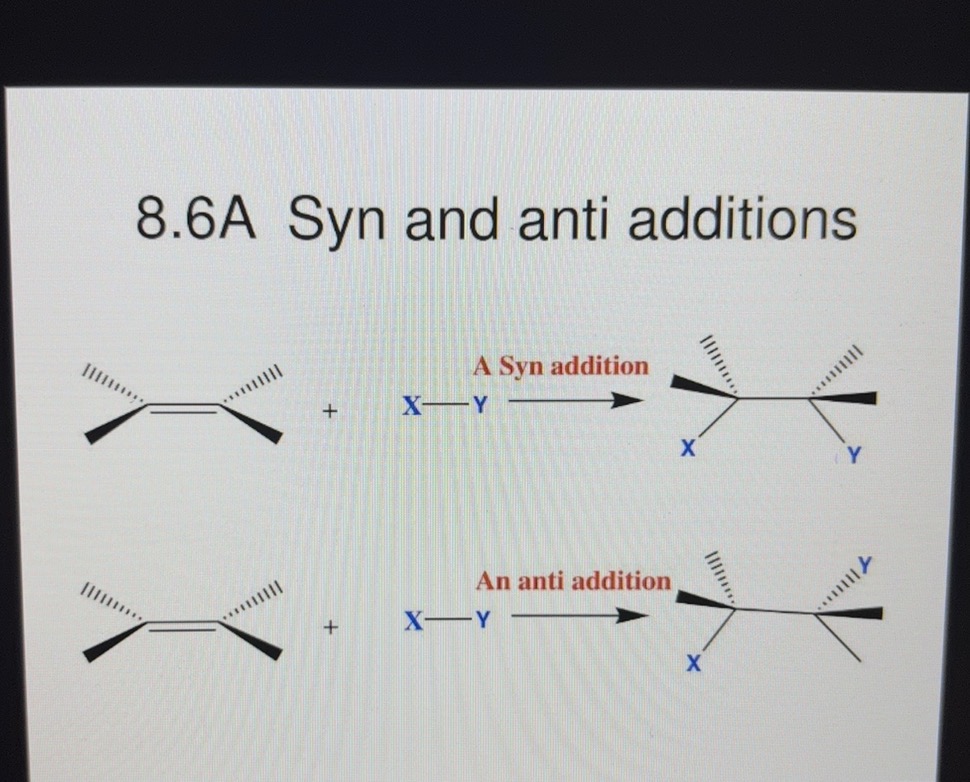
both hydrigens are added to the same side of the bond
this is a syn addition because both H attach to the same side
syn addition
anti addition
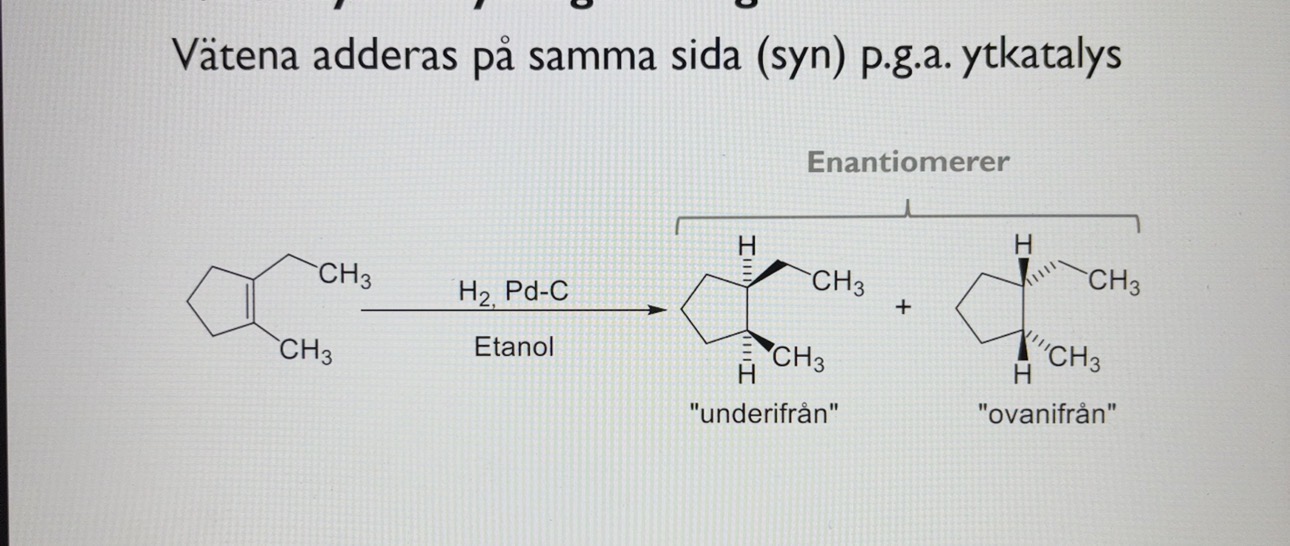
either both H attach overifrån eller underifrån
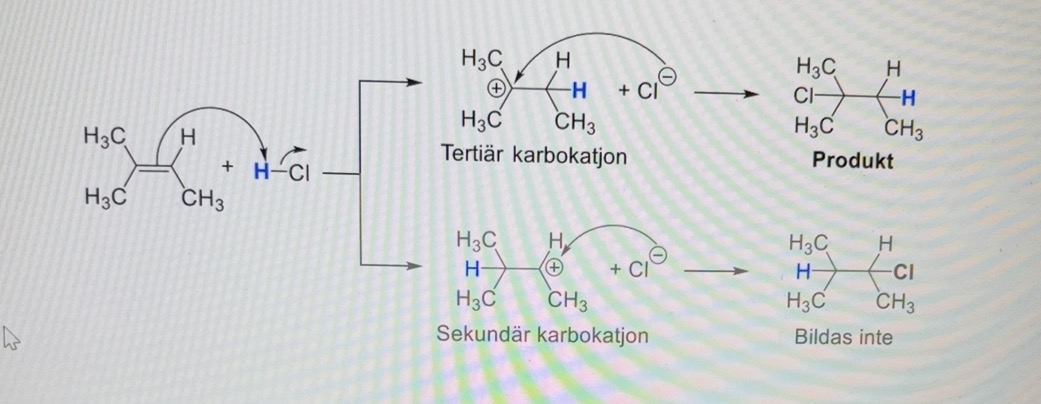
Elektrofil addition av HX (vätehalid) to alkene
Hbr for example
Markovnikov applies here, where H goes to the least substituted carbon and X to the more substituted carbon.
so double bond breaks, H attached to one like and X to the other
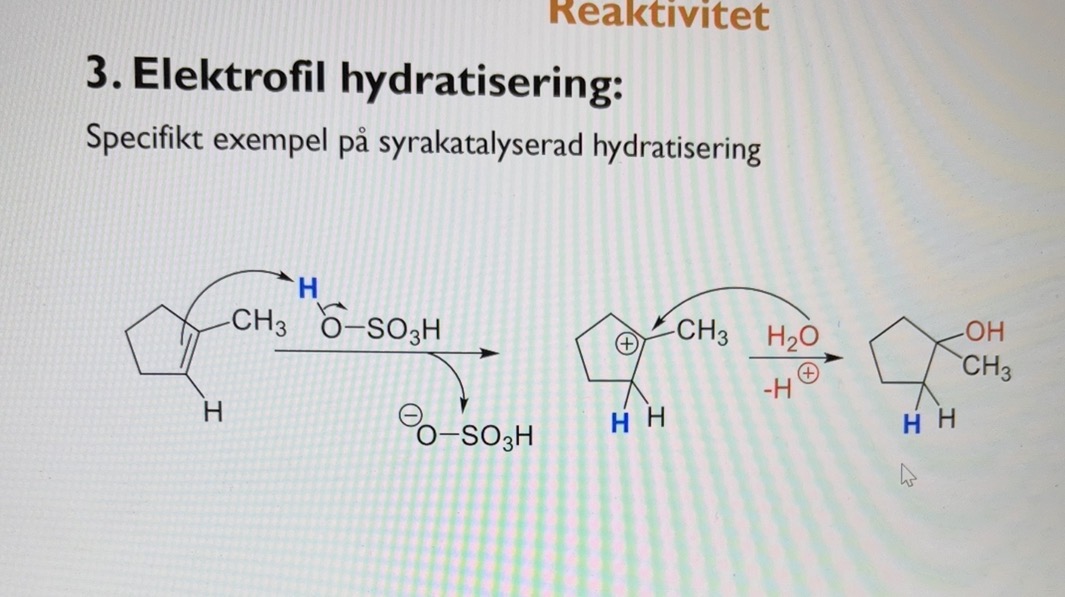
Elektrofil hydratisering av alken
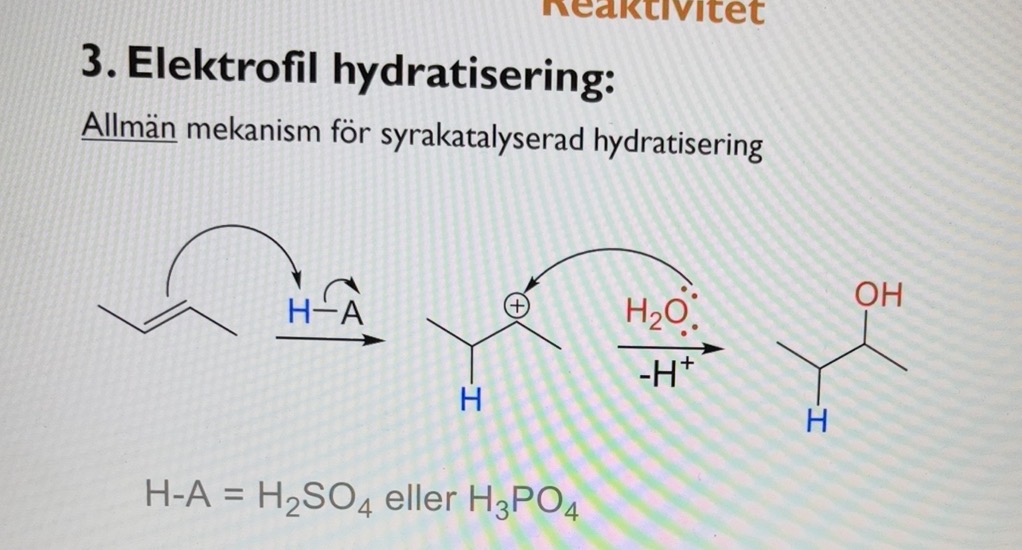
syrakatalyserad hydratisering (hydratisering av alken, addition of H2O)
the pi bond attacks hydrogen and attached to it making a carbocation,
markovnikov
the reagent can be H2SO4 or H3PO4 which are acids
then water is added
OH is added to the bomd and a hydrogen leaves
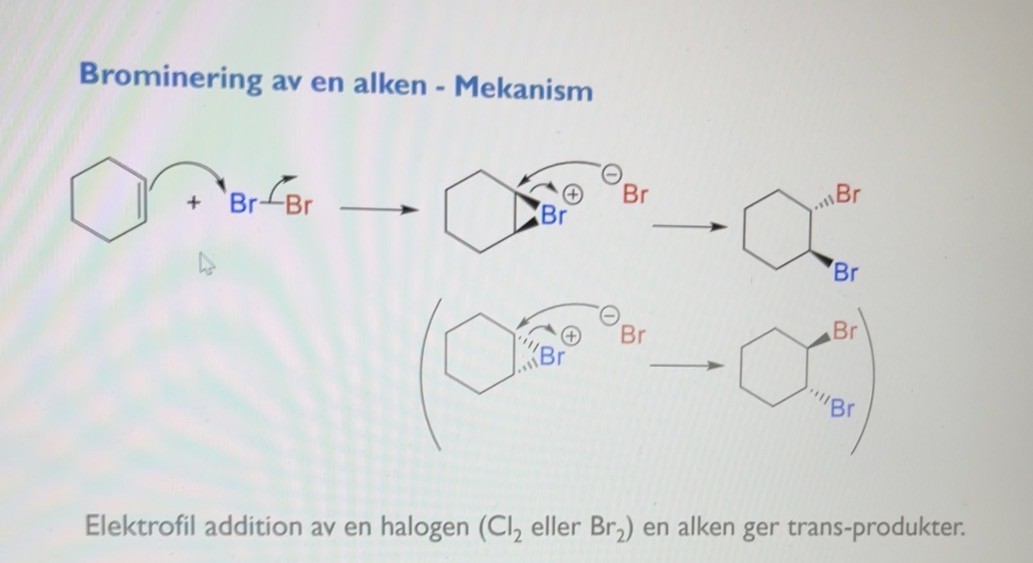
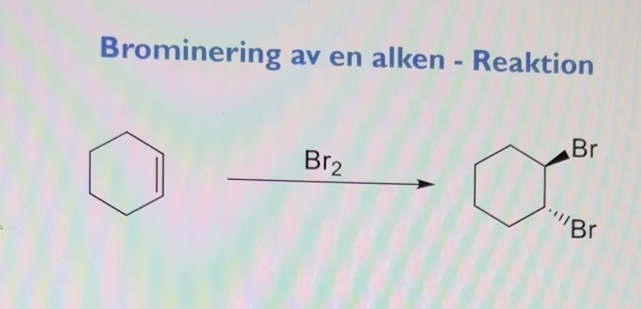
Elektrofil addition av halogen (Br2 or Cl2)
gives trans products meaning the bromines attach on opposite sides
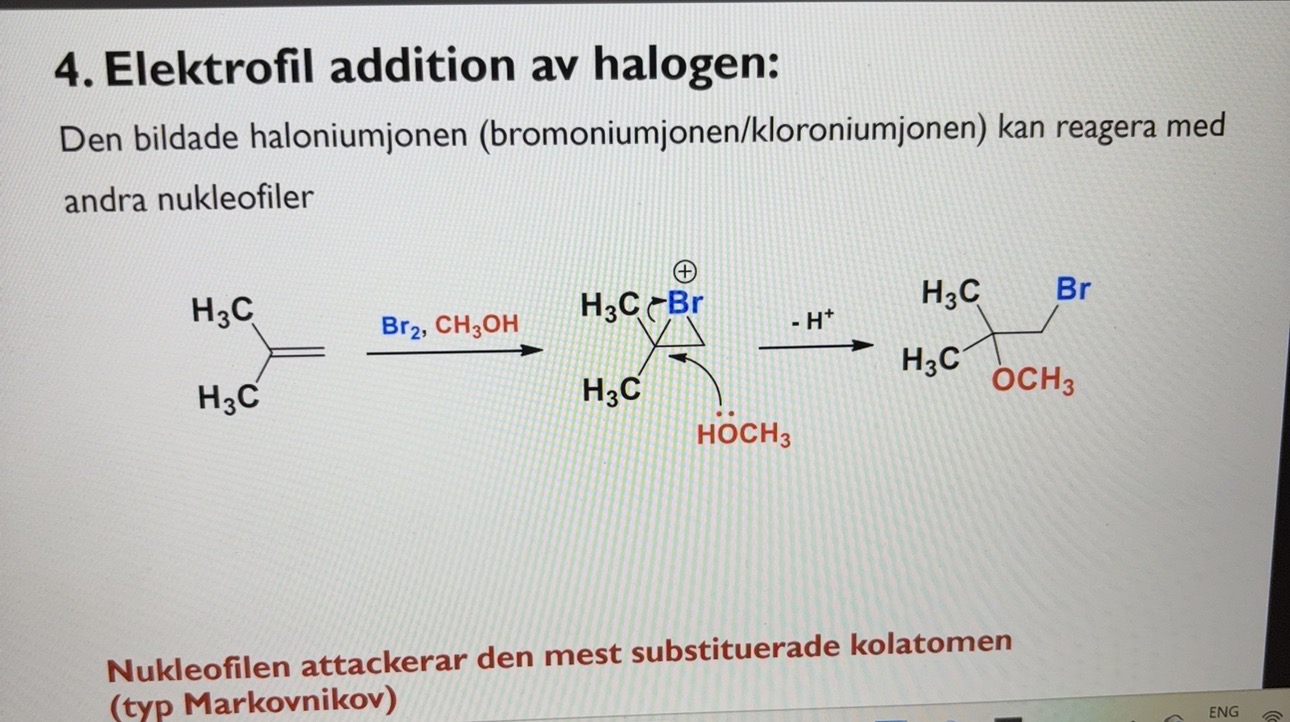
The ion may react with other nucleophiles in this case the methoxy group because ethanol is the solvent it exist in a much larger amount than br
and the nucleophile attacks the most substituted carbon
katalytisk hydrogenering av alkyner
with Lindlar/H2 turns into alkene
with Pd/H2 turns into alkane
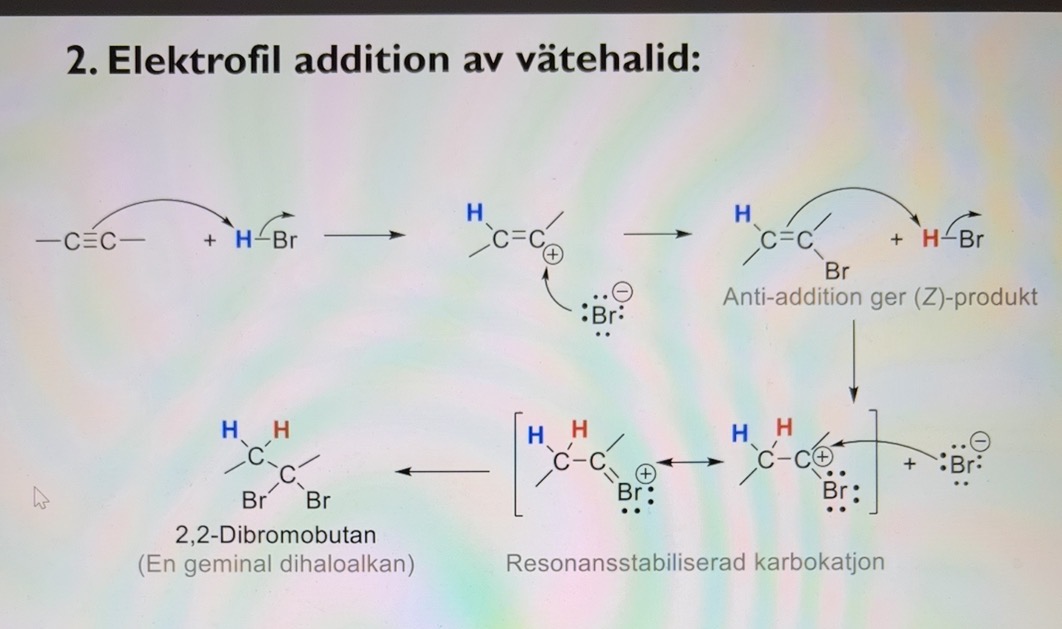
elektrofil additikn av vätehalid HX
markovnikov
triple bond breaks one attaches to Br and an H
and the other also to a Br and an H

Deprotonering och nukleofil attack
terminala alkyner är svagt sura (på grund av elektrondraganfe trippelbindningen
Terminal alkane loses its H and becomes a negatively charged carbon whixh then acts as a nucleophile. how this happens is that a strong base like NaH2 pulls of the H
then the nucleophilic attack happens and attaches an alkyl group the X leaves