NASM Ch 6 Cardiovascular
 Call Kai
 Learn
Learn Practice Test
 Spaced Repetition
 Match
Match Flashcards
 Knowt Play
1/21

There's no tags or description
Looks like no tags are added yet.
Name | Mastery | Learn | Test | Matching | Spaced | Call with Kai | Chat |
|---|
No analytics yet
Send a link to your students to track their progress
22 Terms
cardiorespiratory system
A system of the body composed of the heart, blood, blood vessels, lungs, and airways.
cardiovascular system
A system of the body, also known as the circulatory system, that transports blood to tissues of the body.
thoracic cavity
Chamber within the chest that contains the heart and lungs.
heart
a muscular pump that rhythmically contracts to push blood throughout the body
thoracic cavity
lying anteriorly (in front) to the spine and posteriorly (behind) and slightly to the left of the sternum (breastbone)
mediastinum
The space in the chest between the lungs that contains all the internal organs of the chest (e.g., heart, esophagus) except the lungs.
cardiac muscle
Muscle of the heart.
atrium (atria)
Superior chamber(s) of the heart that gathers blood returning to the heart.
ventricle
Inferior chamber of the heart that pumps blood to the lungs and body.
heart
is approximately the size of a typical adult fist, and weighs roughly 300 grams or approximately 10 ounces.
pulmonic side
The right side of the heart is referred to as the; receives blood from the body that is low in oxygen and high in carbon dioxide
deoxygenated blood
blood that is low in oxygen and high in carbon dioxide
systemic side
The left side of the heart is referred to as; has received oxygenated blood from the lungs that is high in oxygen and low in carbon dioxide
pulmonary
pink
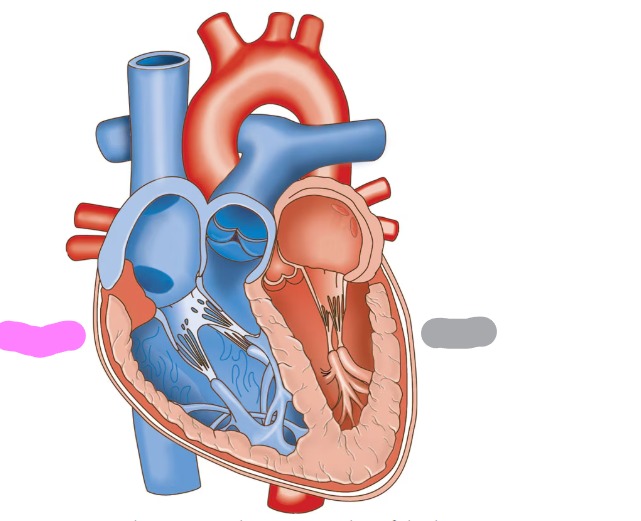
systemic
gray
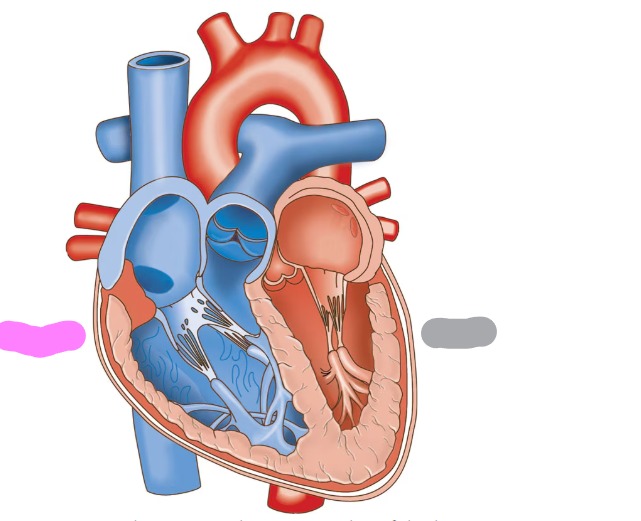
atria
smaller chambers, located superiorly (on top) on either side of the heart. They gather blood returning to the heart and act much like a reservoir
right atrium
gathers deoxygenated blood returning to the heart from the body
left atrium
gathers oxygenated blood coming to the heart from the lungs.
ventricles
larger chambers located inferiorly (on the bottom) on either side of the heart
right ventricle
receives the deoxygenated blood from the right atrium and then pumps it to the lungs through the pulmonary artery to be saturated with incoming oxygen; has thin walls and pumps under low pressure because it only needs to pump blood a short distance to the lungs
left ventricle
receives the oxygenated blood from the left atrium and proceeds to pump it through the entire body; has thicker walls and pumps under high pressure because it pumps blood a greater distance, out to the rest of the body
valves
Each chamber of the heart is separated from one another via one-way _ to prevent a backflow or spillage of blood back into the chambers