SUMER, AKKAD, HETTITES - ARTHIST QUIZ 3
 Call Kai
 Learn
Learn Practice Test
 Spaced Repetition
 Match
Match Flashcards
 Knowt Play
1/14

Earn XP
Description and Tags
ancient near east art history
Name | Mastery | Learn | Test | Matching | Spaced | Call with Kai | Chat |
|---|
No analytics yet
Send a link to your students to track their progress
15 Terms
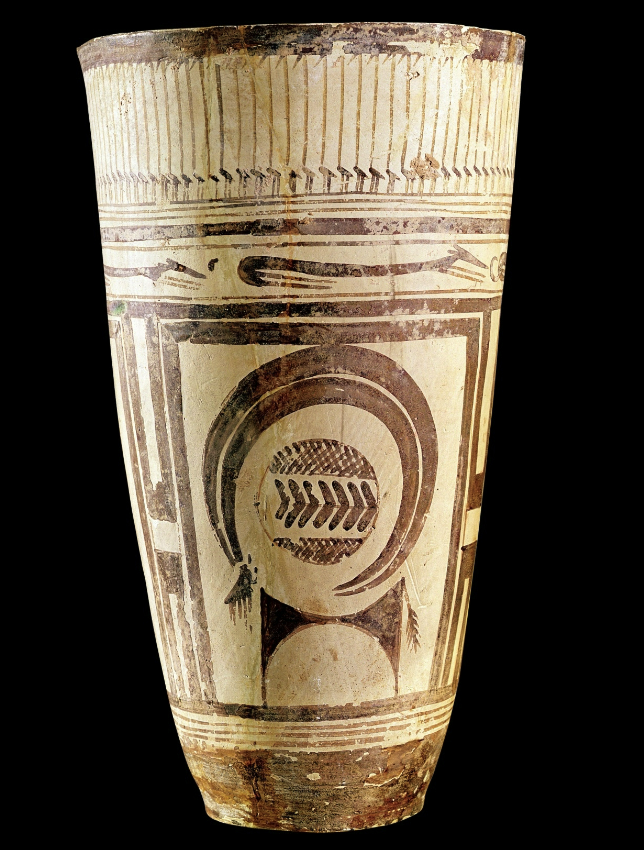
Beaker with animal decoration
from Susa, Elam (modern territory of Iran)
ca. 4000 BCE
shows one of the earliest examples of carefully designed and painted pottery from early civilizations in the Near East. The stylized animal images demonstrate how early artists used decoration and symbolism, revealing cultural beliefs and the development of artistic traditions.
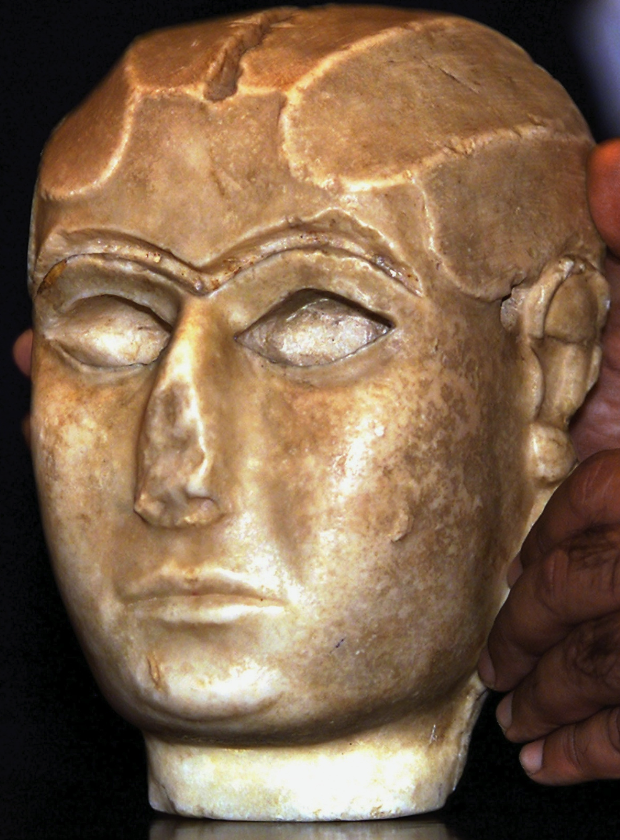
Female head (Inanna?)
Uruk (modern Warka), Iraq
ca. 3200–3000 BCE
one of the earliest known naturalistic sculptures from ancient Mesopotamia, showing advanced skill in carving realistic human features. It likely represented the goddess Inanna and demonstrates the early connection between art, religion, and temple worship in the city of Uruk.
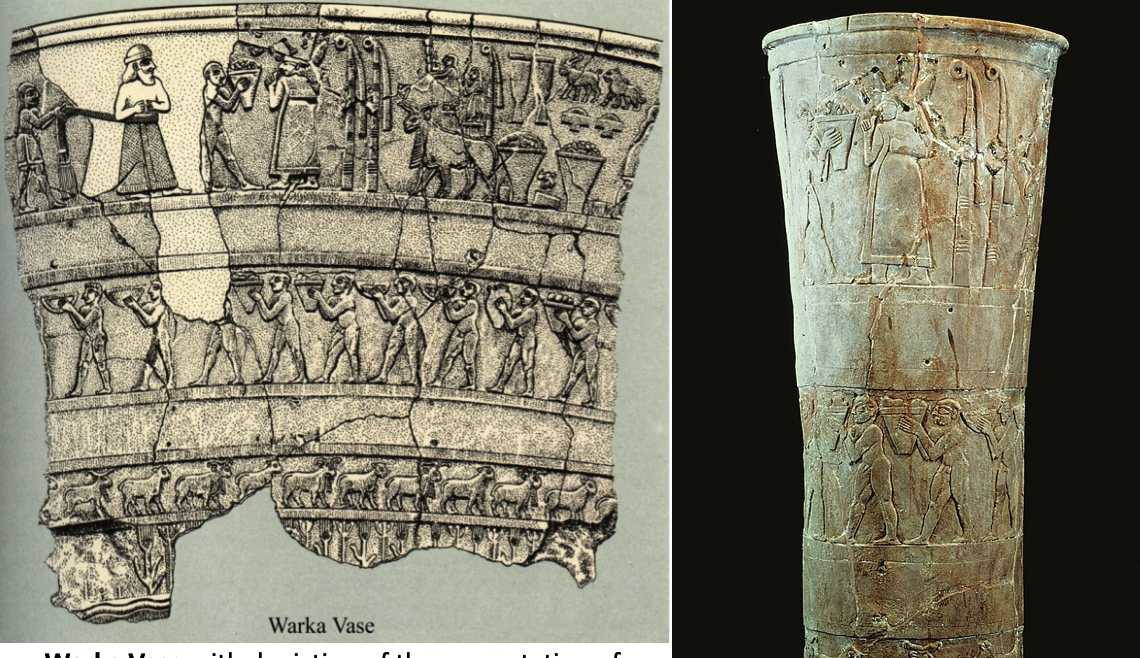
Warka Vase with depiction of the presentation of offerings to Inanna
from Uruk (modern Warka), Iraq
ca. 3200–3000 BCE
one of the earliest examples of narrative relief sculpture, showing a story carved in registers of people bringing offerings to the goddess Inanna. It also demonstrates how art in early Uruk was closely connected to religion and temple rituals.
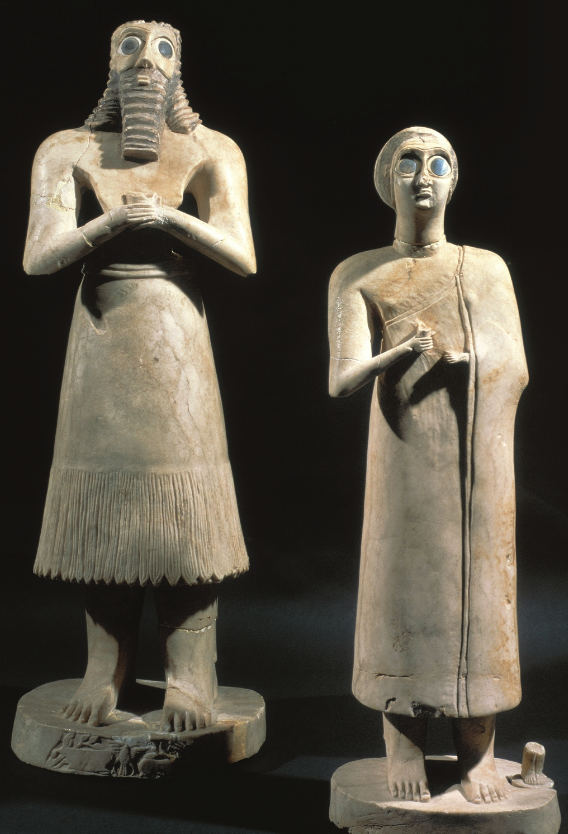
Statuettes of worshipers
from the Square Temple at Eshnunna (modern Tell Asmar), Iraq
ca. 2700 BCE
shows how people in ancient Eshnunna used sculptures as votive offerings to represent themselves praying to the gods. Their stylized forms and large, wide eyes also illustrate key artistic conventions of early Mesopotamian religious art.
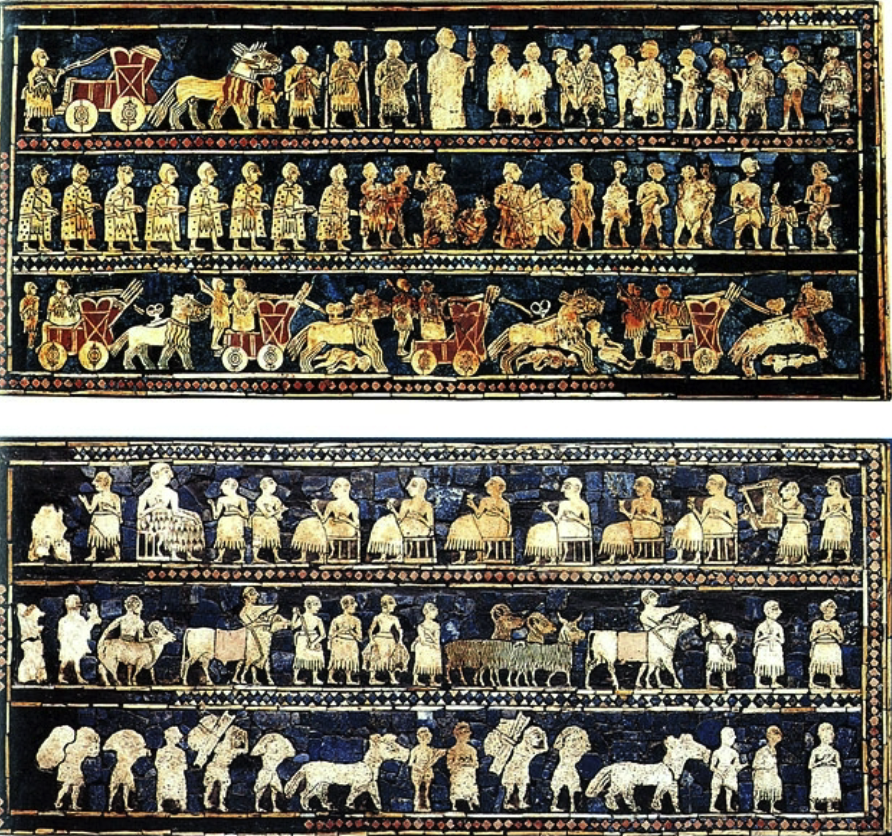
Standard of Ur
from Tomb 779, Royal Cemetery, Ur (modern Tell Muqayyar), Iraq
ca. 2600 BCE
ireveals information about social hierarchy, daily life, and royal power in early Mesopotamian civilization
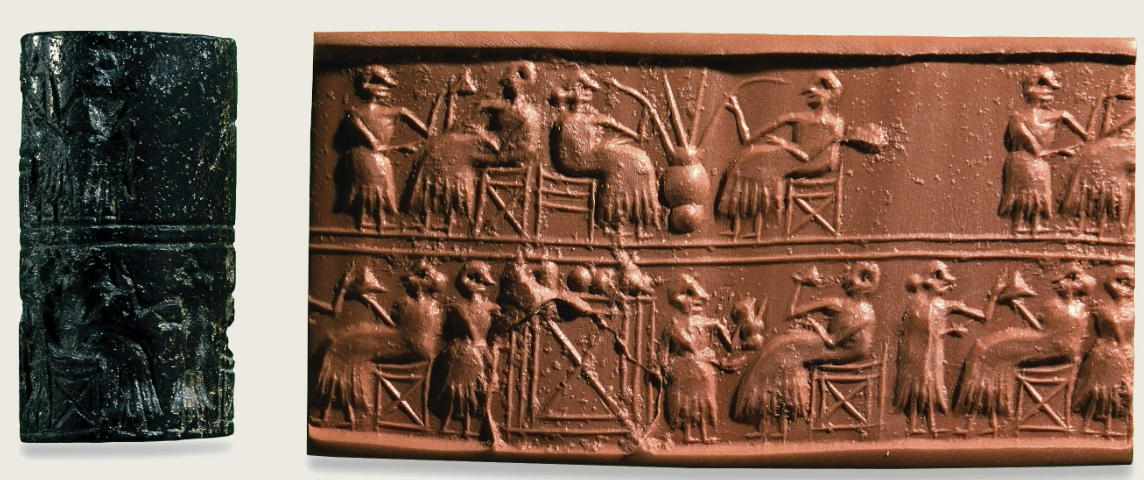
Banquet scene, cylinder seal (left) + its modern impression (right)
from the tomb of Pu-abi (tomb 800), Royal Cemetery, Ur (modern Tell Muqayyar), Iraq
ca. 2600 BCE
shows how small carved seals were used to create detailed narrative images and identify ownership in ancient Ur. It also provides insight into elite life and ritual practices during the time of Pu-abi.
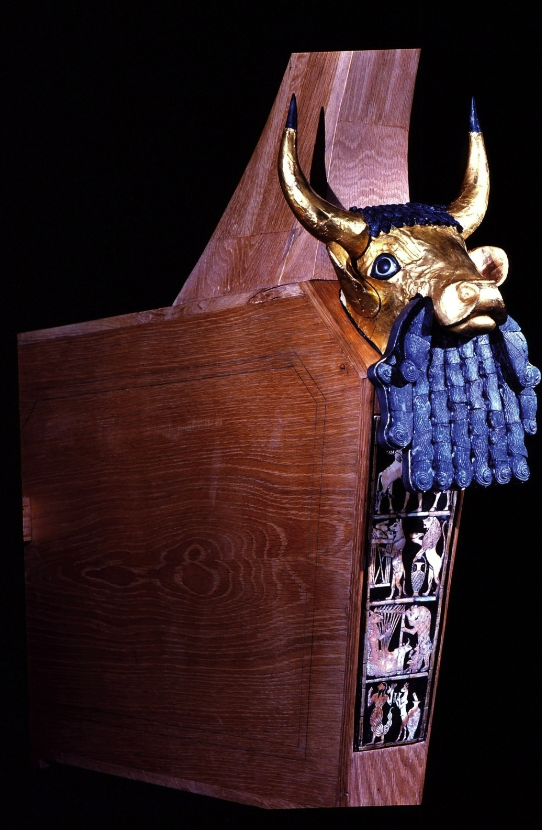
Bull-headed lyre (restored)
from Tomb 789 (“King’s Grave”), Royal Cemetery, Ur (modern Tell Muqayyar), Iraq
ca. 2600 BCE
shows the advanced craftsmanship and use of luxury materials in early Ur. The instrument also reveals the importance of music, mythology, and ceremonial life in ancient Mesopotamian culture.
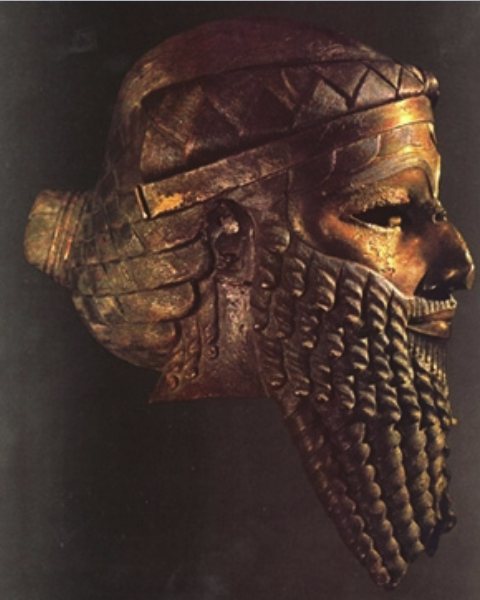
Head of an Akkadian ruler
from Nineveh (modern Kuyunjik), Iraq
ca. 2250–2200 BCE
shows a highly realistic bronze portrait that demonstrates the advanced metalworking and artistic skill of the Akkadian Empire. Beauty standard of Akkadian Rulers for centuries following.
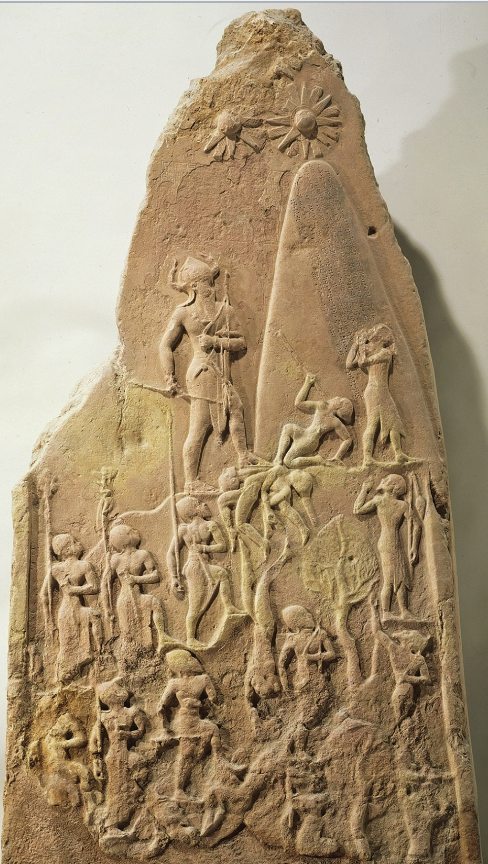
Victory stele of Naram-Sin
from Susa, Iran,
2254–2218 BCE
shows an early example of a narrative relief celebrating a king’s military victory, depicting Naram-Sin defeating the Lullubi people. It is also significant because it breaks from traditional horizontal registers and portrays the king as a god-like figure wearing a horned helmet, emphasizing royal power and divine authority.
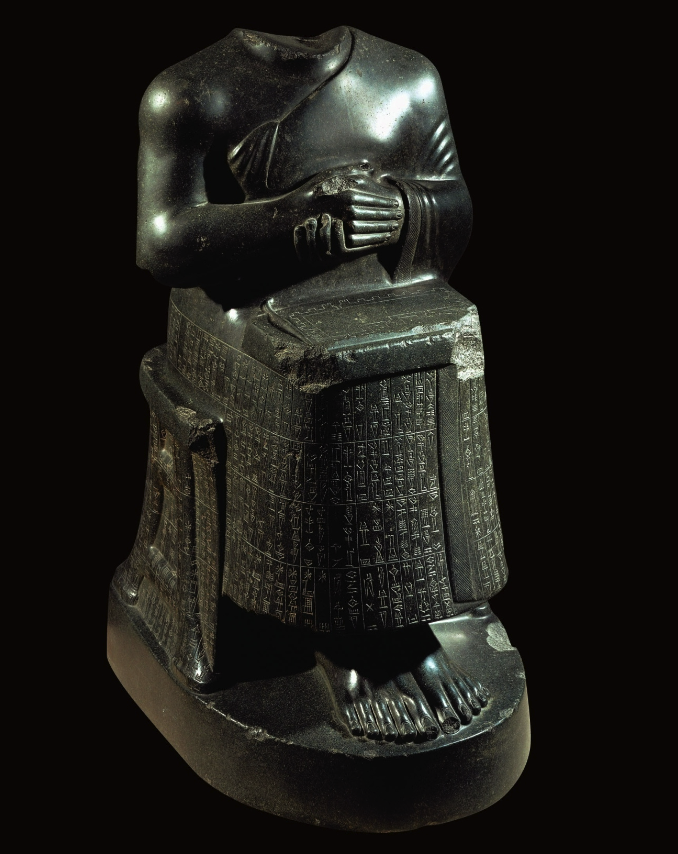
Seated statue of Gudea holding temple plan,
from Girsu (modern Telloh), Iraq
ca. 2100 BCE
shows the ruler Gudea as a devoted builder of temples, emphasizing his role in serving the gods. The carved temple plan symbolizes the importance of religious architecture and the connection between political power and religion in ancient Mesopotamia.
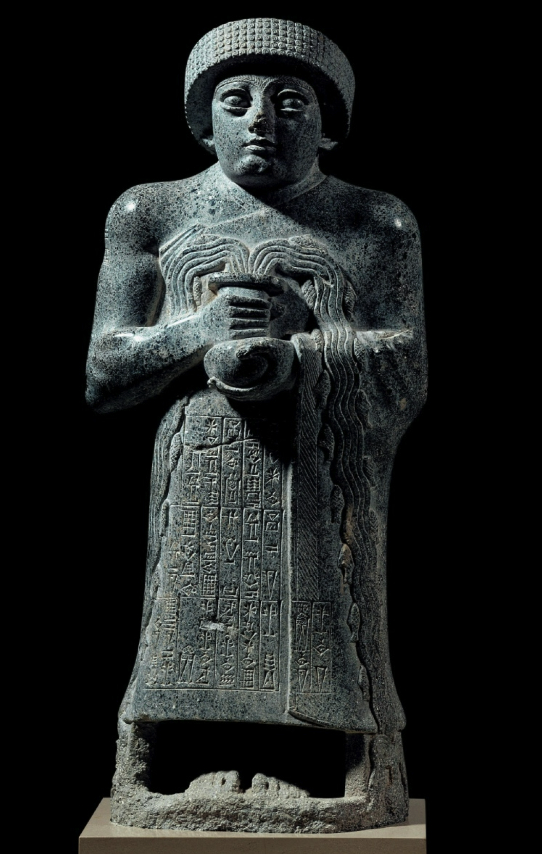
Gudea holding an overflowing water jar,
from the temple of Geshtinanna, Girsu (modern Telloh), Iraq,
ca. 2100 BCE
represents the ruler Gudea as a pious leader connected to the gods. The flowing water symbolizes prosperity and divine blessing, showing how art in ancient Girsu expressed religious devotion and political authority.
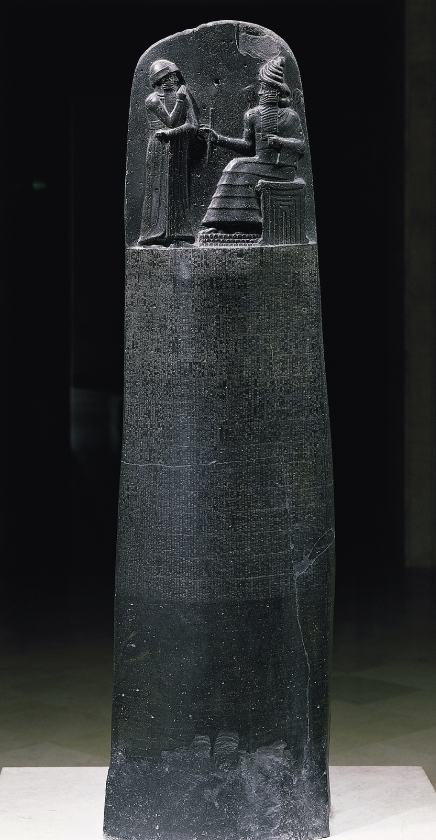
Stele with law code of Hammurabi
from Susa, Iran
ca. 1780 BCE
contains one of the earliest and most complete written law codes, with about 282 laws carved into stone. It also shows the Babylonian king Hammurabi receiving authority from the god Shamash, symbolizing that the laws came from divine power.
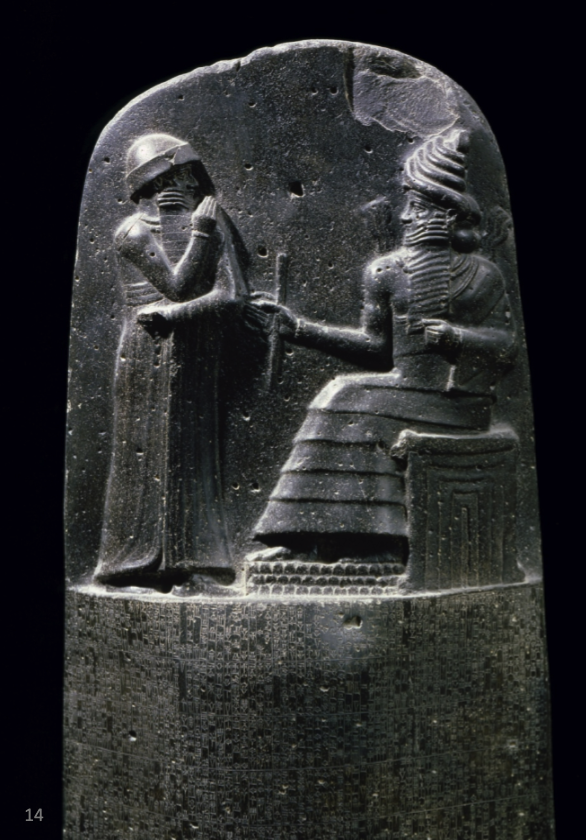
Hammurabi and Shamash, detail of the stele of Hammaurabi
from Susa, Iran
ca. 1780 BCE.
shows the Babylonian king Hammurabi receiving laws from the sun god Shamash, symbolizing that the king’s authority and laws came from the gods. The relief is part of the famous law code carved below it, one of the earliest written legal systems in history.
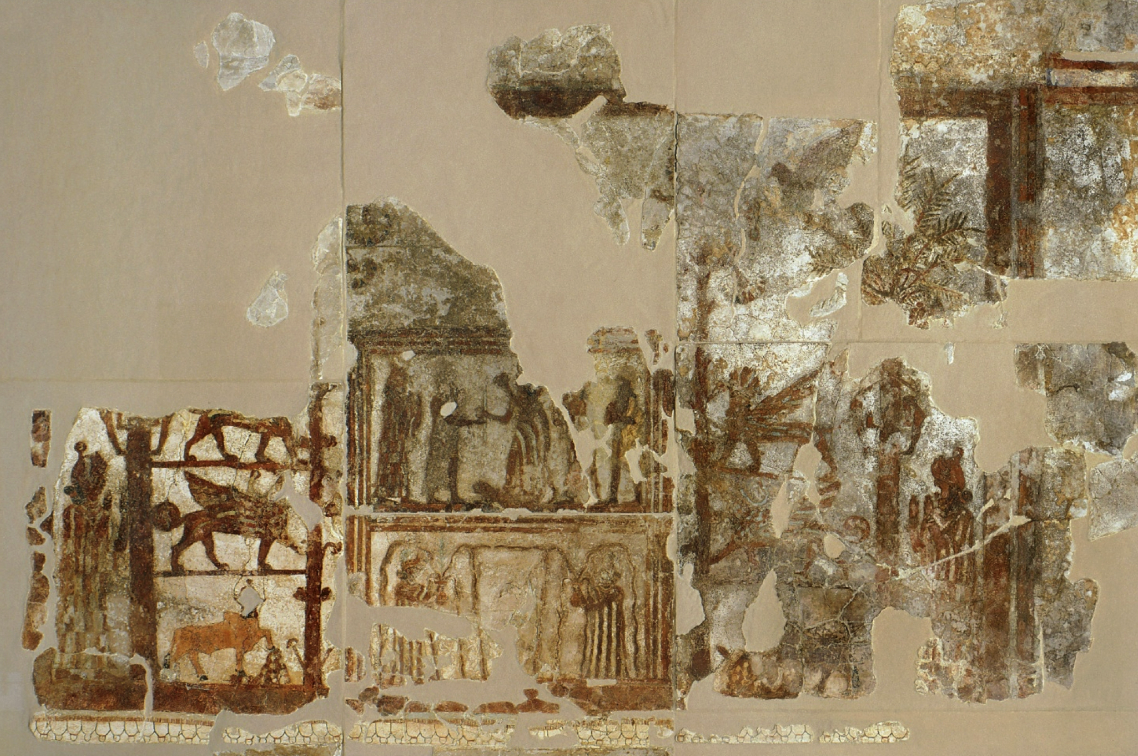
Investiture of Zimri-Lim,
mural painting from court 106 of the palace at
Mari (modern Tell Hariri), Syria,
ca. 1779–1757 BCE
shows the king Zimri-Lim receiving authority from the goddess Ishtar, illustrating the idea that kings ruled with divine approval. It is also one of the best preserved examples of palace wall painting from the ancient city of Mari.
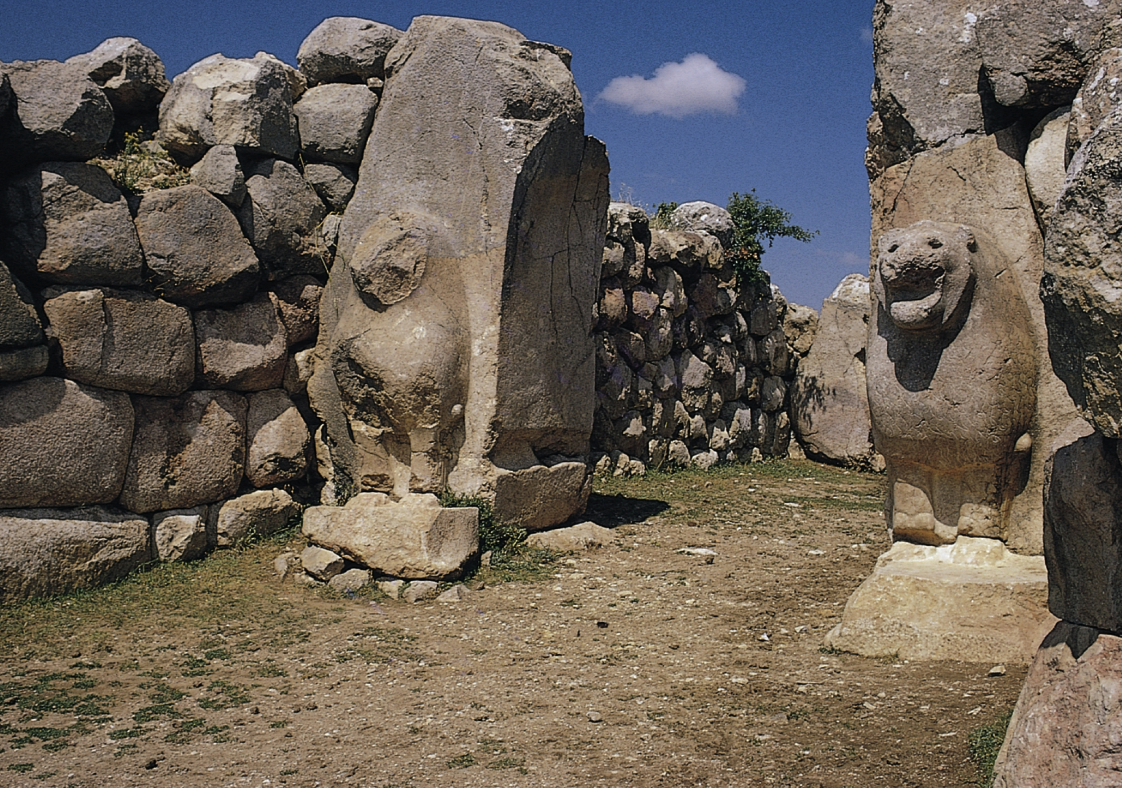
Lion Gate
Hattusa (modern Boghazköy), Turkey
ca. 1400 BCE.
shows the monumental stone architecture and advanced engineering of the Hittite civilization. The carved lion sculptures also demonstrate how art was used to symbolize protection and royal power at the entrance to the capital city of Hattusa.