Biology exam 1 review
 Call Kai
 Learn
Learn Practice Test
 Spaced Repetition
 Match
Match Flashcards
 Knowt Play
1/111

Earn XP
Description and Tags
Exam review
Name | Mastery | Learn | Test | Matching | Spaced | Call with Kai | Chat |
|---|
No analytics yet
Send a link to your students to track their progress
112 Terms
Characteristics of living organisms
Organized
Sensitive and respond to stimuli
Reproduce, grow and develop
Regulation
Maintain Homeostasis
Process and use Energy
Highly adapted to their environment
Living organisms
organized into cells, tissues, organs, and organ systems
sense and respond to: light, temperature, pressure
reproduce sexually or binary fission
regulate temperature, blood flow, oxygen
maintain homeostasis: constant temperature, blood pressure, water, energy, pH
convert chemical energy to mechanical energy
Levels of biological organization
Atoms
Molecules
Macromolecules
Organelles
Cells
Tissues
Organs and organ systems
Organisms, populations, and communities
Ecosystems
Biosphere
Dependent variable
What you measure in an experiment (Y-axis in a graph)
Independent variable
What you change in an experiment (X-axis in a graph)
Hypothesis
A testable explanation that predicts the relationship between variables
A testable and falsifiable proposed explanation for an observable phenomenon or scientific question
Theory
A well-substantiated, comprehensive explanation of an aspect of the natural world that is supported by a vast body of repeated observation and experimentation
Matter
has a mass and occupies space (gas, liquid, solid)
Elements
A pure substance made of only one kind of atom that cannot be broken down into simpler substances by normal chemical reactions
Have specific chemical properties
Have specific physical properties
Each element is designated by a unique chemical symbol:
Are made of atoms
Most common elements in living organisms
CHON
Make up about 96% to 99% of living matte
Protons
Charge: +1
Location: nucleus
Mass: 1 amu
Electrons
Charge: -1
Location: orbitals around the nucleus
Mass: 0 amu
Neutrons
Charge: 0
Location: nucleus
Mass: 1 amu
Which subatomic particles exist in the nucleus of the atom
Protons
Neutrons
The difference between atomic mass and atomic number
Atomic number: number of protons
Atomic mass: protons + neutrons
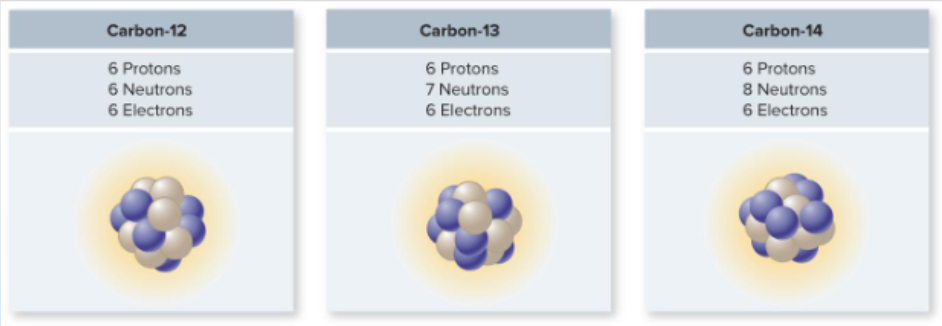
What are Isotopes?
Different forms of the same chemical element that have the same number of protons (and electrons) but a different number of neutrons, which changes the atomic mass
What is an orbital and how many electrons in each orbital?
A specific 3D space around an atomic nucleus where an electron is most likely to be found
s subshell: Contains 1 orbital and holds up to 2 electrons.
p subshell: Contains 3 orbitals and holds up to 6 electrons total (2 per orbital).
d subshell: Contains 5 orbitals and holds up to 10 electrons total (2 per orbital).
f subshell: Contains 7 orbitals and holds up to 14 electrons total (2 per orbital).

What is the Bohr model?
An early simplified depiction of how sub-atomic particles are arranged within an atom
Protons are located in nucleus and electrons in circular orbits around the nucleus
Orbits: electron shells or energy levels
a structural model of the atom stating that negatively charged electrons orbit a positively charged nucleus in distinct, circular paths called energy levels (or shells).
Reactants
The starting molecules that enter a chemical reaction and are transformed into products
They are the inputs that undergo chemical bond breaking and rearrangement during metabolic processes
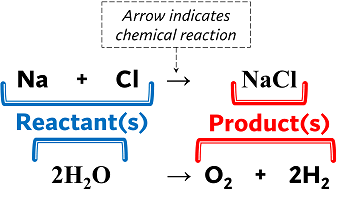
Products
The final molecules or substances formed as the result of an enzymatic or chemical reaction
In an atom what determines if two atoms will interact?
Electrons in outer shell (valence electrons)
Valence electrons (the outer shell electrons) and their need to achieve a stable, full outer energy level determine if two atoms will interact
What can help you determine if a reaction is reversible or irreversible?
The direction of the arrows
Double arrows: shows the reaction proceeds in both forward and reverse directions.

Non-polar Covalent bond
A type of chemical bond where two atoms share a pair of valence electrons equally because they have similar or identical electronegativities
Equal sharing
No partial charges

Ionic bond
A chemical link formed through the electrostatic attraction between oppositely charged ions caused by the complete transfer of electrons from one atom to another
Cation: A positively charged ion formed by losing electrons (p+ > e-)
Anion: A negatively charged ion formed by gaining electrons (e- > p+)

Polar covalent bond
A type of chemical bond where two atoms share valence electrons unequally because one atom has a higher electronegativity than the other
Unequal Sharing
This unequal pull creates uneven charge distribution across the molecule. The atom pulling harder gets a partial negative charge, while the other atom gets a partial positive charge

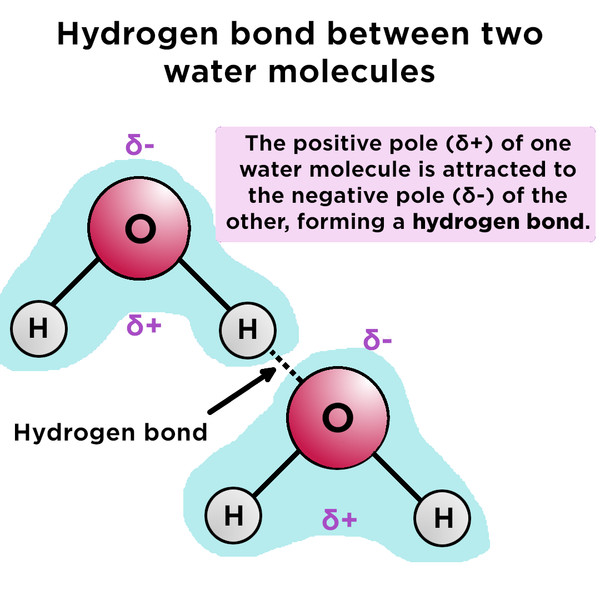
Hydrogen bond
A weak electrostatic attraction between a partially positive hydrogen atom and a partially negative atom—such as oxygen or nitrogen—on a neighboring molecule or another part of the same molecule
Weak Individually, Strong Collectively
Van der Waals interactions
Weak, temporary attractions between molecules that happen when shifting electron clouds create tiny, fleeting partial charges
weak interaction b/w molecules

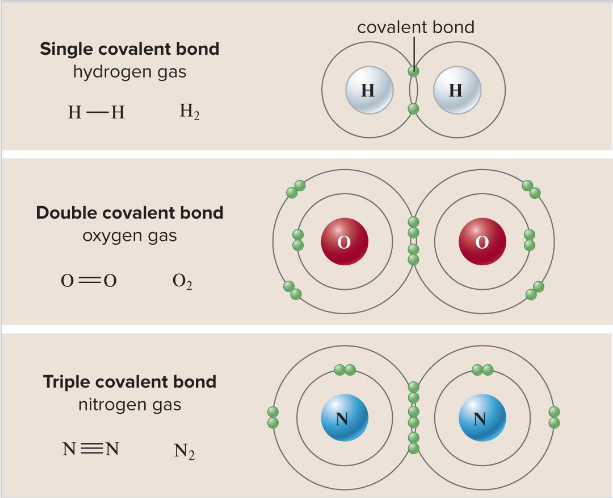
Difference between single, double bond and triple bond
The number of shared electron pairs, which directly dictates their length and strength
Single bond: shares 1 pair of electrons (2 total electrons), longest and weakest of the three
Double bond: shares 2 pairs of electrons (4 total electrons)
Triple bond: shares 3 pairs of electrons (6 total electrons), shortest and strongest type
What are the properties of water
Polarity and Hydrogen Bonding
Cohesion and Adhesion
High specific heat capacity
High Heat of Vaporization / Evaporative Cooling
Lower Density as a Solid (Floating Ice)
As water freezes, hydrogen bonds lock molecules into an open, spaced-out crystalline lattice, making ice less dense than liquid water.
Water as a Universal Solvent
Water's polarity allows it to surround and dissolve polar and ionic substances
Why water makes hydrogen bonds?
Oxygen is electronegative and pulls electrons towards itself (unequal sharing of electrons)
This creates two poles: one negative in Oxygen side and one positive pole in H side
One negative pole in one water molecule forms bond with a positive H atom on an adjacent water molecule:

Why do ions dissolve in water?
Because the polar water molecules form strong electrical attractions with the charged ions, pulling them apart from their crystal lattice
The attractive force between polar water molecules and individual ions overcomes the electrostatic forces holding the ionic crystal lattice together

What does pH of a solution indicate?
The pH indicates the concentration of hydrogen ions (H+) in that solution, which tells you how acidic or basic it is
How are acidic solutions related to H+ ions?
The higher the concentration of H ions, the more acidic the solution is
How are basic solutions related to OH- ions?
The higher the concentration of OH ions, the more basic the solution is
What pHs are Acidic? Neutral? Basic?
Acidc: pH < 7
Neutral: pH = 7
Basic (alkaline): pH > 7
What is the difference b/w pH 6 and 4? Which one is more acidic and by how much?
pH 4 is more acidic
By 100 times
The pH scale is a base-10 logarithmic scale, meaning each whole number step represents a tenfold (10x) change in hydrogen ion concentration

How do buffers work?
An aqueous solution that resists changes in pH when small amounts of acid or base are added
Made of a pair consisting of a weak acid and its conjugate base (or a weak base and its conjugate acid
Work by using one part of the pair to absorb added H+ and the other part to absorb added OH-

What is a functional group in a molecule?
A specific cluster of atoms attached to a carbon skeleton that gives an organic molecule its unique chemical properties and behavior
Carboxyl
A specific functional group with the formula -COOH, where a central carbon atom is double-bonded to an oxygen atom and single-bonded to a hydroxyl group (-OH)

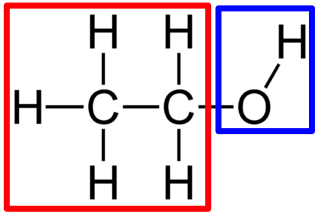
Hydroxyl
A functional group consisting of a hydrogen atom covalently bonded to an oxygen atom
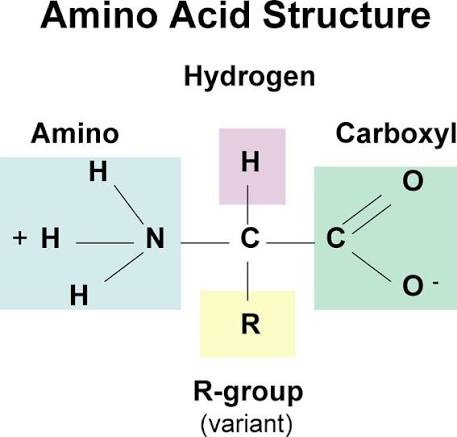
Amino group
A functional group made of a nitrogen atom bonded to two hydrogen atoms (-NH2)
Carbonyl
A functional group consisting of a carbon atom double-bonded to an oxygen atom (C=O)

Why are hydrogen bonds in biomolecules essential?
H bonds give molecules their functional 3-dimensional shape
Denatured (unfolded with no H bonds) are not functional.
Four classes of macromolecules (biomolecules)
Carbohydrates
Lipids
Proteins
Nucleic acids
Dehydration synthesis
A chemical reaction that joins smaller subunits (monomers) into larger chains (polymers) by removing a water molecule
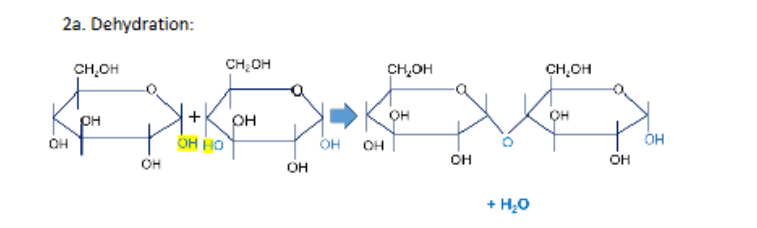
Hydrolysis
A chemical reaction that uses a water molecule to break the covalent bond holding a large polymer together, splitting it into smaller monomers
Water splits: A water molecule (H2O) breaks apart into a hydrogen ion (H+) and a hydroxyl group (OH-)
Bonds attach: The hydrogen ion attaches to one of the separated monomers, and the hydroxyl group attaches to the other.

What are the monomers of carbohydrates?
Monosaccharides: the simplest type of carbohydrate and serves as a single-molecule building block for larger sugar structures
Ex: glucose, fructose, galactose

Examples of sugar monomers
Called monosaccharides, which serve as the basic building blocks for more complex carbohydrates
Ex:
Glucose
Galactose
Fructose

What is the difference between an aldose and ketose sugar?
The primary difference between an aldose and a ketose sugar is the position of the carbonyl group (C=O) within their carbon chain
Aldose: Contains an aldehyde group (CHO) located at the very end (terminal carbon, usually Carbon 1) of the carbon chain
Ketose: Contains a ketone group (C=O) located at an internal carbon (usually Carbon 2) within the carbon chain

What is the link between two sugar (monosaccharide) molecules called?
A glycosidic bond
Covalent bond that joins a carbohydrate (sugar) molecule to another group or molecule, such as another monosaccharide
Formed through dehydration synthesis

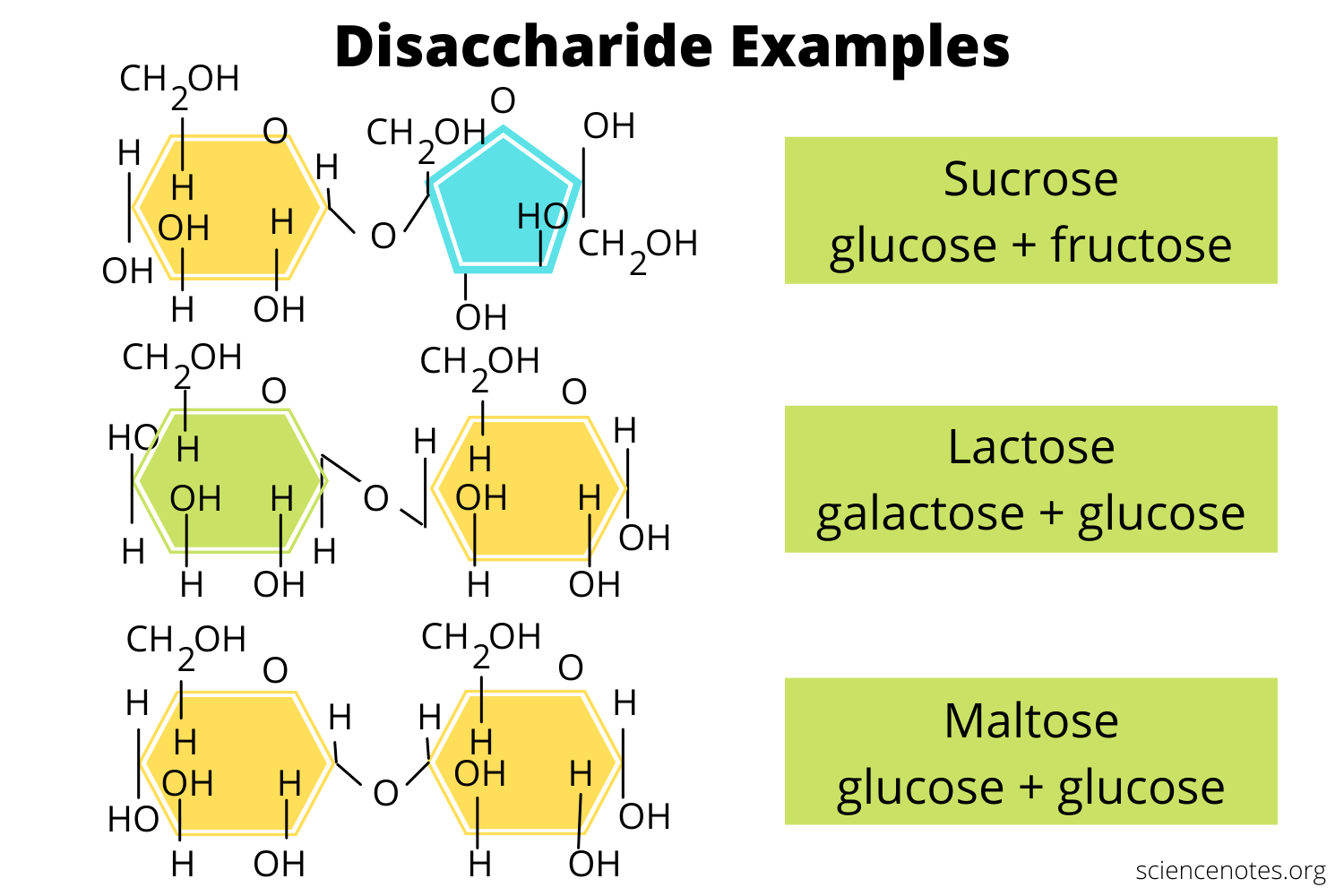
Common disaccharides
Sucrose
Lactose
Maltose
A carbohydrate molecule formed when two monosaccharide monomers join together through a covalent (glycosidic) bond
Form via dehydration synthesis
Difference between branched and unbranched polysaccharides
Unbranched polysaccharides form a single, linear chain of monosaccharides, whereas branched polysaccharides feature side chains of monosaccharides branching off the main carbon backbone

Starch
A storage polysaccharide made of glucose monomers linked by α-1,4 and α-1,6 glycosidic bonds, serving as the primary energy storage molecule in plants
Ex: potatoes, wheat, rice
Cellulose
A structural polysaccharide that makes up the tough cell walls surrounding plant cells, providing them with shape and rigidity
Most abundant carbohydrate; insoluble
Cows & sheep can digest it: cellulose- digesting bacteria
Structural polysaccharide in plants
Glycogen
A highly branched polysaccharide polymer made of glucose monomers that animals use to store extra energy
energy source in animal tissue
Stored in liver & muscle cells
Different functions of lipids
Long-term energy stores
Insulation for plants and animals
Building blocks for some hormones
Component of cells membranes
Different types of lipids
Fats
Oils
Waxes
Phospholipids
Steroids
Two components of fat and which one is hydrophobic:
A fat (triglyceride) molecule is made of glycerol and fatty acids, and the fatty acid tails are the hydrophobic components
An isolated glycerol molecule is hydrophilic (water-loving), but when it is bound inside a fat molecule like a triglyceride, it behaves as part of a hydrophobic structure

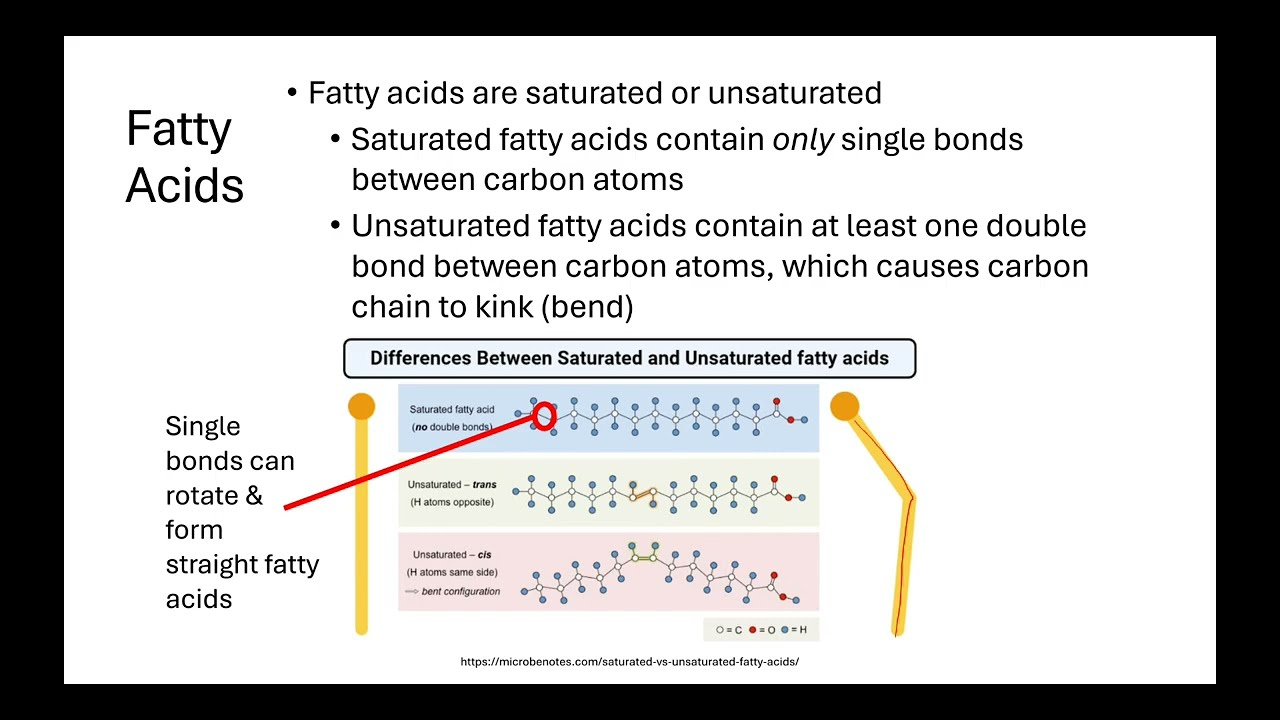
What is the difference between saturated and unsaturated fatty acids?
Saturated fatty acids have only single carbon-carbon bonds and are full of hydrogen atoms, while unsaturated fatty acids have at least one double carbon-carbon bond which creates a bend or kink in the chain
What is a phospholipid; properties of the head and tail
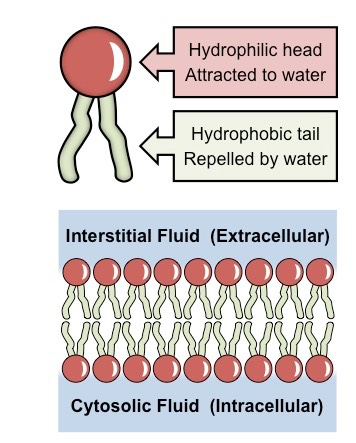
A major type of lipid molecule that forms the primary building block of cell membranes
Head: polar, negative charge, hydrophillic, faces outward towards aqueous environments
Fatty acid tails: nonpolar, uncharged, hydrophobic, face inwards (away from water)

Why are phospholipids an amphipathic molecule?
Because they contain both a hydrophilic (water-loving) region and a hydrophobic (water-fearing) region within the exact same molecule
What are steroids and their function?
A type of lipid molecule characterized by a core chemical structure of four fused carbon rings (three six-sided and one five-sided)
Membrane Fluidity (Cholesterol): Cholesterol embeds itself in animal cell plasma membranes. It acts as a fluidity buffer
Cholesterol serves as the vital starting material or precursor used to synthesize important steroid hormones, including testosterone, estrogen, progesterone, and cortisol
Cell Signaling and Gene Expression

Different functions of protein
Regulatory functions
Structural functions
Protective functions
Transport
Enzymes
Toxins
What are enzymes?
Proteins that work as catalysts (speed up reactions). Enzymes are very specific for one type of reaction and can be used repeatedly
Specific enzyme for specific substrate
Catalysts accelerate chemical reactions by lowering the activation energy required for the reaction to occur, without being consumed in the process.
The monomer that makes proteins:
Amino acids
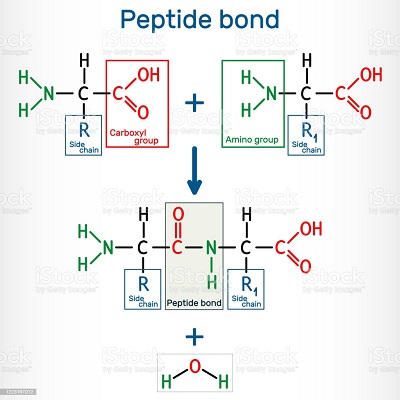
Link together through covalent bonds called peptide bonds formed via dehydration synthesis (condensation reactions) to create polypeptide chains
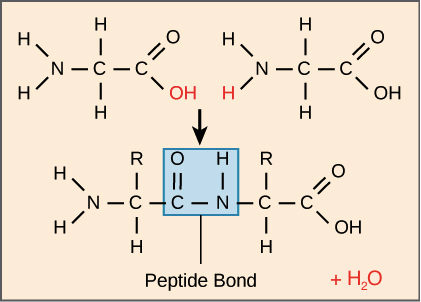
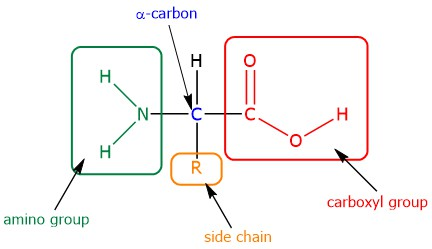
The three main functional groups of amino acids:
Amino group (-NH2)
Carboxyl group (-COOH)
R-group (Side chain): a unique chemical group that gives each specific amino acid its distinct size, charge, and function
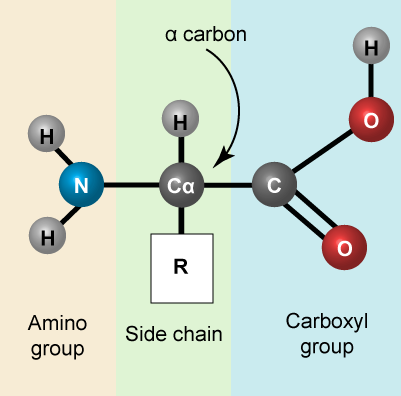
What functional group in an amino acid gives the acid its chemical properties?
The variable side chain, also universally known as the R-group, is the functional group that gives each amino acid its unique chemical properties (such as being polar, nonpolar, hydrophobic, or hydrophilic)
R-groups can be:
Nonpolar (hydrophobic)
Polar
Positive charged
Negative charged
Nonpolar aromatic (rings)
What bond links amino acids together?
Individual amino acids are linked together by covalent chemical bonds called peptide bonds
Peptide bonds: a covalent chemical bond formed through dehydration synthesis that links two amino acids together to form the primary backbone of a protein
Denatured protein
A protein that has lost its normal three-dimensional shape and function because external stress disrupted its weaker internal bonds, while its primary amino acid sequence remained intact
The strong covalent peptide bonds of the primary structure (the amino acid sequence) do not break
Protein structure/shape can change with altering primary structure due to:
Changes in pH
Changes in temperature

What are nucleic acids?
Large biological macromolecules that store, transmit, and express genetic information in living systems
Two types
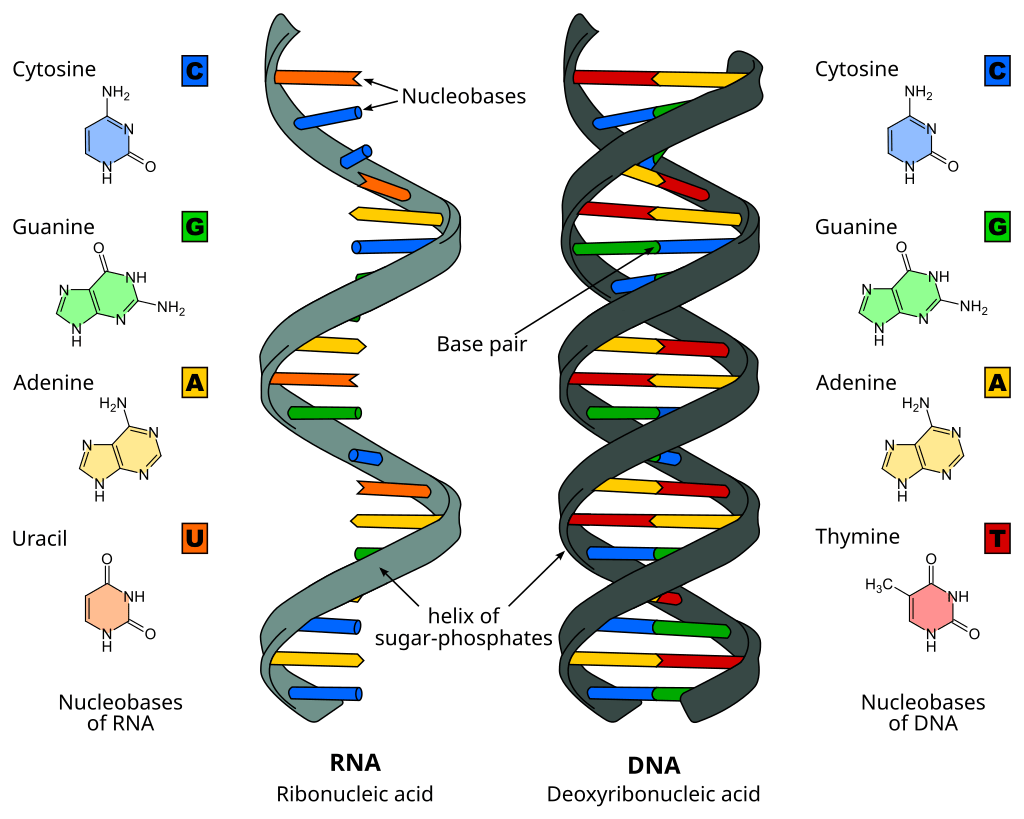
Deoxyribonucleic acid (DNA)
Ribonucleic acid (RNA)
Where do you find DNA in eukaryotes?
Nucleus
Mitochondria
Chloroplasts
What are the three components of DNA?
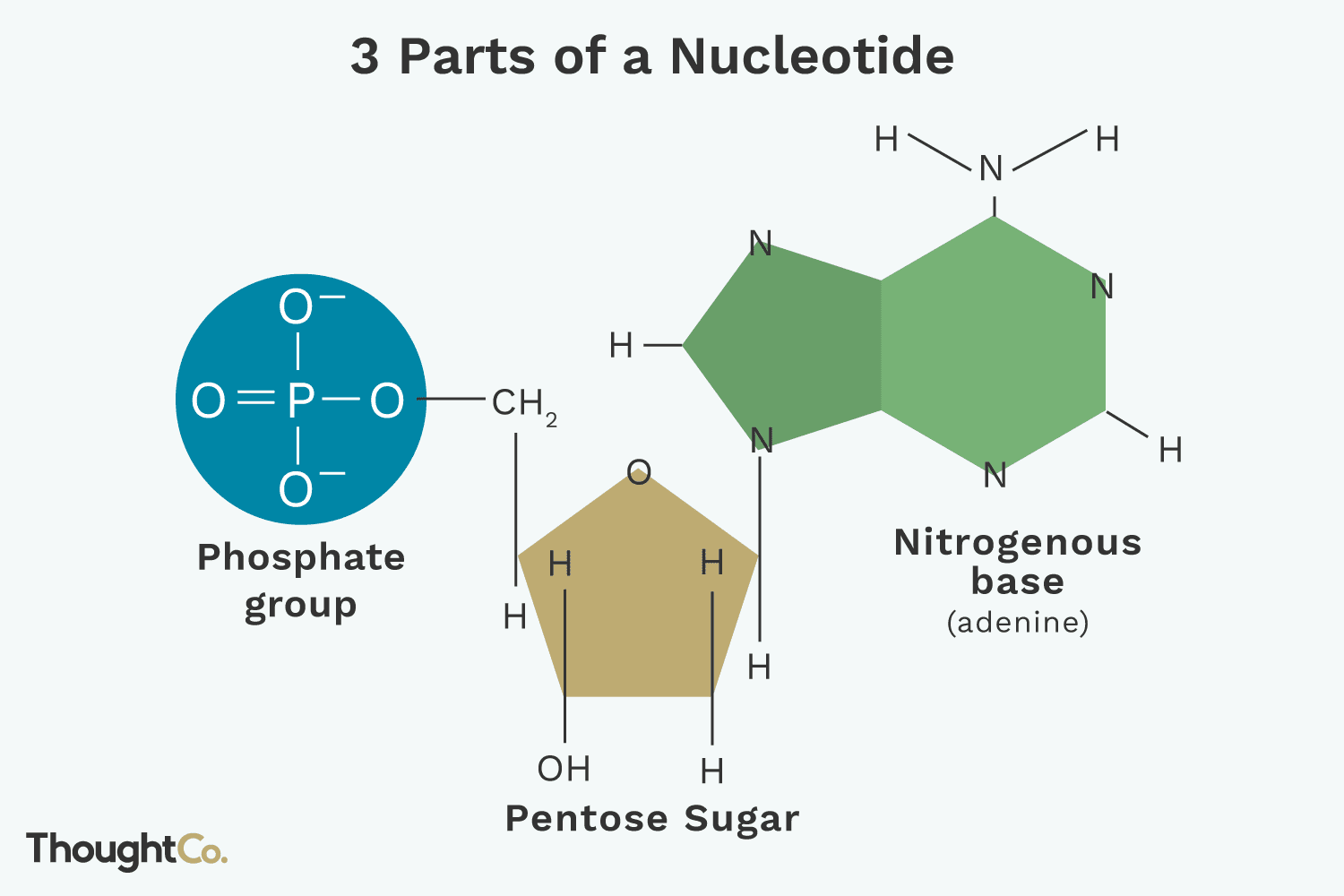
A DNA molecule is a polymer made of repeating smaller units called nucleotides, and each individual nucleotide consists of three main components:
A pentose (five-carbon) sugar molecule
Phosphate group
Nitrogenous base
The monomers of nucleic acids are
Nucleotides
What component of DNA makes the whole molecule negative?
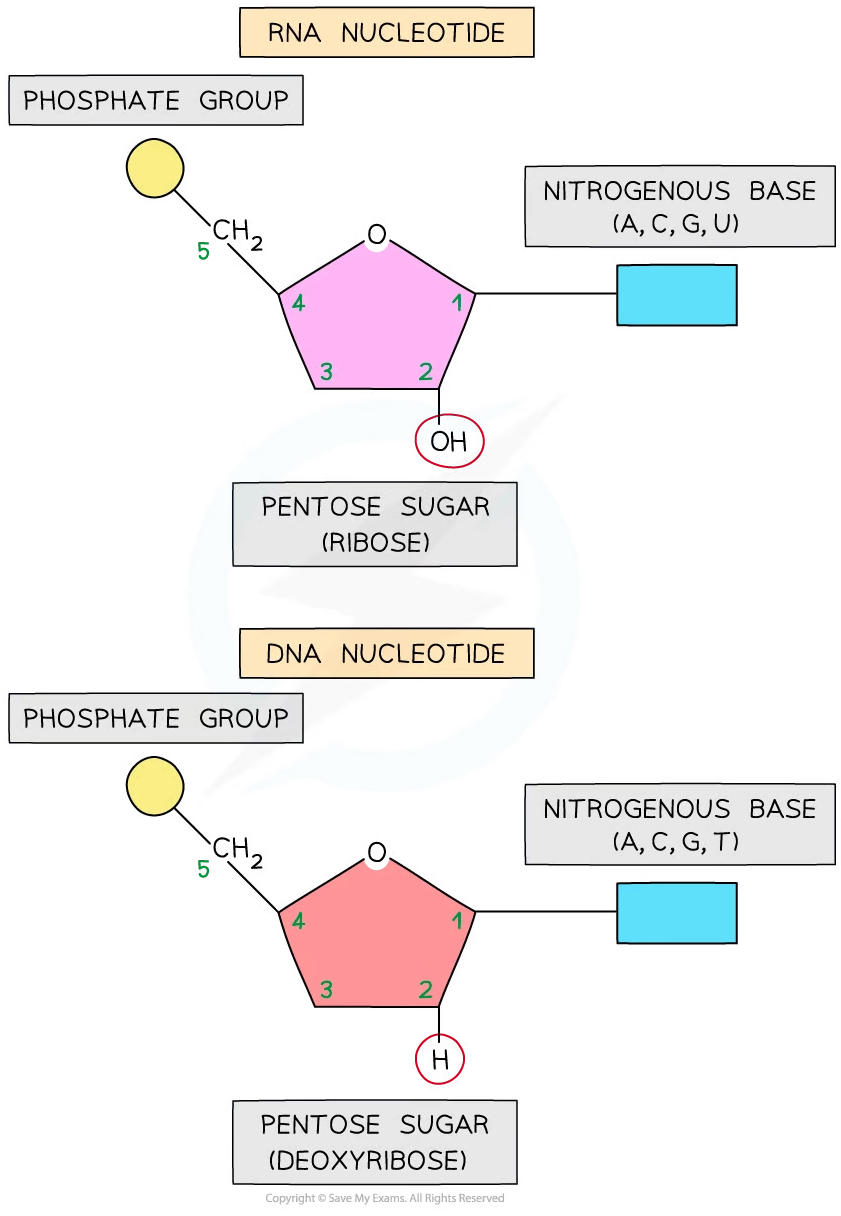
The phosphate group in the sugar-phosphate backbone gives DNA its overall negative charge
At normal cell pH, the oxygen atoms on the phosphate group carry a negative charge

Differences between DNA and RNA:
Sugars:
DNA uses deoxyribose, which lacks one oxygen atom on the second carbon (2'-H)
RNA uses ribose, which has a full hydroxyl group (-OH) on the second carbon
Nitrogenous Bases:
DNA contains Adenine (A), Cytosine (C), Guanine (G), and Thymine (T)
RNA contains uracil (U) instead of thymine
Number of Strands:
DNA is typically double-stranded, forming an antiparallel double helix that protects genetic information
RNA is typically single-stranded, allowing it to fold into various shapes for protein synthesis (such as mRNA, tRNA, and rRNA)
What weak bond keeps two strands of DNA bound to each other?
A hydrogen bond
hydrogen bonds in DNA are located directly between the complementary nitrogenous base pairs on opposite strands

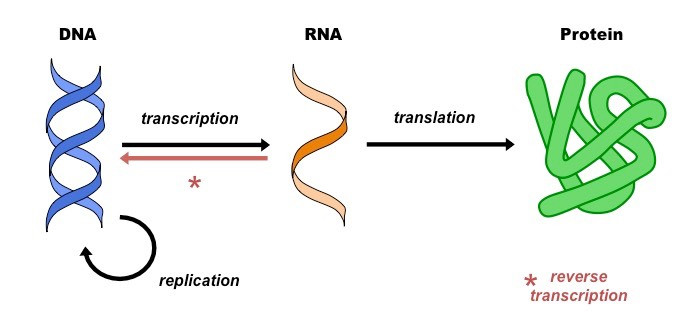
The central dogma of life
The one-way flow of genetic information inside a cell from DNA to RNA to protein
DNA → RNA → Protein
Two main steps:
Transcription
Translation
Retroviruses (like HIV) use reverse transcription to turn RNA back into DNA, which is a special transfer
What are the three parts of the cell theory?
Cells are basic units of life
All living organisms are made of cells
All cells come from pre-existing cells
What is an advantage of using a transmission or scanning electron microscope?
They provides a much higher magnification and resolution than a light microscope, allowing scientists to see tiny cell parts like ribosomes and internal membrane structures
Transmission: show fine detail within cells
Scanning: provide 3-D exterior views
What structures do ALL cells have in common?
Plasma membrane: separates the cell’s interior from the outside
Cytoplasm: inside of cell (cytosol) where organelles are found
DNA: the genetic material
Ribosomes: synthesize proteins
What is an advantage of using a light microscope?
It allows you to view living cells and whole organisms in real time
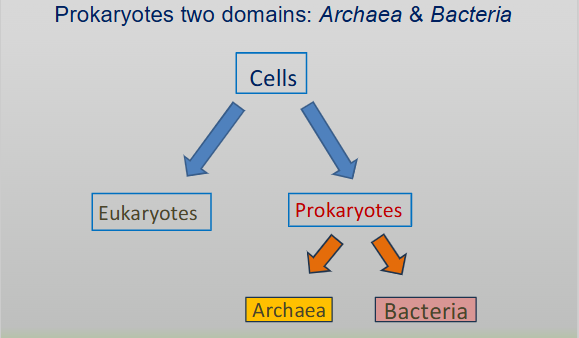
Define prokaryote and give an example
A unicellular organism that lacks a nucleus and other membrane-bound organelles
Two domains: bacteria & archaea
Ex: cyanobacteria, methanogens (archaea), Escherichia coli (E.coli)

The General features of prokaryotic cells are below. What is the function of each one?
Nucleoid: houses and organizes the cell's circular DNA molecule without a surrounding membrane
Cell wall: rigid outer layer that maintains cell shape, provides structural support, and prevents the cell from bursting from osmotic pressure in hypotonic environments
Ribosomes: synthesize proteins by translating messenger RNA (mRNA) sequences into polypeptide chains
Flagella: locomotion, enabling single-celled organisms to swim and actively navigate their liquid environments
What are the two main differences between eukaryotic and prokaryotic organisms
The presence of a membrane-bound nucleus and membrane-bound organelles in eukaryotes, both of which prokaryotes lack
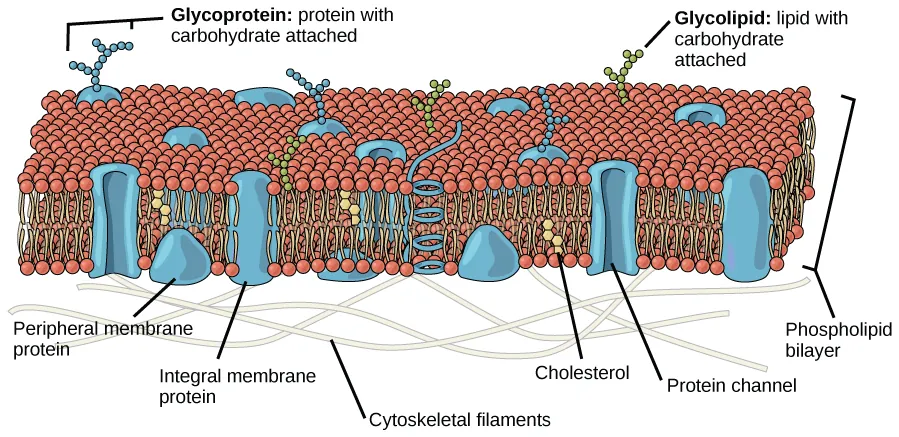
What molecule is the cell membrane composed of?
The cell membrane Is primarily composed of phospholipids arranged in a double layer called a phospholipid bilayer
What are some of the functions of membrane proteins?
Membrane proteins perform six major functions vital for cell survival and communication:
Transport
Enzymatic Activity
Signal Transduction
Cell-Cell Recognition
Intercellular Joining
Attachment to the Cytoskeleton and Extracellular Matrix (ECM)
Membrane proteins
Proteins embedded in or attached to the phospholipid bilayer of a cell membrane. They act as gatekeepers, helping the cell transport materials, receive signals, and speed up chemical reactions
Prokaryotic organisms are found in which two domains of life?
Bacteria
Archaea
How many layers make up the cell membrane?
The cell membrane is made up of two layers of phospholipids, known as a phospholipid bilayer
Outer Layer: The polar, hydrophilic (water-loving) phosphate heads face outward toward the aqueous extracellular fluid.
Inner Layer: The polar heads face inward toward the cytoplasm.
Core: The non-polar, hydrophobic (water-fearing) fatty acid tails point inward, meeting in the middle away from water
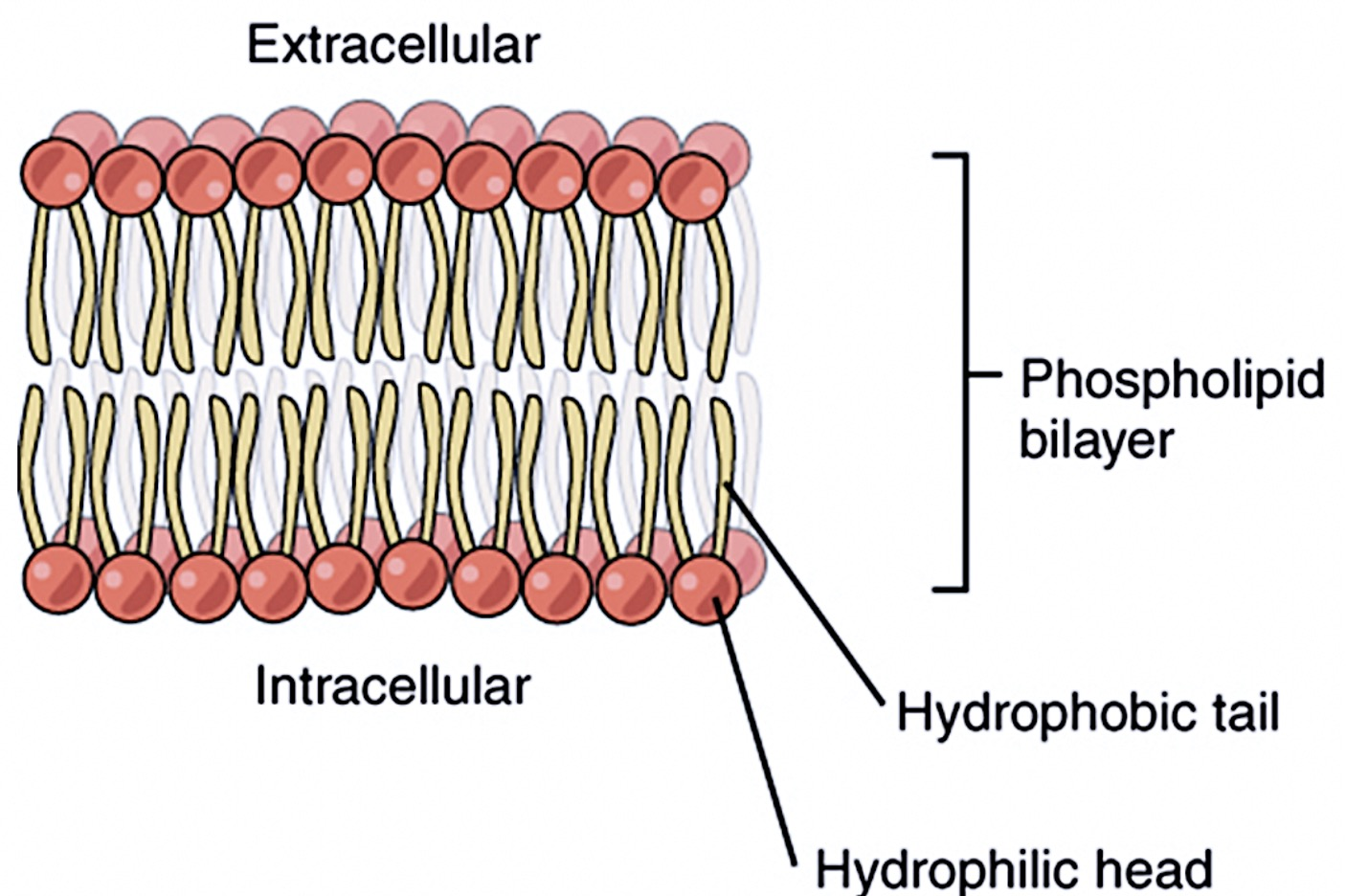
What part of the cell membrane is hydrophilic?
What part of the cell membrane is hydrophilic?
Location: The hydrophilic (water-loving) heads face outward. They contact the watery fluid inside (cytoplasm) and outside (extracellular fluid) the cell.

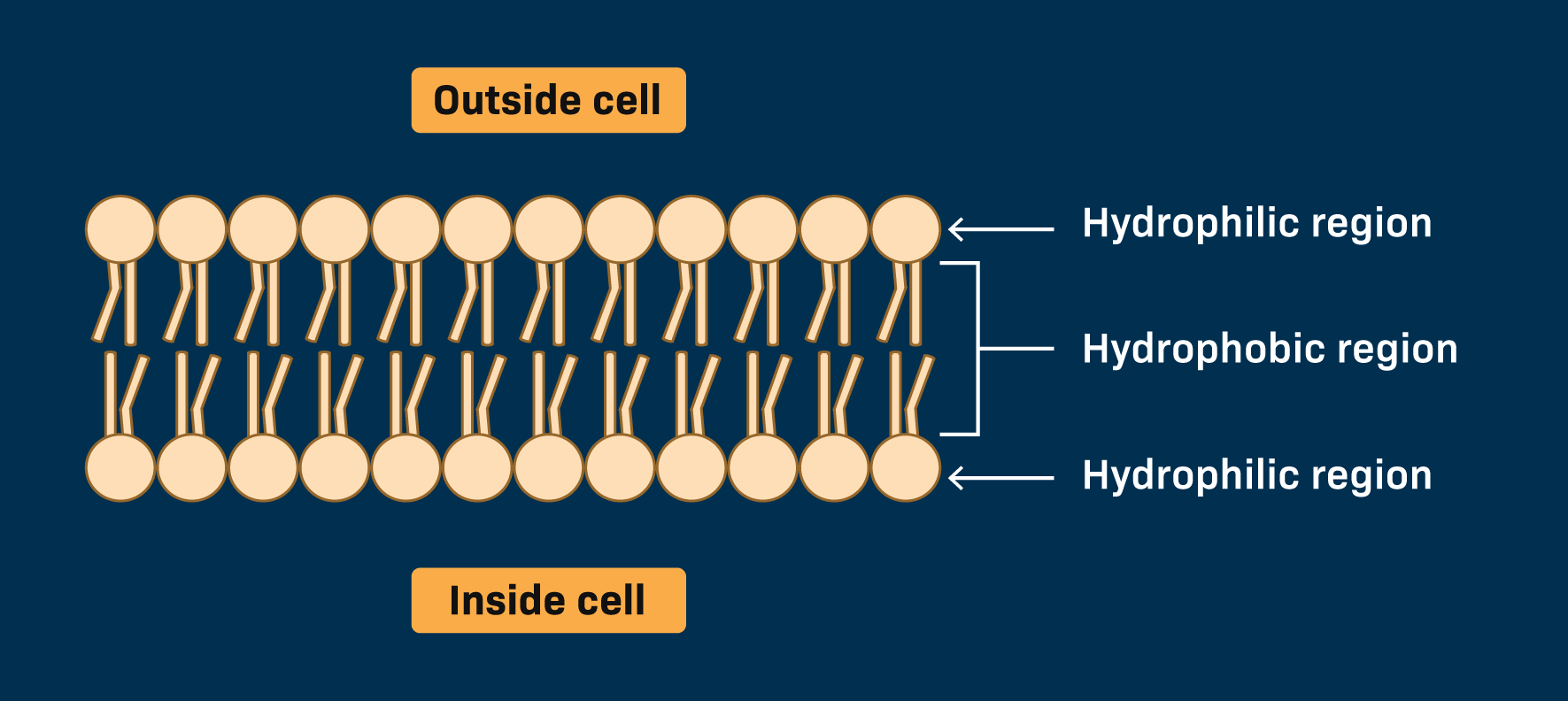
What part of the cell membrane is hydrophobic?
The hydrophobic (water-fearing) part of the cell membrane consists of the nonpolar fatty acid tails of the phospholipid
Location: The two fatty acid tails point inward, meeting in the interior of the phospholipid bilayer to form a nonpolar core away from cellular water
Function: This hydrophobic interior acts as a selective barrier. It lets small, nonpolar molecules (like CO2 and O2) pass through easily, but blocks ions and large polar molecules (like glucose)
Eukaryotic organisms are found in which domain of life?
Eukaryotic organisms are found in the domain Eukarya
Characteristics of Domain Eukarya
Nucleus: Cells store their DNA inside a distinct, membrane-bound nucleus.
Organelles: Cells contain membrane-bound structures like mitochondria and the endoplasmic reticulum.
Kingdoms: This domain includes four major groups: Protista, Fungi, Plantae, and Animalia
Organelle
A specialized sub-cellular structure that performs a specific job inside a cell, much like an organ does in the body

What is the function of the nucleus?
The primary function of the cell nucleus is to store, protect, and manage the cell's genetic information (DNA), serving as the control center for eukaryotic cells
How does the nucleus interact with other organelles?
The Nucleus, Endoplasmic Reticulum, and Golgi Interact to Secrete Substances

What makes the rough ER "rough?"
Because its cytoplasmic surface is studded with bound ribosomes

What is made at the rough ER?
The rough ER synthesizes and processes secretory proteins, membrane-bound proteins, and phospholipids
Proteins
What is made at the smooth ER?
Lipids (such as phospholipids and cholesterol) and steroid hormones

What is the function of the Golgi apparatus?
To modify, sort, and package proteins and lipids for transport to different locations inside or outside the cell
Lipids or proteins within vesicles are sorted, packaged, and tagged to send to the right place

What is the function of lysosomes?
Membrane-bound organelles that use hydrolytic enzymes to break down waste, foreign material, and old cell parts
Lysosomes in animal cells contain digestive enzymes
The enzymes breakdown biomolecules and old organelles

Correlation between Lysosomes, Vacuoles, and Peroxisomes
Lysosomes, Vacuoles, and Peroxisomes Are Cellular Digestion Centers
all membrane-bound sacs inside cells that handle metabolic waste, breakdown, and storage