AP Bio Unit 1 + Stats
 AP Practice
 Call Kai
1/43

Earn XP
Name | Mastery | Learn | Test | Matching | Spaced | Call with Kai | Chat |
|---|
No analytics yet
Send a link to your students to track their progress
44 Terms
Big Idea 1: Evolutionary Change
all living organisms have evolved from the same origin event
diversity of life is a result
Evolutionary Conservation
critical characteristics of early organisms are preserved and passed down
Energy use (ATP)
DNA
RNA
Big Idea 2: Biological systems utilize energy
energy flows through an ecosystem (enter as light, leave as heat)
organisms use energy to preform work
First Law of Thermodynamics - Law of Conservation
Energy cannot be created nor destroyed, only change forms
Second Law of Thermodynamics - Law of Disorder
Everything in the universe is going from order to disorder
unless you add energy to it
something becomes disorders to make something else ordered
Big Idea 3
Living systems store, retrieve, transmit, and respond to information essential to life processes
Characteristics of life (7)
cells
ordered complexity
grow, develop, and reproduce
energy utilization
sensitive to stimuli
homeostasis
evolutionary adaptation
Taxonomy order
Domain
Kingdom
Phylum
Class
Order
Family
Genus
Species
*all can have sub-
How to write scientific name
Genus species
Hypothesis
Prediction that can be tested
if… then…
can either be supported or refuted
NOT correct or incorrect
Null Hypothesis
IV will have NO effect on DV
used to get rid of experimental bias
Experiment
only tests one independent variable at a time
-test and control
Data
Quantitative and Qualitative
Conclusion
statement that supports or rejects hypothesis
claim evidence reasoning
support with data
make recommendations for future study
theories
based on scientific observation
thought to be true at the time
could have new advancements
Major Concepts and Scientific Laws
remain intact
Statistical analysis
used to collect a sample size of data which can infer what is occurring in gen. pop.
Normal Distribution
bell curve
Standard Error of mean
determines confidence in sample mean
SE = (standard deviation)/(sqrrt(n))
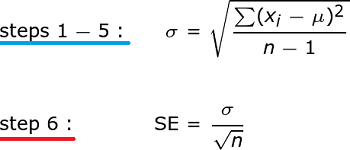
Standard deviation