II. Raw Materials QC Part 2 & III. Packaging Material QC
 Call Kai
 Learn
Learn Practice Test
 Spaced Repetition
 Match
Match Flashcards
 Knowt Play
1/63

There's no tags or description
Looks like no tags are added yet.
Name | Mastery | Learn | Test | Matching | Spaced | Call with Kai | Chat |
|---|
No analytics yet
Send a link to your students to track their progress
64 Terms
c. Karl Fischer Titrimetry
[PHYSICAL TESTS]
The method of Water Determination based on the reaction of H2O with Karl Fischer Reagent
a. Method II
b. Azeotropic Distillation
c. Karl Fischer Titrimetry
d. Coulometric Titration
a. SO2
b. Iodine
c. Pyridine
d. Anhydrous Methanol
“SIPA”
“SI” lang may reactions
[PHYSICAL TESTS]
Karl Fischer is consist of
d. SO2

[PHYSICAL TESTS]
The component of Karl Fischer Reagent that reacts with H2O to form SO3
a. Iodine
b. Pyridine
c. Anhydrous Methanol
d. SO2
c. Iodine
[PHYSICAL TESTS]
The component of Karl Fischer Reagent that reacts with H2O to form HI
a. SO2
b. Pyridine
c. Iodine
d. Anhydrous Methanol
d. Pyridine
[PHYSICAL TESTS]
The component of Karl Fischer Reagent that prevents reversal of the reaction
a. SO2
b. Iodine
c. Anhydrous Methanol
d. Pyridine
d. Pyridine
[PHYSICAL TESTS]
The component of Karl Fischer Reagent that act as buffer
a. SO2
b. Iodine
c. Anhydrous Methanol
d. Pyridine
c. Anhydrous Methanol
[PHYSICAL TESTS]
The component of Karl Fischer Reagent that act as solvent
a. SO2
b. Iodine
c. Anhydrous Methanol
d. Pyridine
c. Anhydrous Methanol
[PHYSICAL TESTS]
The component of Karl Fischer Reagent that prevents complexation
a. SO2
b. Iodine
c. Anhydrous Methanol
d. Pyridine
c. Sodium tartrate dihydrate
[PHYSICAL TESTS]
The standard used in Karl Fischer Titrimetry
a. Sodium chloride
b. Anhydrous methanol
c. Sodium tartrate dihydrate
d. Potassium dichromate
5 mg H2O = 1 mL KFR
[PHYSICAL TESTS]
Karl Fischer reagent titer value
d. Method Ia
[PHYSICAL TESTS]
The Karl Fischer Titrimetry method that uses direct titration
a. Method Ib
b. Method Ic
c. Method Id
d. Method Ia
a. Method Ib
[PHYSICAL TESTS]
The Karl Fischer Titrimetry method that uses residual titration
a. Method Ib
b. Method Ic
c. Method Id
d. Method Ia
b. Method Ic
[PHYSICAL TESTS]
The Karl Fischer Titrimetry method that uses coulometric titration
a. Method Ib
b. Method Ic
c. Method Id
d. Method Ia
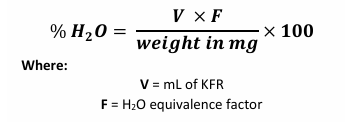
[PHYSICAL TESTS]
Karl Fischer Formula
c. Azeotropic Method
[PHYSICAL TESTS]
The method of Water Determination based on distillation of H2O with Toluene or Xylene
a. Karl Fischer Titrimetry
b. Coulometric Titration
c. Azeotropic Method
d. Gravimetric Metho
d. Toluene or Xylene
[PHYSICAL TESTS]
BEQ: The solvents used in the Azeotropic Method of Water Determination
a. Methanol or Ethanol
b. Acetone or Hexane
c. Chloroform or Benzene
d. Toluene or Xylene
a. Toluene moisture apparatus
[PHYSICAL TESTS]
The apparatus used in the Azeotropic Method of Water Determination
a. Toluene moisture apparatus
b. Pycnometer
c. Karl Fischer apparatus
d. Mohr-Westphal balance
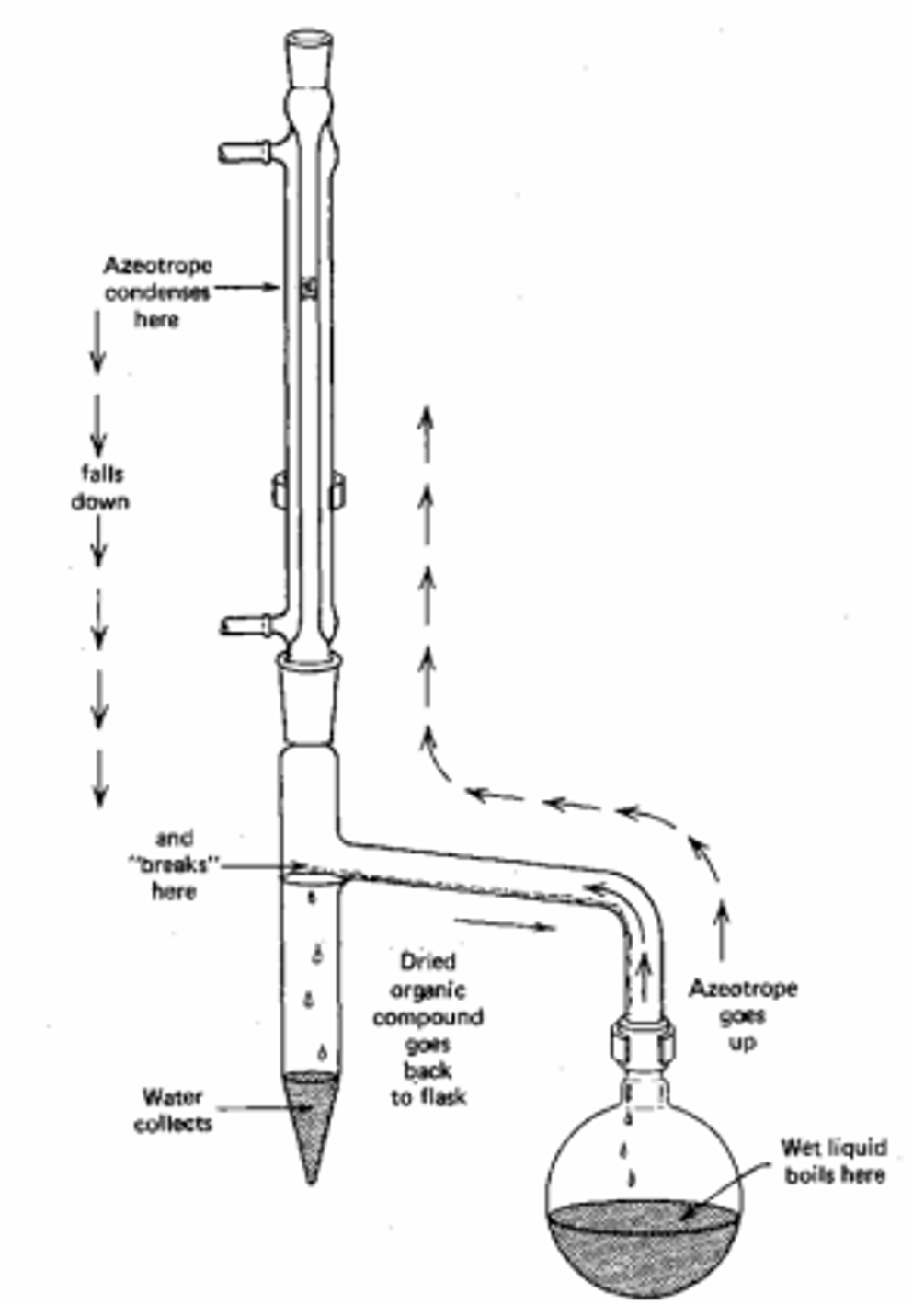
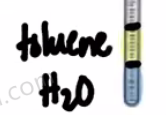
[PHYSICAL TESTS]
Toluene moisture apparatus
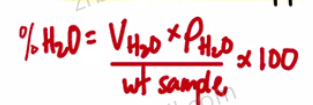
[PHYSICAL TESTS]
% H2O using Toluene moisture apparatus (azeotropic determination)
d. Gravimetric Method

[PHYSICAL TESTS]
The method of Water Determination based on loss on drying
a. Karl Fischer Titrimetry
b. Azeotropic Method
c. Coulometric Method
d. Gravimetric Method
c. 110-120°C
[PHYSICAL TESTS]
The drying temperature used in the Gravimetric Method for inorganic substances
a. 105°C
b. 100°C
c. 110-120°C
d. 125-130°C
a. 105°C
[PHYSICAL TESTS]
The drying temperature used in the Gravimetric Method for organic substances
a. 105°C
b. 100°C
c. 125°C
d. 110-120°C
c. Type III &
d. Type I
[TESTS FOR GLASS]
Powdered Glass Test
a. Type II
b. Type IV
c. Type III
d. Type I
a. Type II
[TESTS FOR GLASS]
Water Attack Test
a. Type II
b. Type IV
c. Type III
d. Type I
c. Type III &
d. Type I
[TESTS FOR GLASS]
Surface Glass Test
a. Type II
b. Type IV
c. Type III
d. Type I
d. Type I
[TESTS FOR GLASS]
The type of glass described as highly resistant borosilicate glass
a. Type III
b. Type IV
c. Type II
d. Type I
a. Type II
[TESTS FOR GLASS]
The type of glass described as treated soda lime glass
a. Type II
b. Type III
c. Type IV
d. Type I
d. Type III
[TESTS FOR GLASS]
The type of glass described as soda lime glass
a. Type I
b. Type IV
c. Type II
d. Type III
b. Type I
[TESTS FOR GLASS]
The type of glass used for buffered or non-buffered aqueous parenterals
a. Type III
b. Type I
c. Type IV
d. Type II
d. Type II
[TESTS FOR GLASS]
The type of glass used for acidic and neutral aqueous parenterals
a. Type I
b. Type III
c. Type IV
d. Type II
b. Type III
[TESTS FOR GLASS]
The type of glass used for non-aqueous or dry solid parenterals
a. Type I
b. Type III
c. Type IV
d. Type II
Type III < Type II < Type I
[TESTS FOR GLASS]
Arrange galss type from low to high resistance to leaching
c. Powdered Glass Test
[TESTS FOR GLASS]
The Old USP test that uses crushed glass as the sample
a. Water Attack Test
b. Surface Glass Test
c. Powdered Glass Test
d. Glass Grains Test
d. 0.02 N H2SO4 VS
[TESTS FOR GLASS]
The titrant used in the Powdered Glass Test
a. 0.1 N HCl VS
b. 0.02 N NaOH VS
c. 0.1 N NaOH VS
d. 0.02 N H2SO4 VS
a. 0.02 N H2SO4 VS
[TESTS FOR GLASS]
The titrant used in the Water Attack Test
a. 0.02 N H2SO4 VS
b. 0.02 N NaOH VS
c. 0.1 N NaOH VS
d. 0.1 N HCl VS
d. 0.1 N HCl VS
[TESTS FOR GLASS]
The titrant used in the Surface Glass Test
a. 0.02 N H2SO4 VS
b. 0.02 N NaOH VS
c. 0.1 N NaOH VS
d. 0.1 N HCl VS
b. 1 mL
[TESTS FOR GLASS]
The limit in mL of 0.02 N H2SO4 for Type I glass in the Powdered Glass Test
a. 8.5 mL
b. 1 mL
c. 4.0 mL
d. 10 mL
a. 8.5 mL
[TESTS FOR GLASS]
The limit in mL of 0.02 N H2SO4 for Type III glass in the Powdered Glass Test
a. 8.5 mL
b. 1 mL
c. 4.0 mL
d. 10 mL
d. Glass Grains Test
[TESTS FOR GLASS]
The New USP test used for Type I, II, and III glass that distinguishes Type I from Type II and III
a. Surface Glass Test
b. Surface Etching Test
c. Powdered Glass Test
d. Glass Grains Test
d. Surface Glass Test
[TESTS FOR GLASS]
The New USP test used for Type I, II, and III glass that distinguishes Type I and II from Type III
a. Glass Grains Test
b. Surface Etching Test
c. Powdered Glass Test
d. Surface Glass Test
b. Surface Etching Test
[TESTS FOR GLASS]
The New USP test used for Type I and II glass that distinguishes Type I from Type II
a. Glass Grains Test
b. Surface Etching Test
c. Powdered Glass Test
d. Surface Glass Test
[TESTS FOR GLASS]
c. Light Transmission
The test used for colored glass containers
a. Water Attack Test
b. Surface Glass Test
c. Light Transmission
d. Powdered Glass Test
d. NMT 10% at any wavelength
[TESTS FOR GLASS]
The limit of Light Transmission for colored glass containers
a. NMT 5% at any wavelength
b. NLT 10% at any wavelength
c. NMT 15% at any wavelength
d. NMT 10% at any wavelength
c. 290 to 450 nm
UV to visible light
[TESTS FOR GLASS]
The wavelength range used in the Light Transmission test for colored glass containers
a. 200 to 350 nm
b. 350 to 500 nm
c. 290 to 450 nm
d. 400 to 600 nm
c. Type I and Type II
nag lleach lang As sa aqeuous solution
[TESTS FOR GLASS]
The glass container test for Arsenic is performed on which types of glass
a. Type III and Type IV
b. Type II and Type III
c. Type I and Type II
d. Type I and Type III
b. Same with limit test for As
[TESTS FOR GLASS]
The method used in the Arsenic test for glass containers
a. Same with limit test for heavy metals
b. Same with limit test for As
c. Same with Water Attack Test
d. Same with Surface Glass Test
d. NMT 0.1 μg per g
0.1 ppm
[TESTS FOR GLASS]
The limit for Arsenic in glass containers
a. NMT 0.5 μg per g
b. NMT 1.0 μg per g
c. NMT 0.5 ppm
d. NMT 0.1 μg per g
d. 0.1 ppm
[TESTS FOR GLASS]
The equivalent ppm limit for Arsenic in glass containers
a. 0.5 ppm
b. 1.0 ppm
c. 0.01 ppm
d. 0.1 ppm
c. Biological Reactivity Tests In Vivo
[TESTS FOR PLASTIC]
The test that determines the classification of plastic materials intended for use as container of drug products
a. Physicochemical Tests
b. Light Transmission Test
c. Biological Reactivity Tests In Vivo
d. Biological Reactivity Tests In Vitro
a. PMQC Tests for Plastic
[TESTS FOR PLASTIC]
Biological Reactivity Tests In Vivo are classified under
a. PMQC Tests for Plastic
b. Physical Tests for Plastic
c. PMQC Tests for Glass
d. Chemical Tests for Plastic
d. Systemic Injection Test
[TESTS FOR PLASTIC]
The Biological Reactivity Test In Vivo that uses Albino mice as the animal
a. Intracutaneous Test
b. Eye Irritation Test
c. Implantation Test
d. Systemic Injection Test
c. Intracutaneous Test and Eye Irritation Test
[TESTS FOR PLASTIC]
The Biological Reactivity Tests In Vivo that use Albino rabbit as the animal
a. Systemic Injection Test and Implantation Test
b. Systemic Injection Test and Eye Irritation Test
c. Intracutaneous Test and Eye Irritation Test
d. Intracutaneous Test and Implantation Test
d. Systemic Injection Test
[TESTS FOR PLASTIC]
The Biological Reactivity Test In Vivo that uses parenteral containers as the sample
a. Eye Irritation Test
b. Intracutaneous Test
c. Implantation Test
d. Systemic Injection Test
c. Eye Irritation Test
[TESTS FOR PLASTIC]
The Biological Reactivity Test In Vivo that uses ophthalmic containers as the sample
a. Systemic Injection Test
b. Implantation Test
c. Eye Irritation Test
d. Intracutaneous Test
a. Implantation Test
[TESTS FOR PLASTIC]
The Biological Reactivity Test In Vivo that uses material in direct contact with tissue as the sample
a. Implantation Test
b. Systemic Injection Test
c. Intracutaneous Test
d. Eye Irritation Test
c. Rabbit
[TESTS FOR PLASTIC]
The animal used in the Implantation Test
a. Albino mice
b. Rat
c. Rabbit
d. Albino rabbit
d. Parenteral containers
[TESTS FOR PLASTIC]
The sample used in both the Systemic Injection Test and the Intracutaneous Test
a. Ophthalmic containers
b. Material in direct contact with tissue
c. Elastomeric material
d. Parenteral containers
Healthy animals after exposure to plastic
[TESTS FOR PLASTIC]
Expected result of BIOLOGICAL REACTIVITY TESTS IN VIVO (test for plastic)
c. Agar Diffusion Test, Direct Contact Test, and Elution Test
[TESTS FOR PLASTIC]
The Biological Reactivity Tests In Vitro that use elastomeric material as the sample
a. Systemic Injection Test and Implantation Test
b. Eye Irritation Test and Intracutaneous Test
c. Agar Diffusion Test, Direct Contact Test, and Elution Test
d. Agar Diffusion Test and Direct Contact Test only
c. Cell or tissue culture
[TESTS FOR PLASTIC]
The system used in all Biological Reactivity Tests In Vitro
a. Animal models
b. Albino rabbit
c. Cell or tissue culture
d. Albino mice
d. Elastomeric material
Plastic and rubber
[TESTS FOR PLASTIC]
The type of material used as sample in Biological Reactivity Tests In Vitro
a. Ophthalmic containers
b. Parenteral containers
c. Material in direct contact with tissue
d. Elastomeric material
a. BIOLOGICAL REACTIVITY TESTS IN VIVO
[TESTS FOR PLASTIC]
determines the classification of plastic materials intended for use as container of drug products
a. BIOLOGICAL REACTIVITY TESTS IN VIVO
b. BIOLOGICAL REACTIVITY TESTS IN VITRO
b. BIOLOGICAL REACTIVITY TESTS IN VITRO
[TESTS FOR PLASTIC]
BEQ: determines the suitability of eleastomeric materials intended for use as container of drug products
a. BIOLOGICAL REACTIVITY TESTS IN VIVO
b. BIOLOGICAL REACTIVITY TESTS IN VITRO