Bio Unit 4 - Microscope Parts
 Studied by 8 people
 Call Kai
 Learn
Learn Practice Test
 Spaced Repetition
 Match
Match Flashcards
 Knowt Play
1/20

There's no tags or description
Looks like no tags are added yet.
Name | Mastery | Learn | Test | Matching | Spaced |
|---|
No study sessions yet.
21 Terms
Eyepiece/Ocular Lens
Lenses that you use to see specimens to see your specimen. Usually, it provides a magnification of 10x.
Body
The main section of the microscope (includes eyepiece and objective lenses). Doesn’t include base, illuminators, or focusing block.
Arm
The area of the microscope between the body and tube. Usually when you carry the microscope, you hold onto this.
Nosepiece
The revolving structure that holds the objective lenses. Rotating it allows for the objective lens to switch.
Diaphragm
A disc located under the stage, and has multiple holes. It exists as an adjustment to the light source coming beneath it.
Condenser
A lens system below the stage that is directly attached to the light source, and focuses the light to make it brighter or cleaner.
On/off switch
Turns the microscope on or off, and is located near the bottom of the microscope.
Objective Lens
Lens that are the closest to the object being viewed, and increase the magnification of the object.
Stage
The flat surface that holds the sample.
Coarse Adjustment
The larger adjustment knob that moves the objective lens closer/farther away in large steps. Used for lower magnifications.
Fine Adjustment
The smaller adjustment knob that moves the object lens, and used to fine tune visibility.
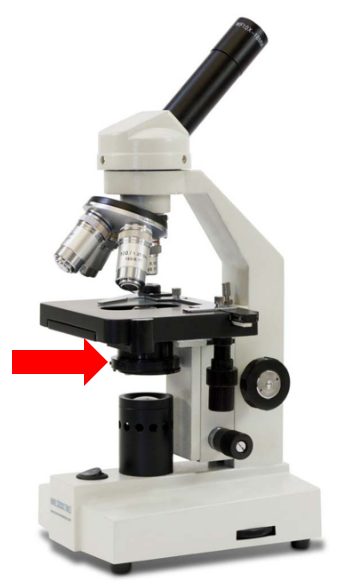
What is this part called?
Diaphragm
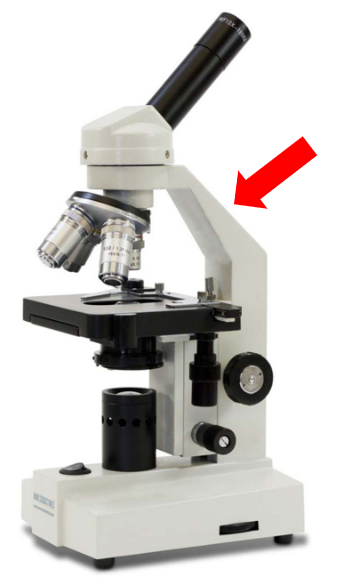
What is this part called?
Arm
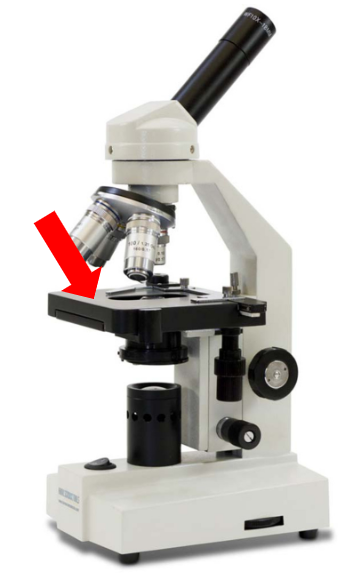
What is this part called?
Stage
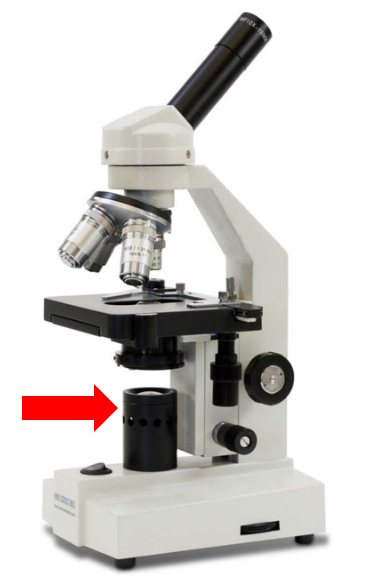
What is this part called?
Light Source
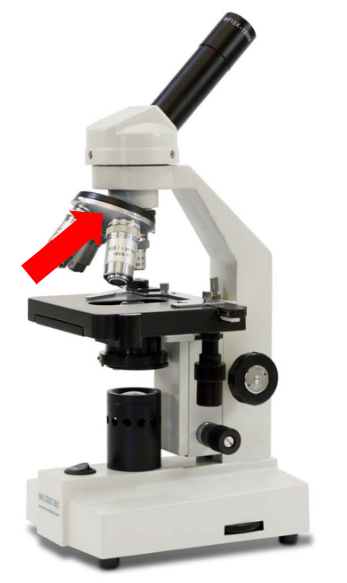
What is this part called?
Nosepiece
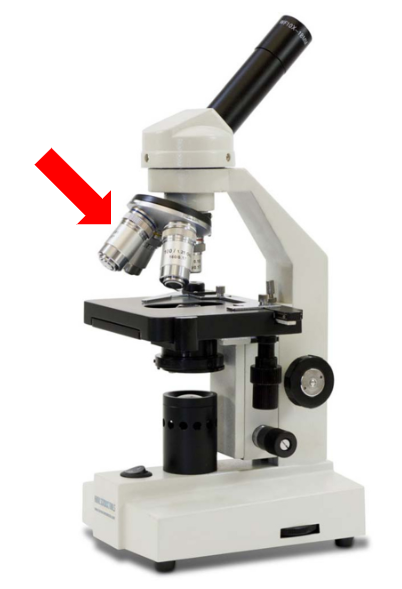
What is this part called?
Objective Lens
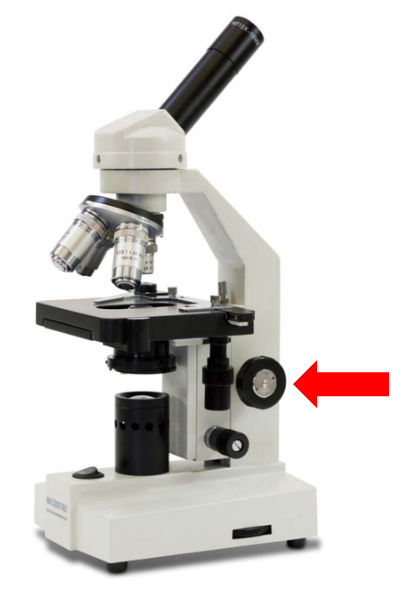
What is this part called?
Coarse Focus
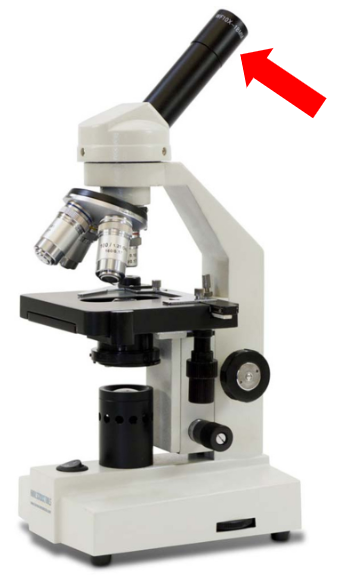
What is this part called?
Ocular Lens
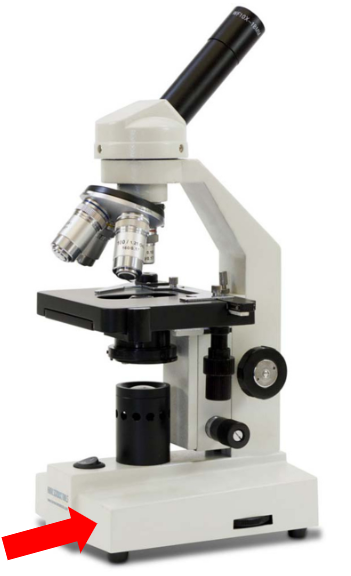
What is this part called?
Base
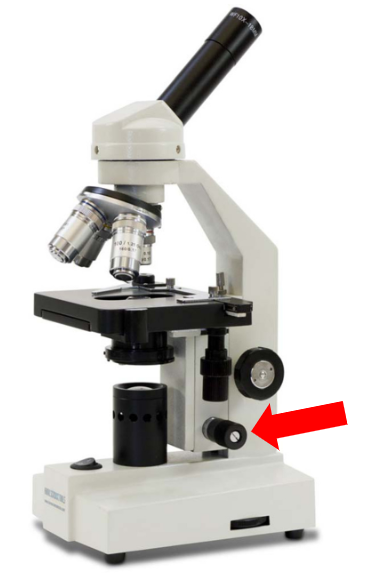
What is this part called?
Fine Adjustment