Week 2 anatomy 224 lab quiz
 Call Kai
 Learn
Learn Practice Test
 Spaced Repetition
 Match
Match Flashcards
 Knowt Play
1/12

There's no tags or description
Looks like no tags are added yet.
Name | Mastery | Learn | Test | Matching | Spaced | Call with Kai | Chat |
|---|
No analytics yet
Send a link to your students to track their progress
13 Terms
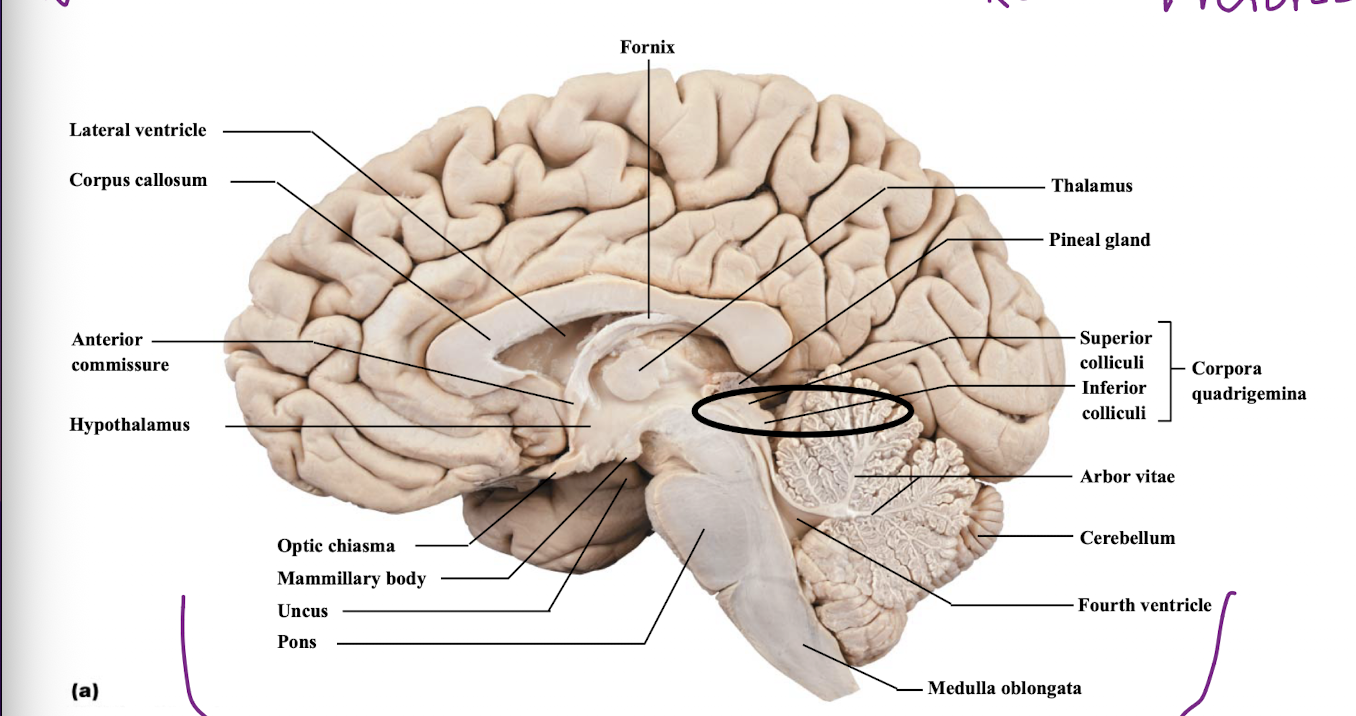
The major divisions of the brain:
Midbrain: (smaller middle spot in brain)
- Helps us regulate movement and process auditory and visual informationForebrain: (upper half of brain)
- processes sensory information, helps with reasoning and problem-solving, and regulates autonomic, endocrine, and motor functionsHindbrain: (bottom half of brain including brainstem)
- Helps to regulate autonomic functions, relay sensory information, coordinate movement, and maintain balance and equilibrium
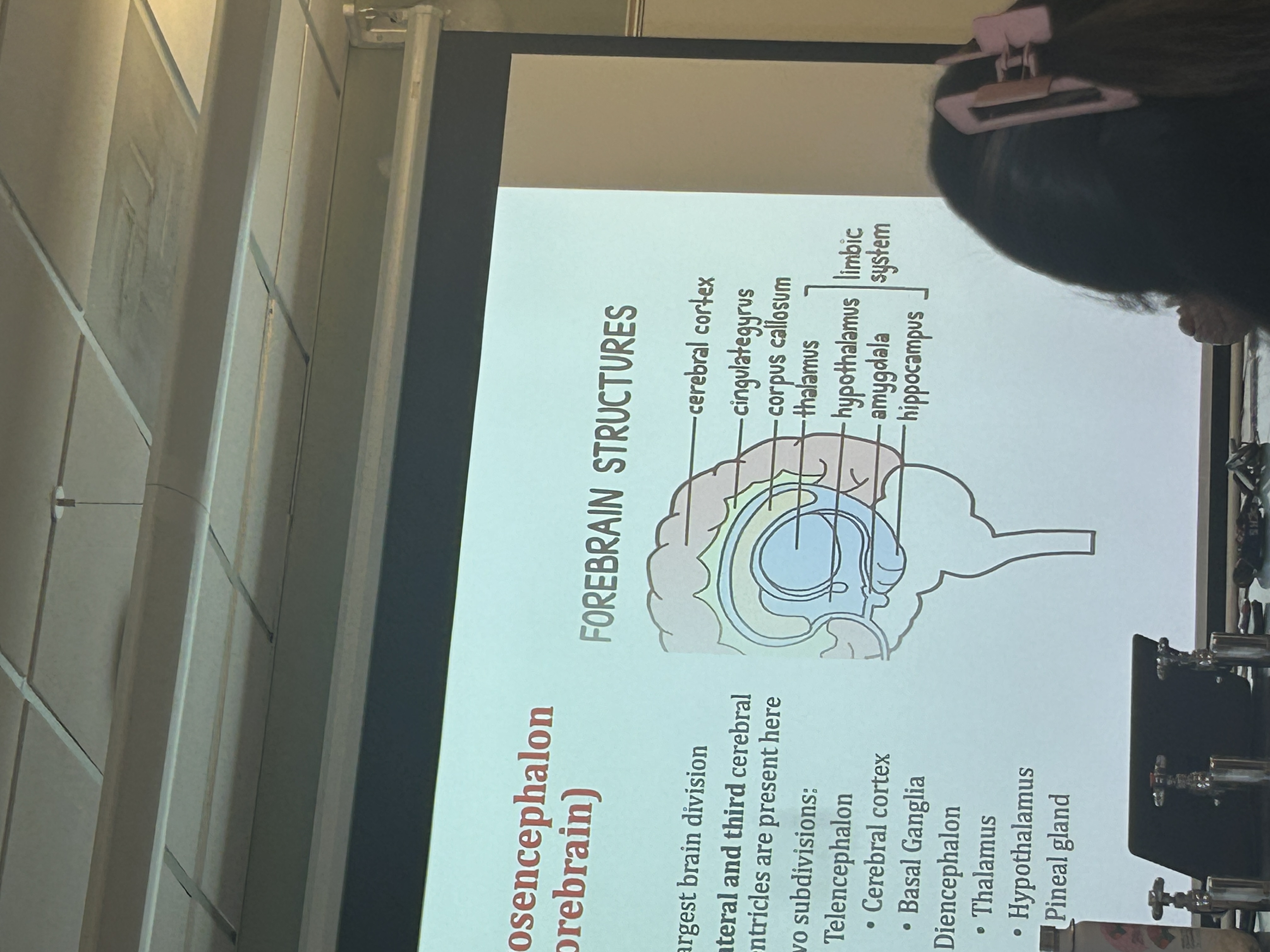
Prosencephalon (Forebrain)
Largest brain division
Lateral and third cerebral ventricles are present here
Two subdivisions
- Telencephalon
- Cerebral cortex
- Basal Ganglia
- Diencephalon
- Thalamus
- Hypothalamus
- Pineal Gland
Telencephalon
Cerebral cortex
- Frontal
- Parietal
- Occipital (vision)
- Temporal (hearing/speech)
- Deep grooves (fissures)
- Shallow grooves (Sulci)
- Ridges (Gyri)Basal Ganglia (process movement)
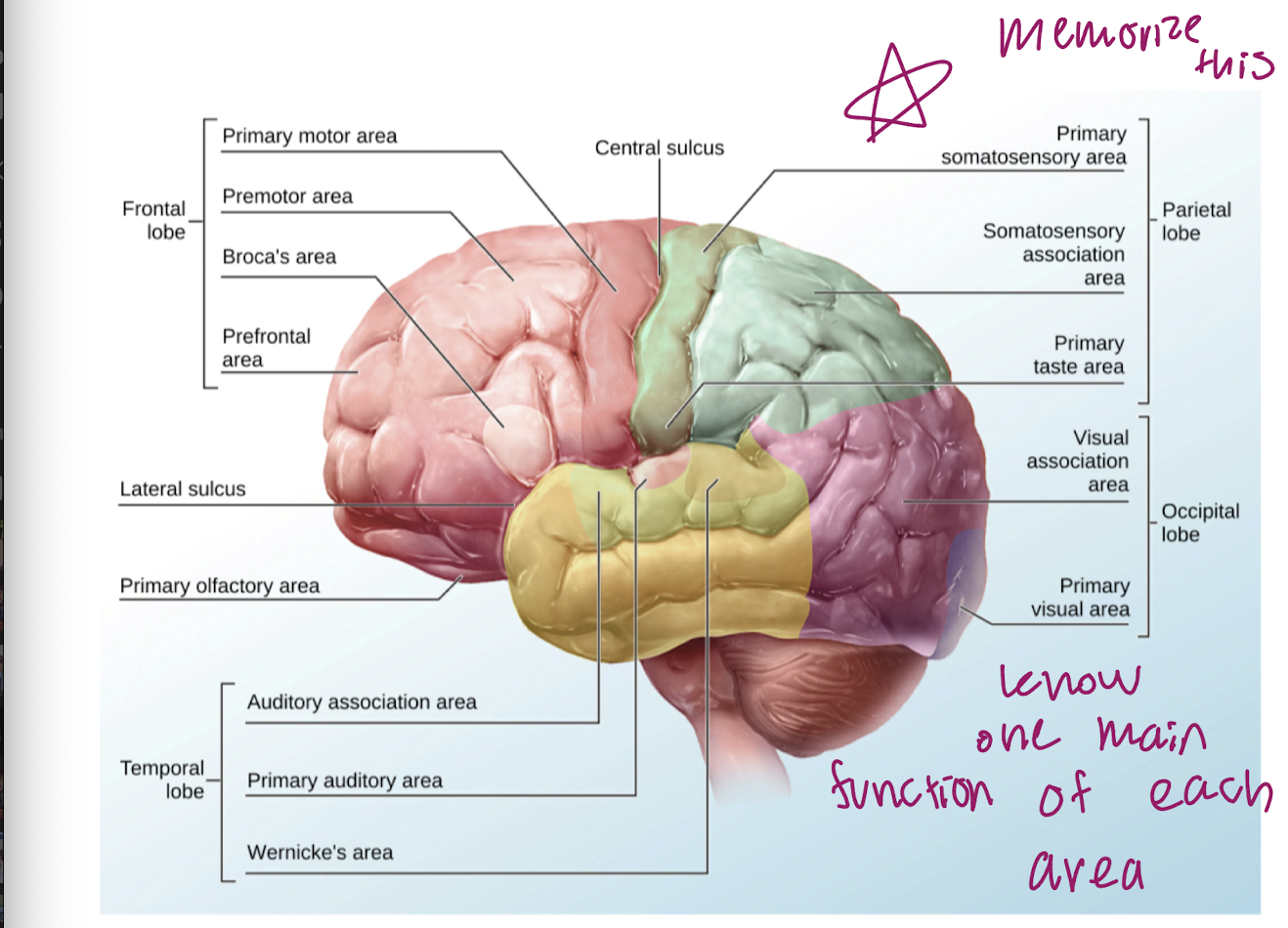
Remember This
Frontal lobe
- Primary motor area
- premotor area
- Broca’s area
- Prefrontal areaLateral sulcus
Primary olfactory area
Temporal lobe
- auditory association area
- primary auditory area
- Wernicke’s areaCentral sulcus
Parietal lobe
- primary somatosensory area
- somatosensory association area
- primary taste areaOccipital Lobe:
- Visual association area
- Primary visual area
Diencephalon
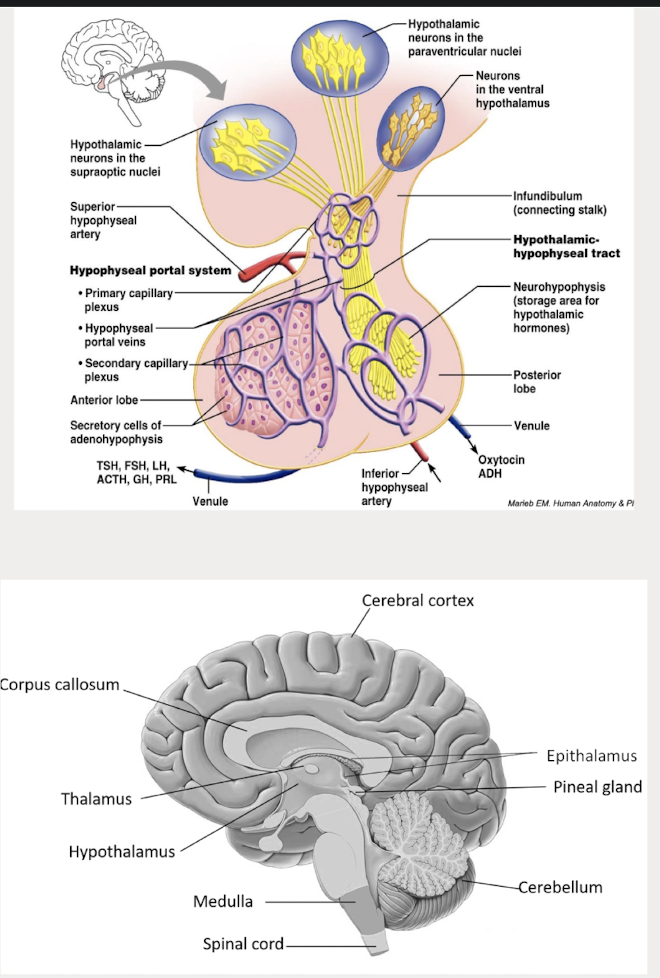
Composed of important centers for homeostasis:
- thalamus
- hypothalamus
- pituitary gland
- release hormones that help carry out body functions
- limbic system: emotions
- Epithalamus
- pineal gland
Limbic System
Several structures involved in olfaction, memory, and emotions
Functional classification, located between diencephalon and cerebrum:
- amygdala
- hippocampus
- cingulate gyrus
- septal nuclei
- dentate gyrus
- fornix
- mammillary body
- medial olfactory striae
- olfactory bulb
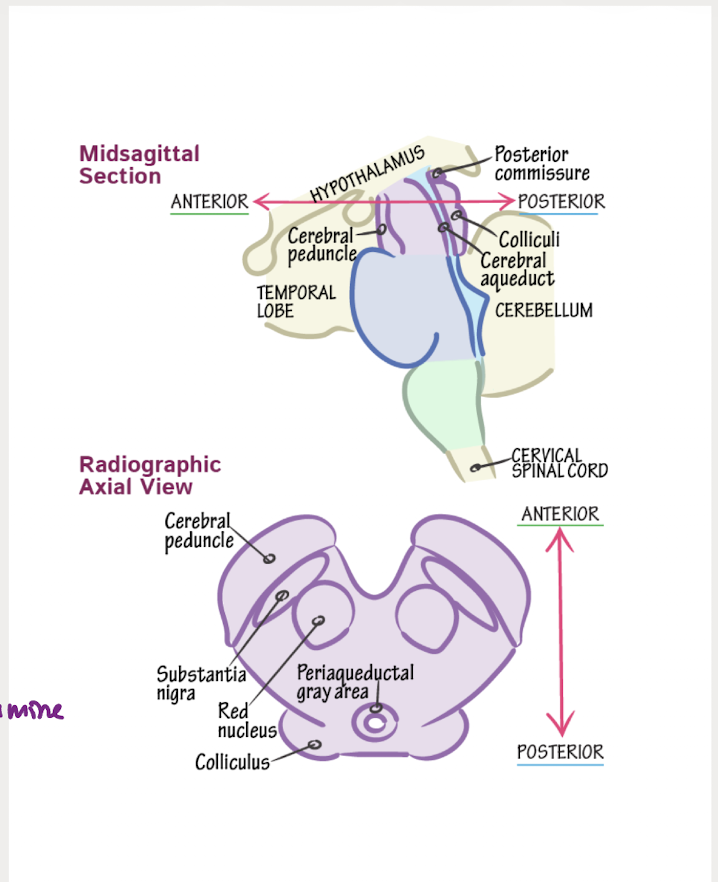
Mesencephalon (midbrain)
connects to the forebrain to the hindbrain
regulates movement and aids in processing auditory and visual information
components of the midbrain
- cerebral aqueduct
- midbrain
- Tectum- sends signals to lobe
- cerebral peduncle
- substantia nigra- release of dopamine
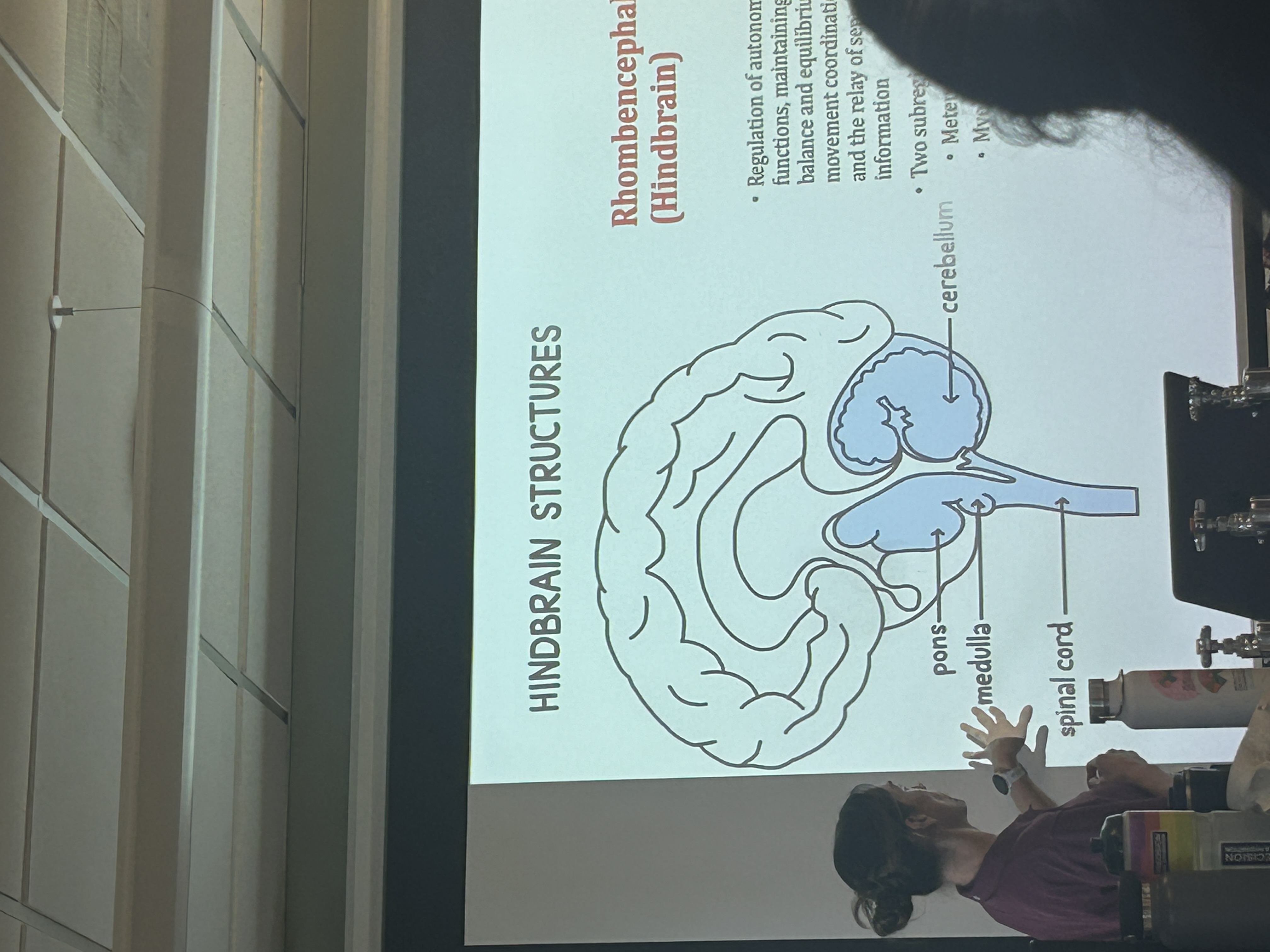
Rhombencephalon (Hindbrain)
regulation of autonomic functions, maintaining balance and equilibrium, movement coordination, and the relay of sensory information
Two subregions:
- metencephalon
- myelencephalon
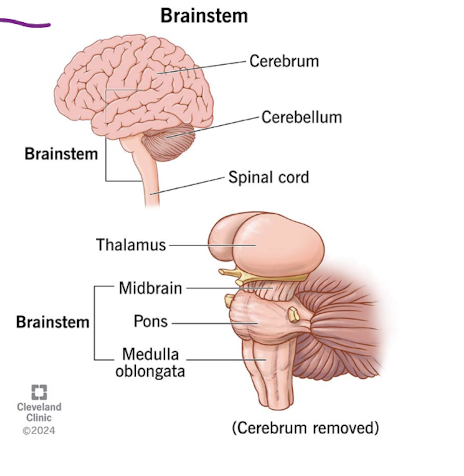
Brainstem
most primitive region of the brain
essential for basic life
includes
- midbrain
- pons
- medulla
Cerebellum
coordinates motor commands, balance, and posture

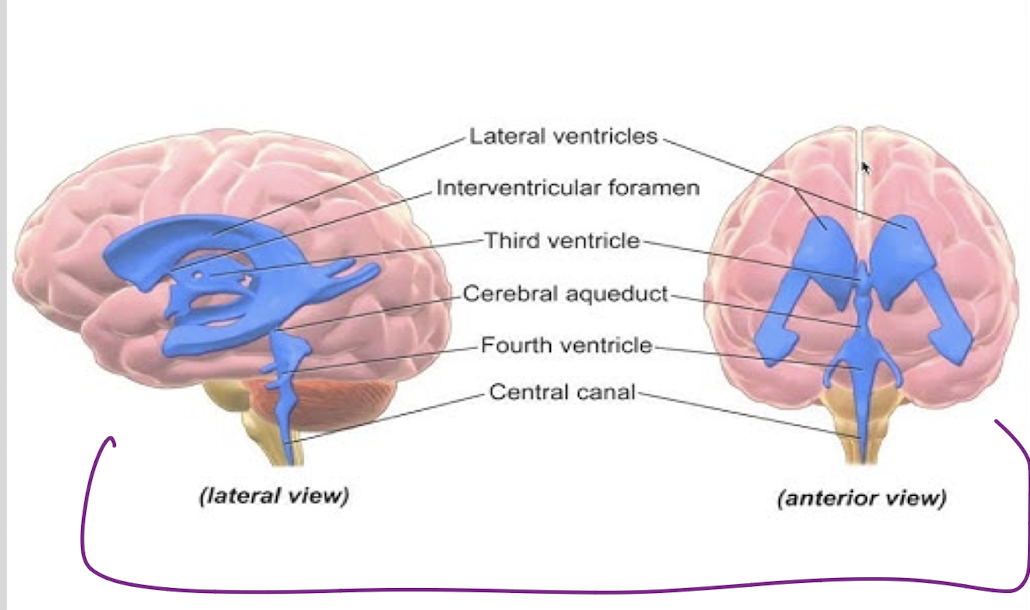
Cerebrospinal Fluid
protects and supports nervous system
produced in choroid plexuses on ventricle walls
circulates through ventricles, meninges, spinal cord
cushion for the brain
Blood Supply to the Brain
Internal carotid vertebral arteries → dural venous sinuses → internal jugular vein
astrocytes join to capillary walls to form blood brain barrier
Know this whole label