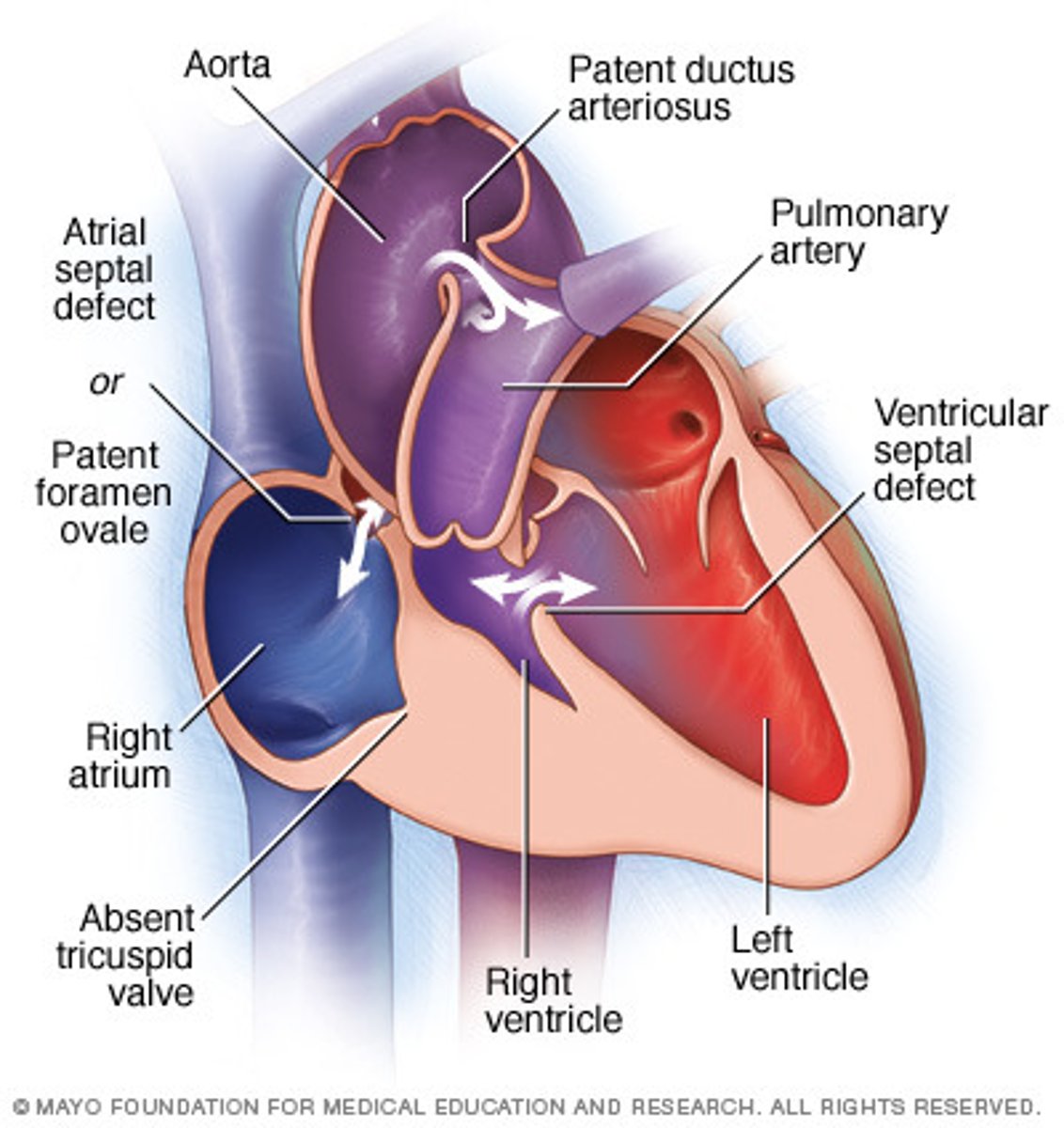
Acyanotic Shunt Defects: ↑ Pulmonary Bloodflow (L to R)
 Call Kai
 Learn
Learn Practice Test
 Spaced Repetition
 Match
Match Flashcards
 Knowt Play
1/34

There's no tags or description
Looks like no tags are added yet.
Name | Mastery | Learn | Test | Matching | Spaced | Call with Kai | Chat |
|---|
No analytics yet
Send a link to your students to track their progress
35 Terms
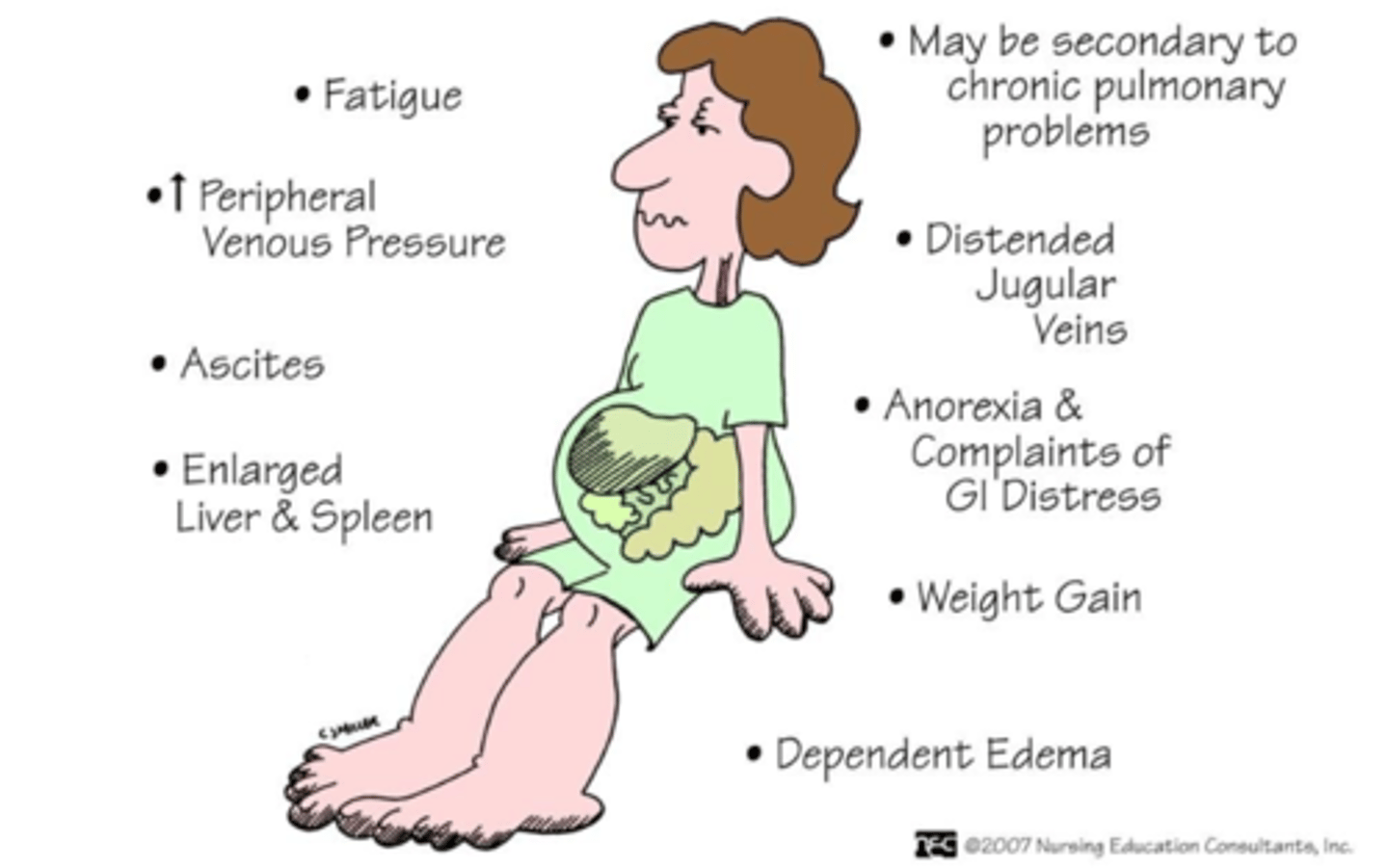
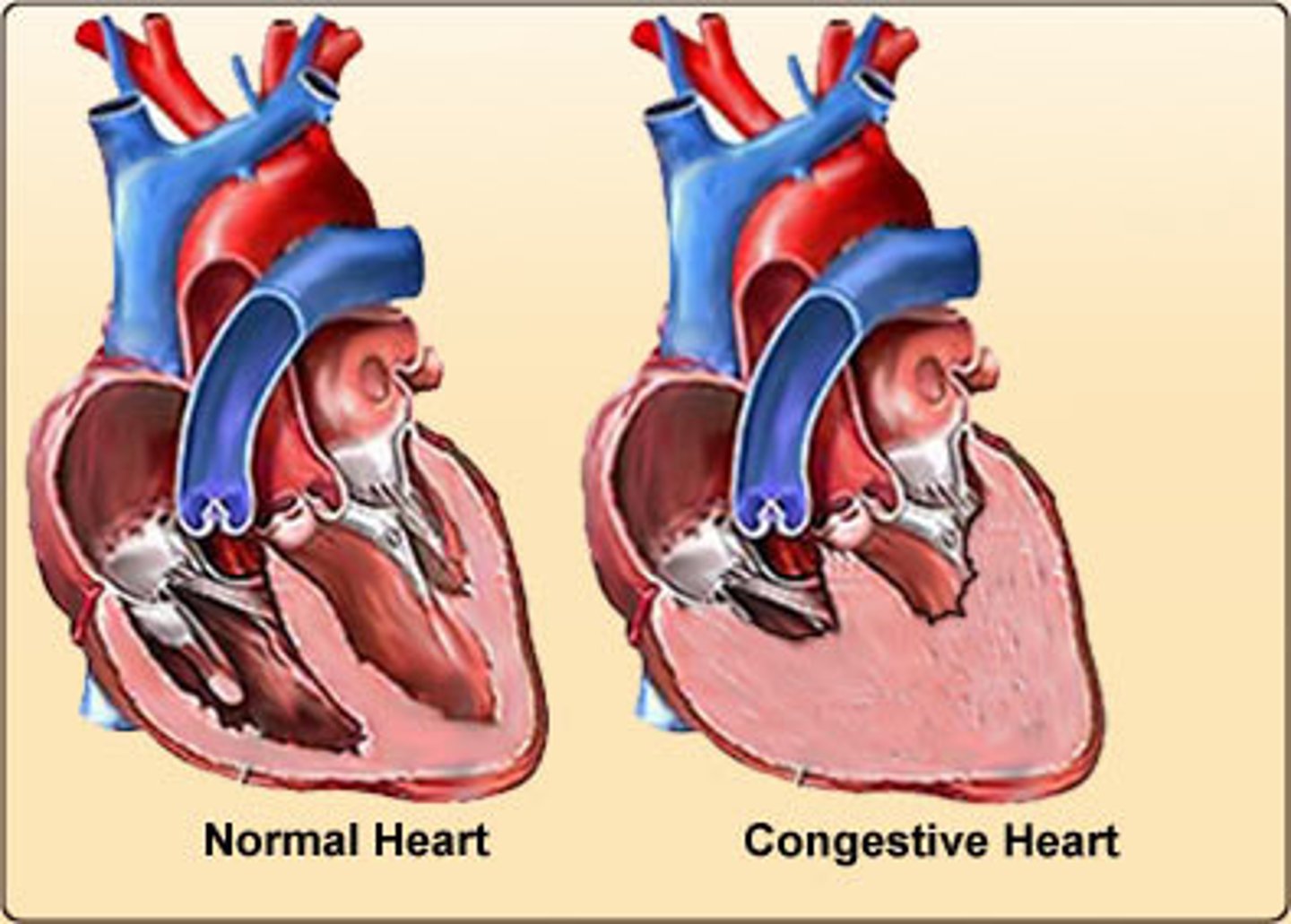
Right HF
peripheral edema, ascites, hepatomegaly
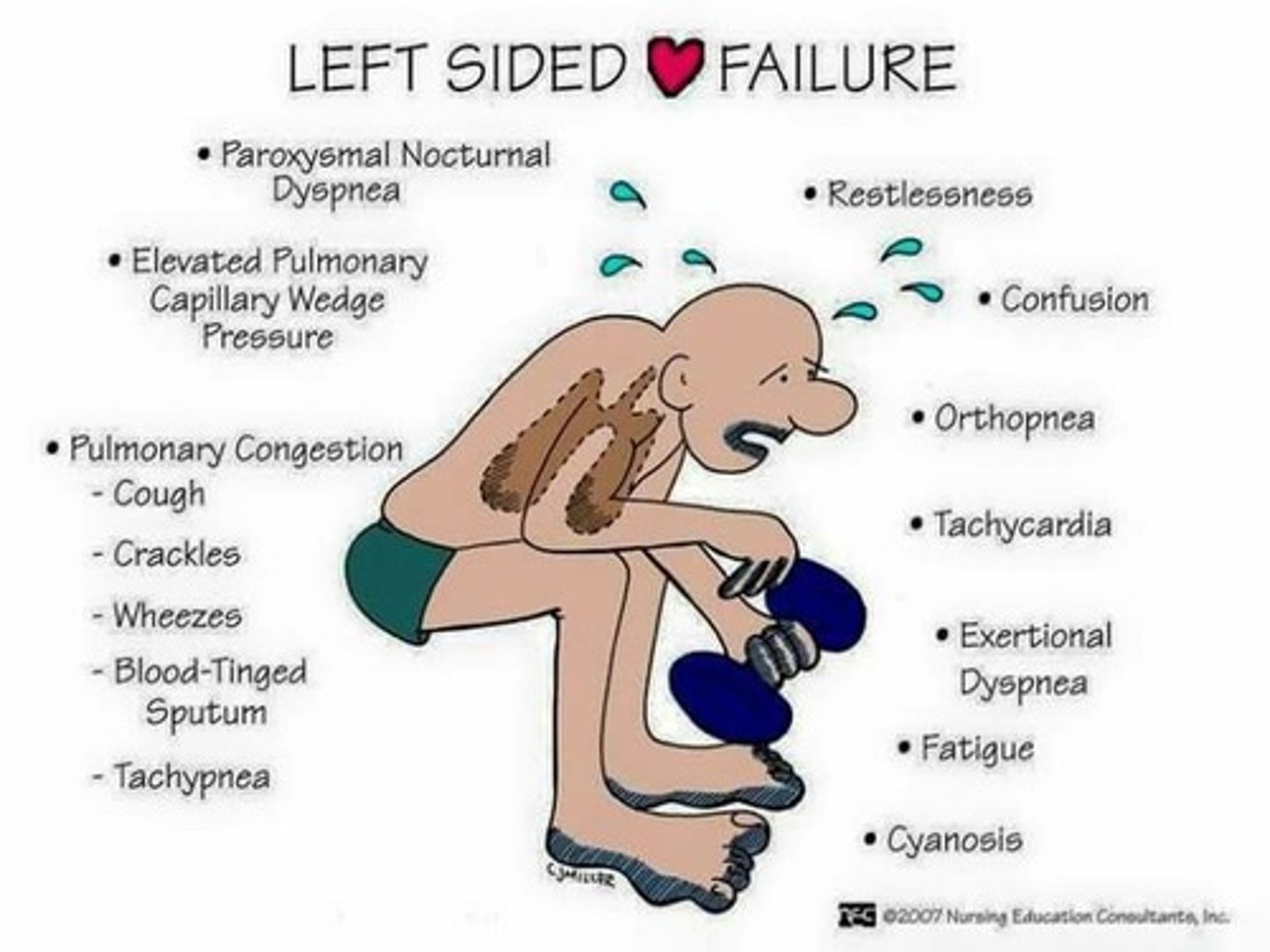
Left HF
pulmonary edema, dyspnea, rales
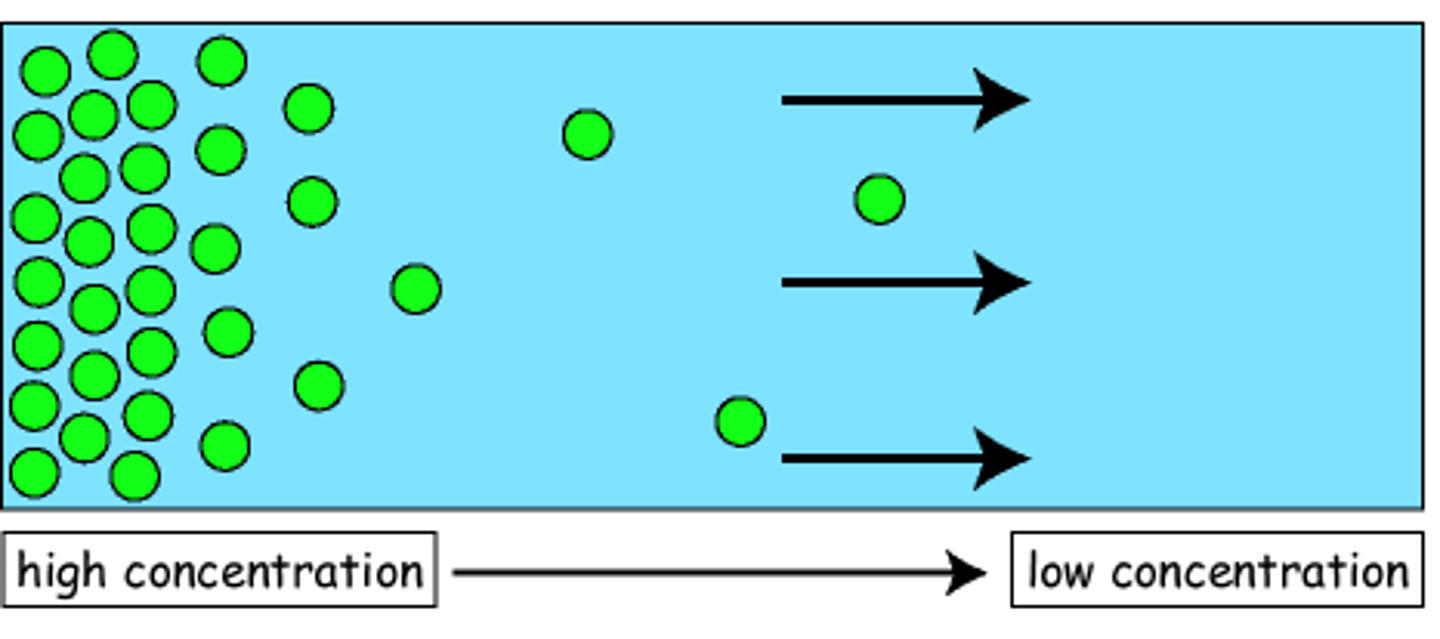
blood moves from an area of __ pressure to __ pressure
higher, lower
Which side of the heart has the highest pressure?
Left
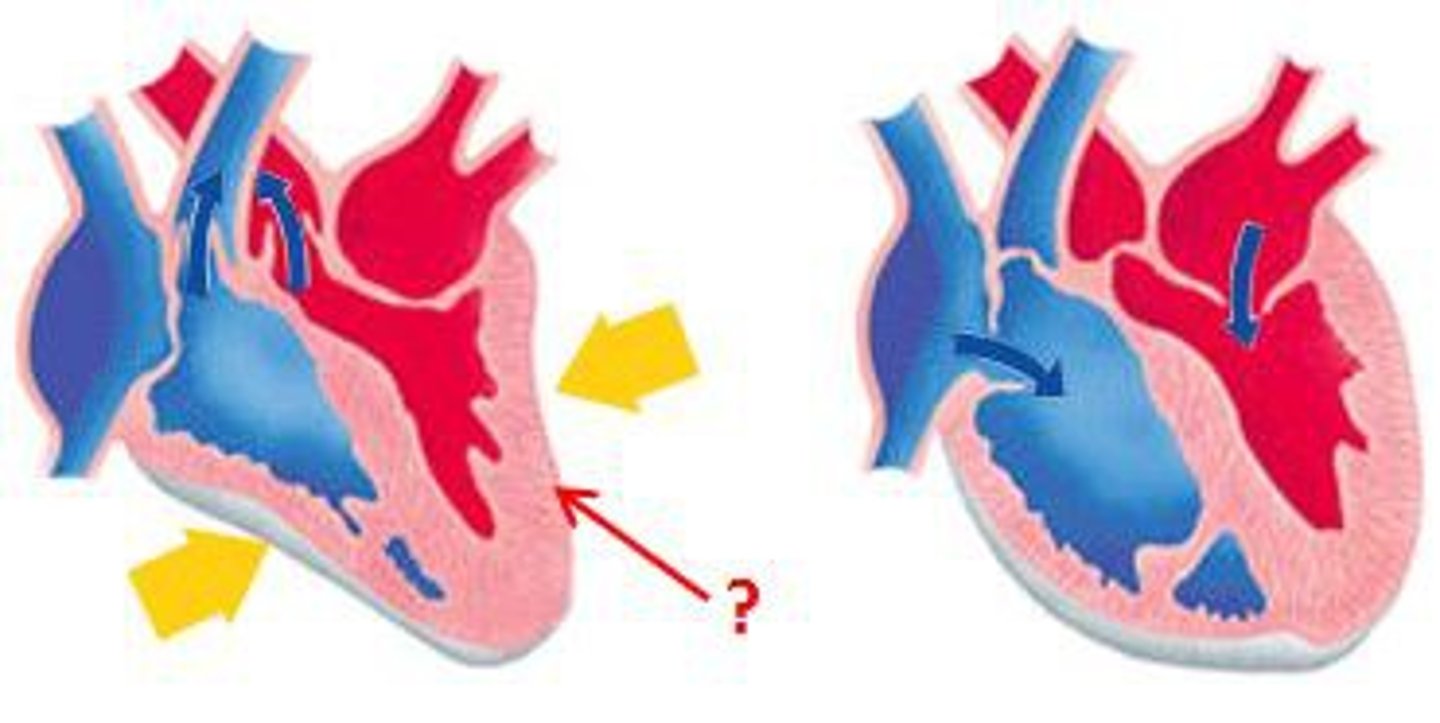
When do congenital heart disorders occur?
at birth
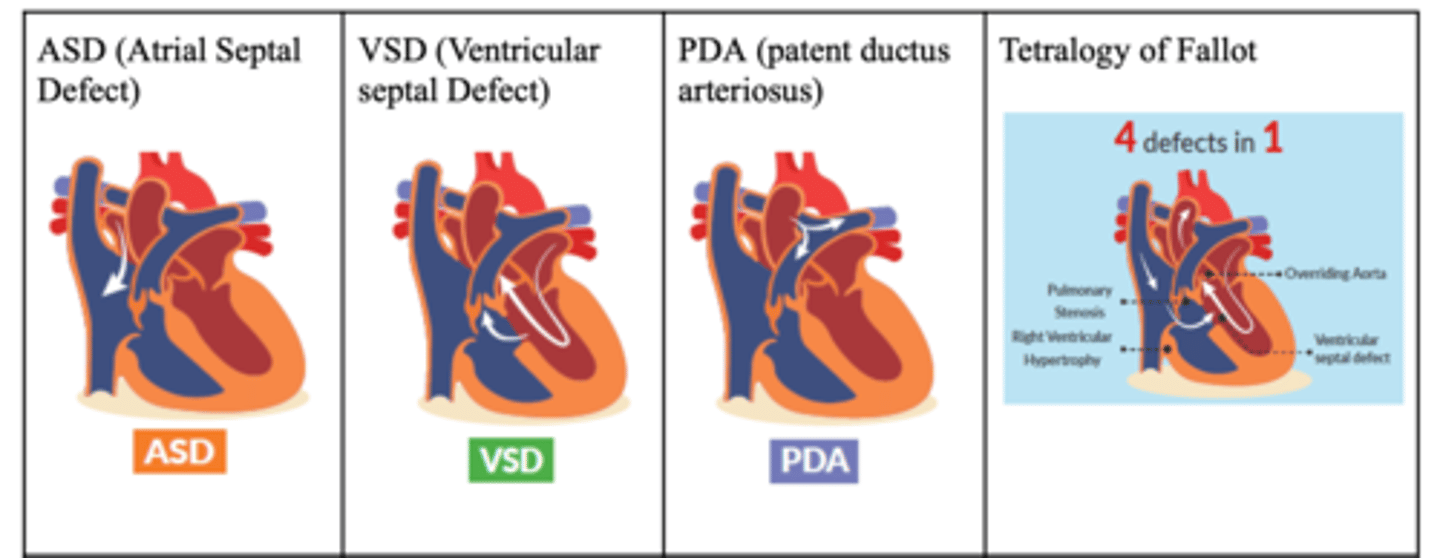
cyanotic (R to L)
deoxygenated blood enters body, causing cyanosis and organ death
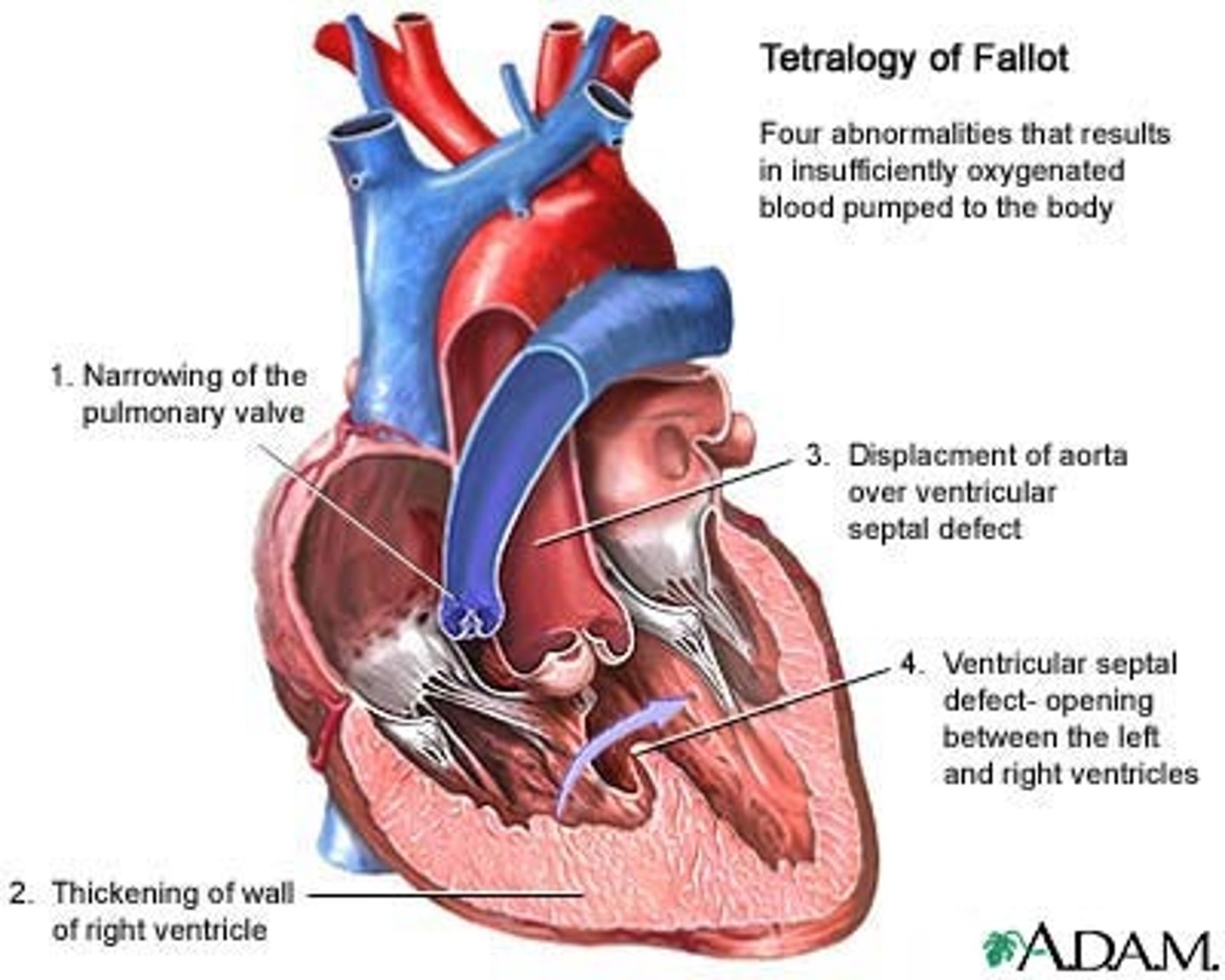
R to L shunt causes
Cyanosis, clubbed fingers
L to R shunt causes
pulmonary congestion, crackles, SOB
acyanotic (L to R)
oxygenated blood goes back to lungs, causing pulmonary HTN and congestion
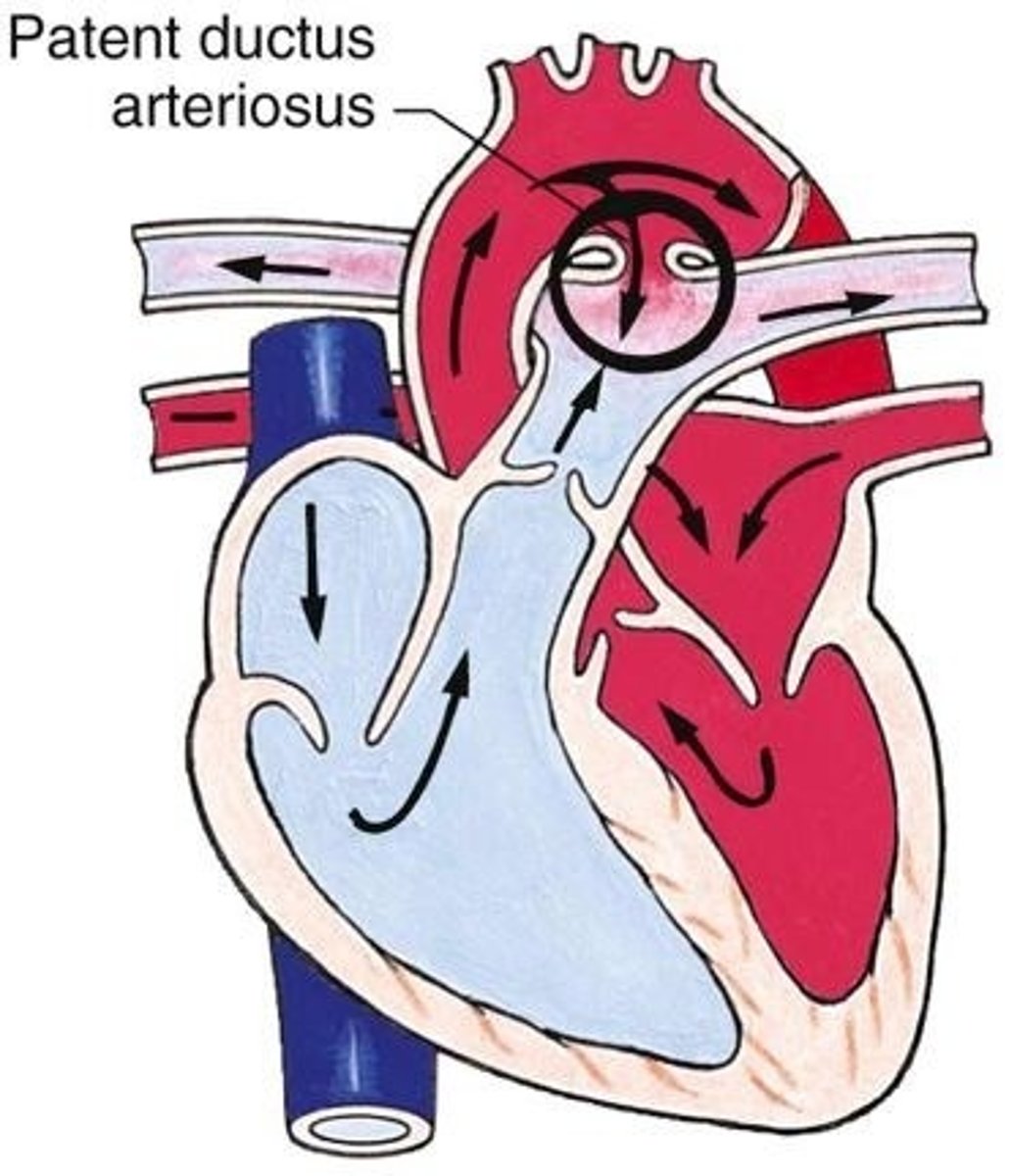
ductus arteriosus
connects the pulmonary artery to the aorta, bypassing the lungs
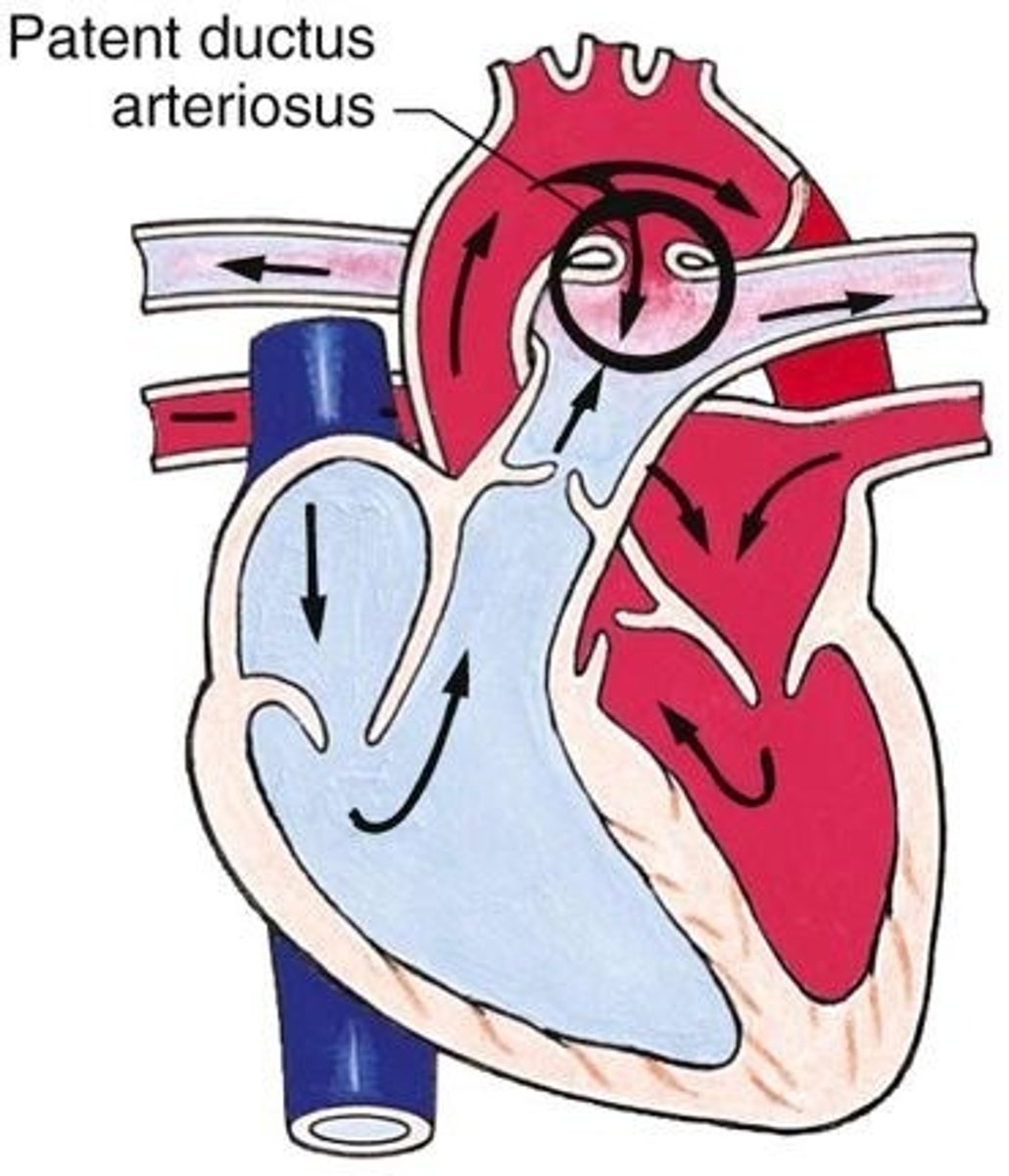
Acyanotic shunt defects (L to R) (5)
- Patent ductus arteriosus (PDA)
- Atrial Septal Defect (ASD)
- Ventricular Septal Defect (VSD)
- Atrioventricular Septal Defect (AVSD)
- Transposition of Great Arteries (TGA)
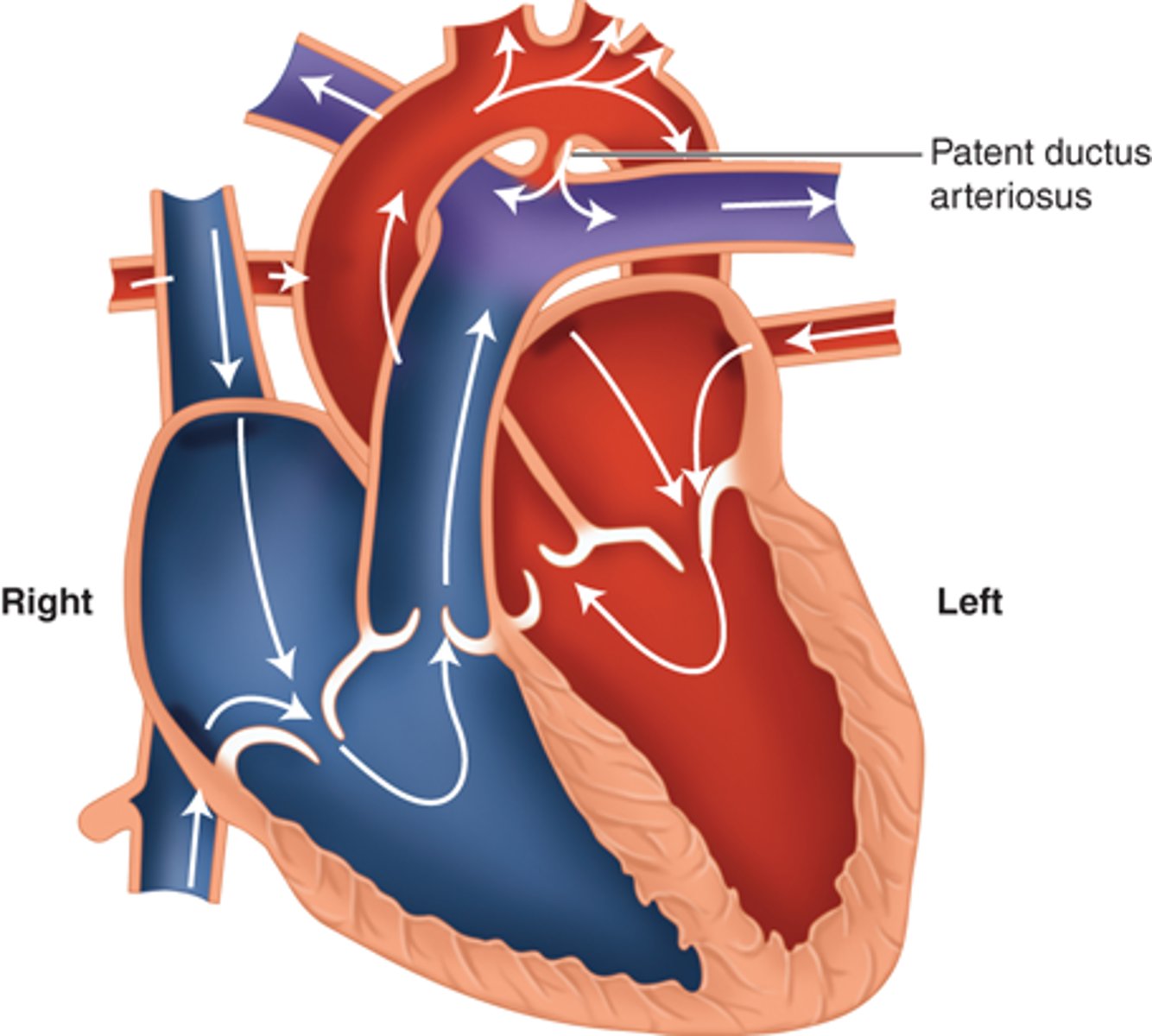
2 Disorders that lead to CHF?
PDA and VSD (heart is overworked, causes sweating with feeds)
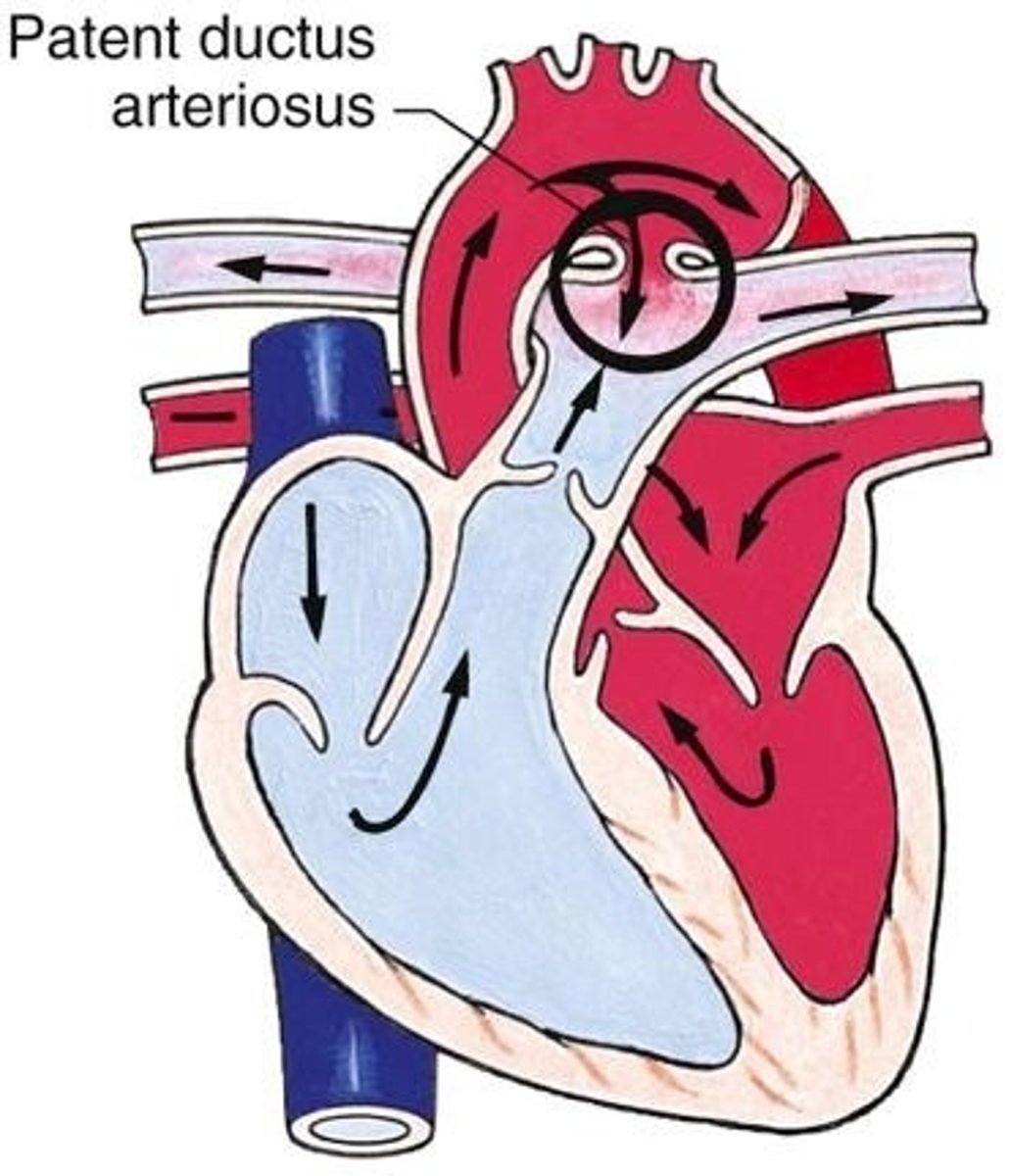
Patent Ductus Arteriosus (PDA)
fetal shunt fails to close at birth
- high risk if premature
- O2 blood overflows lungs
- leads to CHF if large
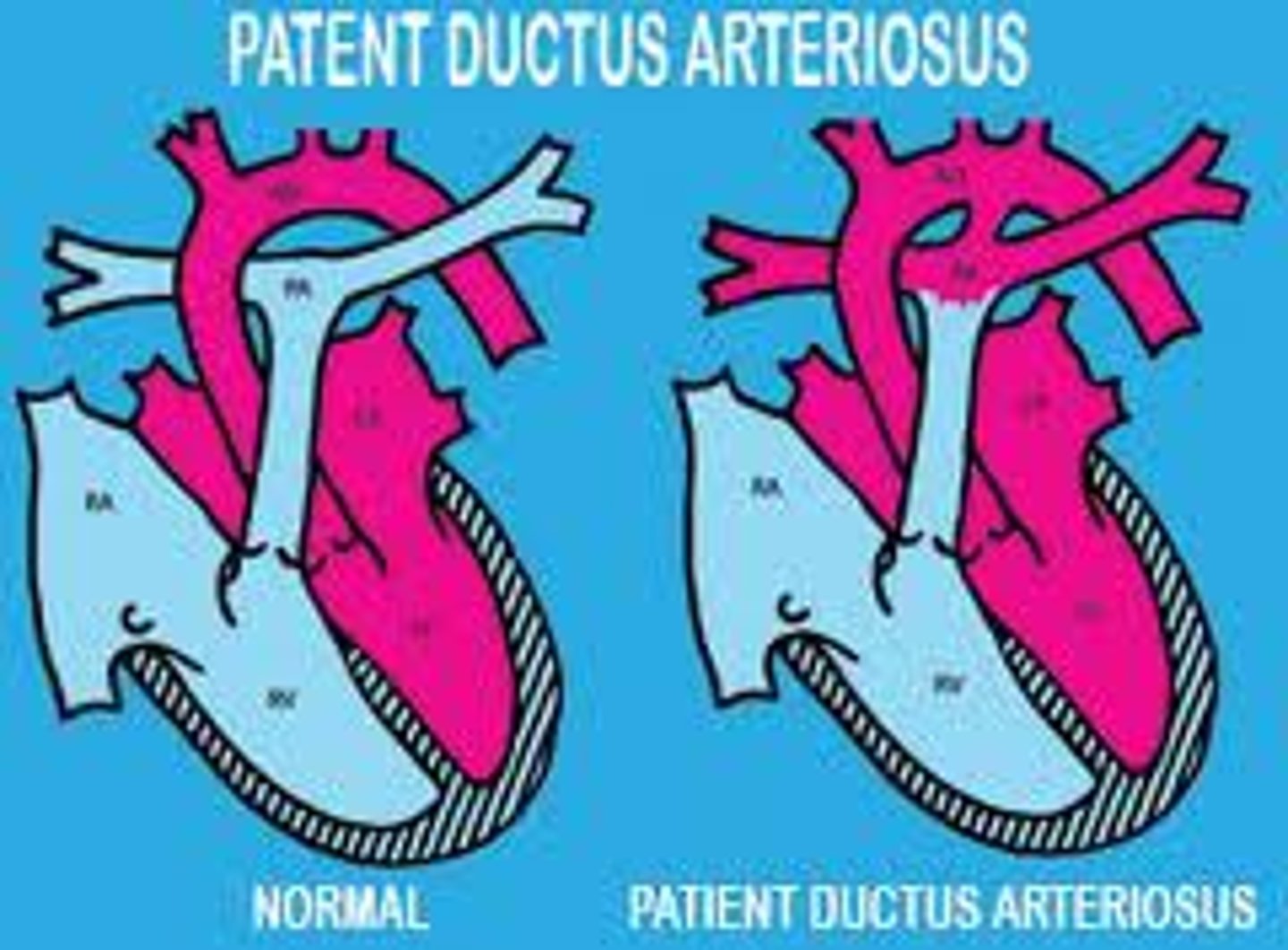
Small PDA symptoms
murmur
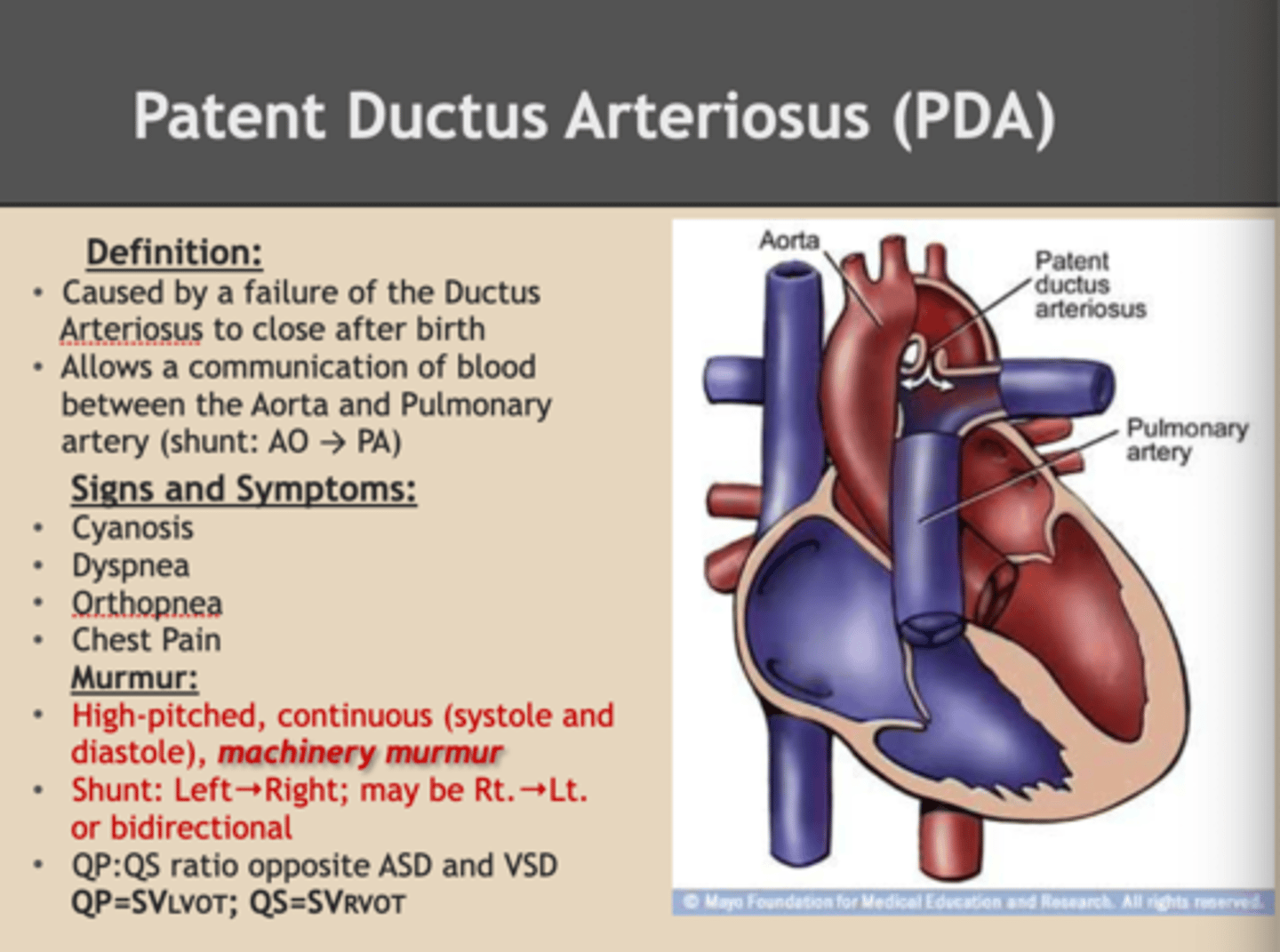
Large PDA Symptoms
sweating with feeds, rales, congestion, increased WOB, poor feeding, dilated left heart
How is a PDA confirmed?
echocardiogram
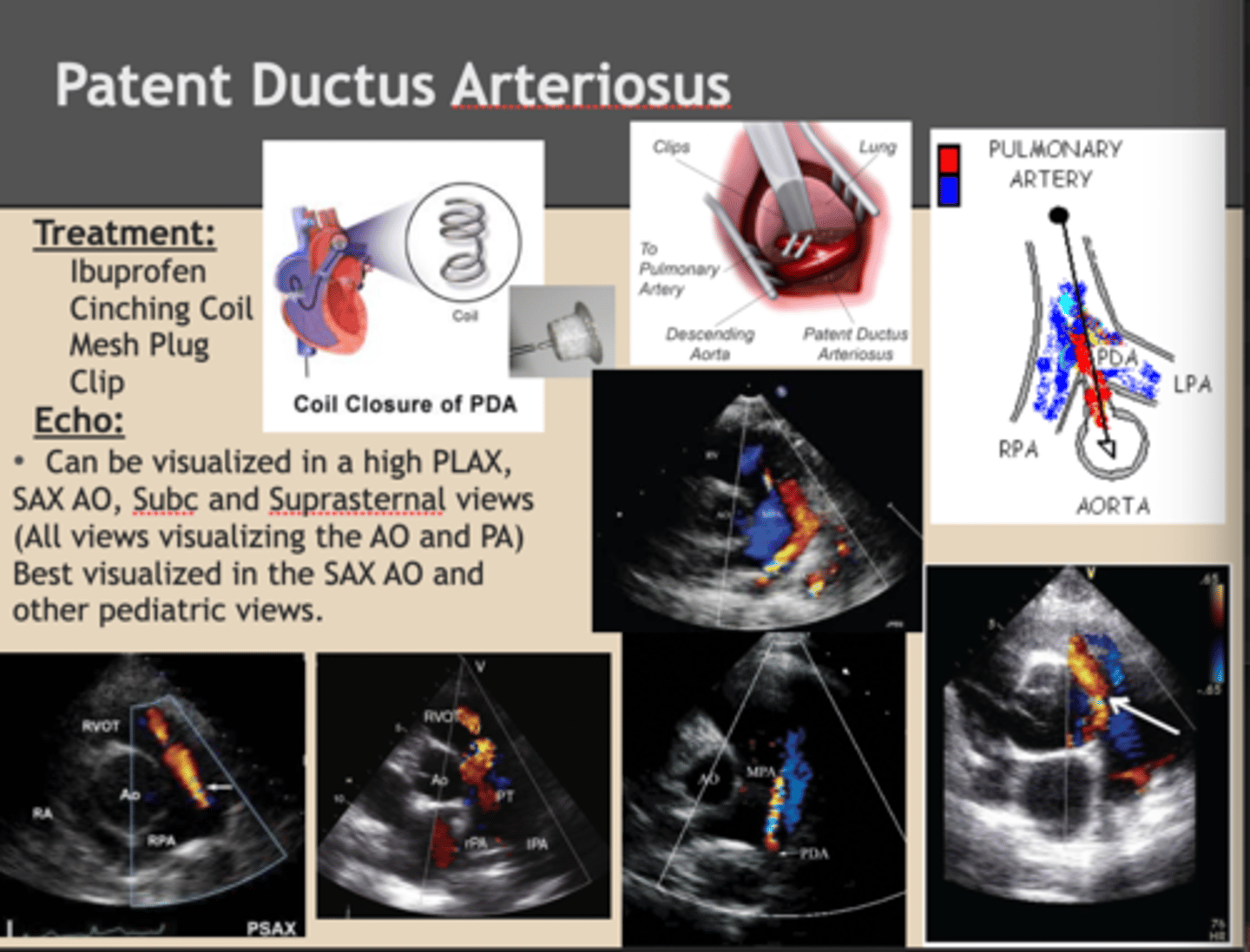
PDA treatment
Diuretic (furosemide) for CHF, High calorie feeds
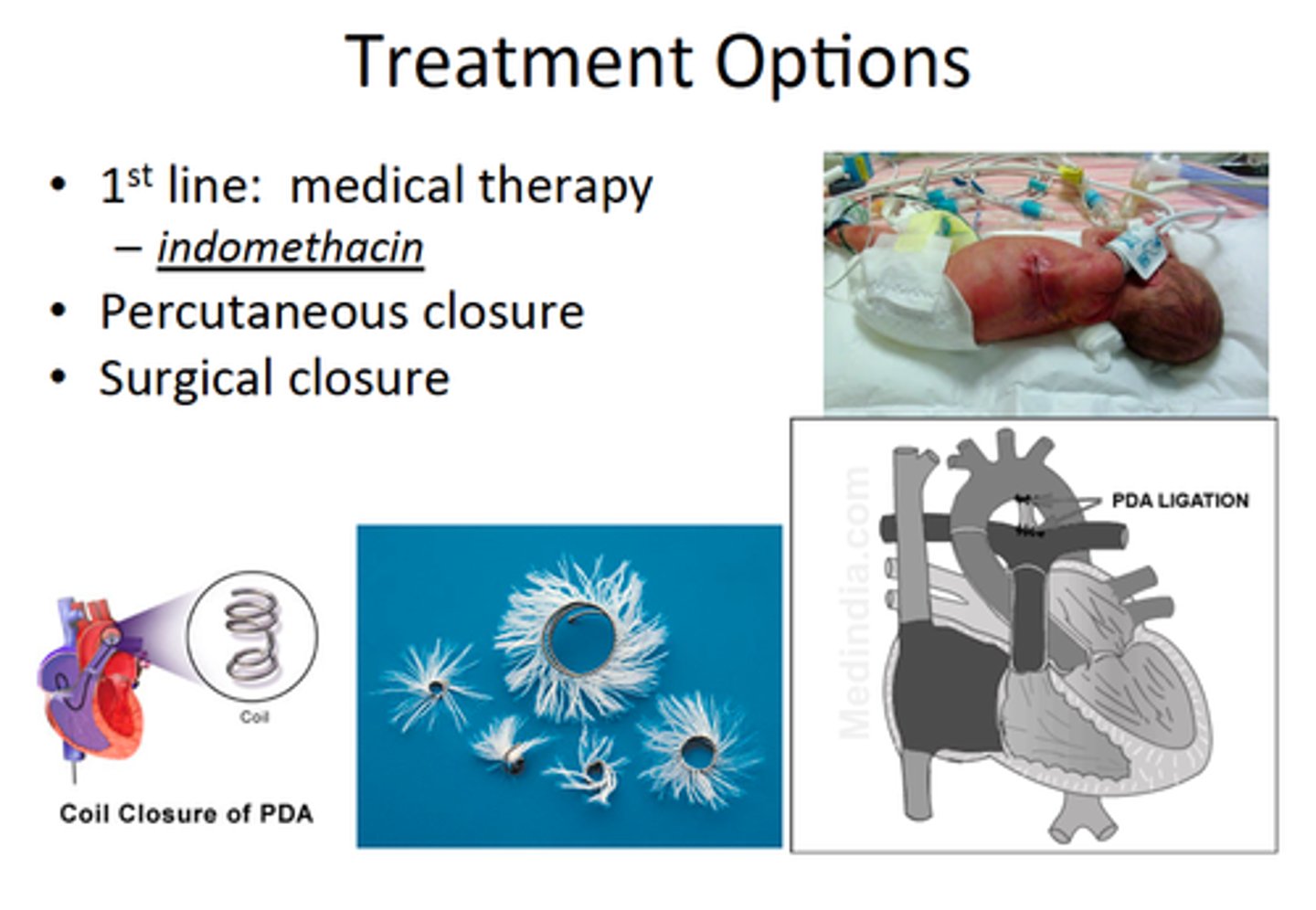
How is PDA closed?
Indomethacin (NSAID) if preterm, surgical closure if older
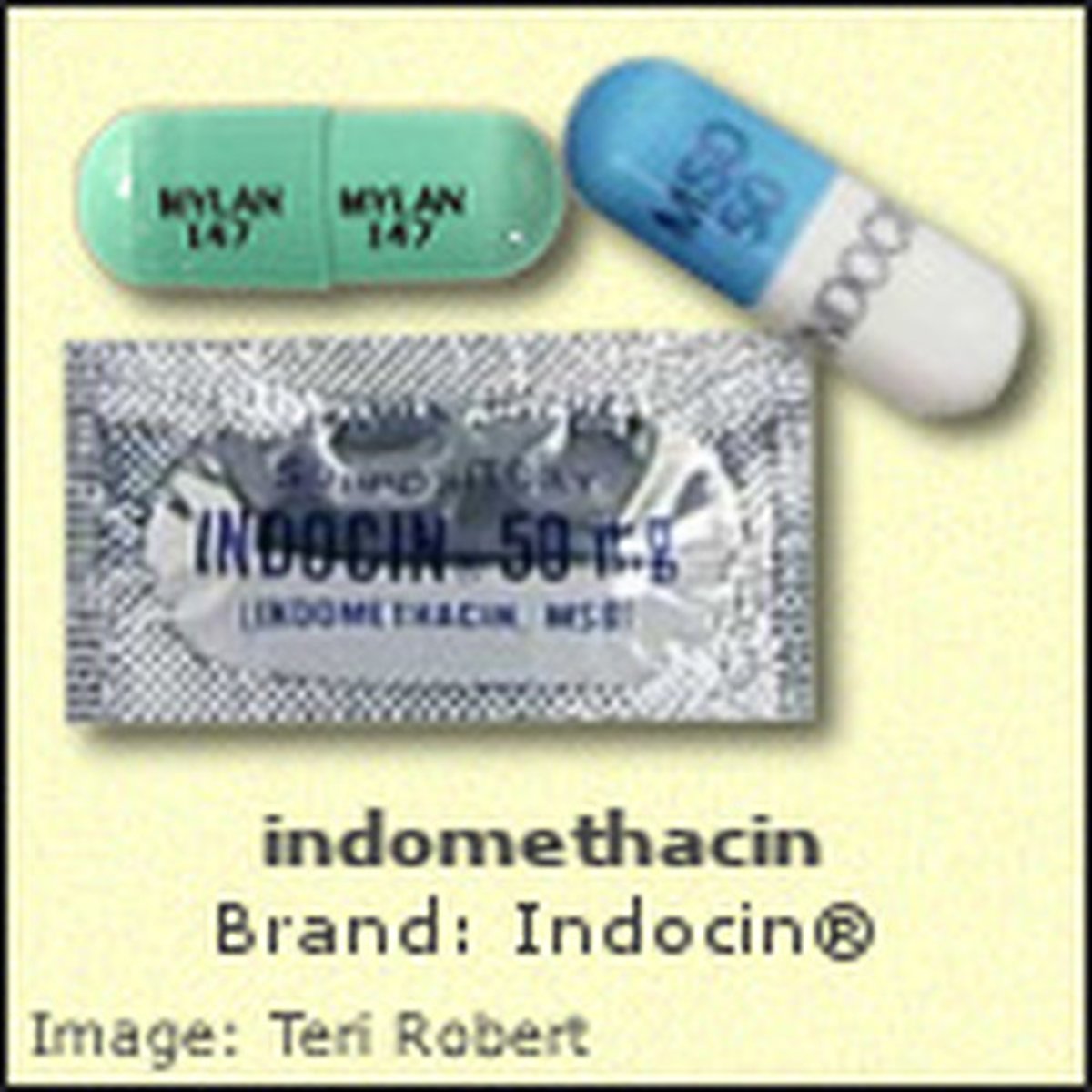
Indomethacin causes __ if given too much
apnea
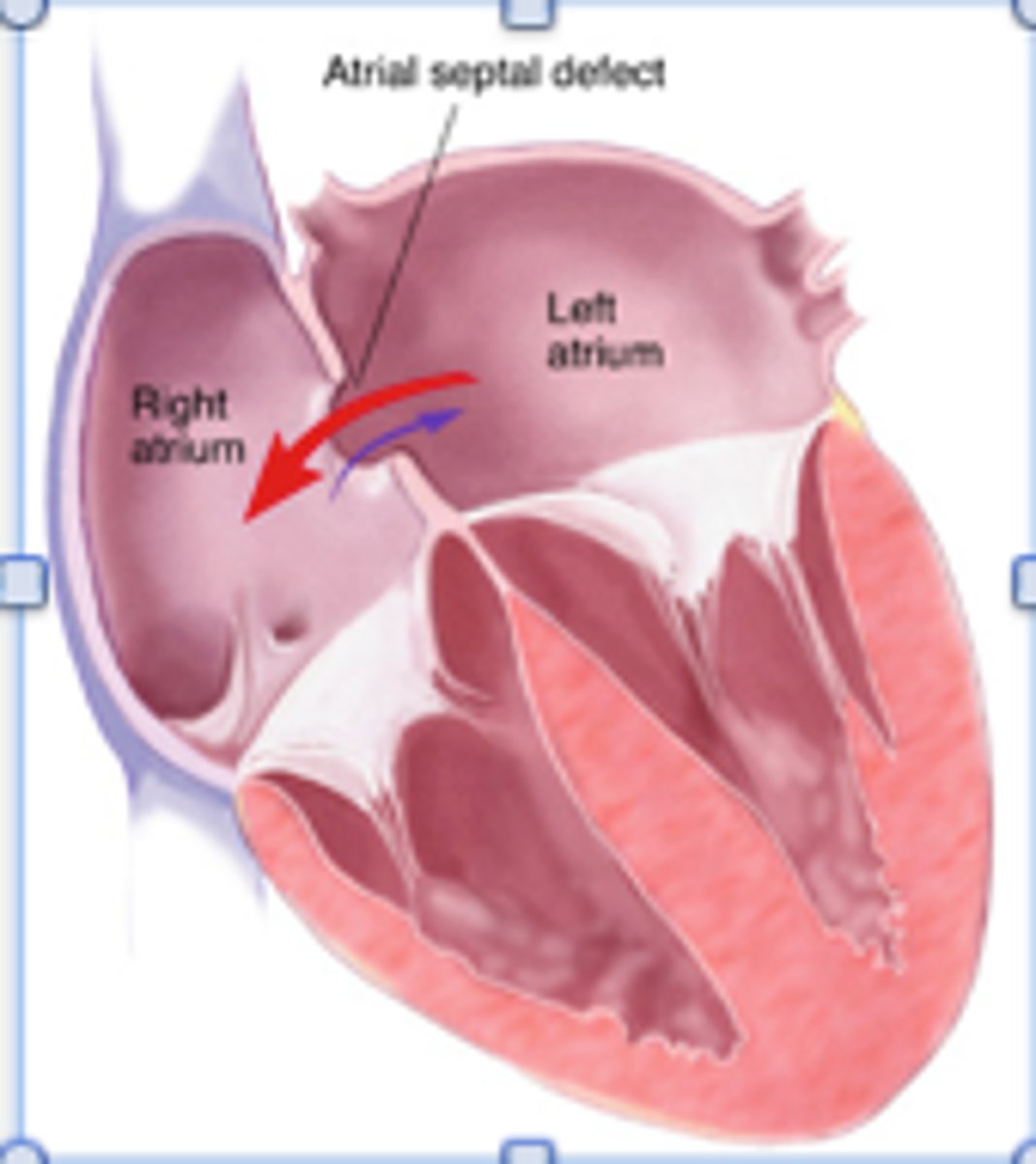
Atrial Septal Defect (ASD) (mild)
hole between the atria
- Causes right heart overload
- mild, no symptoms
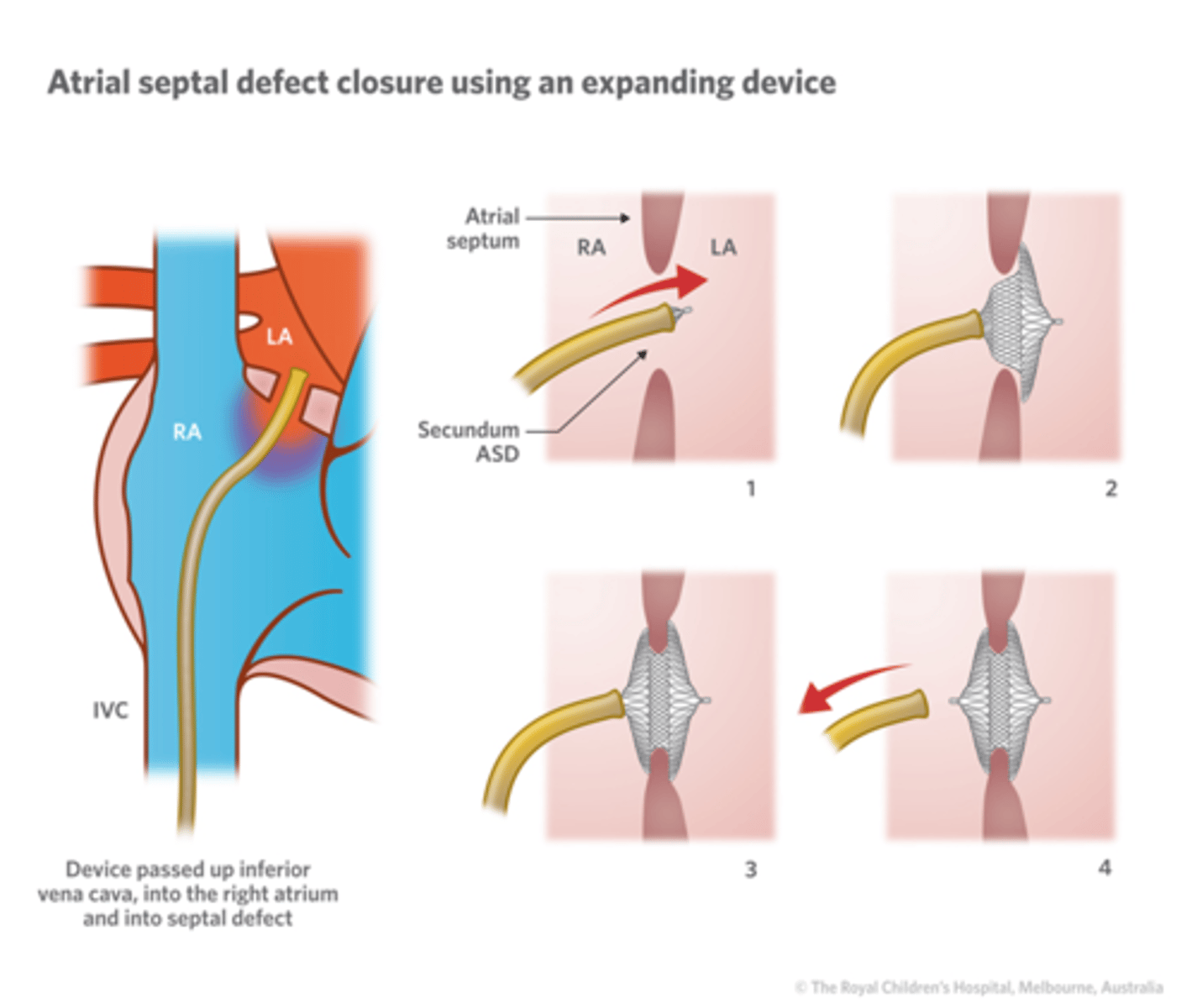
ASD Treatment
hole will close on own, catheter closure if large
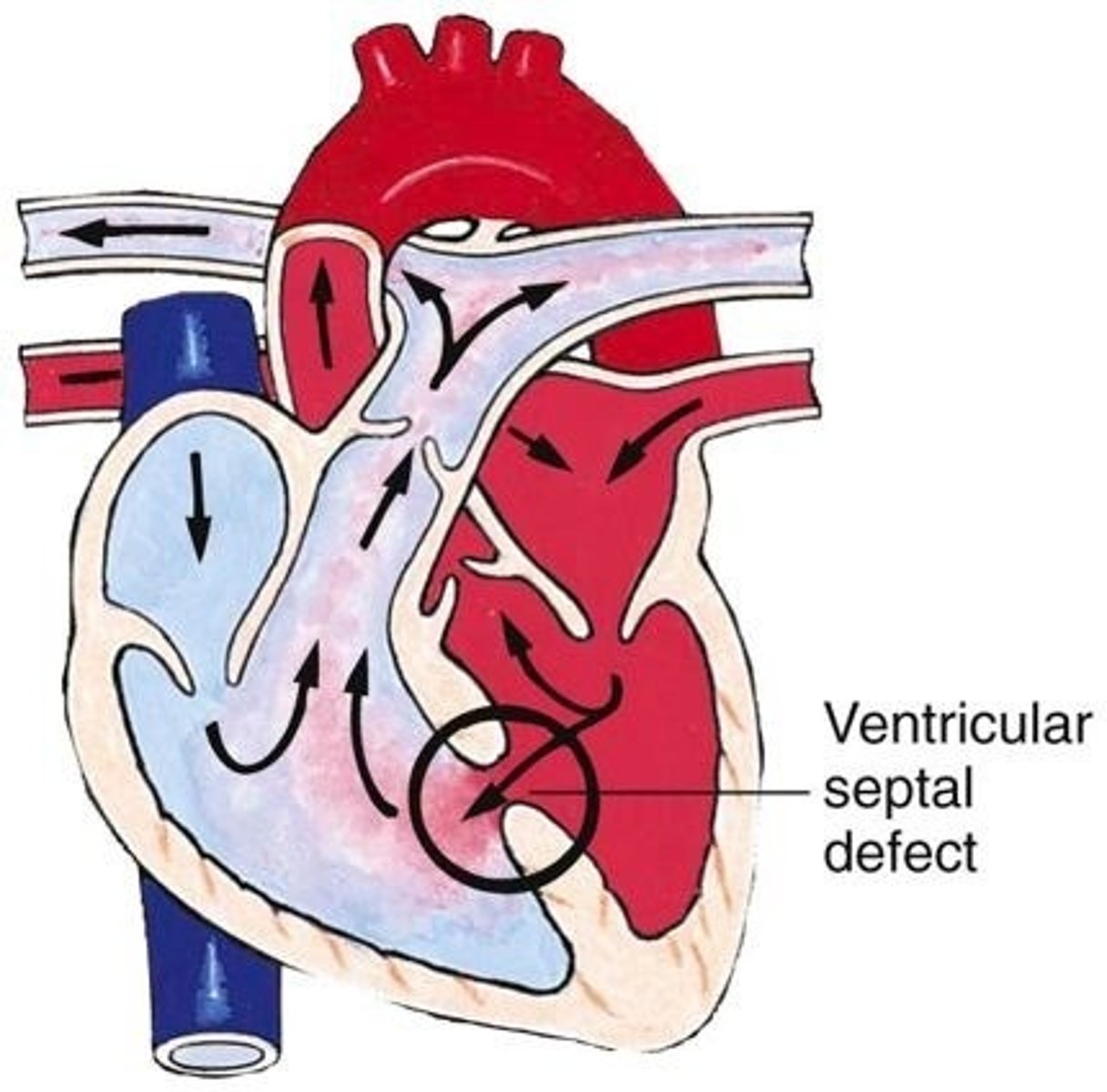
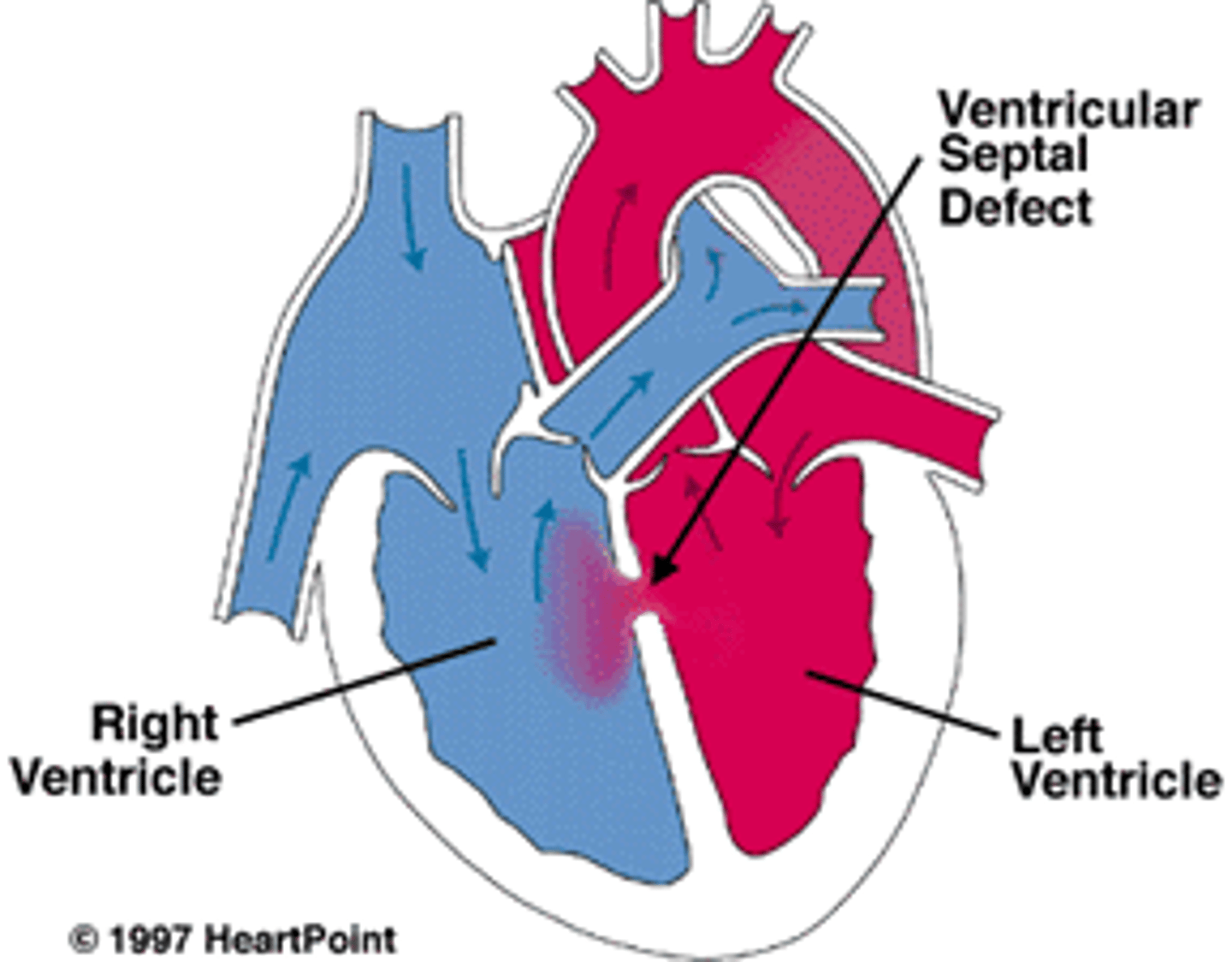
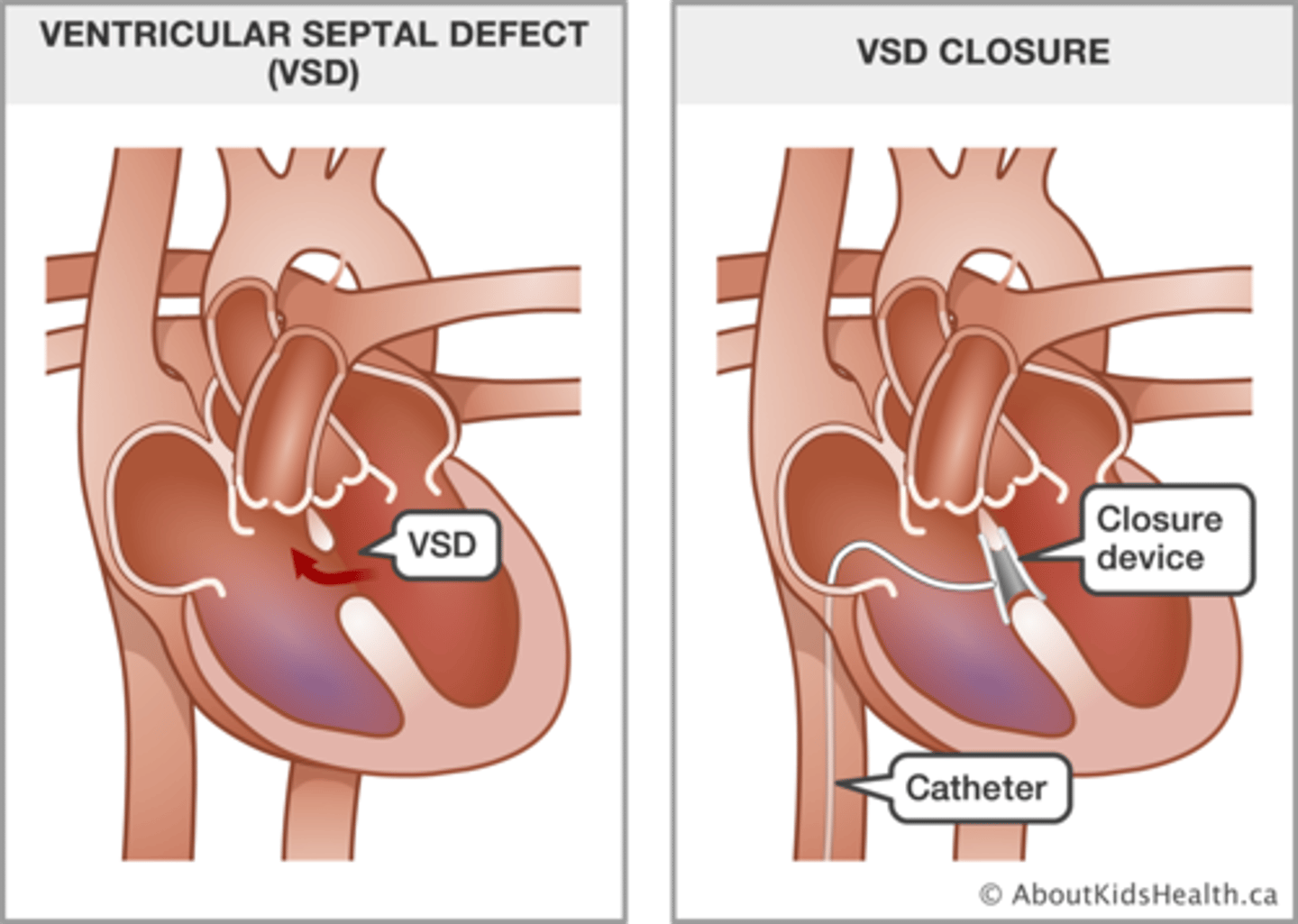
Ventricular septal defect (VSD) (severe)
hole between ventricles
- most common defect
- Causes left heart overload + pulmonary overload
- leads to early heart failure
VSD leads to what severe complication?
early HF
VSD symptoms (early HF)
Sweating with feeds, poor feeding, tachycardia
VSD Treatment
small hole will close on own, Diuretics (for HF) and Surgical repair if severe
How to feed a VSD baby?
high calorie formula in a bottle, small frequent feeds
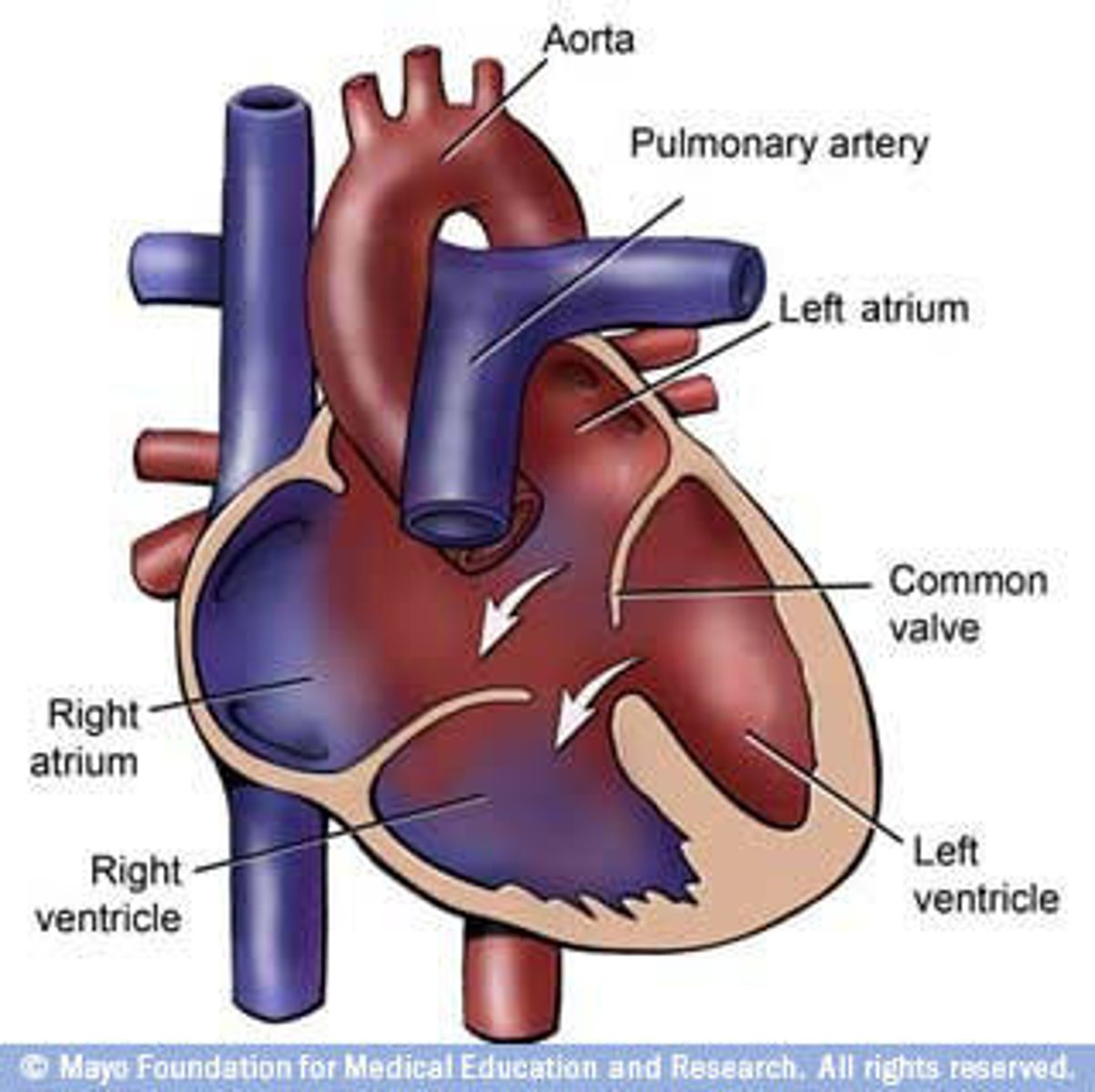
Atrioventricular Septal Defect (AVSD)
Large hole in the center of the heart, common with Down Syndrome
- blood MIXES = volume overload on BOTH sides
- early HF symptoms (poor feeding, tachypnea)
- RAPID HF progression
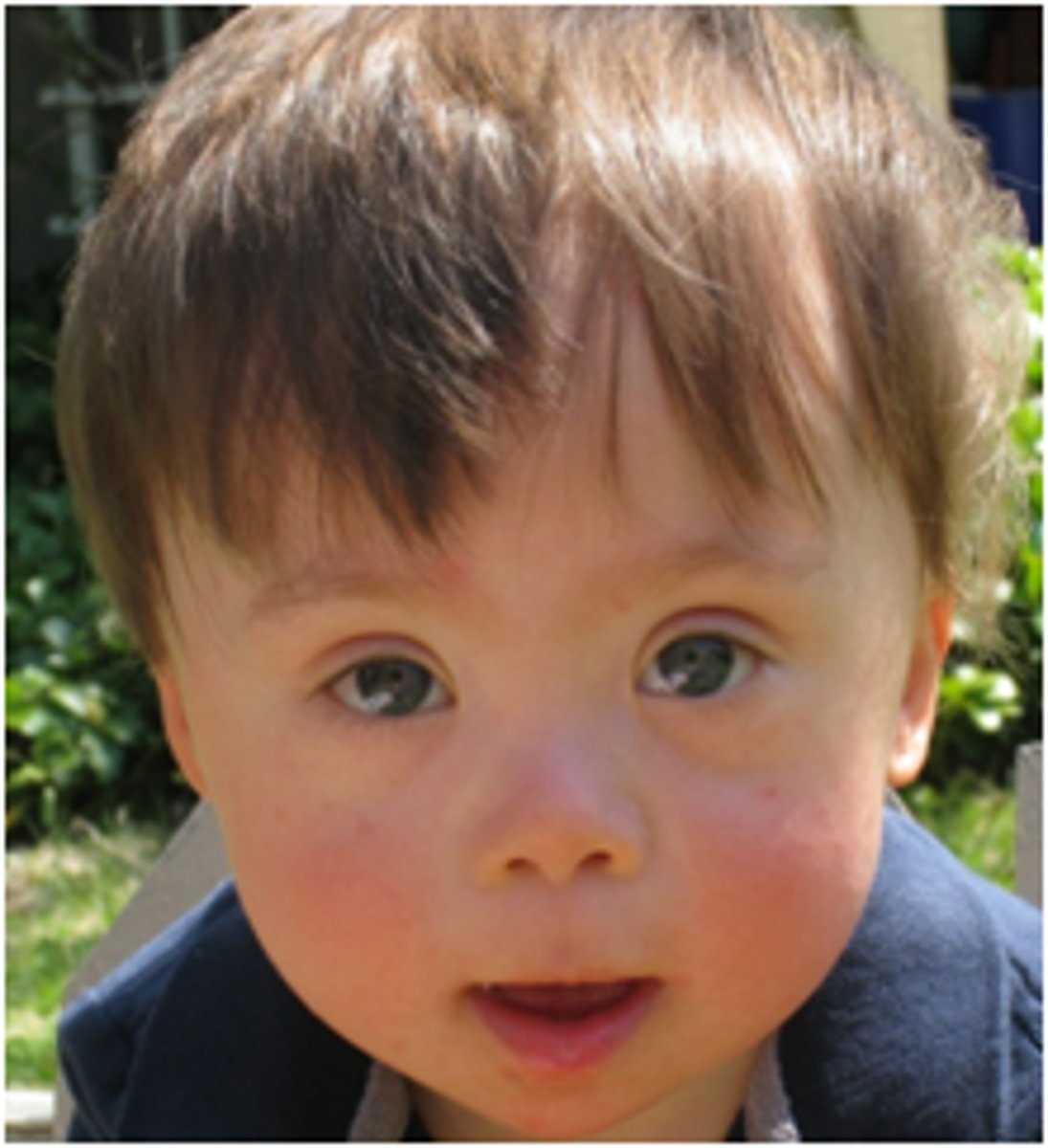
AVSD is common with what condition?
Down syndrome (trisomy 21)
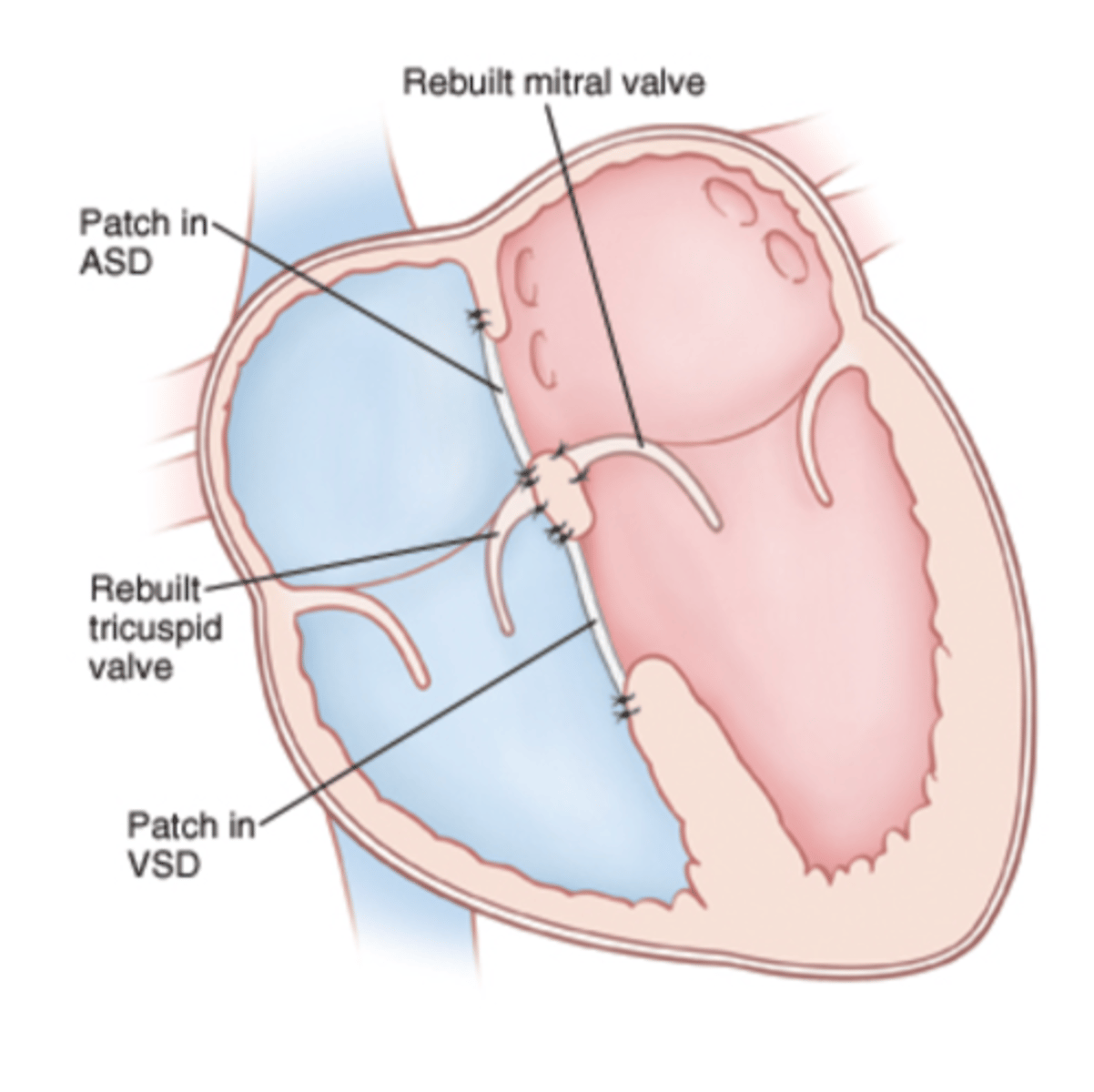
AVSD treatment
surgical repair within first 6 months
- earlier if down syndrome
monitor for heart block post op
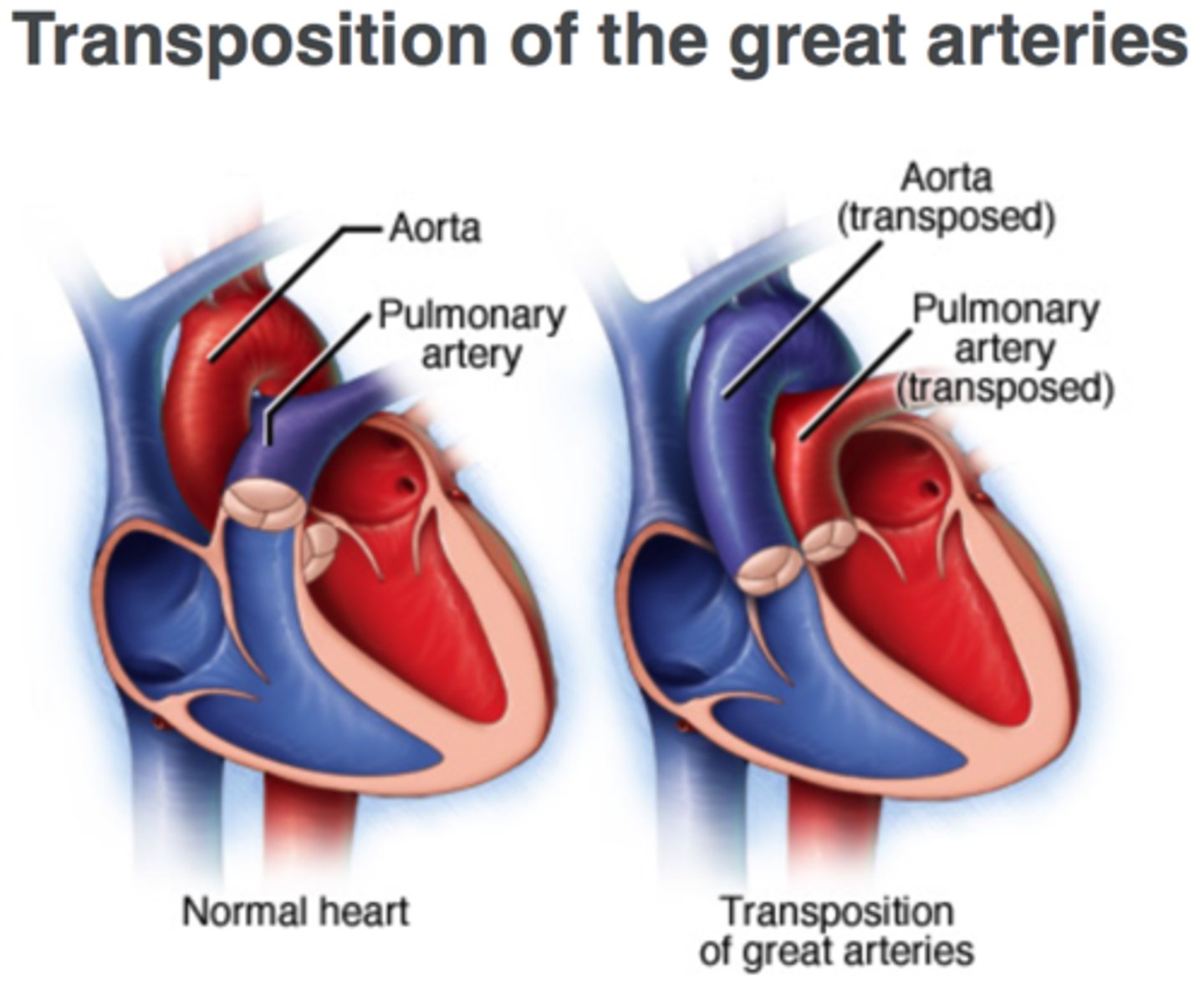
Transposition of Great Arteries (TGA)
Aorta and pulmonary artery are switched
- 2 separate pathways instead of 1
- parellel circulation
- FATAL if untreated
- deoxygenated blood circulates the body
- oxygenated blood keeps recirculating to lungs
- severe cyanosis and death
Key sign of TGA?
cyanosis right after birth, does not improve with O2
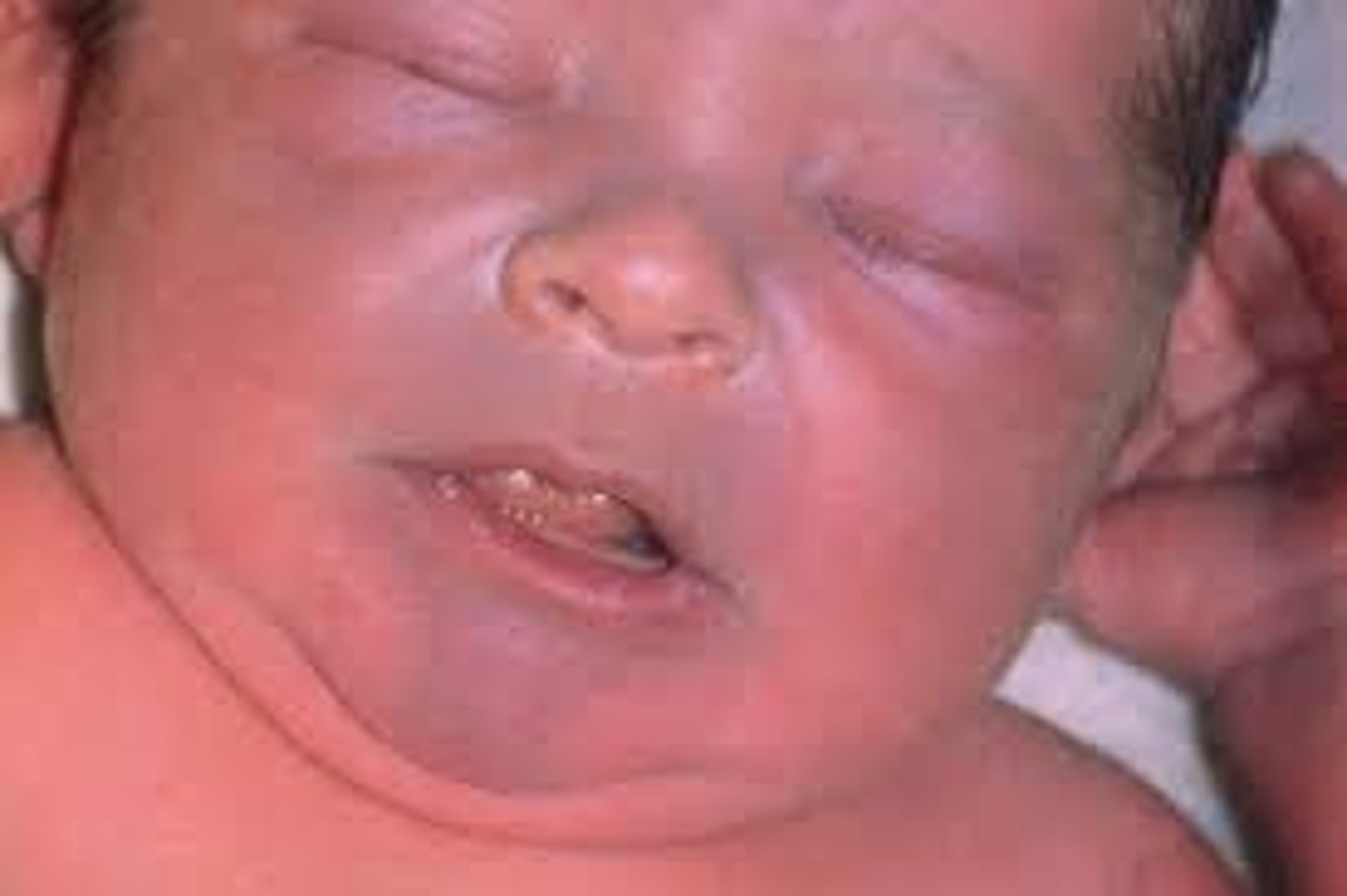
How TGA fatal if untreated?
deoxygenated blood circulates body, causing severe cyanosis and organ death
Blood MUST be mixed ASAP through an open shunt (PDA)
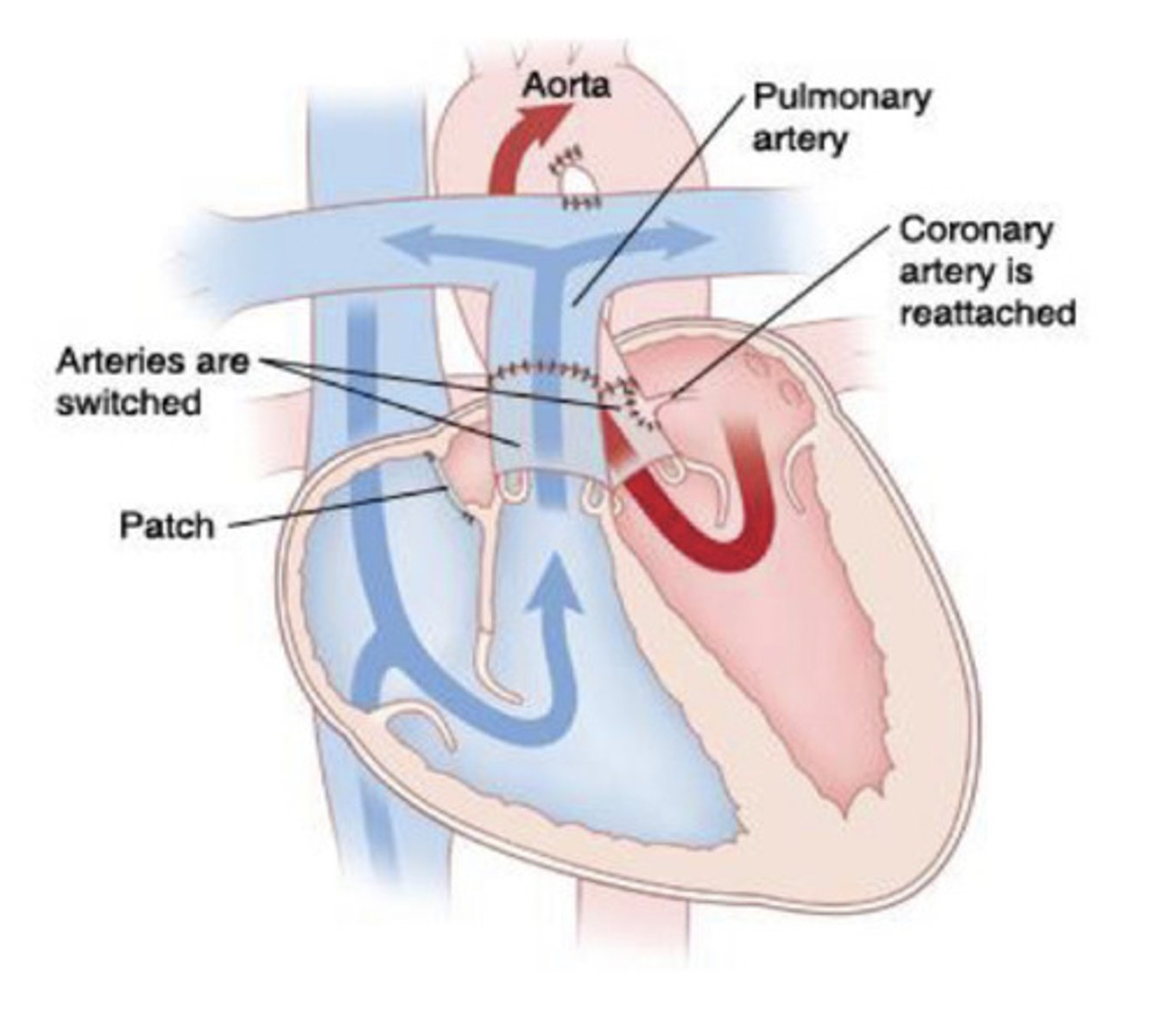
TGA Treatment
PDA kept OPEN with Prostaglandin E1 (PGE1) infusion so blood can mix
Med for TGA
Prostaglandin E1
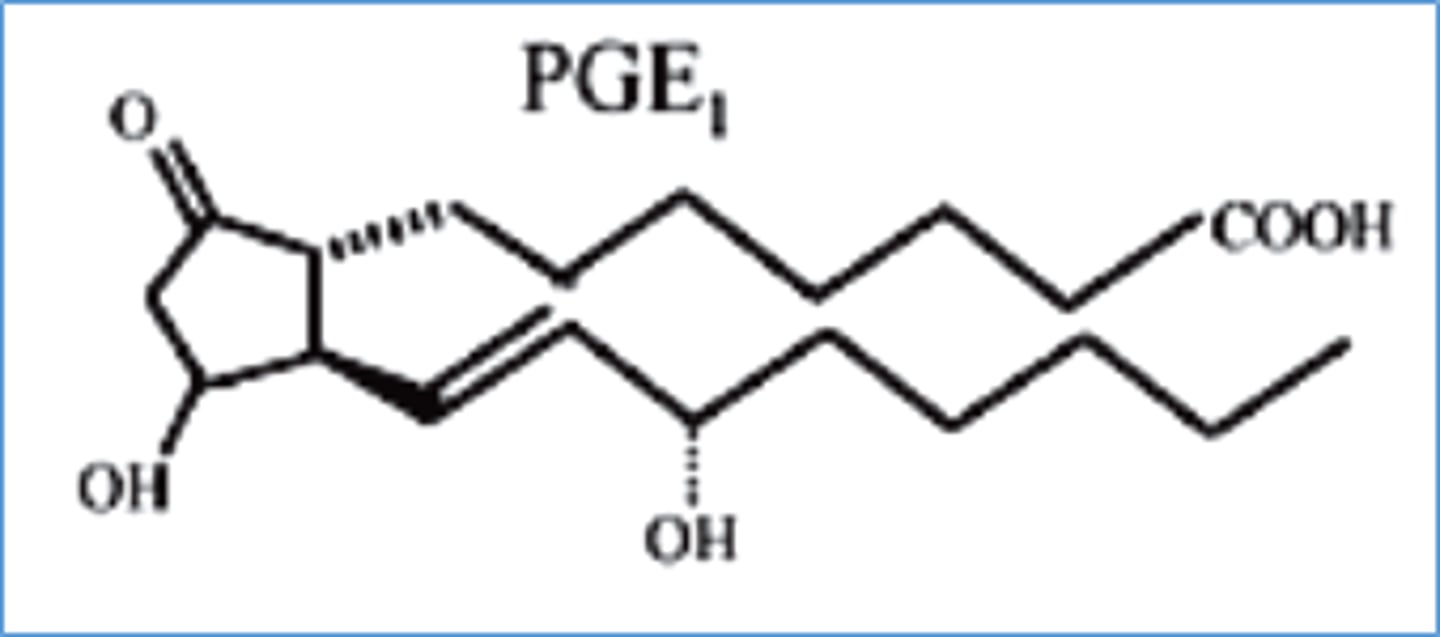
Why is the PDA kept OPEN in TGA?
So blood can mix and oxygenated blood can be pumped to the body