Introduction to the Clinical Biochemistry Laboratory
 Studied by 0 people
 Call Kai
 Learn
Learn Practice Test
 Spaced Repetition
 Match
Match Flashcards
 Knowt Play
1/30

There's no tags or description
Looks like no tags are added yet.
Name | Mastery | Learn | Test | Matching | Spaced |
|---|
No study sessions yet.
31 Terms
examples of analytical techniques
measurement of enzyme activities
spectrophotometry
electrophoresis
separation of molecules based on physical characteristics
immunoassays
HPLC
What type of testing uses reference ranges?
quantitative
What is discretional or selective requesting?
Tests ordered based on the patient’s signs, symptoms and history.
Based on the individual patient and situation.
Can be core or specialised
Why are biochemical tests carried out?
to confirm diagnosis
to aid differential diagnosis
to assess disease severity
to monitor progress
to monitor therapy
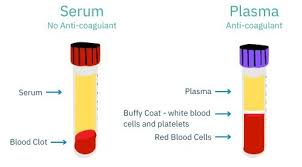
What is the difference between plasma and serum?
Serum- blood clots naturally, remaining liquid is serum (contains no anticoagulants)
Plasma- blood mixed with anticoagulant (blood minus cells)
types of collection tubes
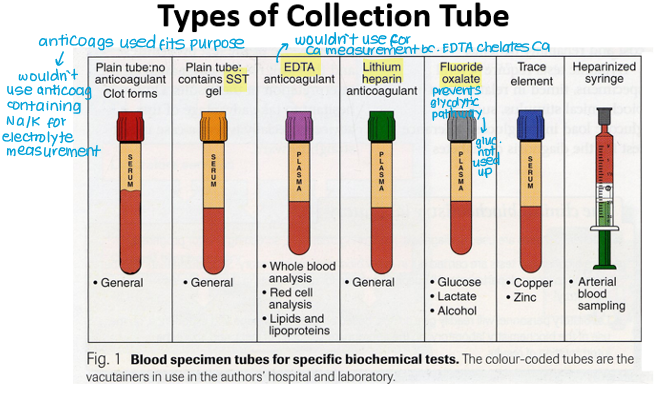
What is the generic tube used for serum? What does it contain?
yellow tube
SST gel (separates serum from blood cells)
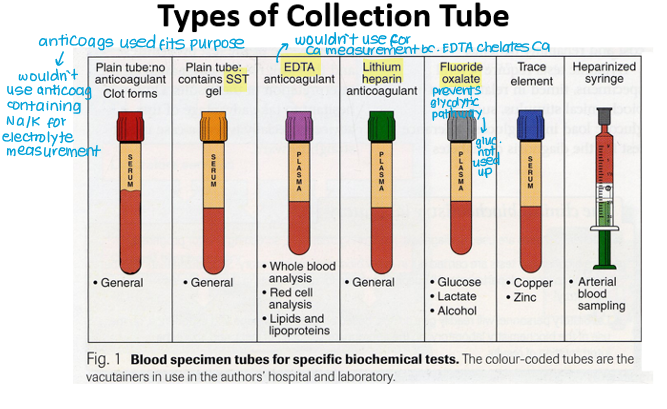
What is the tube used for glucose? What does it contain?
grey tube
fluoride oxalate
for glucose, lactate, alcohol

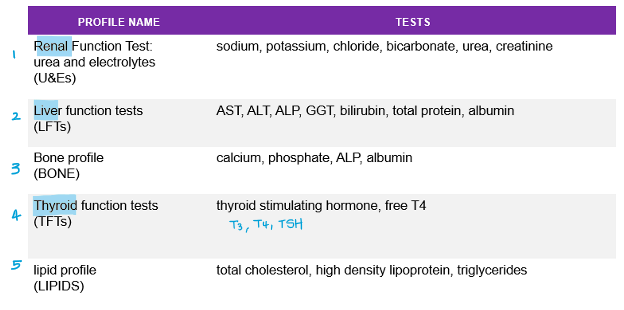
types of biochemistry profiling tests
renal function
liver function
thyroid function
bone profile
lipid profile
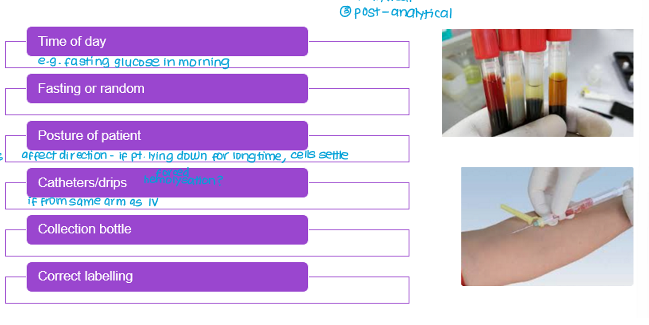
examples of preanalytical factors in specimen collection
time of day
fasting or random
posture of patient
catheters/drips
sample collection tube
sample volume
sample labelling
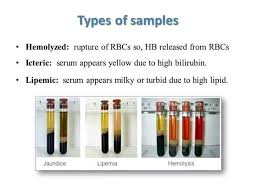
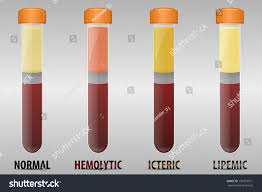
Give three conditions of serum/plasma after centrifugation that can affect testing?
haemolysis
icterus
lipaemia
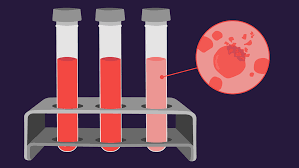
What is haemolysis and what causes it?
Bursting of RBCs causes contents to be released (e.g. Hb, AST, K+, LDH, ALP)
Caused by:
inappropriate venepuncture technique
overvigorous mixing
prolonged storage before centrifugation
inappropriate anti-coagulant used
Why are haemolytic samples a problem?
Hb has maximum absorbance peak at 415nm.
Interferes with readings if other tests are carried out at that same wavelength.
What is icterus and why is it a problem?
high concentration of bilirubin in blood
occurs in acute liver disease
problematic because can interfere if other analytes are measured at same wavelength as bilirubin (450-460nm)
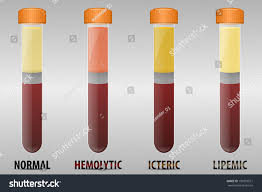
What is lipaemia and why is it a problem?
high concentration of triacylglycerols (TAGs)
cloudy sample
reduces transmission of light, interferes with spectrophotometric tests
What is a QMS?
quality management system
set of procedures, processes and practices that ensures a laboratory‘s operations are consistent, reliable and accurate
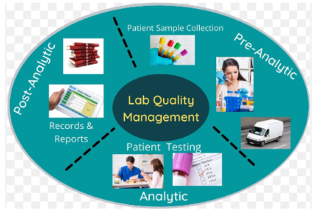
four components of QMS
quality planning (inventory, purchasing)
quality control (IQC daily monitoring, Westgard rules)
quality assurance (EQA schemes)
quality improvement (audit)
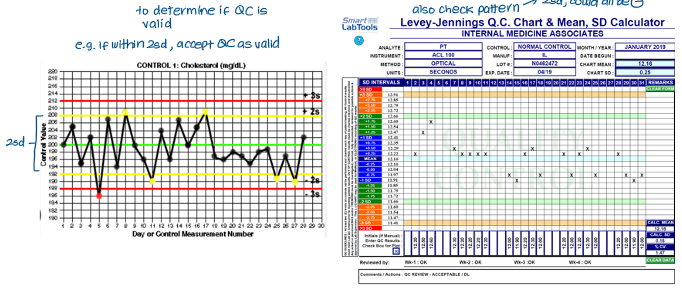
What is a Levey-Jennings chart and how is it interpreted?
determines whether IQC is valid (usually within 2sd)
interpreted using Westgard rules (usually 2,2s- reject when 2 consecutive controls exceed the same mean + or - 2 sd)
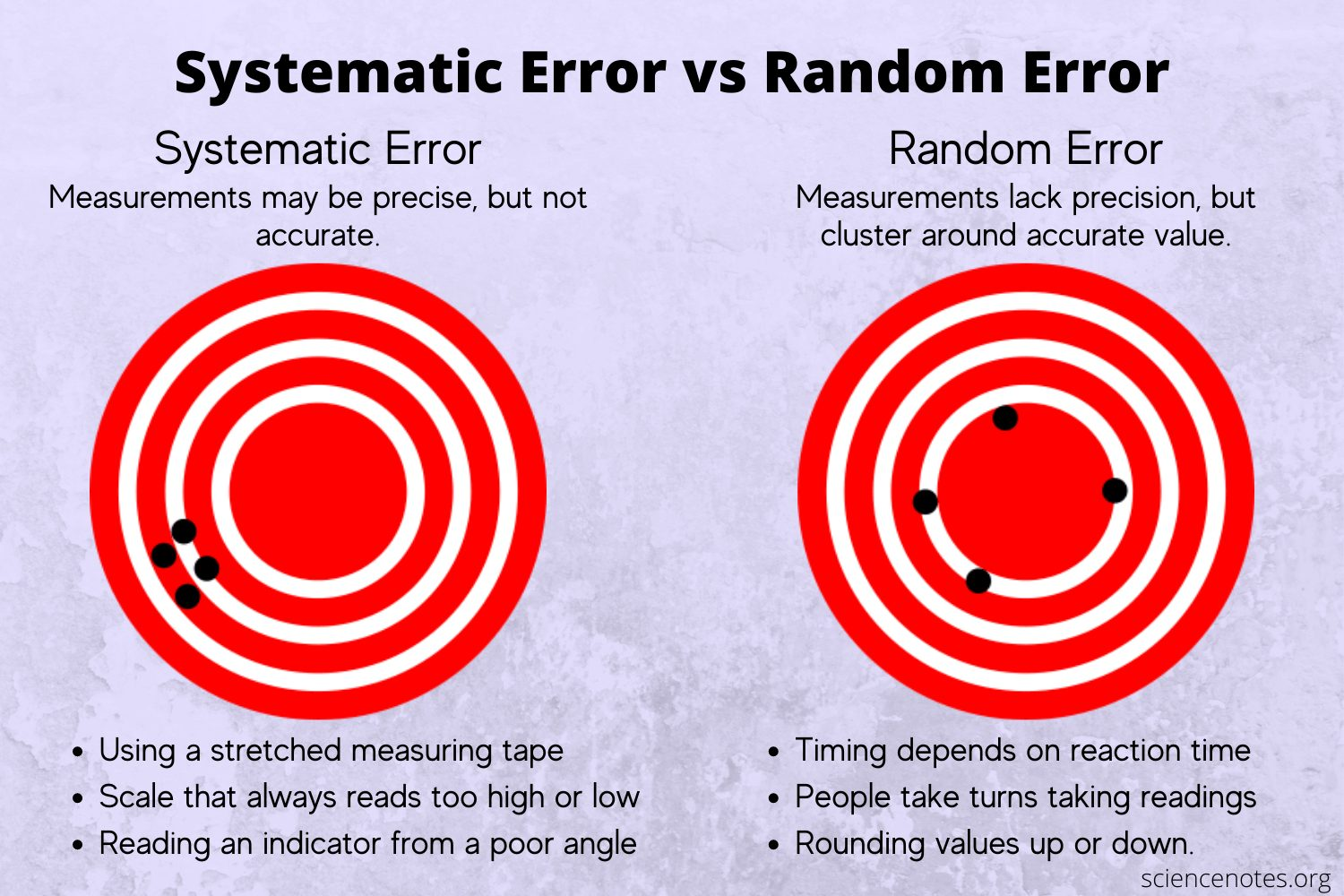
What are the two types of analytical variation?
systematic (precise)
random (accurate)
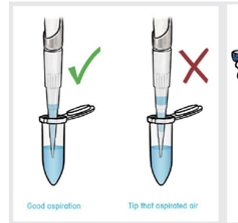
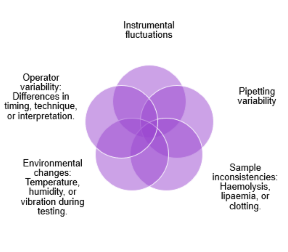
common sources of random variation
difference in operator technique
sample handling (haemolysis, icterus, lipaemia, etc.)
environmental changes during testing
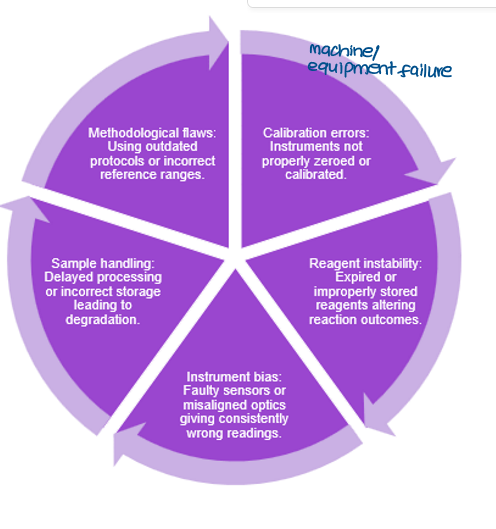
common sources of systematic variation
equipment malfunction
expired reagents
biological sources of variation within and between individuals
within individuals (diet, time of day posture, exercise, menstrual cycle)
between individuals (age, race, ethnicity, BMI)
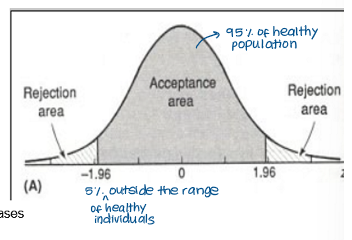
What are reference ranges?
represents 95% of healthy individuals
“reference” not “normal” (5% of healthy individuals lie outside)
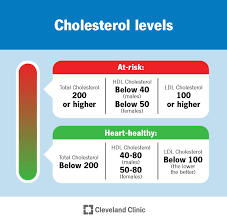
What is an alternative to reference ranges?
target values
e.g. cholesterol
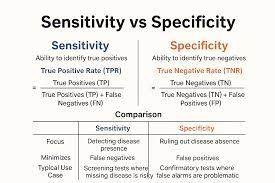
What is sensitivity?
How effective is the test at providing a positive result in the presence of disease?
TRUE-POSITIVES (TPs)
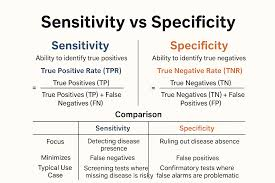
What is specificity?
How effective is the test at providing a negative result in the absence of disease?
TRUE-NEGATIVES (TNs)
PPV (positive predictive value)
The probability that a person with a positive test result actually has the condition (% of TPs)
PPV (%) = [TP/TP+FP] (x 100)
![<p>The probability that a person with a positive test result actually has the condition <strong>(% of TPs)</strong></p><p>PPV (%) = [TP/TP+FP] (x 100)</p>](https://knowt-user-attachments.s3.amazonaws.com/55820dde-991e-47de-9275-a4279d3c62ff.png)
NPV (negative predictive value)
The probability that a person with a negative test result actually doesn’t have the condition (% of TNs)
NPV (%) = [TN/TN+FN] (x 100)
![<p>The probability that a person with a negative test result actually doesn’t have the condition <strong>(% of TNs)</strong></p><p>NPV (%) = [TN/TN+FN] (x 100)</p>](https://knowt-user-attachments.s3.amazonaws.com/01ed4c46-5c66-41dd-8a25-7ebc818ea73f.png)
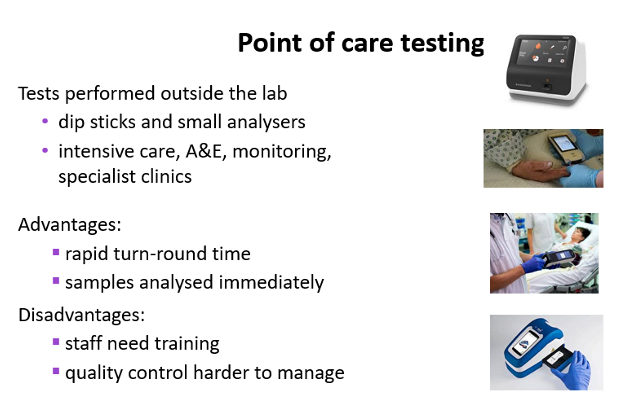
POCT pros and cons
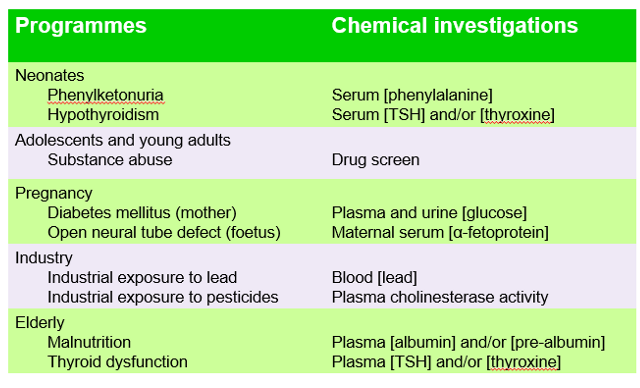
What are the two main types of screening programmes?
well-population screening- proactively testing large groups of apparently healthy people to find those at higher risk for diseases.
case-finding programmes- targeted at individuals suspected to be at risk or already showing vague signs.
examples of case-finding screening programmes