Cell Signaling Types and Pathways in Multicellular Organisms, ch 13-Cellular Respiration and Energy Production in Biology, Energy Generation in Mitochondria & Chloroplasts: Chemiosmotic Coupling and ATP Synthesis, Cellular Reproduction: Mitosis and C…
 Call Kai
 Learn
Learn Practice Test
 Spaced Repetition
 Match
Match Flashcards
 Knowt Play
1/69

There's no tags or description
Looks like no tags are added yet.
Name | Mastery | Learn | Test | Matching | Spaced | Call with Kai | Chat |
|---|
No analytics yet
Send a link to your students to track their progress
70 Terms
What is the primary reason multicellular organisms needed to develop cell signaling?
All cells must be able to respond to signals.
What type of signaling involves hormones acting over long distances?
Endocrine signaling.
What is paracrine signaling?
Signaling where chemicals illicit a response in neighboring cells.
What is autocrine signaling?
Signaling where chemicals illicit a response in the same cell that produced them.
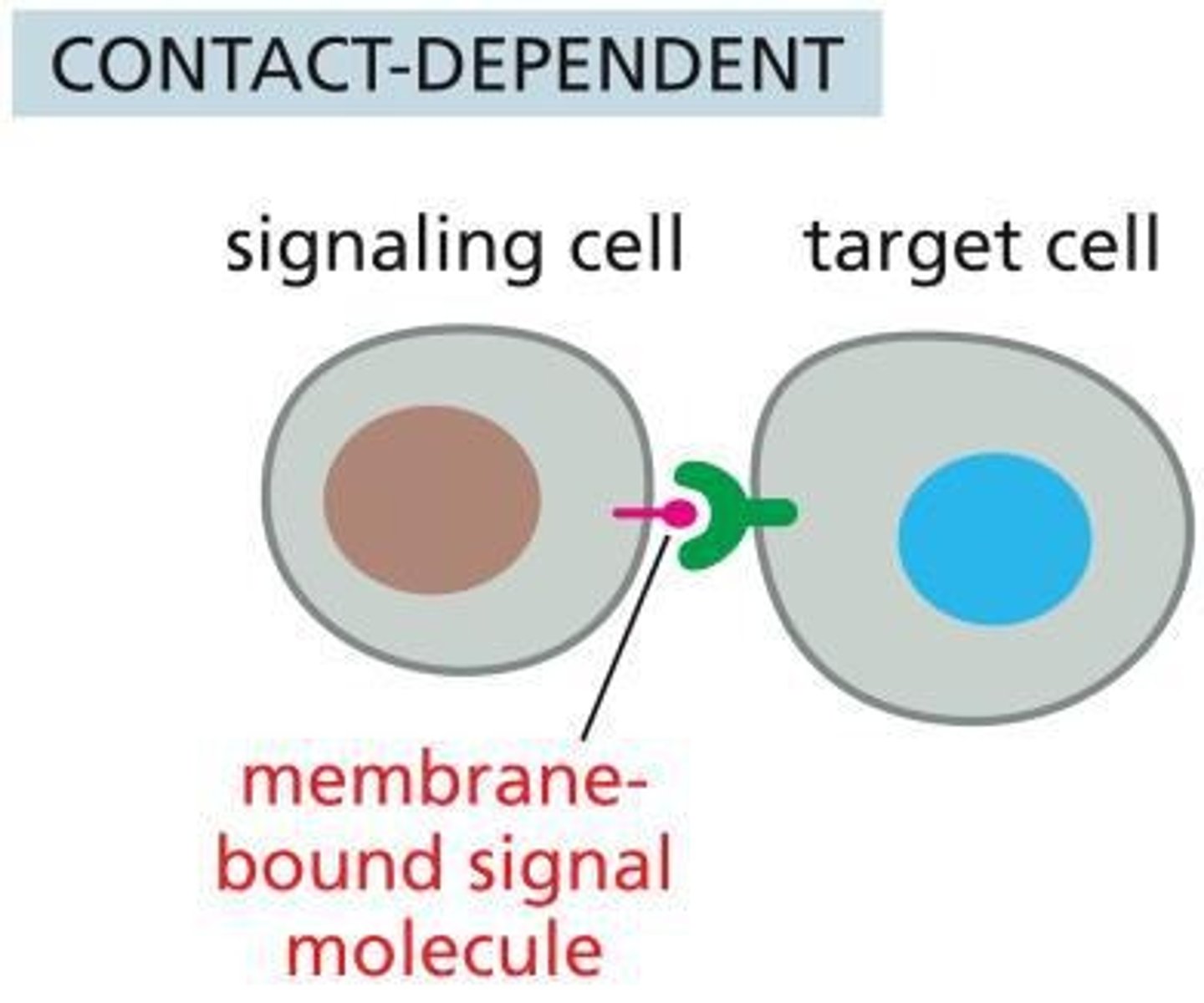
What type of signaling requires physical interaction between cells?
Contact-dependent signaling.
What is the chemical nature of epinephrine?
A derivative of the amino acid tyrosine.
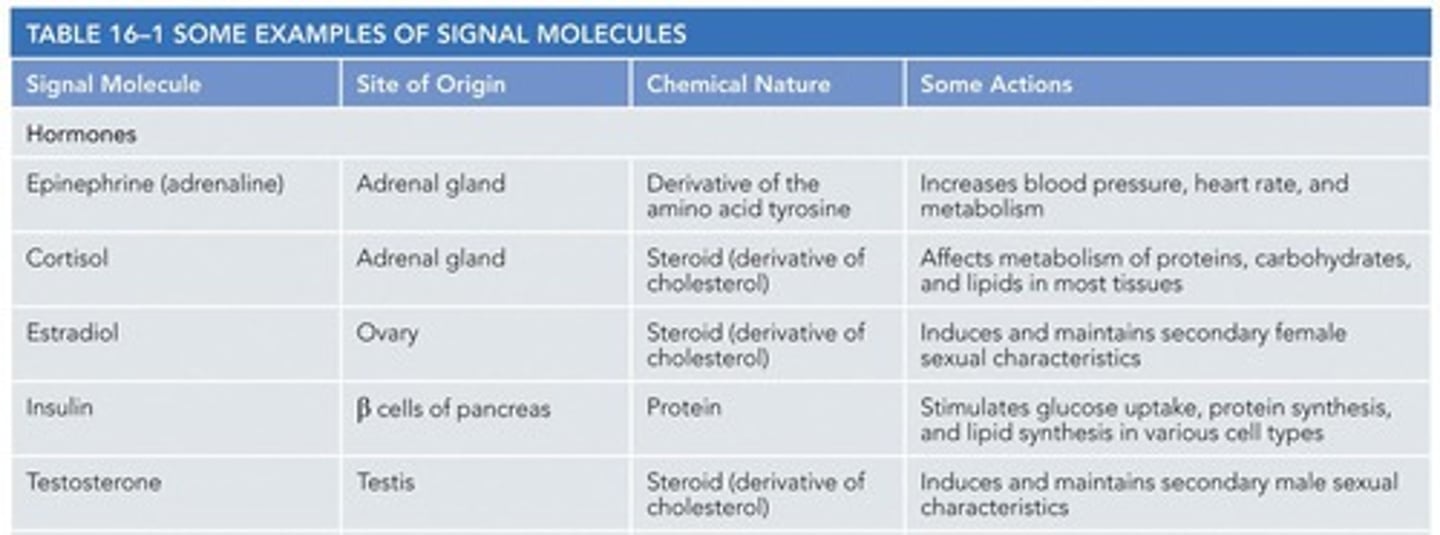
What is the role of cortisol in the body?
It affects metabolism of proteins, carbohydrates, and lipids in most tissues.
What does insulin stimulate in various cell types?
Glucose uptake, protein synthesis, and lipid synthesis.
What is the function of ethylene in plants?
Regulates developmental processes, including seed germination and fruit ripening.
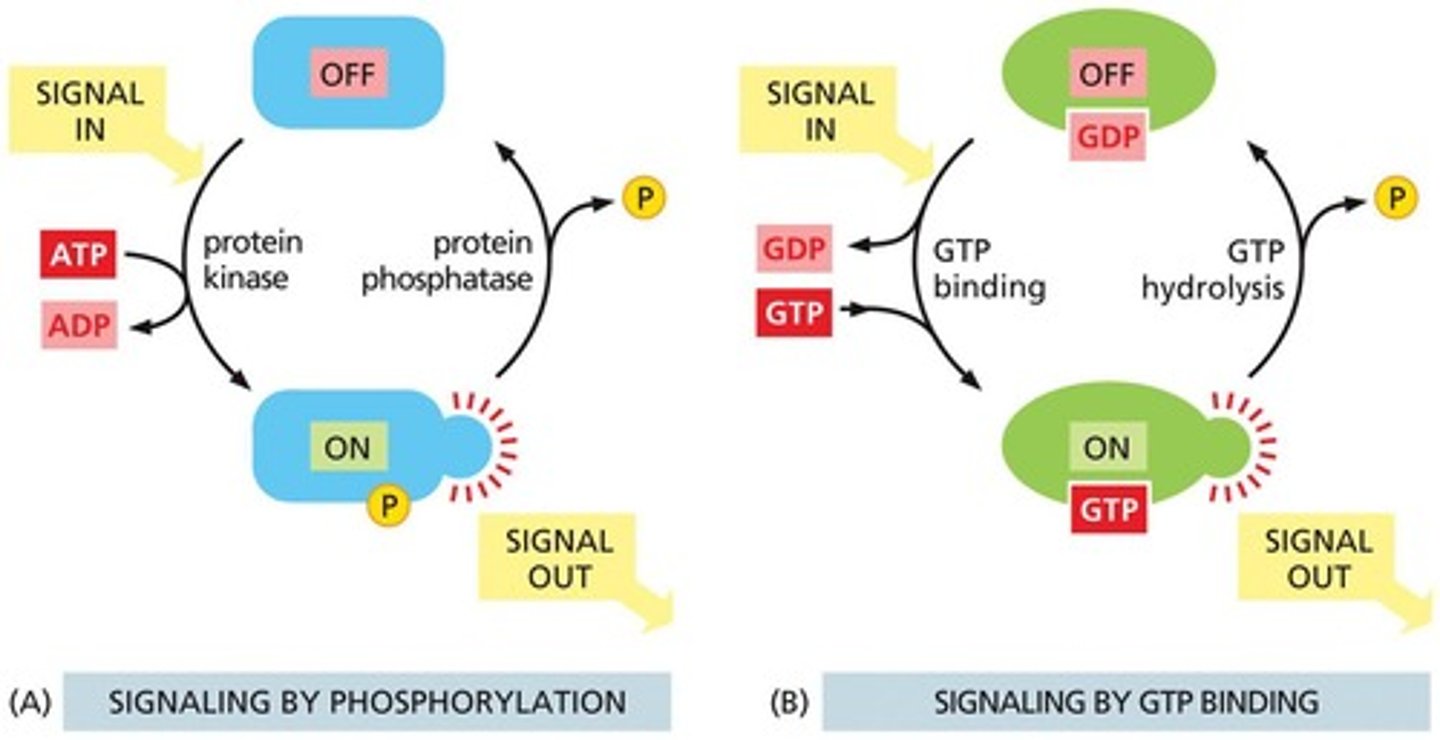
What are the two types of GTP-binding proteins?
Trimeric GTP-binding proteins (G proteins) and monomeric GTPases.
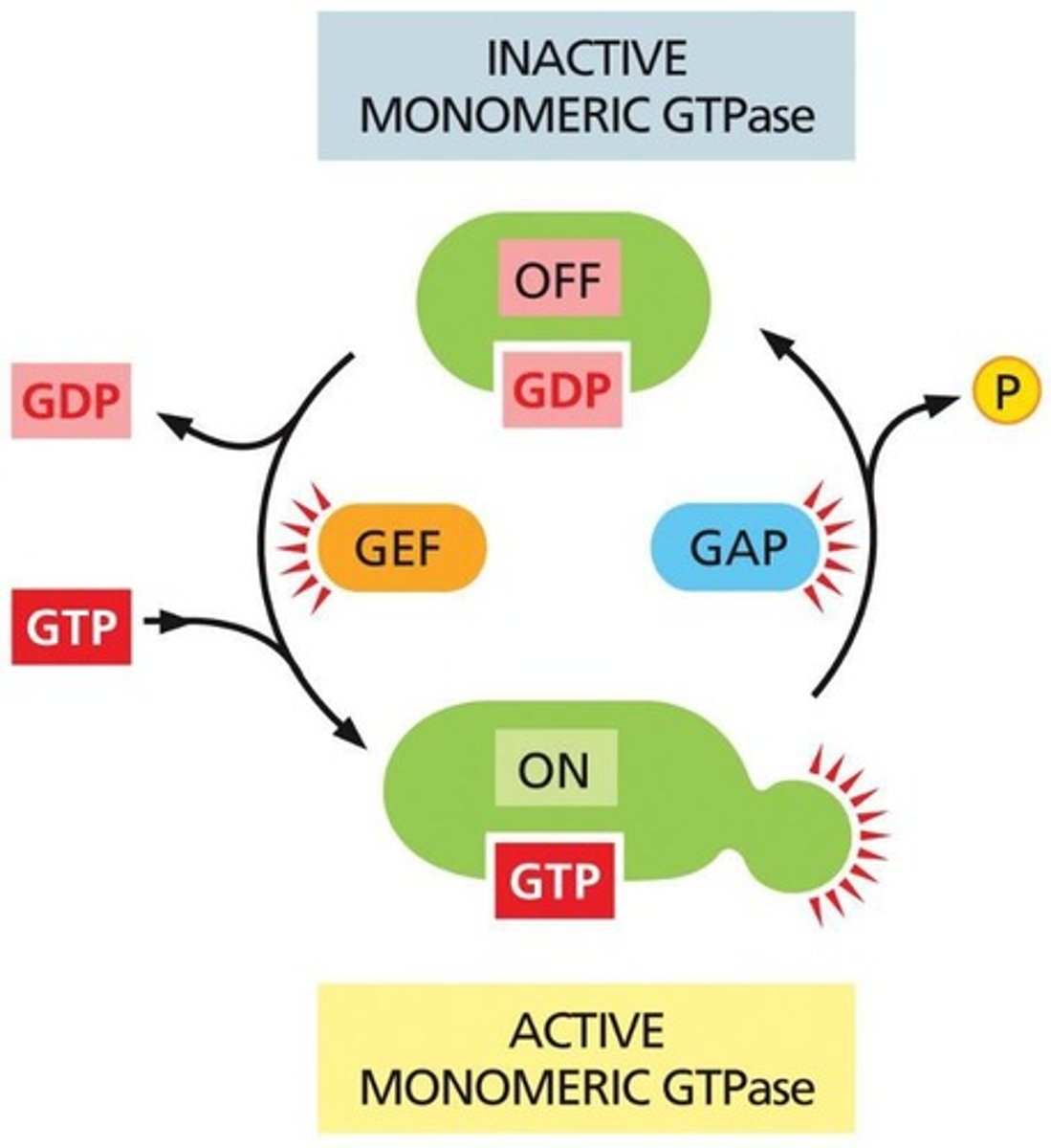
What is the function of guanine exchange factors?
They promote the exchange of GDP for GTP.
What is the largest family of cell-surface receptors?
G-protein-coupled receptors.
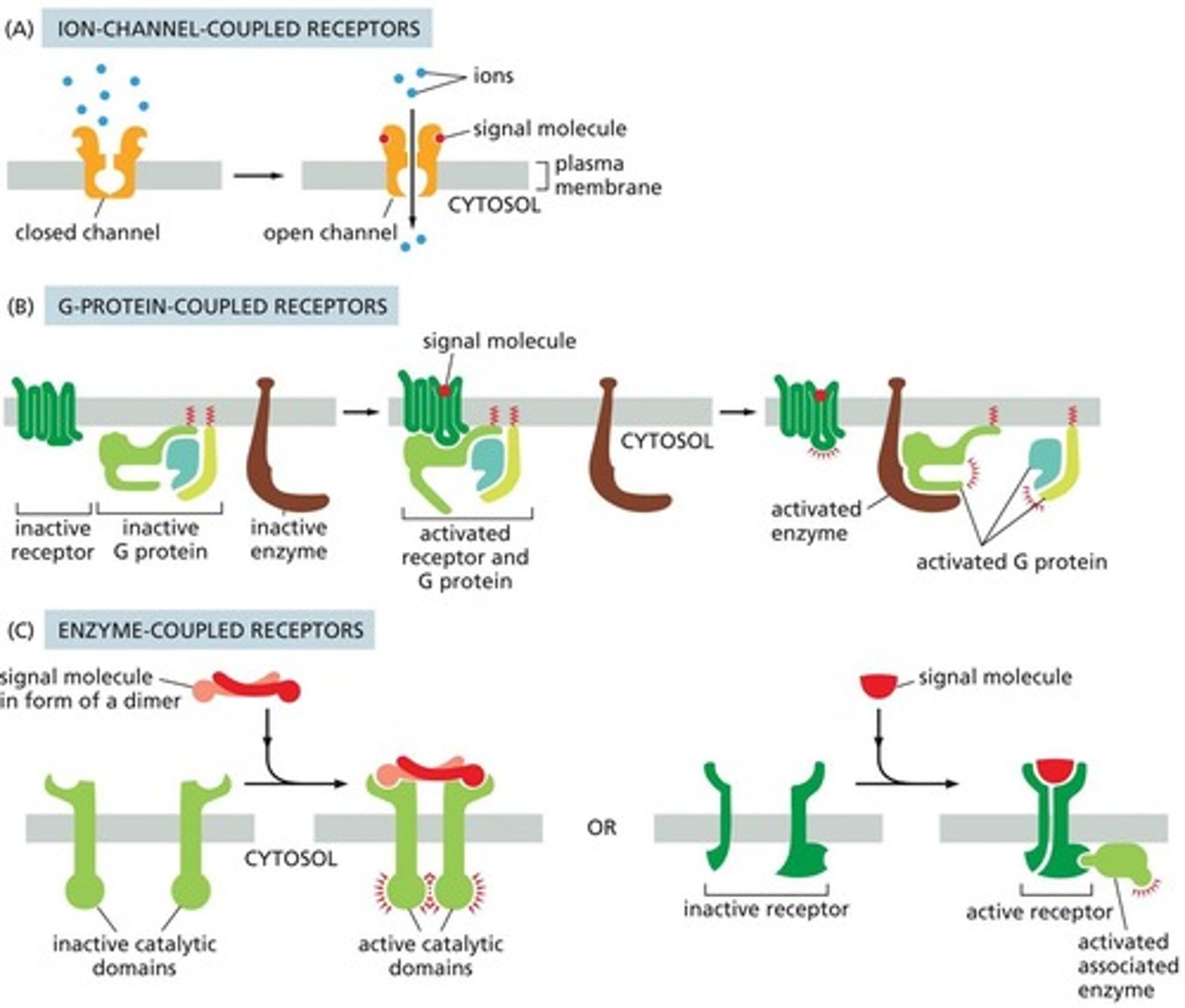
What do G-proteins interact with to cause immediate changes in cell behavior?
Ion channels.
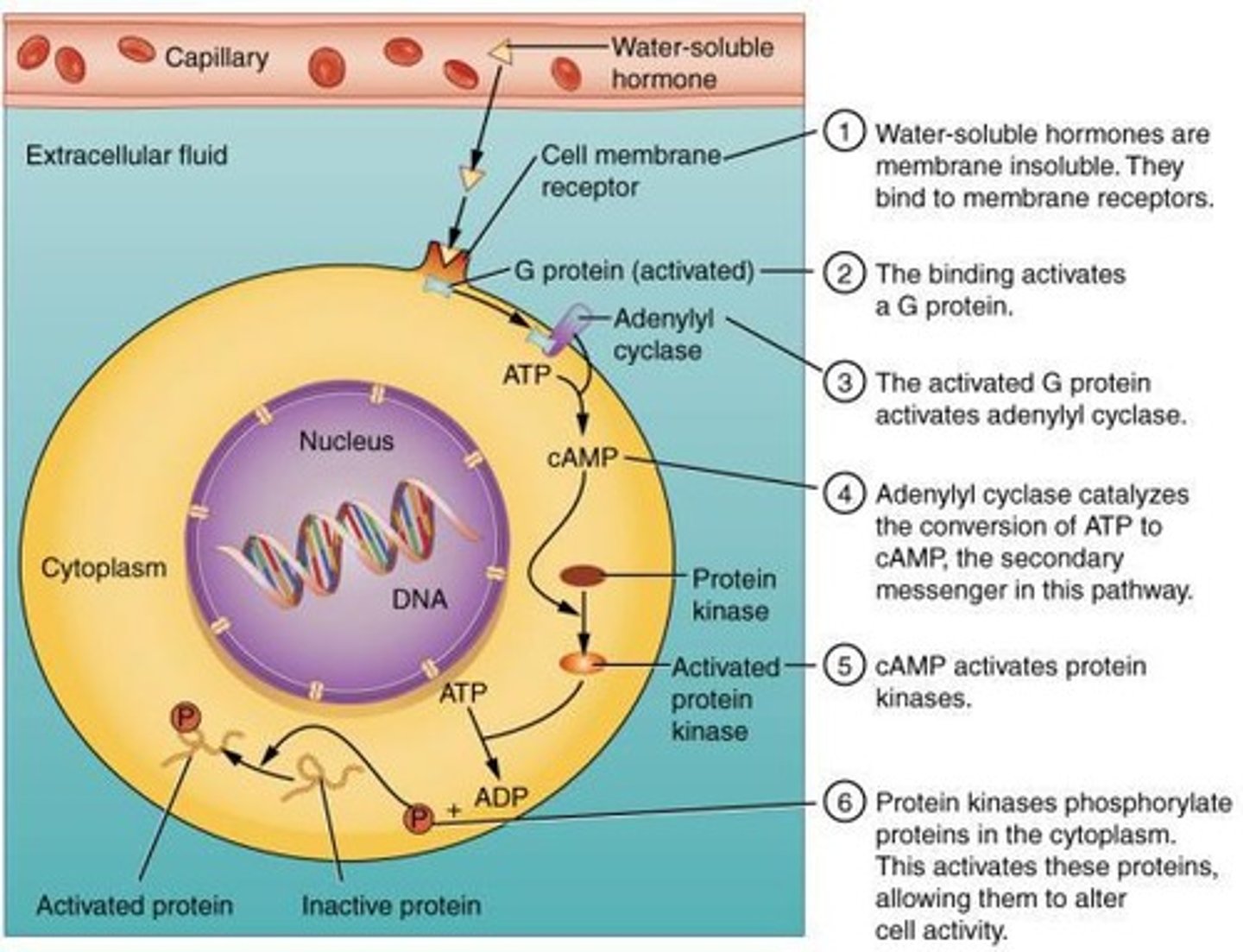
What is the role of cyclic AMP in cell signaling?
It is a secondary messenger that is produced by adenyl cyclase.
What activates Ras in receptor tyrosine kinases?
Dimerization of receptors upon ligand binding.
What is the mitogen-activated protein-kinase pathway (MAP-kinase pathway)?
A signaling pathway initiated by Ras that involves a phosphorylation cascade.
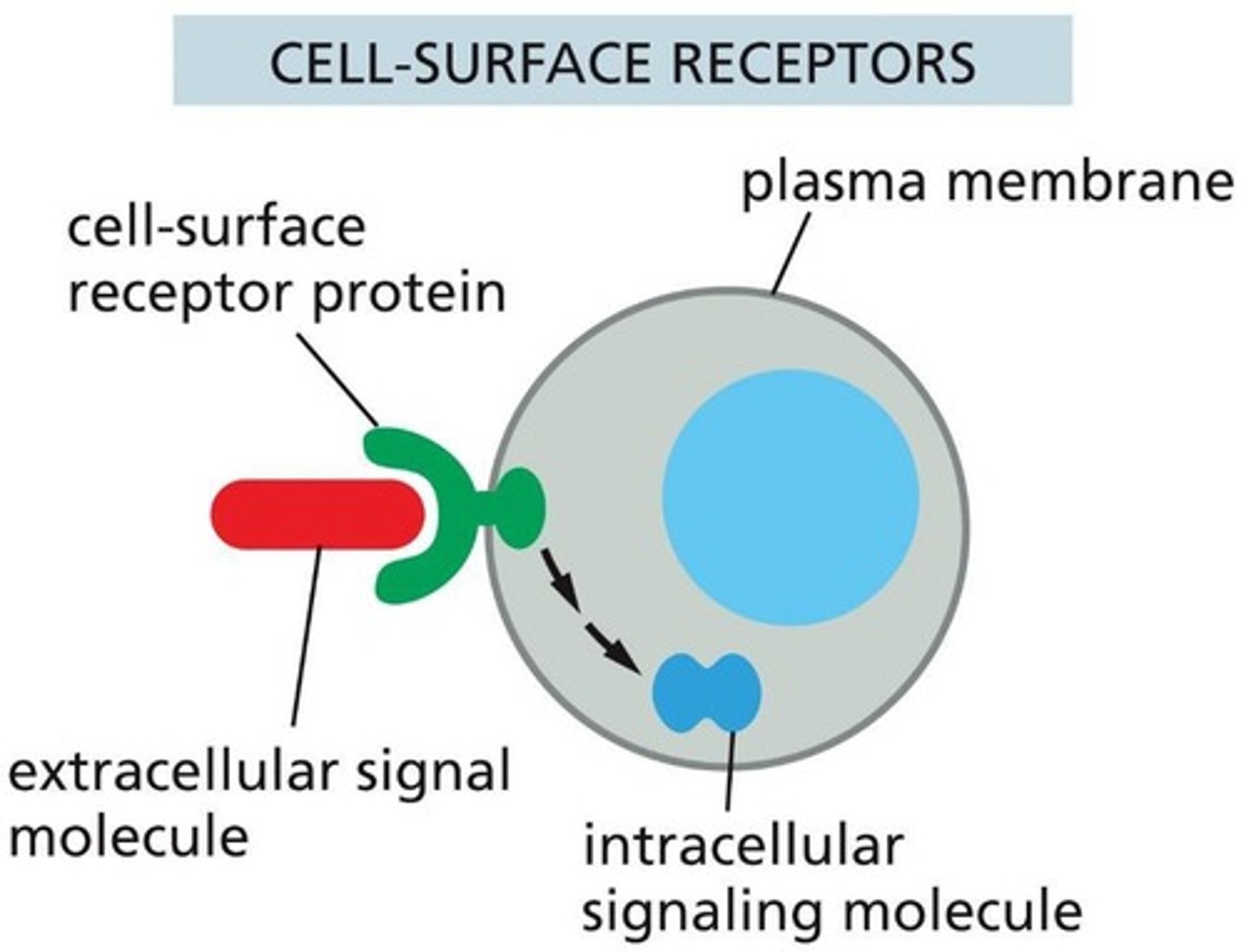
What is the function of enzyme-linked cell-surface receptors?
They act as enzymes or form a complex with an enzyme upon activation.
How do cells integrate signals to produce a response?
Cells must integrate all of the signals received.
What are the two responses that can occur from signaling pathways?
Primary response (direct transcription induction) and secondary response (activation of other genes).
What is the significance of different receptors for the same signal molecule?
They can lead to different effects on target cells.
What is the role of phospholipase C in cell signaling?
It produces inositol triphosphate and diacylglycerol, which activate protein kinase C.
What is cellular respiration?
The process by which sugars are broken down to generate energy, oxidizing them to carbon dioxide and water.
What do oxidation-reduction reactions involve?
The transfer of electrons between atoms or the inequitable sharing of electrons.
What happens during oxidation?
Electrons are removed from an atom.
What happens during reduction?
Electrons are added to an atom.
How do oxidation and reduction apply to polar covalent bonds?
They apply when atoms do not share electrons equally.
What is the relationship between hydration reactions and reductions?
When atoms gain an electron, they often add a hydrogen, making these hydration reactions reductions.
What is substrate-level phosphorylation?
One of the two mechanisms by which ATP is made during cellular respiration.
What is oxidative phosphorylation?
The second mechanism by which ATP is produced in cellular respiration.
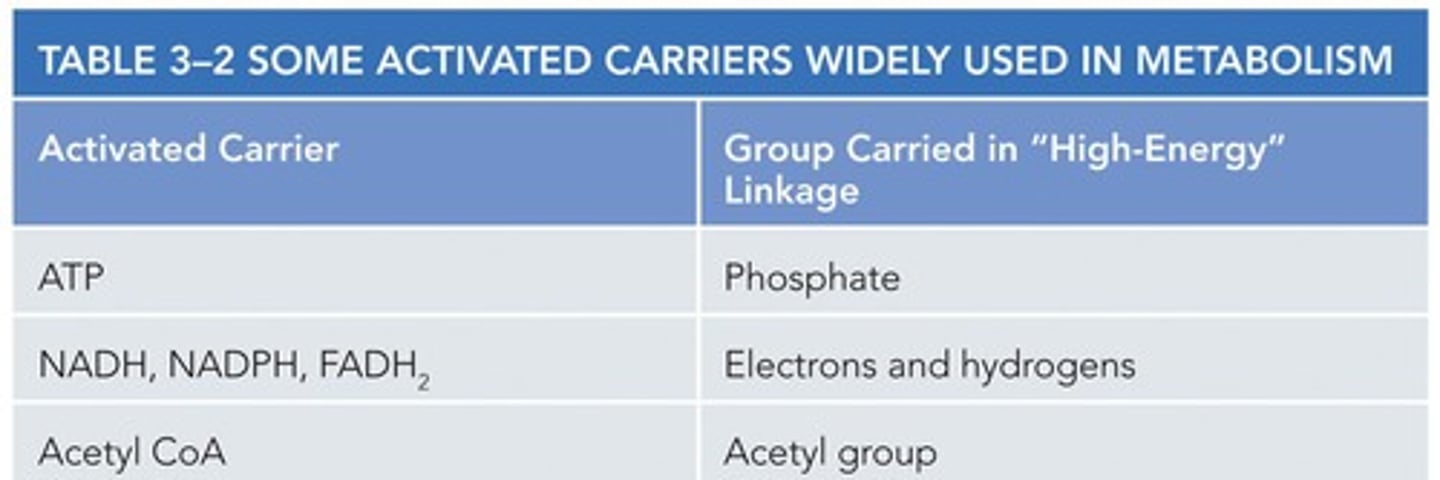
What are activated carriers?
Small organic molecules that contain one or more energy-rich bonds, capturing energy released during cellular respiration.
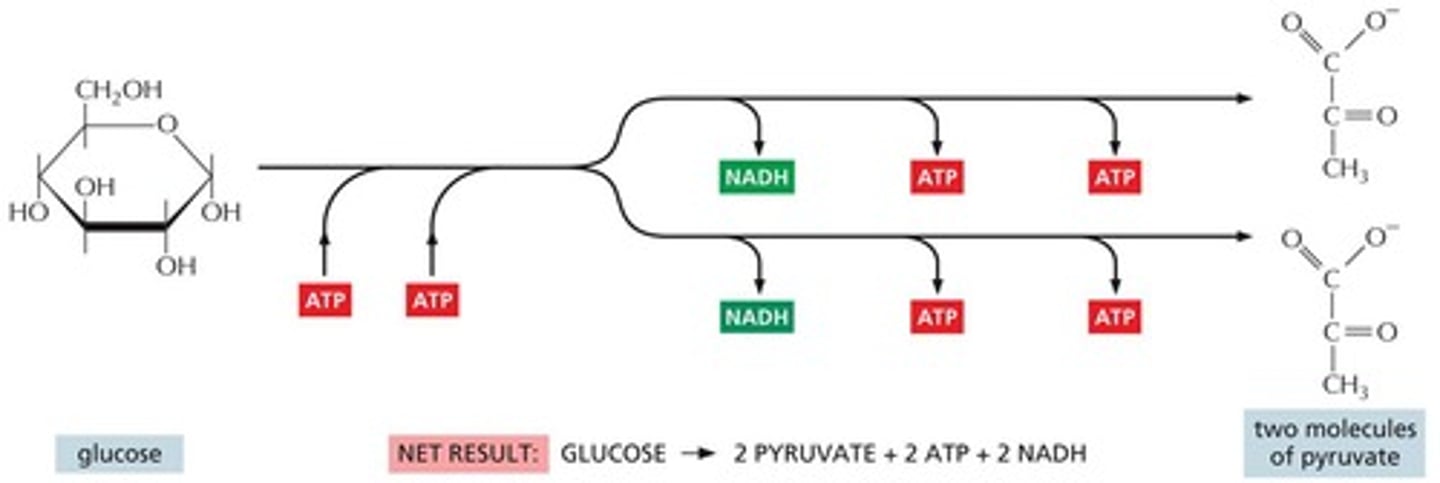
What is glycolysis?
The first stage of catabolism of energy-yielding nutrients.
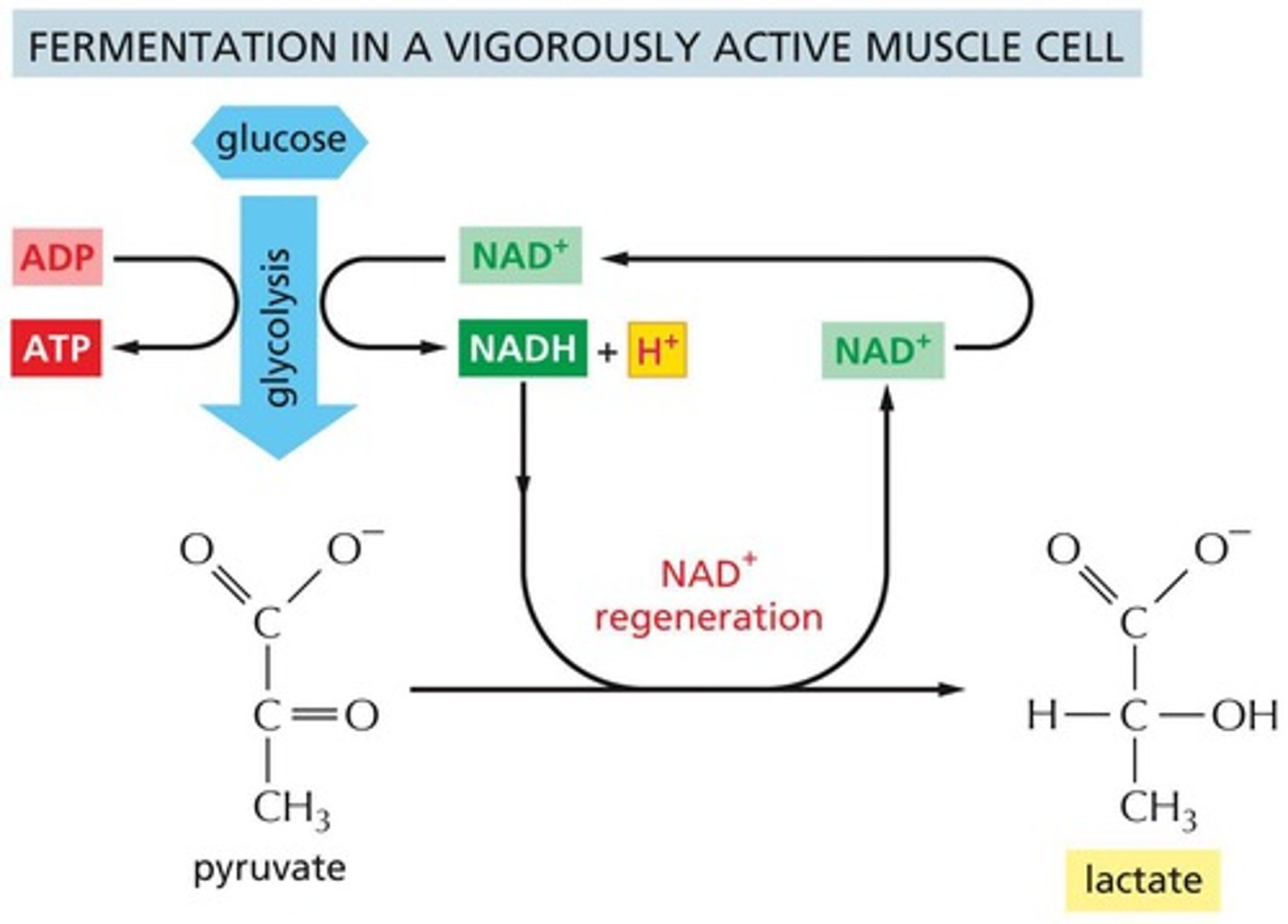
What is fermentation?
Anaerobic respiration that occurs when oxygen is limited or absent, producing lactic acid or ethanol.
What happens during aerobic respiration?
Occurs when oxygen is available; pyruvate enters the Krebs cycle in the mitochondria.
What is the Cori cycle?
The process by which lactate is converted back into pyruvate or glucose in the liver.
What is the citric acid cycle?
The second stage of nutrient catabolism where acetyl CoA is oxidized, occurring in the mitochondrial matrix.
What are the products of the citric acid cycle?
Three NADH, one FADH2, one GTP, and two molecules of carbon dioxide.
What is FAD?
Flavin adenine dinucleotide, an important coenzyme in cellular respiration.
What is the role of NAD in cellular respiration?
Nicotinamide adenine dinucleotide acts as an electron carrier during cellular respiration.
What is the main function of the Krebs cycle?
To catalyze the complete oxidation of carbon atoms in the acetyl groups of acetyl CoA.
What occurs during the third stage of nutrient catabolism?
Oxidative phosphorylation takes place, generating ATP using the electron transport chain.
What is produced from pyruvate in muscle cells during fermentation?
Lactic acid, NAD+, and ATP.
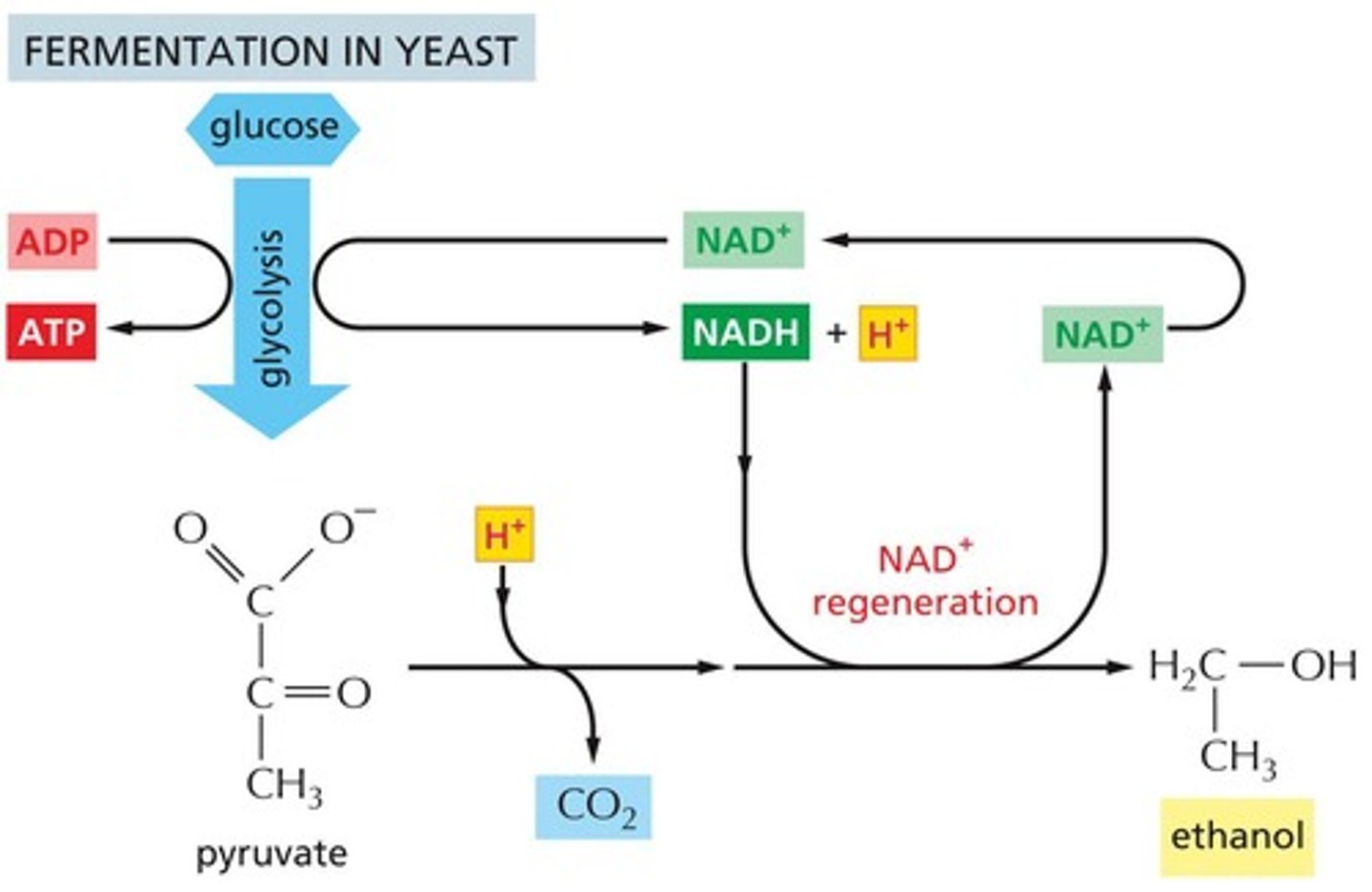
What is produced from pyruvate in yeast during fermentation?
Ethanol and NAD+.
What process links chemical bond-forming reactions that synthesize ATP with membrane transport?
Chemiosmotic coupling
What do activated carriers like NADH do in the electron transport chain?
They donate electrons.
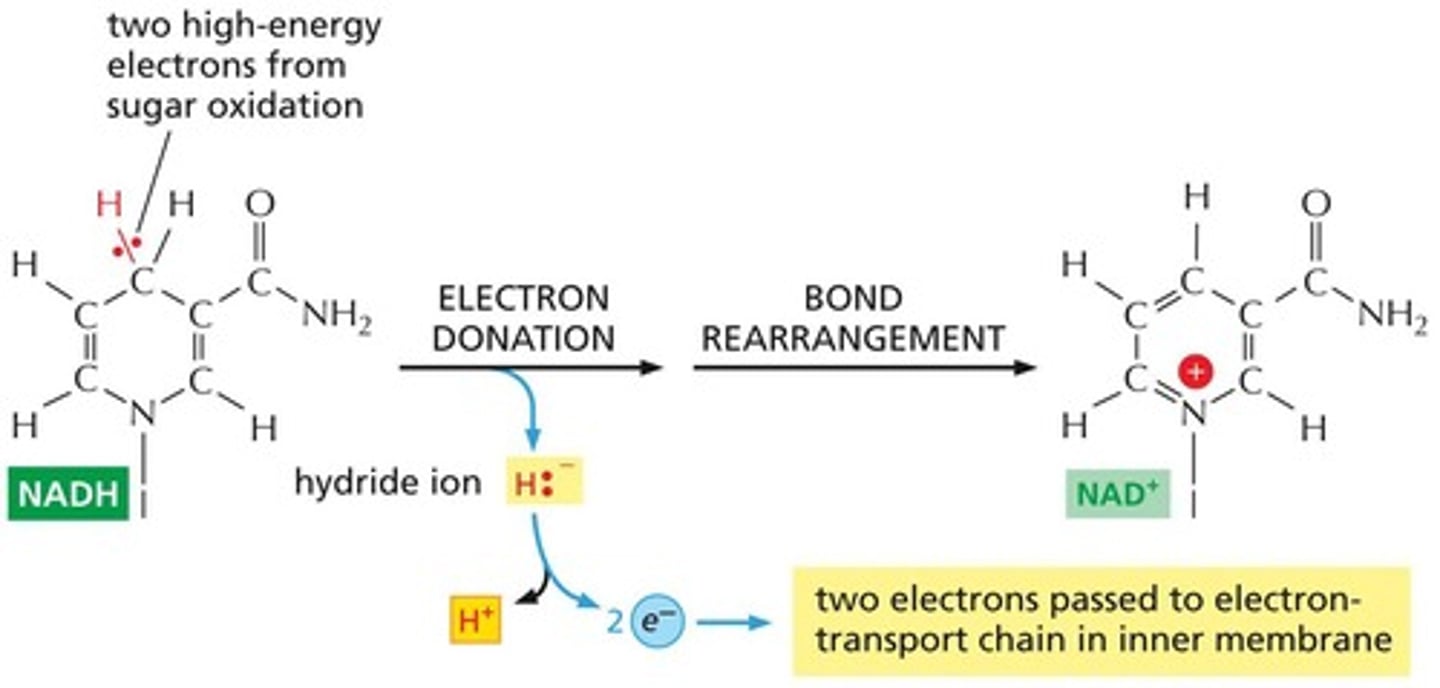
Where are high-energy electrons transferred in mitochondria?
Through enzyme complexes in the inner mitochondrial membrane.
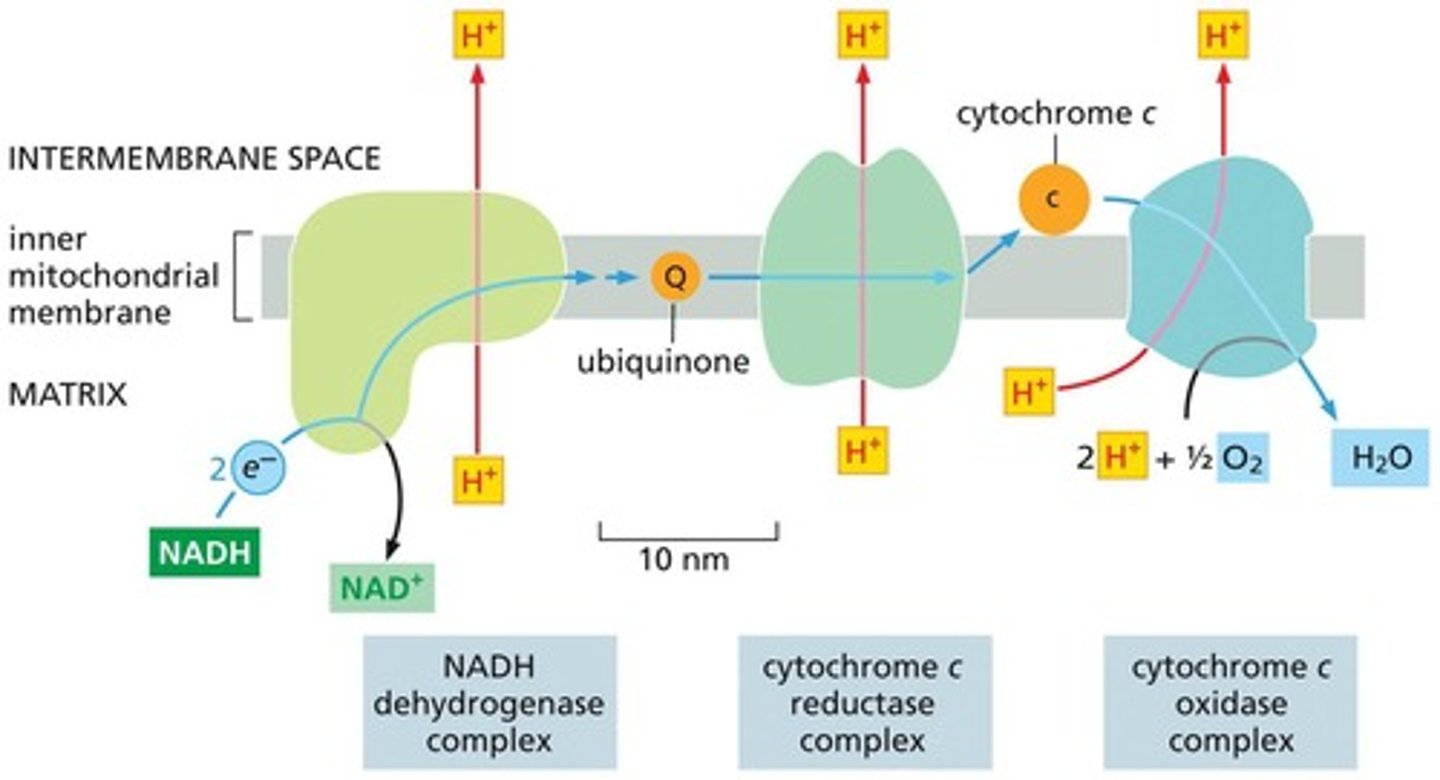
What is created from the electron transport in mitochondria?
An electrochemical hydrogen gradient.
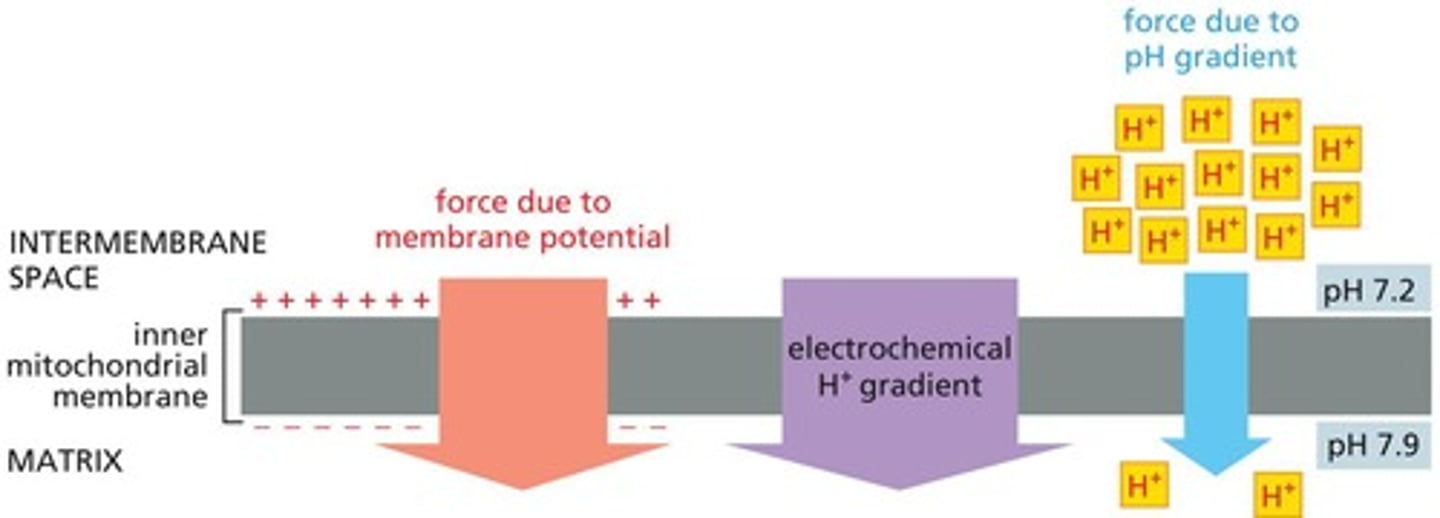
What drives protons back into the mitochondrial matrix?
Proton-motive force resulting from the pH gradient.
What enzyme converts the energy of protons flowing down their electrochemical gradient into ATP?
ATP synthase
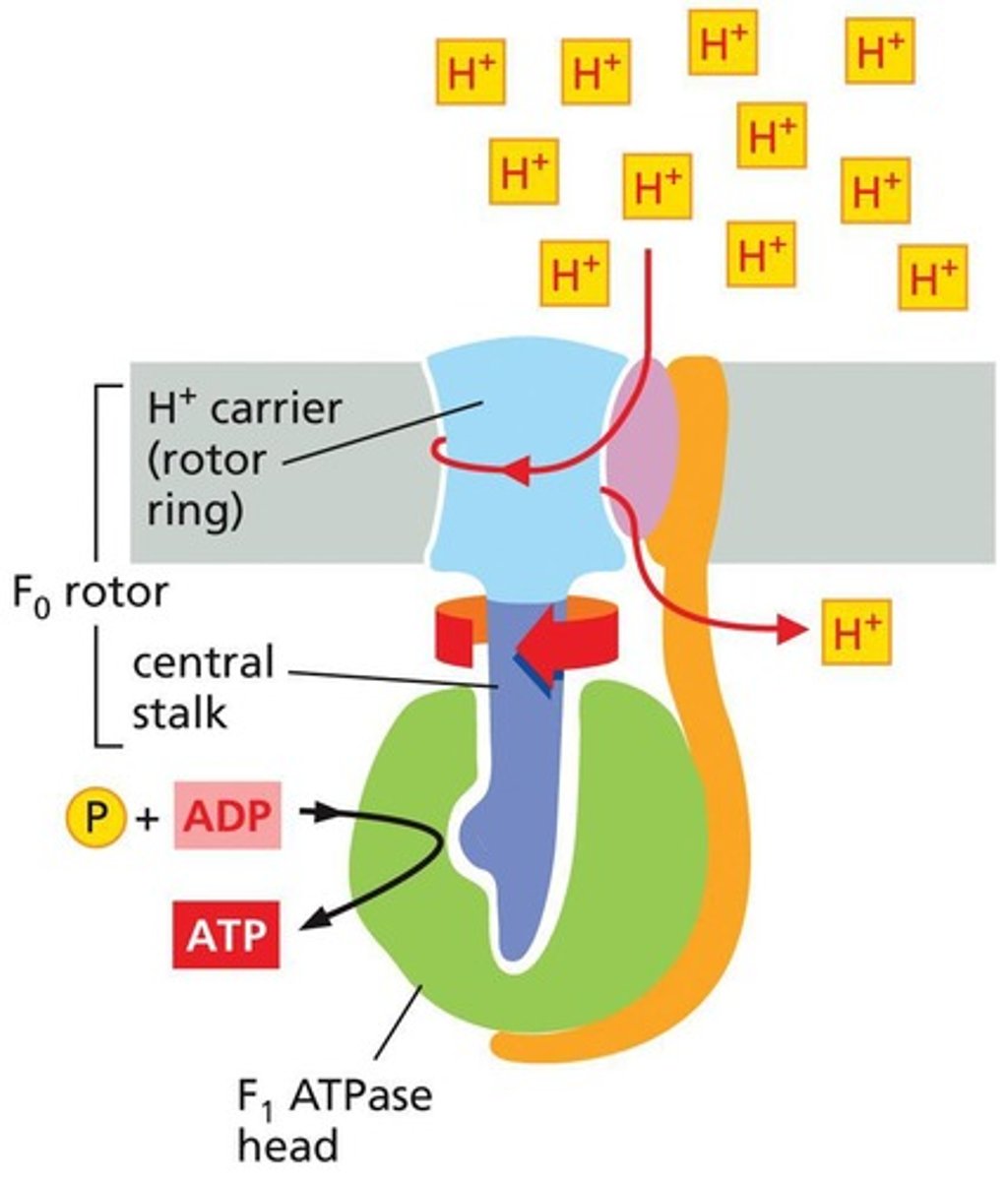
What is the main product of ATP production in mitochondria?
ATP
What is the role of the electron transport chain in ATP synthesis?
It facilitates the transfer of high-energy electrons to create a proton gradient.
What is the process of cell division that produces somatic cells?
Mitosis
What type of cells does meiosis produce?
Sperm and egg cells (gametes)
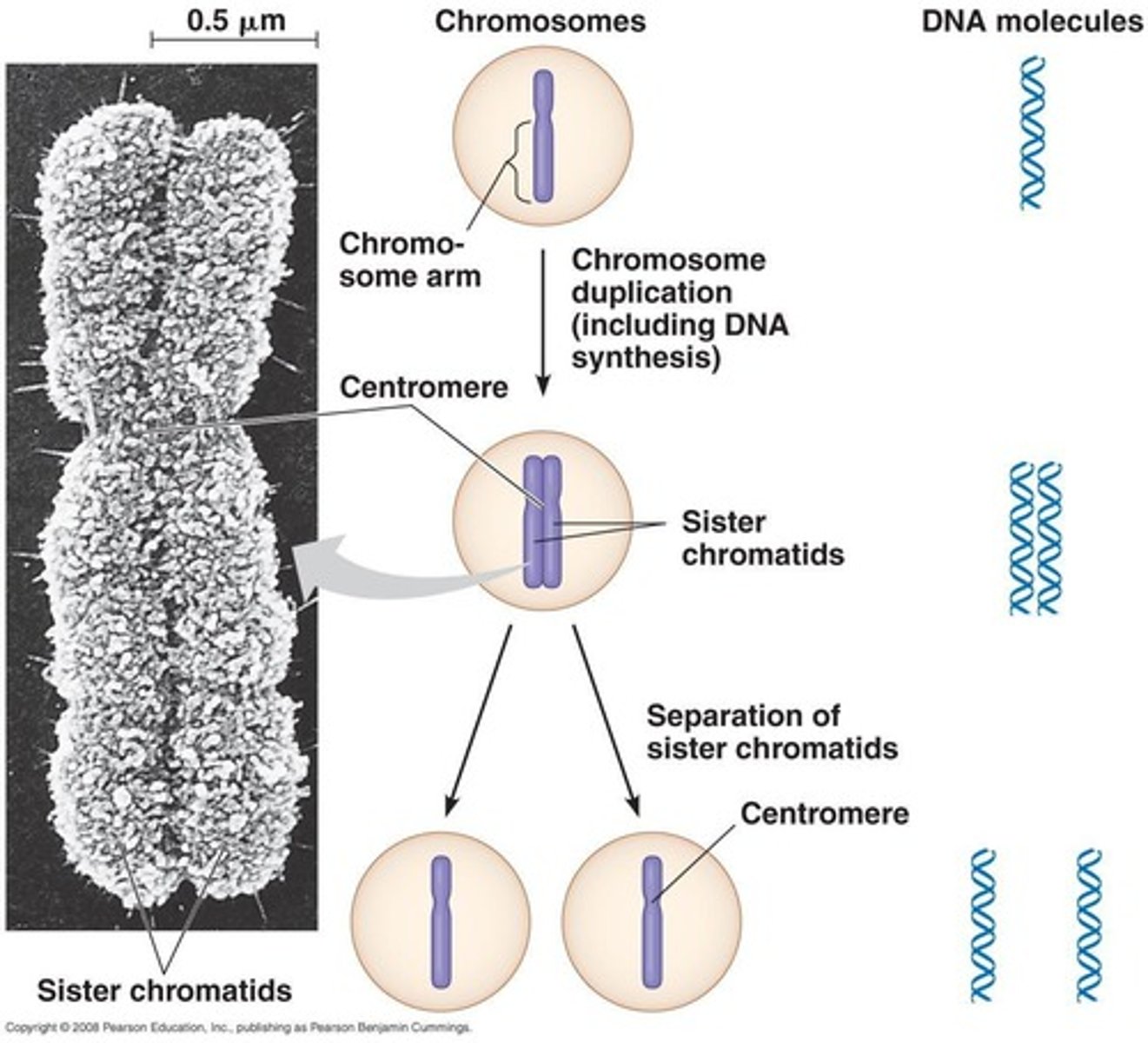
What must happen to a cell's genome before it can divide?
The entire genome must be copied.
How many chromosomes do typical human cells have?
46 chromosomes (23 from each parent)
What is the structure of DNA in non-dividing cells?
Long, thin strands called chromatin.
What are the two main processes involved in the cell cycle?
Mitosis and cytokinesis.
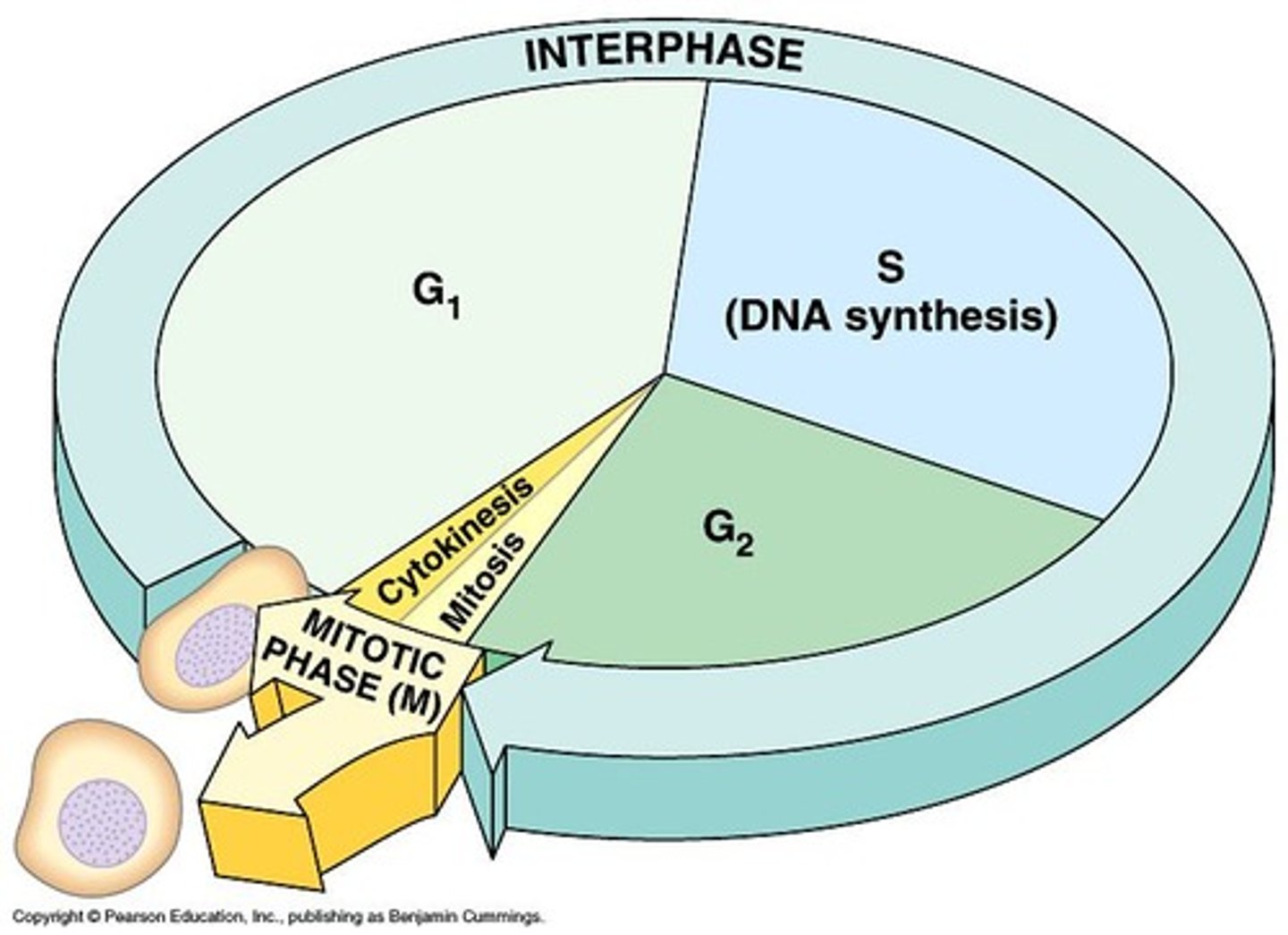
What phase of the cell cycle is known as interphase?
G1, S, and G2 phases.
What occurs during the G1 phase of interphase?
The cell gets the signal to divide and makes materials needed to replicate DNA.
What happens during the S phase of interphase?
DNA replication occurs.
What is the role of centrosomes during cell division?
They provide connection points for microtubules and are microtubule organizing centers.
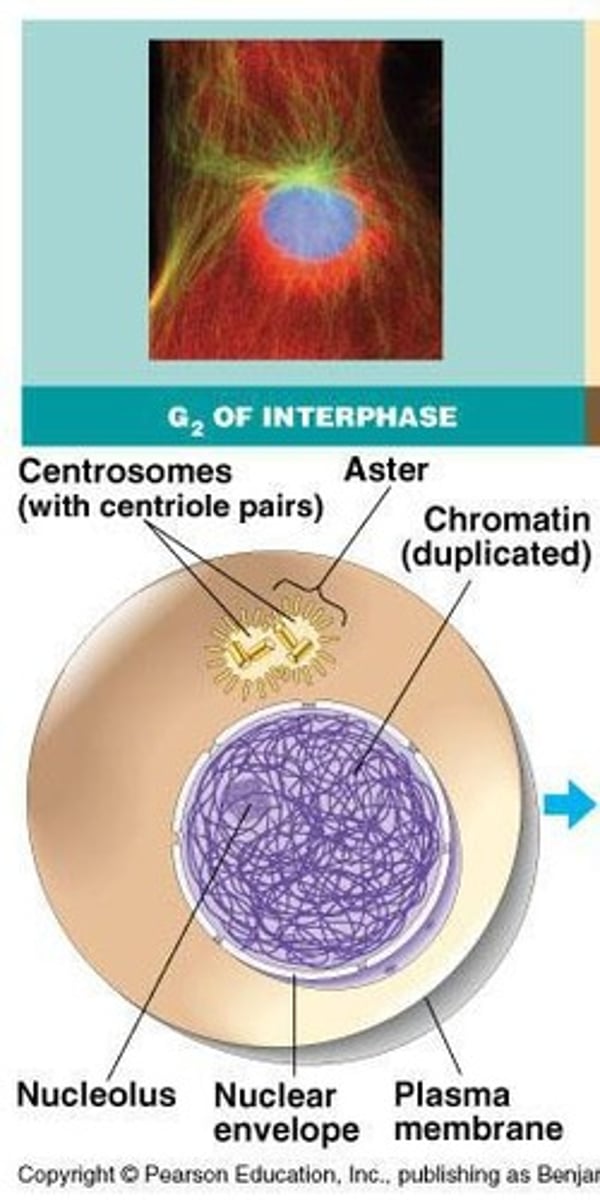
What happens during prophase of mitosis?
Chromatin condenses into chromosomes, the nuclear membrane breaks down, and the mitotic spindle begins to form.
What is the metaphase plate?
The axis along which sister chromatids align during metaphase.
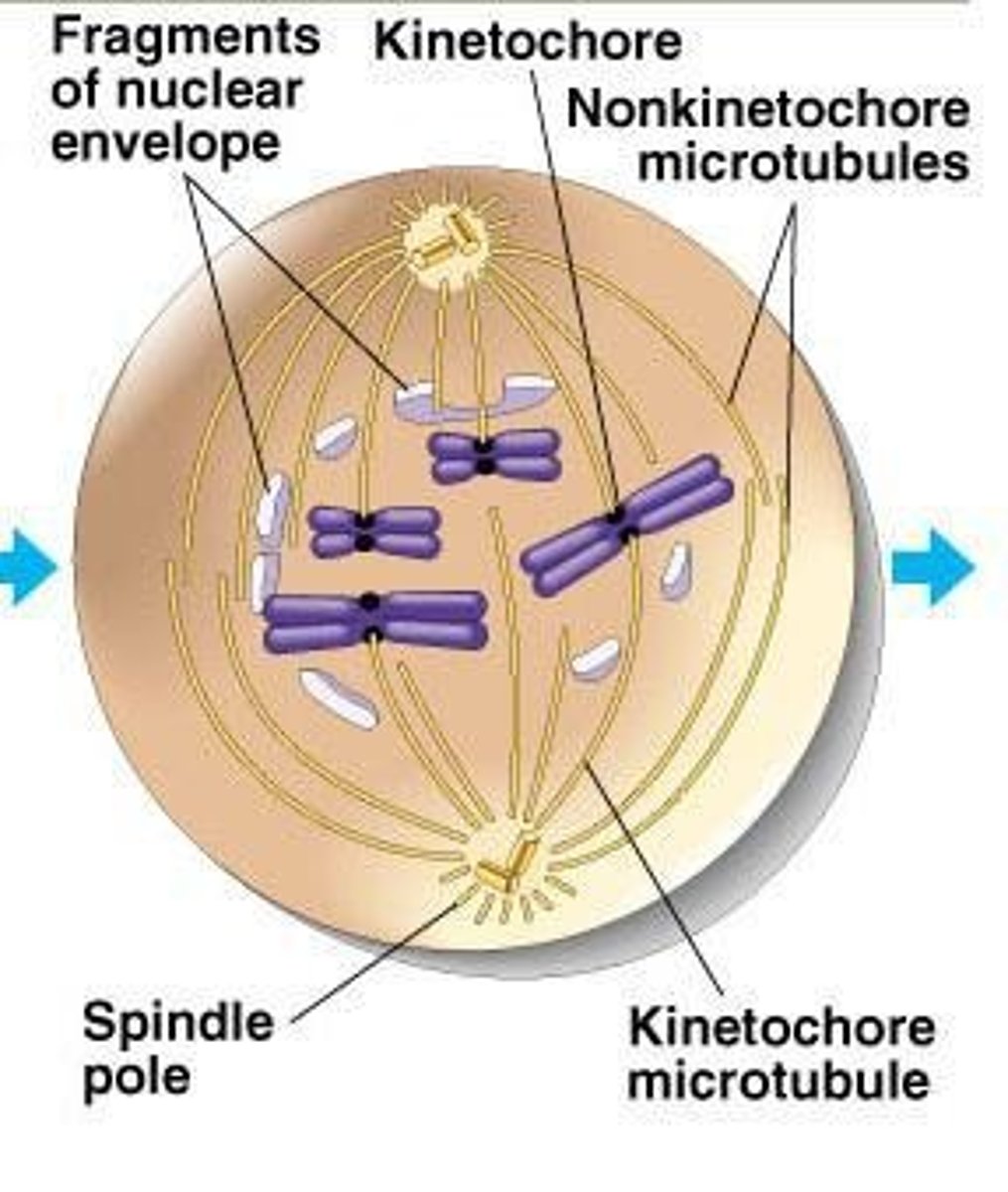
What occurs during anaphase of mitosis?
Sister chromatids are pulled apart toward opposite ends of the cell.
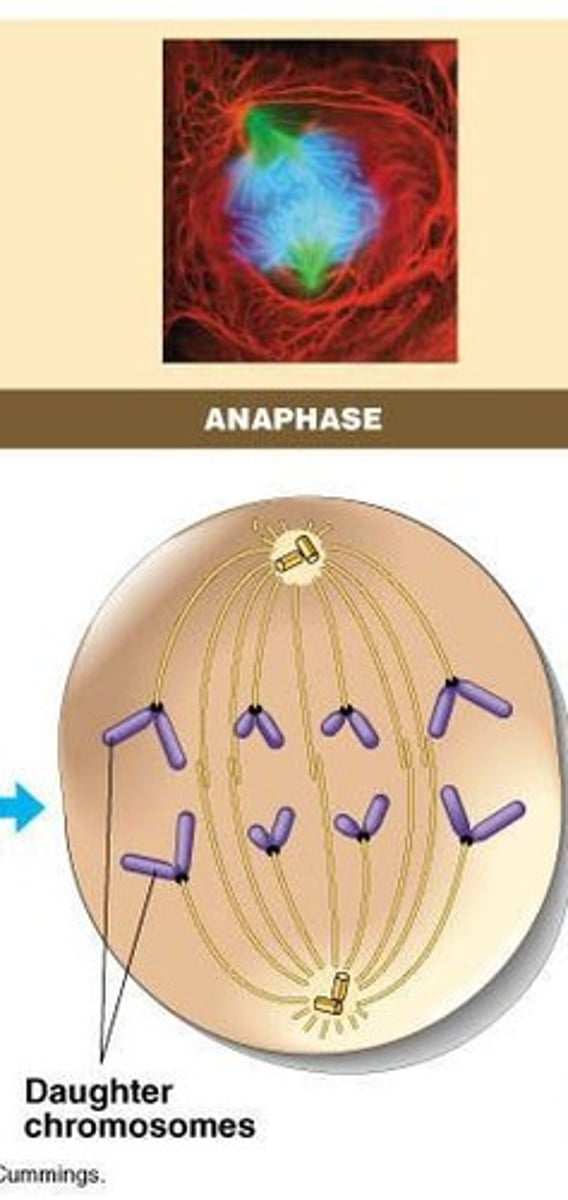
What happens during telophase?
The nuclear membrane forms around chromosomes, and chromosomes de-condense back into chromatin.
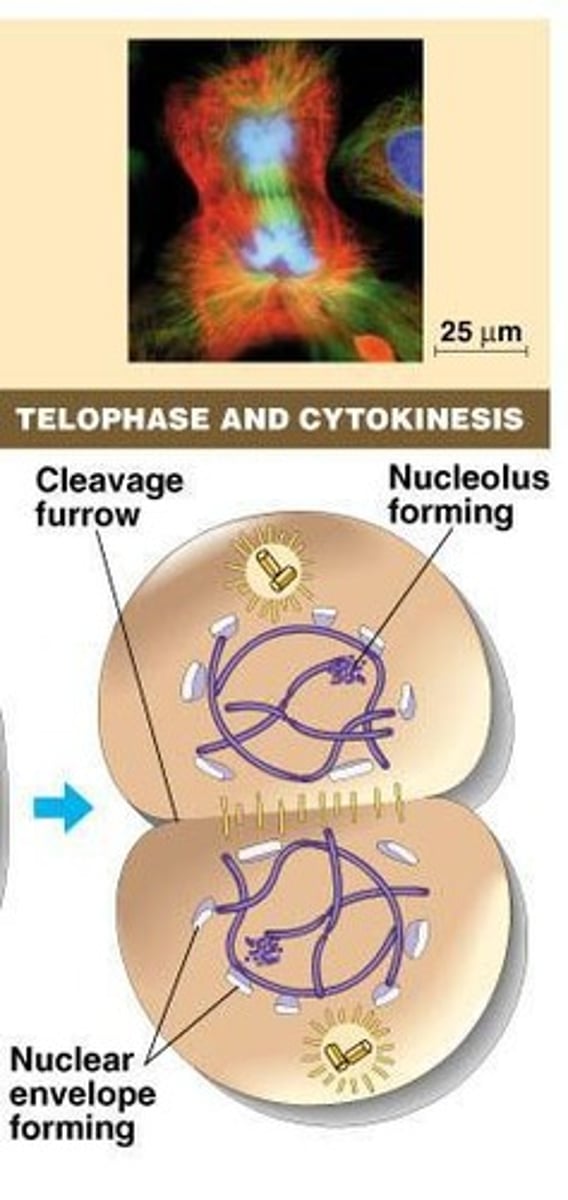
What is cytokinesis?
The division of the cytoplasm, which occurs simultaneously with telophase.
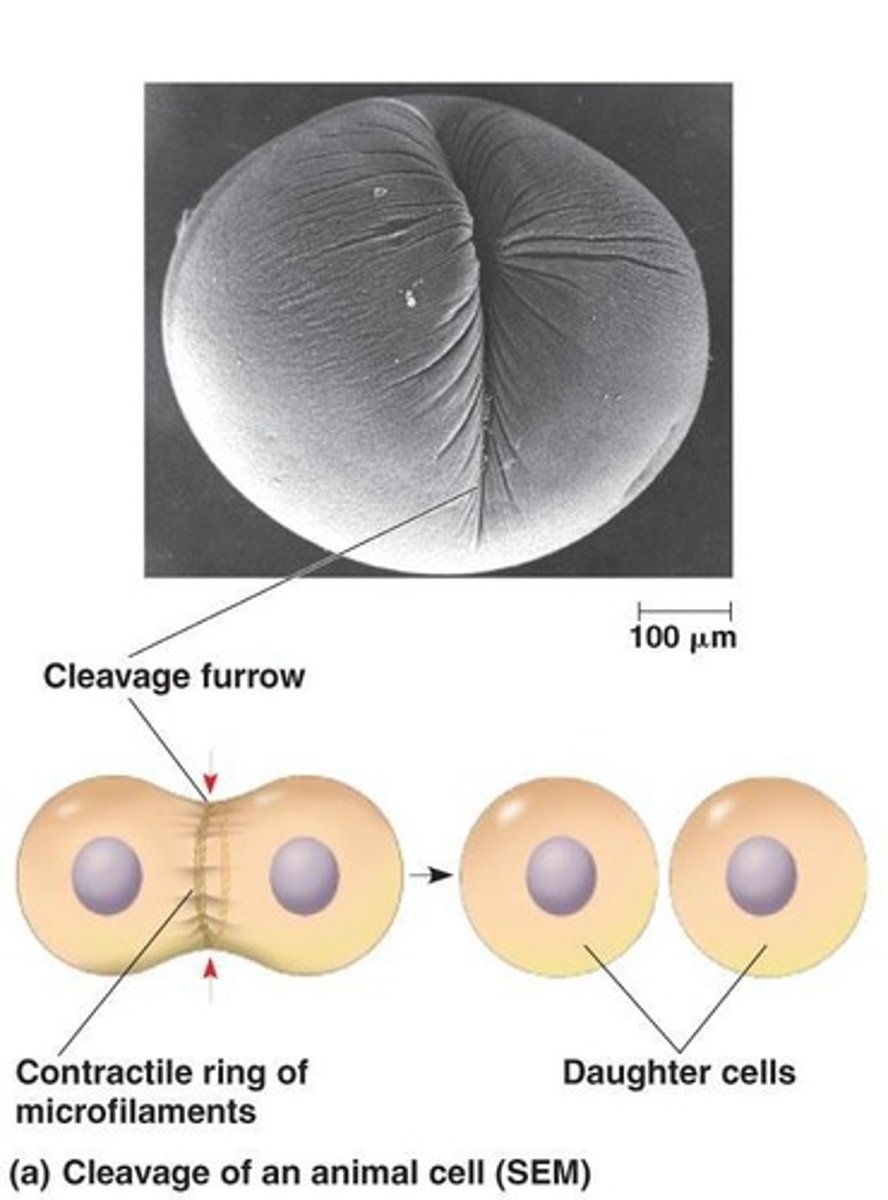
How does cytokinesis occur in animal cells?
Formation of a cleavage furrow that pinches the cell in two.
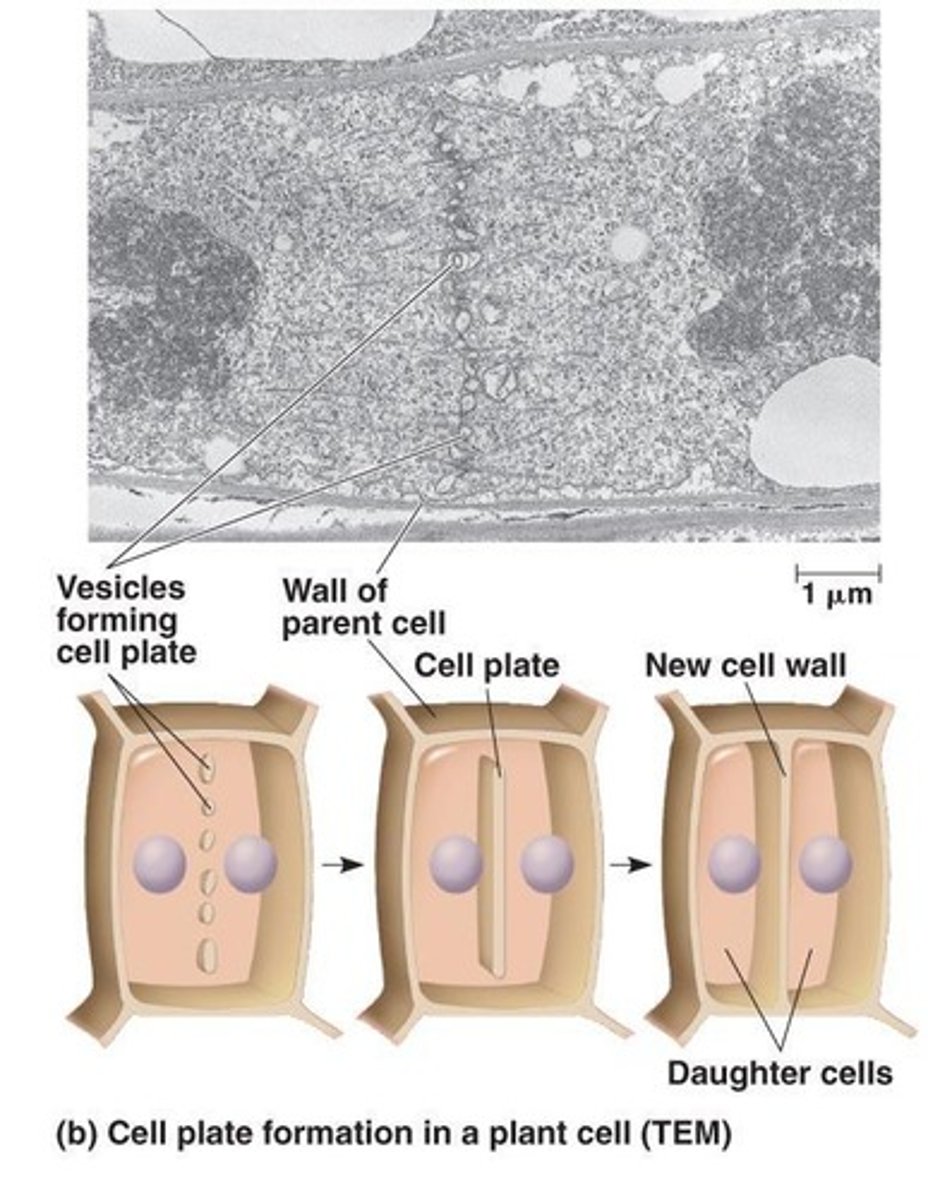
What is the cell plate in plant cells?
A structure formed during cytokinesis that develops into the plasma membrane and cell wall.
What is the function of the contractile ring in animal cell cytokinesis?
It helps to pinch the cell in two using actin microfilaments.
What is the significance of the G0 phase?
The cell carries on its day-to-day operations without preparing to divide.
What happens to the chromosomes during telophase?
They become less condensed and return to chromatin form.