Normal Hematopoiesis
 Call Kai
 Learn
Learn Practice Test
 Spaced Repetition
 Match
Match Flashcards
 Knowt Play
1/27

There's no tags or description
Looks like no tags are added yet.
Name | Mastery | Learn | Test | Matching | Spaced | Call with Kai | Chat |
|---|
No analytics yet
Send a link to your students to track their progress
28 Terms
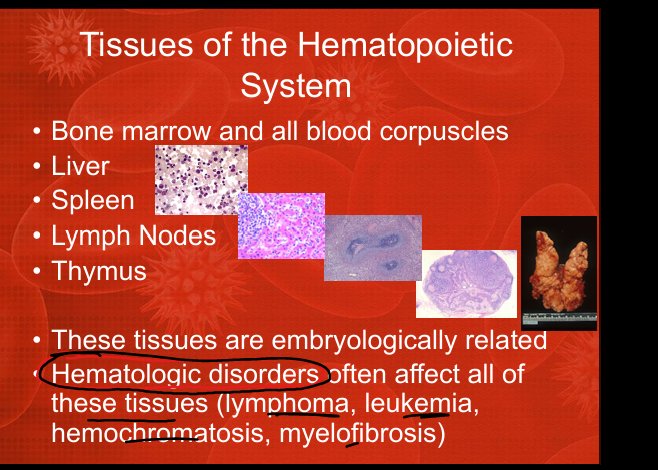
What are the major tissues of the hematopoietic system?
Bone marrow, liver, spleen, lymph nodes, thymus — all embryologically related and commonly affected together in hematologic disorders.
What is the function of bone marrow in hematopoiesis?
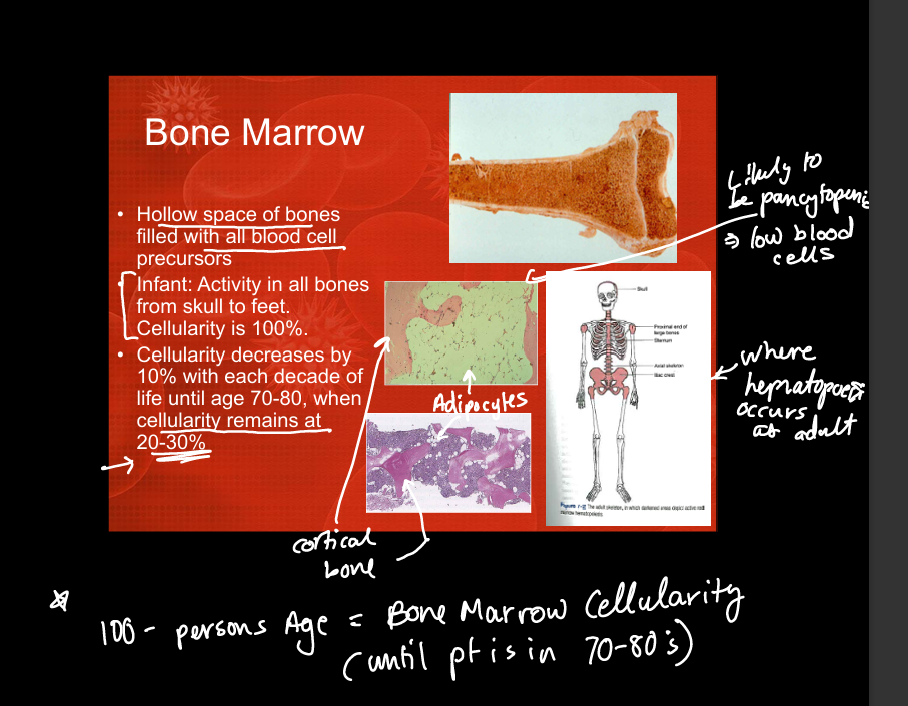
Hollow space in bones containing all blood cell precursors
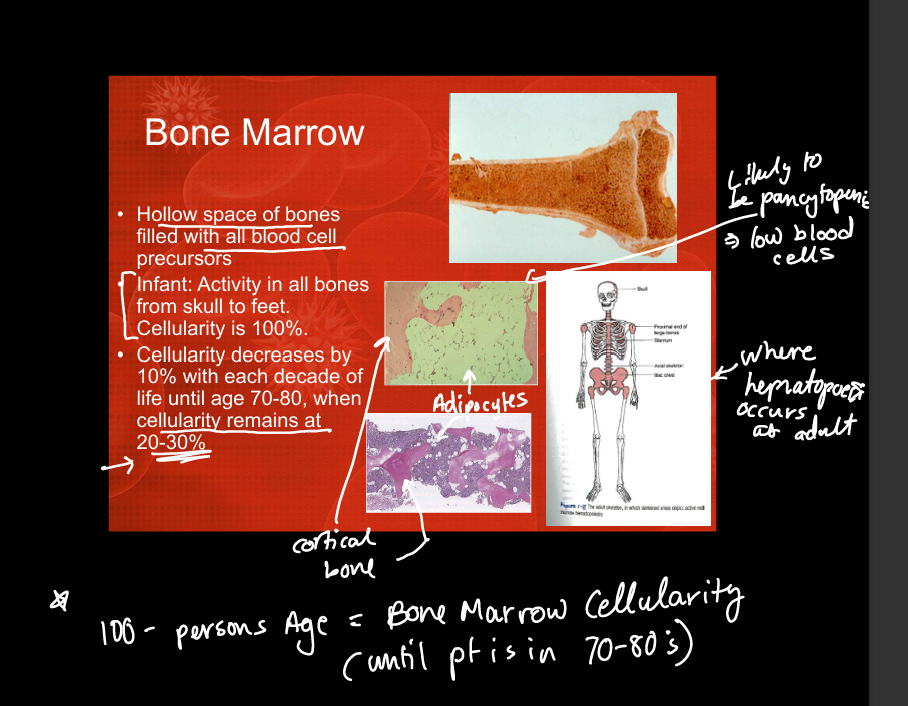
Which bones produce blood in infancy vs adulthood?
Infants: all bones from skull to feet
Adults: Sternum(breast bone), pelvis, proximal head of long bones, skull, spine
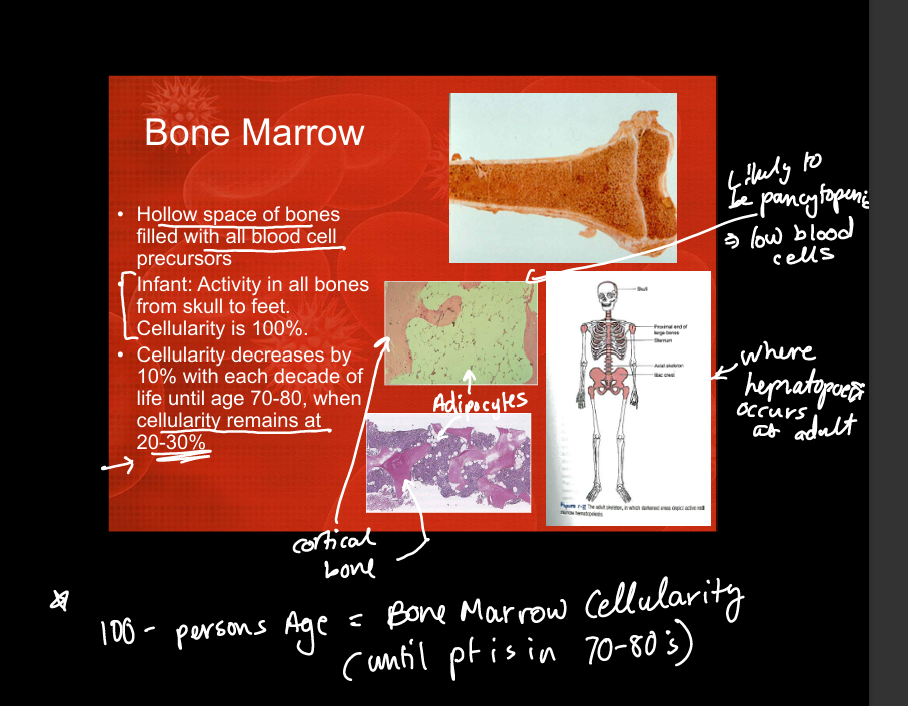
How does bone marrow cellularity change with age? Equation?
Starts at 100% in infancy, decreases ~10% per decade until age 70–80, then remains at ~20–30%.
100- persons age= Bone Marrow Cellularity
What is the normal myeloid:erythroid ratio?
3:1 in healthy bone marrow.
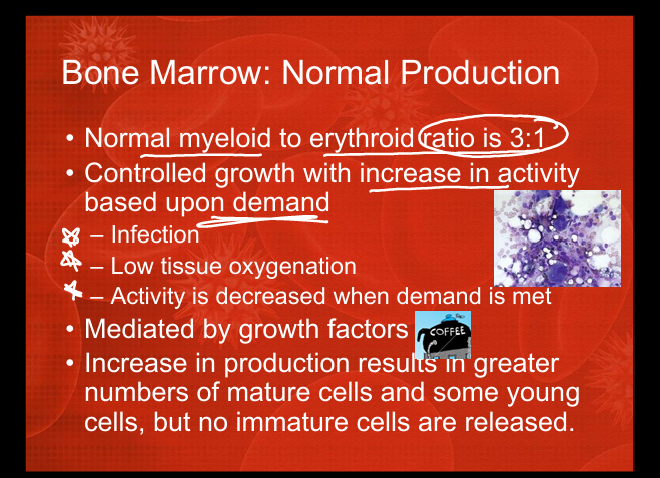
What regulates hematopoiesis in bone marrow?
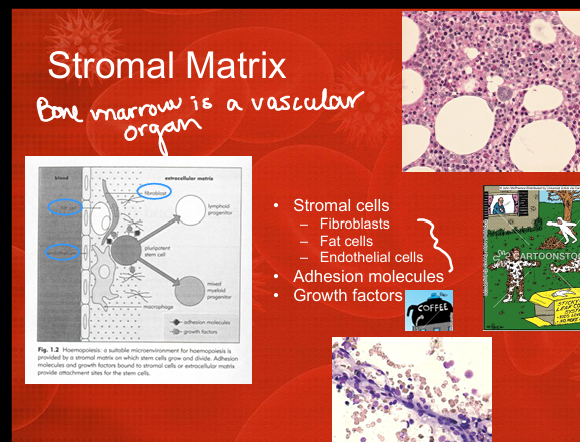
Stromal matrix (fibroblasts, fat cells, endothelial cells), adhesion molecules, and growth factors that support stem cell proliferation and differentiation.
What are the embryonic sites of hematopoiesis?
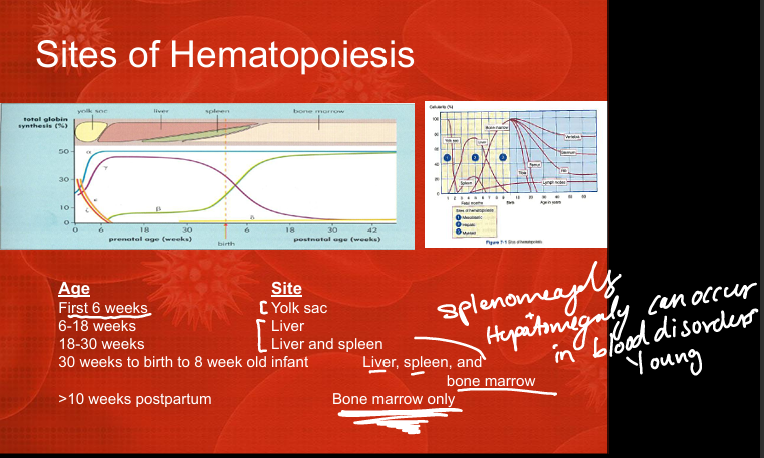
Yolk sac (first 6 weeks),
Liver (6–18 weeks),
Liver + spleen (18–30 weeks),
Liver/spleen/bone marrow (30 weeks–birth),
Bone marrow only after ~10 weeks postpartum.
When does the liver become the primary hematopoietic organ?
6–18 weeks gestation.
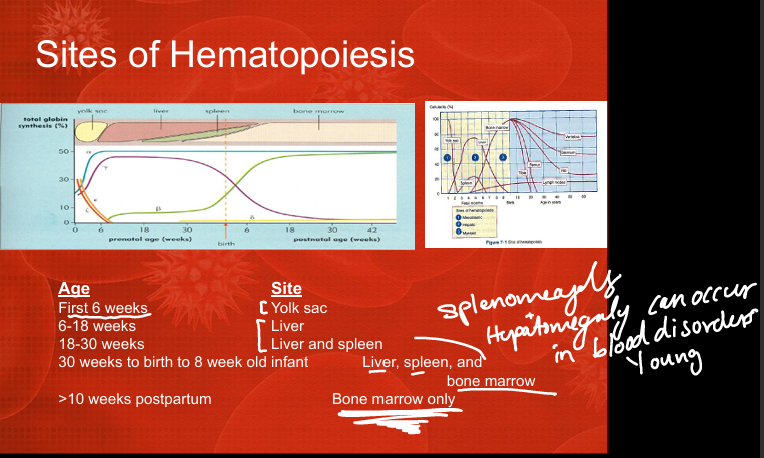
When does bone marrow become the dominant hematopoietic organ?
Late fetal period → exclusively after ~10 weeks postpartum.
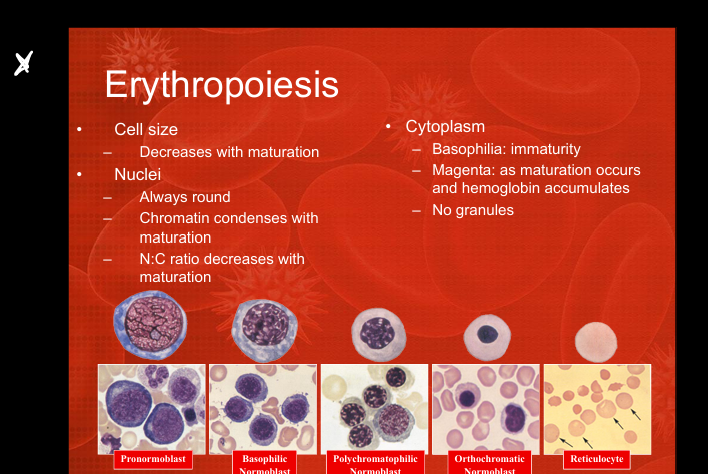
What is erythropoiesis? What changes occur to rbc?
Maturation of erythroblasts into RBCs: cell size decreases, nucleus condenses then is extruded, cytoplasm shifts from blue (basophilic) to pink (hemoglobinized).
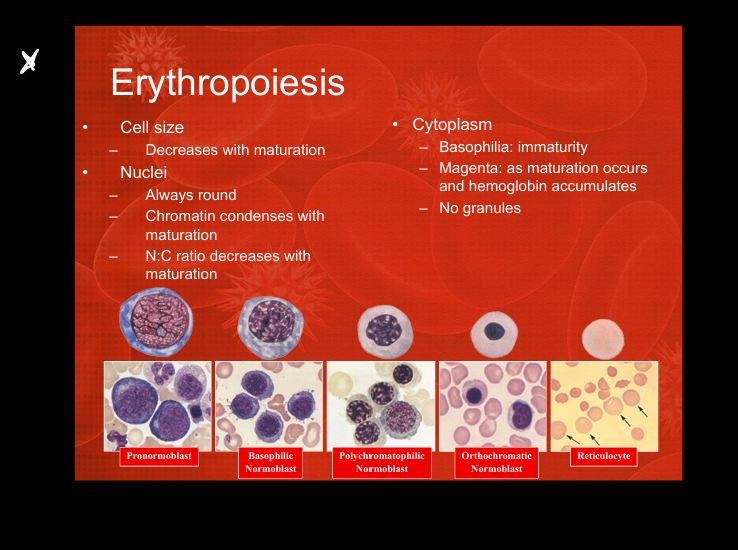
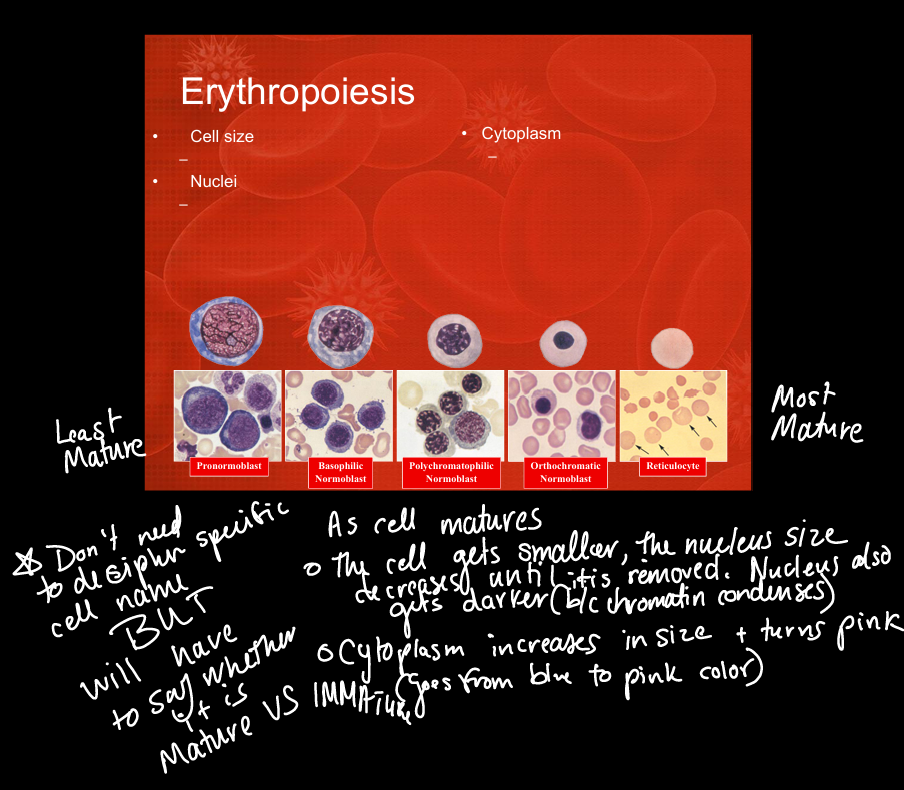
How does the nucleus change during erythropoiesis?
Always round, chromatin condenses making it more purple until it disappears and cytoplasm takes over
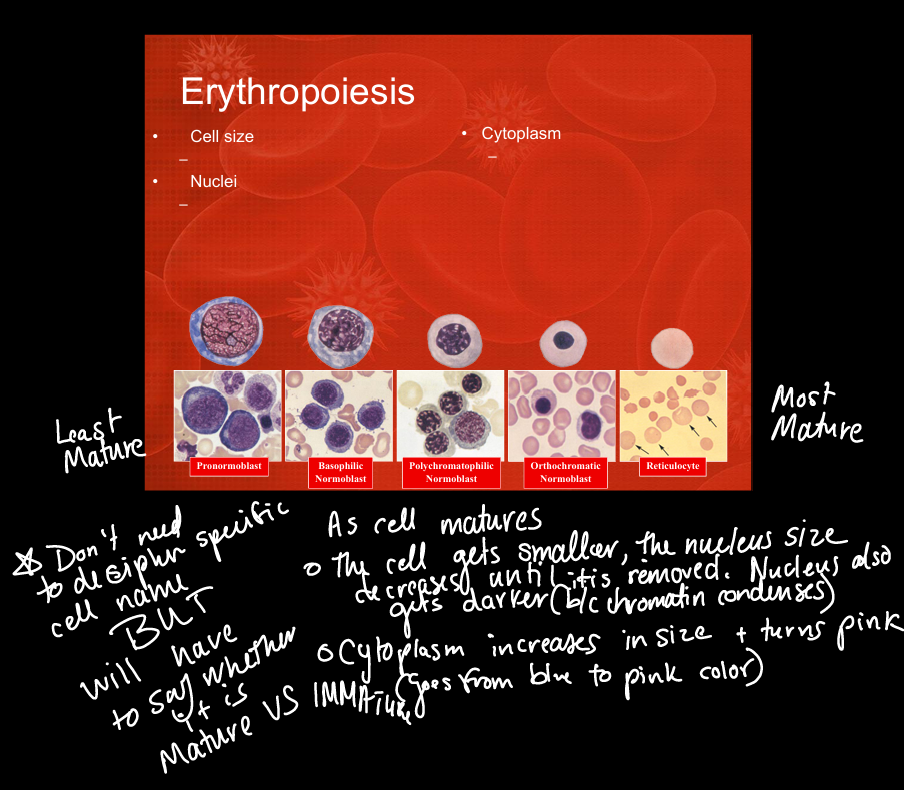
How does cytoplasm change during erythropoiesis?
Basophilic (blue) in immature cells → becomes magenta/pink as hemoglobin accumulates
What is the structure of a mature red blood cell?
Biconcave disk, ~8 µm diameter, central pallor, highly deformable, no nucleus or organelles.
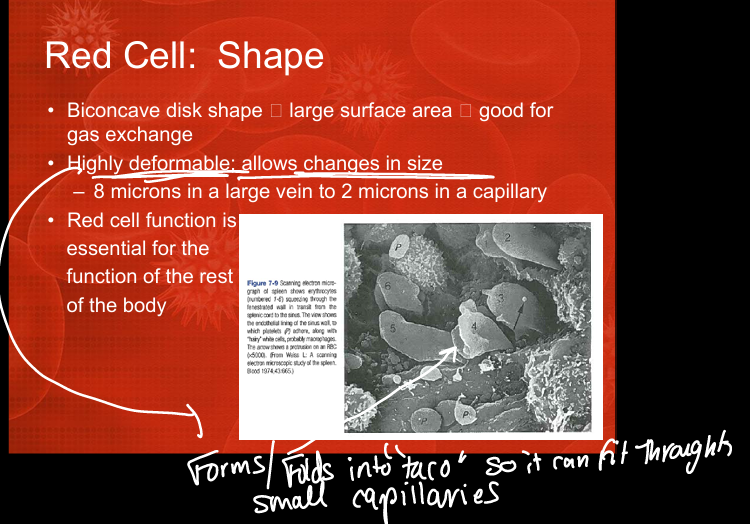
Why is RBC deformability important?
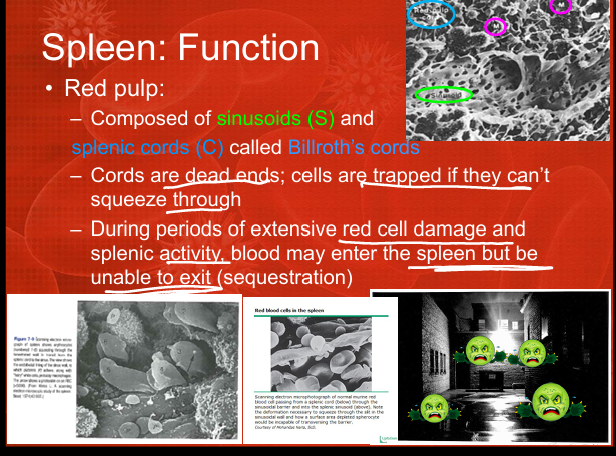
Allows RBCs to squeeze from 8 µm veins into 2 µm capillaries and through splenic sinusoids
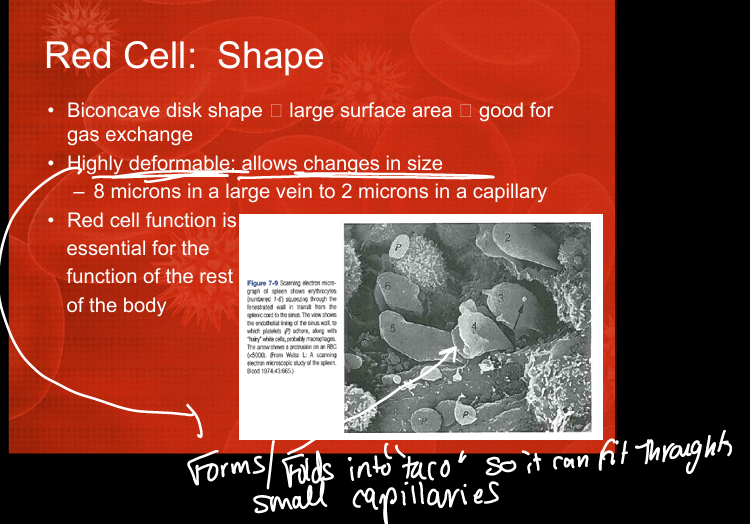
What is the role of the spleen in RBC quality control?
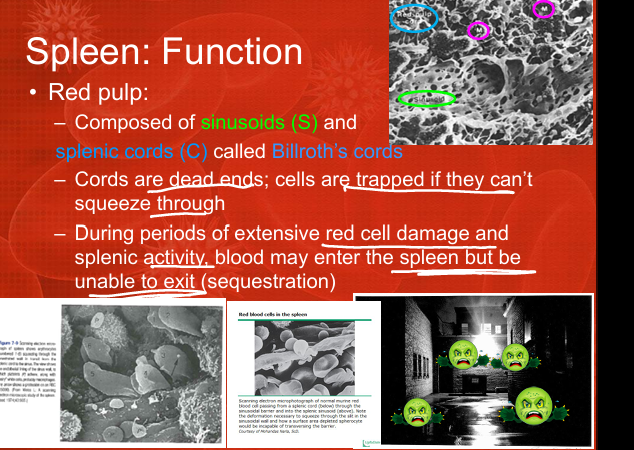
Red pulp macrophages remove senescent or abnormal RBCs
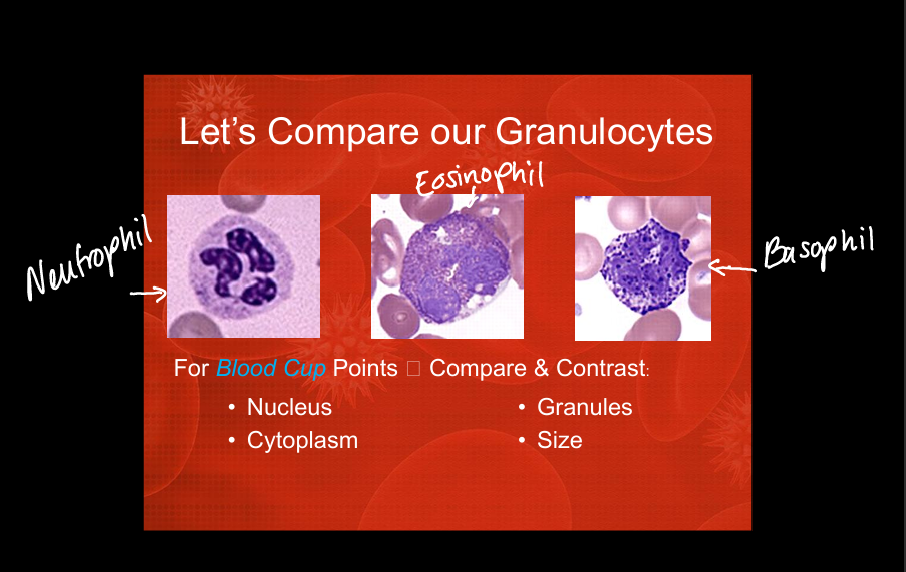
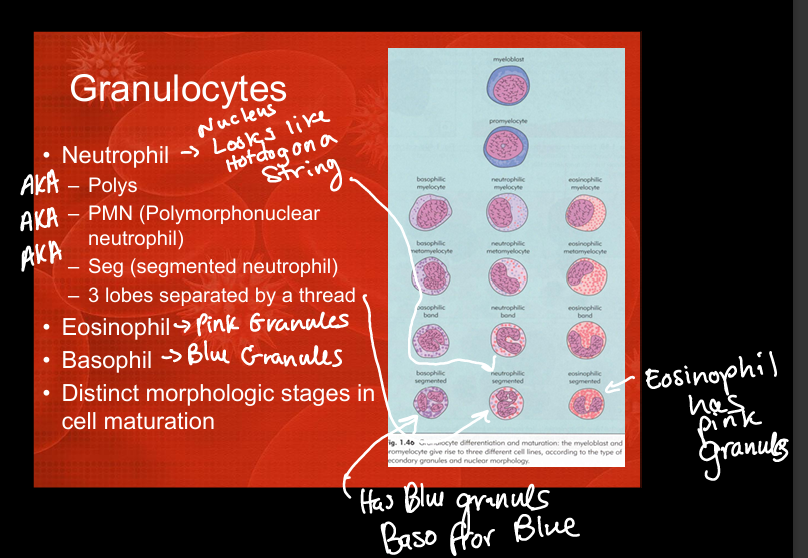
What are granulocytes?
Neutrophils, eosinophils, basophils — all with distinct granules and maturation stages.
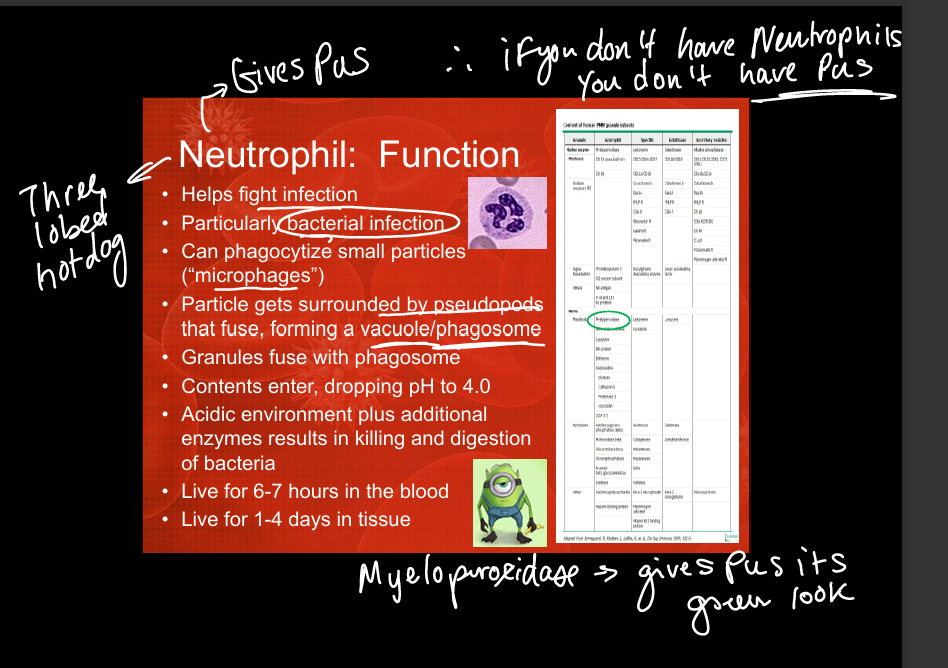
What is the morphology of a mature neutrophil?
Segmented nucleus with 3 lobes (“hot dog on a string”), pale cytoplasm with fine granules.
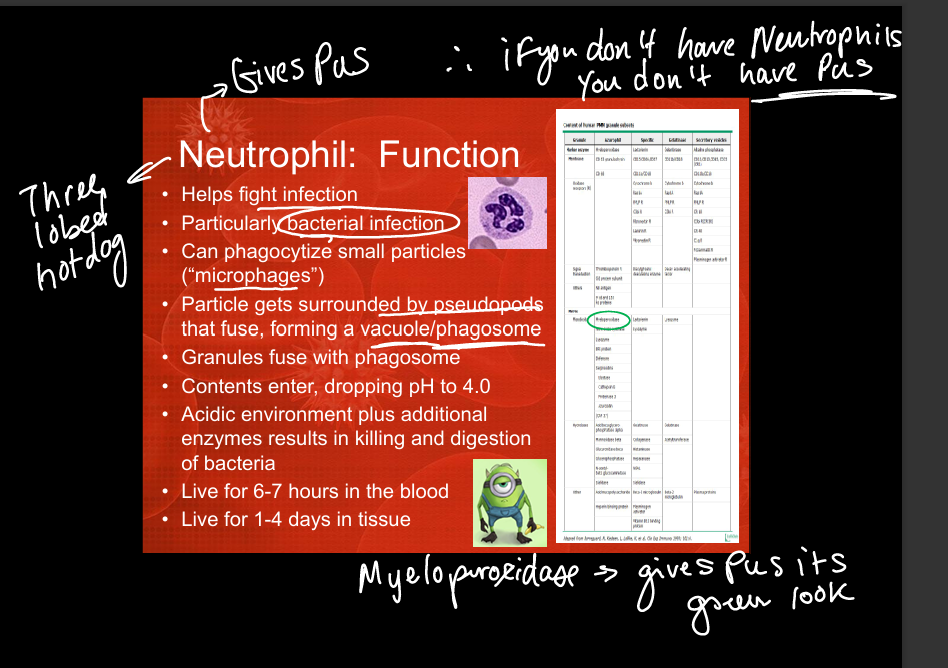
What is the function of neutrophils?
Phagocytosis of bacteria
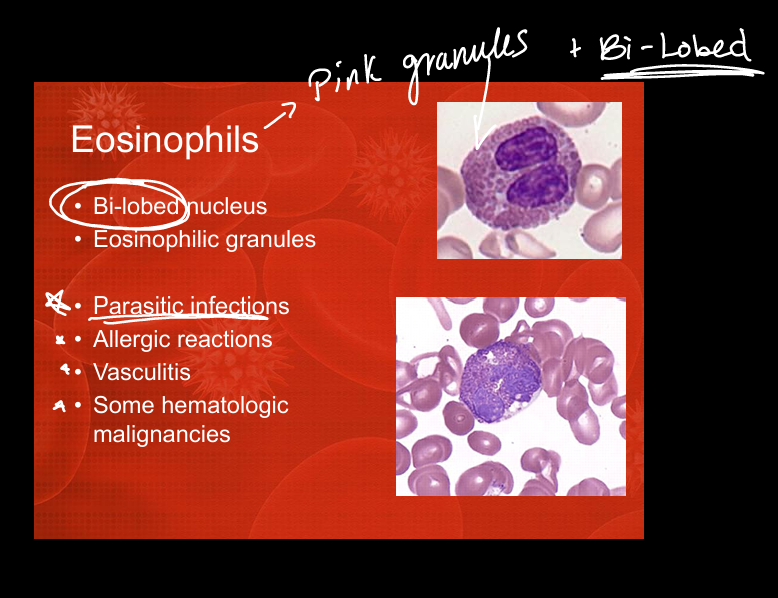
What are eosinophils?
Bi‑lobed nucleus, bright eosinophilic (pink) granules; used for parasitic infections, allergic infections
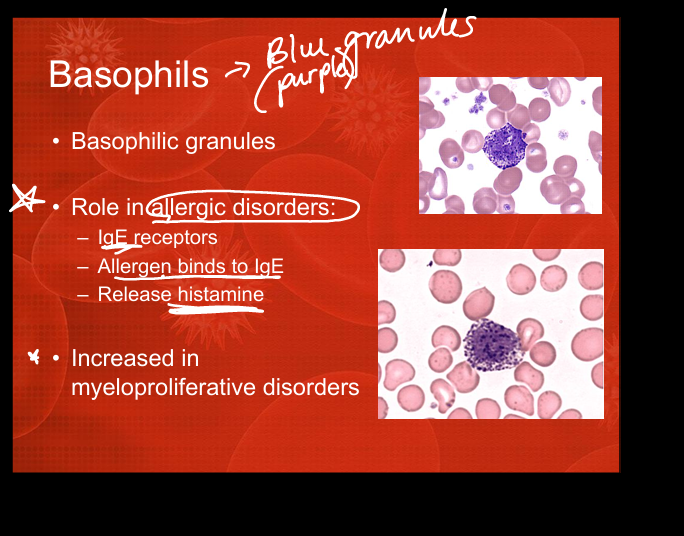
What are basophils?
Basophilic (purple/blue ) granules. B for Blue or purple; used for IgE receptors, allergic disorders
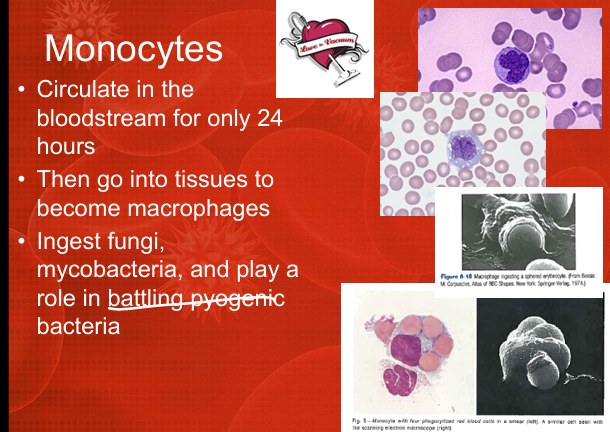
What is the morphology of monocytes?
Large cell, kidney‑shaped nucleus, abundant gray cytoplasm
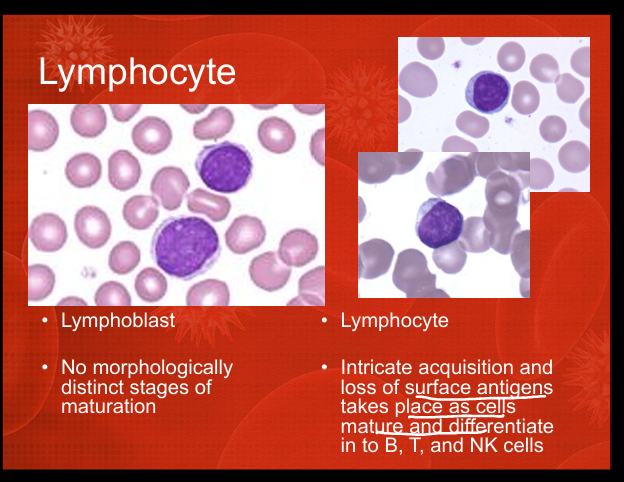
What are lymphocytes?
T cells, B cells, NK cells
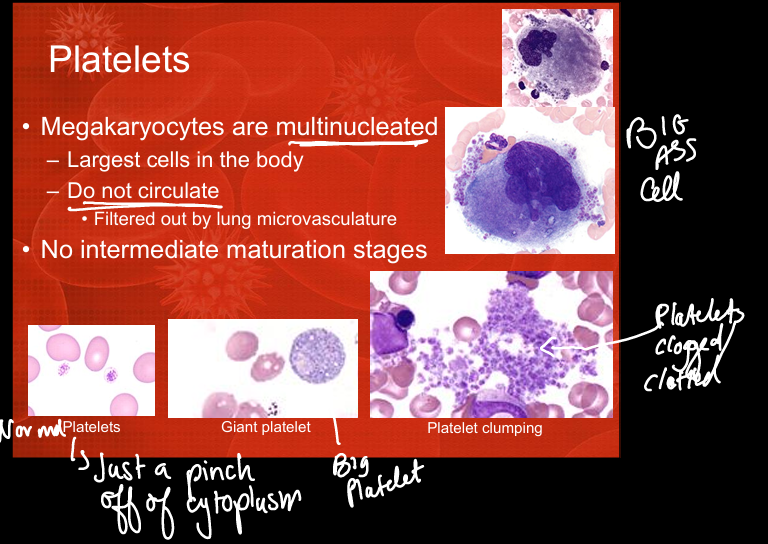
What is the maturation sequence of platelets?
Megakaryocyte (largest cell in body, multinucleated) → cytoplasmic fragmentation → platelets. They are BIG ASS cells
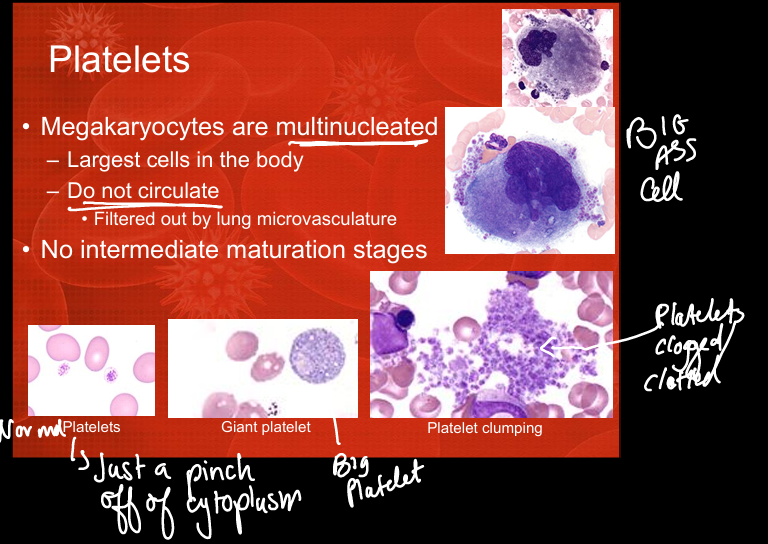
Where are megakaryocytes found?
Bone marrow only
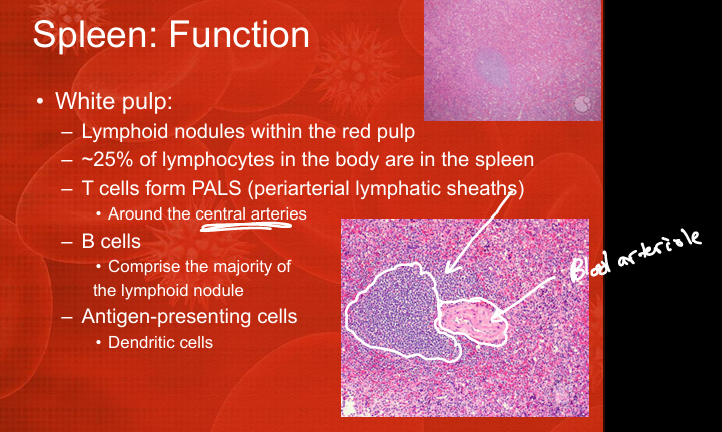
What is white pulp of the spleen?
Lymphoid nodules containing T‑cell PALS around central arteries and B‑cell follicles
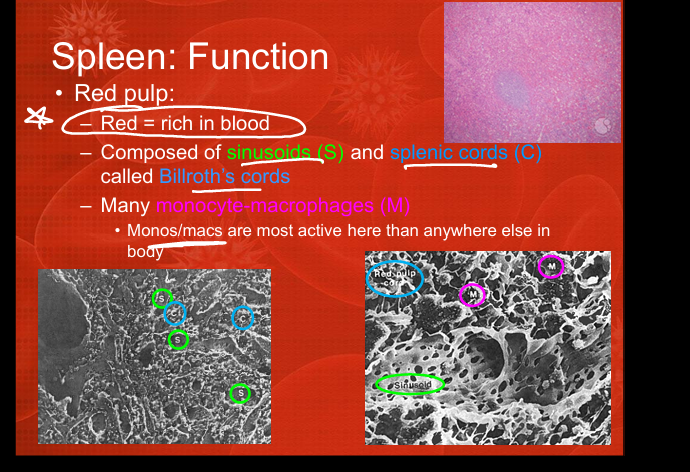
What is red pulp of the spleen?
Sinusoids + Billroth’s cords
Why do spherocytes get trapped in the spleen?
They lack deformability and cannot squeeze through splenic sinusoidal slits → sequestration and hemolysis.
Comparing Granulocytes