Conditions of the bovine skin (TV4101, Lecture 24 Notes)
 Call Kai
 Learn
Learn Practice Test
 Spaced Repetition
 Match
Match Flashcards
 Knowt Play
1/13

There's no tags or description
Looks like no tags are added yet.
Name | Mastery | Learn | Test | Matching | Spaced | Call with Kai | Chat |
|---|
No analytics yet
Send a link to your students to track their progress
14 Terms
Discuss sampling/testing of skin lesions
Tier 1 - sample multiple animals (accompanied by lesion photographs)
- Biopsy (formalin fixed and fresh)
- Cytology
- Whole blood and serum
- Skin scraping
- Hair pluck
- Superficial ectoparasites, especially maggots (alcohol fixed)
Tier 2
- Cytology
- Bacterial culture
- Fungal culture
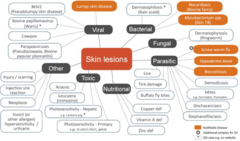
List common skin conditions
Discuss dermatophilosis (rain scald)
- Common
- Associated with skin damage/maceration and prolonged wetting with close contact transmission
- Pain-brush hair lesions with raw, non-pruritic erosions
- Impression smear with branching filaments and railroad track appearance
- May self-resolve with drying environment, if severe treat with systemic antibiotics (e.g. penicillin, LA oxytet or TMP-sulpha)

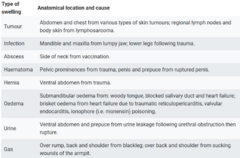
Discuss differential diagnosis of skin lumps
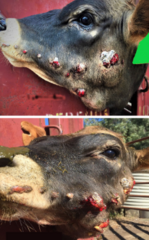
Discuss atypical cutaneous actinobacillosis (woody tongue)
- Associated with penetrating lesion (i.e. opportunistic infection)
- Pyogranulomatous soft-tissue lesions (commonly on the head)
- Administer IV sodium iodine
Discuss Staphylococcal infections
- Superficial pustular dermatitis (especially udder, scrotum and perineum)
- Wash daily with chloramine (0.5%) or povidone iodine (5%)
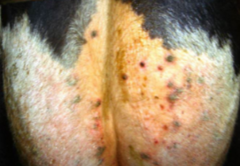
Discuss udder cleft dermatitis
- Multifactorial disease with opportunistic anaerobe overgrowth
- Erythema/papules/crusts or ulcerative, exudative wounds with necrosis/hemorrhage of the intermammary cleft
- May spontaneously recover or implement rigorous cleaning/debridement

Discuss black spot/pox
- Necrotic lesion at teat orifice with secondary infection (e.g. Staphylococcus aureus and Fusobacterium necrophorum)
- Evaluate milking machine function and routine
- Administer high-emollient teat disinfectants with hypochlorite dips to debride dead tissue
Discuss common fungal skin diseases
Ringworm (Dermatophytosis)
- Common, self-limiting disease
- Due to Trichophyton verrucosum
- Exudation and fungal hyphae produce characteristic dry, crusty lesions
Aspergillosis
- Due to Aspergillus fumigatus
- Fungal placentitis resulting in skin lesions (grey, felt-like or yellow, dry plaques) in the aborted foetus
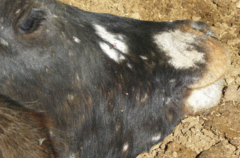
Discuss common viral skin diseases
- Papillomatosis (warts), due to bovine papillomaviruses
- Bovine papular stomatitis
- Bovine herpes mammillitis (BoHV-2)
- Pseudo lumpy skin disease (BoHV-2)
- Bovine viral diarrhoea (BVDV), with diffuse stomatitis
- Malignant catarrhal fever (MCF), sheep-associated with oral ulcers and erosions
- Foot-and-mouth disease (FMD), excessive salivation with mouth and foot lesions causing lameness
- Lumpy skin disease (Capripoxvirus)
Discuss common external parasites
Typically associated with reduced BCS, milk production and damaged hides;
- Cattle tick
- Buffalo fly, may transmit Stephanofilaria (susceptible to MLs)
- Lice, common during cooler months
- Follicular, burrowing or non-burrowing mites, perform skin scraping (with oil until capillary ooze)
- Chorioptic manage (susceptible to MLs)
- Myiasis/blowfly strike, secondary to open wounds
Discuss common neoplastic skin diseases
- Warts, due to bovine viral papillomatosis
- Squamous cell carcinoma (common), due to UV light exposure
- Cutaneous lymphosarcoma
- Fibroma
- Melanoma
- Cutaneous angiomatosis
Discuss common deficiency skin disorders
Copper deficiency - dry, dull, non-elastic skin with poor growth of scant brittle hairs and subtle coat changes
Cobalt deficiency - poor growth rate and wasting with poor, fragile hair.
Zinc deficiency - deterioration and loss of hair thickened with cracked skin (parakeratosis) of muzzle, neck, lower limbs, perineum and scrotum.
Vitamin A, E or C deficiency

Discuss dermatosparaxis
- Autosomal recessive disease
- Collagen dysplasia causing extensible and fragile skin
