macronutrients
 Call Kai
 Learn
Learn Practice Test
 Spaced Repetition
 Match
Match Flashcards
 Knowt Play
1/56

There's no tags or description
Looks like no tags are added yet.
Name | Mastery | Learn | Test | Matching | Spaced | Call with Kai | Chat |
|---|
No analytics yet
Send a link to your students to track their progress
57 Terms
name the 6 classes of nutrients
carbohydrates, fats, protein, vitamins, minerals, water
define the term energy balance
calories in vs calories out
what are the 3 energy states to be in?
negative energy balance, neutral energy balance, positive energy balance
what energy state results in weight loss?
negative energy balance
what energy state keeps weight stable?
neutral energy balance
what energy state results in weight gain?
positive energy balance
define gross energy
the total amount of energy supplied via food
Digestible energy is the energy remaining after loss in ____________.
feces (digestion and absorption are never 100%)
Metabolizable energy accounts for the losses in _______ and _________.
urine, gases
Net energy is accounting for the energy lost as _______ in digestion, absorption, and use of food.
Heat (also called heat increment or specific dynamic action)
Net energy can be broken down into 2 sub groups, they are called what? What are they for?
NEm for maintenance, NEp for production or growth (if there is NE remaining after used for maintenance)
define deficiency
minimum requirement for nutrient is NOT met
define toxicity
maximum level of nutrient is exceeded
what does it mean to have a complete diet?
contains all the essential/required nutrients for a specific species or life phase
what does it mean to have a balanced diet?
contains all essential/required nutrients in the correct ratios for the specific species or lifestage
what is the gold standard for AAFCO nutritional adequacy testing of a diet? does this use healthy or unhealthy animals?
feeding trial, healthy
what do veterinarians consider the most useful method of testing nutritional advocacy? does this use healthy or unhealthy animals?
clinical trial, unhealthy

In this example product, name the sources of protein
chicken by-product meal, corn gluten meal, wheat gluten
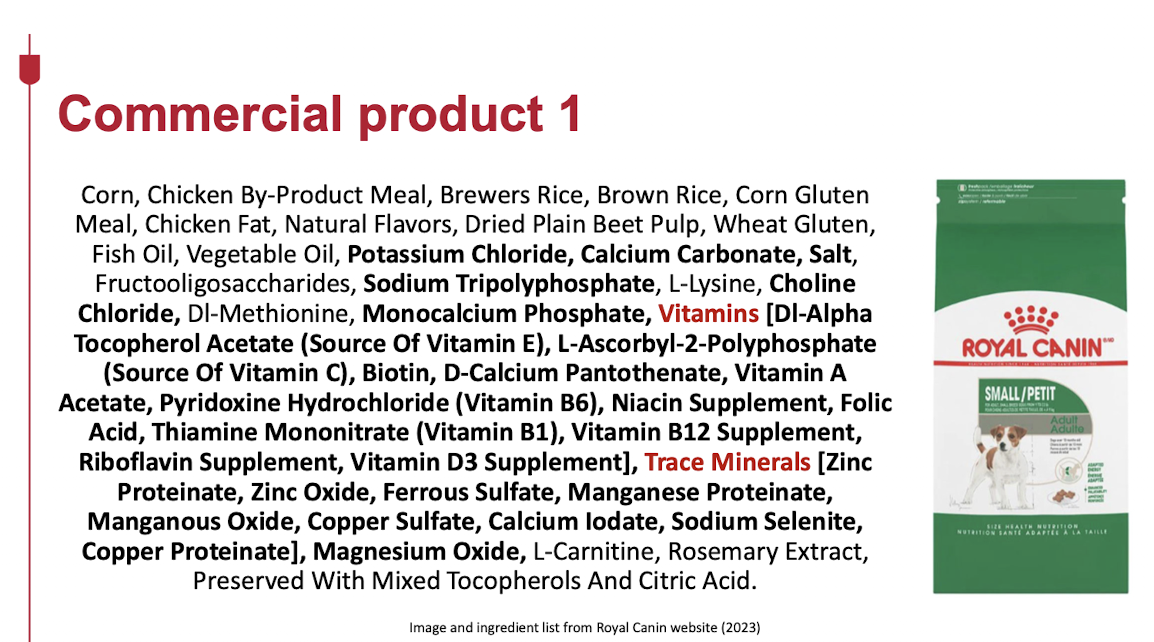
in this example product, name the sources of fat
chicken by-product meal, chicken fat, fish oil, vegetable oil

in this example product, name the sources of starch and fiber
corn, brewers rice and brown rice, driet plain beet pulp, fructooligosaccharides

in this example product, name the sources of protein
chicken, chicken by-product meal, corn gluten meal

in this example product, name the sources of fat
chicken fat, fish oil, dried egg product, chicken by-product meal, chicken

in this example product, name the sources of starch and fiber
ground whole grain corn, corn grits, dried plan beet pulp

in this example product, name the sources of protein
chicken

in this example product, name the sources of fat
chicken, soy oil
what is genesis?
production/building
what is lysis?
breakdown
nucleotide metabolism
DNA carries genetic code (in the form of nucleotides) for specific proteins, RNA consists of nucleotide codes that are translated into AA sequences
pentose phosphate pathway (PPP)
synthesis of ribose-5-P to produce nucleotides
amino acid metabolism
production of nonessential amino acids, cellular portiens and urea (urea cycle)
in amino acid metabolism, what is transamination?
transfer of an amino group from one molecule to another
in amino acid metabolism, what is deamination?
removal of an amino acid group from one molecule to another
lipogenesis
production of triglyceride (fat) from glucose
Beta-oxidation
break down of fatty acids to produce energy (ATP)
glycolysis
convertes glucose to pyruvate and produces energy (ATP)
gluconeogenesis
formation of new glucoes from glycerol, lactate, amino acids, and fatty acids
glycogenesis
production of glycogen from glucose stores
the citric acid cycle / krebs cycle
connects glucose, amino acids, and fatty acid metabolism through acetyl-CoA; produces energy (ATP)
the electron transport chain (ETC)
group of proteins and organic molecules found in the inner membreane of the mitochondria; chain members transfer electrons in a series of oxidation-reduction reactions to form a proton gradient that drives ATP production, primary source of ATP production
meals and feral diet of dogs
larger meals consumed rapidly, scavenging rather than hunting is typical
meals and feral diet of cats
smaller equally distributed meals, feral diet consists of small creatures like rodents, birds, lizards
what is neophobia? is this common in dogs or cats?
selection of old diet (taste, texture, smell, etc) over the new one, in cats
cats vs dogs protein requirements
cats have a higher miniimum requirement, dogs have a lower minumum requirement
cats vs dogs taurine requirements
cats require taurine since they cannot synthesize it, dogs have no taurine requirement since they can synthesize it (with sufficient methionine and cysteine)
cats vs dogs argenine requriements
cats have DOUBLE the argenine minumum since they have very limited synthesis ability due to low enzyme activity, dogs have a lower minimum since they can make a limited amount (not sufficient to meet needs)
dogs vs cats protein intake adaptability
dogs are ADAPTIVE (gluconeogenisis switches off and on, urea cycle enzymes correlate with dietary protein), cats are NONADAPTIVE (gluconeogenesis and urea cycle are always on)
cats and dogs both need the same essential amino acids, what is the abbreviation to remember them?
PVTTIMHALL
compare fatty acid requirements of the cat vs dog
cats dont have enough enzyme activity to convert anything, dogs can produce a small amount of arachidonic acids from linoleic acid (still not a sufficient amount)
sources of PUFAs
corn oil, animal fat, flaxseed oil, cold-water fish/algae
are there starch, sugar, or fiber requirements? are they beneficial?
no, yes
in both cats and dogs how is starch used in the body?
source of energy (essential during lactation)
in both cats and dogs how is fiber used in the body?
metabolic regulation, fecal features, GI system, gut bicobiome health, immune system, plus more
rapidly fermentable fibers
prebiotic fibers— impac tmicrobiota composition, short chain FAs produced as energy for the GIT, fermentation increases
slowly fermentable fibers
bulking fibers or roughage: energy density and digestibility decreases, stimulates motility
2 subcategories of carbohydrates
non-digestible (escapes enzymatic digestion to be fermented in the colon) and digestible (digested by enxymes in small intestine)
non-digestable carbs
nonfermentable, slowly fermentable, moderately fermentable, rapidly fermentable
digestable carbs
complex carbs (starches) or simple carbs (sugars)