Chem Unit 2 Quiz 2
 Call Kai
 Learn
Learn Practice Test
 Spaced Repetition
 Match
Match Flashcards
 Knowt Play
1/19

Name | Mastery | Learn | Test | Matching | Spaced | Call with Kai | Chat |
|---|
No analytics yet
Send a link to your students to track their progress
20 Terms
Atomic number
the number of protons and the nuclear charge of an atom, identifies the atom
Atomic mass
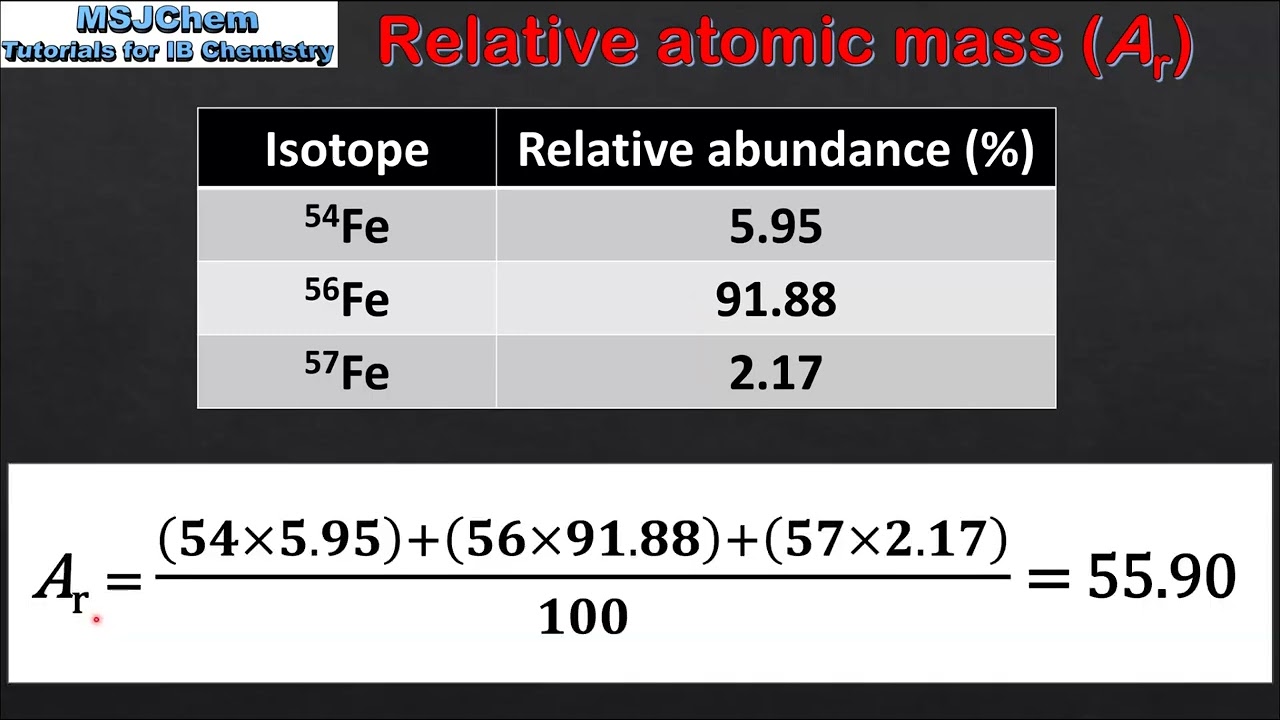
the weighted averaged of all the naturally occurring isotopes of an atom, always a decimal
Calculating Atomic Mass
atomic masses are weighted averages that take into account the natural abundances of each isotope
Mass number
the protons and neutrons in the nucleus. Equal to the number of nucleons. Identifies an isotope, always a whole number
Atomic mass unit (amu)
the unit of measure for a subatomic particles, 1/12th the mass of Carbon
Isotope
atoms of the same elements with a different number of neutrons. Mass number and number of nucleons will be different as well. Same atomic #, different mass # or same # of protons, different # of neutrons
Most common isotope
the isotope that exists in the greatest abundance. Round the atomic mass and you will get MCI
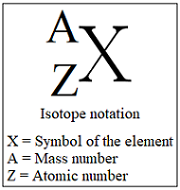
Isotopic notation
symbol of the element,the element’s atomic number and the mass number
Ion
a charged particle formed by the loss or gain of an atom’s electrons
Dalton Model (1803)
The atom is a solid indivisible sphere, also known as “Billiard Ball” model

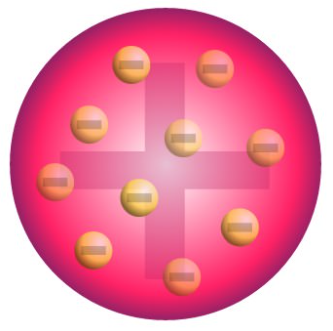
Thompson Model (1897)
known as the Plum Pudding model, discovered the electron. The atom is a sphere with small electrons embedded in a positively charged mass
Experiment: Cathode Ray Tube
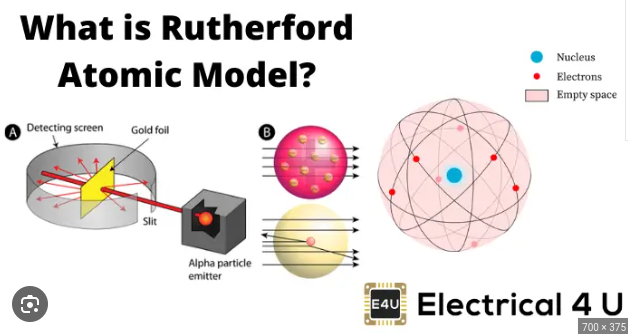
Rutherford Model (1911)
The atom is mostly empty space with a small dense nucleus with electrons moving around it like the planets move around the sun.
Experiment: Gold Foil
Bohr Model (1913)
The electrons in an atom move in circular fixed orbits at fixed distances from the nucleus. Problem is that this model only worked for explaining Hydrogen

Electron Cloud/ Wave Mechanical Model/ Modern Model (1926)
Introduces quantum mechanics to the world, describes electrons as both waves & particles

Orbitals
region of high probability of finding an electron
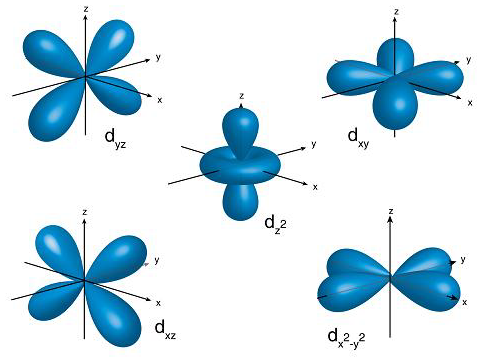
Electron Configuration Rules
Aufbau Principal: electrons occupy the orbitals of lowest energy first
Pauli Exclusion Principal: no two electrons can occupy the same space in an orbital
Hund’s Rule: each orbital can hold 2 electrons - fill each orbital /w 1 electron before pairing electrons in an orbital
Electron Configuration
electrons are distributed in the electron cloud into principal energy levels (1, 2, 3..), sublevels (s, p, d, f), orbitals (s has 1, p has 3, d has 5, f has 7) and spin (2 electrons allowed per orbital)
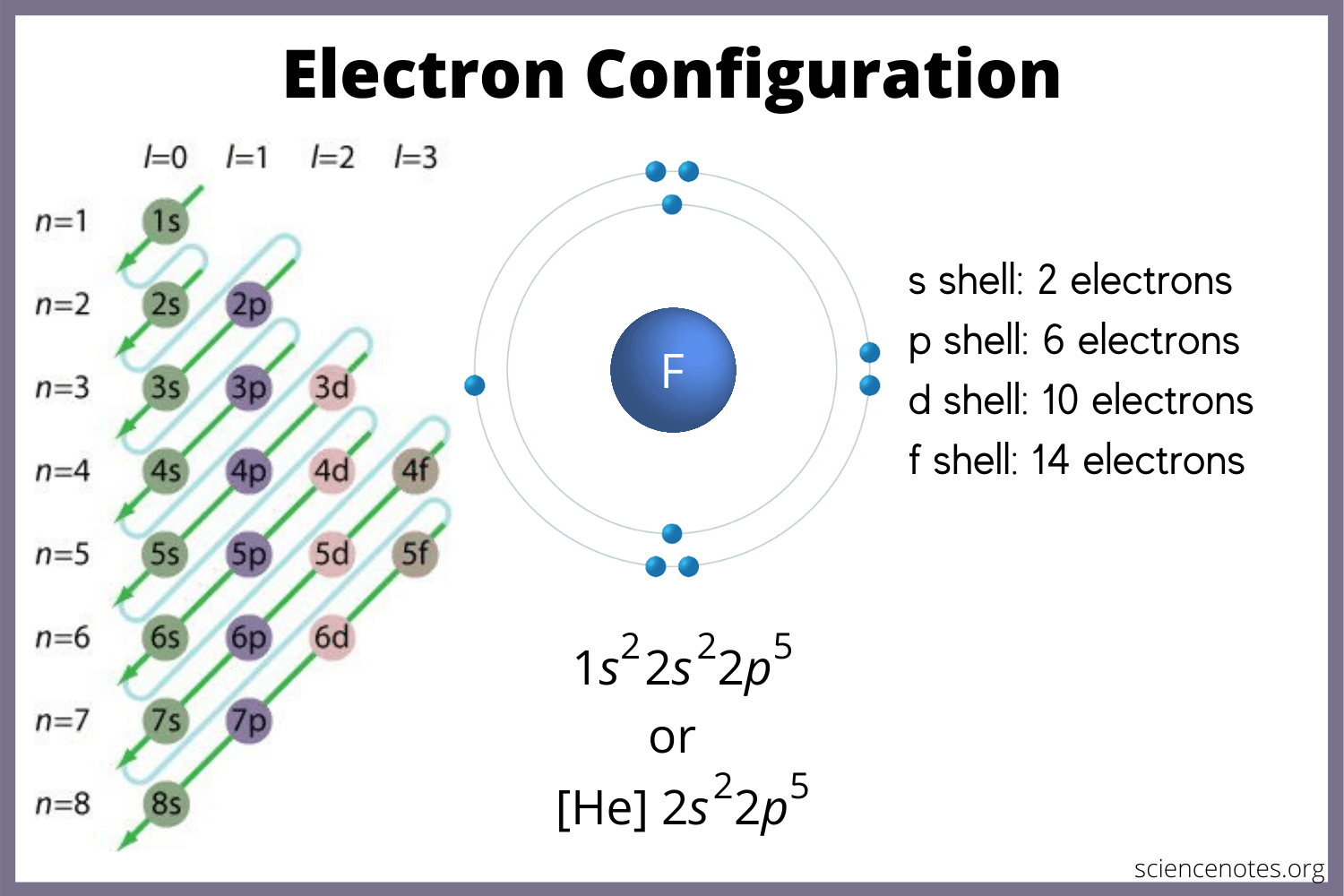
Valance Electrons
-the electrons in the outermost energy level
-the only electrons in a chemical reaction, # of electrons determine how atom will react
-Lewis/Electron dot diagrams show valance electrons only

Cation
an atom with 1, 2 , or 3 valence electrons will lose those electrons to become a stable ion, a positive ion is called a cation

Anion
an atom with 5, 6, or 7 valence electrons will gain electrons to become a stable ion, a negative ion is called an anion