PHA6142: Organic Medicinals Samplex
 Call Kai
 Learn
Learn Practice Test
 Spaced Repetition
 Match
Match Flashcards
 Knowt Play
1/97

There's no tags or description
Looks like no tags are added yet.
Name | Mastery | Learn | Test | Matching | Spaced | Call with Kai | Chat |
|---|
No analytics yet
Send a link to your students to track their progress
98 Terms
A
1. As the size of the alkyl group decreases, the pharmacologic activity of adrenergic amines will predominantly be:
A. alpha
B. beta
C. alpha and beta
D. no change
2. Which of the following statements concerning adrenergic agonist are TRUE?
I. catecholamines are activated by the methylation of the hydroxyl group (deactivated)
II. the ethylamine chain is essential to their activity
III. N-substituent alter drug activity
A. I only
B. III only
C. I and II
D. II and III
3. Meta hydroxy phenol is:
A. Catechol
B. resorcinol
C. aniline
D. hydroxyquinone
4. Methylbenzene is also known as:
A. anisole
B. toluene
C. aniline
D. catechol
5. Epinephrine is also known as:
A. alpha tocopherol
B. adrenaline
C. emetine
D. levarterenol
6. The principal hydrolytic degradation product of Aspirin is:
A. Methyl salicylate
B. Acetyl chloride
C. Salicylic acid
D. Salicylamide
D
7. Barbiturates containing a sulfur atom are usually:
A. short-acting
B. intermediate acting
C. long-acting
D. ultra-short acting
8. Oxidation of which alcohol yield an aldehyde:
A. primary
B. secondary
C. tertiary
D. all of the given
9. The general formula CnH2nO can be assigned to a saturated __________.
A. aldehyde
B. alcohol
C. ether
D. carboxylic acid
10. Which of the following functional group is the most basic?
A. imide
B. amide
C. amine
D. aniline
11. The functional group in pyridoxine is:
A. alcohol
B. amine
C. carboxylic acid
D. ketone
12. Ascorbic acid and tetracycline are:
A. enols
B. esters
C. ethers
D. amines
13. Derivatives of benzylsulfonylureas are:
A. oral hypoglycemic
B. diuretics
C. anti-inflammatory
D. spasmolytic
14. The functional group of Codeine and Scopolamine is a/an:
A. amine
B. alcohol
C. ester
D. ether
15. Hydroxybenzoic acid is:
A. acetic acid
B. salicylic acid
C. oxalic acid
D. citric acid
16. 1,3-dimethylxanthine is:
A. caffeine
B. theobromine
C. theophylline
D. aminophylline
D
17. Which of the following liquid anesthetics is the least volatile?
A. diethyl ether
B. methoxyflurane
C. chloroform
D. halothane
18. All of the following anesthetics are gases at room temperature, EXCEPT:
A. nitrous oxide
B. halothane
C. ethylene
D. cyclopropane
19. Local anesthetic that is derivative of benzoic acid is:
A. Lidocaine
B. Procaine
C. Dibucaine
D. Bupivacaine
20. Xanthine derivatives are indicated in/for:
A. asthma
B. analgesic
C. antipyretic
D. epilepsy
21. Which of the following is a weak acid:
A. Phenobarbital
B. Codeine
C. Quinine
D. Reserpine
22. Paracetamol is a/an:
A. salicylate
B. pyrazalone
C. aniline derivative
D. azocaine derivative
23. Which of the following is not a phenothiazine derivative?
A. Nortriptyline
B. Chlorpromazine
C. Thioridazine
D. Fluphenazine
24. Which of the following anesthetic is most volatile?
A. methoxyflurane
B. diethyl ether
C. halothane
D. chloroform
25. Bupivacaine is classified as:
A. amine
B. ester
C. alcohol
D. ketone
26. The onset and duration of barbiturate action is mainly a function of its:
A. lipid solubility
B. renal excretion
C. plasma binding
D. method of administration
A
27. In which of the following groups of drugs is the mechanism of action for diuresis associated with a free –SO2NH2 group?
A. carbonic anhydrase inhibitor
B. mercurial diuretics
C. aldosterone antagonists
D. thiazide diuretics
28. Diphenoxylate is a structural analog of:
A. Dilantin
B. Codeine
C. Meperidine
D. Naloxone
D
29. The antihypertensive agent Diazoxide is most similar in chemical structure to which of the following diuretics?
A. Spironolactone
B. Furosemide
C. Acetazolamide
D. Hydrochlorothiazide
30. The piperidine moiety of morphine is common with the following analgesics, except:
A. Methadone
B. Hydroxymorphone
C. Oxycodone
D. Heroin
C OR B
31. Of the congeners, the one that is used primarily for its analgesic activity is:
A. Diphenoxylate
B. Hydroxymorphone
C. Pentazocaine
D. Apomorphine
32. The activity of the following drugs is dependent upon a p-phenyl-N-alkylpiperidine, except:
A. Meperidine
B. Morphine
C. Imipramine
D. Diphenoxylate
33. Dibenzazepine derivatives having a methyl or dimethyl aminopropyl group attached to the ring nitrogen have:
A. local anesthetic activity
B. antidepressant property
C. opioid antagonistic property
D. general anesthetic property
D
34. Which of the following compounds, because of its chemical relationship to Fluphenazine would most likely cause similar side effects?
A. Thioridazine
B. Prochlorperazine
C. Chlorpromazine
D. Triflupromazine
35. Name this natural alkaloid:
A. Atropine
B. Morphine
C. Phenylpropanolamine
D. Sphingosine
36. Which is true about substitution of 6-OH group?
A. its removal increases the activity
B. its acetylation increases its addictive property
C. its methylation decreases analgesic property
D. its methylation result to increase polarity
37. What is expected of the pharmacokinetic property of this drug?
A. it is easily hydrolyzed
B. it passes through the blood brain barrier more readily than N-dealkylated analogue
C. the unprotonated tertiary nitrogen accounts for its ease of excretion
D. its sulfate salt is stored in adipose tissue
C
38. Which is true about substitution of phenolic –OH group?
A. its removal increases analgesic property
B. methylation removes the analgesic property of the drug when administered intra-cerebrally
C. acetylation decreases the chance of the drug passing through the blood-brain barrier
D. increasing electron density by adding electron withdrawing substituent at C-1 position inactivates the drug
B
39. Which part of the molecule is not required for analgesia?
A. Ring A
B. ether bridge
C. nitrogen atom
D. C7-C8 double bond
40. The only chemically used alkyl sulfonate is:
A. busulfan
B. uracil mustard
C. streptozocin
D. dacarbazine
41. Mexiletine is what type of antiarrhythmic drugs?
A. amides
B. xylyl derivatives
C. quaternary ammonium compounds
D. diiodobenzyloxyethylamine
A
42. The optimal diuretic activity of benzothiazines on certain structural features. These includes:
I. saturation of the 3,4-double bond increases potency
II. methyl groups at position 2 decreases potency
III. replacement of the sulfonyl group in position 1 shortens the activity.
A. I only
B. III only
C. I and II
D. II and III
43. Amide type local anesthetics are:
A. short acting
B. intermediate acting
C. long acting
D. none of the choices
D
44. Antibacterial potencies of primary alcohol increases with molecular weight up to ____ only:
A. C3
B. C4
C. C6
D. C8
45. The simplest ketone is:
A. methadone
B. ethenone
C. propanone
D. butanone
46. 1,3-butadiene is classified as:
A. allenic
B. conjugated
C. propanone
D. A and C
47. The following are semi-synthetic penicillins, EXCEPT:
A. Methicillin
B. Ampicillin
C. Pen G
D. Cloxacillin
48. Which of the following Erythromycin is least susceptible to gastric acid degradation?
I. estolate
II. base
III. Ethylsuccinate
A. I only
B. III only
C. I and II
D. II and III
49. Macrocyclic lactones containing 12 to 20 carbon atoms in the primary ring:
A. Penicillins
B. Aminoglycosides
C. Macrolides
D. Cephalosporins
50. Which of the following agents has/have a beta-phenylethylamine structure with the phenyl moiety containing ortho-dihydroxy substitution?
I. Epinephrine
II. Ephedrine
III. Dopamine
A. I only
B. II only
C. I and III
D. II and III
E. I, II and III
51. The number of carbon atoms separating the amino from phenyl ring that will produce maximal sympathomimetic activity is:
A. 1
B. 2
C. 3
D. 4
E. 5
B
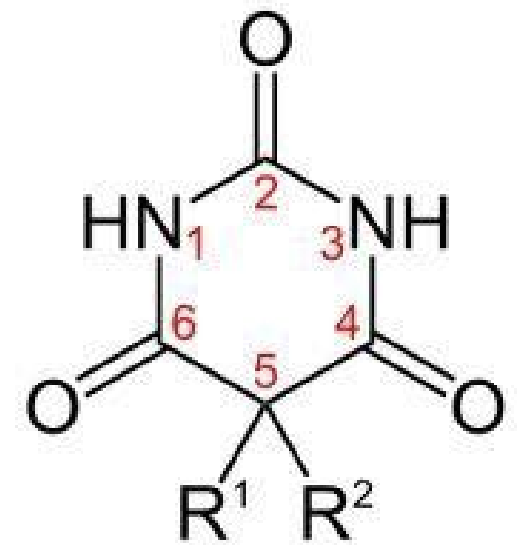
52. What is the common use of drugs possessing the structure given below?
A. Anticonvulsant
B. Sedative-hypnotic
C. Intravenous anesthetics
D. Antipsychotic
E. Antidepressant
53. Which of the following barbiturates is the most water soluble?
A. Amobarbital
B. Methohexital
C. Pentobarbital
D. Secobarbital
E. Phenobarbital
54. Which of the following metabolites of methoxyflurane is primarily responsible for the nephrotoxicity associated with this inhalation anesthetic?
A. Fluoride
B. Oxalic acid
C. Dichloroacetic acid
D. Bromide
D
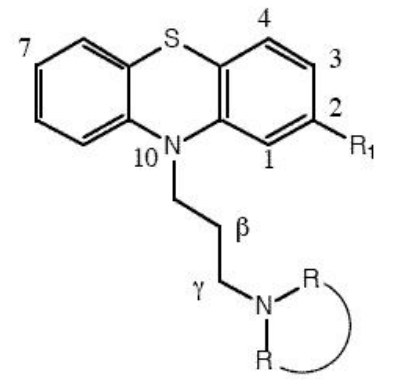
56. Agents possessing the structure given below are most used for what condition?
A. Seizure disorder
B. Bacterial infection
C. Anticholinesterase
D. Psychosis
E. Bipolar disorder
57. What is the most potent effect of trimethyl substitutions in positions 1, 3, and 7 of the xanthine molecules?
A. Diuresis
B. Coronary vasodilation
C. CNS stimulation
D. Skeletal muscle relaxation
58. Which of the following drug is also known as 1,3-dimethylxanthine?
A. Theophylline
B. Caffeine
C. Pentoxifylline
D. Doxofylline
60. Which of the following drugs has the following structure: CH3CH2CH2C(CH3CH2CH2)HCOOH
A. Carbamazepine
B. Primidone
C. Ethacrynic acid
D. Valproic acid
B
61. This drug is also known by the chemical name, (+)-N,alpha-dimethylphenylamine
A. Amphetamine
B. Methamphetamine
C. Ephedrine
D. Phentermine
62. The potent vasoconstrictor Angiotensin II is a polypeptide containing how many amino acids?
A. 5
B. 8
C. 15
D. 20
63. Which of the following agents is an example of an H-2 antihistamine?
A. Ranitidine
B. Hydroxyzine
C. Omeprazole
D. Terfenadine
64. The proton pump inhibitors are chemically known as?
A. ethenediamines
B. propanimidamides
C. hydropropanes
D. benzimidazoles
65. Which functional moieties generally make up the hydrophilic center of local anesthetics?
A. thiols
B. secondary or tertiary amines
C. primary or secondary alcohols
D. carboxylate
66. Which portion of the general structure of the local anesthetics is important in the ability of the drug to penetrate through the cell membrane of the axon?
A. Lipophilic center
B. Ester group
C. Amide group
D. Hydrophilic center
67. Which of the following choices correctly illustrates the general structure of local anesthetics?
A. lipophilic center – bridge – ester/amide – hydrophilic center
B. bridge – lipophilic center – hydrophilic center – ester/amide
C. lipophilic center – ester/amide – bridge – hydrophilic center
D. hydrophilic center – bridge – ester/amide – lipophilic center
68. Which portion of the general structure of the local anesthetics is responsible for binding to the sodium channels?
A. Lipophilic center
B. Ester group
C. Hydrophilic center
D. Bridge alkyl group
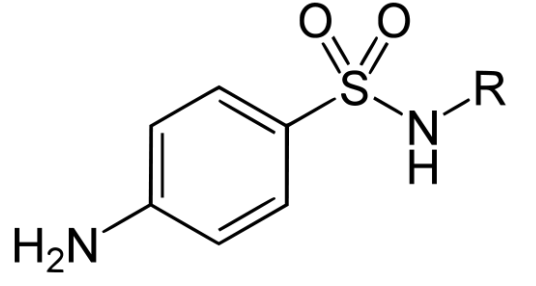
69. The structure below represents what therapeutic class?
A. Diazoxide (Thiazide)
B. Sulfonamide
C. Thiazide
D. Sulfonylurea
C
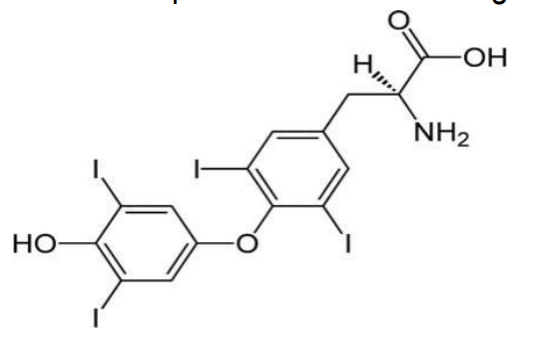
70. Which hormone possesses the following structure?
A. Glucogen
B. Estrogen
C. Thyroxine
D. Insulin
71. What are the active forms of Simvastatin and Lovastatin that can inhibit the rate-limiting step in cholesterol synthesis?
A. alpha-hydroxy acids
B. beta-hydroxy acids
C. enols
D. 2-ketones
72. What is the IUPAC name of Valproic acid?
A. 2-methylpropanoic acid
B. 2-ethylbutanoic acid
C. 2-propylpentanoic acid
D. 2-butylhexanoic acid
73. What is the common functional moiety present in the molecules of the clinically useful Carbonic Anhydrase Inhibitor?
A. benzene
B. CH3
C. chlorobenzene
D. SNO2H2
D
74. Which of the following compounds is classified as a “thiazide-like diuretic” because its mechanism of action and pharmacologic properties are like the thiazides although its chemical structure does not have the benzothiadiazine-1,1-dioxide nucleus?
A. Chlorthalidone
B. Furosemide
C. Benzothiazine
D. Hydrochlorthiazide
75. Which of the following compounds is a 5-sulfamoylanthranilic acid derivative?
A. Furosemide
B. Cocaine
C. Sulfadiazine
D. Indapamide
76. Which of the following gases is associated with the mechanism of action of drugs like Sildenafil and Nitroglycerin?
A. carbon dioxide
B. oxygen
C. nitric oxide
D. nitrous oxide
77. Which of the following Calcium channel blockers is a benzothiazepine?
A. Verapamil
B. Nifedipine
C. Diltiazem
D. Amlodipine
C
78. Which clinically useful analgesic possesses the structure given below?
A. Acetaminophen
B. Diclofenac
C. Aspirin
D. Ibuprofen

79. What is the clinical use of the dextro isomer of the opioid N-methylmorphinan?
A. analgesic
B. sedative
C. anesthetics
D. antitussive
80. Which of the following opioids contains a phenanthrene nucleus?
A. Morphine
B. Meperidine
C. Methadone
D. Fentanyl
81. Which of the following opioids contains a piperidine nucleus?
A. Dextromethorphan
B. Oxycodone
C. Meperidine
D. Codeine
82. Which of the following neuromuscular blockers possesses a steroid nucleus?
A. Atracurium
B. Pancuronium
C. Tubocurarine
D. Doxacurium
83. Which of the following compounds is hydrolyzed by beta lactamase enzyme forming a “Michael acceptor” which alkylates a nucleophilic residue on the beta-lactamase enzyme leading to irreversible inhibition of the enzyme?
A. Cilastatin
B. Clavulanic acid
C. Pyridoxine
D. Amoxicillin
84. Which amino acid is the precursor in the biosynthesis of choline, an important substrate in the synthesis of acetylcholine in presynaptic nerve terminals?
A. Proline
B. Tryptophan
C. Serine
D. Phenylalanine
C
85. Which of the following drugs will promote a broader volume of distribution?
A.
B.
C.
D. none of the choices
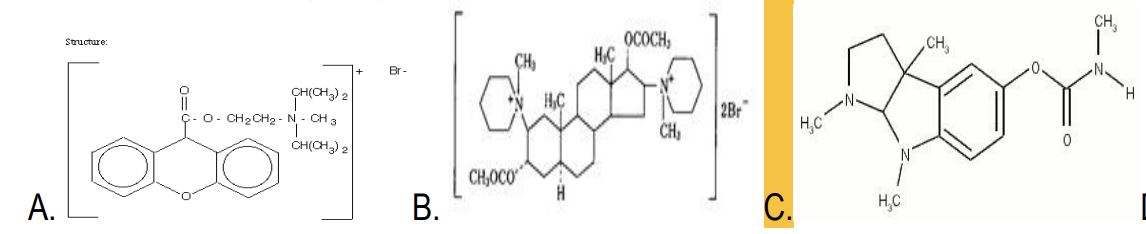
86. A natural acetylcholinesterase inhibitor used as antidote for atropine overdose.
A. physostigmine
B. neostigmine
C. pyridostigmine
D. none of the choices
87. Which of the following group is present in a parasympathomimetic drug?
A. trimethylammonium group
B. ethyl ester
C. phenylethylamine
D. catecholamine
C

89. The following drug has the imidazoline nucleus except:
A. Xylometazoline
B. Oxymetazoline
C. Naphazoline
D. Phenylephrine
90. A synthetic acetylcholinesterase inhibitor with benzanaminium parent compound used as antidote for tubocurarine poisoning.
A. physostigmine
B. neostigmine
C. pyridostigmine
D. none of the choices
A
91. What substituent must be attached to R2 for optimum antihemorrhagic activity?
A. Methyl
B. alkyl group containing 10 or more carbon atoms
C. dimethylamino
D. all
C
92. All of the following can be an R3 substituent except:
A. dimethylamino
B. phytyl
C. OH
D. OCH
93. The following will contribute to increase antihemorrhagic activity except:
A. R4 is a OH group
B. R3 is an alkyl group containing more than 10 Carbon atoms
C. Ring A is substituted
D. R2 is methyl
C
94. What is the functional group present in R1 and R4 of Vitamin K4?
A. Ketone
B. Ester
C. Alcohol
D. Carboxylic acid
95. What is the functional group present in R1 and R4 of Vitamin K1?
A. Ketone
B. Ester
C. Alcohol
D. Carboxylic acid
96. Which of the following agents is an example of an H2 antihistamine?
A. Ranitidine
B. Omeprazole
C. Hydroxyzine
D. Terfenadine
97. Which of the following compounds is a 5-sulfamoylanthranilic acid derivative?
A. Furosemide
B. Sulfadiazine
C. Cocaine
D. Indapamide
98. Which of the following opioids contains a phenanthrene nucleus?
A. Morphine
B. Methadone
C. Meperidine
D. Fentanyl
99. Which of the following gases is associated with the mechanism of action of drugs like Sildenafil and Nitroglycerin?
A. carbon dioxide
B. nitric oxide
C. oxygen
D. nitrous oxide
B
100. Blockade of this receptor can be useful for inducing muscle relaxation during surgery.
A. Nicotine
B. Muscarine
C. Acetylcholine