Biology Exam 4
 Call Kai
 Learn
Learn Practice Test
 Spaced Repetition
 Match
Match Flashcards
 Knowt Play
1/73

There's no tags or description
Looks like no tags are added yet.
Name | Mastery | Learn | Test | Matching | Spaced | Call with Kai | Chat |
|---|
No analytics yet
Send a link to your students to track their progress
74 Terms
Prokaryotes
The first singles celled creatures, the simplest and most abundant organisms on earth.
Prokaryotes origin of Life
No one knows for sure where the first organisms (thought to be like today’s bacteria) came from.
There are several possibilities for the origin of life on earth,
such as:
• Extraterrestrial origin- another planet
• Special creation- intelligent design/religion
• Evolution- stable molecules
Only evolution permits testable hypotheses and is the only
scientific explanation.
Stanley Miller and Harold Urey experiment
Reconstructed the oxygen- free atmosphere of the early
earth in their laboratory.
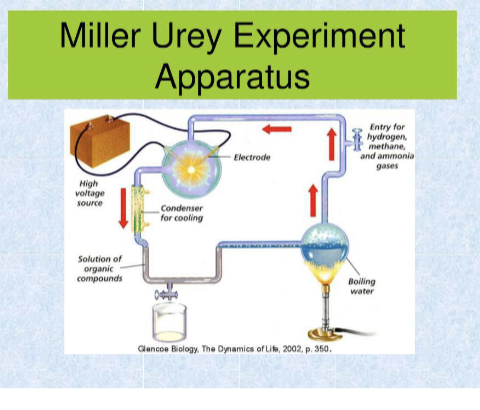
They subjected it to the lightning and UV radiation that
it would have experienced then
Stanley Miller and Harold Urey experiment results
• They found that many of the building blocks of organisms
formed spontaneously.
• life may have evolved in molecules formed in the early
earth’s oceans.
How Did Cells Arose?
We don’t know how first cells formed, but most scientists assume the first cells formed spontaneously- from bubble enclosed molecules (microspheres)
Microspheres
It is when organic molecules are present in water, they tend to cluster together in structures of Bubble enclosed molecules,
It is assumed first celles formed spontaneosuly from
These microspheres have many cell-like properties
The first cells could have formed in a way similar to how microspheres form.
When was earth formed?
4.5 billion yrs ago
When was first life originated?
2.5 billion years ago.
A clock of biological time
A clock of biological time
Two types of prokaryotes
bacteria and archaea
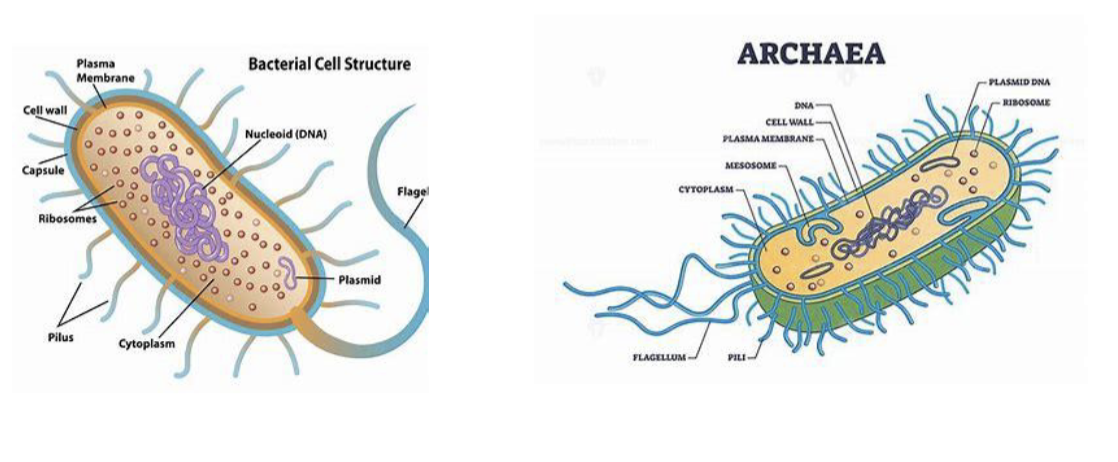
Characterstics of the simplest organisms (prokaryotes)
• Small
• Simply organized
• Lack an organized nucleus
• Single celled
Prokaryotes differ from eukaryotes in
• Internal compartmentalization
• Cell size
• Unicellularity
• Chromosomes
• Cell division
• Flagella
• Metabolic diversity
Prokaryotes vs Eukaryotes diagram
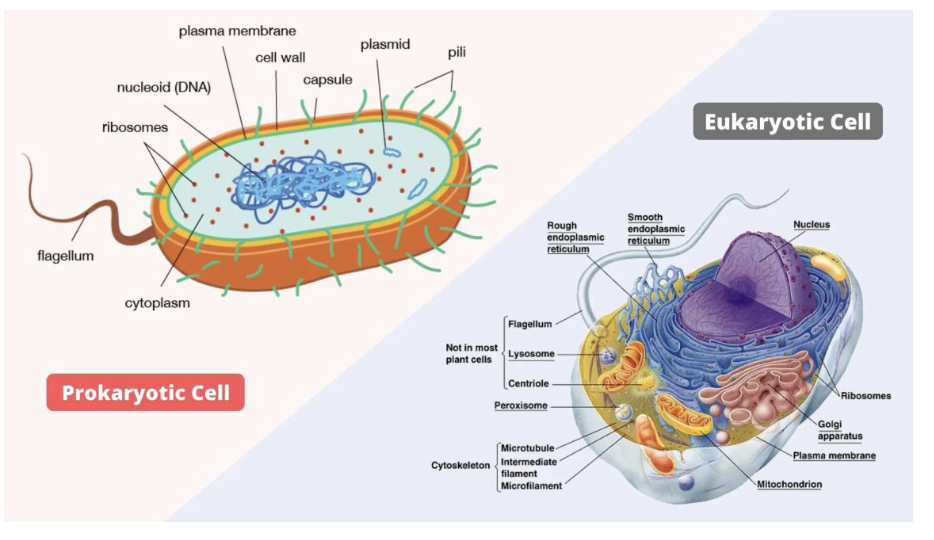
Prokaryotic: Archaea includes what?
include methanogens and extremophiles
Methanogens
are anaerobes and cannot survive in oxygen. Found in swamps, marshes, cow guts
Extremophiles
live in harsh environments where mostorganisms cannot survive
Importance of Prokaryotes
• Decomposers-break down dead/decaying matter
• Commercial uses, such as genetically-modified bacteria
that break down oil
• Cause diseases in humans and other organisms- plague, pneumonia, tuberculosis
Prokaryotes come in many shapes pictures
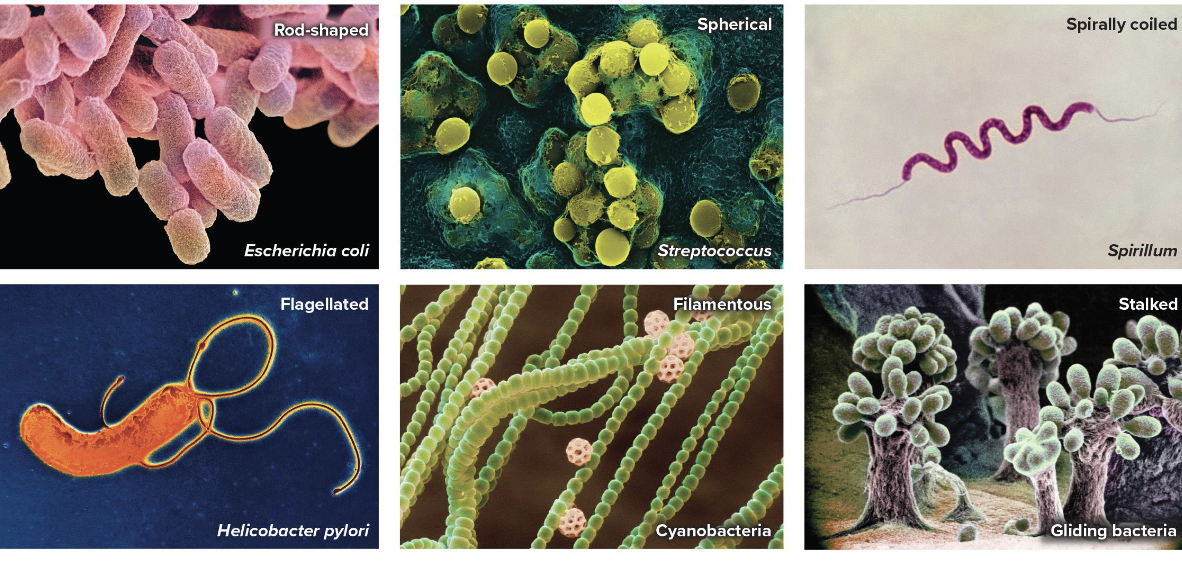
oldest prokaryotes
Bacteria
Bacterial cells are simple in form
• Rod-shaped (bacilli)
• Spherical (cocci)
• Spirally coiled (spirilla)
The prokaryotic cell’s plasma membrane
is encased within a cell wall.
• The cell wall of bacteria is different than that of
archaea and those found in eukaryotes.
cell wall is made of peptidoglycan.
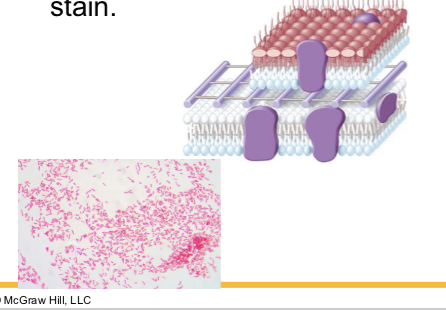
Gram-negative bacteria
-a thinner cell wall is surrounded by an outer membrane
The outer membrane prevents the cell wall from taking up a type of stain called a Gram stain.
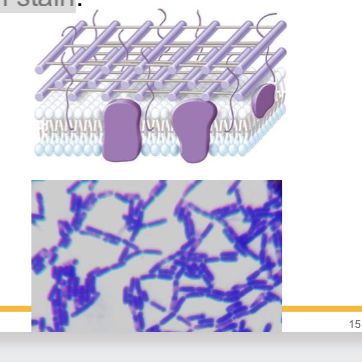
Gram-positive bacteria
-no outer membrane and the cell wall is much thicker
Without the outer membrane, these bacteria take up the
Gram stain
Additional features of some bacteria include
-Capsule
-Flagella
-Pili
-Endospores
Capsule
gelatinous layer outside the cell wall
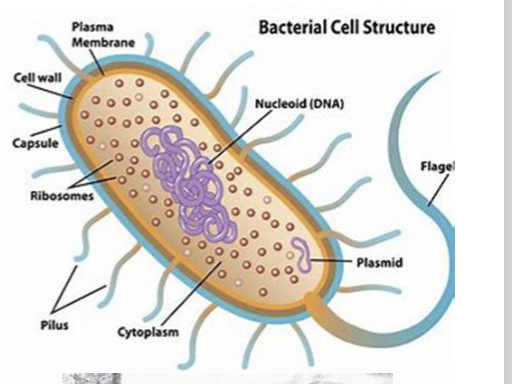
Flagella
long strands of protein used in swimming
Pili
shorter strands that help with attachment
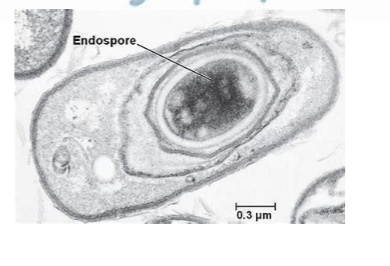
Endospores
thick-walled enclosures of DNA and a small bit of cytoplasm that are extremely resistant to environmental stress
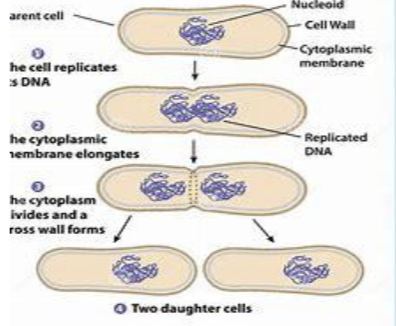
All prokaryotes can reproduce via
Binary fission
• After replicating DNA, the plasma membrane and cell wall
grow inward and eventually divide the cell.
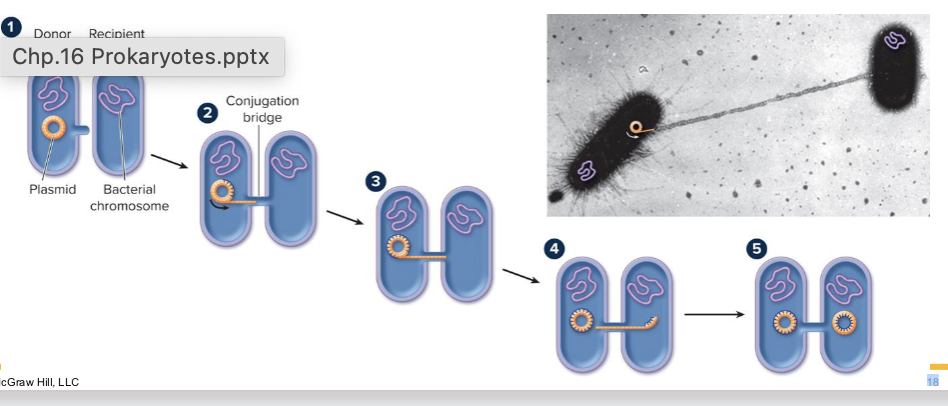
Conjugation
Some bacteria can exchange genetic information via
plasmids (fragment of DNA) passed from one cell to another.
occurs through a special connection that forms between bacterial cells pili called a conjugation bridge.
Prokaryotic Lifestyles: Bacteria
• Heterotrophs-consume organic molecules
• Cyanobacteria were the first photosynthesizers (sun energy)
• Many bacteria are decomposers.
• Some bacteria form colonies called biofilms.
• Bacteria cause many human diseases. Tuberculosis is a
very serious disease fornhumans and other organisms.
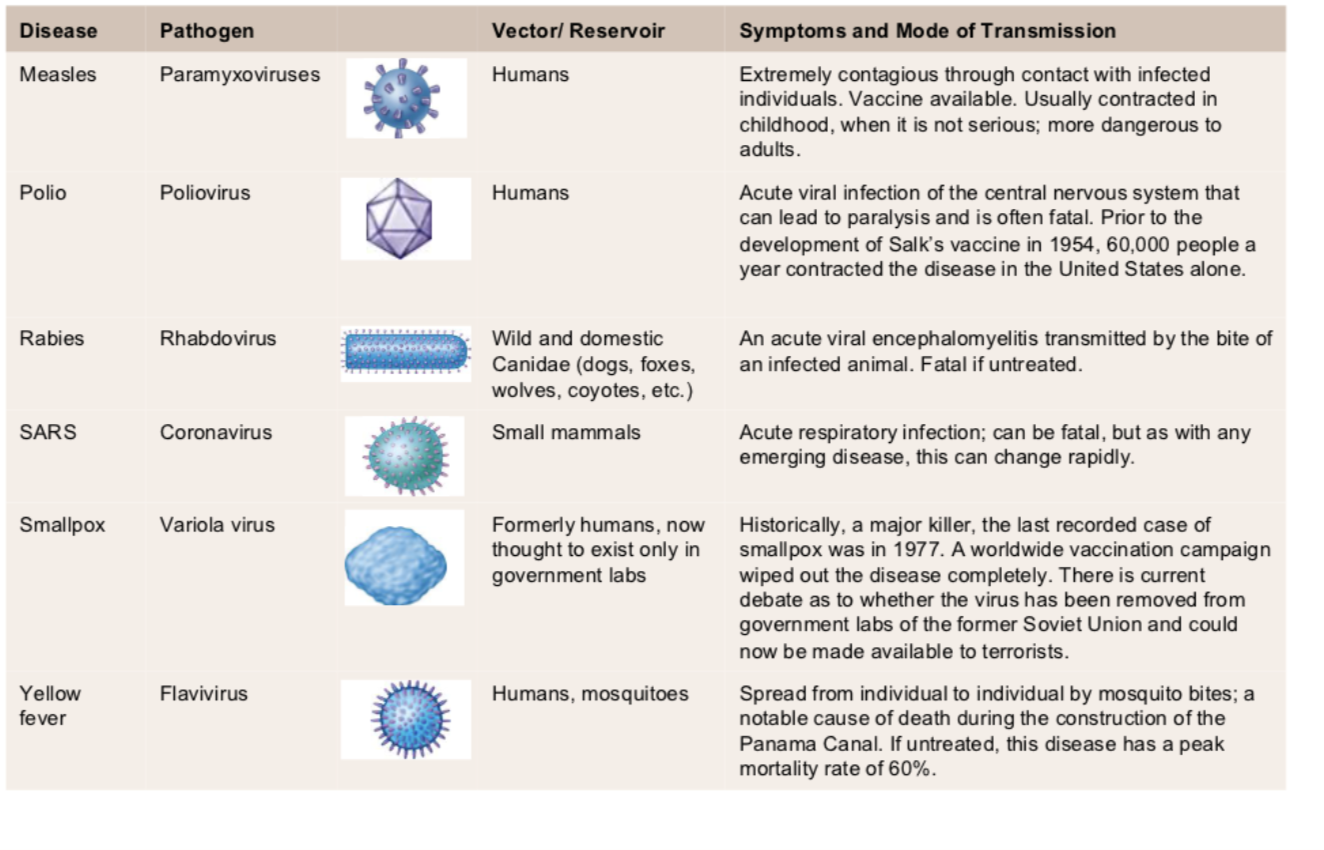
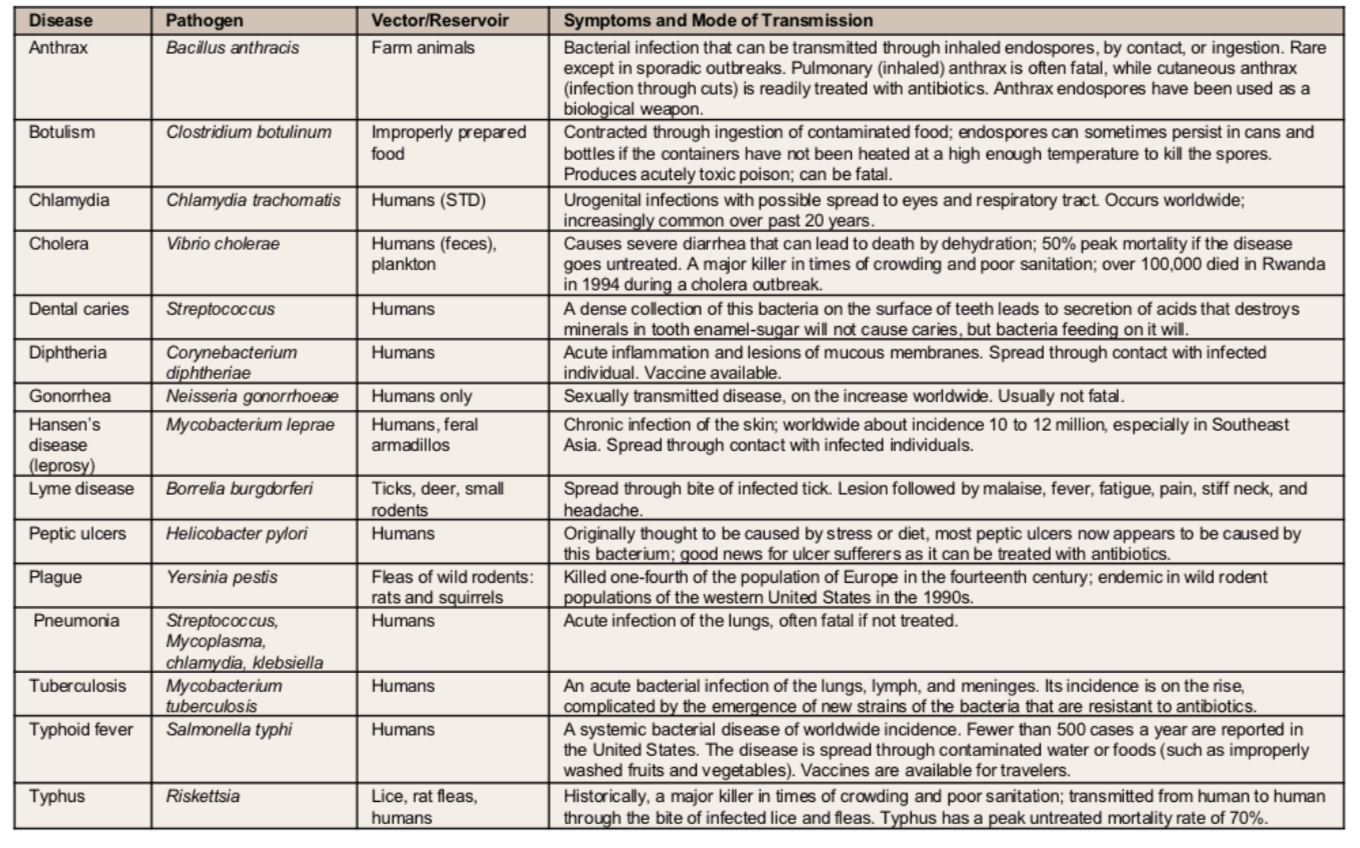
Important Human Bacterial Diseases
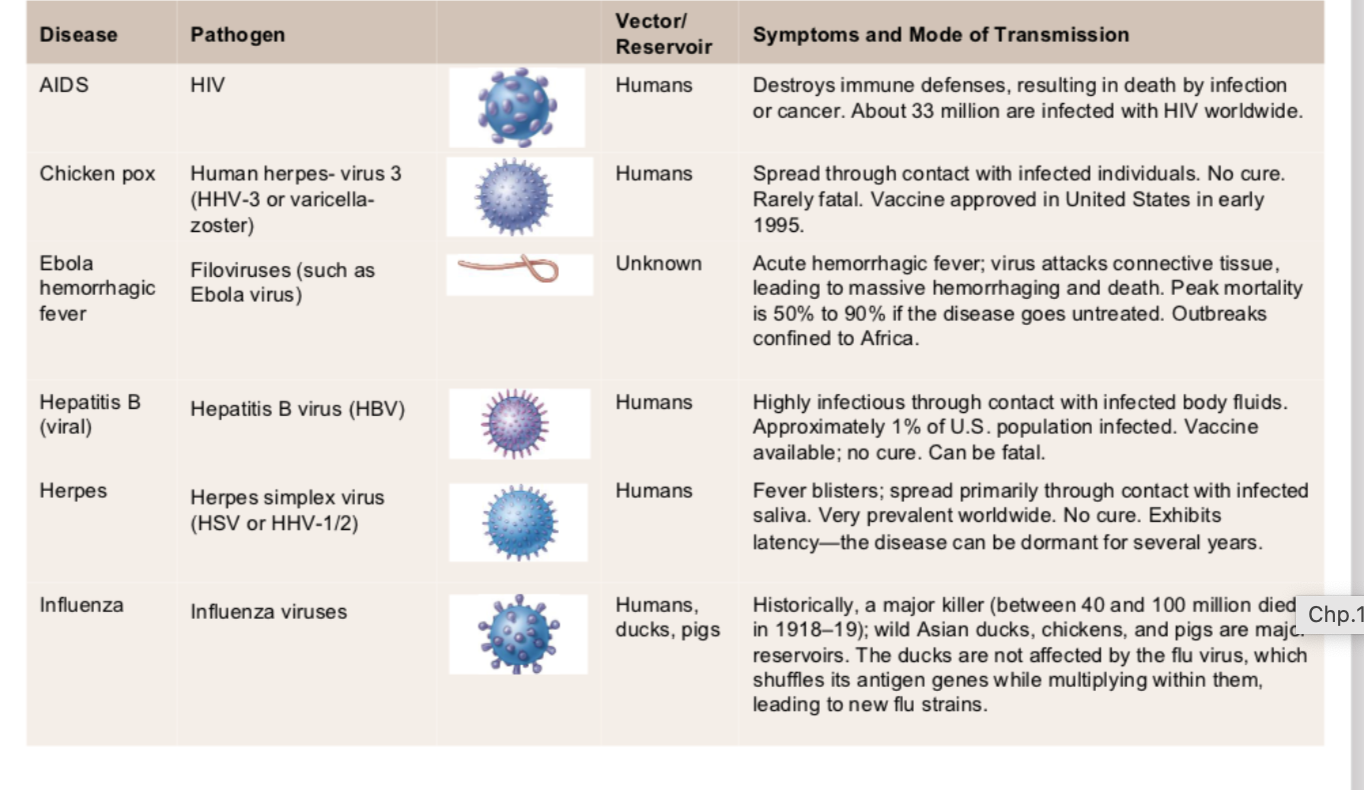
Viruses
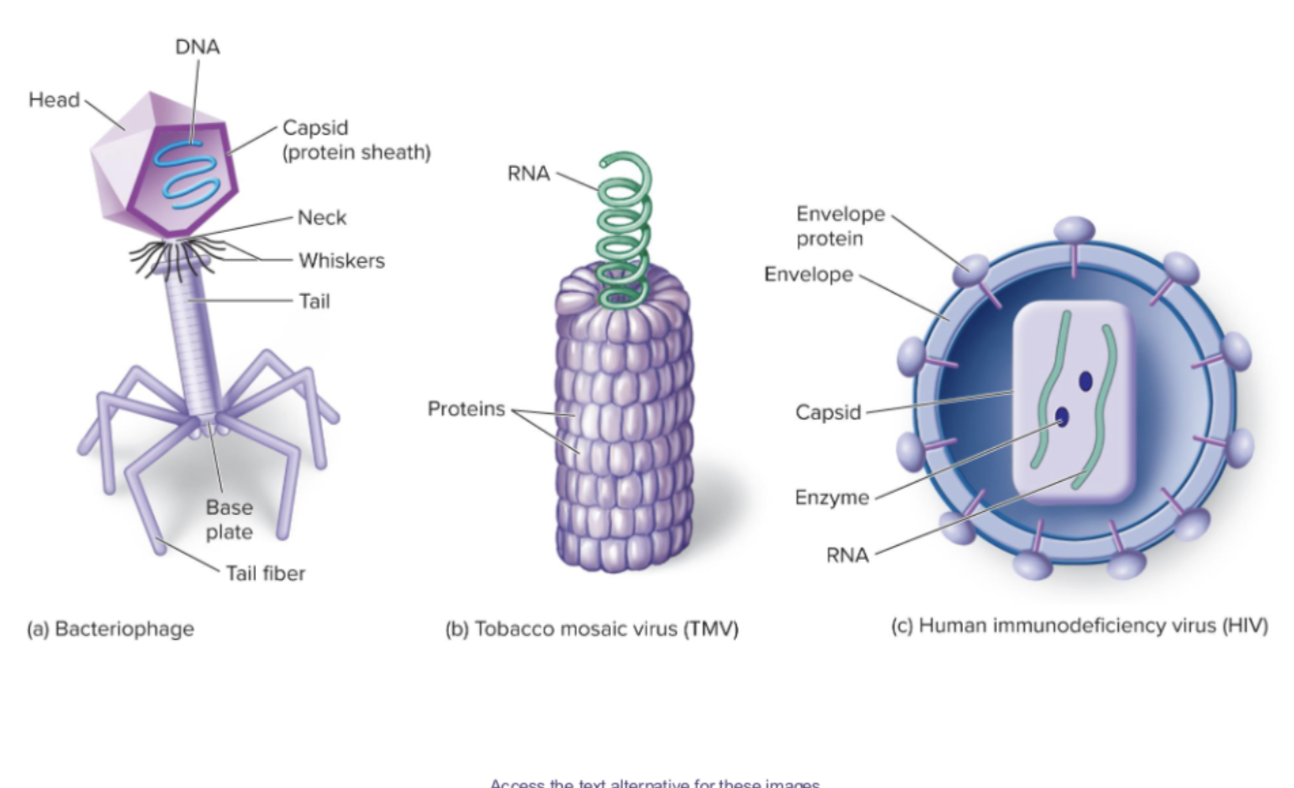
are parasitic chemicals, segments of DNA (or sometimes RNA) wrapped in a protein sheath called a capsid.
• They are not alive because they possess only a portion of
the properties of organisms and cannot reproduce on their
own.
• They are very small in size.
• They infect all organisms.
• There are structural differences among types of viruses.
The structure of bacterial, plant and animal viruses
Bacteriophage
are viruses that infect bacteria.
Structurally and functionally diverse
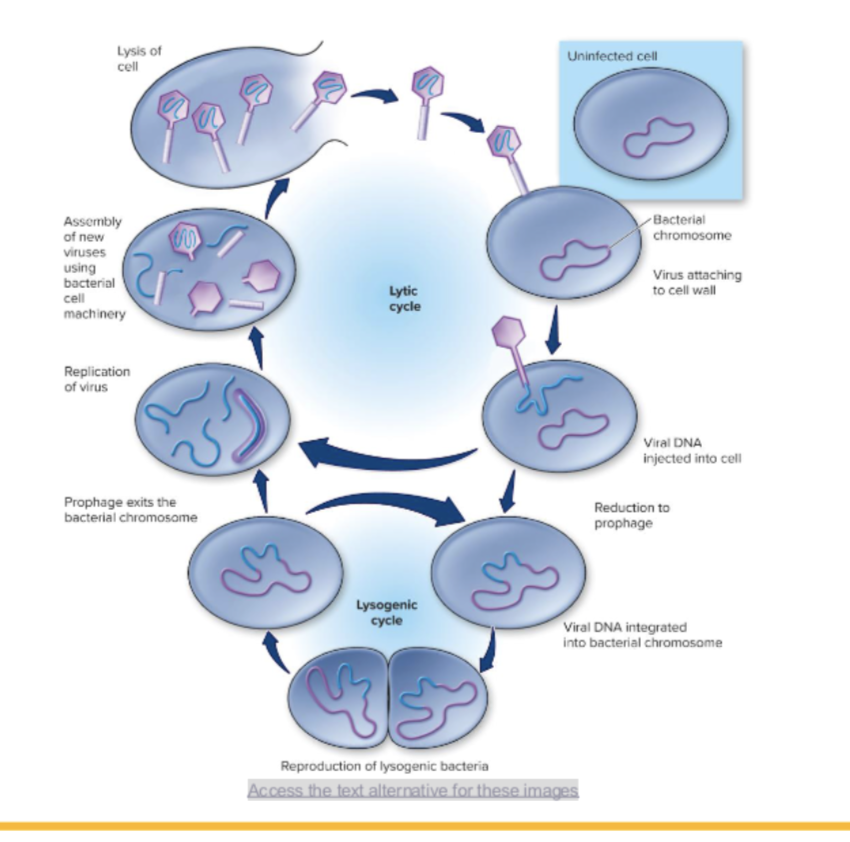
Process of infection by a bacteriophage
The tail tube pierces the bacterial cell wall.
• The contents of the head, mostly DNA, are injected into the bacterial cytoplasm.
• The viral DNA is transcribed and translated by the bacterial cell.
• New viral components are assembled.
• The host cell ruptures, releasing new viral cells to infect other bacterial cells.
How Bacteriophages Enter Prokaryotic Cells
During a viral infection, viruses cycle between lytic and
lysogenic cycles
The lytic cycle
The viral reproductive cycle
• The virus kills the infected host cell in which its replicating.
lysogenic cycle
Includes integration of the viral nucleic acid into the genome of the infected host cell, called lysogeny
Gene conversion
The expression of viral genes integrated into the host genome
Lytic and lysogenic cycles of a bacteriophage digram
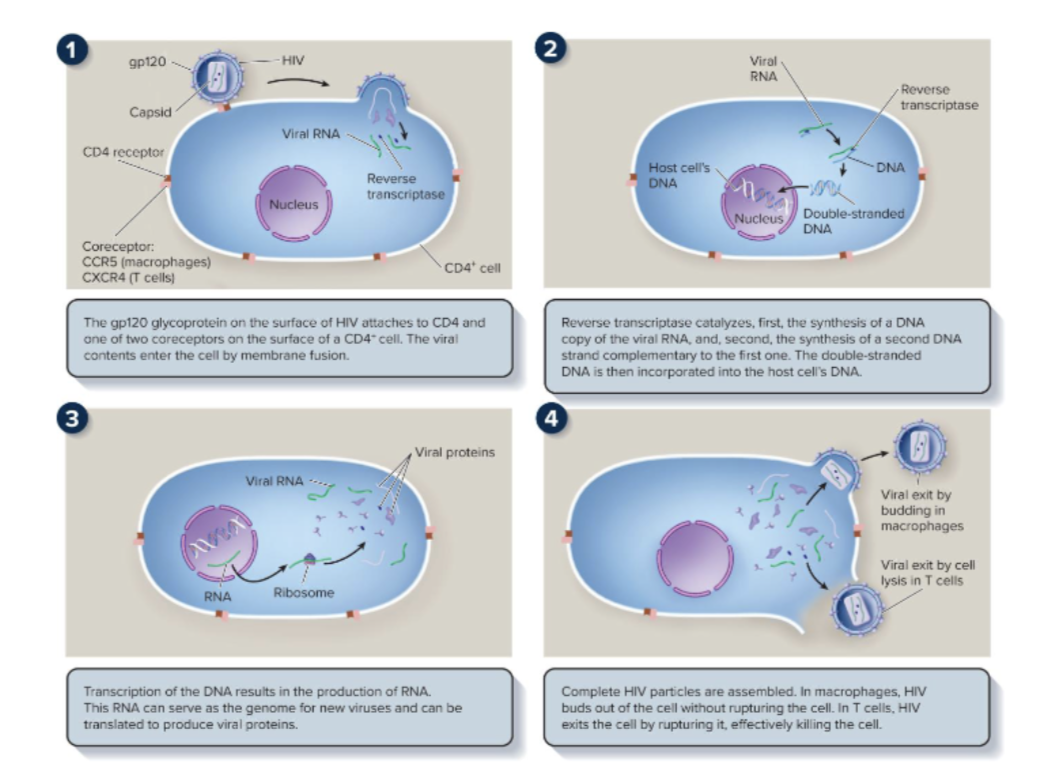
Animal viruses
• Enter animal cell by membrane fusion or endocytosis
• On the surface of animal viruses are spikes which match
animal cell surface markers and trigger membrane fusion.
• Inside the animal cell, the virus sheds its protective coat
and replicates its DNA or RNA in the cytoplasm.
• New viruses produced in the animal cell exit by bursting
through the plasma membrane and killing the animal cell.
The HIV infection cycle
Emerging viruses
Arise in one species and pass to another, causing a new disease
Influenza
virus has been one of the most lethal viruses in human history
AIDS (HIV)
Is derived from a virus that originated in Central Africa in chimpanzees and monkeys
Ebola
virus also arose in Central Africa and attack human connective tissues
Zika
Virus is transmitted by mosquitos and causes microcephaly in unborn babies.
SARS
severe acute respiratory syndrome, originated from a
virus that infects the Chinese horseshoe bat
COVID-19
A close relative of SARS, attacks the upper and lower respiratory tracks
Important Human Viral Diseases