ECON 310 (study)
 Call Kai
 Learn
Learn Practice Test
 Spaced Repetition
 Match
Match Flashcards
 Knowt Play
1/10

Earn XP
Description and Tags
notes and other things
Name | Mastery | Learn | Test | Matching | Spaced | Call with Kai | Chat |
|---|
No analytics yet
Send a link to your students to track their progress
11 Terms
3 basic assumptions about preferences
Completeness, Transitivity, Monotonicity
Completeness
Preferences have to be compared, you have to chose one of the 3 outcomes

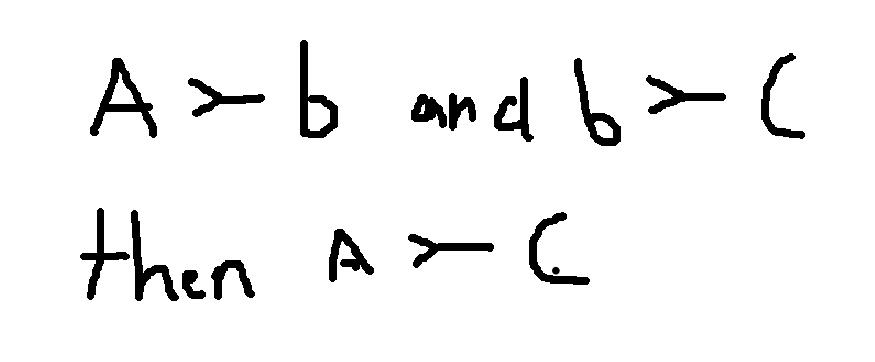
Transitivity
Customers rankings are logically consistent:
Rational preferences, if they are complete and transitive
Monotonicity
All else equal, more of a commodity is better then less
In this sense, a “good” is different from a “bad”
Completeness violation(s)
indifferent= I dont care
Different= I dont know
Transitivity Violation
if: a>b, b>c, c>a
Then a>b>c>a
Sorites Paradox:
Cup of coffee have lil sugar to a lot
c1~c2, c2~c3
c1~c2~c3….~c1000
Cups next to each other are indifferent, but due to the law of transitivity, this means that the first cup and the one thousandth cup are indifferent, but in reality they are not they are very different.
Monotonicity Violation
Overeating in the pizza example
Consuming to much of a good that it becomes bad
Preferences
A consumers tastes or preferences determine the pleasure derived from goods/services
Indifference Curve
A graph showing different mixes of two goods that give a person the same total happiness or satisfaction.
Indifference Map
A complete set of indifference curves that summarize a consumers taste. Note: like preferences Indifference maps are specific to individuals.
Rules:
Downward slope: To get more of one good, you must give up some of the other good.
Curves do not cross: If they cross, it breaks the rules of logical choice.
Higher means more: Curves placed further right and up mean a higher level of total joy.
Bowed shape: Curves curve inward because people value extra items less when they already have many.
CANNOT be thick