Anatomy & Physiology I - Exam One
 Call Kai
 Learn
Learn Practice Test
 Spaced Repetition
 Match
Match Flashcards
 Knowt Play
1/250

There's no tags or description
Looks like no tags are added yet.
Name | Mastery | Learn | Test | Matching | Spaced | Call with Kai | Chat |
|---|
No analytics yet
Send a link to your students to track their progress
251 Terms
anatomy
study of body part structure and their relation to eachother
physiology
study function of body parts + how they carry out function
gross/macroscopic
study of large and visible structures
what subtopics are apart of gross/macroscopic
regional, system, and surface anatomy
regional anatomy
looks at structures in a specific area
system anatomy
looks at one system
surface anatomy
views internal structures in relation to the skin (ex visible veins)
microscopic anatomy
deals w/ structures that cant be seen w/eyes
what are microscopic anatomy subtopics
cytology and histology
what is histology
study of tissues
cytology
study of cells
developmental anatomy
looks at anatomical + physiological dev
developmental anatomy subtopic
embryology
embryology
study dev before birth
subdiv of physiology
organ systems and cellular + molecular lvls
principle of complementarity of structure + function
function + structure inseparable
struct. org. order
chem lvl->cell lvl->tissue lvl->organ lvl->organ system lvl->organismal lvl
life requirements are?
maintain boundaries, movement, responsiveness, digestion, metabolism, excretion, reproduction, growth
why maint. of boundaries important
sep int+ext environment (ex plasma membrane)
why movement important
muscular system allow move body part via skeletal system and substance via cardiac and smooth muscle
movement's contractility
movement @ cell lvl
why repsonsiveness important
sense/respond to stimuli (ex control breathing/withdrawal effect)
why digestion important
breakdown foodstuffs into simple molecules taken by blood
why metabolism important
all chem reactions in cells
metabolism's catabolism
breakdown molecules
metabolism's anabolism
make molecules
why excretion important
remove metabolism/digestion wastes (ex urea, co2,feces)
why reproduction important
cells divide for growth/repair, organisms make offspring
why growth important
increase size of organism or body part
multicellular
cells need be kept alive via organ systems that service them
integumentary system parts
hair, skin, nail
integ. system func.
outside body covering, protect deep tissue, make vit. d, house receptors and sweat/oil glands
skeletal system parts
bones + joints
skel. system funct.
protect/support organs, give muscle framework for movement, form blood cells and store minerals
muscular system parts
skeletal muscles
musc. system funct.
manipulate environment, locomotion, face xpression, posture, make heat
nervous system parts
brain, spine, nerves
nerv. system funct.
fast control system, respond to in/xternal stim. via glands/muscles
endocrine system parts
pineal pituitary adrenal and thyroid glands, thymus, pancreas, ovaries+testis
endo. system funct.
make process-regulating horomones (ex. growth, metabolism, etc)
cardiovascular system parts
heart + blood vessels
cardiov. system funct.
vessels move blood carrying o2, co2, waste, nutrients. heart pump blood
lymphatic system parts
bone marrow, thymus, lymphatic vessels, thoracic duct, spleen, lymph nodes
lymph. system funct.
take leaked fluid from blood vessels + return to blood, dispose debris in lymph. stream, lymphocytes (WBCS) + immune response
respiratory system parts
nasal cav., pharynx, larynx, trachea, bronchus, lungs
resp. system funct.
supply blood w o2 and remove co2 using walls of lung air sacs
digestive system parts
oral cav., esophagus, liver, stomach, small + large intest. rectum, anus
digest. system funct.
break down food to absorbable parts that blood sends to c. indigestible stuff removed via feces
urinary system parts
kidneys, ureter, urinary bladder, urethra
rep. system (m) parts
prostate, penis, testis, scrotum, ductus deferens
rep. system (f) parts
mammary glands (breasts), ovaries, uterine tube, uterus, vagina
rep. system (m) funct.
testes>make sperm + (m) sex horomone, ducts+glands send sperm to female rep. tract
rep. system (f) funct.
ovaries>make egg and (f) sex horomone, rest parts are fertilization sites/fetus dev. sites, mam. glands> milk
list survival needs
nutrients, o2, h2o, normal body temp, appropriate atmosphere pressure
nutrients
used for energy and making cells. (macro and micro)
why o2 important
releases energy from food
why h2o important
give environment needed for chem reactions, fluid base for secretion/excretion, most abundant
why normal body temp important
chem reaction rates impacted if not normal
why appropriate atmospheric pressure important
certain pressure needed for breathing and gas xchange
homeostasis
maintain stable internal conditions in changing environment
what are controls needed for homestasis
variable, receptor, control center, effector
variable
factor that changes
receptor
sensor that scan environment and respond to stimuli, send input to to CC
control center
receive input from receptor, establishes set pt. where variable stays and determines response
effector
gets output from CC and gives means to respond- response reduces (-fb) or enhances stimulus (+fb)
negative feedback
most used. reduce/shut off stimulus, variable opposite direction of OG change
ex. insulin cause effector to take more glucose, drops blood glucose lvls

positive feedback
exaggerate og stimulus, more infrequent, variable same direction as OG change
ex. platelet plugging

homeostatic imbalance
inc. risk of disease, aging contributes as control systems weaken
standard anatomical position
erect body w/feet apart, palms face forward and thumbs point away

superior/cranial
toward head/upper part of body/above
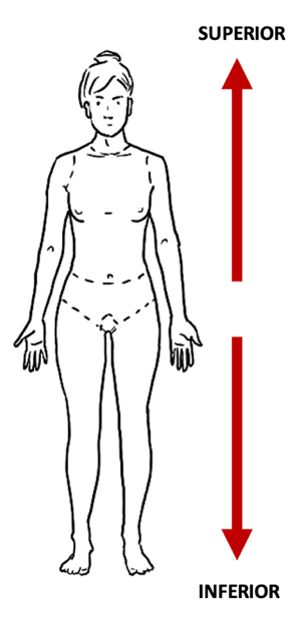
inferior/caudal
away from head, toward lower body, below

anterior/ventral
toward/at front
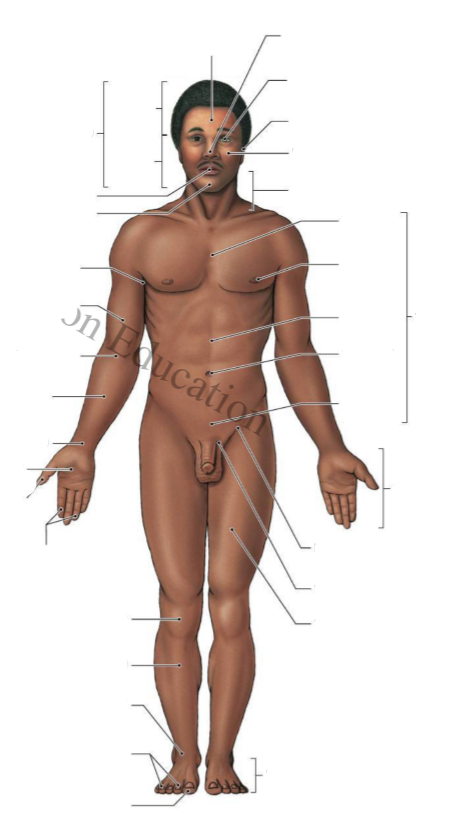
posterior/dorsal
toward/at back/behind

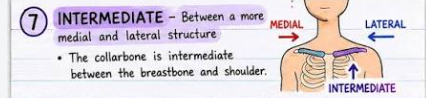
medial
toward or at midline/on inner side of

lateral
away from midline/on outer side of

intermediate
between a more medial and more lateral struct.
proximal
closer to point of attachment of limb to trunk
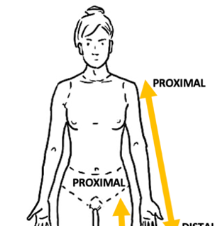
distal
further from point of attachment of limb to trunk

superficial/external
toward/at body surface

deep/internal
away from body surface/more inside

whatre the two major divs of body?
axial and appendicular
axial division
head, neck, trunk
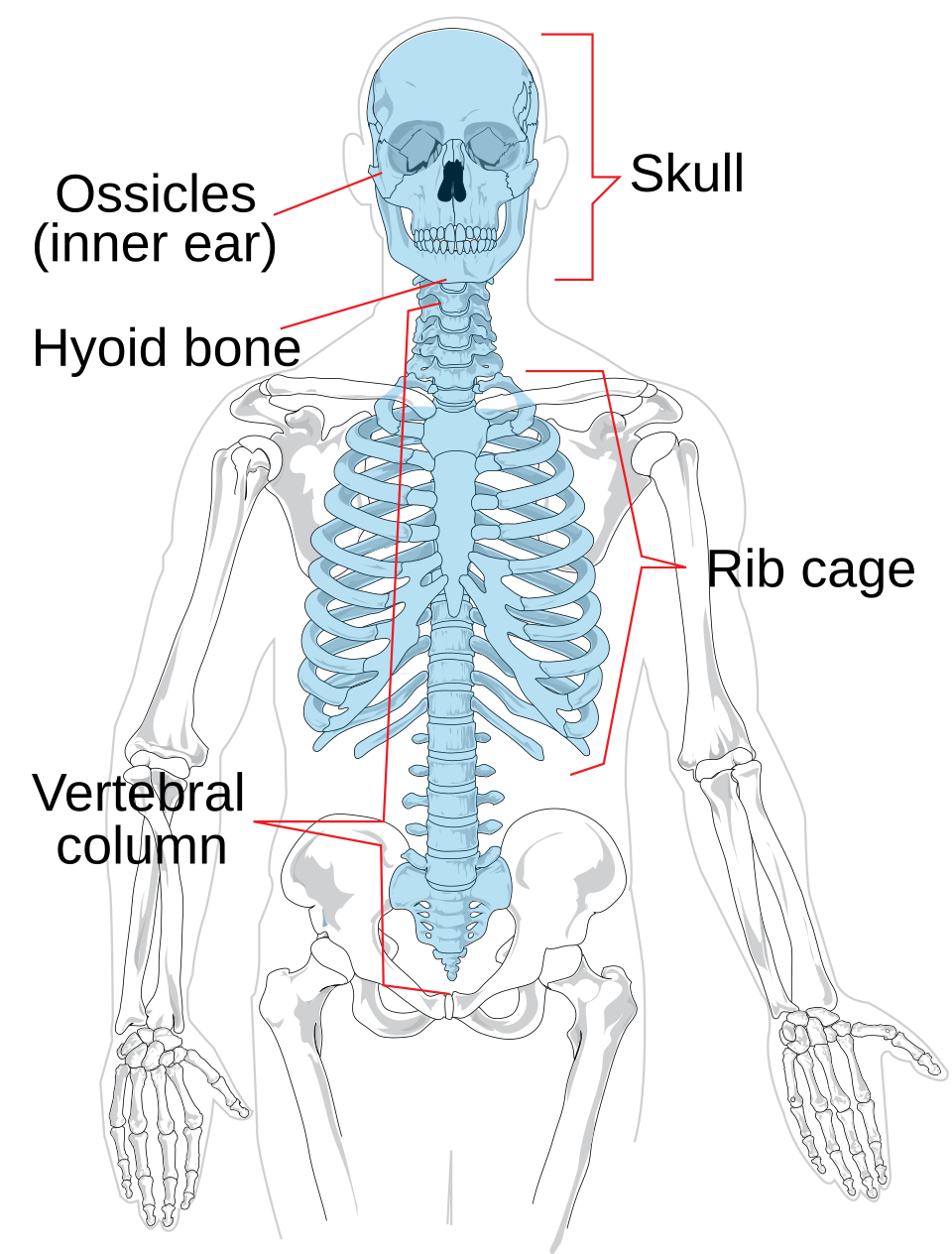
appendicular division
limbs both leg and arm

sagittal plane
div body vertically into left + right
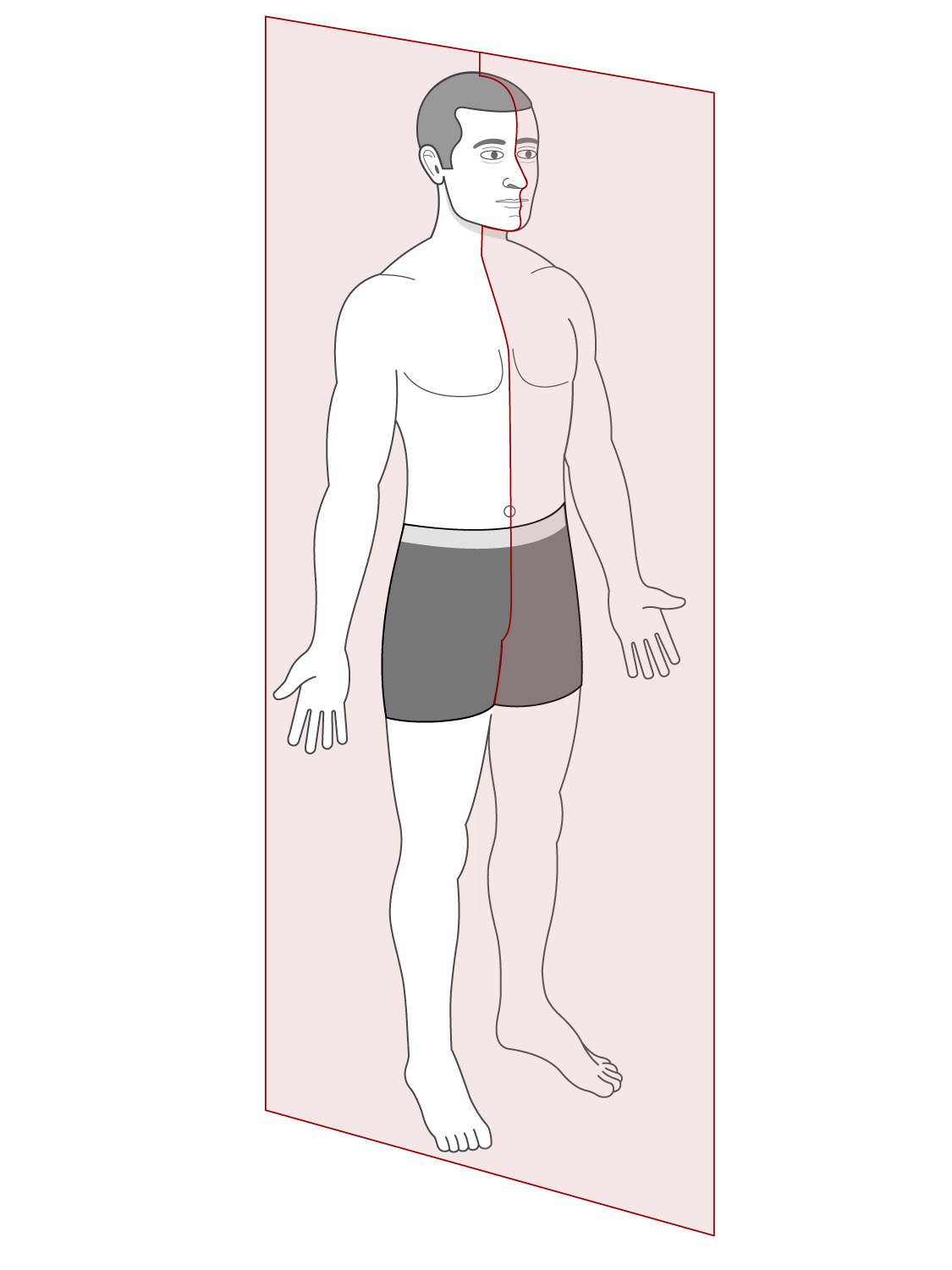
midsagittal/median plane
cut made perfectly along midline

parasagittal plane
cut off center/not on mid line

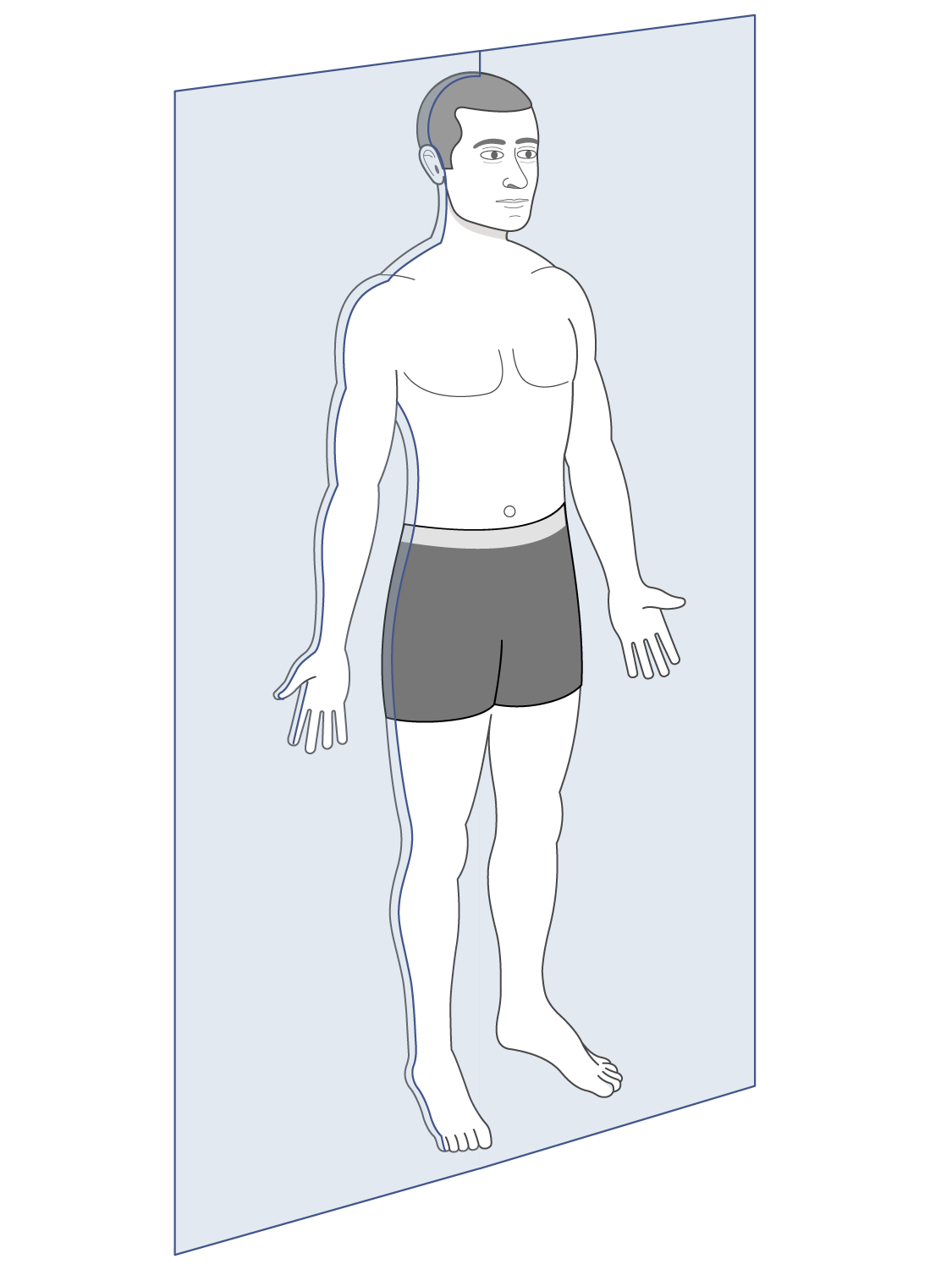
frontal/coronal plane
div body vertically into posterior + anterior
transverse/horizontal plane
div body horizontally into superior + inferior

oblique section
cut at angle other than 90 deg

dorsal body cavity set
contain cranial + vertebral cav

cranial cavity
(dorsal) holds brain
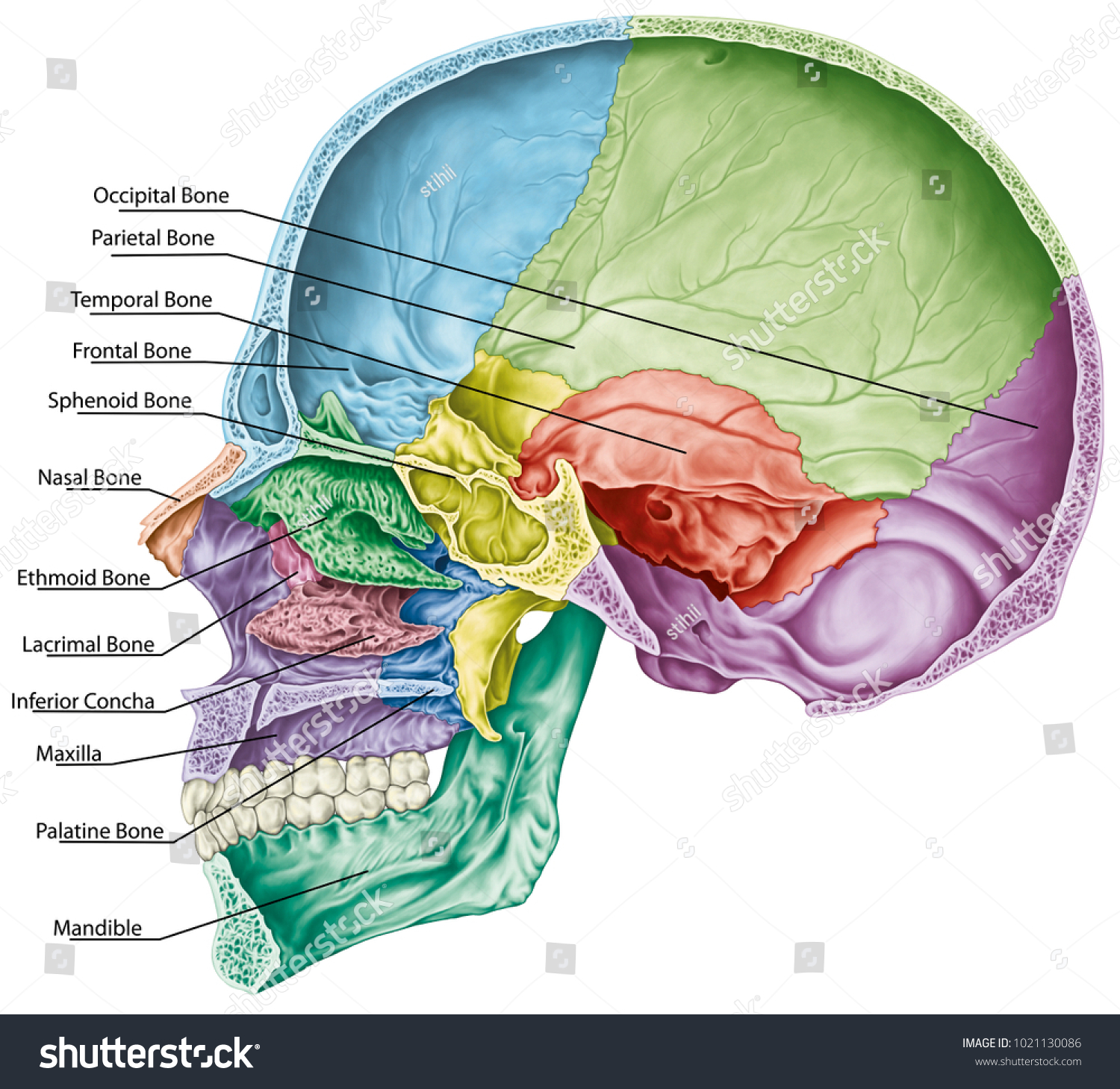
vertebral cav
(dorsal) holds spine

ventral body cav set
encompasses thoracic + abdominopelvic cav

thoracic cav
holds two pleural cavs, mediastinum, + pericardial cav

pleural cav
(thoracic) hold lungs

mediastinum
(thoracic) holds other thoracic organs (ex. trachea + esophagus) and pericardial cav
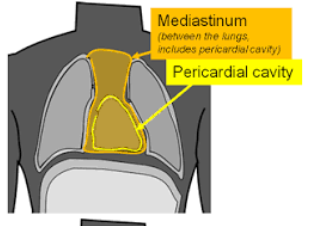
pericardial cav
(thoracic) holds heart

abdominopelvic cav
has abdominal cav + pelvic cav

abdominal cav
(abdominopelvic) stomach, intestines, spleen, liver

pelvic cav
(abdominopelvic) urinary bladder, reproductive organs, and rectum