(B4) Characteristics of Parasitic Alimentary Diseases of Horses
 Call Kai
 Learn
Learn Practice Test
 Spaced Repetition
 Match
Match Flashcards
 Knowt Play
1/73

There's no tags or description
Looks like no tags are added yet.
Name | Mastery | Learn | Test | Matching | Spaced | Call with Kai | Chat |
|---|
No analytics yet
Send a link to your students to track their progress
74 Terms
what is coccidias parasite (Rare Eggs)
Eimeria leuckarti
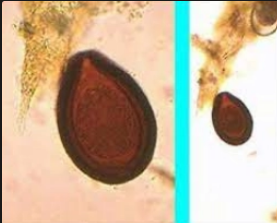
what is it (Rare Eggs)
Eimeria leuckarti
what are 2 rare eggs (Rare Eggs)
Eimeria leuckarti
liver flukes
what is the scientific name for liver flukes (Rare Eggs)
Gastrodiscus aegyptiacus
what life cycle do liver flukes have (Rare Eggs)
indirect
what are the intermediate host of liver flukes (Rare Eggs)
Planorbid snails / Ramshorn Snails
clinical signs (6) (Equine Bots)
horse licking its legs
horse may try rubbing its face or try biting strange objects to ease the irritation within its mouth
oral ulcers
Colic
poor appetite
abdominal pain
how to treat (4) (Equine Bots)
removal of the eggs is essential to prevent the life cycle of the bots from escalating.
Using a tool called a bot knife to scrape the eggs off the hide.
spraying the horse with a suitable fly spray preparation during the bot fly season.
Deworming medication can assist the horse to move the larvae out of the stomach
how to prevent (2) (Equine Bots)
horse is stabled or in a stall, using strong fans during the summer will decrease the population of the bot fly from that area.
Removing all horse droppings from the paddocks and fields will also help reduce the amount of reinfection by your horse.
beep
boop
what is the parasite that is pinworms
Oxyuris equi
what is life cycle (pinworms)
direct
what kind of migration (pinworms)
Mucosal migration.
where do adults live (pinworms)
large intestine
where do females lay eggs (pinworms)
Females crawl out of the anus to lay eggs, which stick to perineal hair and skin.
clinical signs (2) (pinworms)
Rubbing tail
pruritus of anal region.
how to diagnose (pinworms)
Scotch tape mount
how to treat (2) (pinworms)
Most available anthelmintics.
Added treatment of washing perineum and perianal region may help relieve symptoms.
how to prevent (3) (pinworms)
Environmental hygiene
Regular fecal examination
Regular deworming
what is the roundworm parasite known as
Parascaris equorum
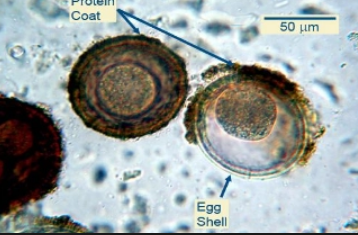
what is it (roundworm)
Parascaris equorum
what kind of life cycle (roundworm)
direct
what kind of migration (roundworm)
Tracheal migration.
where do adults live (roundworm)
small intestines
what is the prepatent period (roundworm)
3 months
what animals are most susceptible (roundworm)
less than 18 month foals
Adults develop … and although they may have low levels of infestations, fecal shedding of eggs is low. (roundworm)
age-dependent immunity
clinical signs (14) (roundworm)
Unthrifty
poor growth rate.
Pot bellies
rough hair coat.
Lethargy
inappetence.
Migrating larvae damage liver and lungs.
cough
nasal discharge.
diarrhea
constipation
colic.
Death
colic
how to diagnose (7) (roundworm)
Fecal analysis
surgery
necropsy
poor gut motility
abdominal pain
respiratory sounds AB
nasal discharge seen
how to prevent (2) (roundworm)
Regular fecal examination
Deworm mare before foaling:
what are Bloodworms known as
Strongyles
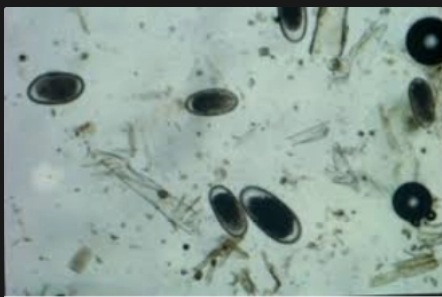
what is it (Bloodworms)
strongyles
what are the large strongyles (3) (Bloodworms)
Strongylus vulgaris
Strongylus edentatum
Strongylus equinus
what is the most dangerous large stongyle (Bloodworms)
Strongylus vulgaris
why are Strongylus vulgaris the most dangerous (Bloodworms)
because these larvae crawl up the cranial mesenteric artery to overwinter
what kind of life cycle does large strongyles have (Bloodworms)
direct
where do large strongyles live (Bloodworms)
large intestine
what is the prepatent period for large strongyle (range) (Bloodworms)
200–330 days.
clinical signs of large strongyles (13) (Bloodworms)
Poor doing
rough-coated
pot-bellied foals.
Depression.
Larvae may cause an aneurysm in the mesenteric artery
intermittent colic
sudden death.
May also cause thromboembolism in the mesenteric arteries.
Moderate anemia and eosinophilia.
Weight loss
Diarrhea
Delayed shedding of coat
COLIC
how to diagnose large strongyles (3) (Bloodworms)
fecal analysis
physical exam
CBC
necropsy
what would be seen in a physical exam for large strongyles (4) (Bloodworms)
poor gut motility
abdominal pain
pale MM
poor CRT
what would be seen in a CBC for large strongyles (2) (Bloodworms)
Moderate anemia
leukocytosis
how to prevent large strongyles (3) (Bloodworms)
Regular fecal examinations
Reduce contamination of grounds
Deworm regularly and move to new grounds afterwards.
what are small strongyles commonly called (Bloodworms)
cyathostomes
what is the life cycle of small strongyles (Bloodworms)
direct
how long can small stronglyes remain encysted in mucosa for (Bloodworms)
2½ years
what kind of migration does small strongyles have (Bloodworms)
Mucosal migration.
what is the prepatent period of small strongyles — days to — years (Bloodworms)
40 days to 2½ years.
what are the clinical signs of small strongyles (7) (Bloodworms)
Diarrhea
Weight loss
depression.
Poor doing
delayed shedding of coat.
Some adults suck blood.
Colic
when do most clinical signs occur from small strongyles (Bloodworms)
when the encysted larvae emerge in mass from the gut mucosa.
what season do most clinical signs occur for small strongyles (2) (Bloodworms)
late winter
early spring
how to diagnose small strongyles (4) (Bloodworms)
Fecal analysis
necropsy
poor gut motility
abdominal pain
how to prevent small strongyles (2) (Bloodworms)
Regular fecal examinations
Reduce contamination of grounds:
what parasites are under tapeworm (tapeworm)
Paranoplocephala sp.
Anoplocephala sp.
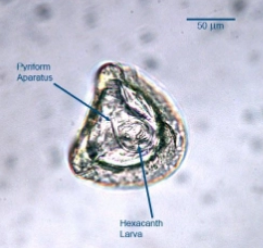
what is it
Anoplocephala sp.
what kind of life cycle (tapeworm)
Indirect
how is it spread (tapeworm)
ingestion of mites
where do adults live (tapeworm)
ileocecal junction
clinical signs (5) (tapeworm)
Lethargy
Weight loss
Colic
Dull, dry coat
anemia
how to diagnose (8) (tapeworm)
Fecal examination
Segments on manure
Post mortem
poor gut motility
abdominal pain
possible tachycardia
Laparotomy
Saliva ELISA test
define Laparotomy (tapeworm)
a surgical procedure sometimes used to access and inspect the abdominal cavity for the presence of parasites.
define Saliva ELISA test (tapeworm)
involves collecting saliva samples from horses and testing for antibodies against tapeworm proteins
how to prevent (3) (tapeworm)
Regular fecal examinations
Rotate pastures
Properly timed deworming
What is Anthelmintic resistance?
Resistance is the ability of worms in a population to survive treatments that are generally effective against the same species and stage of infection.
The true goal of dewormer (anthelmintic) is to … and not to …
limit the parasite infection (NOT to eradicate it).
what is the 3 goals of dewormer
To minimize the risk of parasitic disease.
To control parasite egg shedding
To maintain efficacious drugs and avoid further development of dewormer resistance.
what does AAEP stand for
American Association of Equine Practitioners
what is the low egg count level
1-200 EPG
what is the moderate egg count level
200-500 EPG
what is the high egg count level
>500 EPG
what does EPG stand for
eggs per gram
how does McMaster egg count work
uses sugar (sheathers solution) or NaCl and a glass slide with graph
what does FECRT stand for
Fecal Egg Count Reduction Test
what is deworming schedule for fouls (4)
1st deworming - at 2 months of age
2nd deworming - before weaning (4-6 months of age)
3rd - at 9 months
4th deworming - at 12 - 14 months