INCOME TAX RETURN
 Call Kai
 Learn
Learn Practice Test
 Spaced Repetition
 Match
Match Flashcards
 Knowt Play
1/4

There's no tags or description
Looks like no tags are added yet.
Name | Mastery | Learn | Test | Matching | Spaced | Call with Kai | Chat |
|---|
No analytics yet
Send a link to your students to track their progress
5 Terms
Capital Cost Allowance vs. Depreciation
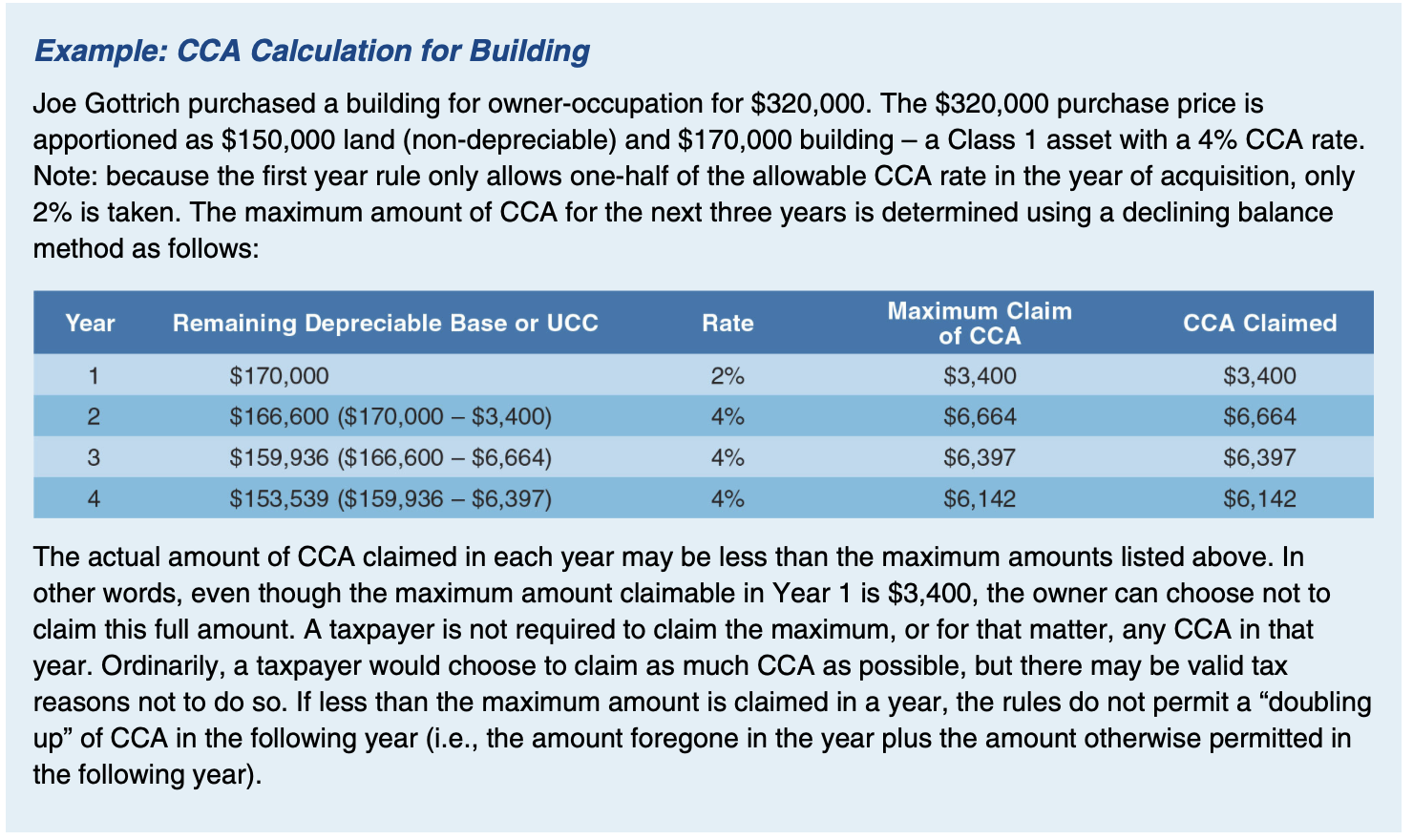
-For income tax purposes, depreciation is calculated using Capital Cost Allowance (CCA) and is the only method allowed by Canada Revenue Agency (CRA).
-CCA is based on declining balance which applies a fixed rate to the undepreciated cost of an asset, resulting in a lesser amount amortized in each year as the asset ages, and thus less depreciation taken each year.
-Following CRA ruling, each asset is assigned to a particular class with a specified CCA rate; over 40 classes
-The CCA claimed in each year is the CCA rate multiplied by the remaining depreciable base of a property, or its undepreciated capital cost (UCC).
-UCC is the remaining balance in the asset’s account, or the initial cost less any CCA previously claimed.
Further CCA rules include the following
• Pooling Assets: If a taxpayer owns several assets of the same class, the assets are placed in a common pool provided that the assets relate to the same business.
• First Year CCA Claim: Regardless of when the asset is purchased in the fiscal year, the eligible CCA deduction for the year is limited to 50% of the regular rate, as long as the asset is being used to earn income by the last day of the fiscal year.
• Final Year Rule: CCA cannot be claimed for an asset in the year of disposition, even if the asset is owned for the majority of the year.
• Short Year Rule: CCA must be prorated where a taxpayer’s taxation year is less than twelve months.
• CCA Recapture: When a depreciable asset is sold, any CCA claimed during the holding period that does not represent an actual decline in market value of the asset is considered to be taxable income at the time of disposition of the property.
Taxable Income
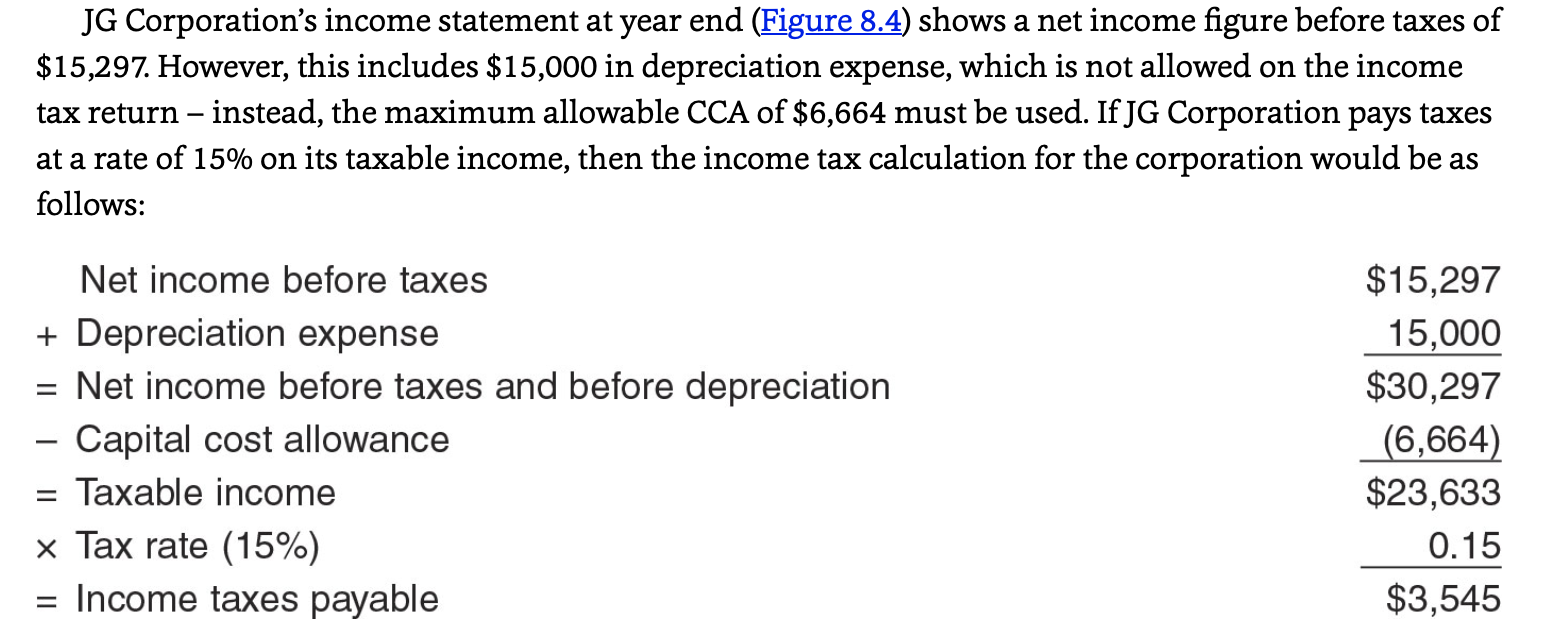
-used to calculate income taxes payable to Canada Revenue Agency.
-tax return is that capital cost allowance must be used in place of depreciation expenses when filing the return. Therefore, taxable income reported on the income tax return may differ from the net income on the income statement
CCA’s Potential Tax Shelter Benefits
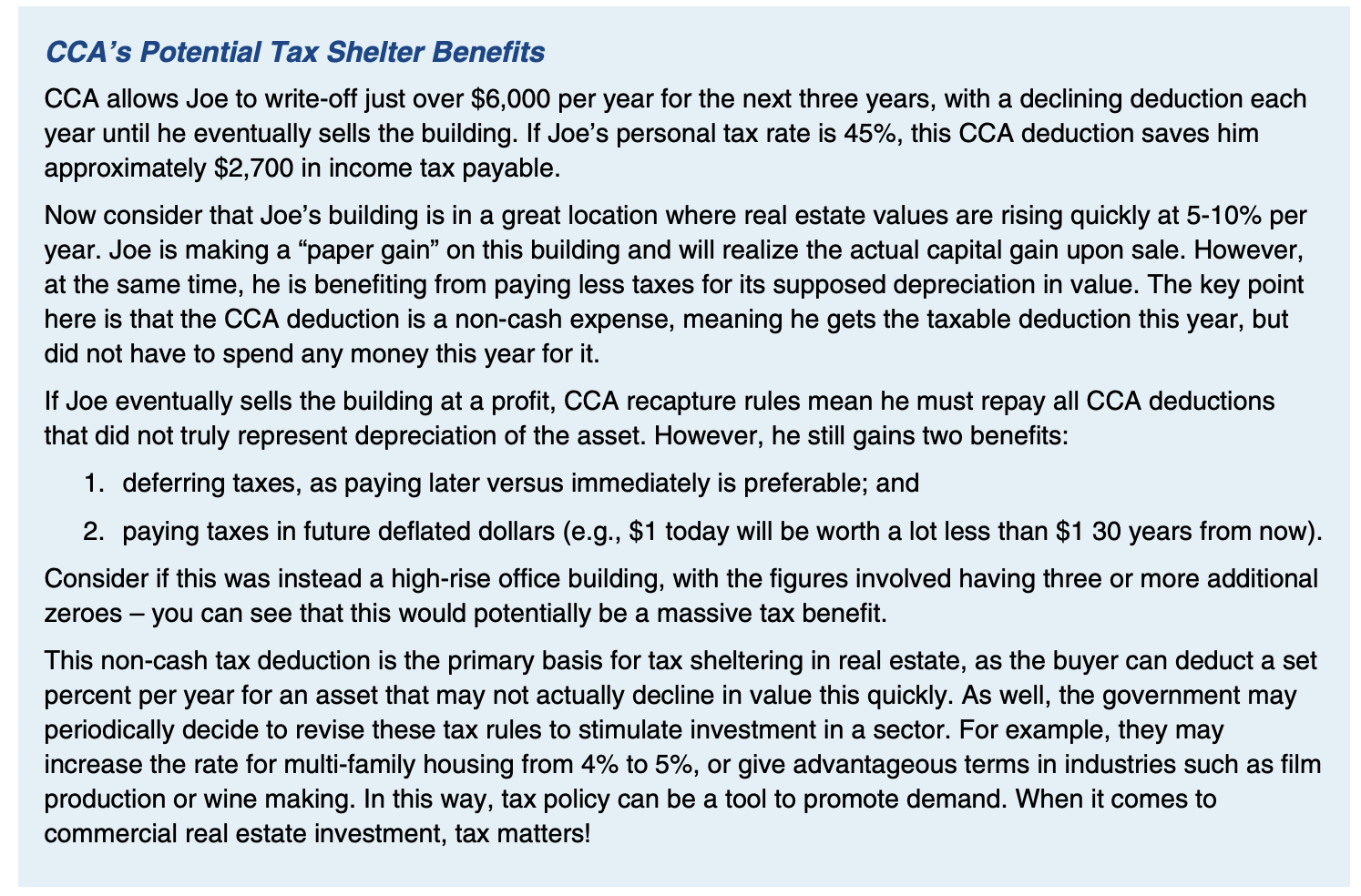
This non-cash tax deduction is the primary basis for tax sheltering in real estate, as the buyer can deduct a set percent per year for an asset that may not actually decline in value this quickly
ANALYZING FINANCIAL STATEMENTS
-An owner or accountant can complete this analysis using generally accepted financial ratios, industry benchmarks, and analysis tools.
-it can help a licensee and their client reach conclusions on:
• the level of activity and profitability of the enterprise;
• the adequacy of the capitalization, whether more investment of either equity or debt is required;
• whether the business is carrying excessive amounts of current assets (e.g., inventory);
• whether the business is carrying excessive debt relative to earnings, or if there is an opportunity to increase debt to fund business expansion; and
• the sufficiency of working capital.
-also helpful in comparing the liquidity, profitability, activity, and debt of one enterprise with a competitor in the same industry.
-profitability of a business is typically measured by comparing income or cash flow against the firm’s assets or equity → Dividing an income measure by the investment amount