PB 200 Exam 3 Review
 Call Kai
 Learn
Learn Practice Test
 Spaced Repetition
 Match
Match Flashcards
 Knowt Play
1/119

Earn XP
Description and Tags
Name | Mastery | Learn | Test | Matching | Spaced | Call with Kai |
|---|
No analytics yet
Send a link to your students to track their progress
120 Terms
Cyanobacteria
Also called blue-green algae or blue-green bacteria.
Have bacteriochlorophyll a, red and blue pigments, and requires moist conditions.
Importance of Cyanobacteria
They are at the base of many aquatic food chains.
Their rapid division under optimal conditions can significantly impact water quality. Such as with overgrowth and blooms.
Toxin production by some species, causing neurological effects and vomiting
Nitrogen fixation; some can converse N2 to NH3 which allows rice production
Can cause skin irritation, such as swimmer’s itch
A few are edible and used in body-care products, such as Spirulina and Nostoc “star jelly”
Overgrowths and blooms are stimulated by ___ and ____
N and P
Algal Body Structures
Unicellular, Thalloid, Filamentous, Colonial, Nodal
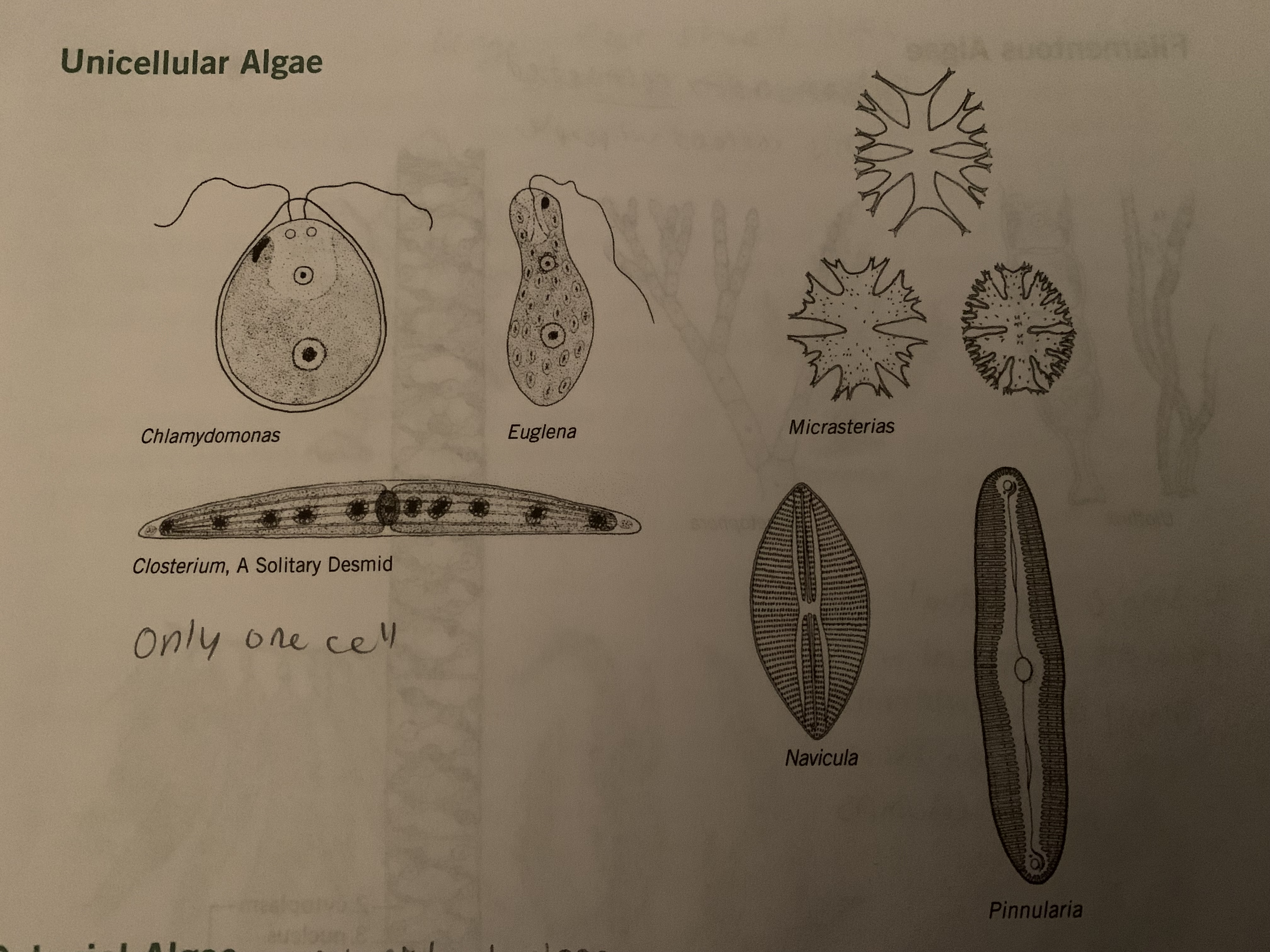
Unicellular
may be elaborate, one cell
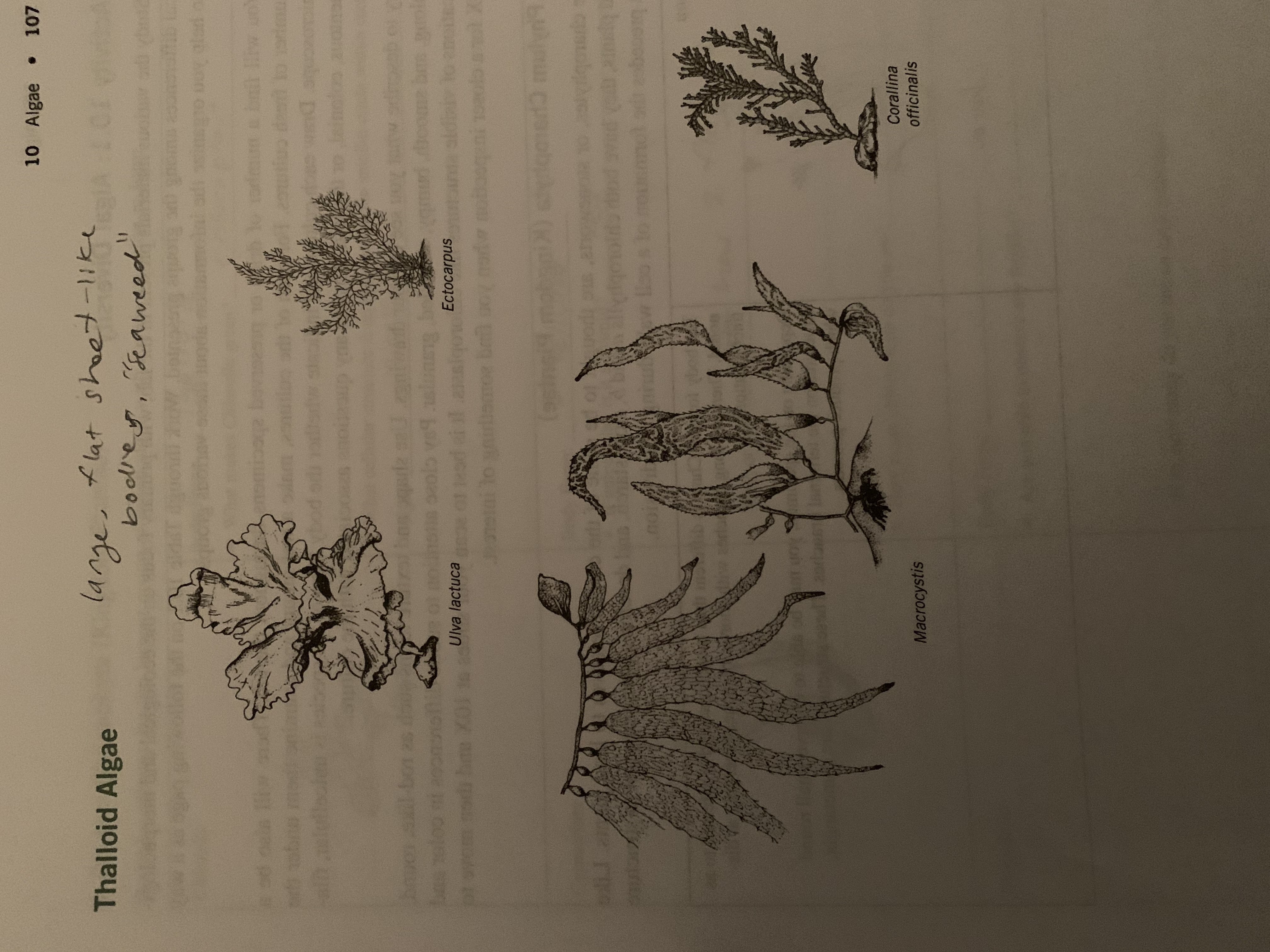
Thalloid
sheet-like, large, flat, “seaweed-like”
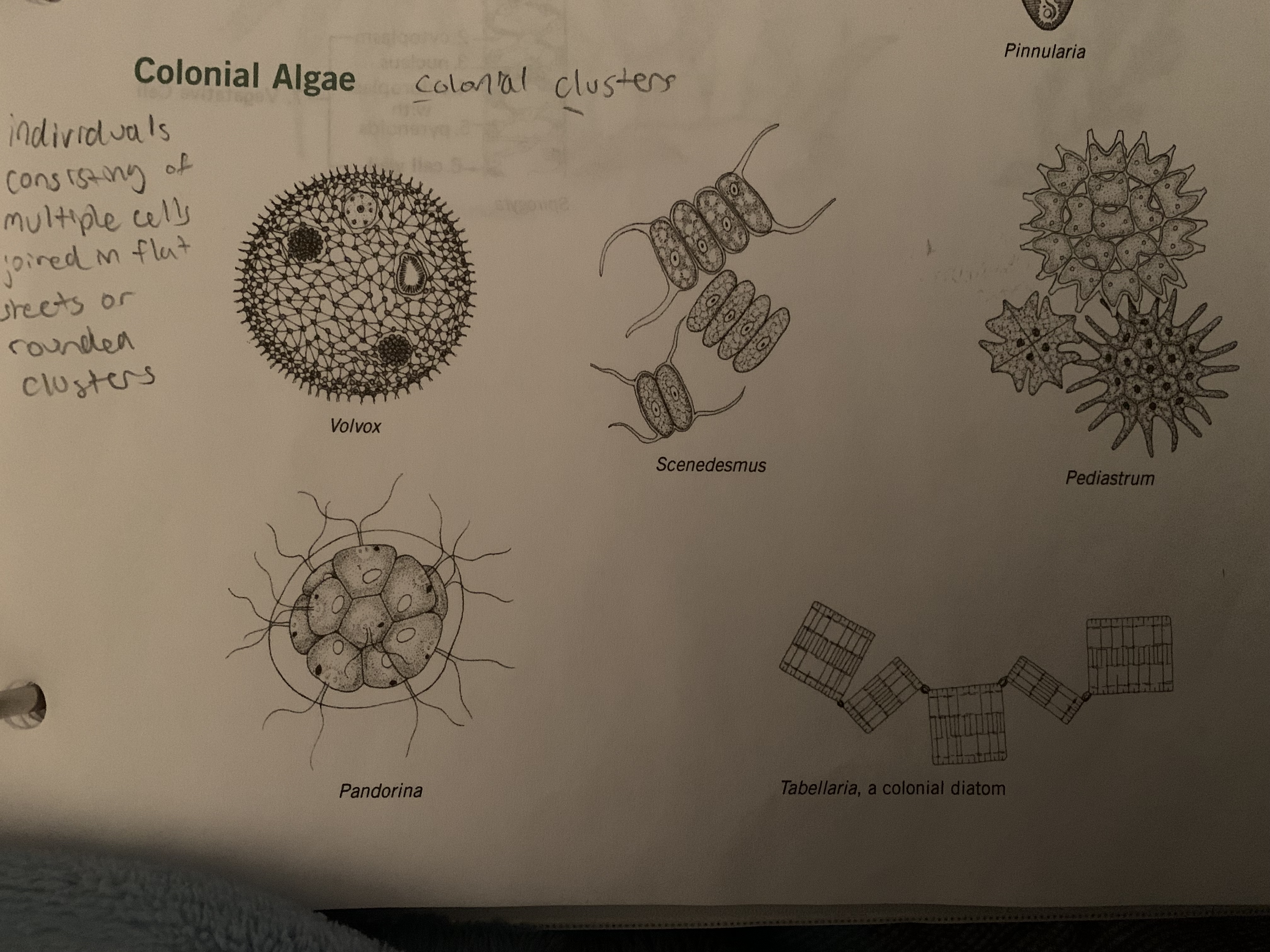
Colonial
indivudals consisting of multiple cells aggregate together in a particular configuration, such as flat sheets or rounded clusters
Nodal
stem-like stuctures with distinct locations for branching
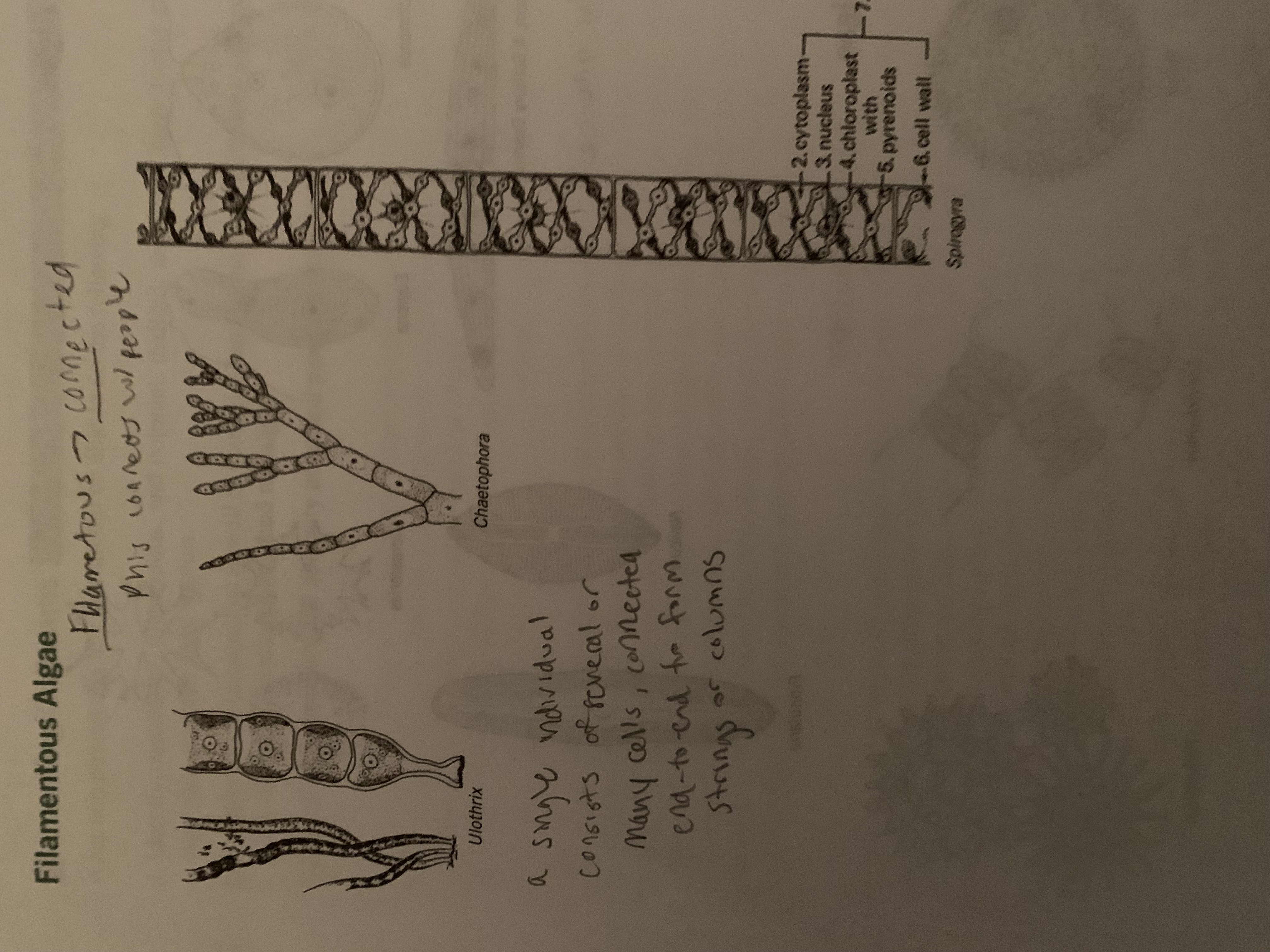
Filamentous
a single individual consisting of several or many cells, connected end-to-end to form strings or columns (strand-like)
Nodal
body arrangement has nodes like plants do
Charophyta
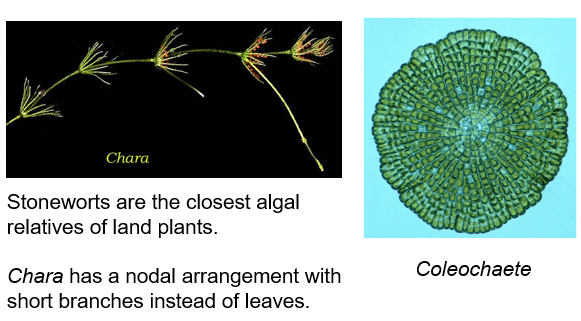
The Charophytes. Closest relatives to terrestrial land plants.
Structural characteristics: some nodal, no meristems
Novel characteristics: evolved from a common ancestor with plants
Habitat: Lives in freshwater usually
Economic impacts: use in agriculture as biofertilizers because of nitrogen-fixing abilities
Environmental impact: provides oxygen for underwater habitats
Chlorophyta (Kindom Plantae)
The Chlorophytes. Called the green algae.
Structural characteristics: large group, all have chl. a, store starch, some of the largest photosynthetic cells known, varied body form
Novel characteristics: source of biofuels, models for understanding cell function
Habitat: Freshwater and marine
Economic impacts: used in food production like seaweed, source of biofuels
Environmental impacts: key oxygen contributor through photosynthesis
Chromophyta (Kingdom Chromista)
The Diatoms, brown, golden-brown, and yellow-green algae.
Diatoms (Kingdom Protista)
Structural characteristics: unicellular, silicon walls, grooved walls, light-reflective
Novel characteristics: diatomical earth used in road sign paint and water filters, produce lipids when they die which becomes sea foam, used to control insects
Habitat: both freshwater and marine
Economic impact: diatomic earth is very important
Environmental impact: significant role in carbon cycling and aquatic food webs
Brown Algae (Kingdom Protista)
Structural characteristics: dark green to brown, some of the largest ones referred to as kelps, “sea grasses,” have long blades, up to 900 ft, varied body forms
Novel characteristics: produces alginates which are thickeners in food products and cosmetics
Habitat: marine
Economic impact: produces alginates, which are used in food and pharmaceutical
Environmental impact: provides habitat for marine organisms
Rhodophyta (Kingdom Protista)
The red algae.
Structural characteristics: highly branched and thalloid, appear red because of phycobilin which is a light-harvesting pigment in low-light conditions
Novel characteristics: Nori which is sushi wrapping, agar which is used in cooking/labs, thickeners in dairy and dressings
Economic impact: used in a lot of food products like agar
Environmental impact: important for coral reef ecosystems, provides support and structure
Dinophyta (Kingdom Protista)
The dinoflagellates.
Structural characteristics: unicellular, cellulosic plates under membrane dino, facilitate mobility flagellae
Novel characteristics: >3k identified, only some now known from the fossil record
Habitat: both freshwater and marine
Economic impact: associated with “red tide” which caused major economic impacts,
Environmental impact: Pfisteria associated with 1990 fish kills in NC estuaries, causing neurogenic effects
Lichens
symbiotic asssociation between fungi and cyanobacteria or algae
the fungi allow mineral and water absorption, while cyanobacteria allow for photosynthesis
Lichen body types
Crustose, Folose, Fruticose
Crustose
crust-like, flat, most common 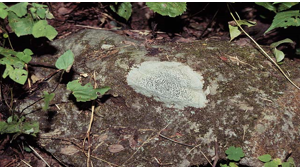
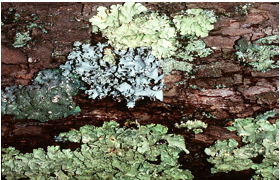
Foliose
thalloid, sheet or foliage-like, most noticeable
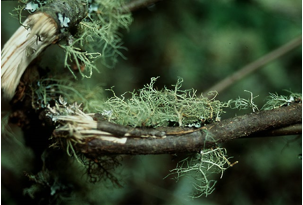
Fruticose
bushy or string-like
Ecological/Cultural Significance of Lichens
air quality indicators
forage for deer and caribou
fabric construction which makes tweeds
dye extraction
Alternation of generations
Plants that reproduce sexually go through 2 life stages (generations) with one more dominant or conspicuous than the other. One generation is DIPLOID, and it is a sporophyte. One is HAPLOID. and it is a gametophyte.
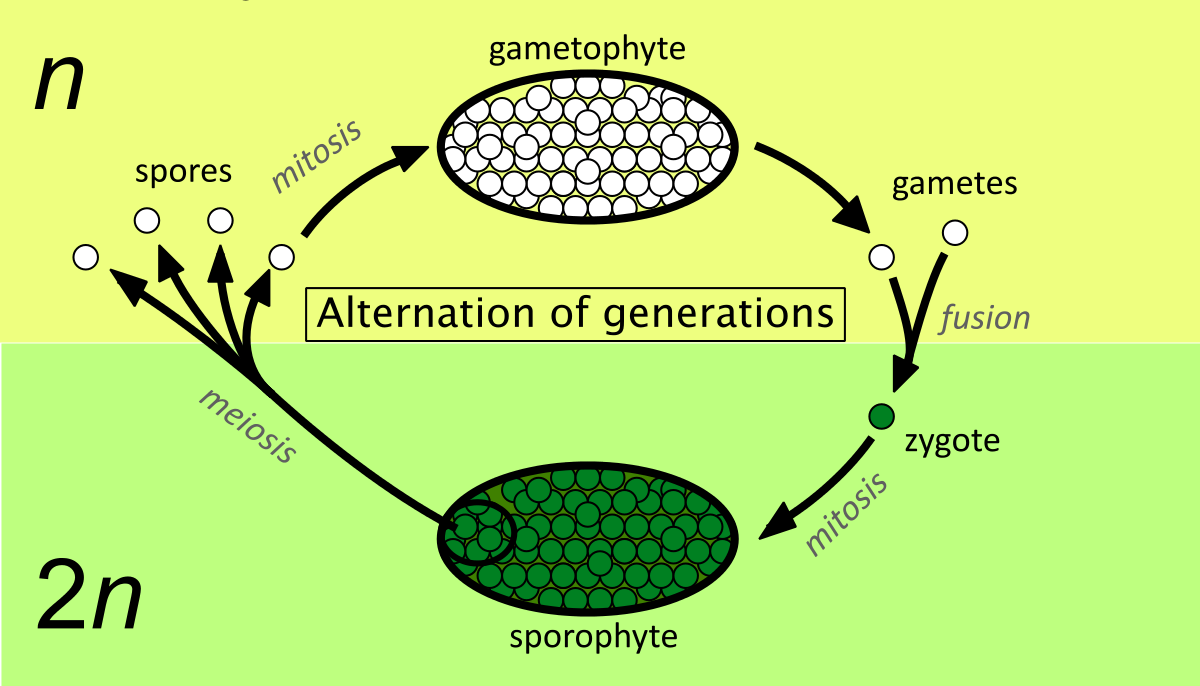
Diploid cells undergo meiosis to form ___
spores. NOT GAMETES!!!!!
Spores will develop and mature into the ____ generation of the life cycle.
gametophyte
In the gametophyte generation, a sperm cell fertilizes an egg cell to form a zygote, which will develop into a ____
Sporophyte
Plants with a dominant gametophyte generation:
Bryophytes (mosses) and Algae
Plants with a dominant sporophyte generation:
Ferns and Allies, Gymnosperms, Angiosperms
Bryophytes
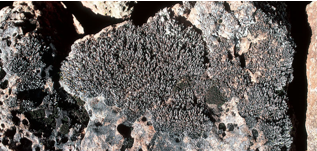
Plants with no seeds or vascular tissue. About 23,000 species.
structurally small, only a few cm
dominant gametophyte
live in moist environments or may be aquatic
have mycorrhizal associations
colonizing organisms and good establishers
highly variable environments
Liverworts
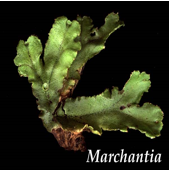
Small, flat gametophytes anchored by rhizoids.
anchoring ONLY, no mass H20 absorption
thought at one point to treat liver disease in Middle Ages
one phylum (Hepaticophyta)
Hornworts
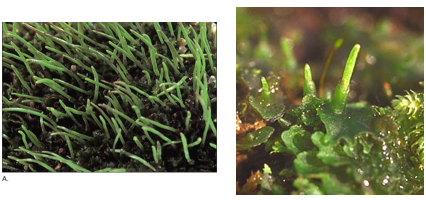
Small but dominant gametophyte.
produces a hornlike sporophyte
stomata and guard cells on sporophyte
Mosses
Bryon: moss
Three general groups based on substrate and occurence:
rock/granite mosses
peat mosses
true mosses
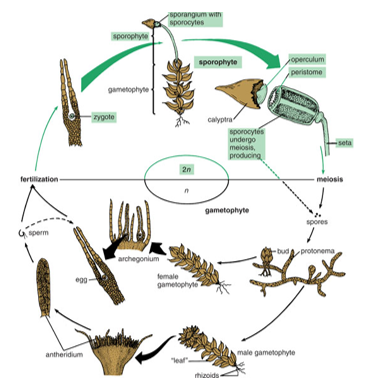 The green-mat like portion of mosses is the gametophyte generation, which is dominant.
two types of gametophytes: those producing egg cells from archegonia (female) and those producing sperm cells from antheridia (male)
Mosses can absorb water on the surfaces of stem and leaf-like aerial tissues
Ecological importance/human uses of mosses:
Colonizers: build soil with they decay
Where they grow: good indicators of soil conditions, high Ca2+ salinity, low pH
Preservative capacity
Fuel sources (peat mosses)
Antiseptic properties
Help prevent erosion
Fern Allies
organisms with similar life cycle characteristics to ferns
all reproduce by spores and have vascular tissues
Ex. Lycophytes,
Ferns
seedless vascular plants
Lycophytes (Club Mosses and Quillworts)
“Club moss” is a generic name. Better descriptors are used for each major group.
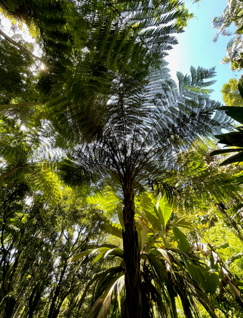
Lycopodium (Ground pines)
Lycopods
1-5 ft tall, have roots of mycorrhizal
scale-like leaves appear similar to gymnosperms
“running cedar”
Selaginella (Spike mosses)
free-branching
produce small leaves, require moist habitats, some are sold as resurrection plants
Isoetes (Quillworts)
resemble pen quills
confused with grasses
moist soil or boglike conditions → up to 20 cm tall
All lycophytes have unique uses:
ornamental/decorative
spores used as flash powders in photography
forage for wildlife
blood coagulate, stops bleeding
Whisk Ferns (Pteridophyta, Class Psilotopsia)
only a few living species
ancient organisms found in fossil record, earliest known plant to have vascular tissue
2 living genera
structural features: no true roots, rhizomes anchored by rhizoids, bifurcating stems with yellow sporangia
habitat: tropical/subtropical, usually Australia and South Pacific
Horsetails and Scouring Rushes (Pteridophyta, Class Equisetopsida)
about 25 species
all have roots and stems
structural features: 5-12 feet tall, hollow, ribbed, vertical stems → photosynthetic with obvious nodes of scale-like leaves
habitat: moist soil, clay/sand habitat, can be weedy
Interesting human uses: scouring/cleaning implements, astringent properties
Ferns (Pteridophyta, Class Polypodiopsida)
size: 1cm-5ft
Habitats: variable, have swimming sperm so H2O is essential, many temperate ferns overwinter well
Rachis is used in many ways like basket-weaving and mattress stuffing
Some young fiddleheads edible
Air filtration uses
Resistant to many plant pathogens
Tannins → leather production
used historically to treat leprosy, diabetes, dandruff infections, fungal infections
Fern Life Cycle
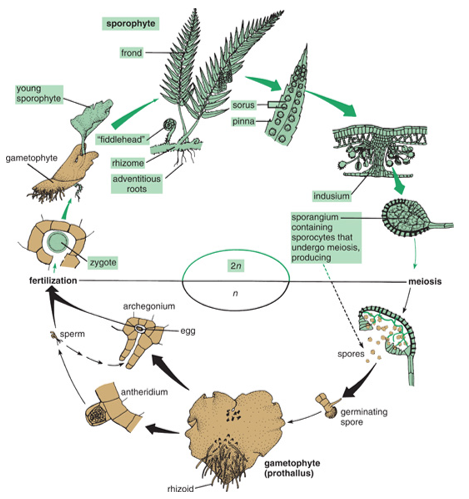
Ferns have a dominant sporophyte generation with true roots, stems, and leaves. Spores are produced in sporangia on the surfaces of margins of fronds. Distinct clusers of sporangia visible on the frond surface are called sori.
Some fronds specialized for photosynthesis, others specialized for spore production
Gametophytes are mostly inconspicuous. Fern gametophytes also lack vascular and are anchored by rhizoids, like moss gametophytes. It is photosynthetic, however. Unlike mosses, ferns produce archegonia and antheridia on the SAME gametophyte structure, called a prothallus. But the gametophytes die after the next sporophyte generation is established, unlike mosses.
Gymnosperms
Naked seeds. Seeds but no fruit.
Phylum Pinophyta (formerly Coniferophyta)
Cone-bearing. Pines, firs, junipers, etc.
Structural features: needles arranged in clusters called mascicles, thick cuticle, compact mesophyll, resin canals, sunken stomata (reduce water loss)
Woody stem features: resin canals, undergo secondary growth similar to dicors, increase in diameter
NOTE: conifers and pines LACK xylem vessel elements and fibers! They only have tracheids. They have thick bark/periderm, lots of cork cells, and cope with low-intensity fires.
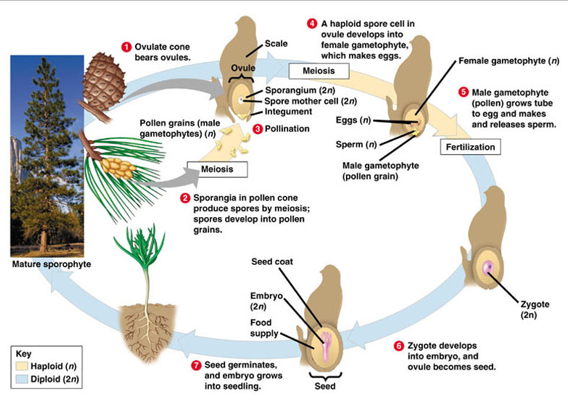
Pine Reproduction: pollen cones (male) that produce sperm cells, seed cones (female) and spirally arranged bracts (base of bracts are ovules that produce female gametophyte or egg cell)
Family Pinacaea (pines)
models for studying gymnosperms structure and morphology
Length of time from pollination to seed maturity and release for pine cones
2-3 years
Example of other conifers:
Sequoia (Sequoia sp.): largest single organisms on Earth → 580 ft tall!
Red Cedar (Juniperus sp.): “Berries” used to flavor gin, female cones
Deodar Cedar (Cedrus deodara): wood source used in different parts of the world for sarcophagi, strong scent
Bald Cypress (Taxodium distichum): live in semi-aquatic environments
Douglas Fir (Pseudotsuga mensiesii): largest fir trees, used in cabin construction → stacked log homes
Fraser fir (Abies fraseri): Christmas tree→ mountain species
Yews (Taxus sp.): Taxol → treats breast/ovarian cancer as chemotherapy
Cycadophyta
has two households (male and female) or “dioecious”
Ginkgophyta
Ginkgo biloba is only living member → extracts sold for medicinal purposes
Significant features and uses of gymnosperms
Boreal forests—cold or freezing tolerance
Primary invaders in succession — Mycorrhizal relationship
Size and longevity
Resistant to many pathogenic fungi and insects
Building materials and wood products
2 × 4’s
Barrels
String instruments
Newsprint
Turpentine, rosin, pitch, and tar (the “tar heel” state)
Wildlife shelter
Ornamentals: Christmas trees, bonsai
Flower
a reproductive organ in angiosperms that probably evolved most recently out of other major organs (specialized leaves) and is composed of up to 4 whorls
Floral Organ Whorls
Calyx
all sepals (most external, develops first. may be photosynthetic, protect more interhalogen during development)
Corolla
all petals, attract pollinators
Androecium
all stamens, male structures, composed of anther and filament
Gynoecium
all pistil(s), pistil is composed of stigma (receives pollen), style (elongates stigma), and ovary (contains ovules each producing an egg cell)
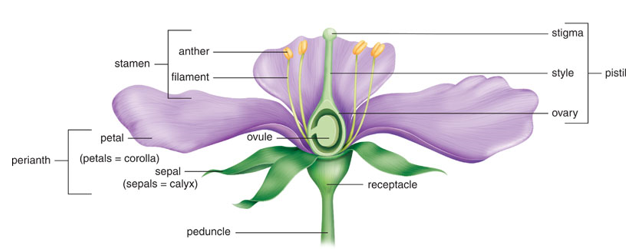
Pistil
A pistil may be composed of one or more carpels. If there is only 1 carpel, the structure may be called a pistil OR a carpel. If there are multiple carpels, you can call the structure a pistil.
Moncot Flower Whorls
multiples of 3
dicot flower whorls
multiples of 4 of 5
Receptacle
enlarged tip of flower peduncle where whorls attach to
peduncle
flower “stalk” or stem”, which elevates flower and connects it with the stem
Anther
produces pollen which produces sperm cells
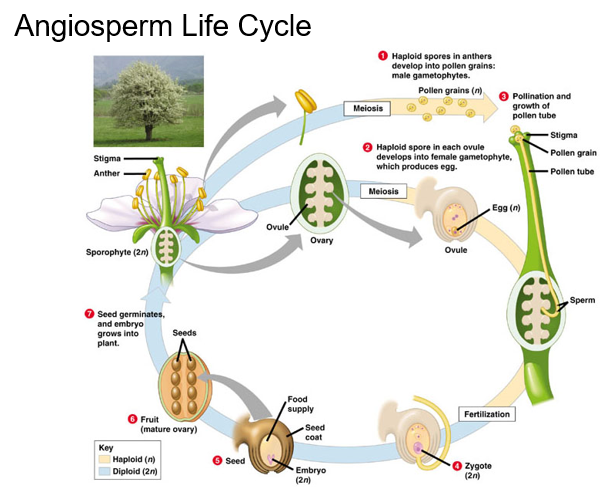
Angiosperm Life Cycle
Inflorescence
numerous flowers in a cluster in a definite pattern
Perfect Flower
has both stamens and pistils (male and female parts)
Imperfect Flower
lacks either stamens OR pistils (is only male or female)
Complete Flower
has all 4 whorls
Incomplete flower
lacks at least 1 whorl
Monoecious
1 household. When male and female imperfect flowers appear on the same plant (ex. corn and oats)
IMPERFECT
Dioecious
2 households. When all flowers on the same individual plant are either male or female (ex. willows, cannabis, holly)
IMPERFECT
Overall function of a flower
production of offspring, yield fruits which attract seed dispersers, and yield seeds
Self-pollination
transfer of pollen from anther to stigma on the SAME plant
Cross-pollination
transfer of pollen from anther to stigma on a DIFFERENT plant
Fertilization
the union of sperm and egg cells to form a diploid zygote
Fruits form as a result of:
the thickening or enlargement of the ovary (and sometimes the receptable)
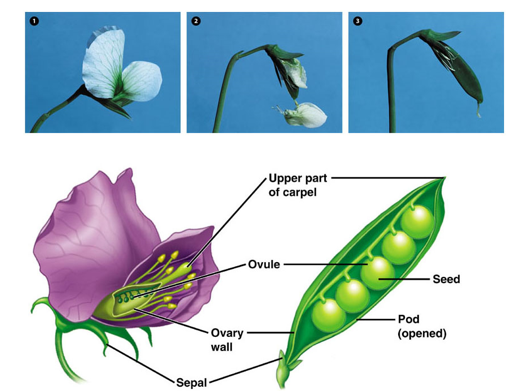
A fruit is actually a thickened ___
ovary
Seeds are fertilized ___
ovules
Major Fruit Categories
Dry (Dehiscent and Indehiscent), Fleshy (Drupes and Berries), Aggregate, Multiple, Accessory
Dry fruits
Dehiscent: ovary dehydrates at maturity → often thin fruit walls and split open
follicles (milkweed), legumes (peas, beans, peanuts), siliques (mustard, broccoli), capsules (irises, orchids, lillies)
Indehiscent: not split open
nuts and acorns, achenes (sunflower seeds), grains (wheat, rice), samaras (maple “wings”), schizocarps (parsley family like carrots)
Fleshy Fruits
remain hydrated at maturity.
Drupes (single ovule) - coconuts, cherries, peaches, walnuts
Berries (compound ovaries)
True berries: tomatoes, grapes
Inferior ovary berries: bananas, blueberries. often have remnant flower parts or scars at one end
Pepos: pumpkins, squashes, have thick exocarp (rind)
Hespiridium (leathery skin): most citrus, often make oils
Pomes: (simple accessory fruits), pears, apples; have accessory tissues from other flower parts, the core is the ovary, and everything else develops from the flower tube around the ovary
Aggregate fruits
form from several pistils in the SAME FLOWER. The individual ovaries enlarge and fuse together.
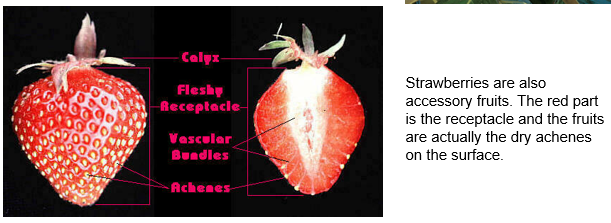
raspberry, blackberry, strawberry, magnolia
Multiple fruits
form from SEVERAL FLOWERS in an infloresence. The fruits from each flower fuse together to generate one larger structure.
pineapple, fig, corn
Accessory fruits
composed of the thickened ovary wall as well as other floral organs such as the petals and/or receptacles
ex: apple and strawberry
Angiosperms
have vascular tissue, seeds, AND flowers
dominant sporophyte generatoin
most diverse phylum (300,000+ known living species)
Angiosperm consumption
20,000-30,000 plant species are edible out of 300,000+
humans have eaten about 2,500 species
current world food supply depends on only 150 species
Domestication
growing a plant and selecting for favorable characteristics, causing population to grow over time so it is more desirable to humans
Characteristics Important in Domestication
Faster growth
Increased biomass
Shift in carbohydrate content
Ability to withstand abiotic stress
Disease resistance
Wider growth range
Changes in Sclerification/Fibrosity
avoided in part through harvest before maturity
Plant domestication: Decrease in toxic metabolites & anti-nutrients
Alkaloids are found in several plant families
Glucosinolates in Brassicaeceae (bitterness)
Lectins in legumes
Amylase inhibitors in kidney beans, wheat, and rye
Plant domestication: Enhanced and Variable Carbohydrate Content
Change in carbohydrate profiles, where starches are either stored or converted to mono- and disaccharides (sweeter fruits).
Members of the Musa genus have been cultivated in part to produce a higher percentage of simple carbohydrates.
Plant domestication: Developed or increased variability in pigment
Plastids contribute to most fruit color variation, as in bell pepper (Capsicum annum). Selection has occurred for more variation.
Anthocyanins and betacyanins are stored in vacuoles and have anti-oxidant properties. Natural variation occurs in potato—domestication has actually reduced some variability.
Where on Earth did our modern food plants evolve?
Tracing crop plants to their centers of origin usually involves looking for:
High varietal diversity
different traits based on variations in genetic composition & expression
Co-occurrence of wild ancestors with domesticated
Long history of crop use
Tomatoes originated in northern regions of South America.
Germplasm
describes the variety of genetic composition of a particular species, seeds are usually how germplasm is collected and stored
US germplasm collections are maintained by the USDA—National Germplasm System
Preserving Crop Plant Germplasm
Some large-scale commercial crops have relatively homogeneous germplasms to ensure that plant quality and yield is consistent
Homogeneity increases production but also can reduce the rate of survival when exposed to pests, diseases, and environmental stressors
Conserving the germplasm of known variations in a species allows for a more complete genetic inventory, which could be useful in plant breeding
Svalbard Global Seed Vault
A seed bank with deposits made by countries
in Spitsbergen, Norway; ideal location due to no tectonic activity, permafrost, and elevation above sea level
countries must also have backup collections of their own
this vault provides a germplasm reserve should a global crisis occur
opened Feb 2008
capacity to store 4.5 million samples
Like plants, algae have the organelle ____, which allows them to make their own food through photosynthesis.
chloroplast
All algae are classified under Kingdom ____ with the exception of ____ which are classified under Kingdom Plantae.
All algae are classified under Kingdom Protista with the exception of green which are classified under Kingdom Plantae.
One characteristic that unites all algae is:
they contain chlorophyll, which allows them to photosynthesize.
Some species of algae have a large complex, multicellular body called a ____.
thallus
The biggest ecological significance of algae is that......
they are primary producers
Cyanobacteria are similar to algae in that they are capable of:
Photosynthesis
The color of algae found in Phylum Rhodophyta is ___.
red
Which of the following describes algae that grow in several or many cells connected end-to-end to form strings or columns?
Filament
true or false: All algae species are green in color.
False
True or False. Ferns and moss need water as part of their reproduction.
True
Name one difference between mosses and ferns.
Ferns have vascular tissues, mosses don’t.
What do ferns need for fertilization to occur? In other words, how does sperm travel to the egg?
Ferns need at least a film of water for fertilization to occur, since sperm cells must swim to the egg cells.