Unit 10- Chemical Bonds
0.0(0)
Studied by 2 people Call Kai
 Learn
Learn Practice Test
 Spaced Repetition
 Match
Match Flashcards
 Knowt Play
Card Sorting
1/31

Earn XP
Description and Tags
Last updated 2:52 AM on 12/16/22
Name | Mastery | Learn | Test | Matching | Spaced | Call with Kai | Chat |
|---|
No analytics yet
Send a link to your students to track their progress
32 Terms
1
New cards
Atom Inventory
How many atoms of each element the compound has
2
New cards
Octet Rule
Atoms combine to become more chemically stable when they obtain 8 electrons in their outer shell.
3
New cards
Valence Electrons
Electrons in the outermost shell
4
New cards
Lewis Structure
Write element symbol in the middle, follow with dots going clockwise based on the amount of valence electrons.
5
New cards
Chemical Bonding
A force that holds the atoms together in a substance. When atoms lose, gain, or share electrons they become stable and form chemical bonds.
6
New cards
Ions
Atoms that have a charge. They form by losing of gaining electrons.
7
New cards
Cations
Have a positive charge. They form by losing electrons.
ex. Magnesium- Mg+2
ex. Magnesium- Mg+2
8
New cards
Anions
Have a negative charge from gaining electrons.
ex. Oxygen- O-2
ex. Oxygen- O-2
9
New cards
Ionic Bond
When atoms of opposite charges combine
(electrons are transferred)
ex. MgCl2
(electrons are transferred)
ex. MgCl2
10
New cards
Covalent Bond
When atoms share electrons
ex. Cl2
ex. Cl2
11
New cards
Polar Molecules
Have a positive and negative end because of unequal sharing of electrons.
ex. Water, H2O
ex. Water, H2O
12
New cards
Non- Polar Molecules
Does not have oppositely charge ends
ex. methane, CH4
ex. methane, CH4
13
New cards
Ionic Bonding
metal and non-metal
cation and anion
transfer of electrons
solids at room temp.
cation and anion
transfer of electrons
solids at room temp.
14
New cards
Covalent
2 or more nonmetals
2 or more anions
share electrons
gases at room temp.
2 or more anions
share electrons
gases at room temp.
15
New cards
Monatomic
Single atom with charge (Na+)
\*all of these will be on the periodic table
\*all of these will be on the periodic table
16
New cards
Polyatomic
Group of covalently bonded atoms that act as a group and carry an overall charge (NH4+)
\*most of these will be on the back of the periodic table
\*most of these will be on the back of the periodic table
17
New cards
2
How many words will always be in the name of the formula
18
New cards
No
Do you use prefixes when naming ionic compounds?
19
New cards
Chemical Reaction
One or more substances is changed into different substances (chemical change)
20
New cards
Reactants
starting materials (present before a reaction)
21
New cards
Products
ending materials (present after a reaction)
22
New cards
Law of Conservation of Mass
Total mass of reactants must equal total mass of products
23
New cards
Signs of a Chemical Reaction
Bubbles
Heat energy/ light absorbed or released
Color change
Odor change
Formation of a precipitate (solid)
Heat energy/ light absorbed or released
Color change
Odor change
Formation of a precipitate (solid)
24
New cards
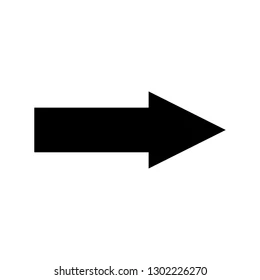
Yield
What does this sign mean?
25
New cards
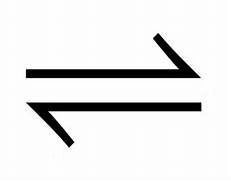
Reversible Reaction
What does this sign mean?
26
New cards
Solid
(s)
27
New cards
Liquid
(l)
28
New cards
Gas
(g)
29
New cards
Aqueous
(aq)
(dissolvable in water)
(dissolvable in water)
30
New cards
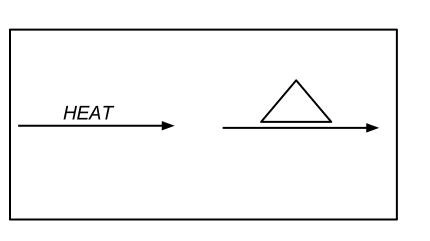
Heat is Applied
What does this sign mean?
31
New cards
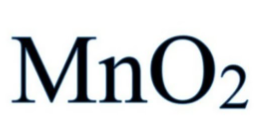
Catalyst is added to speed up reaction
What does this sign mean?
32
New cards
Balanced Equation
An equation that has the same number of atoms of each element on both side of the yield sign.