Comprehensive Dizziness Evaluation and Management: Peripheral and Central Causes
 Call Kai
 Learn
Learn Practice Test
 Spaced Repetition
 Match
Match Flashcards
 Knowt Play
1/87

There's no tags or description
Looks like no tags are added yet.
Name | Mastery | Learn | Test | Matching | Spaced | Call with Kai | Chat |
|---|
No analytics yet
Send a link to your students to track their progress
88 Terms
What are the four traditional categories of dizziness?
Vertigo, presyncope, disequilibrium, and light-headedness.
Why is the distinction between dizziness symptoms of limited clinical usefulness?
Patients often have difficulty describing their symptoms and may give conflicting accounts.
What does vertigo with unilateral hearing loss suggest?
Meniere disease.
What is vestibular neuritis characterized by?
Episodic vertigo not associated with any trigger.
What is the HINTS examination used for?
To distinguish between peripheral and central etiologies of dizziness.
What physical examination components are included for patients with dizziness?
Orthostatic blood pressure measurement, cardiac and neurologic examination, nystagmus assessment, and the Dix-Hallpike maneuver.
What is the recommended treatment for benign paroxysmal positional vertigo?
Canalith repositioning procedure, such as the Epley maneuver.
How can Meniere disease be treated?
With salt restriction and diuretics.
What is the treatment for vestibular neuritis symptoms?
Vestibular suppressant medications and vestibular rehabilitation.
What is the TITrATE approach in evaluating dizziness?
It uses Timing of symptoms, Triggers that provoke symptoms, and a Targeted Examination.
What are the three clinical scenarios identified by the TITrATE approach?
Episodic triggered, spontaneous episodic, or continuous vestibular.
What should raise suspicion for Meniere disease during examination?
Vertigo associated with unilateral hearing loss.
What is the significance of orthostatic blood pressure measurement in dizziness evaluation?
It helps assess potential causes of dizziness related to blood pressure changes.
What is the Dix-Hallpike maneuver used for?
To assess for benign paroxysmal positional vertigo.
What are common causes of spontaneous episodic dizziness?
Meniere disease, vestibular migraine, and anxiety disorders.
What are central causes of continuous spontaneous dizziness?
Cerebrovascular disease and cerebellopontine angle tumors.
What are the common triggers for episodic triggered dizziness?
Head motion and changes in body position.
What are classic vestibular symptoms?
Continuous dizziness or vertigo associated with nausea, vomiting, nystagmus, gait instability, and head-motion intolerance.
What conditions are most consistent with continuous dizziness in the absence of trauma?
Vestibular neuritis or central etiologies.
What is vertigo?
A sensation of self-motion when not moving or distorted self-motion during normal head movement, resulting from asymmetry in the vestibular system.
What is the significance of the HINTS examination?
It helps differentiate between peripheral causes of vestibular neuritis and central causes.
What does the TiTrATE diagnostic approach evaluate?
It evaluates the Timing, Triggers, and Targeted Examination to classify dizziness.
What are the diagnostic criteria for Meniere disease?
Episodic vertigo lasting at least 20 minutes, associated with documented low- to medium-frequency sensorineural hearing loss and tinnitus or aural fullness.
What is the role of the Dix-Hallpike maneuver?
It is used to assess benign paroxysmal positional vertigo (BPPV) by triggering symptoms with position changes.
What is the relationship between the number of medications and dizziness risk in older adults?
The use of five or more medications increases the risk of dizziness.
What does a positive Romberg test indicate?
An abnormality with proprioception receptors or their pathway.
What is the significance of saccades during the Head-Impulse test?
A saccade suggests a peripheral etiology, while no eye movement suggests a central etiology.
What should be assessed in patients presenting with dizziness?
Cardiac and neurologic assessments, including head, eye, ear, nose, and throat examinations.
What is the effect of age on medication adverse effects in older patients?
Older patients are more susceptible due to age-related pharmacokinetic and pharmacodynamic changes.
What are the common triggers for BPPV?
Sudden changes in position, such as quick head turns or tipping the head back.
What is the expected blood pressure change in orthostatic hypotension?
Systolic blood pressure decreases by 20 mm Hg, diastolic by 10 mm Hg, or pulse increases by 30 beats per minute upon standing.
What are the common medications associated with dizziness?
Alcohol, antiarrhythmics, antihistamines, antihypertensives, and narcotics.
What is the expected finding in the test of skew for central pathology?
Vertical deviation of the covered eye after uncovering is an abnormal result.
What should be included in the physical examination of a patient with dizziness?
A full neurologic examination and assessment of gait and balance.
What type of nystagmus suggests a peripheral cause?
Spontaneous unidirectional horizontal nystagmus that worsens when gazing in the direction of the nystagmus.
What type of nystagmus indicates a central etiology?
Dominantly vertical or torsional nystagmus, or gaze-evoked bidirectional nystagmus.
What is a positive result in the Dix-Hallpike maneuver?
Triggering vertigo with or without nystagmus during the maneuver.
What causes BPPV?
Dislodged otoconia (canaliths) entering the semicircular canals.
What is the most common age range for BPPV?
Between 50 and 70 years.
What is the Epley maneuver?
A canalith repositioning procedure used to treat BPPV.
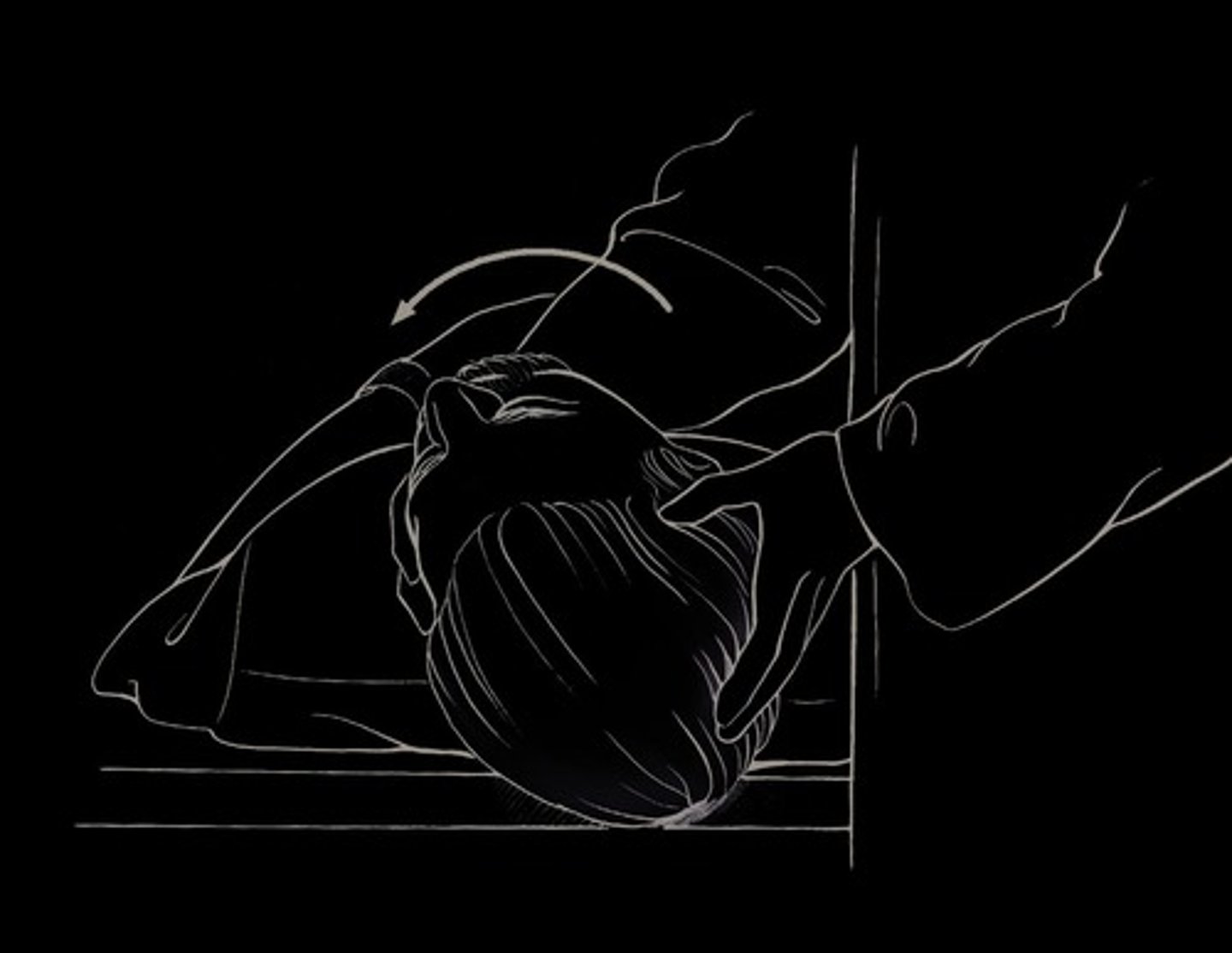
What is the success rate of the Epley maneuver on the first attempt?
Approximately 70%.
What should be avoided in the treatment of BPPV?
Vestibular suppressant medications, as they interfere with central compensation.
What is vestibular neuritis thought to be caused by?
Viral infection.
What age group is most commonly affected by vestibular neuritis?
Persons aged 30 to 50 years.
What is a key symptom of vestibular neuritis?
Severe rotatory vertigo with nausea and oscillopsia.
What is the role of laboratory testing in patients with dizziness?
Most patients do not require testing; only those with chronic conditions or suggestive symptoms may need it.
What is the typical outcome of vestibular compensation after vestibular neuritis?
Vertigo resolves slowly over a few days, but a sensation of disequilibrium may persist for months.
What is the significance of nystagmus during the Dix-Hallpike maneuver?
Nystagmus may indicate a central etiology if timing and triggers are inconsistent with BPPV.
What is the recommended home treatment for BPPV?
Brandt-Daroff exercises.
What is the relationship between head trauma and BPPV?
Head trauma is a possible cause of BPPV in younger individuals.
What imaging is indicated for vestibular neuritis?
Routine imaging is not indicated unless there are abnormal neurologic findings.
What is the typical presentation of nystagmus in vestibular neuritis?
Horizontally rotating spontaneous nystagmus to the nonaffected side.
What is the importance of the timing and trigger in diagnosing BPPV?
They must be consistent with BPPV for a diagnosis to be made.
What is the prevalence of identifiable causes of dizziness in older patients?
50% to 70% of older patients have no obvious cause.
What is the potential risk of using vestibular suppressants in BPPV treatment?
They may increase the risk of falls and interfere with central compensation.
What are common adverse effects of Metoclopramide?
Akathesia, atrioventricular block, bradycardia, bronchospasm, dizziness, drowsiness, dystonic reaction, gynecomastia, nausea, tardive dyskinesia.
What is the dosage range for Prochlorperazine?
5 to 10 mg orally or IM every 6 to 8 hours.
What are the adverse effects associated with Dimenhydrinate?
Anorexia, blurred vision, dizziness, drowsiness, nausea.
What is the recommended dosage for Meclizine?
12.5 to 50 mg orally every 4 to 8 hours.
What are the common adverse effects of Promethazine?
Agitation, bradycardia, confusion, constipation, drowsiness, dizziness, dystonia, extrapyramidal symptoms, gynecomastia, photosensitivity, urinary retention.
What is the dosage for Diazepam?
2 to 10 mg orally or IV every 4 to 8 hours.
What are the adverse effects of Lorazepam?
Amnesia, dizziness, drowsiness, slurred speech, vertigo.
What lifestyle changes are recommended for managing Meniere disease?
Limiting dietary salt intake, reducing caffeine, and limiting alcohol to one drink per day.
What is the underlying pathology of Meniere disease?
Excess endolymphatic fluid pressure leading to inner ear dysfunction.
What are the symptoms of Meniere disease?
Vertigo, unilateral hearing loss, nausea, vomiting, loss of balance, and headaches.
What is the prognosis for patients with vestibular neuritis?
The prognosis is excellent, but development of BPPV may occur in 15% of patients.
What are the central structures involved in the vestibular system?
Vestibular nuclei, cerebellum, brainstem, spinal cord, and vestibular cortex.
What percentage of dizziness cases are caused by central abnormalities?
Approximately 25%.
What are the diagnostic criteria for vestibular migraine?
At least five episodes of vestibular symptoms lasting 5 minutes to 72 hours, a history of migraine, and no other cause for vestibular symptoms.
What is the potential consequence of transtympanic gentamicin treatment?
Associated with hearing loss.
What is the recommended duration for using antiemetics in vestibular neuritis?
No more than three days due to effects on central compensation.
What are common central etiologies of dizziness?
Vestibular migraine and vertebrobasilar ischemia.
What is the dosage for Promethazine in different forms?
25 mg every 6 hours orally, IM, or rectally every 4 to 12 hours.
What is the initial management focus for 'cardiogenic vertigo'?
Identifying and avoiding migraine triggers, along with stress relief, adequate sleep, and exercise.
What types of medications are recommended for the prevention of vestibular migraines?
Preventive medications include anticonvulsants, beta adrenergic blockers, calcium channel blockers, tricyclic antidepressants, butterbur extract, and magnesium.
Is migraine abortive therapy effective in treating vertigo?
It is not clear whether migraine abortive therapy is effective in treating vertigo.
What is the blood supply to the brainstem, cerebellum, and inner ear derived from?
The vertebrobasilar system.
What can cause vertigo related to vertebrobasilar ischemia?
Major branch occlusion in the vertebrobasilar system.
What is the initial symptom in 48% of patients with vertebrobasilar ischemia?
Vertigo.
What are common brainstem symptoms associated with vertigo?
Diplopia, dysarthria, weakness, or clumsiness of the limbs.
What treatment is included for patients with significant vertebral or basilar artery stenosis?
Warfarin (Coumadin) has been used in such cases.
What is the recommended treatment for persistent dizziness in elderly patients?
Antiplatelet therapy and reduction of risk factors for cerebrovascular disease.
What is the consensus statement on orthostatic hypotension by the American Autonomic Society?
It defines orthostatic hypotension, pure autonomic failure, and multiple system atrophy.
What is the role of vestibular rehabilitation?
It is used for unilateral peripheral vestibular dysfunction.
What is the Epley maneuver used for?
It is a treatment for benign paroxysmal positional vertigo (BPPV).
What is the role of corticosteroids in treating vestibular neuritis?
They are used for idiopathic acute vestibular dysfunction.
What is the recommended management for idiopathic vestibular dysfunction?
Corticosteroids and vestibular rehabilitation are common treatments.
What is the significance of the study by Paul NL et al. regarding transient isolated brainstem symptoms?
It highlights their potential to precede posterior circulation stroke.