BIO103 - B03 - name the class of macromolecule
 Call Kai
 Learn
Learn Practice Test
 Spaced Repetition
 Match
Match Flashcards
 Knowt Play
1/39

There's no tags or description
Looks like no tags are added yet.
Name | Mastery | Learn | Test | Matching | Spaced | Call with Kai | Chat |
|---|
No analytics yet
Send a link to your students to track their progress
40 Terms
protein (an amino acid is compound with an amino group on one end and a carboxyl group on the other end... they are the monomers of proteins)
amino acid
protein (a polypeptide is a sequence of amino acids... the linear sequence represents the primary structure of a given protein)
polypeptide chain
carbohydrate (a monosaccharide is a simple sugar... they are the monomers of linked carbohydrate polymers)
monosaccharide
carbohydrate (starch, or maltose, is a storage polysaccharide in plants consisting entirely of glucose)
starch
carbohydrate (glycogen is an extensively branched glucose storage polysaccharide found in the liver and muscle of animals; the animal equivalent of starch in plants)
glycogen
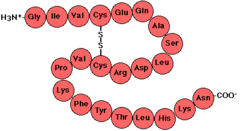
protein (primary structure is simply the amino acid sequence of the polypeptide chain)
primary structure
protein (secondary structure is formed by folding and twisting of polypeptide chain)
secondary structure
protein (tertiary structure is formed when the twists and folds of the secondary structure fold again based on weak and strong bonds/interactions between R groups of amino acids to from a larger 3D structure)
tertiary structure
protein (the fourth level of protein structure; the shape resulting from the association of two or more polypeptide subunits)
quaternary structure
lipid (triglycerides, or fats, are made up of a glycerol and three fatty acids)
glycerol and three fatty acids
lipid (a fatty acid is a hydrocarbon chain contained in lipids, such as fats or oils)
fatty acid
lipid (a steroid is a type of lipid characterized by a carbon skeleton consisting of four rings with various functional groups attached)
steroid
lipid (a lipid consisting of a glycerol bound to two fatty acids and a phosphate group... amphipathic and primary component of membranes)
phospholipid
carbohydrate (a double sugar, consisting of two monosaccharides joined by dehydration synthesis)
disaccharide
carbohydrate (polysaccharides are large carbohydrate polymers formed from monosaccharides)
polysaccharide
carbohydrate (polysaccharide consisting of glucose monomers that reinforces plant-cell walls)
cellulose
carbohydrate (glucose is a monosaccharide... a simple sugar that is an important source of energy in many living organisms)
glucose
carbohydrate (milk sugar)
lactose
carbohydrate (a five-carbon sugar that is a component of DNA nucleotides)
deoxyribose
carbohydrate (a five-carbon sugar present in RNA)
ribose
carbohydrate (table sugar)
sucrose
nucleic acid (deoxyribonucleic acid, or DNA, is a self-replicating material present in nearly all living organisms as the main constituent of chromosomes... it is the carrier of genetic information)
DNA
nucleic acid (ribonucleic acid, or RNA, a single-stranded nucleic acid that, in an important form, passes along genetic messages via the messenger RNA... RNA has many other functions as well!)
RNA
nucleic acid (adenosine triphosphate, or ATP, is the energy currency within cells and powers cellular work)
ATP
nucleic acid (a nucleotide is a monomer of nucleic acids made up of a 5-carbon sugar, a nitrogenous base, and a phosphate group... maybe multiple phosphates --> ATP)
nucleotide
nucleic acid (the sugar-phosphate backbone is the alternating chain of sugar and phosphate to which the DNA and RNA nitrogenous bases are attached along a polynucleotide chain or strand... provides the structure to the strand)
sugar-phosphate backbone
nucleic acid (a nitrogenous base is carbon ring (or rings) that contains nitrogen.... a purine or pyrimidine; a subunit of a nucleotide in DNA and RNA; in DNA, adenine, thymine, cytosine, guanine... in RNA, uracil replaces thymine)
nitrogenous base
protein (the R group, or side chain, of an amino acid represents the part of the core structure that makes each of the 20 different amino acids unique)
R group (or side chain)
protein (an enzyme is a substance produced by a living organism that acts as a catalyst to bring about a specific biochemical reaction... NOTE: in most cases, enzymes are proteins!... but not always)
enzyme
protein (these are enzymes of the carbohydrates... sucrose, maltose, and lactose; enzymes end in "-ase")
sucrase, maltase, lactase
protein (denaturation is a process in which a protein unravels and loses its native conformation, thereby becoming biologically inactive.... however, denaturation also happens in DNA --> the separation of the two strands of the double helix)
denaturation
nucleic acid (a genome represents all the genetic information in an organism; all of an organism's chromosomes)
genome
protein (a proteome is the entire set of proteins expressed by a given cell, tissue, or organism)
proteome
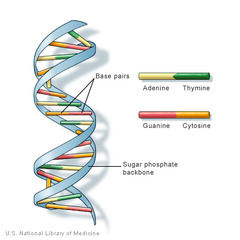
nucleic acid (picture is DNA)
protein (picture is an individual amino acid... should be able to determine because of R group)

lipid (picture is a triglyceride)

carbohydrate (three important polysaccharides)

nucleic acid (picture is a nucleotide... a monomer of nucleic acids)

lipid (picture is a phospholipid)

protein (picture is the primary structure of a polypeptide.... simply the sequence of amino acids in a polypeptide)