08 - International comparisons
 Studied by 0 people
 Call with Kai
 Learn
Learn Practice Test
 Spaced Repetition
 Match
Match Flashcards
 Knowt Play
1/40

There's no tags or description
Looks like no tags are added yet.
Name | Mastery | Learn | Test | Matching | Spaced | Call with Kai |
|---|
No study sessions yet.
41 Terms
Why do we look at how other countries organize and deliver health care?
• Opportunity to learn about alternative approaches
• Different approaches can impact health outcomes
No two countries are alike – how to reasonably compare?
Generally regarded as ‘developed countries
High-income countries
World Bank: Gross National Income
High Human Development Index
A country is considered high income if its
GNI (Gross National Income) per capita is more than $13,845 USD per year.
GNI per capita means
the average income per person in that country.

what do notice from this photo
North America, Western Europe, Australia, Japan, and some Middle Eastern countries are mostly high income.
Many countries in Africa, South Asia, and parts of Latin America are not high income.
Russia and some Eastern European countries are in the “former high-income” category.
High human development index
Quantifies a country's "average achievement in three basic dimensions of human development: a long and healthy life, knowledge, and a decent standard of living“ (UN)
Health outcomes
Influenced by a variety of social and economic factors
Many of these factors are outside the control of health care systems
Policies and public investments in education, employment, nutrition, housing, transportation, and environmental safety
Broad and population-based
Health care outcomes
Outcomes that can be improved by the delivery of health care services
‘silos’!
Primary care
Specialized care (hospitals)
Long-term care
Rehabilitation, pharmaceuticals, diagnostics, dental care, mental health care, traditional/ complementary/ alternative medicines, vision care…
Specific to services/interventions
Health outcomes vs health care outcomes: focus
Health outcomes are broader and focus on the general health status of individuals or populations.
Healthcare outcomes are specific to the results from healthcare services or medical interventions.
Health outcomes vs health care outcomes: Factors
Health outcomes are determined by a wide range of factors, including non-healthcare determinants like social and environmental conditions.
Healthcare outcomes are primarily influenced by the quality of healthcare delivery, which includes access, provider competence, and the effectiveness of treatment protocols.
Health outcomes vs health care outcomes: Perspective
Health outcomes are often used in public health contexts to assess population well-being, government policies, or lifestyle changes.
Healthcare outcomes are used to assess the performance of healthcare providers, hospitals, or specific interventions in a medical or clinical setting.
Health outcomes vs health care outcomes: example cancer
Health outcomes: The presence of cancer (e.g., cancer incidence or survival rate)
→ This describes the population’s health status.
Health care outcomes: Cancer treatment options like: Surgery, Chemotherapy, Immunotherapy, Radiation, Hormone therapy
→ How effective these treatments are would be a healthcare outcome.
Health outcomes vs health care outcomes: example cancer
Health outcomes: Having diabetes or measuring diabetes rates
→ Reflects the population’s overall health
Health care outcomes: Diabetes treatment options like: Insulin, Medications, Gene therapy (future), Artificial intelligence tools, Stem cell therapy
How does Canada compare to other healthcare to other high income countries
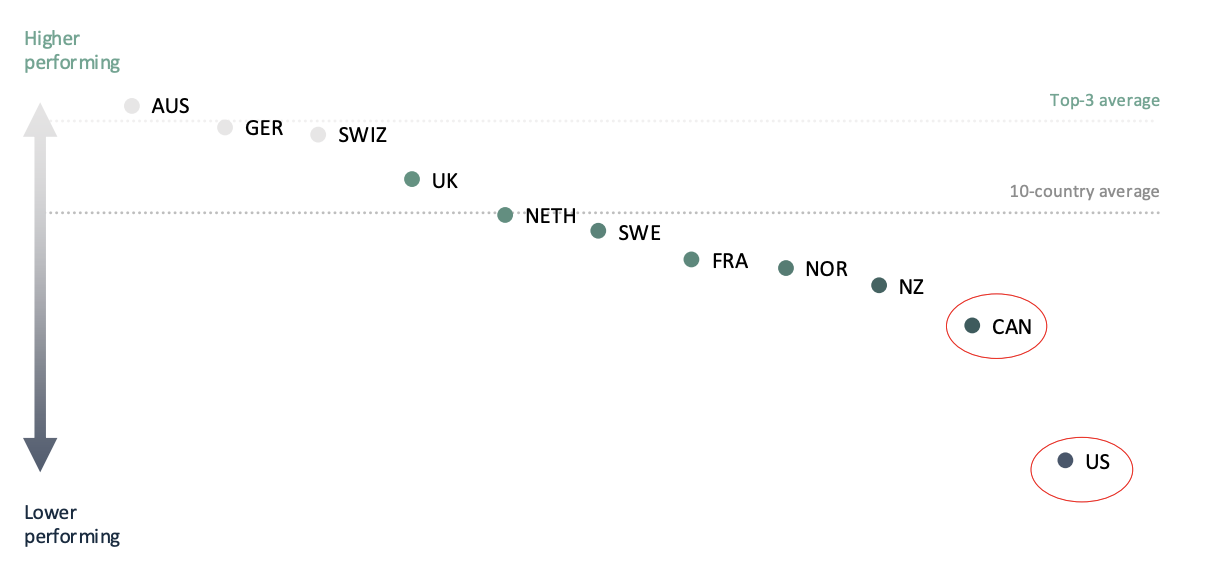
Goal: To compare health care system performance of 11 high-income countries
Methods: Analysis of performance measures drawn from Commonwealth Fund, OECD, and WHO data
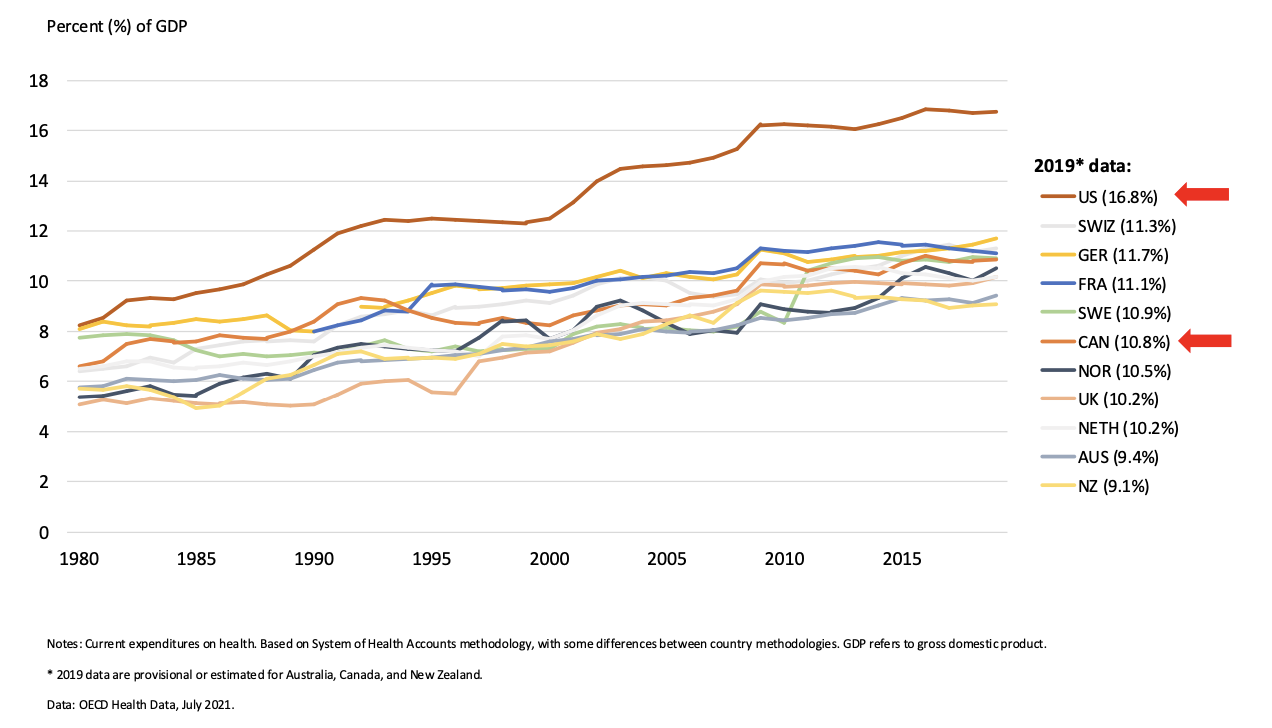
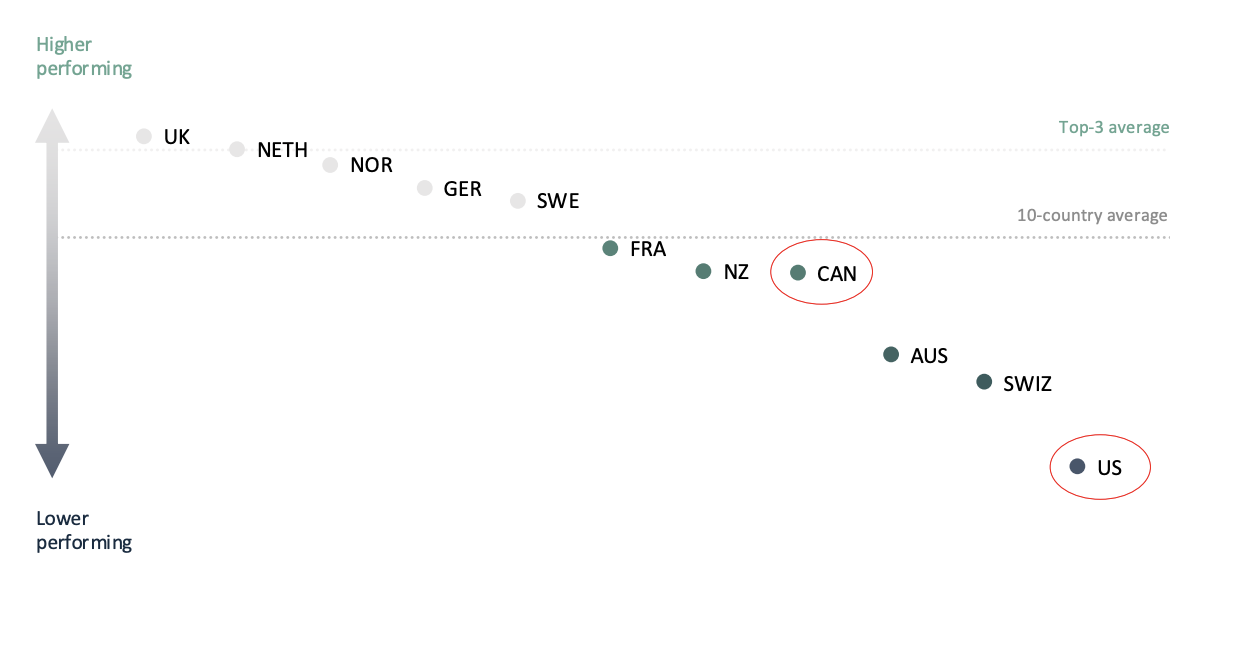
Findings: Norway, Netherlands, and Australia are top performers; US ranks last overall, despite spending the most
Health care system performance domains - Access to care
Affordability and timeliness
Health care system performance domains - Care process
Preventive care, safe care, coordinated care, engagement and patient preferences
Health care system performance domains - Administrative efficiency
How well health systems reduce documentation and other bureaucratic tasks
Health care system performance domains - Equity
Income-related disparities in access to care, care process, and administrative efficiency
Health care system performance domains - Health care outcomes
Outcomes most responsive to health care: infant mortality rate, life expectancy, maternal mortality, avoidable mortality
Health Care System Performance Rankings
1st - nor
2nd - neth
3rd - aus
10th - can
11th - us
Health Care Spending as a Percentage of GDP, 1980–2019
Factors Influencing Healthcare Spending
1. Healthcare model/market driven systems
2. Population demographics
3. Efficiency and cost containment
4. Health system coverages and accessibility
5. Technological innovation and resource intensity
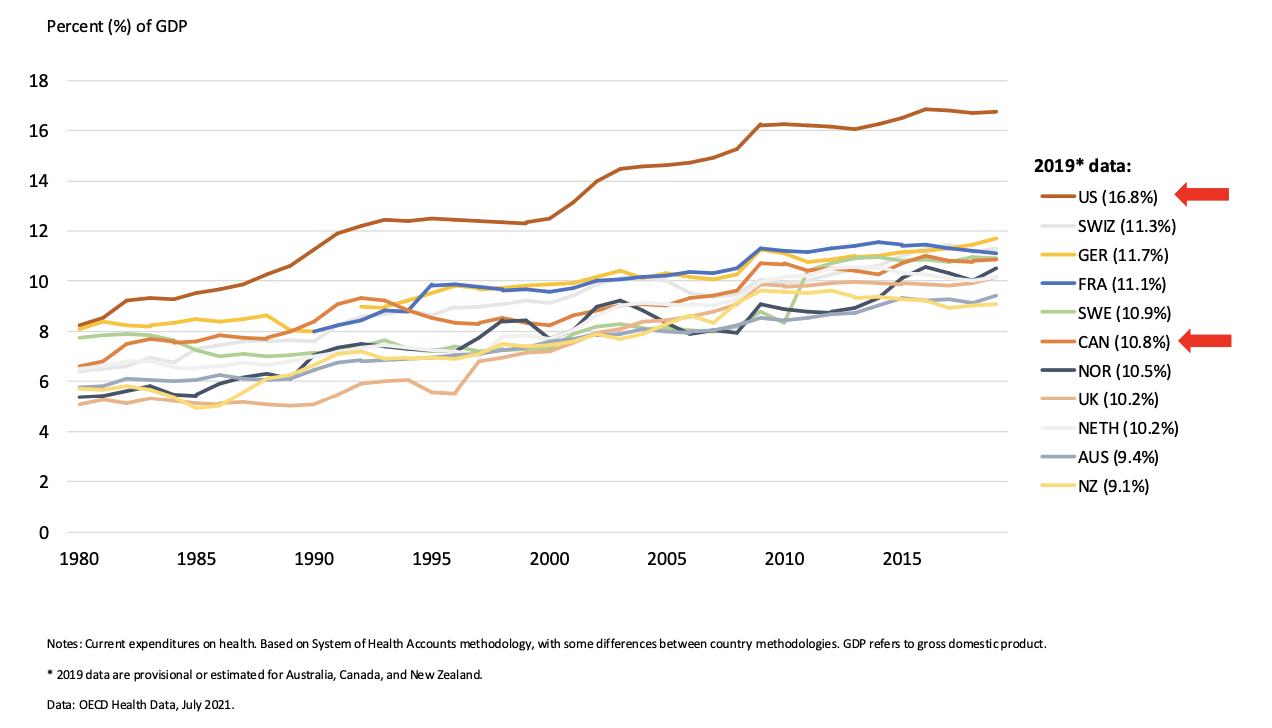
Interpretation and Balance from the photo
• Higher % of GDP not necessarily correlated with health outcomes
• Low % of GDP potentially underinvestment
• Balance = strong outcomes without breaking the bank
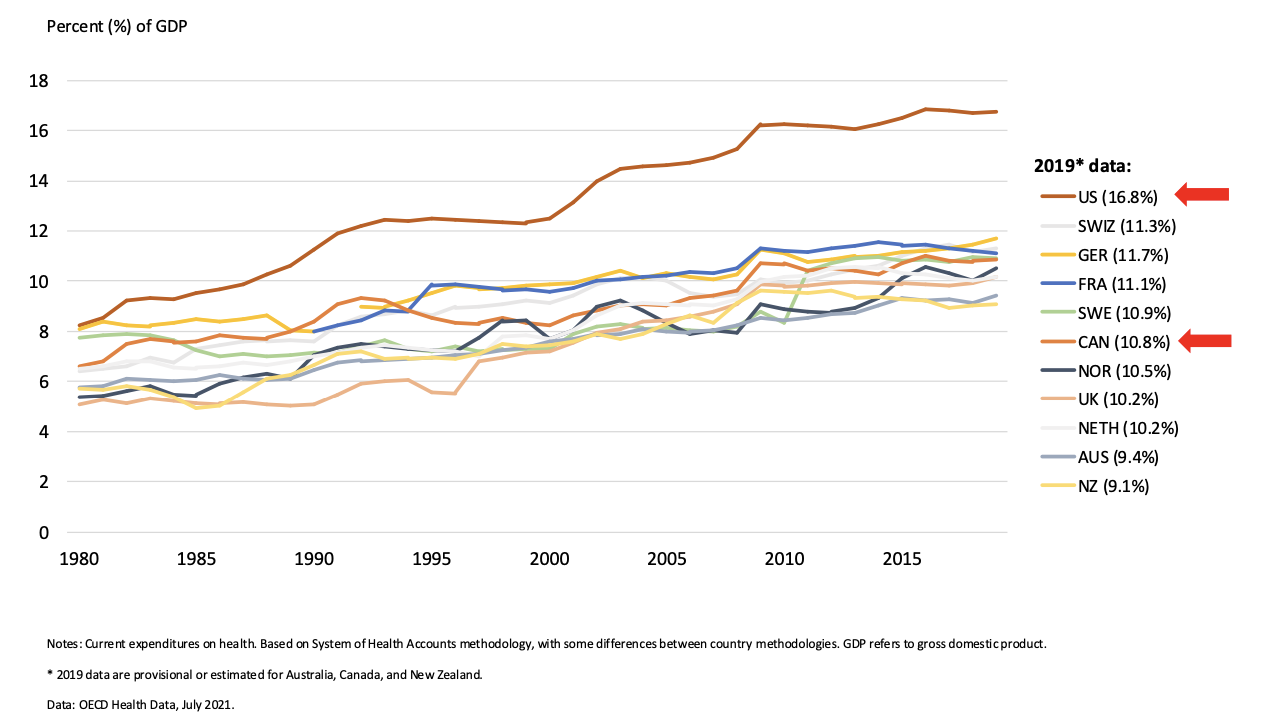
Key Points
Context Matters:
• higher spending may indicate greater investment or inefficiencies, while lower spending could indicate underinvestment.
Not Just Spending, but Value:
• Evaluating healthcare requires looking beyond spending to the value provided, which includes outcomes like life expectancy, health equity, and overall population health.
Different Countries, Different Strategies:
• Comparing shows that the effectiveness of spending depends on the healthcare model, efficiency, and equity policies.
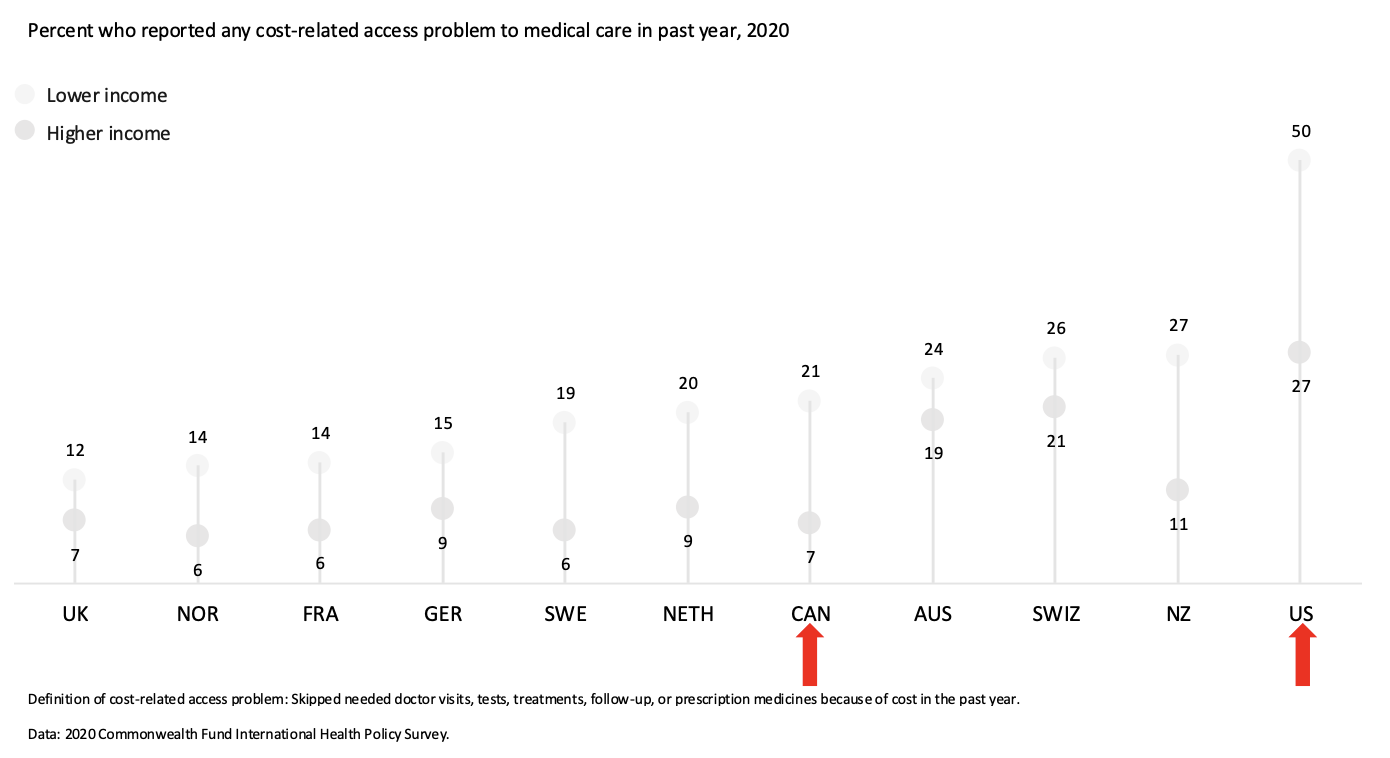
Health Care System Performance Scores: Affordability
Health Care System Performance Scores: Equity
Cost-Related Access Problems Affect
Low Income Populations, Especially in the U.S.
4 Lessons learned from top performing countries
Provide universal coverage and remove cost barriers so people can get the car they need in a way that works for them
Invest in primary care systems to ensure highvalue services are available equitably, reducing risk of discrimination and unequal treatment
Reduce administrative burdens that cost patients and clinicians time and effort and can discourage access to care, especially for marginalized groups
Invest in social services that increase equitable access to nutrition, education, childcare, community safety, housing, transportation, and worker benefits, leading to healthier population and less demands on health system
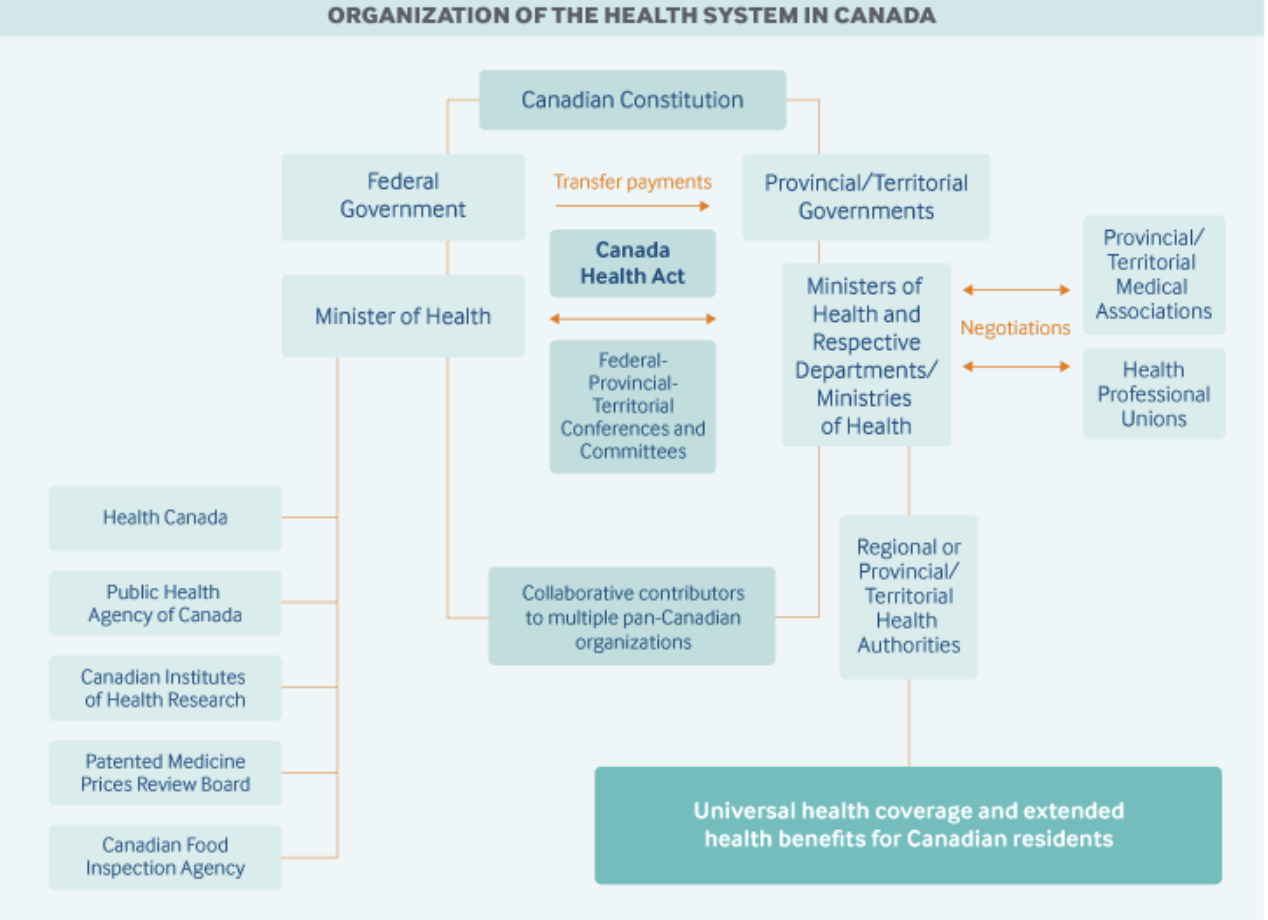
organization of the healthcare system in canada
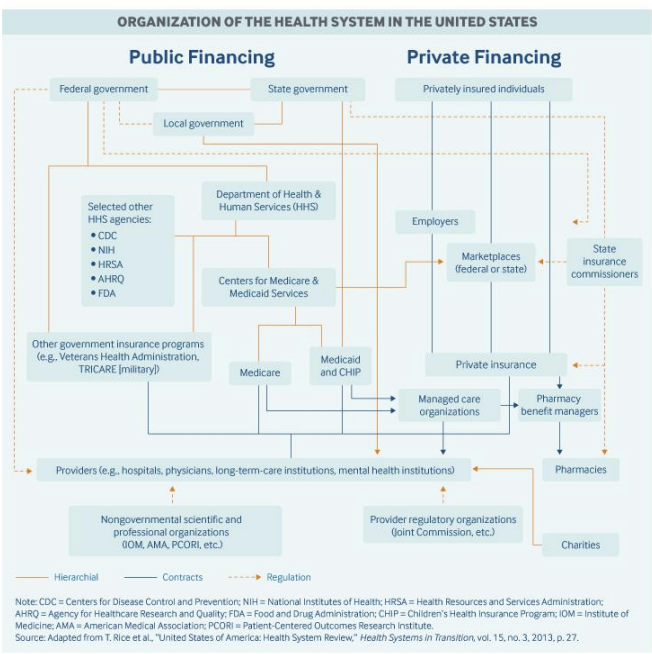
organization of the healthcare system in the us
US health care stats
us public spending is similar to other countries; out-of-pocket and private spendinng are higher than most
the us has the lowest life expectancy
suicide rate are the highest in the us
adults have the highest chronic disease burden
highest rate of obesity
high rate mri scans
among the highest rate of hospitilizations from preventable causes like diabetes and hypertension
highest rate of avoidable deaths
Why does the US spend so much more, and apparently get so much less?
Administrative costs
• Physician & hospital administrative activities
• Insurance administrative costs
Norway healthcare system
• Universal healthcare
• Primary care is the backbone
• High levels of health equity
• Centralized Management
• Quality of Care
• Public health and prevention
• Government investment and public trust
• Universal healthcare
• Publicly funded through taxation
• Minimal out-of-public
• Primary care is the backbone
• Gatekeepers
• Strong focus on prevention
• High levels of health equity
• Available to everyone, even in remote/rural areas (has incentive policies)
• Mitigates socioeconomic status impact on health outcome
• Centralized Management
• National coordination reducing duplication and promoting standardization
• Digitalization of healthcare – very efficient
• Quality of Care
• Integrated and coordinated services, seamless patient journey
• Strong standards for safety and training (low rates of medical errors)
• Public health and prevention
• High emphasis on population health
• Addresses SDOH (e.g., housing, income inequality, welfare model)
• Government investment and public trust
• High spending – staff, resources, spaces
• Strong public and political support for the welfare state
What are some takeaways when we explore international perspectives?
• Performance domains provide a lends for evaluation
• Comparative analysis reveals strengths and weaknesses
• Spending is not always correlated with outcomes
• Resources allocation is an important strategy
• Balancing cost and value
• QALYs, patient satisfaction, equity
• Equity and access are crucial indicators of system effectiveness
• Efficiency drives sustainability
• Holistic health systems thrive – prevention, physical and mental