Lower Extremity OMM
 Call Kai
 Learn
Learn Practice Test
 Spaced Repetition
 Match
Match Flashcards
 Knowt Play
1/72

There's no tags or description
Looks like no tags are added yet.
Name | Mastery | Learn | Test | Matching | Spaced | Call with Kai | Chat |
|---|
No analytics yet
Send a link to your students to track their progress
73 Terms
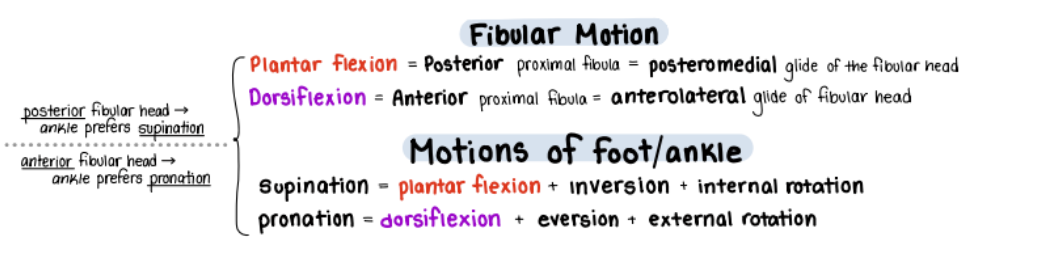
Fibular Motion + Motions of Foot/Ankle
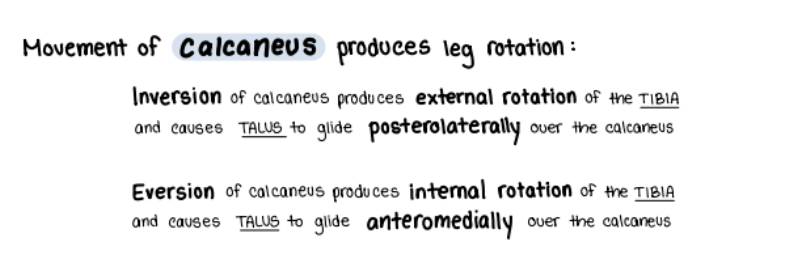
Calcaneus Movements
MET for Flexed Hip

MET for Extended Hip

MET for Adducted Hip
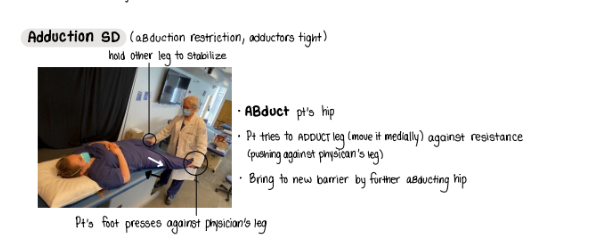
MET for Abducted Hip
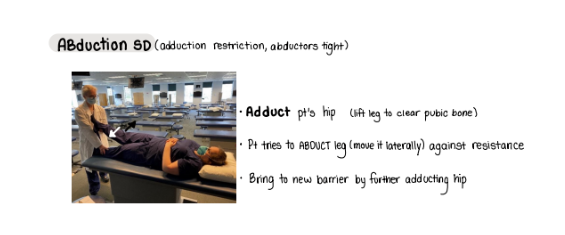
MET for Externally Rotated Hip

MET for Internally Rotated Hip

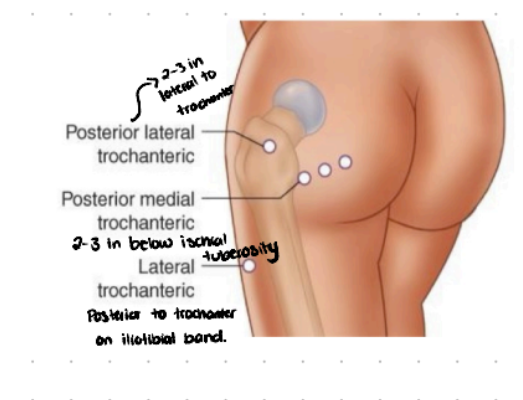
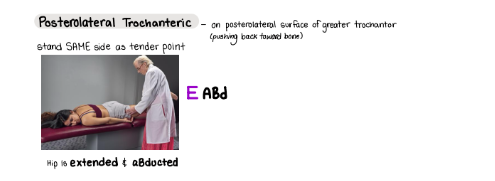
Posterolateral Trochanteric CS
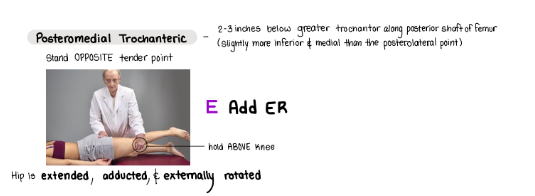
Posteromedial Trochanteric CS
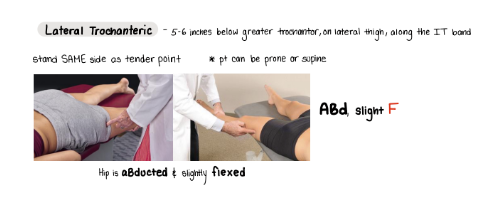
Lateral Trochanteric CS
MET for Externally Rotated Tibia

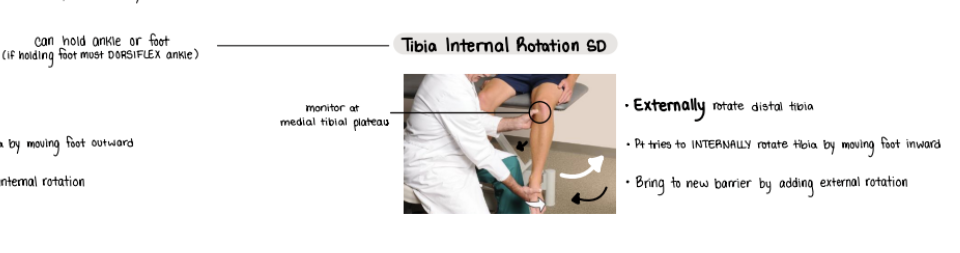
MET for Internally Rotated Tibia
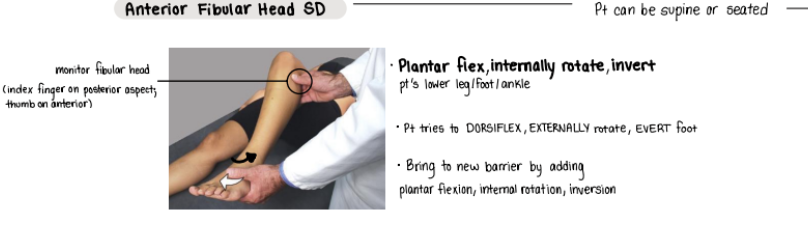
MET for Anterior Fibular Head
MET for Posterior Fibular Head

Lateral Hamstring CS

Medial Hamstring CS

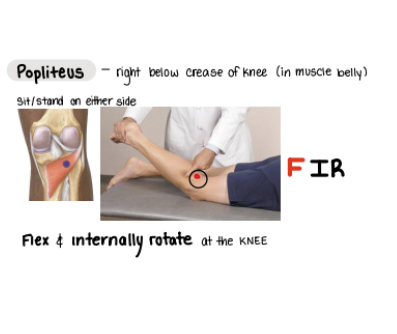
Popliteus CS
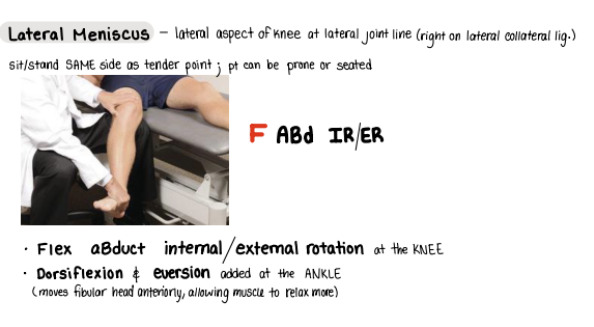
Lateral Meniscus CS
Medial Meniscus CS

Anterior Tibiofemoral HVLA

Posterior Tibiofemoral HVLA
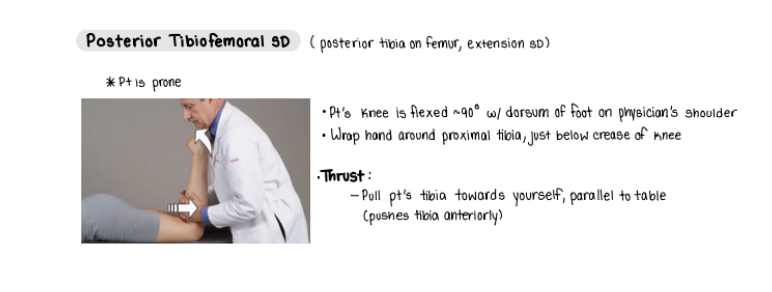
Anterior Fibular Head HVLA
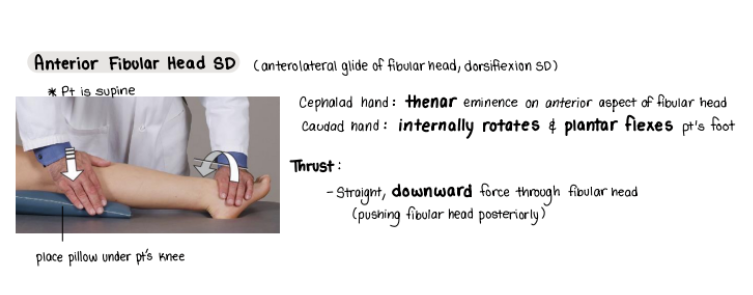
Posterior Fibular Head HVLA
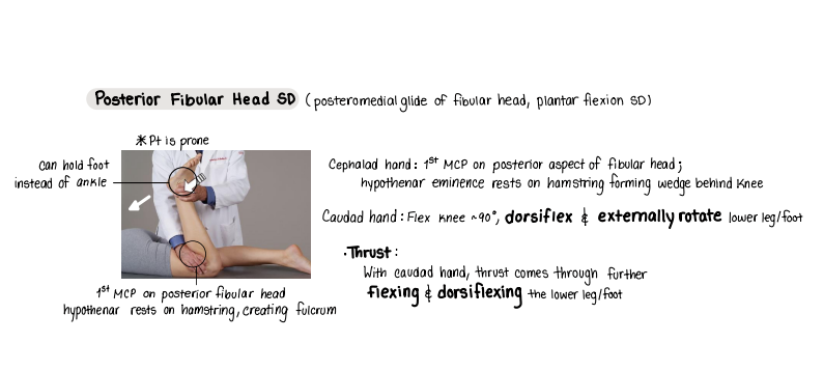
Tibiotalar Plantar Flexion MET
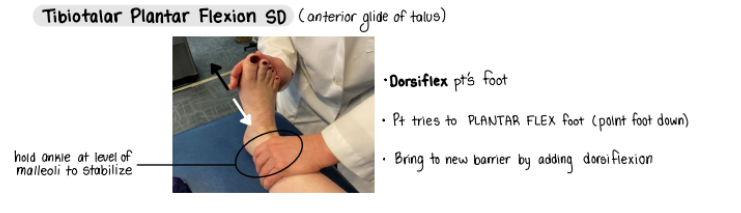
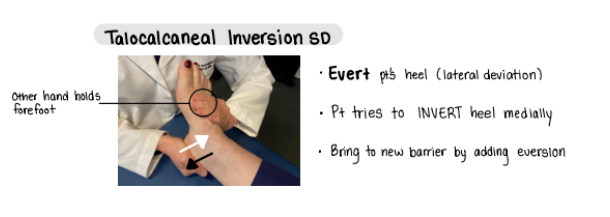
Talocalcaneal Inversion MET
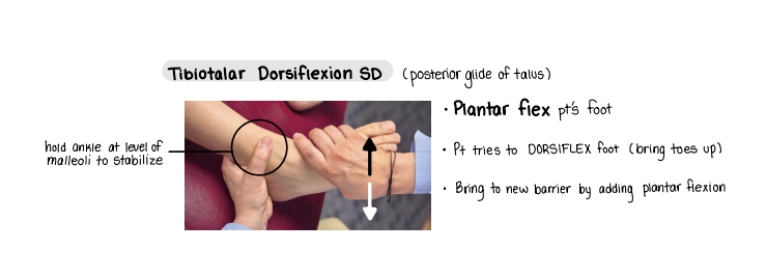
Tibiotalar Dorsiflexion MET
Talocalcaneal Eversion MET

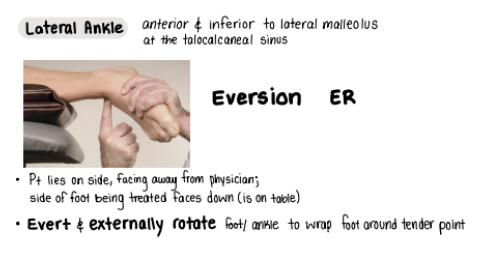
Lateral Ankle CS
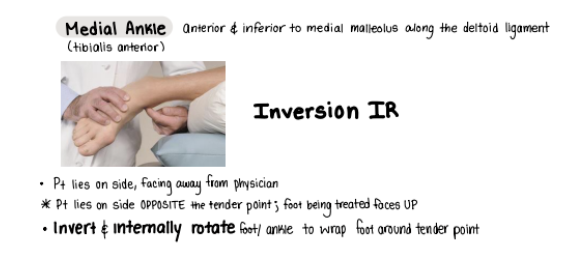
Medial Ankle CS
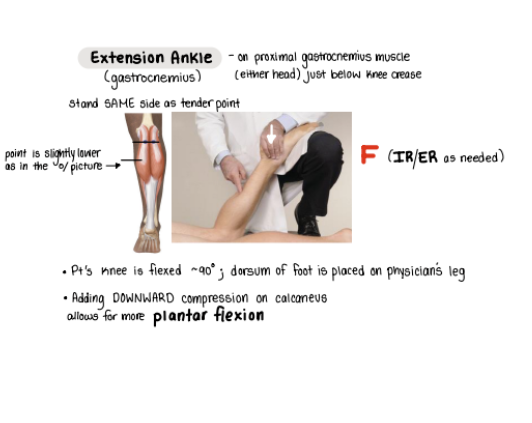
Extension Ankle CS
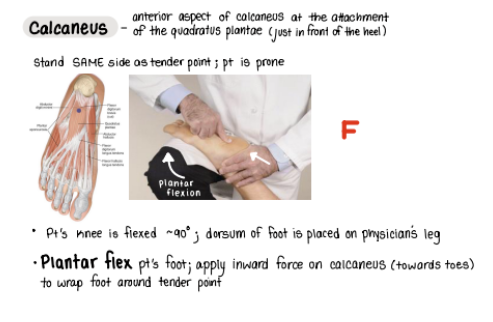
Calcaneus CS
Navicular CS

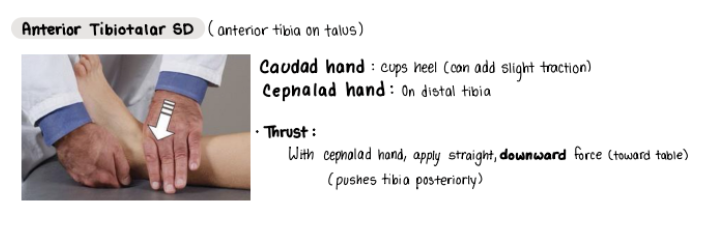
Anterior Tibiotalar HVLA
Posterior Tibiotalar HVLA

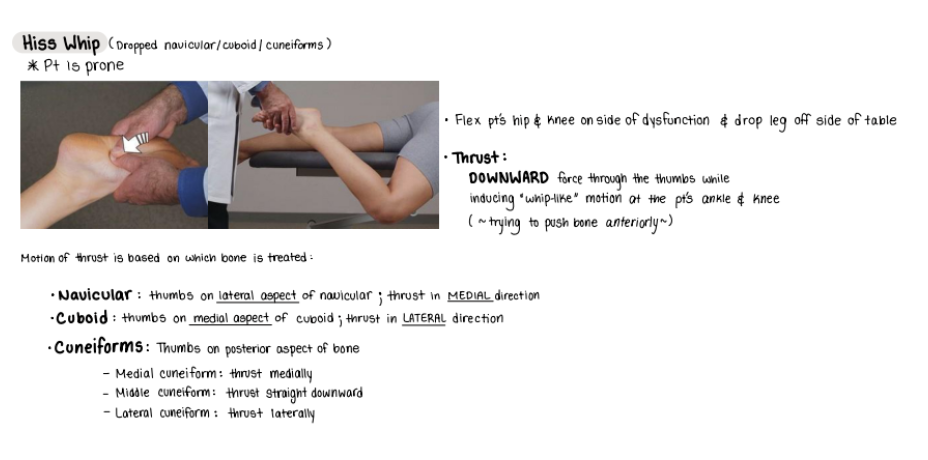
Hiss Whip HVLA
Testing the hip adductors (Hip Abduction ROM)
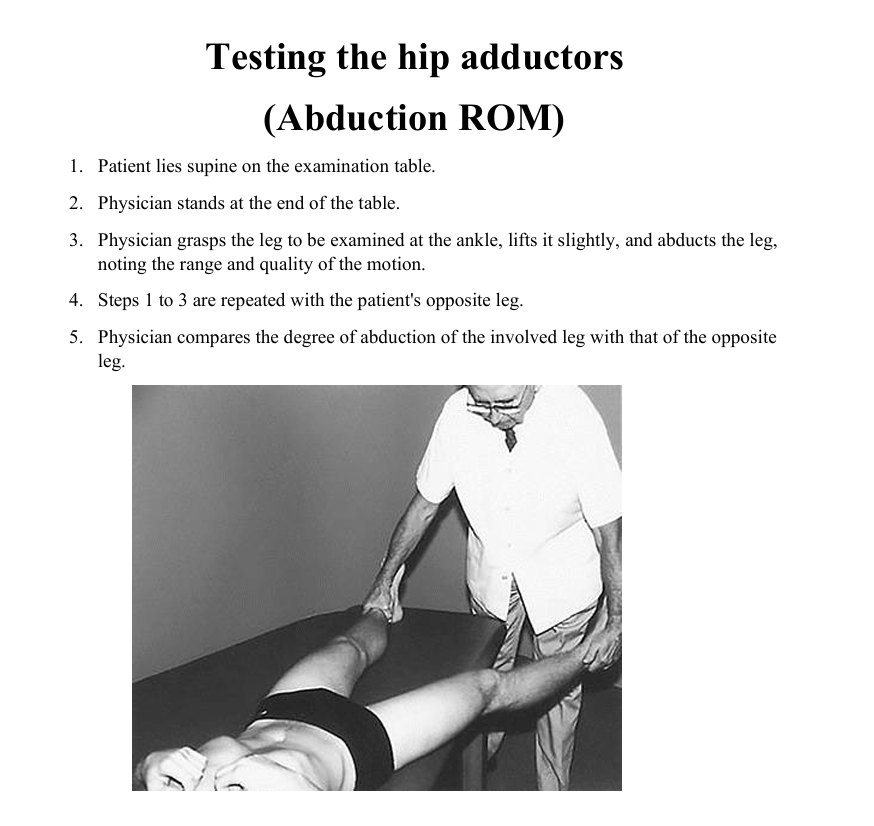
Testing the hip abductors (Hip Adduction ROM)

Testing the hip internal rotators (Hip External Rotation ROM)
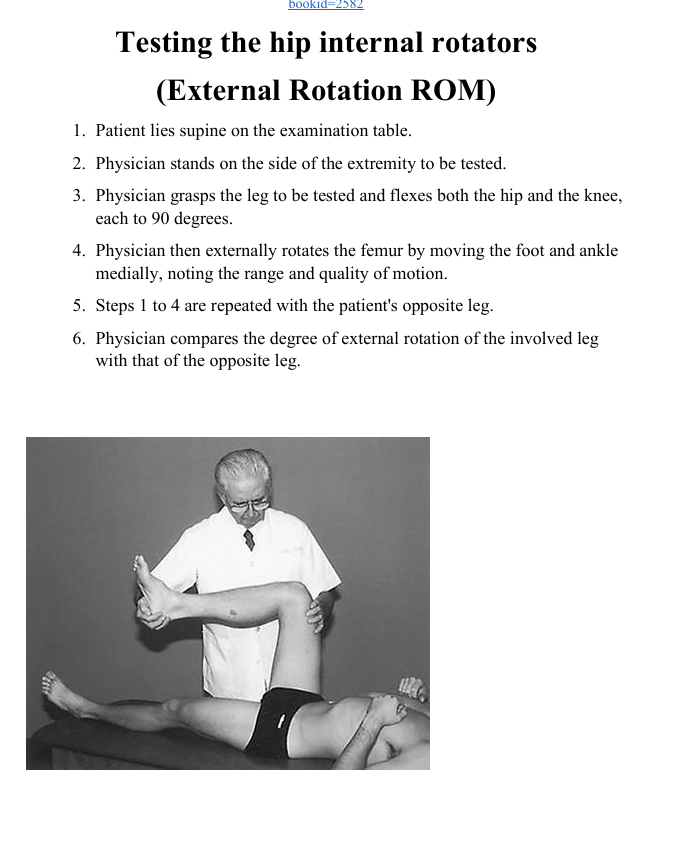
Testing the hip external rotators (Hip Internal Rotation ROM)
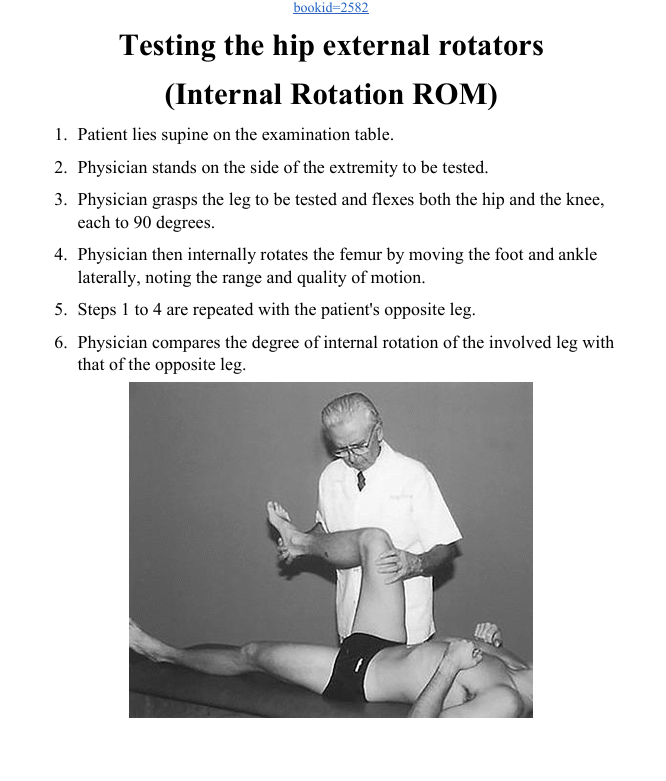
Testing the hip extensors (Hip Flexion ROM)
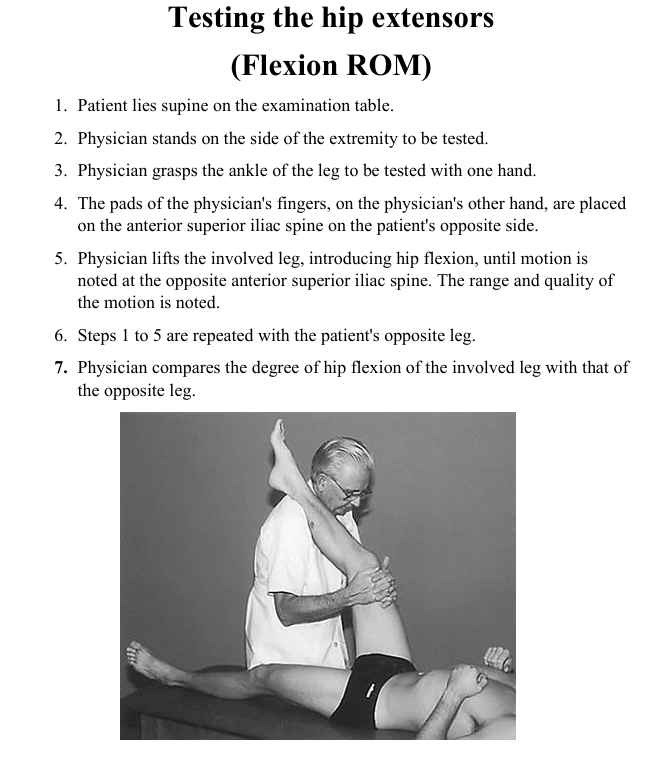
Testing the hip flexors (Hip Extension ROM)

What are the 6 ranges of motion for the hip?
Abduction, Adduction, Flexion, Extension, Internal Rotation, and External Rotation
What does the tibiofemoral joint refer to?
The knee
What are the ranges of motion of the tibiofemoral (knee) joint?
Flexion, Extension, Internal Rotation, and External Rotation
Flexion of the tibiofemoral (knee) joint is associated with what glide?
Anterior glide
Extension of the tibiofemoral (knee) joint is associated with what glide?
Posterior glide
Internal rotation of the tibiofemoral (knee) joint is associated with what glide?
Posterolateral glide (IPEAM)
External rotation of the tibiofemoral (knee) joint is associated with what glide?
Anteromedial glide (IPEAM)
Testing tibiofemoral (knee) extension ROM
Pt is supine with pillow under knee

Testing tibiofemoral (knee) flexion ROM
Pt is prone

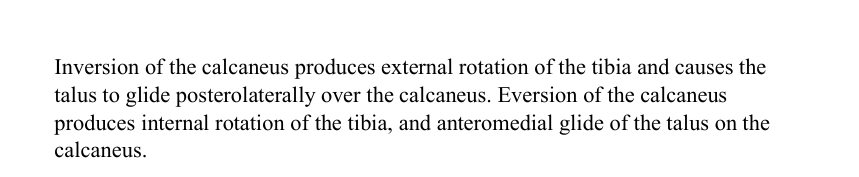
Testing tibia (related to tibiofemoral/knee) internal/external rotation ROM
Pt is seated. You are moving the pt’s heel
What are the 2 motions associated with the fibula?
Plantar flexion (posterior fibular head) and dorsiflexion (anterior fibular head)
Testing plantar flexion (posterior fibular head)
Pt is seated

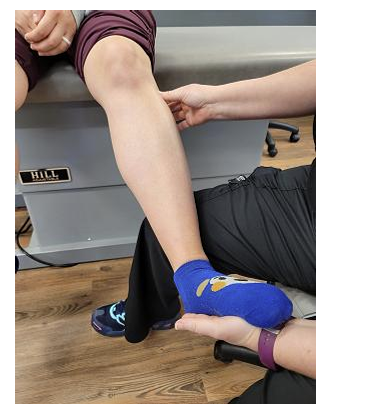
Testing dorsiflexion (anterior fibular head)
Pt is seated
What are the ranges of motion for the Tibiotalar (talus) joint?
Plantar flexion (with anterior glide) and dorsiflexion (with posterior glide)
What is the tibiotalr joint also called?
Talus
Testing plantar flexion of the tibiotalar (talus) joint
Both hands cupped on pt’s foot

Testing dorsiflexion of the tibiotalar (talus) joint
Both hand cupped on pt’s foot
What are the ranges of motion of the talocalcaneal (subtalar) joint?
Inversion and Eversion
What is another name for the talocalcaneal joint?
Subtalar
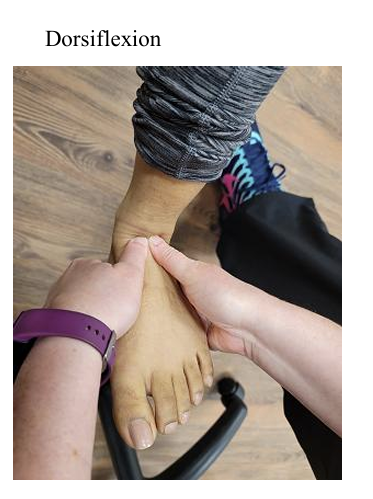
Testing inversion/eversion of the talocalcaneal (subtalar) joint
Pt is supine

What are the ranges of motion associated with the tarsals?
Plantar glide and dorsal glide
Diagnosing Tarsals
For tarsal diagnosis, the physician palpates along the medial edges of the bones to determine whether they feel dropped or stuck.
A plantar glide means the tarsal bone has dropped downward toward the sole of the foot.
A dorsal glide means the tarsal bone feels stuck upward on the dorsal aspect of the foot.
If you can’t feel anything while palpating the sole of the foot, it’s a dorsal glide. If you can feel something, it’s a plantar glide
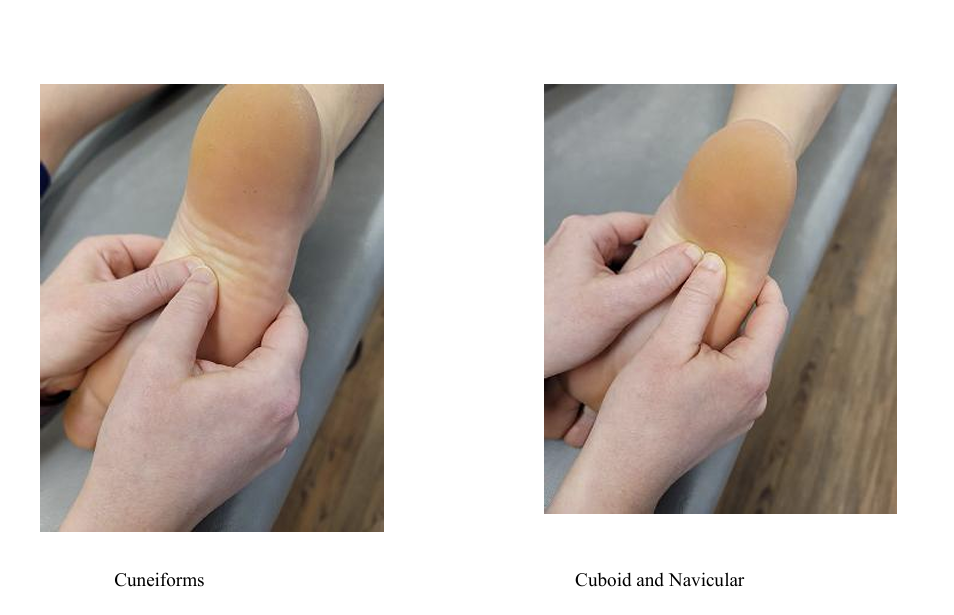
How to find the cuboid joint:
To locate the cuboid:
Palpate along the fifth metatarsal (pinky toe).
Find the tuberosity at the fifth metatarsal.
Move slightly posterior/proximal to find the cuboid.
Where is the navicular joint?
The navicular is located next to the cuboid region and is also palpated along its medial edge. It will be inferior from the first metatarsal (big toe)
Inversion of the talocalcaneal (subtalar) joint is associated with what glide?
Posterolateral glide of talus on calcaneus (IPEAM)
Eversion of the talocalcaneal (subtalar) joint is associated with what glide?
Anteromedial glide of talus on calcaneus (IPEAM)
What are the ranges of motion associated with the tarsometatarsal joints?
3 paired motions: Plantar glide/ dorsal glide, internal rotation/ external rotation, lateral glide/medial glide
Diagnosing the tarsometatarsal joints:

Location of posterolateral trochanteric CS
2-3 inches lateral to trochanter (go lateral and superior to booty cheek)

Location of posterior medial trochanteric CS
2-3 inches below ischial tuberosity (lower middle of booty cheek)

Location of lateral trochanteric CS
posterior to trochanter on iliotibial (IT) band (go below booty cheeks and then go laterally all the way to where you’re on the leg)