PHYLUM CHLOROPHYTA
 Call Kai
 Learn
Learn Practice Test
 Spaced Repetition
 Match
Match Flashcards
 Knowt Play
1/33

There's no tags or description
Looks like no tags are added yet.
Name | Mastery | Learn | Test | Matching | Spaced | Call with Kai | Chat |
|---|
No analytics yet
Send a link to your students to track their progress
34 Terms
comprise the green algae and land plants
common synapomorphies
cell walls containing cellulose
chloroplasts containing chlorophylls a and b
food stored in the form of starch
typically have mitochondria with flat cristae
Kingdom Viridiplantae
what are the two lineage subgroups of Viridiplantae
two lineage subgroups
Chlorophyta (cholorobiont clade)
Streptophyta (Streptobiont clade)
Charophyta
Embryophyta
what are the differences between the Chlorobionts and Streptibionts in terms of mitosis
chlorobionts: generally with centrioles (centric) and closed (the nuclear envelope remains intact)
streptobionts: no centrioles (acentric) and open (the nuclear envelope breaks down)
what are the differences between the Chlorobionts and Streptibionts in terms of cytokinesis
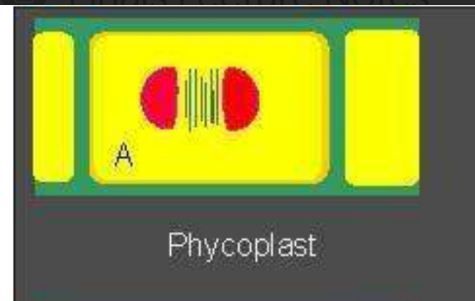
Chlorobionts: Phycoplast
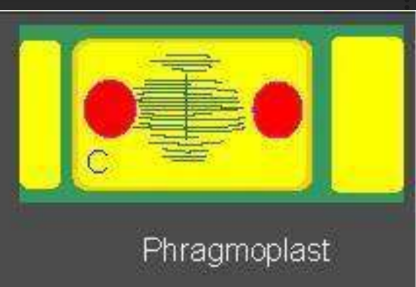
Streptobionts: Phragmoplast
what are the differences between the Chlorobionts and Streptibionts in terms of flagellar insertion
Chlorobionts: at the apex of motile cells
Streptobionts: subapical on motile cells
set of microtubules arranged parallel to the plane of cell division
Phycoplast
microtubules arranged perpendicular to the plant of division
Phragmoplasts: (charophyceae)
nuclear envelope remains intact (Ulvophyceans)
Closed mitosis
nuclear envelope breaks down early in mitosis (Charophyceans and in higher plants)
open mitosis
includes most of the green algae
may grow as colonies, unicells, filaments, and larger seaweeds
occur in almost all types of water and often are dominants in freshwater environments
some are terrestrial species
Phylum Chlorophyta
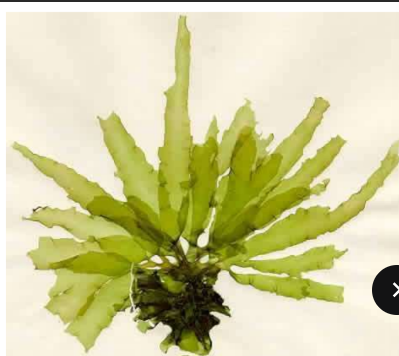
Ulva (sea lettuce)
describe the sexual and asexual reproduction of ulva (sea lettuce)
flat expanded sheet
asexual reproduction
biflagellated zoospores
sexual reproduction
isogamous
alternation of diploid and haploid isomorphic generation
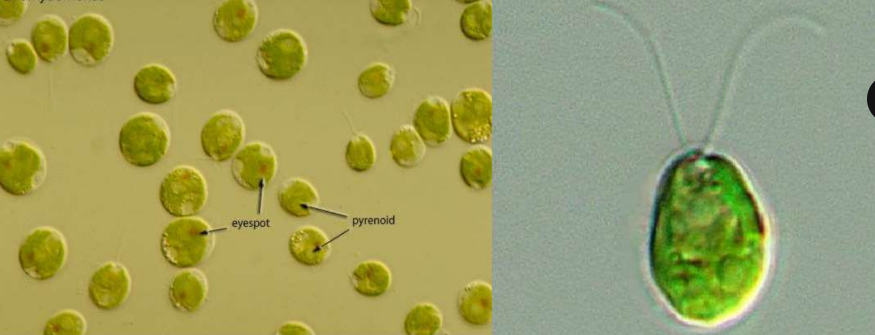
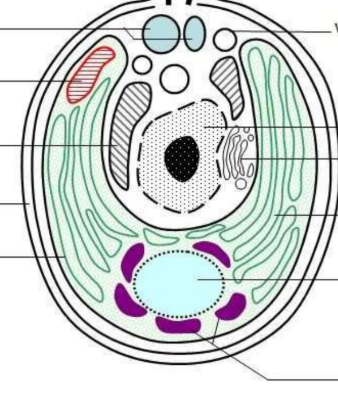
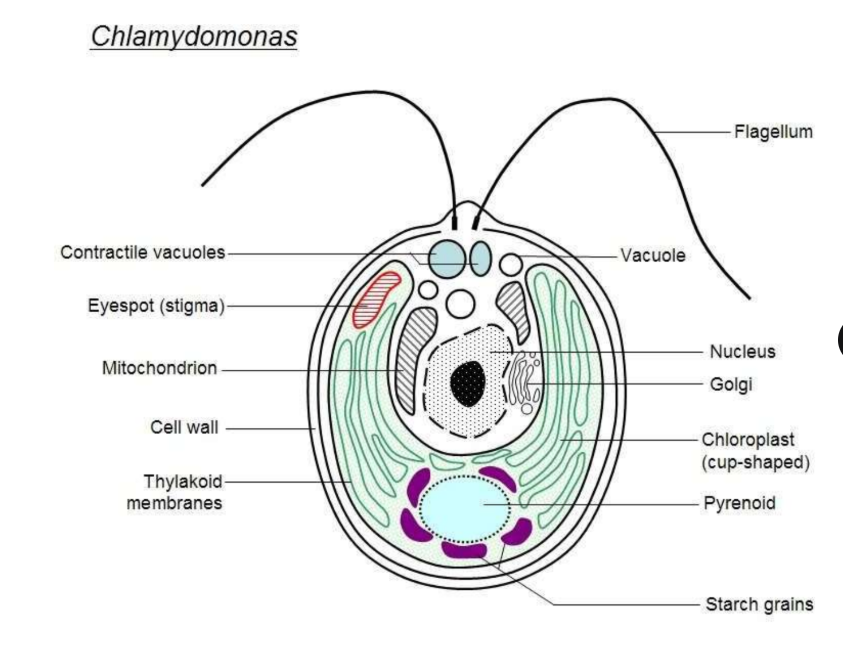
Chlamydomonas (sea cockroach)
motile unicellular algae; oval in shape
cell wall of glycoprotein and non cellulosic polysaccharides
with prominent cup or bowl shaped chlroplast
pyrenoid contain starch sheath
2 anterior flagella (whiplash; 9+2 arrangment)
Chlamydomonas (sea cockroach)
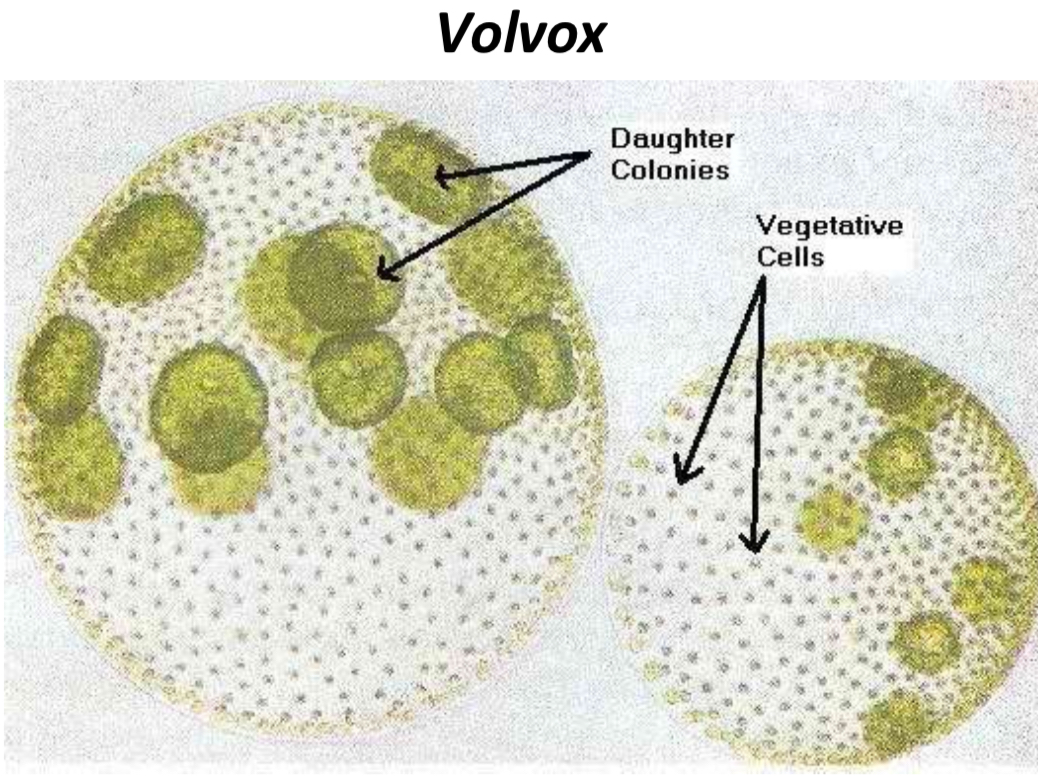
composed of numerous flagellate cells similar to Chlamydomonas, up to 50,000 in total
haploid adult cells
volvox
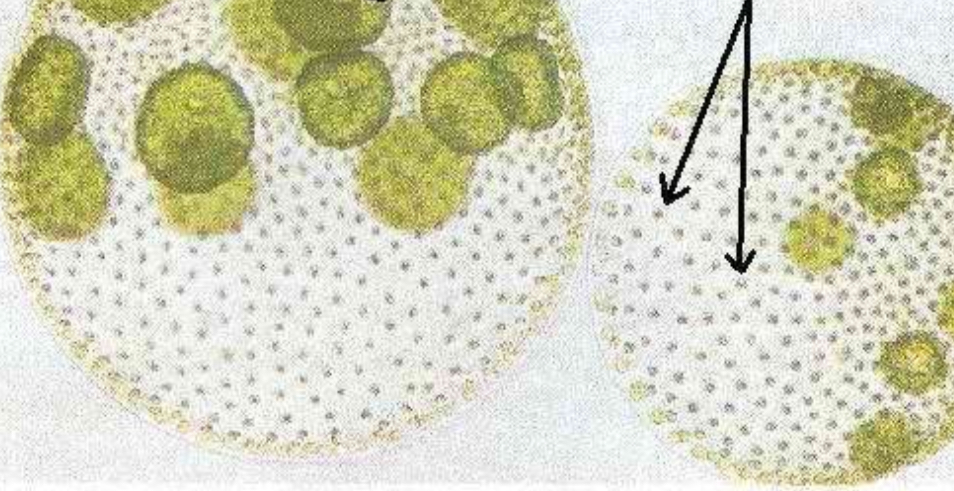
cells are embedded in the surface of a hollow sphere or coenobium containing an extracellular matrix made of gelatinous glycoprotein
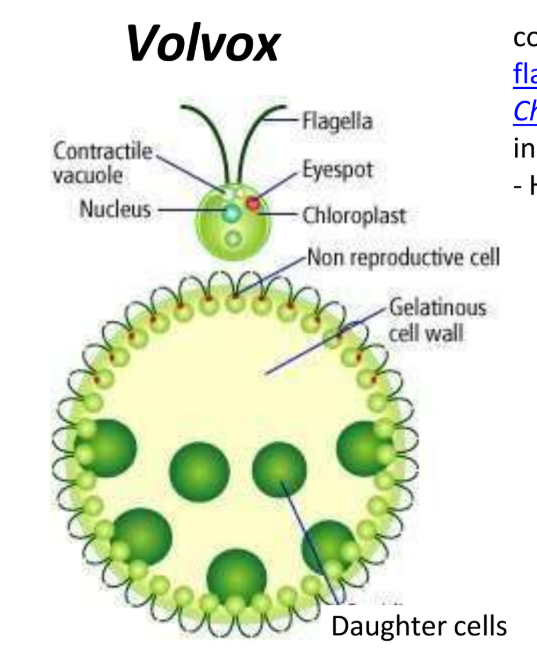
occurs by repeated mitotic division of one of the cells (zooids) to form a hollow sphere of cells, with flagellated ends of the cells inside
The sphere then turns itself inside out to form a daughter colony similar to the parent colony
Several daughter colonies are formed inside the parent colony before they escape by rupture of the parent
Volvox: asexual reproduction
Describe the sexual reproduction of volvox
some of zooids differentiate into macro gametes or microgametes
Macrogametes are fewer and larger and are loaded with food for nourishment of the young organisms
microgametes, by repeated division, form flagellated sperm that leave the mother organisms and swim about to find a mature ovum
After fertilization, the zygote secretes a hard, spiny, protective shell around itself
When released by the breaking up of a parent, a zygote remains dormant during the winter
Within its shell the zygote undergoes repeated division, producing a small organisms that breaks out in the spring
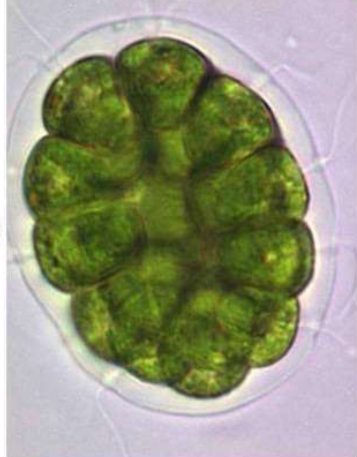
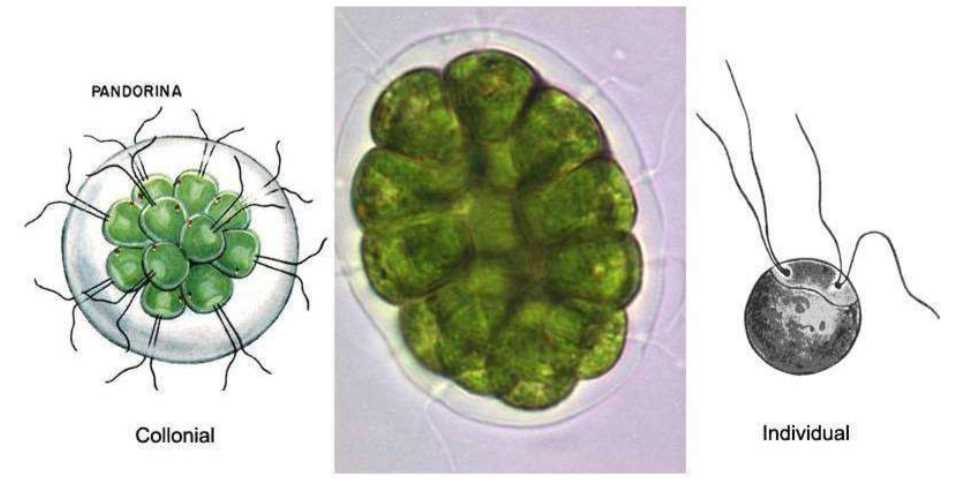
Composed of 8, 16, or sometimes 32 cells, held together at their bases surrounded by mucilage
Pandorina
Composed of 16 or 32 spherical biflagellate cells loosely aggregated into a globular shape within a mucilage envelope
Eudorina
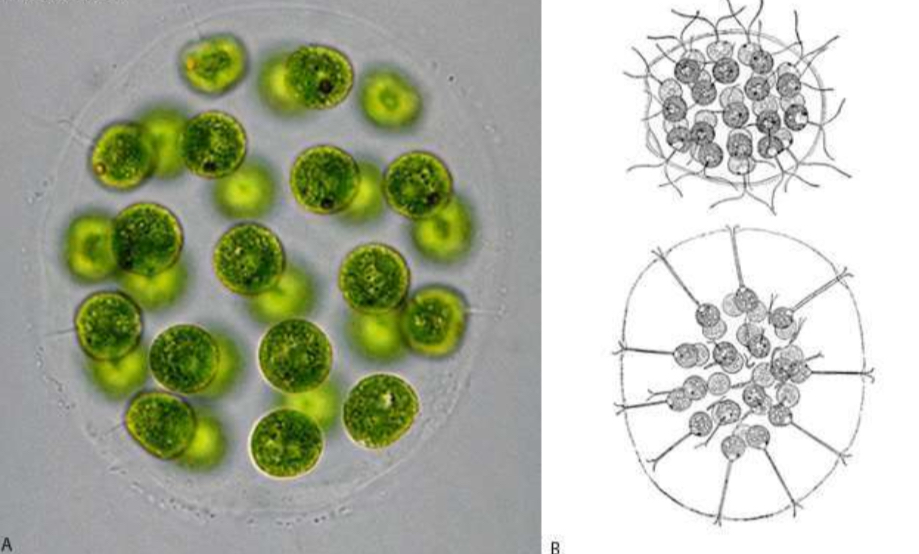
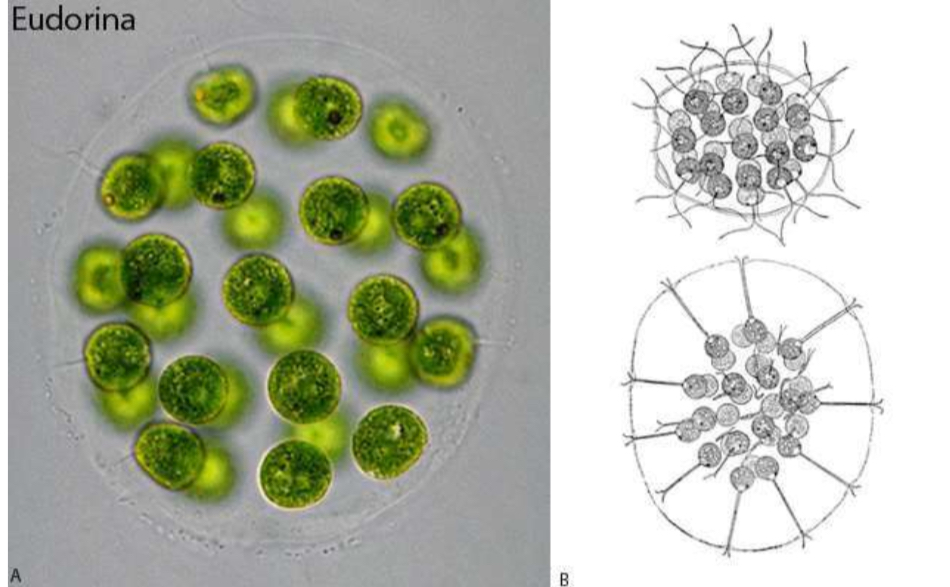
members are organized as coenobium colonies and occur in quite or slow moving waters
Pediastrum
What is the family of pediastrum?
Family Hydrodictyaceae
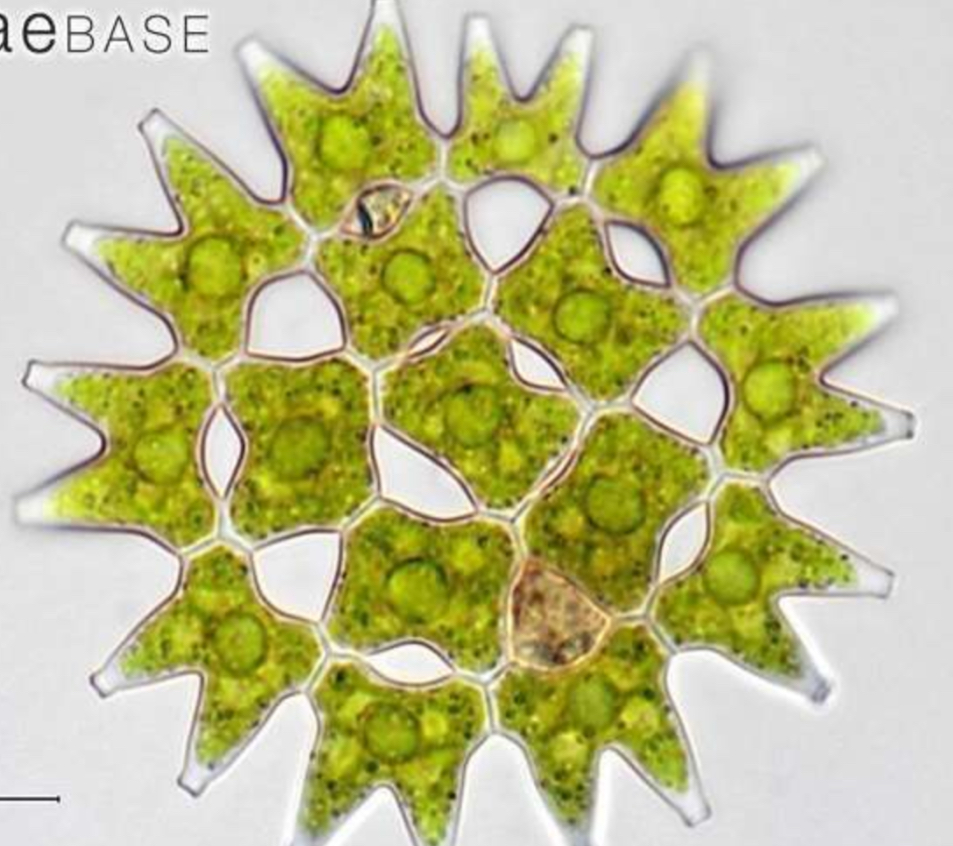
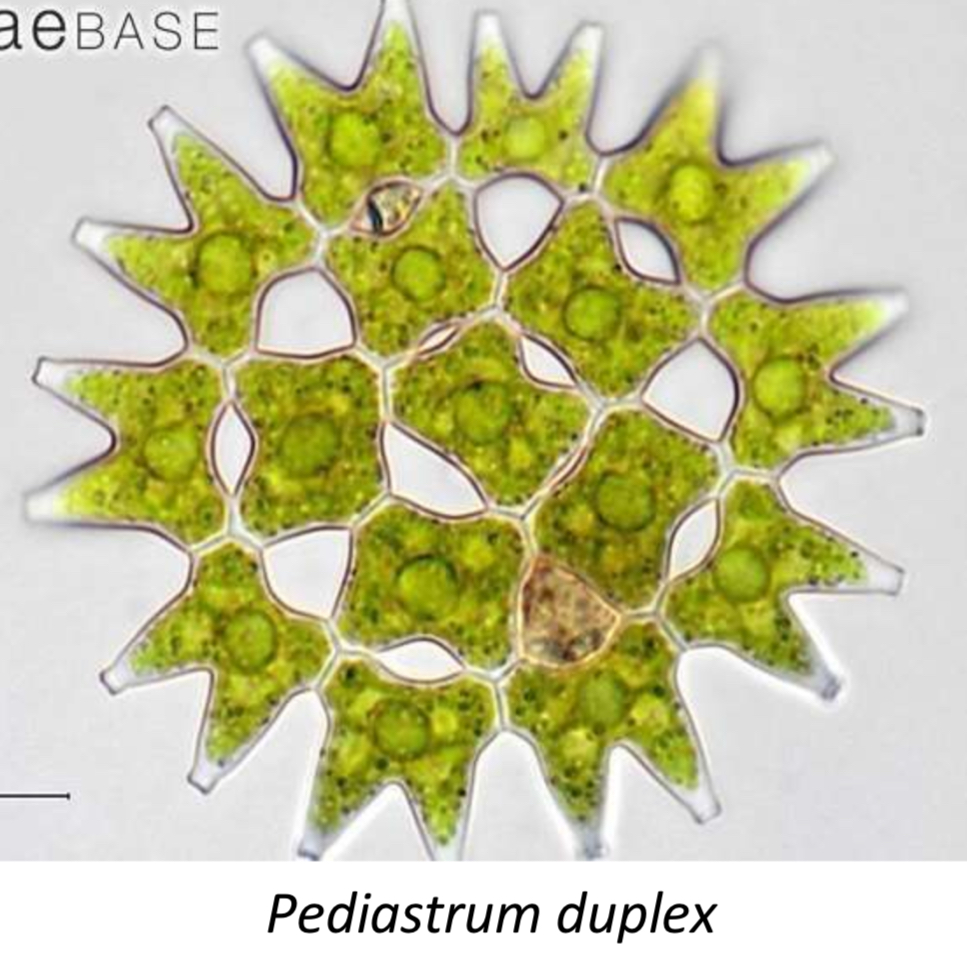
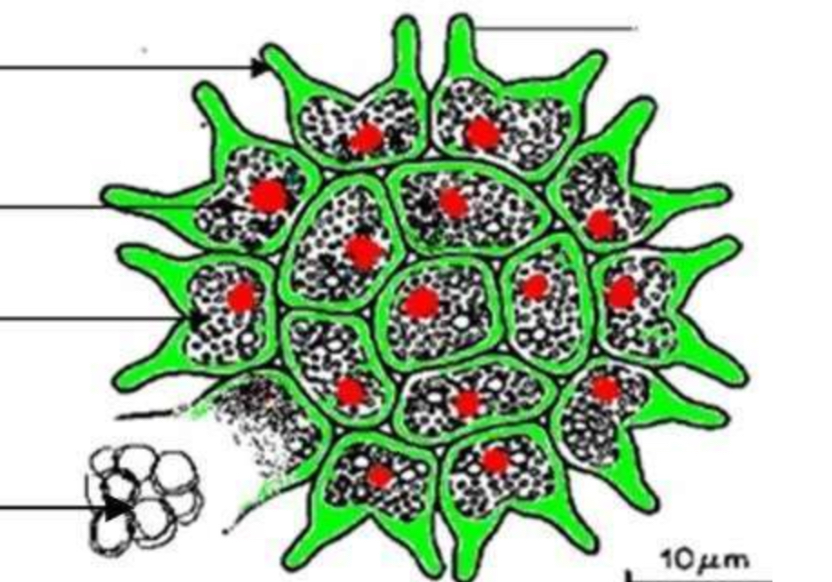
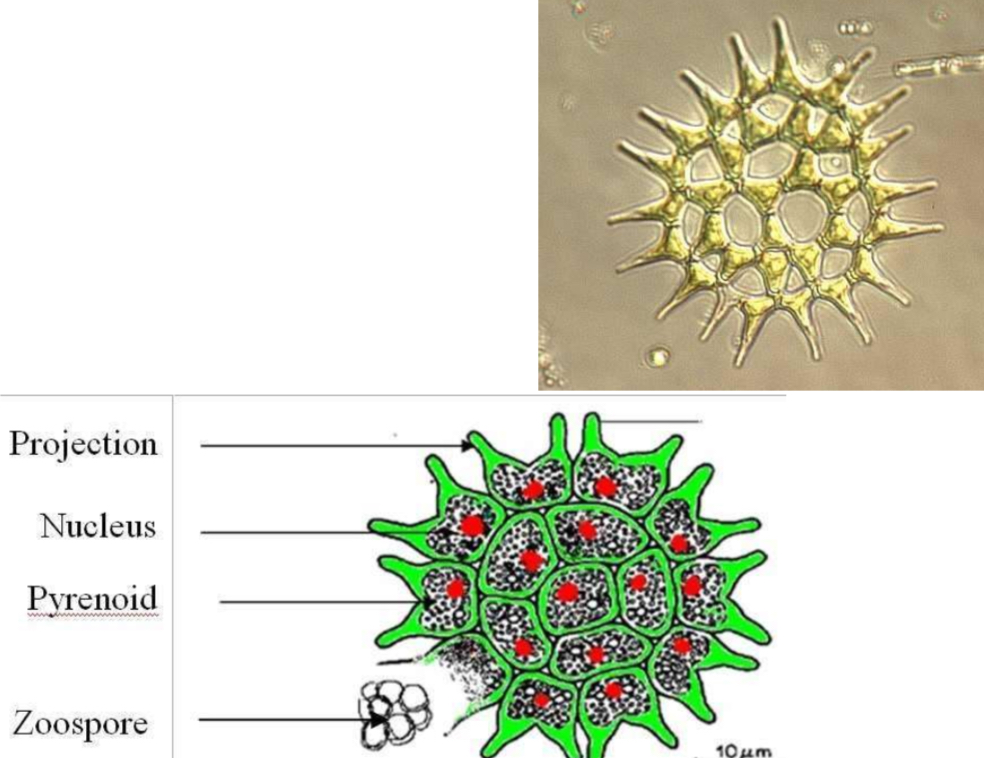
free floating with two to 128 polygonal cells
Cells are arranged in a stelate plate, one cell in thickness
Each cell has a single parietal plate like chloroplant
Pediastrum
What is the life cycle of Pediastrum
Haplontic life cycle
Describe the asexual reproduction of Pediastrum
a parent colony produces a number of biflagellate zoospores kept within a vesicle
Aggregation and arrangement of motile spherical spores transform into “butterfly-shaped cells”
The cells organize into a new complete daughter colony drifting and floating along water current
Describe the sexual reproduction of Pediastrum
the cell forms two bi-flagellate gametes (isogamy)
The gametes fuse into a zygote and develop further through the asexual lifecycle as described above
Oedogonium
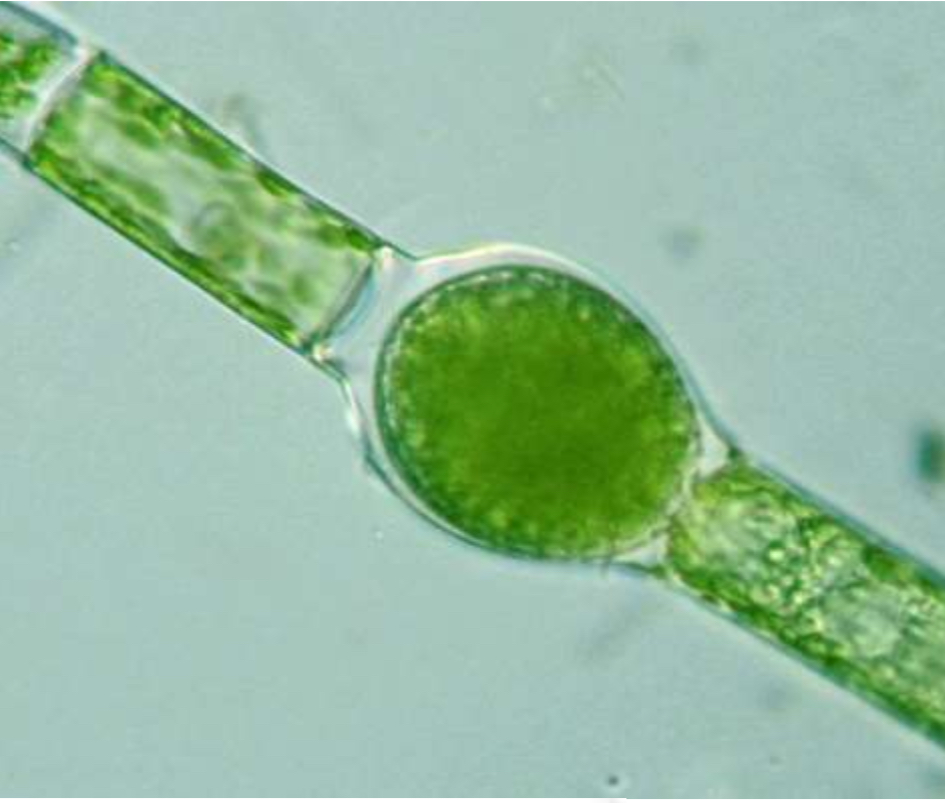
filamentous; cells uninucleate
Sexual reproduction: oogamous; with flagellated zoospores
Oedogonium
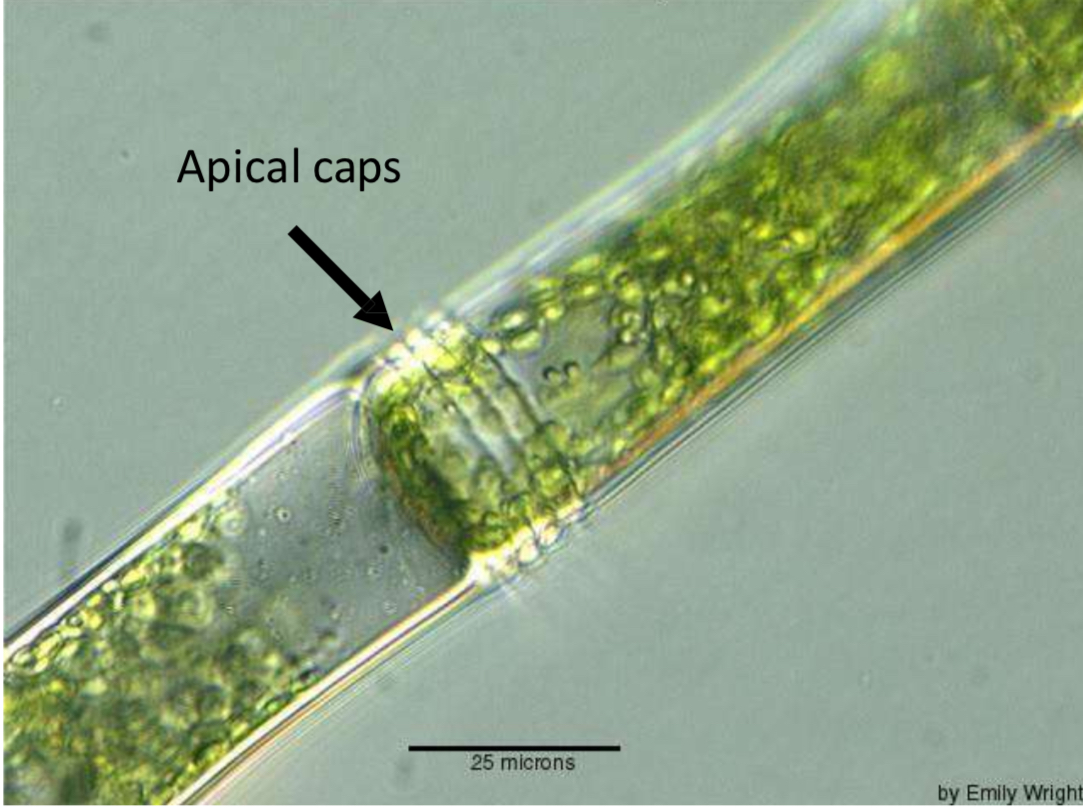
Oedogonium is an unbranded filaments with only certain cells that can divide. Those that do divide have stacks of old cell walls called?
Apical caps (at the cell apex)